
Home › Blog › The Hajj route, step by step
Pilgrimage · 10 min read · 2026-08-12
The Hajj route, step by step
Every year, around two million people perform the Hajj, the pilgrimage to Mecca. From a distance it looks like an immense crowd. On a map it looks like something else: a strikingly compact route, barely twenty kilometres, which pilgrims travel up and back over five days in a precise order. Here is what happens, step by step.
A fixed-date pilgrimage in a confined space
The Hajj is the fifth pillar of Islam. It is required once in a lifetime of every Muslim who has the physical and financial means. That is what sets it apart from the Umrah, often called the lesser pilgrimage: the Umrah can be performed at any time of year, the Hajj cannot. It runs from the 8th to the 13th of Dhul-Hijjah, the twelfth and final month of the Muslim calendar.
Because that calendar is lunar, it shifts about ten days each year against the Gregorian one. The Hajj therefore drifts slowly through every season, and regularly falls in the height of the Saudi summer, when temperatures can pass forty-five degrees. That is a major organisational constraint.
The other striking feature is geographical. Every site of the pilgrimage fits within a radius of some twenty kilometres east of Mecca. Mina, Muzdalifah and Arafat line up along a single axis, a valley framed by arid mountains. This concentration explains both the intensity of the moment and the considerable logistical challenge of moving millions of people simultaneously across a few kilometres.
Ihram: crossing an invisible border
The pilgrimage does not begin in Mecca, but before it. At a set distance from the city lie five ritual boundary points called miqats. No one enters the sacred perimeter without stopping there.
The pilgrim washes, then puts on the Ihram. For men, two pieces of unstitched white cloth, the izar around the waist and the rida over the shoulder. For women, modest dress covering the body, with the face left uncovered. They then state their intention and pronounce the Talbiyah, the invocation that will accompany the whole journey.
This clothing is more than a dress code. It produces a striking visual effect: in the crowd it becomes impossible to tell a rich man from a poor one, a ruler from a labourer. From that moment a series of prohibitions also applies, such as wearing perfume, cutting hair or nails, or hunting, and they hold until the end of the pilgrimage.
Mecca: the Tawaf and the Sa'i
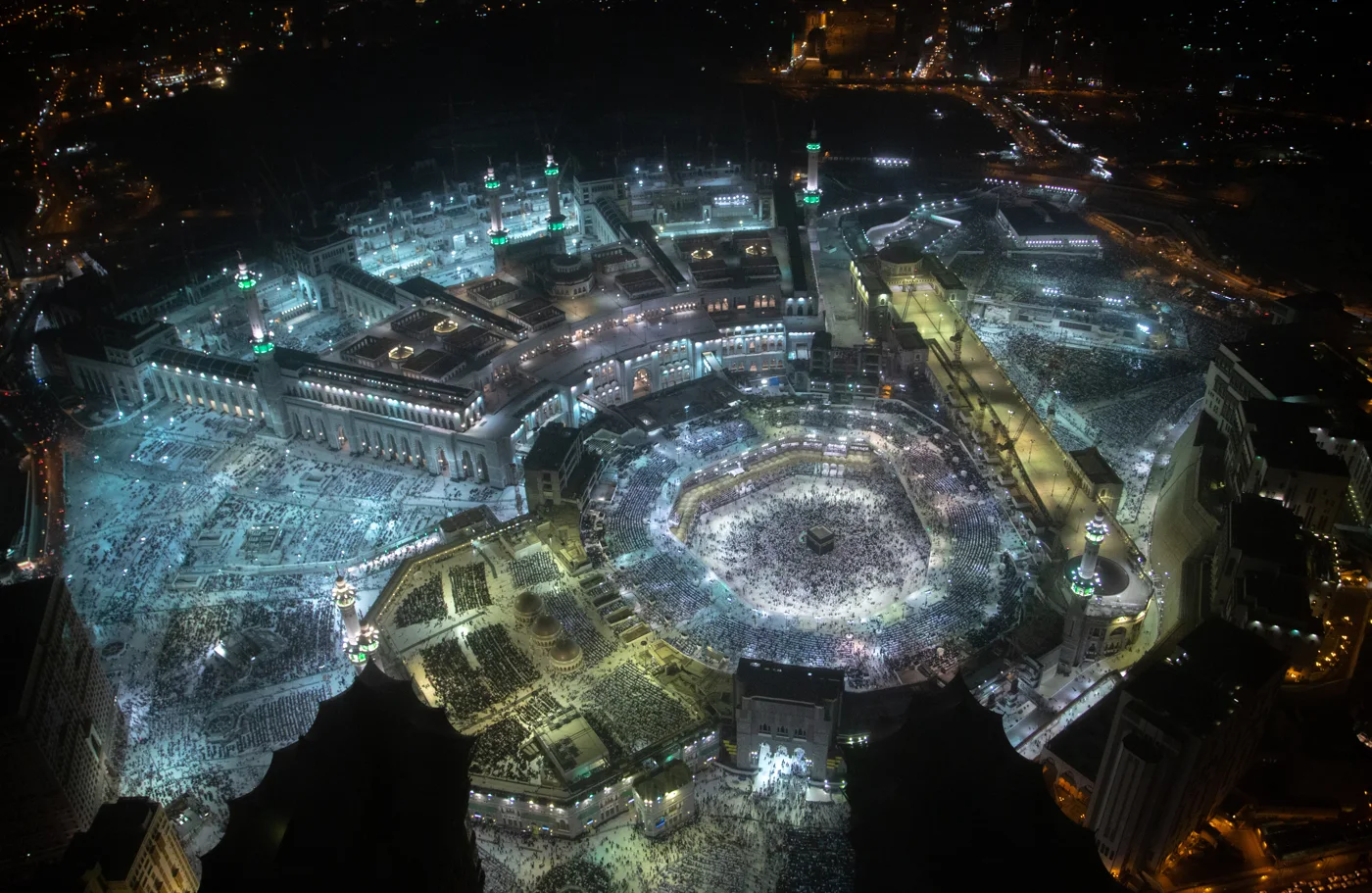
On reaching the Grand Mosque, the pilgrim performs the Tawaf: seven circuits around the Kaaba, anticlockwise. The movement is continuous, day and night, pausing only for the obligatory prayers.
Then comes the Sa'i: seven trips between the hills of Safa and Marwa. The rite re-enacts the search for water by Hajar, the wife of Ibrahim (peace be upon him), for her son Ismail (peace be upon him). The two hills, once in the open air, are now fully enclosed within the mosque complex, joined by a covered gallery several hundred metres long, on multiple levels, to absorb the flow.
8 Dhul-Hijjah: the move to Mina
On the first day of the Hajj proper, pilgrims leave Mecca for Mina, about eight kilometres away. They spend the day and the night there, performing the prayers.
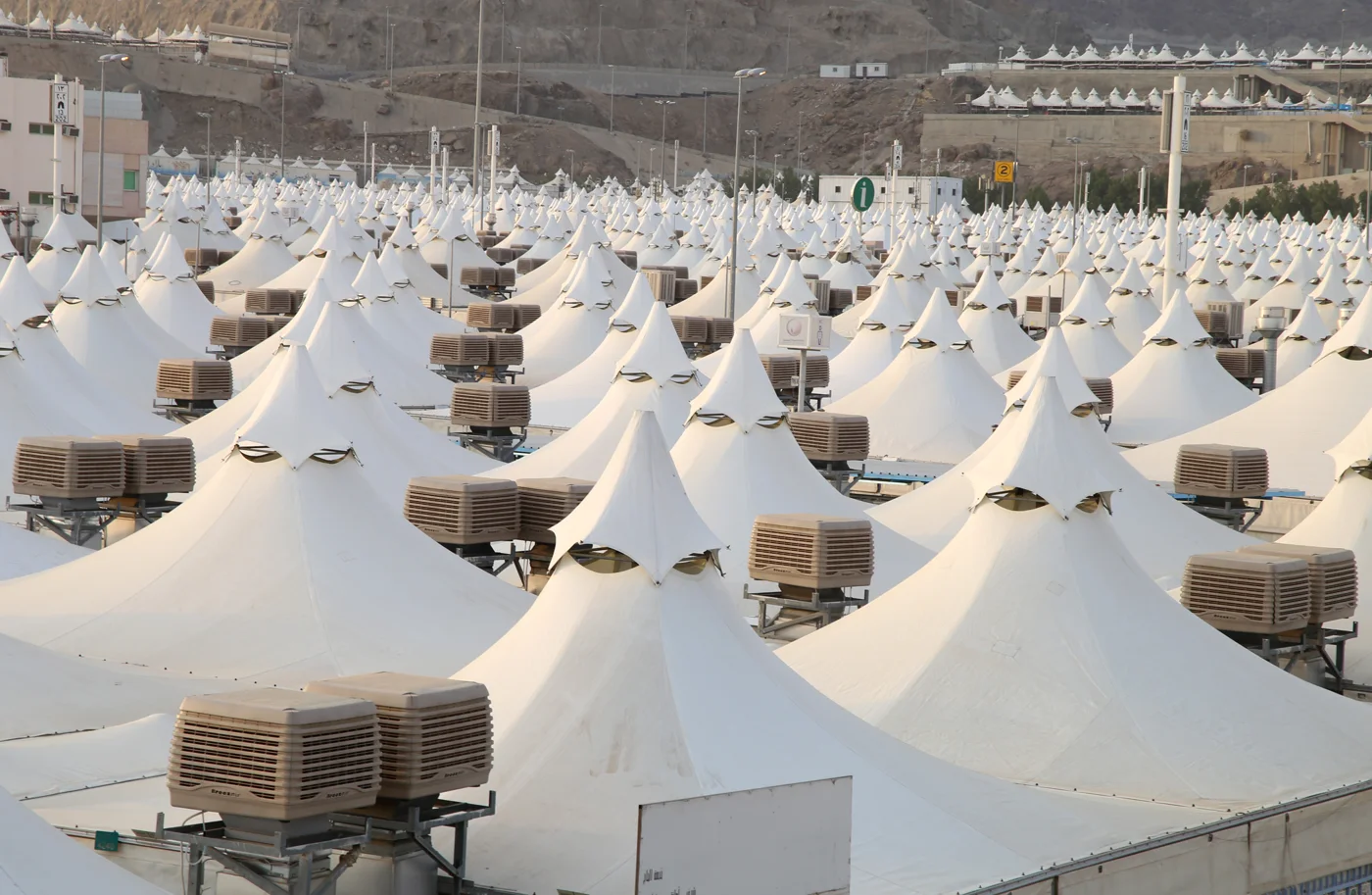
Mina is a singular place. It is a valley covered with tens of thousands of aligned white tents, a temporary city able to shelter more than a million people, with its own streets, water points and services. For the rest of the year the site sits almost entirely empty. Few places on earth show such a contrast between a few days of saturation and eleven months of silence.
9 Dhul-Hijjah: Arafat, the heart of the pilgrimage
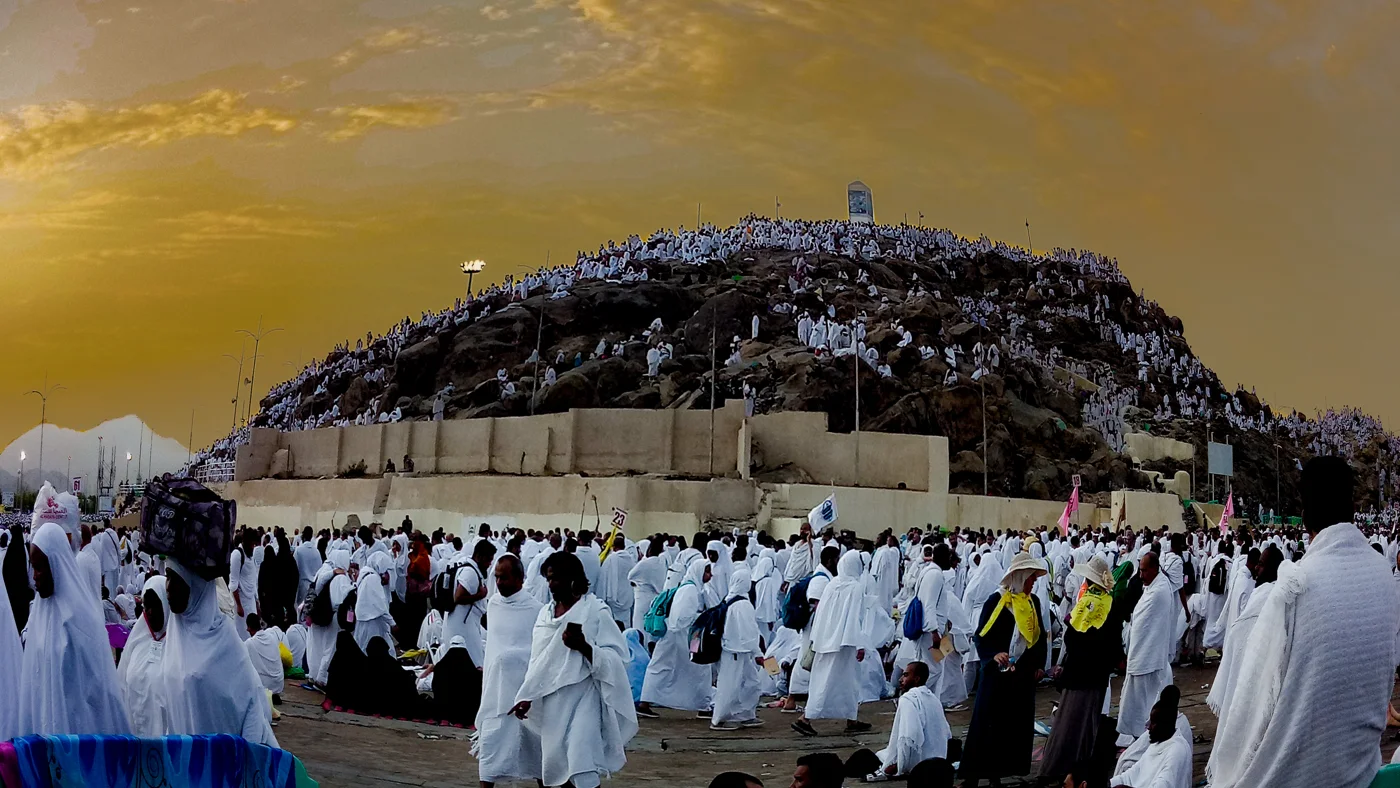
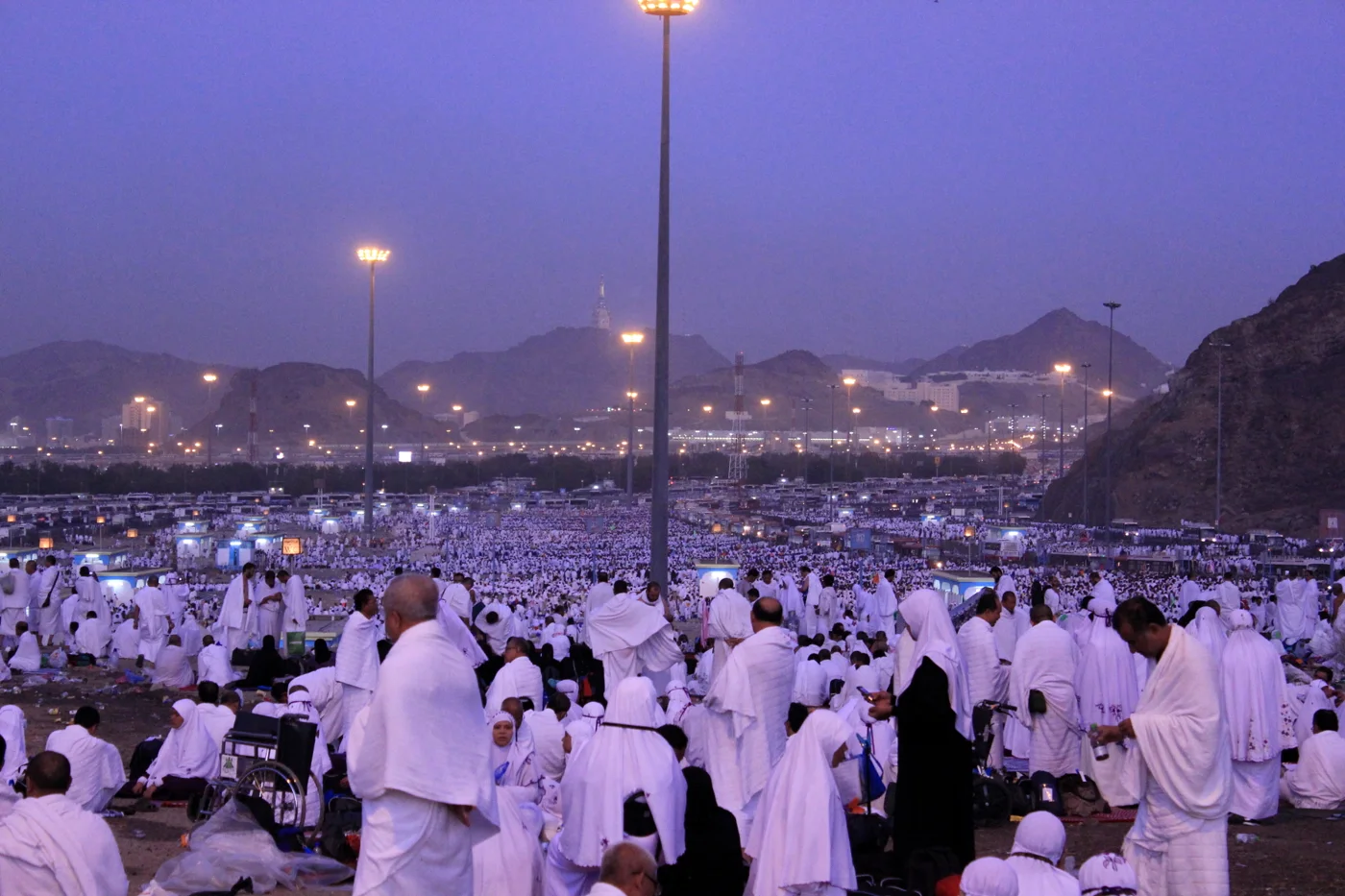
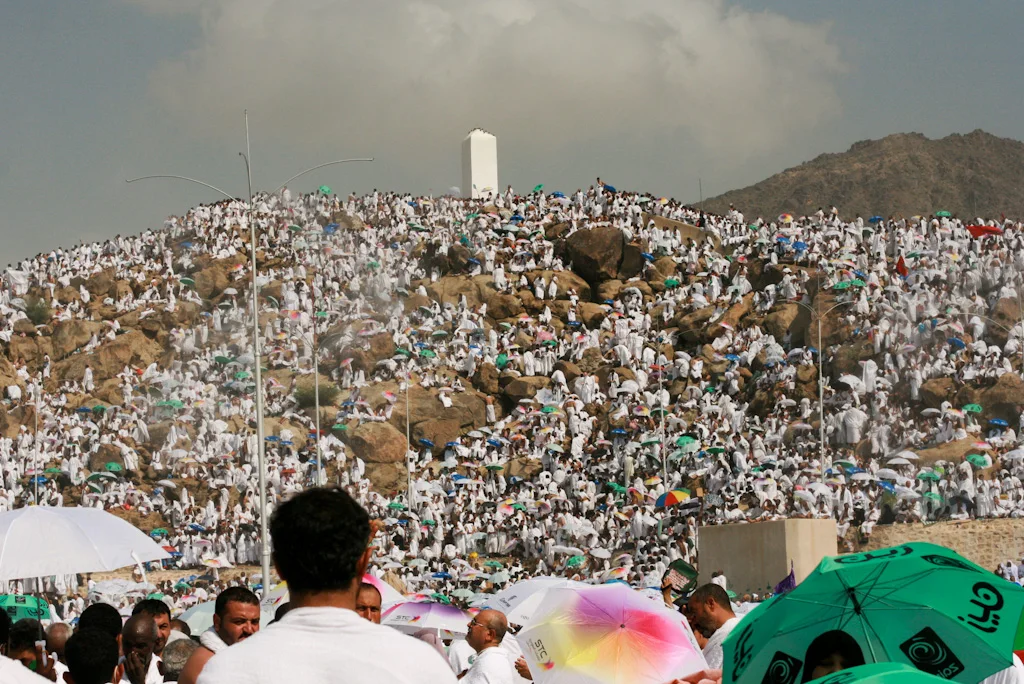
The second day is the decisive one. Pilgrims travel to the plain of Arafat, some twenty kilometres from Mecca, and perform the wuquf, the standing, from midday until sunset.
This is where the validity of the pilgrimage is settled. According to tradition, a pilgrim who misses Arafat has not performed the Hajj, whatever other rites they completed. No other stage carries that absolute weight.
In the middle of the plain rises a small rocky hill, Jabal ar-Rahmah, the Mount of Mercy. It was in this area that the Prophet Muhammad (peace and blessings of Allah be upon him) delivered his farewell sermon, during his only pilgrimage. The time there is devoted mainly to supplication and seeking forgiveness.
The night at Muzdalifah
After sunset the crowd leaves Arafat for Muzdalifah, halfway back to Mina. Moving several hundred thousand people at night within a few hours is one of the most delicate operations of the entire pilgrimage.
At Muzdalifah pilgrims pray, then spend the night on the ground, under the open sky. There are no tents here: the halt is deliberately bare. It is also where they gather the small pebbles used for the next day's stoning.
10 Dhul-Hijjah: stoning, sacrifice and return
The third day is the densest. Back in Mina, pilgrims throw seven pebbles at the large pillar, Jamrat al-Aqabah, a gesture symbolising the rejection of temptation. This stage was long the most dangerous of the pilgrimage because of crowd surges. The Saudi authorities rebuilt the whole structure: the old columns were replaced by long walls, easier to reach, and the Jamarat bridge now has several levels with separate entry and exit flows.
Then comes the sacrifice of an animal, whose meat is distributed, echoing the act of Ibrahim (peace be upon him). Men shave their heads or cut their hair, women cut a lock. The pilgrim then leaves the state of consecration partially.
Finally they go down to Mecca for the Tawaf al-Ifadah, seven more circuits around the Kaaba, before returning to spend the following nights in Mina, where the stoning is repeated on 11 and 12 Dhul-Hijjah, this time at all three pillars.
The farewell Tawaf
The pilgrimage closes with one last circuit around the Kaaba, the Tawaf al-Wada, literally the circumambulation of farewell. It is the gesture by which the pilgrim leaves the sanctuary, and it marks the end of the Hajj.
Many pilgrims then extend their trip with a visit to Medina, about four hundred kilometres to the north, where the Mosque of the Prophet (peace and blessings of Allah be upon him) stands. That visit is not among the obligatory rites of the Hajj, but it is very widely practised.
Following the route on a map
Reading the list of stages gives you the order, but not the geography. It is by seeing the route that you understand why Muzdalifah necessarily lies between Arafat and Mina, or why the return to Mecca on 10 Dhul-Hijjah involves a round trip rather than simply one more stop.
That is exactly what our 3D satellite map of the Hajj route offers: a real-relief view where each stage opens onto its rites and invocations, in Arabic, transliteration and French translation. For the first stage, the Ihram, the article on the five miqats sets out exactly where those sacred boundaries lie.