
Home › Blog › Malaysian mosques: between Malay tradition and spectacular modernism
Southeast Asia · 6 min read · 2026-02-02
Malaysian mosques: between Malay tradition and spectacular modernism
Few countries have made their mosques such symbols of national identity as Malaysia. Since independence in 1957, every great mosque here has also been an architectural manifesto, blending Malay heritage, Middle Eastern influences and outright modernism.
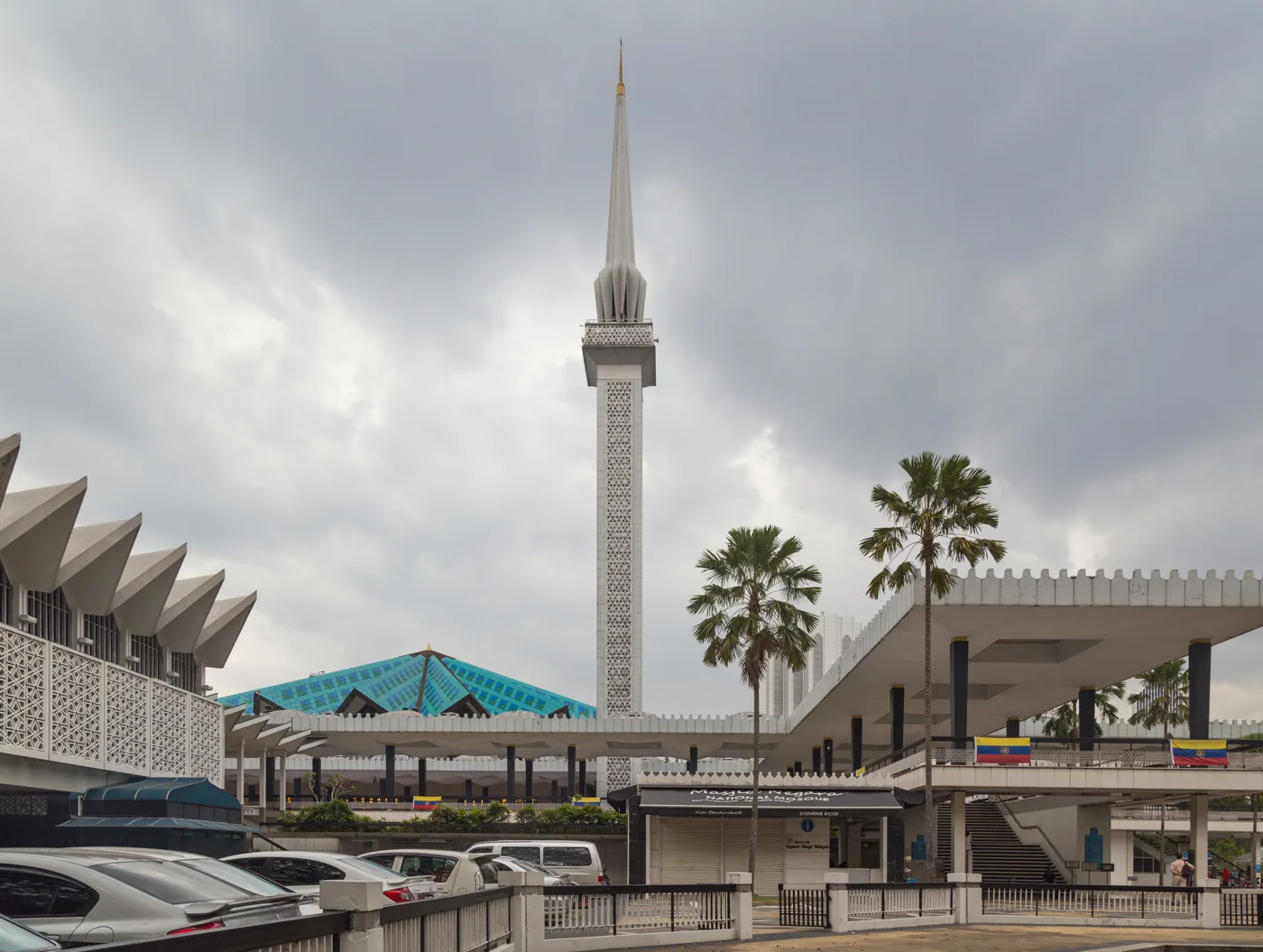
The National Mosque, a manifesto of independence
Completed in 1965, Masjid Negara (the National Mosque) in Kuala Lumpur was conceived from the outset as the architectural symbol of a newly independent nation. Its main roof, a sixteen-pointed pleated umbrella, does not attempt to imitate a traditional dome: it evokes both a blossoming flower and the folding of a ceremonial Malay parasol. It is very often described as having eighteen points, thirteen for the states of the federation and five for the pillars of Islam. That reading was denied by Ikmal Hisham Albakri, a member of the design team, in an interview with Badan Warisan Malaysia. Its slender, finned rocket-shaped minaret breaks radically with Ottoman or Mughal towers.
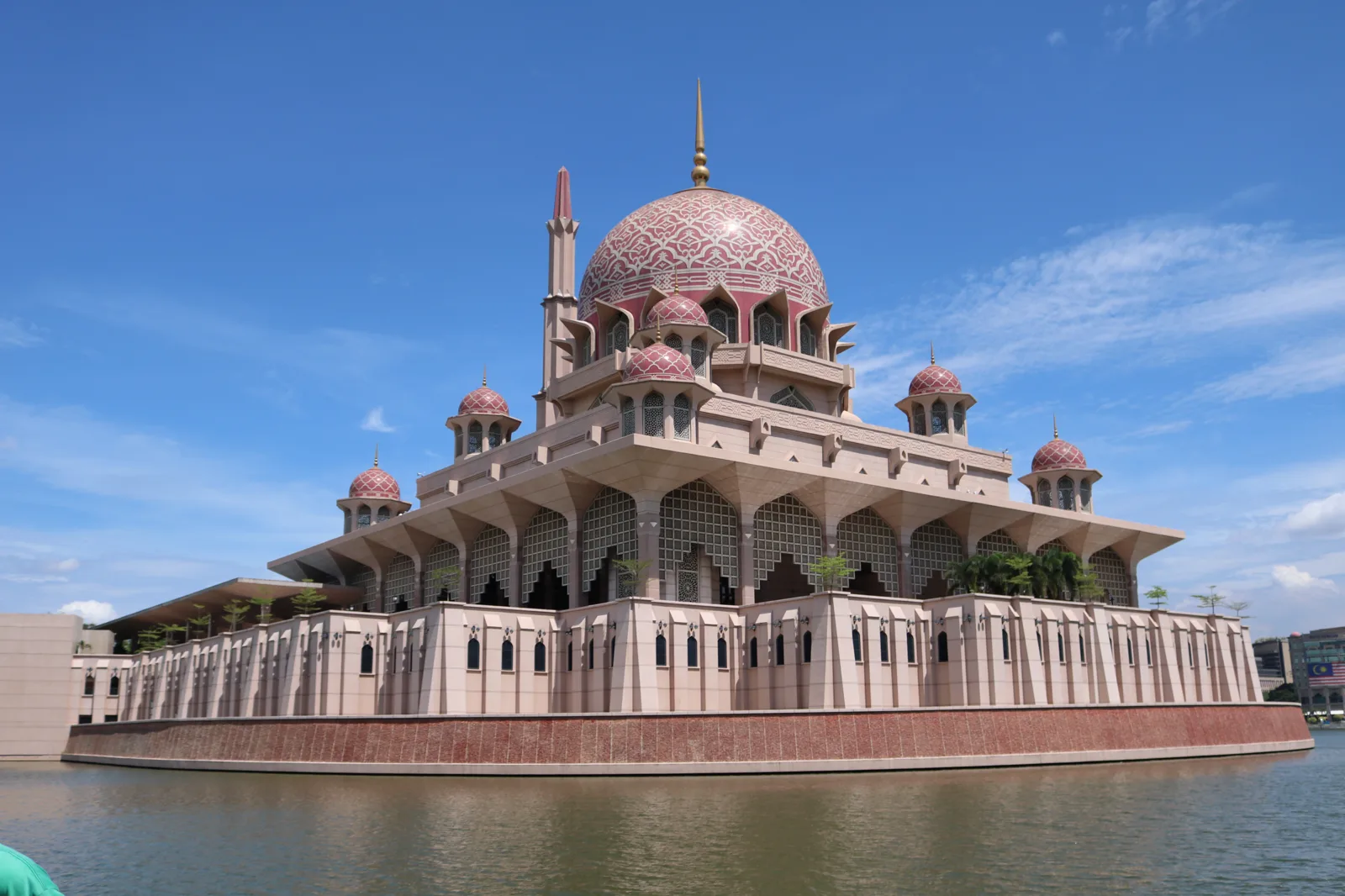
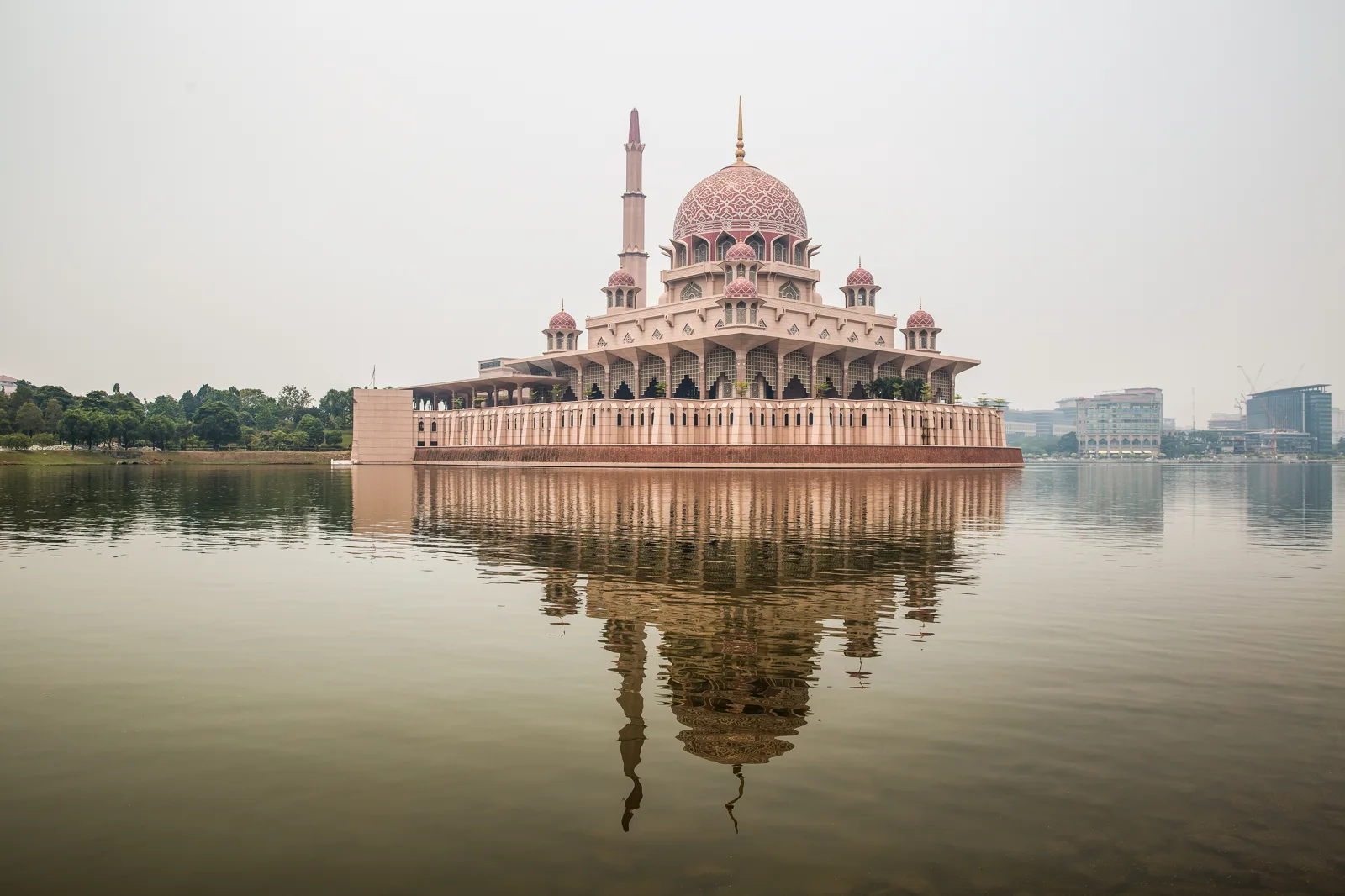
Putra Mosque, between lake and pink granite
In Putrajaya, an administrative city built in the late 1990s, the Putra Mosque pushes the blend of influences further: a dome and minaret inspired by Iran and Central Asia, but built from local pink granite and largely set upon an artificial lake, resolutely contemporary.
The Blue Mosque of Shah Alam, an outsized scale
Not far from Kuala Lumpur, the Sultan Salahuddin Abdul Aziz Mosque in Shah Alam : nicknamed the "Blue Mosque" for its immense turquoise dome, one of the largest in the world : illustrates another trend: the race for gigantism, with a capacity sometimes exceeding 24,000 worshippers, backed by the resources of a regional oil-producing state.
A vocabulary specific to Southeast Asia
Before these grand official programmes arrived, Malay mosque architecture drew on a very different vernacular vocabulary: tiered tiled roofs, timber frames, Chinese and Indian influences carried by trade routes. This vernacular foundation has not disappeared: it can still be found in many small village (kampung) mosques, a counterpoint to the concrete and granite giants of the big cities.
Discover
Mosques mentioned in this article
About this page's content: this site offers editorial and cultural content written with care and respect for the religious traditions concerned; it does not constitute a theological opinion or a source of religious authority. Despite our checks, errors, inaccuracies or approximations may remain. If you spot one, please let us know via the Contact page or by email at qibla.mosk@gmail.com, and we will correct it gratefully.