
Home › Blog › Putra and Masjid Jamek: two faces of Muslim Malaysia
Discovery · 5 min read · 2026-03-23
Putra and Masjid Jamek: two faces of Muslim Malaysia
A century apart and just a few dozen kilometers from each other, the Masjid Jamek and the Putra Mosque tell two different stories of Malaysia: the colonial one that gave rise to Kuala Lumpur, and the contemporary one of an administrative capital built from scratch.
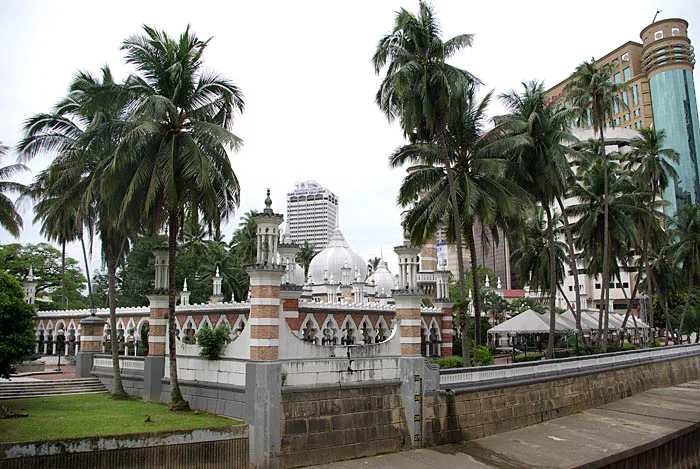
Masjid Jamek, the founding mosque of Kuala Lumpur
Built in 1909 by the British architect Arthur Benison Hubback in the Indo-Saracenic style, the Masjid Jamek stands at the confluence of the Klang and Gombak rivers, at the very spot where Kuala Lumpur ("muddy confluence") was founded. It was the city's main mosque until the national mosque was built in 1965. Damaged during a Japanese air raid in 1941, it also saw one of its domes collapse under heavy rain in 1993, since repaired.
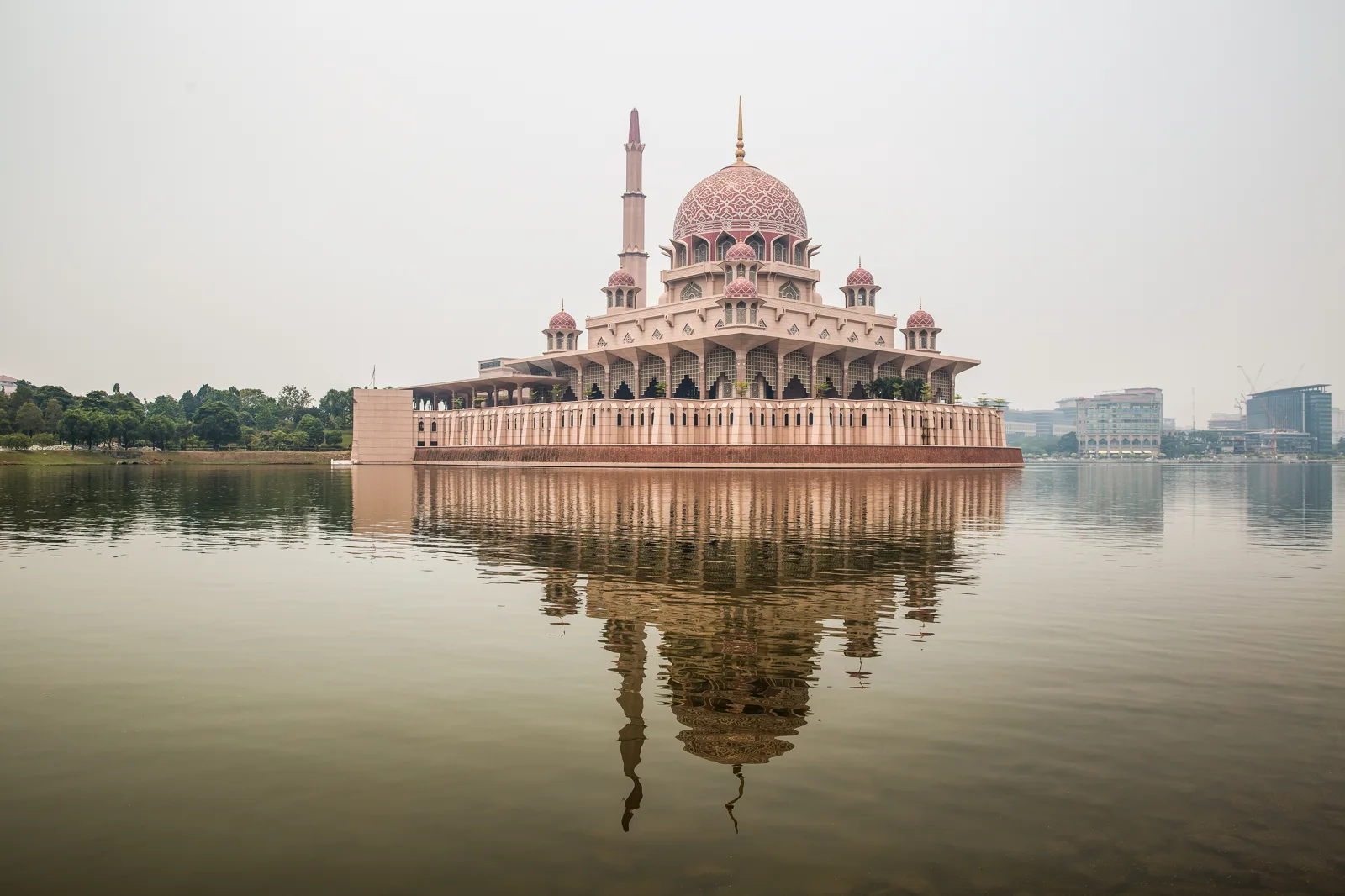
Putra, the pink mosque of the administrative capital
Completed in 1999 in the administrative capital Putrajaya, the Putra Mosque owes its distinctive pink hue to a blend of rose-colored cement, not simple paint. Built on the edge of an artificial lake in which it is reflected, it has become one of the architectural symbols of modern Malaysia, blending Middle Eastern heritage with contemporary national identity.
A century of Malaysian religious architecture
From Kuala Lumpur's red-brick colonial-era mosque to Putrajaya's ultra-contemporary pink mosque, these two buildings sum up the evolution of Malaysian religious architecture: a country that first worked within British architectural heritage before asserting, a century later, a fully embraced Islamic and national identity in the design of its new capital.
Discover more
Mosques mentioned in this article
Putra Mosque
The granite "pink mosque" set on the lake of Putrajaya, blending Persian tradition and Malay craftsmanship.
Masjid Jamek
The founding mosque of Kuala Lumpur, built at the very confluence of the rivers that gave the city its name.
About this page's content: this site offers editorial and cultural content written with care and respect for the religious traditions concerned; it does not constitute theological advice or an authoritative religious source. Despite our checks, errors, inaccuracies, or approximations may remain. If you spot one, please let us know via the Contact page or by email at qibla.mosk@gmail.com, and we will gladly correct it.