History
History
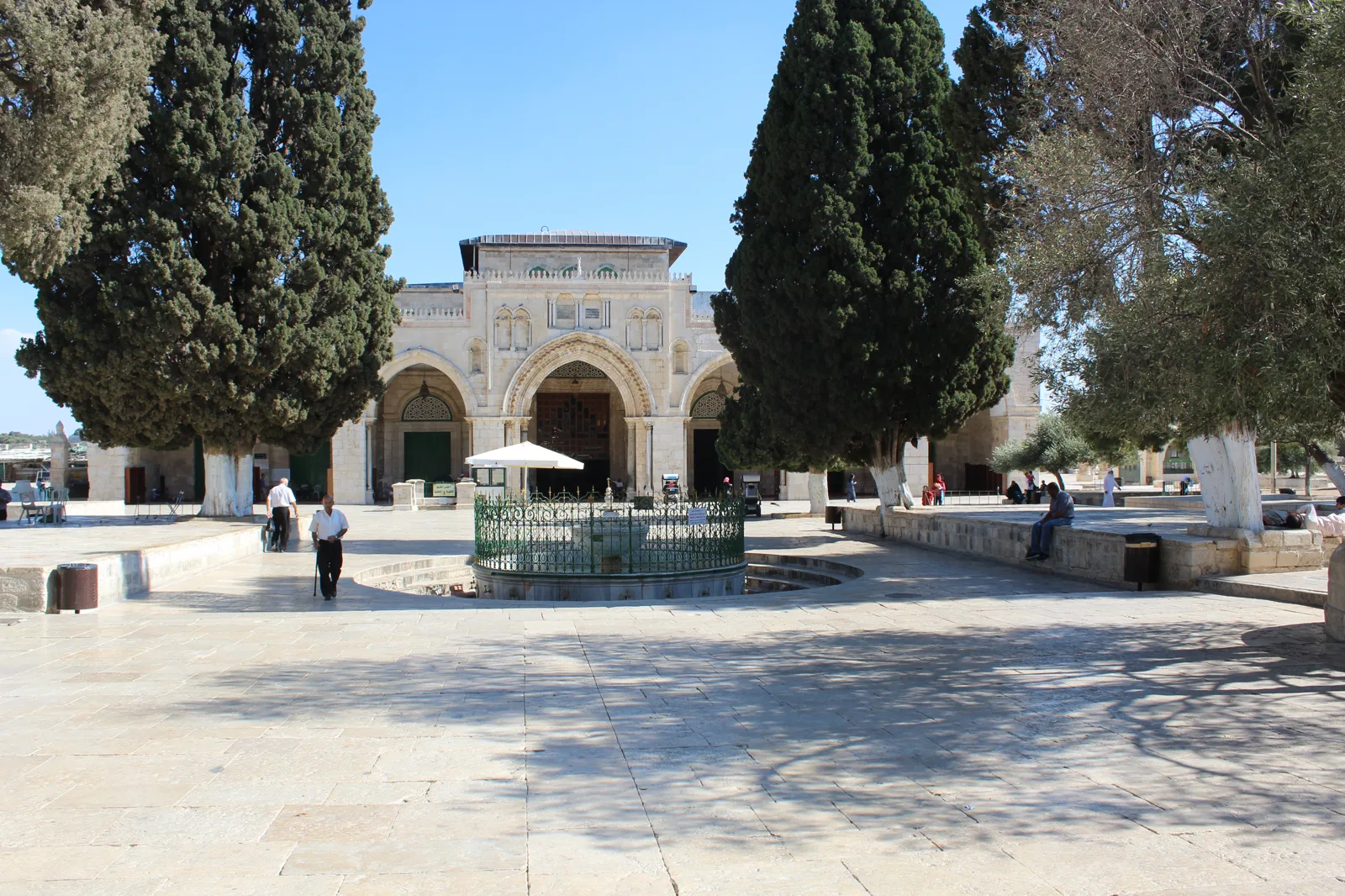
Built in the early 8th century by the Umayyad caliph al-Walid I on the Haram al-Sharif esplanade, Al-Aqsa Mosque is linked in the Quran to the Night Journey of the Prophet (peace and blessings of Allah be upon him). Destroyed several times by earthquakes, it was rebuilt by the Abbasids and then the Fatimids, who gave it most of its current silhouette with seven naves and a silver dome.
Together with the golden-domed Dome of the Rock, often mistaken for it, it forms a unique monumental complex layering fourteen centuries of religious and political history. Its mosaics, marble columns and painted ceiling, a 20th-century gift, make it a compendium of Islamic art.
Anecdotes & highlights
- "Al-Aqsa" means "the farthest": the farthest mosque mentioned in the account of the Night Journey.
- The neighbouring Dome of the Rock, with its gold dome, is not a mosque but a commemorative shrine.
- Some marble columns come from reused Byzantine and Roman buildings.