History
History
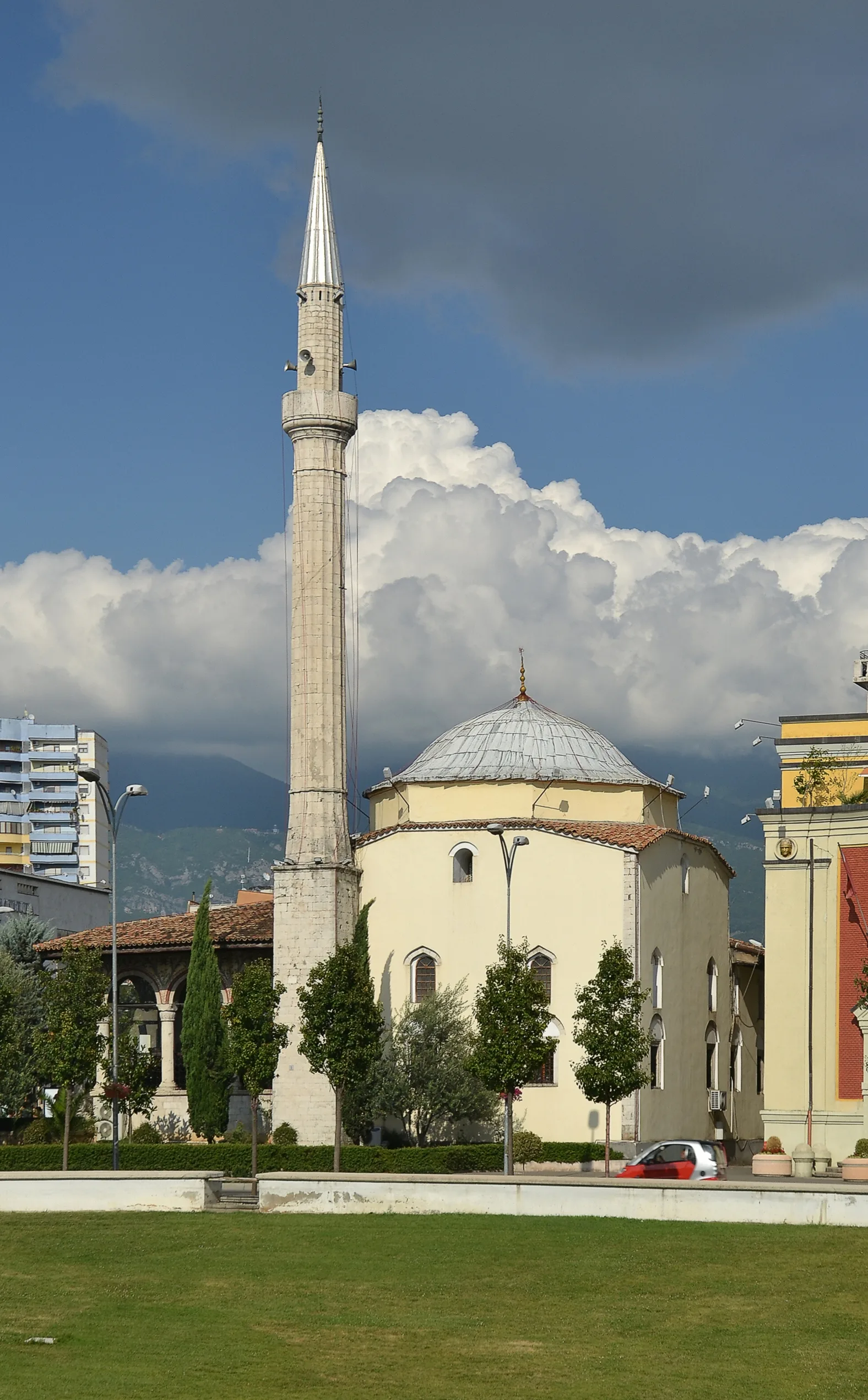
Begun around 1791–1794 by Molla Bey, of the Toptani family, and completed in the early 19th century by his son Haxhi Et'hem Bey, this mosque stands out for its interior and exterior frescoes depicting trees, waterfalls and bridges, rare in late Ottoman religious art.
Closed during the communist period, when Albania officially proclaimed itself the world's first atheist state, it survived destruction thanks to its protected historic-monument status. On 18 January 1991, around 10,000 people attended Friday prayer there despite the government ban still in force, a moment regarded as marking the de facto end of the religious ban in the country.
Anecdotes & highlights
- Famous for its interior and exterior frescoes depicting trees, waterfalls and bridges.
- It survived the communist period, when Albania had proclaimed itself the world's first atheist state, thanks to its protected-monument status.
- On 18 January 1991, 10,000 people attended Friday prayer there despite the government ban still in force.