History
History
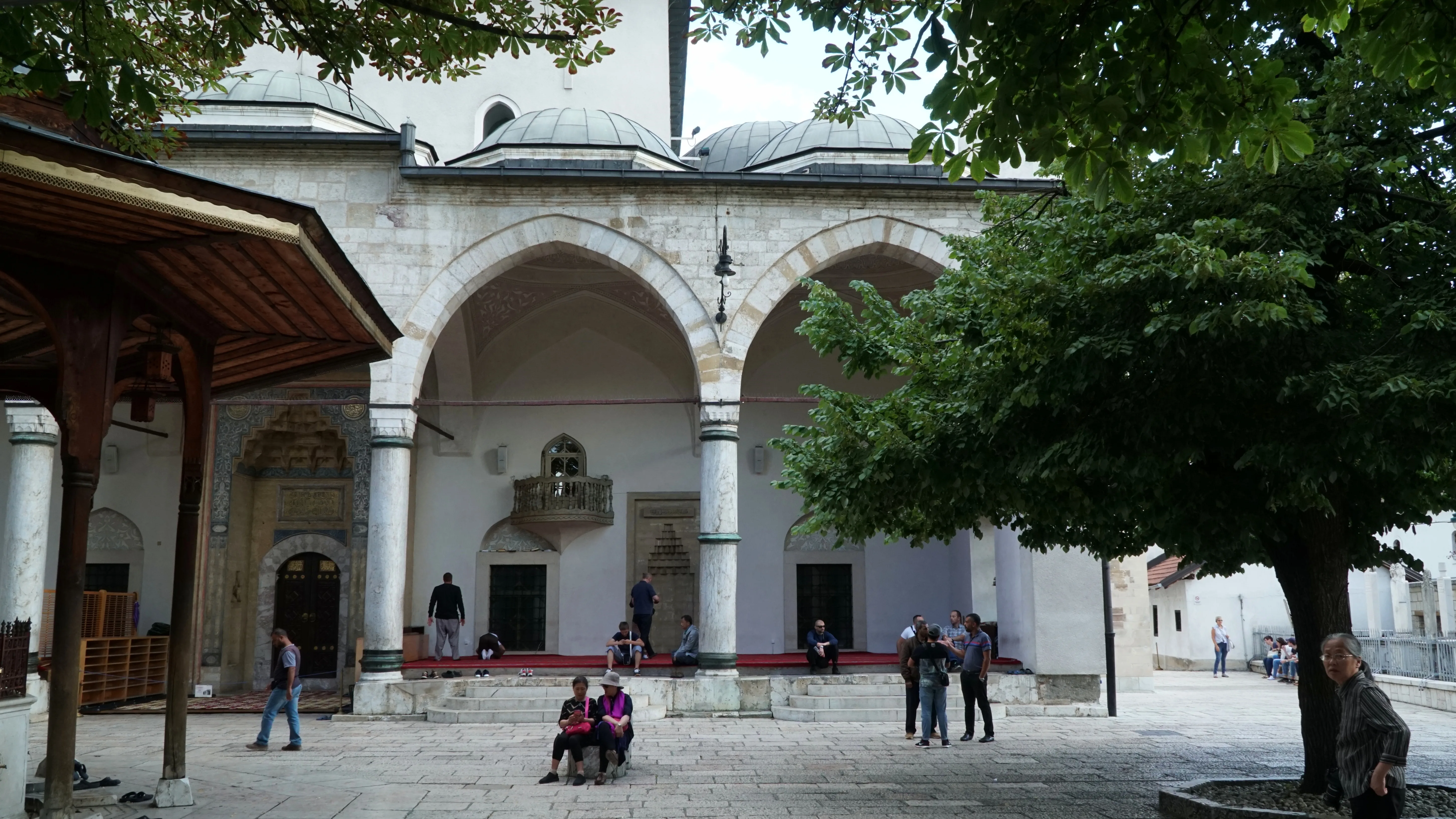
Built in 1530 and funded by the waqf of Ottoman governor Gazi Husrev-beg, this mosque is one of the most representative examples of classical Ottoman architecture in the Balkans. Masons from Ragusa (present-day Dubrovnik) are said to have taken part in its construction, at the governor's own request.
Severely damaged by Serb shelling during the Siege of Sarajevo (1992–1996), it was restored from 1996 onward with international aid, becoming once again a symbol of the resilience of the Bosnian Muslim community.
Anecdotes & highlights
- It is Bosnia and Herzegovina's largest historic mosque and one of the most representative examples of classical Ottoman architecture in the Balkans.
- Masons from Ragusa (Dubrovnik) are said to have taken part in its construction, at the request of Gazi Husrev-beg.
- Severely damaged during the Siege of Sarajevo (1992–1996), it was rebuilt from 1996 with aid including from Saudi Arabia.