History
History
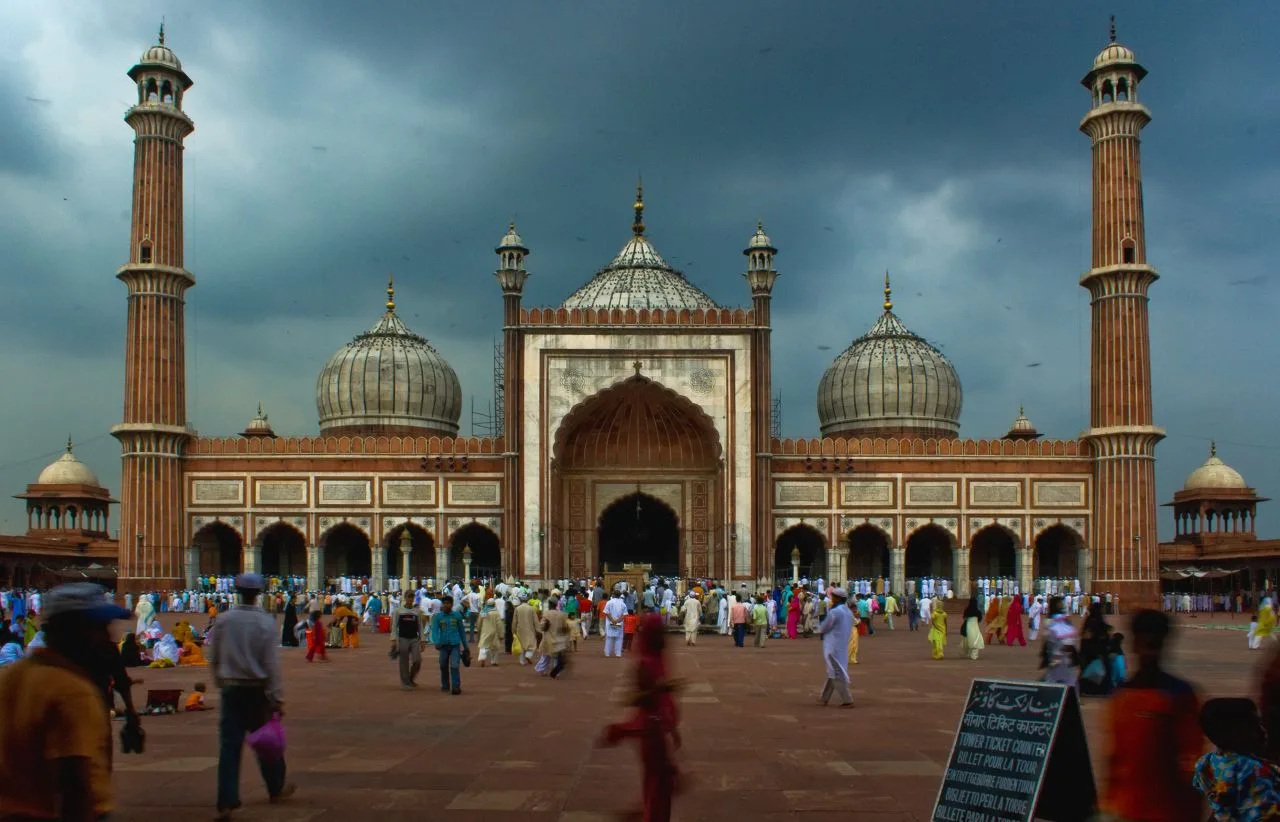
Built between 1650 and 1656 by the Mughal emperor Shah Jahan, the builder of the Taj Mahal, Delhi's Jama Masjid was the crowning achievement of his new capital, Shahjahanabad. Perched on a rocky platform, it opens through three monumental gates onto a courtyard able to hold 25,000 worshippers.
Its facade alternates red sandstone and white marble, beneath three striped bulbous domes and two 40-metre minarets. Several thousand workers laboured on the site, directed, it is said, by the vizier Saadullah Khan.
Anecdotes & highlights
- Its official name, Masjid-i Jahan-Numa, means "the mosque that reflects the world".
- Climbing one of the minarets offers one of the finest views over Old Delhi and the Red Fort.
- The mosque holds relics attributed to the Prophet (peace and blessings of Allah be upon him), shown to visitors on certain occasions.