History
History
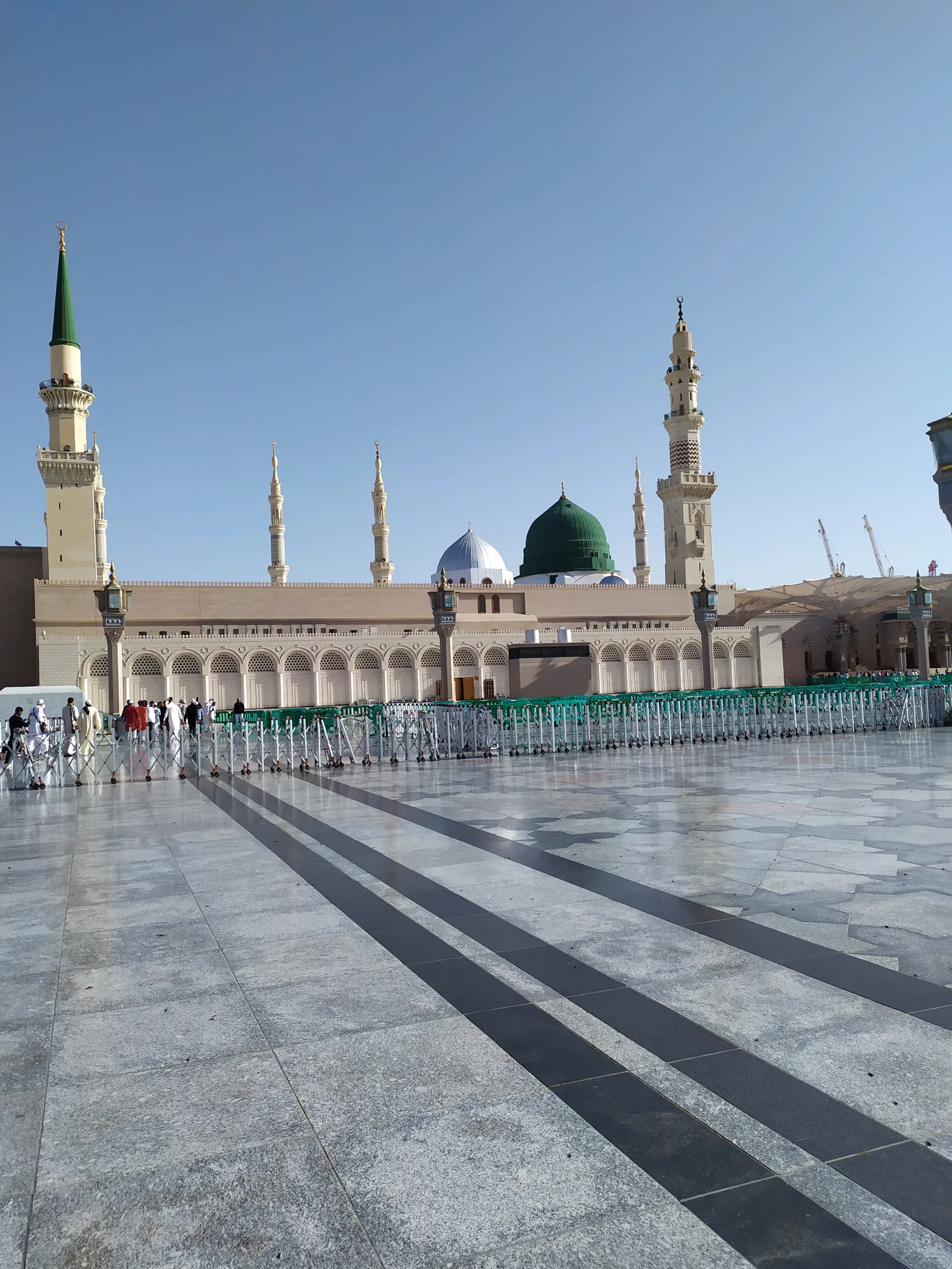
Built in 622 next to the house of the Prophet Muhammad (peace and blessings of Allah be upon him), the Mosque of the Prophet (peace and blessings of Allah be upon him) is the second holiest site in Islam. Originally a modest structure of mud bricks and palm trunks, it now houses the tomb of the Prophet (peace and blessings of Allah be upon him), topped since the 19th century by the famous Green Dome, one of the most recognisable symbols of the Muslim world.
Successive extensions, notably Ottoman then Saudi, have multiplied its surface area several hundred times over. Its esplanades are covered with monumental retractable umbrellas that open like flowers every morning to shield worshippers from the Hejaz sun.
Anecdotes & highlights
- The mosque was one of the very first places in the Arab world to be lit by electricity, as early as the late 19th century.
- Its 250 giant, automatically deployed umbrellas provide shade over tens of thousands of square metres of esplanade.
- The Prophet's original mihrab and the Rawda, "Garden of Paradise", attract a continuous stream of visitors day and night.