
Home › Qibla › All these mosques face the same point
Episode 1 · 8 min read
All these mosques face the same point
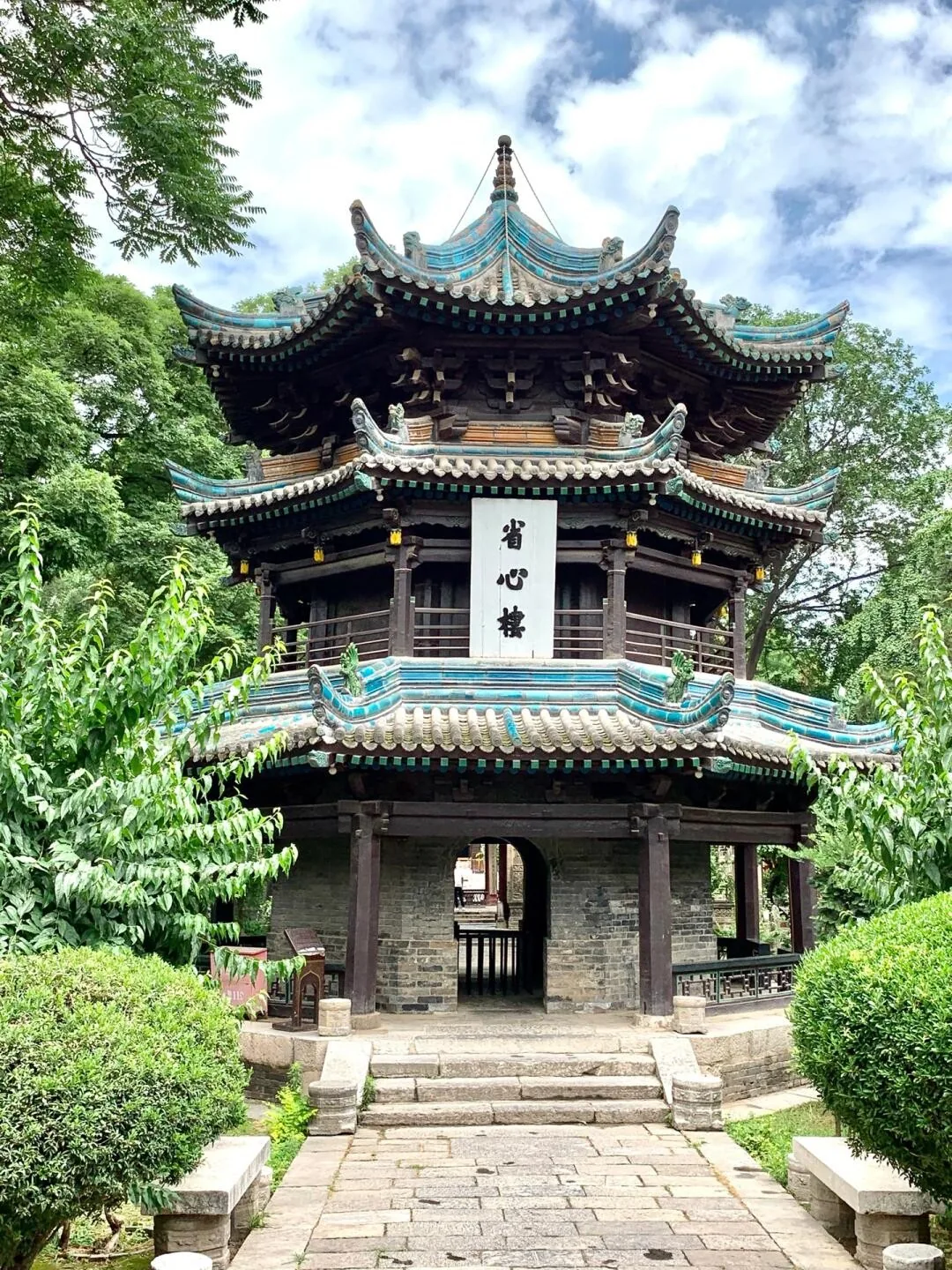
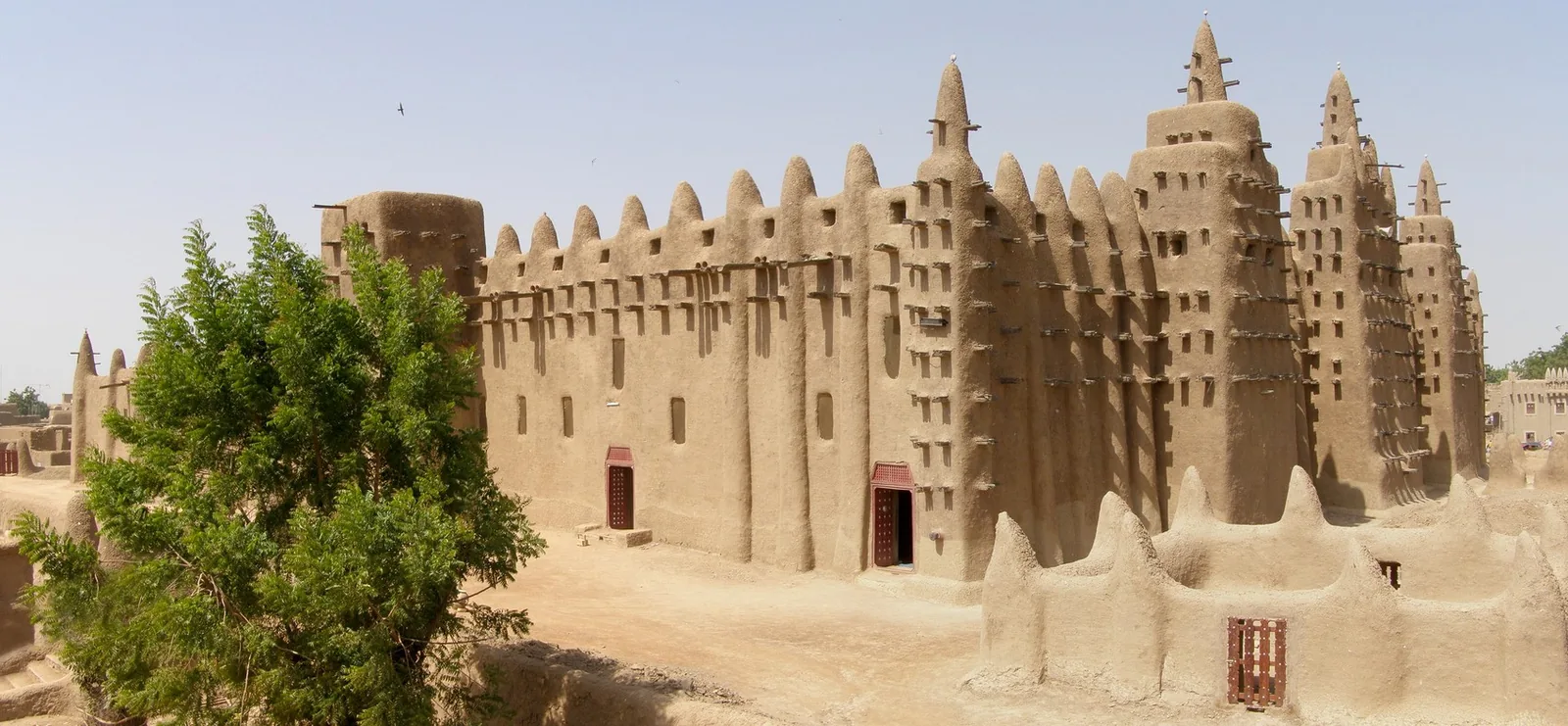
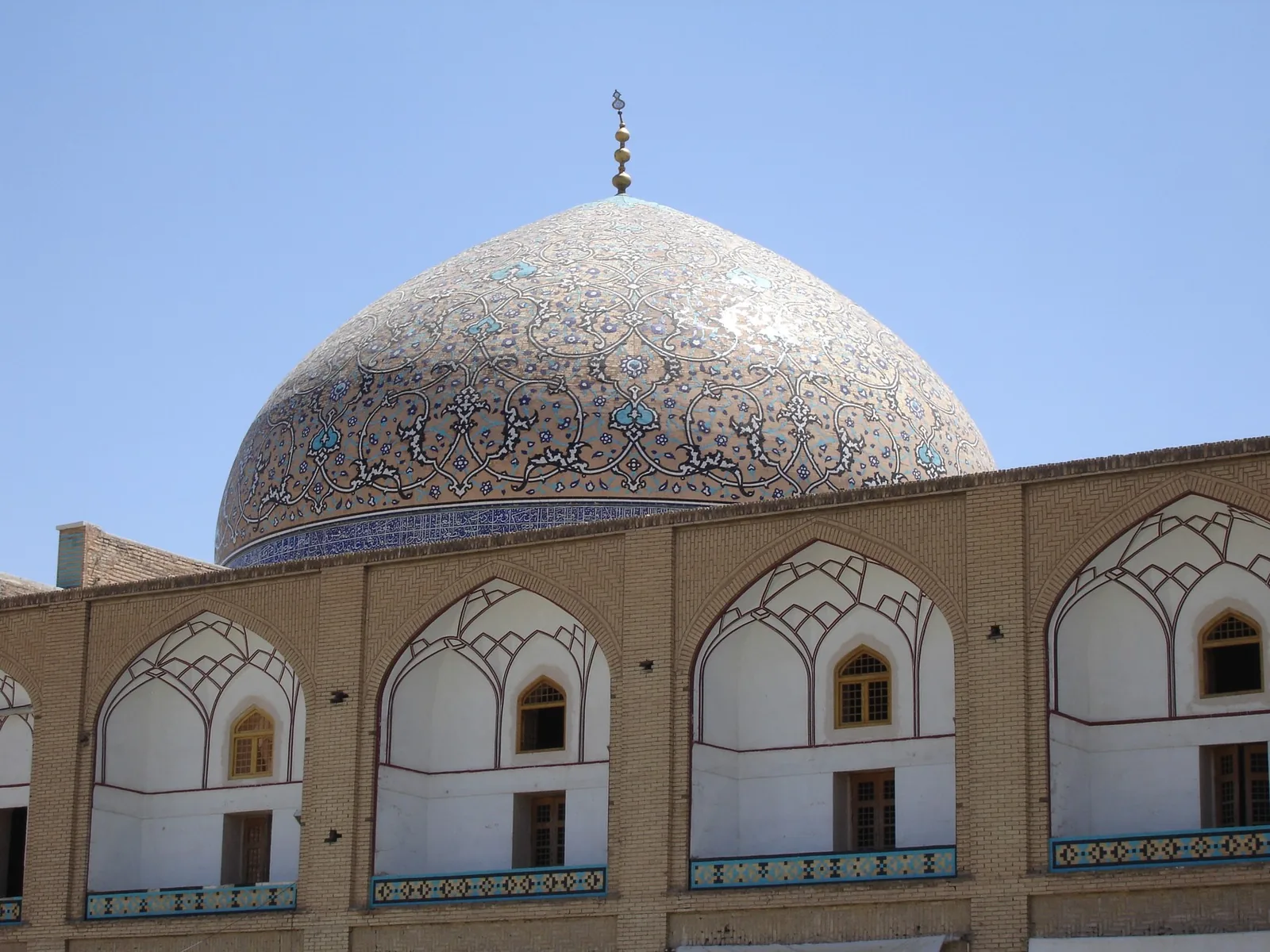
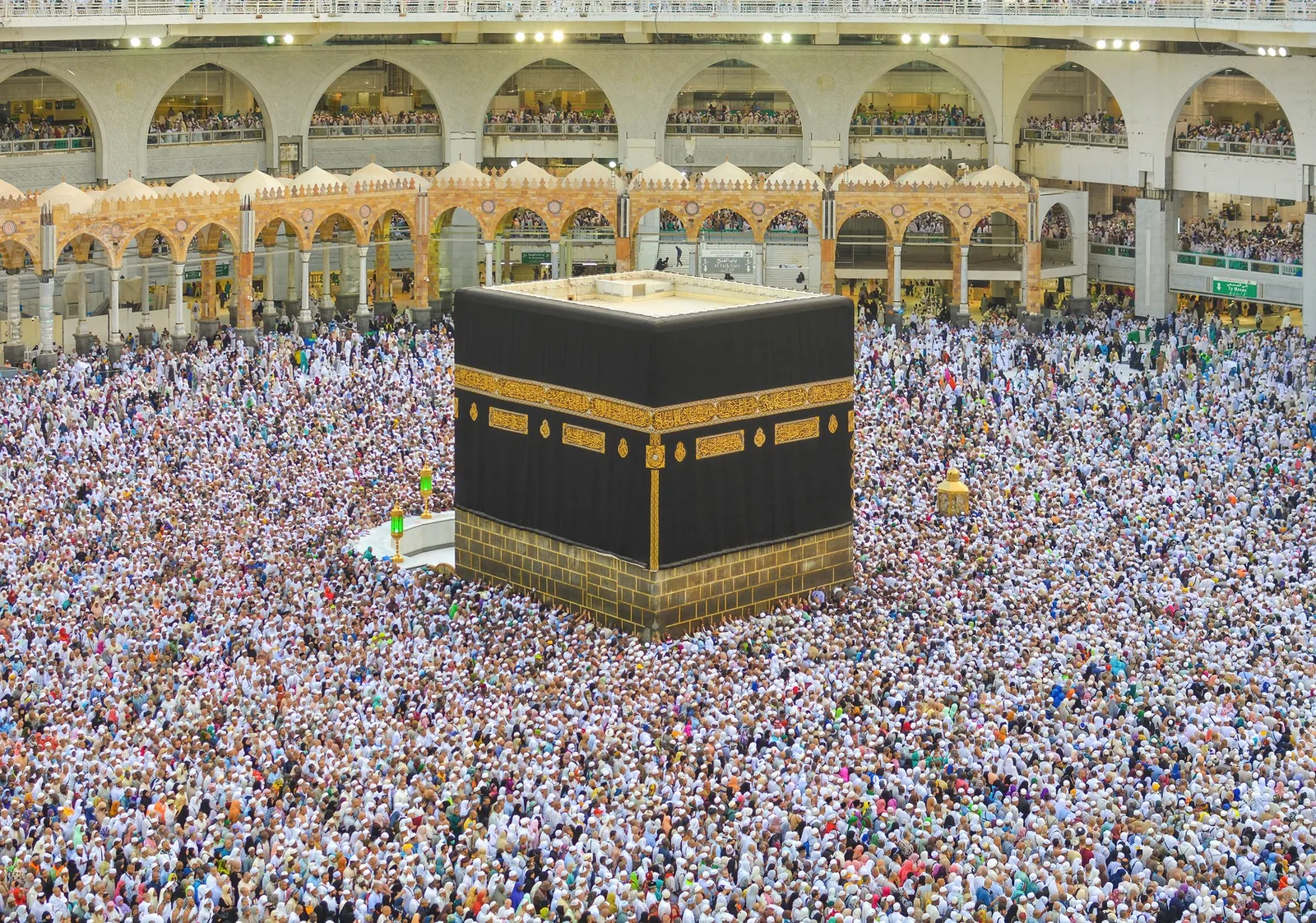
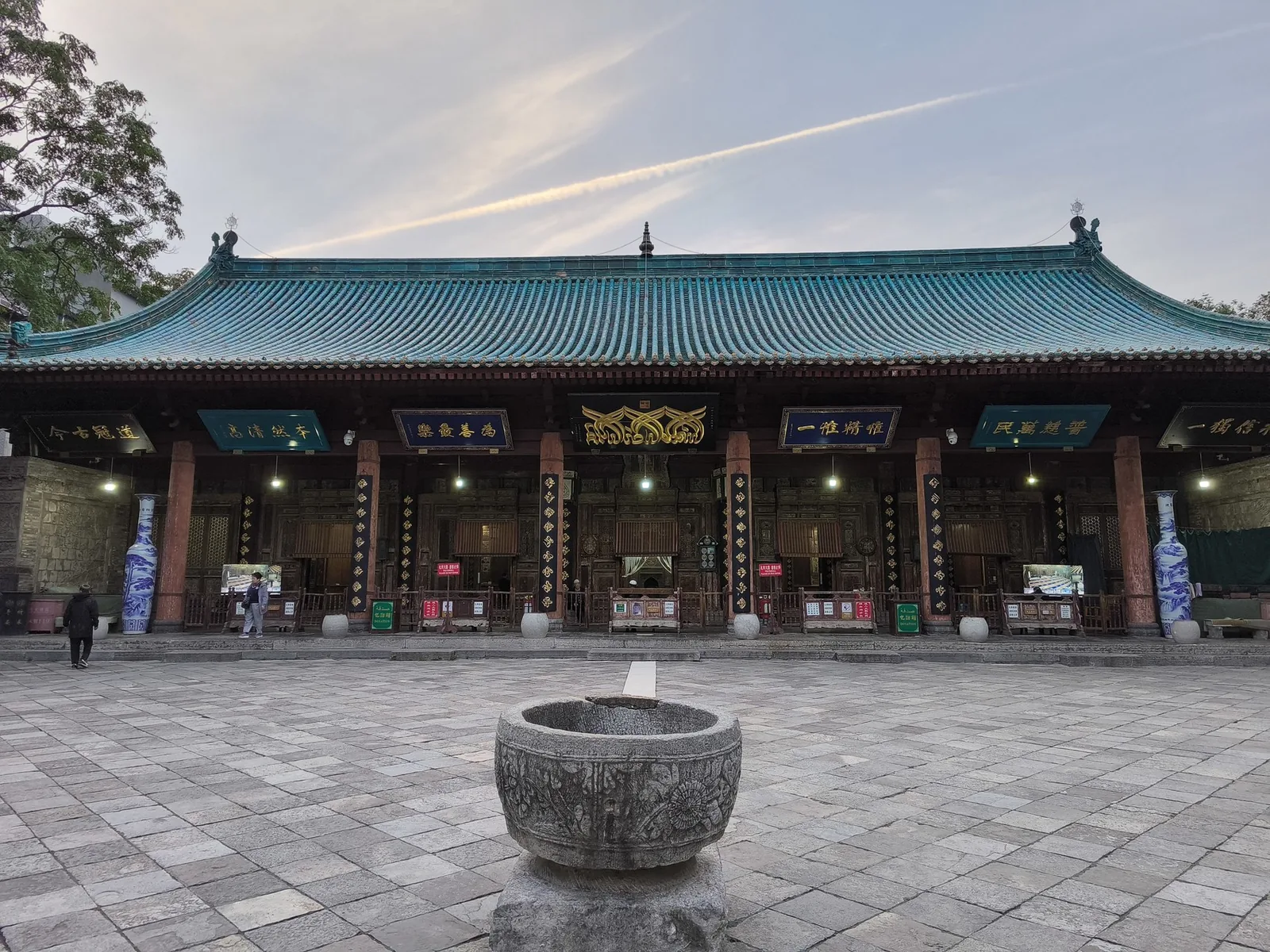
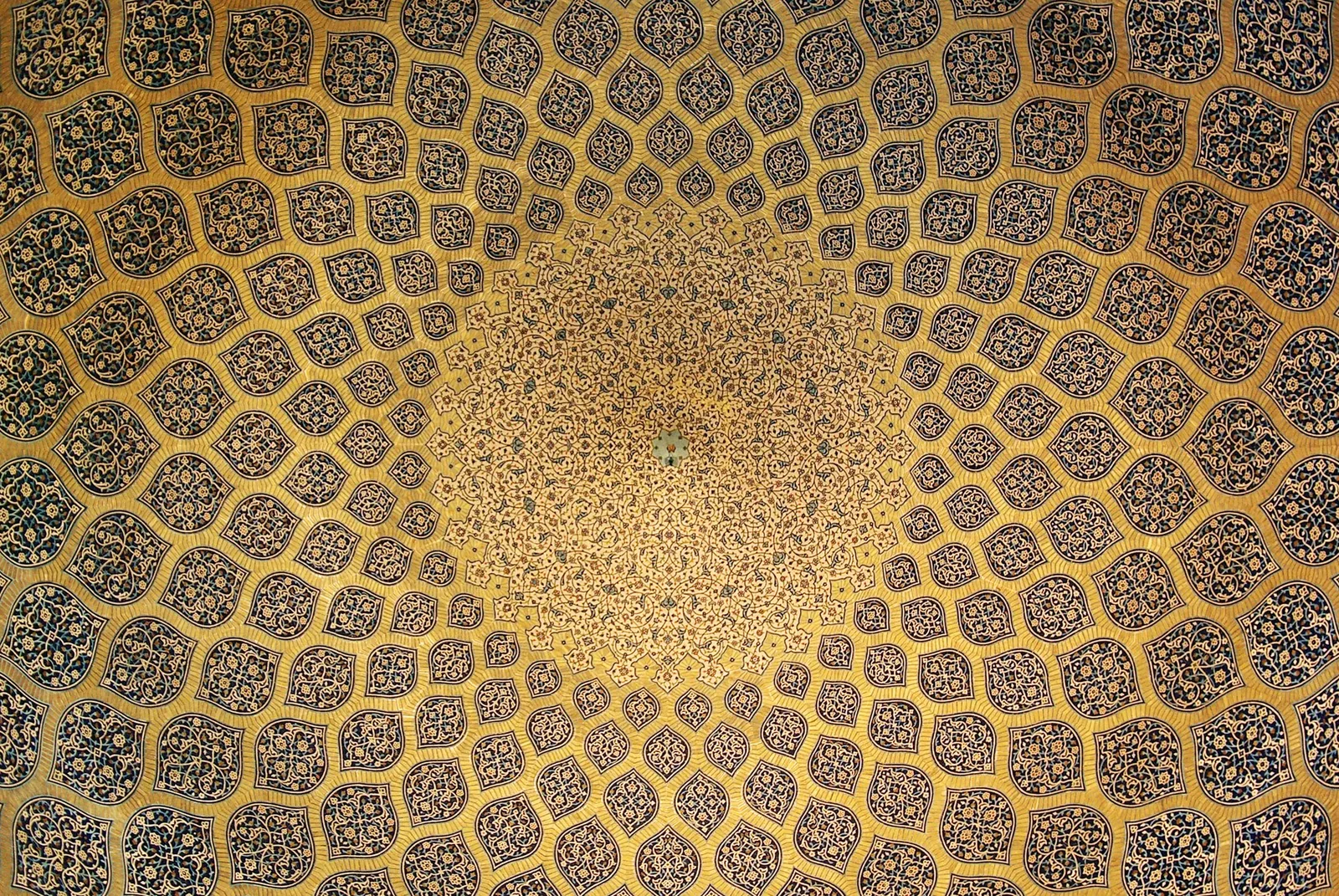
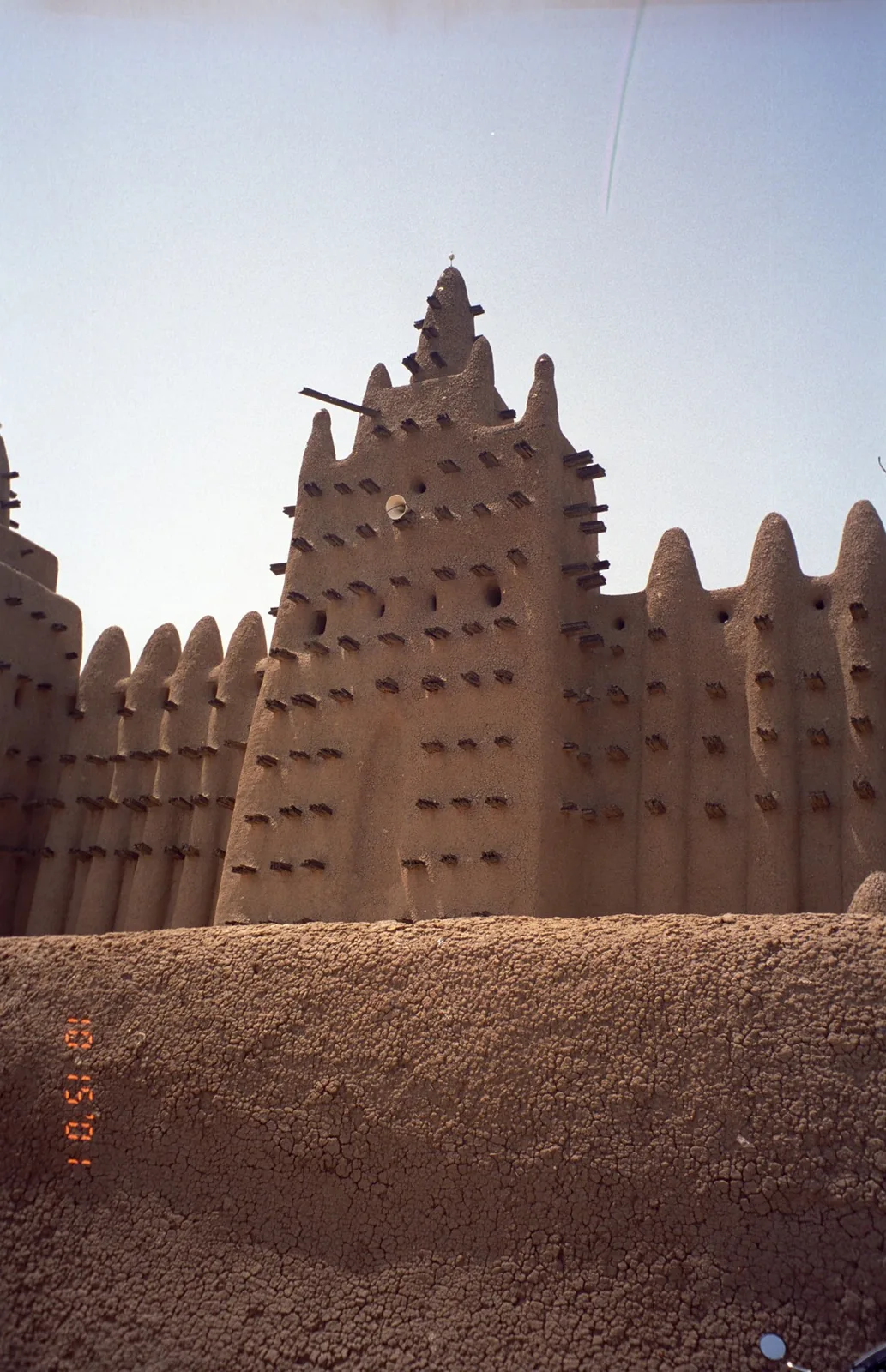
A pagoda in Xi'an, a tower of earth in Djenne, a dome in Isfahan. Three buildings sharing neither material, nor shape, nor century, nor even the idea most people have of a mosque. And yet, inside each one, worshippers turn towards exactly the same point on the surface of the Earth.
Three buildings with nothing in common
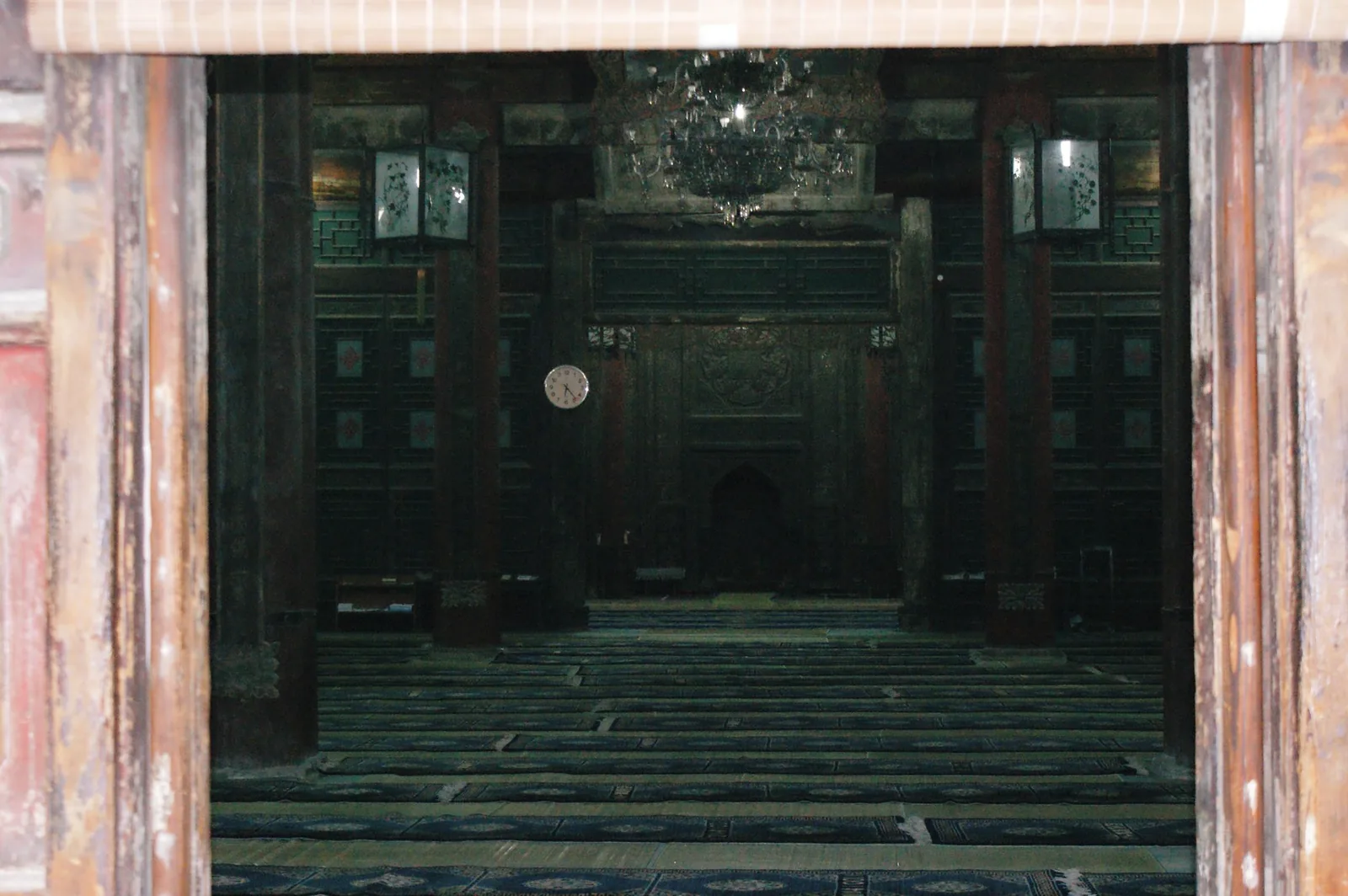
In Xi'an, the Great Mosque has neither dome nor minaret in the usual sense. It unfolds through successive courtyards, with glazed tile roofs and a tiered pavilion serving as the call tower. A visitor who did not know where they were would take it for a temple.
In Djenne, everything is raw earth, shaped by hand and re-plastered every year by the whole town. The turrets bristling with palm beams look like nothing built anywhere else, and the building slowly changes shape with each re-plastering.
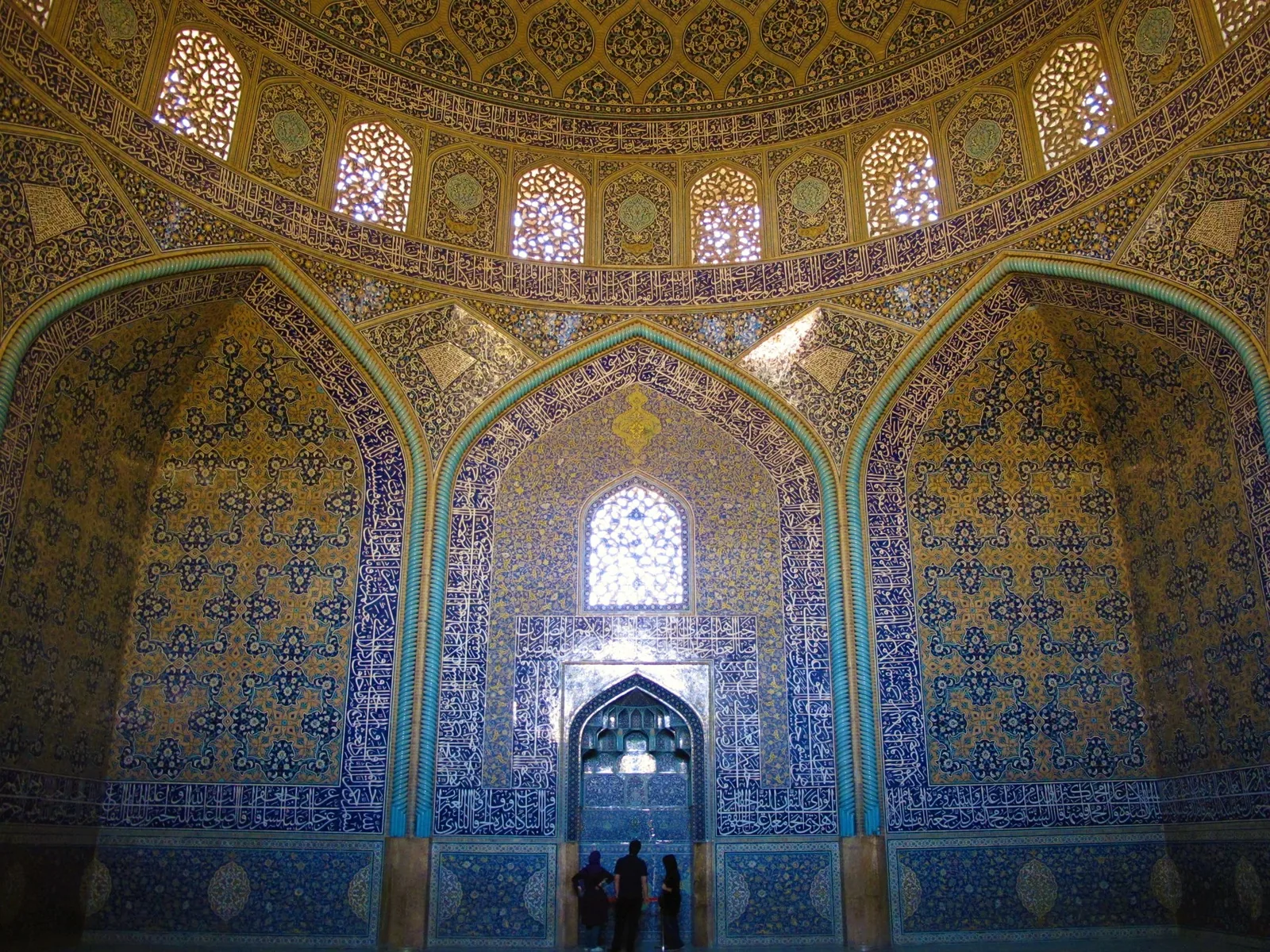
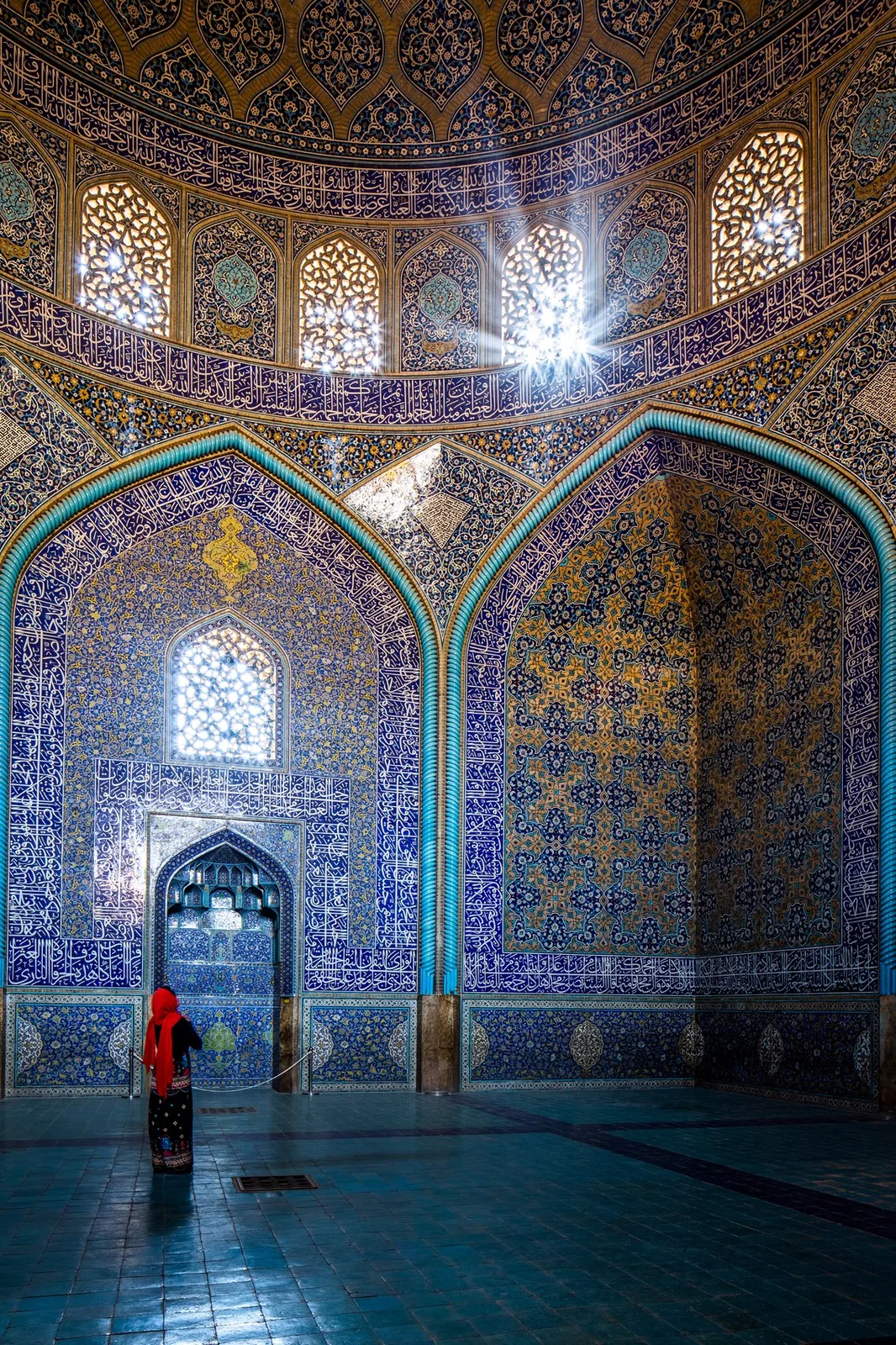
In Isfahan, the dome of Sheikh Lotfollah is covered in ceramic whose colour shifts from cream to pink with the hour, and the interior unfolds a geometric web converging on a central medallion. Nothing whatsoever links these three buildings, except an axis you cannot see.
The wall that carries the orientation
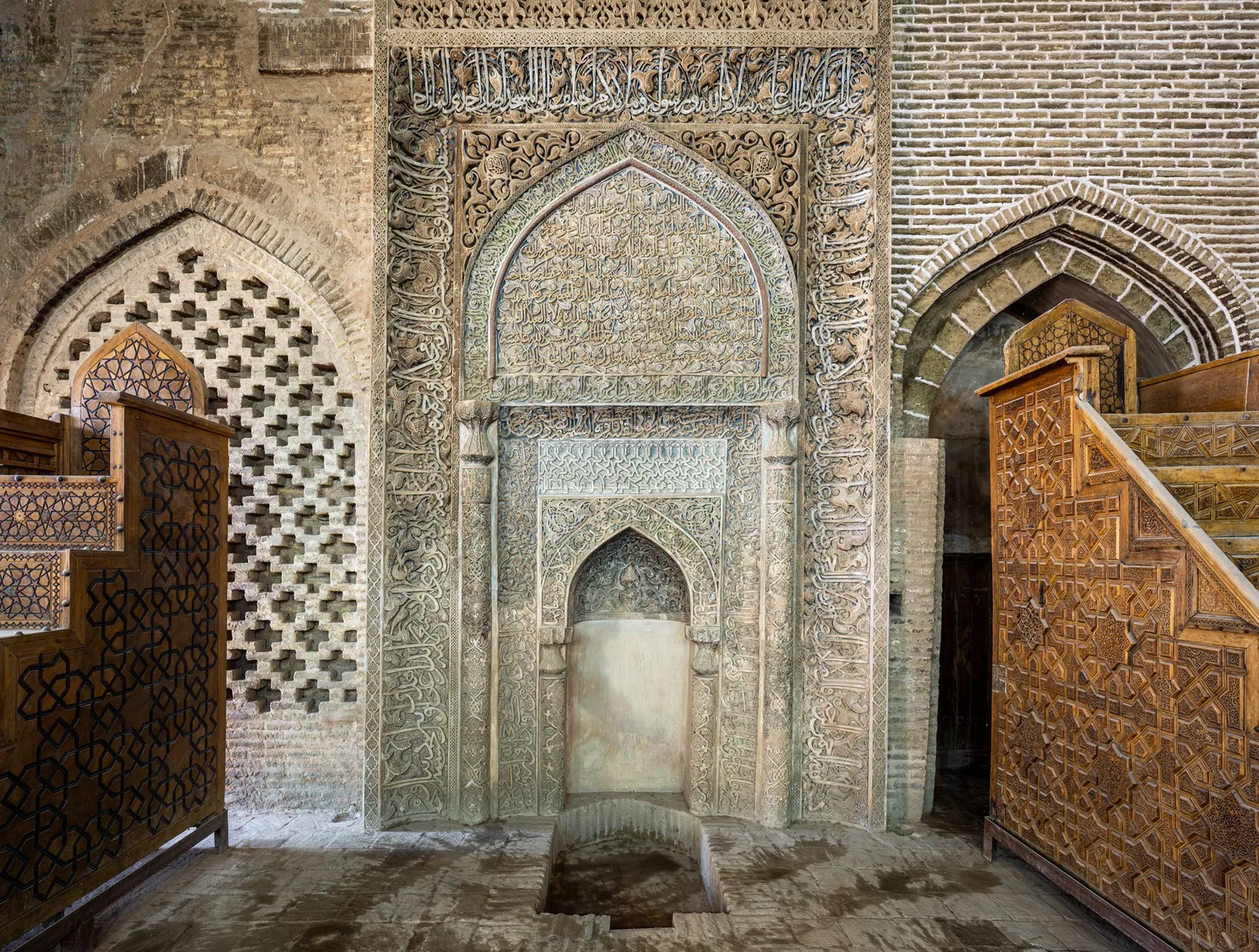
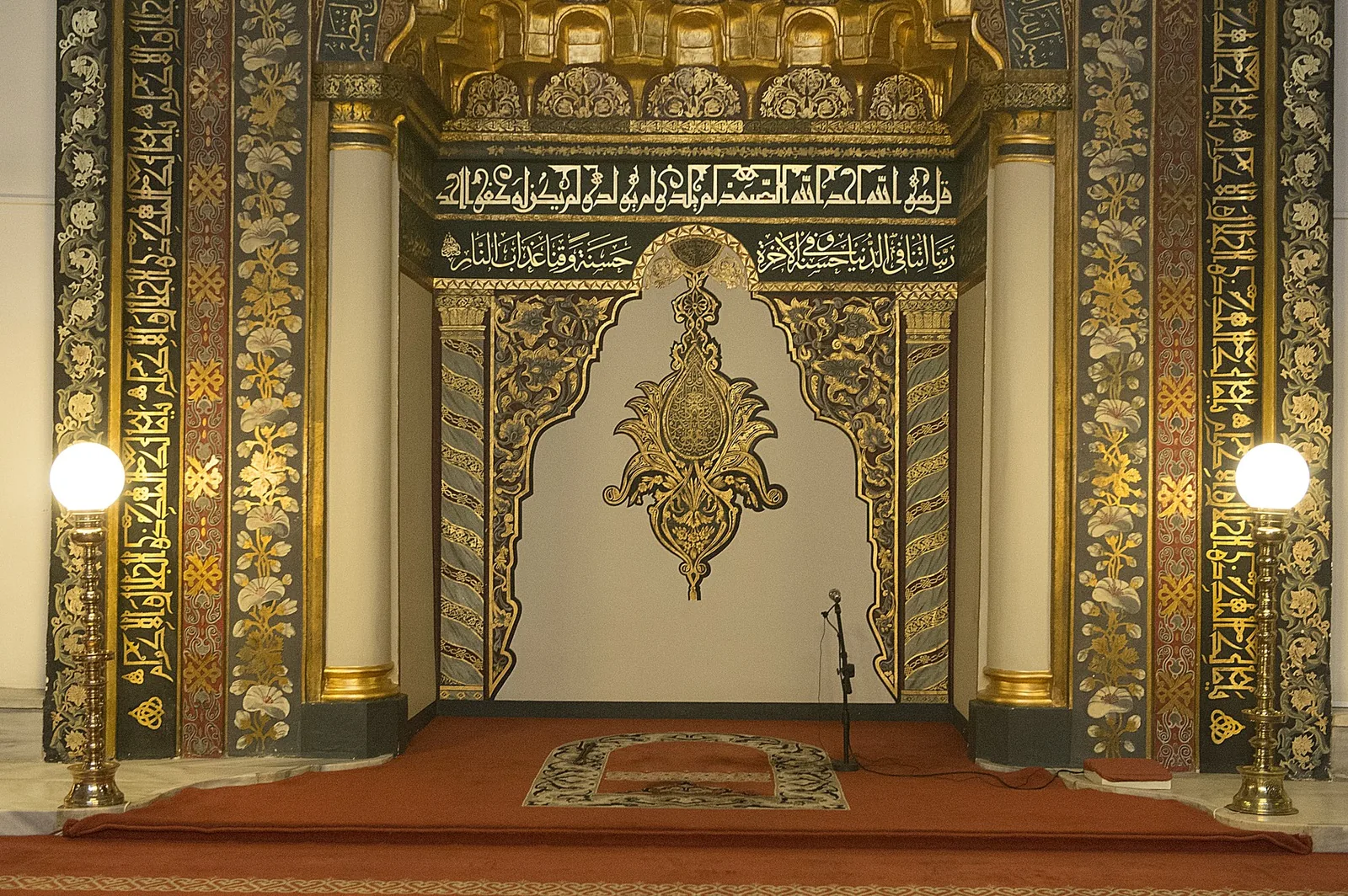
In every mosque, one wall marks the direction: the qibla wall. It is the wall that carries the orientation, not the mihrab, the niche cut into it which only signals it to the congregation. The rest of the building can be arranged freely, the constraint applies to that wall alone.
That constraint is the only shared geometric rule across fourteen centuries and three continents of building. It explains things people rarely notice: why some mosques sit askew in a perfectly gridded district, why two neighbouring buildings raised a century apart do not quite face the same way, or why a church converted into a mosque keeps a slight offset between its nave and its mihrab.
Why it is not a straight line
Here is the point that surprises everyone. Take a flat world map, lay a ruler between your city and Mecca, draw. That line is almost never the right direction.
The reason lies in the shape of the Earth. On a sphere, the shortest path between two points follows a great circle, a circle whose centre coincides with the centre of the planet. Projected onto a flat map, that path appears curved, and the gap with the straight line grows with distance and with latitude. It is the same phenomenon that sends a Paris to Tokyo flight over Siberia.
Figures make it concrete. From Paris, the qibla is at 119 degrees, east-south-east, for a distance of 4,496 kilometres. From Montreal it is at 59 degrees: north-east, which looks absurd as long as you look at a flat map, and perfectly logical as soon as you look at a globe. The straight line drawn with a ruler would give a noticeably different heading.
A problem of geometry, not of devotion
Working out the qibla therefore means calculating the starting angle of a great circle between two points whose coordinates you know. Put that way, it sounds like an exercise. But you have to place yourself before the completion of spherical trigonometry, with no logarithm tables, no precise measuring instrument, and often without knowing the coordinates of your own city exactly.
This problem occupied the best mathematicians of the Islamic world for several centuries. It produced calculation methods, tables, specialised maps and dedicated instruments. It also produced mistakes that stood for a very long time, and attributions of discovery that proved wrong centuries later.
And while scholars were calculating, the great majority of mosques went on being oriented by other means: by sunrise on a given date, by a known star, by a prevailing wind, or by the street layout already in place. These methods belong to folk astronomy and they were perfectly accepted. That is what explains the variety of old orientations, the subject of the following episodes.
What the series will follow
From this single constraint you can unfold fourteen centuries of ingenuity: mosques that do not face where you would think and for good reasons, instruments that give the direction without calculation, regional methods that diverge, and two days a year when the shadow of a plain stick is enough to find the qibla anywhere in the world.
To find the direction from where you are, it is calculated on the Qibla Compass page. To follow the reasoning, episode 2 looks at a building that faces fifty degrees away from the calculated direction to Mecca, and is nonetheless entirely right: the Great Mosque of Cordoba.