
Home › Blog › Samarkand, Sarajevo, Tirana: the mosques of Central Asia and the Balkans
Discovery · 6 min read · 2026-02-16
Samarkand, Sarajevo, Tirana: the mosques of Central Asia and the Balkans
From Samarkand to Tirana via Sarajevo, these three mosques mark out a lesser-known route of Islamic architecture: that of Timurid Central Asia and the Ottoman Balkans, where Islam took root as early as the Middle Ages and has never stopped being practiced.
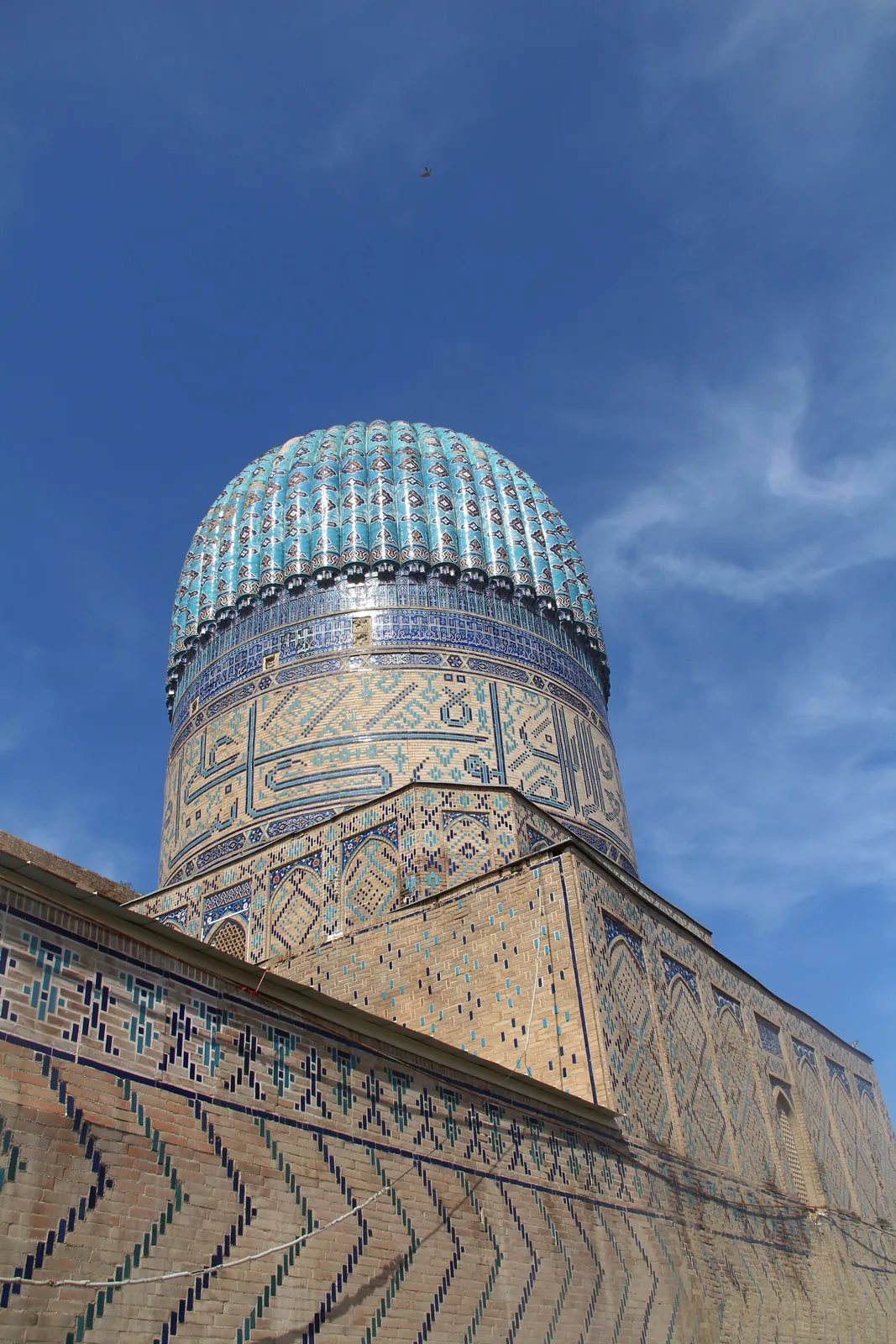
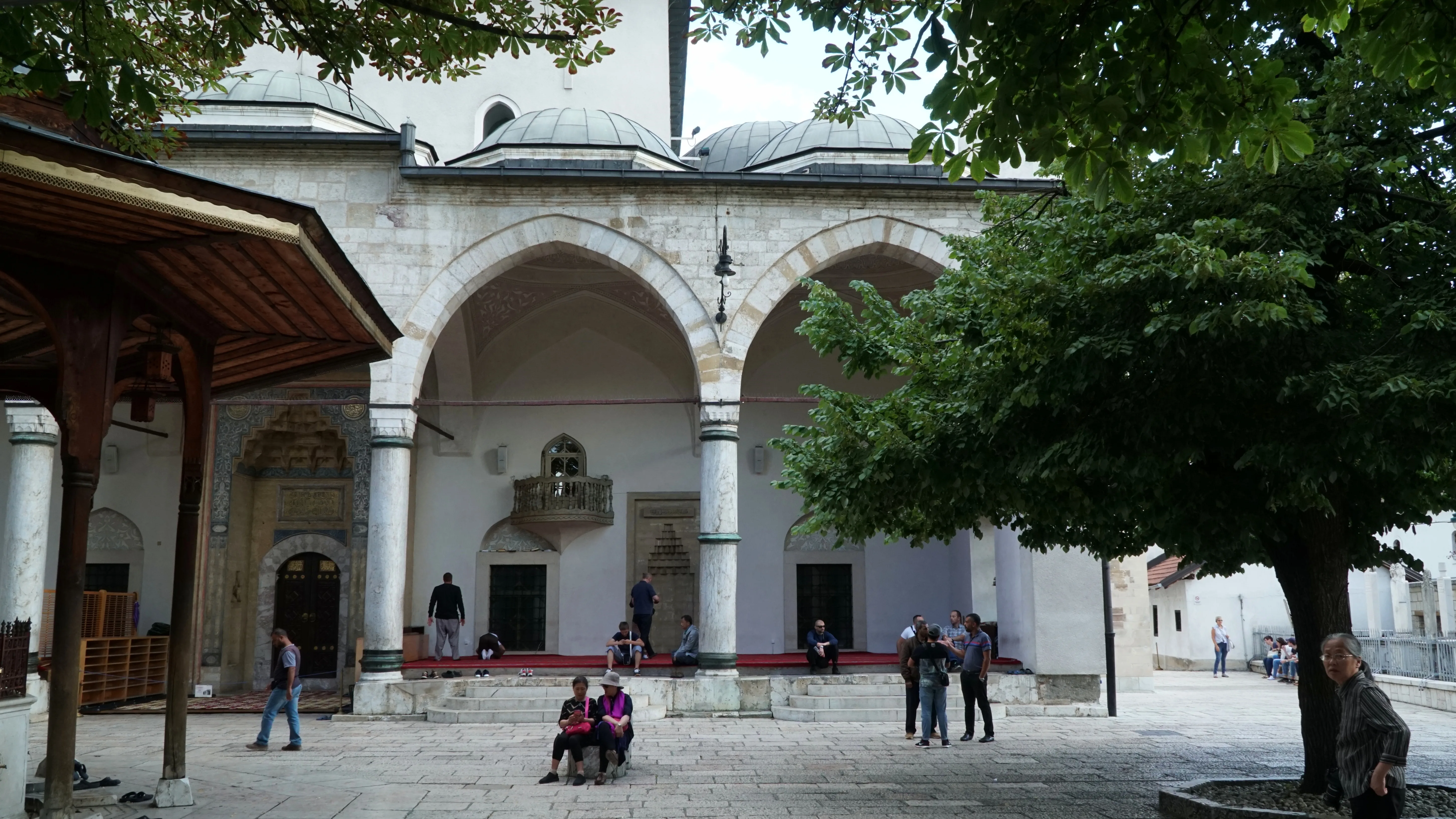
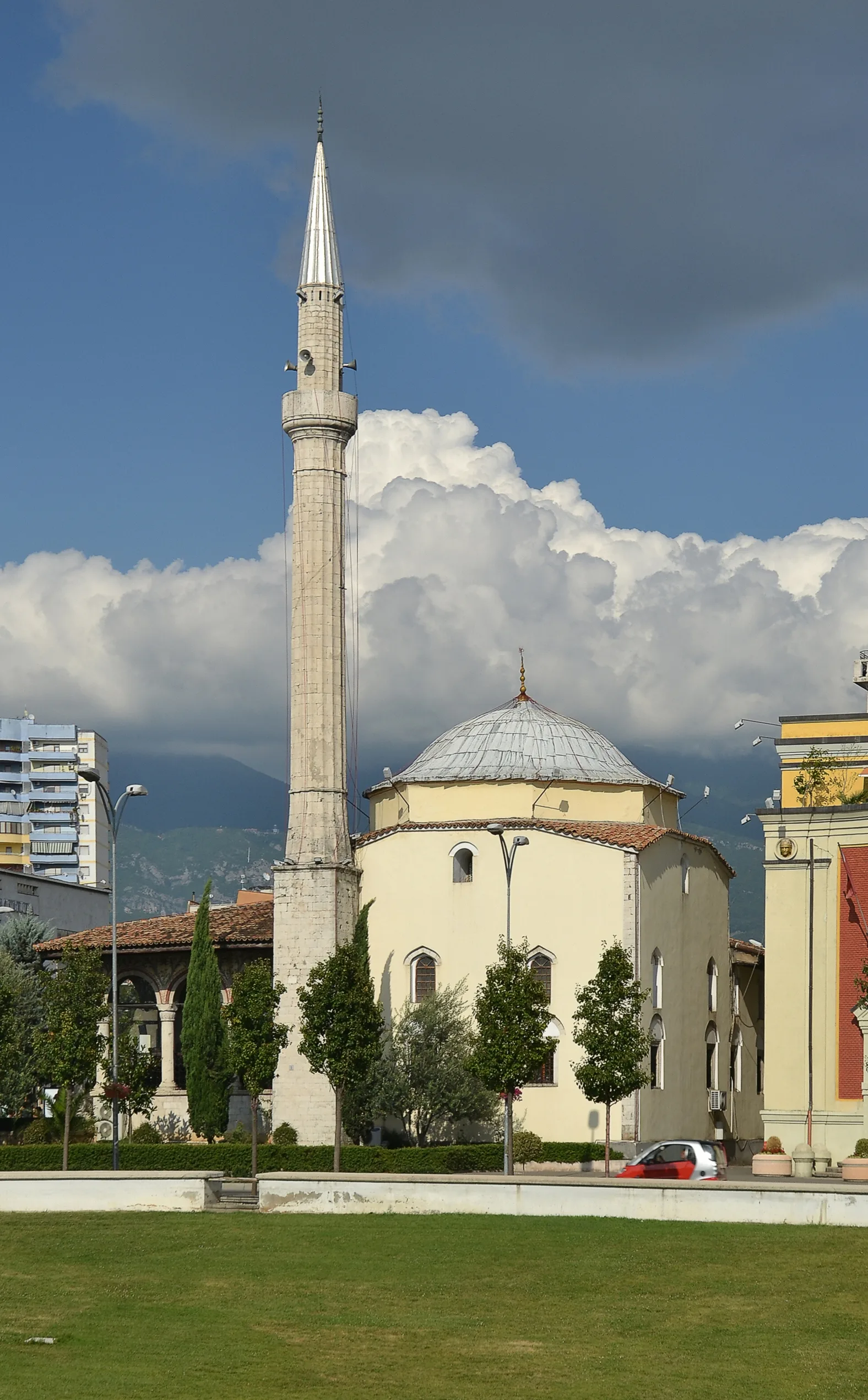
Bibi-Khanym, Tamerlane's grandeur
Built between 1398 and 1404 by order of Tamerlane (Timur), the Bibi-Khanym Mosque in Samarkand was meant to gather the entire male population of the city for Friday prayer. Timur brought in architects and craftsmen from his India campaign to build it on the scale of his empire; upon completion, it was one of the largest mosques in the Islamic world. However, the hasty construction weakened the structure, and the arch of its main portal collapsed during an earthquake in 1897.
Gazi Husrev-beg, the spiritual heart of Sarajevo
Built in 1530, funded by the waqf of the Ottoman governor Gazi Husrev-beg, the Gazi Husrev-beg Mosque is the largest historic mosque in Bosnia and Herzegovina and one of the most representative examples of classical Ottoman architecture in the Balkans. Severely damaged by shelling during the Siege of Sarajevo (1992-1996), it was restored starting in 1996, once again becoming a symbol of the resilience of the Bosnian Muslim community.
Et'hem Bey, the mosque that survived state atheism
Begun around 1791 by Molla Bey and completed in the early 19th century by his son Haxhi Et'hem Bey, the Et'hem Bey Mosque in Tirana stands out for its frescoes depicting trees, waterfalls, and bridges, a rarity in late Ottoman religious art. Closed during the communist period, when Albania officially declared itself the world's first atheist state, it survived thanks to its status as a protected historic monument. On 18 January 1991, around 10,000 people attended Friday prayer there despite the government ban still in force, a moment remembered as the de facto end of the religious ban in Albania.
Khiva, the fourth: a mosque with neither courtyard nor dome
The three buildings above share a grammar: dome, portal, courtyard. Some eight hundred kilometres west of Samarkand, in the Khorezm oasis, the Friday Mosque of Khiva has none of it. From the street it is a low volume of mud brick with an ordinary door. The whole architecture is inside.
The hall measures roughly fifty-five metres by forty-six. The ceiling is flat, made of wood, and it rests on two hundred and twelve wooden columns set in seventeen rows. There is no window at all: light falls through three wells opened in the roof, and the rest of the hall stays in half-darkness. In a city where summer runs well past forty degrees, a blind hall is first of all an answer to the climate.
The most remarkable fact cannot be seen. Twenty-five of those columns are far older than the hall that shelters them, dated from the tenth to the sixteenth century, and four of them carry a Kufic inscription. The hall itself was rebuilt at the end of the eighteenth century, and the carpenters salvaged timber from ruined buildings. The building was remade; the columns only changed roofs.
What these routes have in common
From Urgench to Tirana, these mosques belong to different empires, separated by centuries and by thousands of kilometres. They nevertheless share three traits rarely found together elsewhere.
Brick rather than stone. Timurid Central Asia and Khorezm build in fired brick and mud brick, for want of quarries nearby. That explains both the refinement of the ceramic decoration, which comes to cover a poor material, and the structural fragility of some large buildings: Bibi-Khanym cracked before it was even finished.
Timber as load-bearing structure. Where the Ottomans of the Balkans carry their domes on masonry, Khorezm carries its roofs on wooden columns. That choice has a consequence we tend to underrate: a wooden column can be taken down, moved and put back up somewhere else. It outlives its building, which a dome never does.
Continuity of use, never broken. That is the real thread of this page. Neither the Samarkand earthquake, nor the siege of Sarajevo, nor Albanian state atheism put an end to the use of these places. Each was rebuilt, restored or reopened, and one of them even saw ten thousand people come back to pray on a Friday in January 1991 while the ban was still in force.
Four cities, four ways of lasting
Set the four buildings side by side and it is not their style that brings them together, it is the way they cross time.
| Mosque | City | What nearly ended it | What held |
|---|---|---|---|
| Bibi-Khanym | Samarkand | Its own foundations, then an earthquake in 1897 | The portal, raised again in the twentieth century |
| Gazi Husrev-beg | Sarajevo | The shelling of 1992-1996 | A restoration begun in 1996 |
| Et'hem Bey | Tirana | State prohibition of religion | Its status as a protected monument |
| Friday Mosque | Khiva | Complete replacement of the fabric | The columns, reused century after century |
Three fates, one continuity
These three mosques, separated by thousands of kilometers and several centuries, each tell a different story of resilience: a structure too ambitious for its own foundations in Samarkand, a postwar reconstruction in Sarajevo, a silent resistance to religious prohibition in Tirana, and a building entirely remade around timbers older than itself, in Khiva.
Discover more
Mosques mentioned in this article
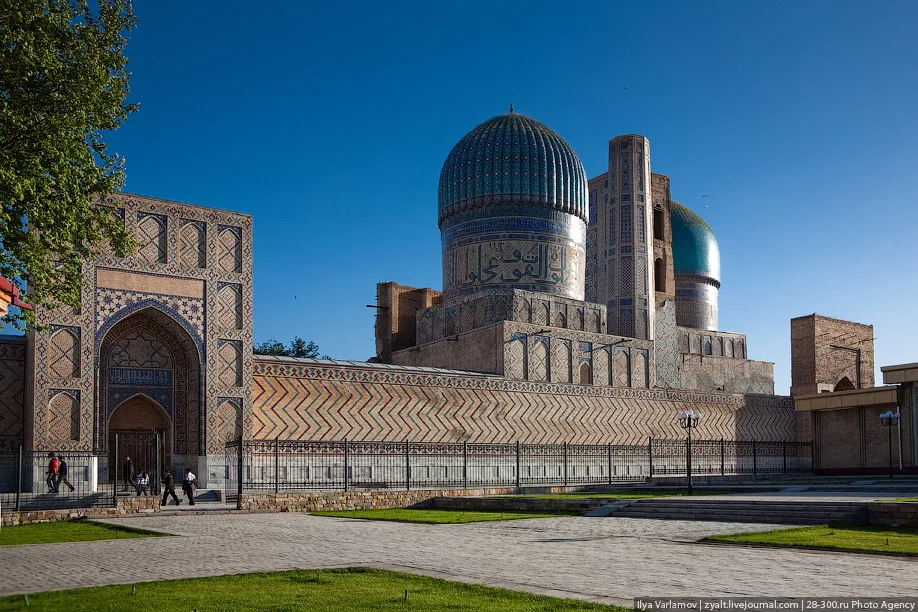
Bibi-Khanym Mosque
Commissioned by Tamerlane as one of the largest mosques in the Islamic world, at the heart of Samarkand.
Gazi Husrev-beg Mosque
The largest historic mosque in Bosnia and Herzegovina, spiritual heart of Sarajevo since 1530.
Et'hem Bey Mosque
A small mosque with unique frescoes, now a symbol of religious freedom regained in Albania.
About this page's content: this site offers editorial and cultural content written with care and respect for the religious traditions concerned; it does not constitute theological advice or an authoritative religious source. Despite our checks, errors, inaccuracies, or approximations may remain. If you spot one, please let us know via the Contact page or by email at qibla.mosk@gmail.com, and we will gladly correct it.