
Home › Blog › Al-Azhar, Ibn Tulun, Kairouan: the North African roots of Islamic architecture
History · 6 min read · 2026-03-02
Al-Azhar, Ibn Tulun, Kairouan: the North African roots of Islamic architecture
Cairo and Kairouan are among the oldest centers of Islamic architecture in North Africa. Three mosques there alone sum up several centuries of architectural invention, from Aghlabid Tunisia to Fatimid and then Abbasid Egypt.
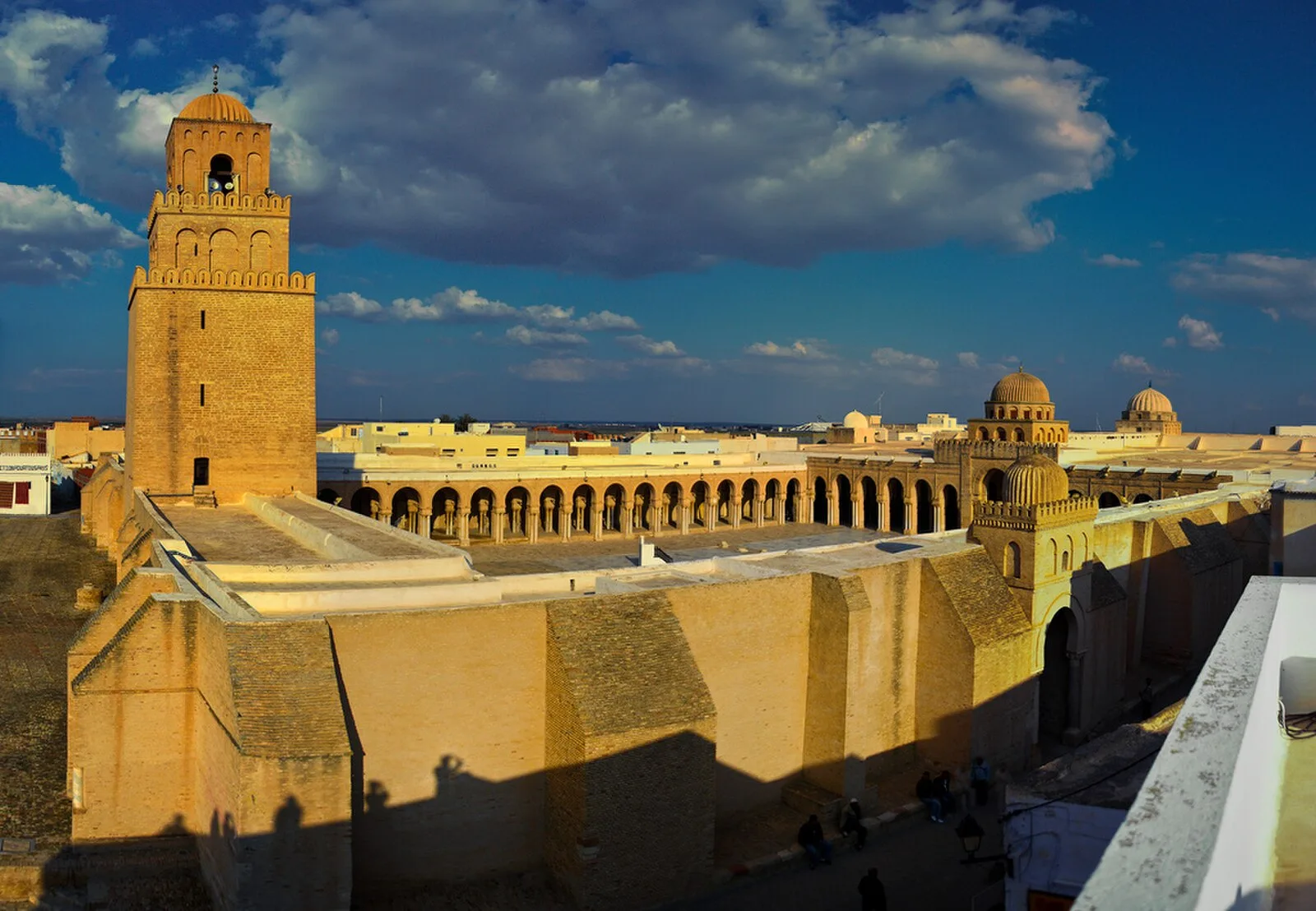
Kairouan, one of the oldest minarets in the Islamic world
Founded around 670 by the Arab general Uqba ibn Nafi, the Great Mosque of Kairouan, in Tunisia, retains a minaret begun around 730, considered the oldest still standing in the Islamic world. Its marble and porphyry columns come from Roman and Byzantine sites such as Carthage. A local saying held that seven pilgrimages to Kairouan were equal to one pilgrimage to Mecca, a popular tradition never recognized as canonical.
Ibn Tulun, an unmatched spiral ramp
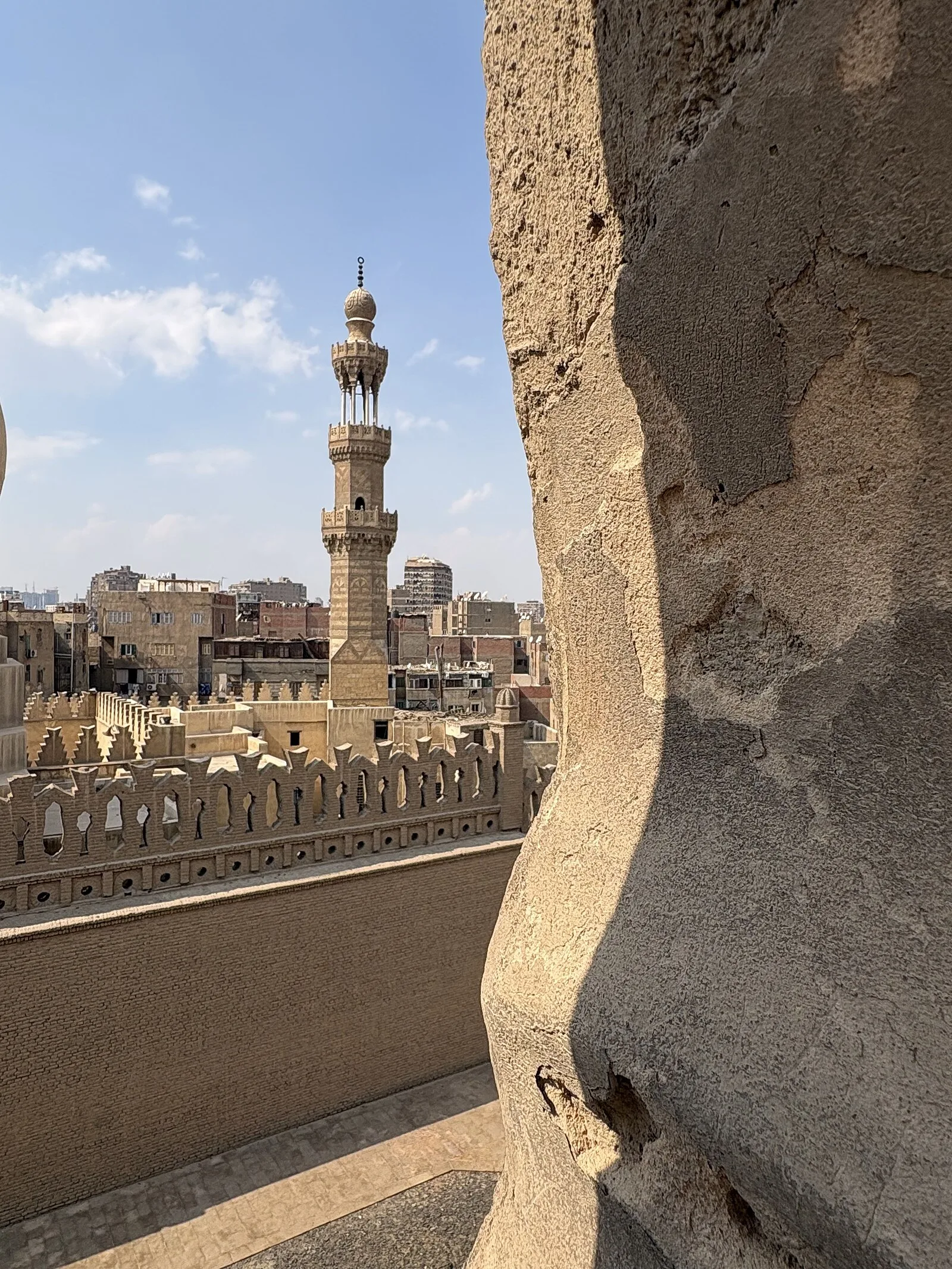
Built between 876 and 879 by order of Ahmad ibn Tulun, the nearly independent Abbasid governor of Egypt, the Ibn Tulun Mosque in Cairo stands out for the exterior spiral ramp of its minaret, inspired by Mesopotamian ziggurats. Legend has it that Ibn Tulun got the idea for this spiral while absent-mindedly winding a scroll of parchment around his finger. The mosque is said to have been built on Yashkur Hill, where, according to local tradition, Noah's Ark came to rest.
Al-Azhar, a mosque that became a university
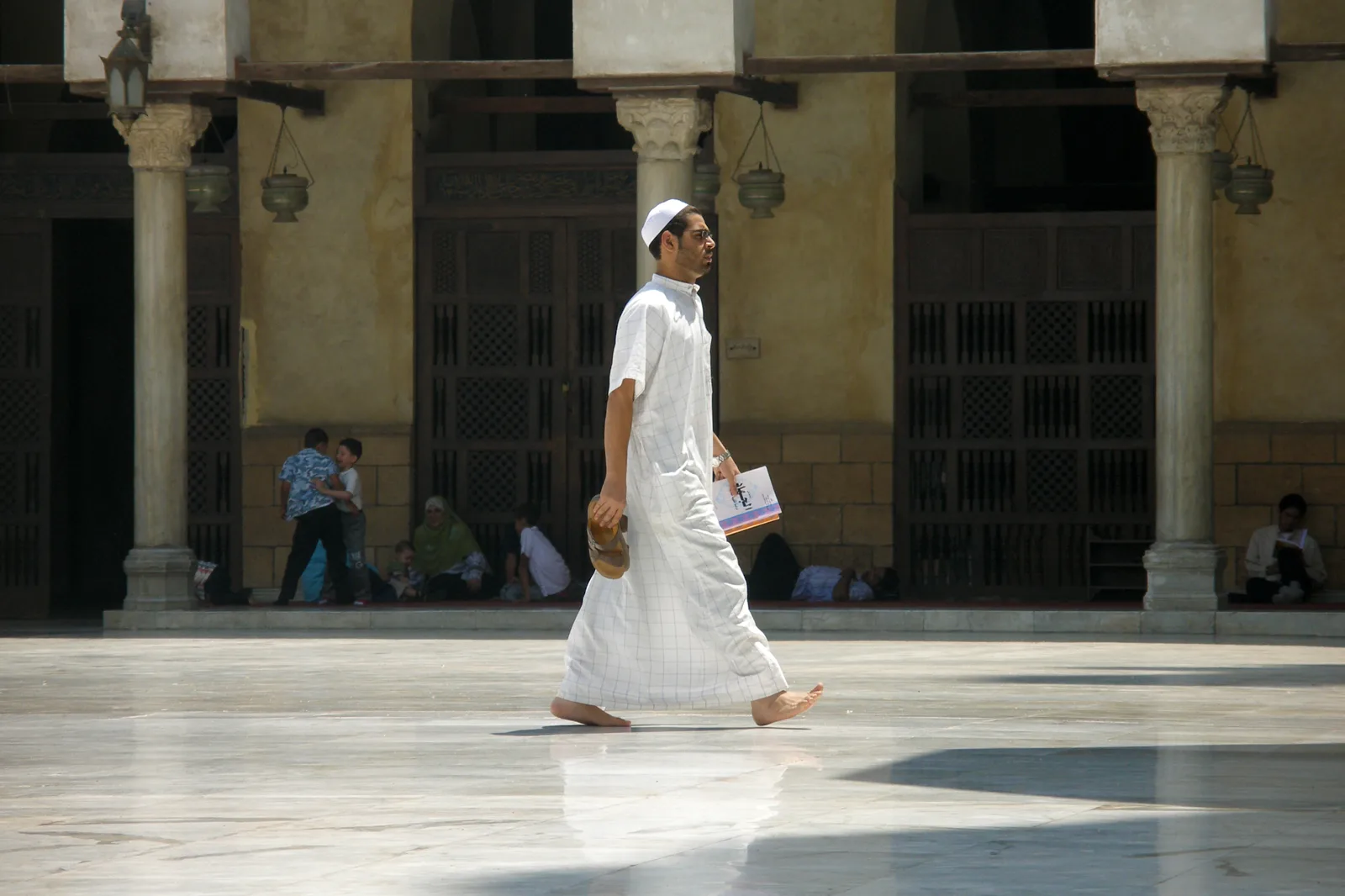
Founded between 970 and 972 by the Fatimid general Jawhar al-Siqilli, the Al-Azhar Mosque is both a place of worship and the oldest continuously operating university in the world. Its name, "the resplendent", is thought to reference Fatima al-Zahra, the daughter of the Prophet (peace and blessings of Allah be upon him), whom the Fatimids claimed descent from. Students from all over the world lodged there by "riwaq", galleries assigned by country of origin; its five minarets, built in different eras, form a veritable textbook of Egyptian architectural history.
Three layers of one history
From Kairouan to Al-Azhar, these three mosques mark out three centuries of Islam's expansion across North Africa, each innovating in its own way: the hypostyle form and the oldest minaret at Kairouan, the bold geometry of the spiral at Ibn Tulun, and the intellectual and academic vocation at Al-Azhar.
Discover more
Mosques mentioned in this article
Al-Azhar Mosque
A Fatimid mosque and thousand-year-old university, an intellectual beacon of the Sunni world since the year 972.
Ibn Tulun Mosque
Cairo's oldest surviving mosque, famed for its exterior spiral-ramp minaret, unique in Egypt.
Great Mosque of Kairouan
The oldest great sanctuary of the Muslim West, a fortress of faith with 400 ancient columns.
About this page's content: this site offers editorial and cultural content written with care and respect for the religious traditions concerned; it does not constitute theological advice or an authoritative religious source. Despite our checks, errors, inaccuracies, or approximations may remain. If you spot one, please let us know via the Contact page or by email at qibla.mosk@gmail.com, and we will gladly correct it.