
Home › Blog › Arabic writing had been erased from these negatives
Mecca · 8 min read · 2026-08-22
Arabic writing had been erased from these negatives
Everyone has seen old photographs of Mecca. Almost nobody asks who took them. The answer holds two corrections, one grey area, and a material fact that the library which digitised the prints states in plain words.
The first was not European
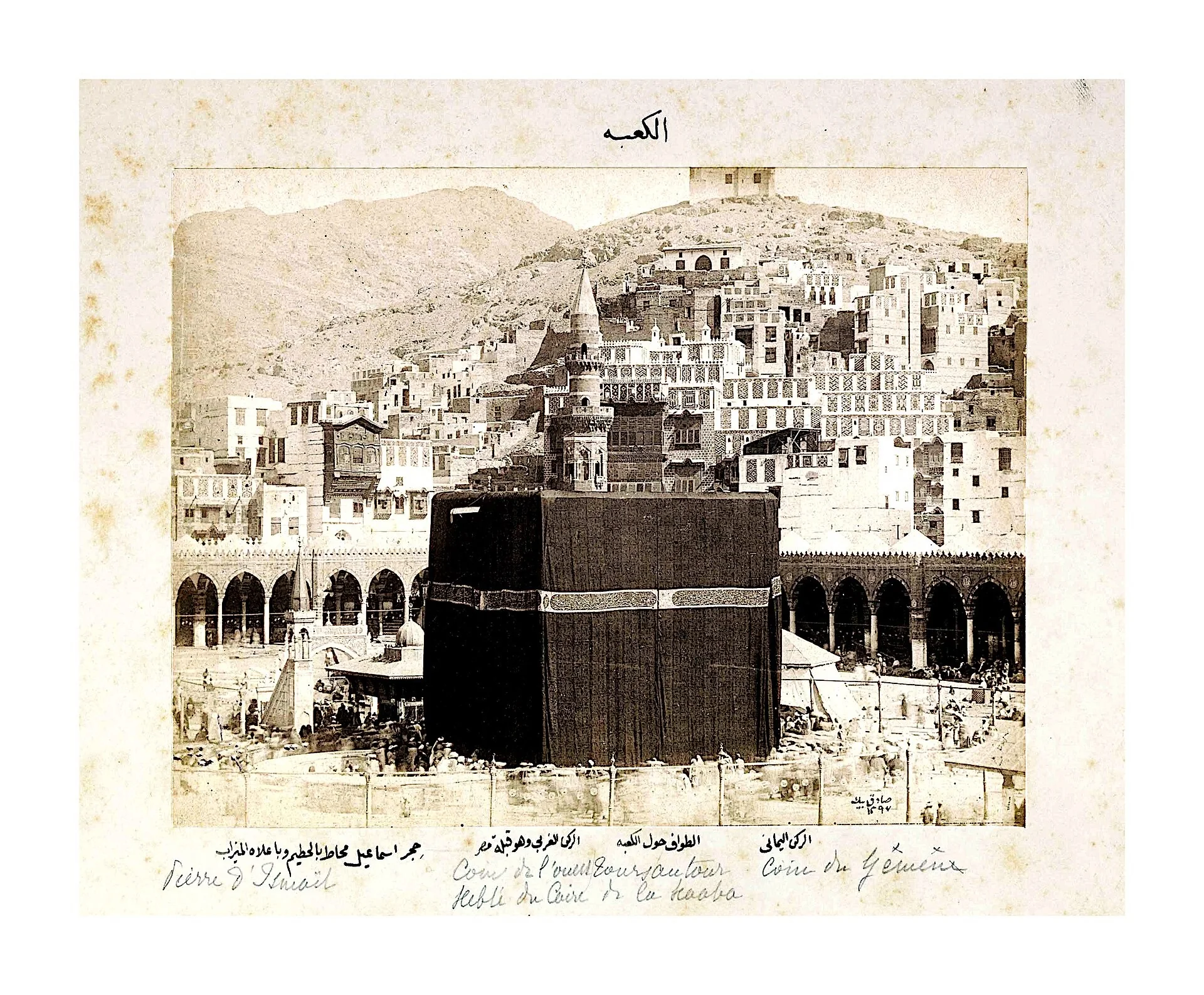
Muhammad Sadiq Bey was an engineer and surveyor in the Egyptian army, and treasurer of the Egyptian pilgrimage caravan. He took his first photographs in 1861, on glass plates, at Medina. They are the earliest known photographic images of the region.
His most important views, of the sanctuaries of Mecca and Medina and of the sites at Arafat and Mina, date from 1880 and 1881. In 1881 his work received a gold medal at the Venice geographical exhibition. He published his images in two books, in 1881 and 1896.
He therefore precedes by thirty-three years the first Frenchman to enter the city, and by nearly twenty years the volume discussed below. That is the first correction, and it would be enough on its own: the photography of Mecca does not begin with a European.
A volume published in 1889
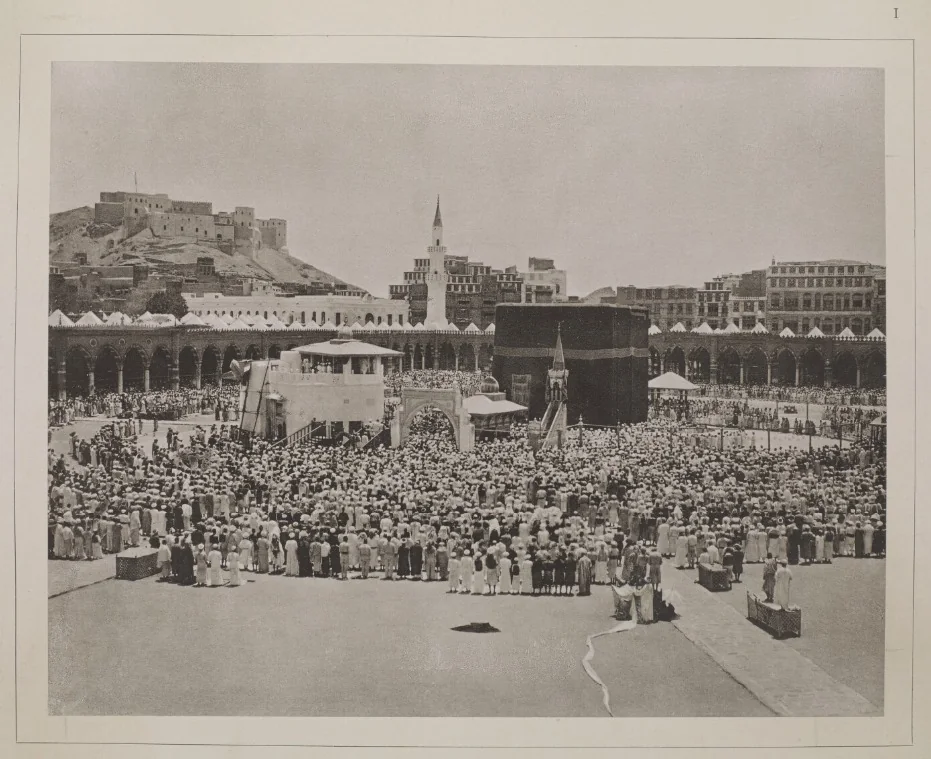
In 1889 a book appeared in Leiden titled Bilder aus Mekka, twenty collotype plates, published under the name of the Dutch orientalist Christiaan Snouck Hurgronje. The original is held by the British Library and is now digitised and consultable online at the Qatar Digital Library.
Snouck Hurgronje had converted to Islam and taken an Arabic name, Abd al-Ghaffar, before entering Mecca, where he stayed about six months in 1885. He lodged in the house of a physician of the city, al-Sayyid Abd al-Ghaffar, and it was there that he taught him photography.
The coincidence of the two names is real and holds no mystery: Snouck Hurgronje took his in Jeddah, before entering Mecca and therefore before meeting the physician, and Abd al-Ghaffar is in any case a very common name on conversion.
What the library that digitised the prints says
This is where the file becomes interesting, and we quote the source rather than conclude in its place.
The Qatar Digital Library notice states that the photographs were likely taken by al-Sayyid Abd al-Ghaffar, the Meccan physician. For this it refers to the work of Claude Sui, published in 2008 by the Reiss-Engelhorn Museum in Mannheim, in a volume on travel to the Holy Land and photography in the nineteenth century.
The same notice adds a material fact, and words it thus: Arabic script, written onto many of the negatives, has been erased subtly, but is visible upon close inspection in the prints, with the exception of four plates.
What we checked ourselves
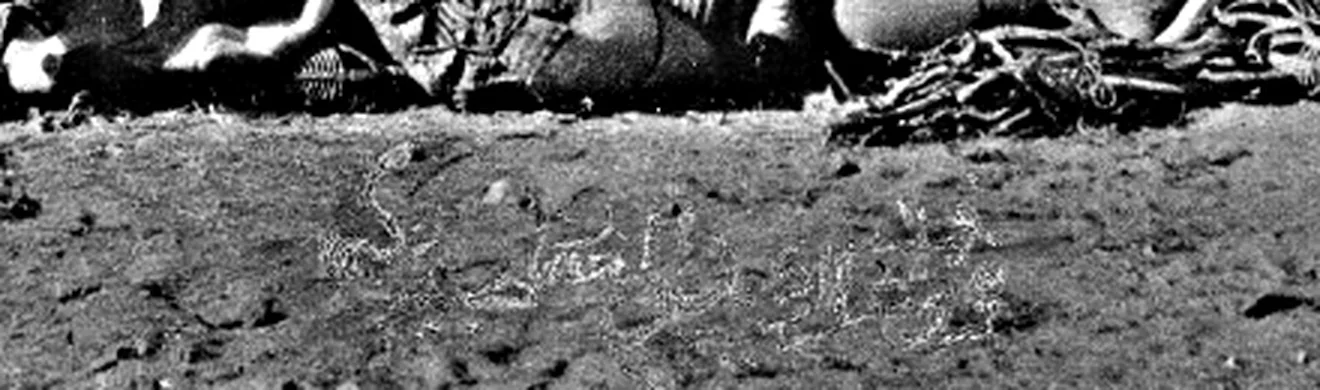
We examined eight digitised plates at high magnification. On one of them, in a band of sand in the foreground, one can make out a series of pale strokes, continuous, of even thickness and aligned on a baseline, with links between the forms. The grain of the terrain around it is granular and without direction: the difference is plain once the local background is removed.
So we say it precisely: something is written there, and it is not legible. No word, no name can be deciphered at this resolution. The video shows those traces while labelling them as an enlarged detail with enhanced contrast, and draws no reading from them.
A word on method
We have not read Claude Sui's study, which underpins the attribution: we know it exists and what it refers to, not what reasoning it sets out. That is why this article writes "according to the Qatar Digital Library" rather than asserting directly. The distinction may look formal. It is not: it separates what we verified from what we report.
One more precaution, on the images. The eight plates we examined were downloaded from the Qatar Digital Library's public viewer, not from a print in hand. What can be seen at that resolution is what we describe, and no more: a trace, not a text. A higher-resolution examination, or an inspection of the original held by the British Library, could say more than we can.
What we do not say
We do not say who erased that writing, or why. The sources establish that the erasure happened, not who decided it. It could have been the author of the volume, his publisher, his printer, or a later hand.
We draw no conclusion from the coincidence of names, which the chronology explains.
And we pass no judgement on the sincerity of a conversion. The profession of faith is not spoken under constraint, and no one is in a position to assess the faith of a dead man.
The part history eventually gave back
One last element deserves to be known, because it shifts the subject.
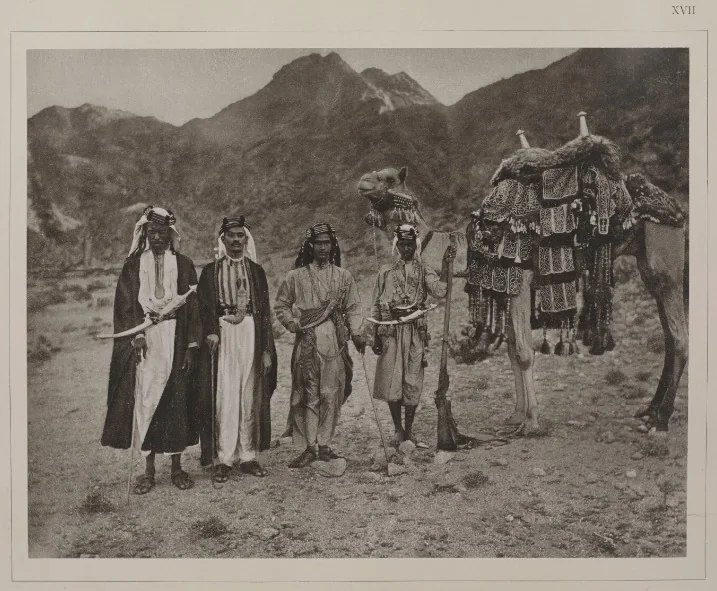
After Snouck Hurgronje left, between 1886 and 1889, the Meccan physician went on photographing. The Qatar Digital Library states that he then produced more than two hundred and fifty photographs of the city and its residents, which he sent to the Netherlands. What remains of his work is held at Leiden University Library, in the Snouck Hurgronje archive.
He is therefore not an assistant whose signature was rubbed out. He is a photographer with a body of work of his own, recognised today as the first photographer native to Mecca. Sadiq Bey was Egyptian: the two titles do not contradict each other.
And this must be added, because it suits no simple narrative: it was European and Qatari scholars and institutions that gave Abd al-Ghaffar his name back. Claude Sui in Mannheim, the Qatar Digital Library, the Leiden library that holds his prints. The same scholarship blurred the attribution and repaired it.
And a Frenchman, five years later
The first Frenchman to photograph Mecca was Jules Gervais-Courtellemont, born in 1863 at Avon, near Fontainebleau, and taken as a child to Algeria where he would spend twenty years. He converted to Islam in 1894 and made the pilgrimage in the autumn of that same year. His account appeared with Hachette in 1896 under the title Mon voyage à La Mecque, and his photographs in L'Illustration in 1897.
Thirty-three years after Sadiq Bey. That is the second correction: here again, the word "first" means nothing until you say first at what.
Further reading: our article on Sinan, architect of the Empire.
Newsletter
One mosque, one story, every month
Get our stories of architecture, history, and travel. Zero spam, unsubscribe in one click.