
Home › Blog › Mansa Musa: History's Richest Man Left a Mosque in Timbuktu
History · 7 min read · 2026-08-10
Mansa Musa: History's Richest Man Left a Mosque in Timbuktu
Ruler of the Mali Empire in the fourteenth century, Mansa Musa is today regarded as the richest person in all of history, his fortune reportedly even causing the price of gold to collapse in Egypt during his stay. From his pilgrimage to Mecca, he also brought back a lasting architectural project: the Djinguereber Mosque in Timbuktu, still standing seven centuries later.
An empire built on gold and salt
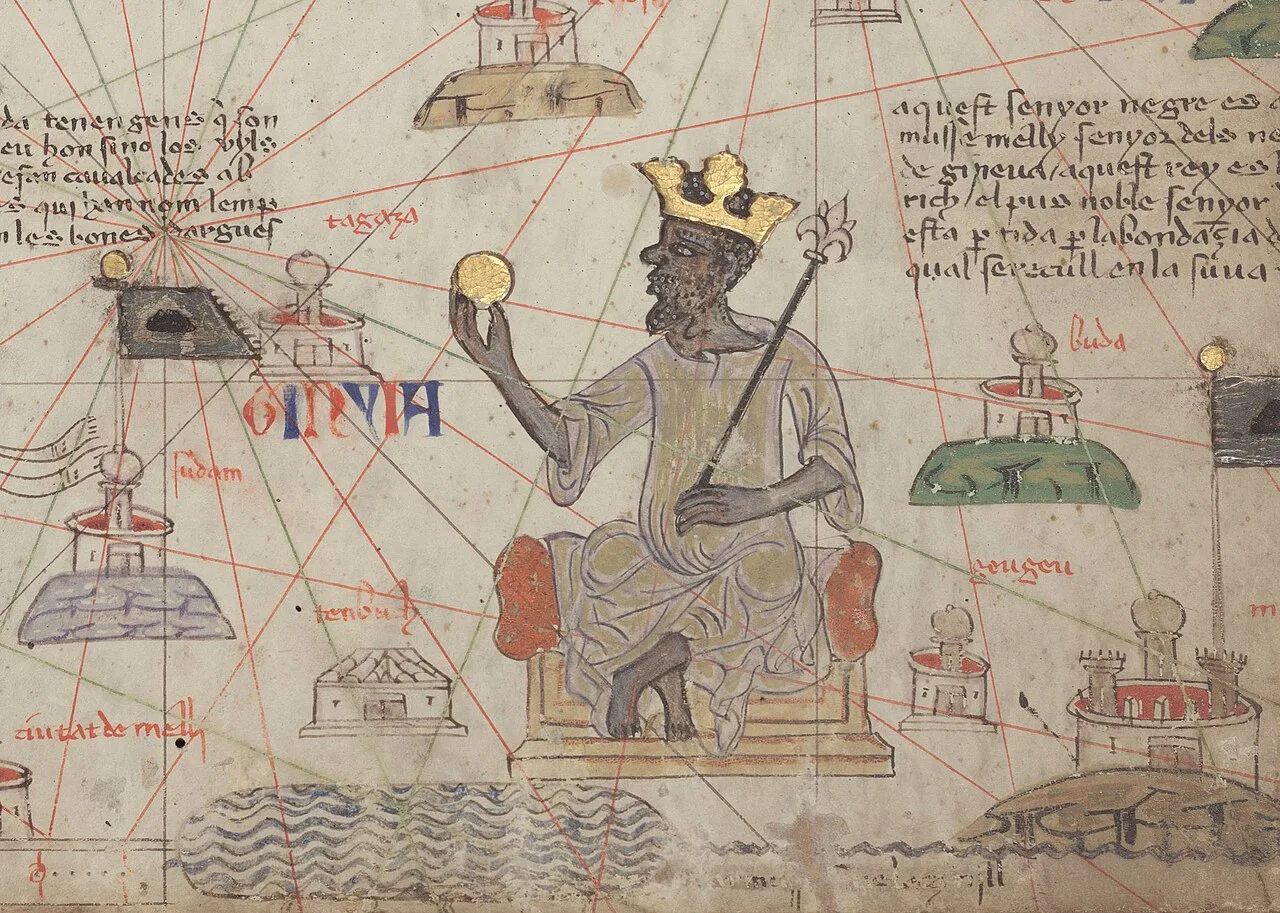
Mansa Musa ruled over the Mali Empire from 1312. This vast West African territory controlled a large share of trans-Saharan trade at the time, along with some of the richest gold- and salt-producing regions in the known world. This grip on two of the most sought-after resources of the era earned Mansa Musa his reputation, still held today, as the wealthiest individual in all of history, his fortune considered impossible to convert into current value, so far did it exceed ordinary scales of wealth. His fortune, entirely in physical gold, surpassed that of Elon Musk or Jeff Bezos today, whose wealth rests mostly on the stock market valuation of their companies.
Trans-Saharan trade, the engine of an empire
The Mali Empire was not born with Mansa Musa. Its origins lie in the victory of Sundiata Keita, founder of the dynasty, over the rival kingdom of Sosso at the Battle of Kirina, around 1235. That victory gave rise to the empire and to the Keita line, of which Mansa Musa, who came to power nearly a century later, remains the most famous ruler. The trans-Saharan trade that built this fortune rested on a simple imbalance between two resources: salt, mined at Saharan sites such as Taghaza, and gold, produced in the gold-bearing regions of the empire's south. Salt, almost worthless at the heart of the desert, sometimes traded in the Sahel for its own weight in gold. This trade passed through relay oases such as Sijilmasa, the gateway to Morocco, at the end of caravans that could number several thousand camels to cross roughly two thousand kilometres of desert.
A pilgrimage that crashed the price of gold
In 1324, Mansa Musa set out on the pilgrimage to Mecca at the head of a caravan described by chroniclers of the time as enormous: several tens of thousands of people, and dozens of camels each carrying more than a hundred kilos of gold. Along the way, he stopped in Cairo, where his extravagant generosity, gifts and largesse handed out without counting, flooded the local market with gold. The result: the metal's value collapsed in the region, and it took the Egyptian economy a decade to fully recover. This episode remains one of the rare instances in history where the sheer generosity of a single man durably destabilized the economy of an entire region.
The Djinguereber Mosque, brought back from Mecca
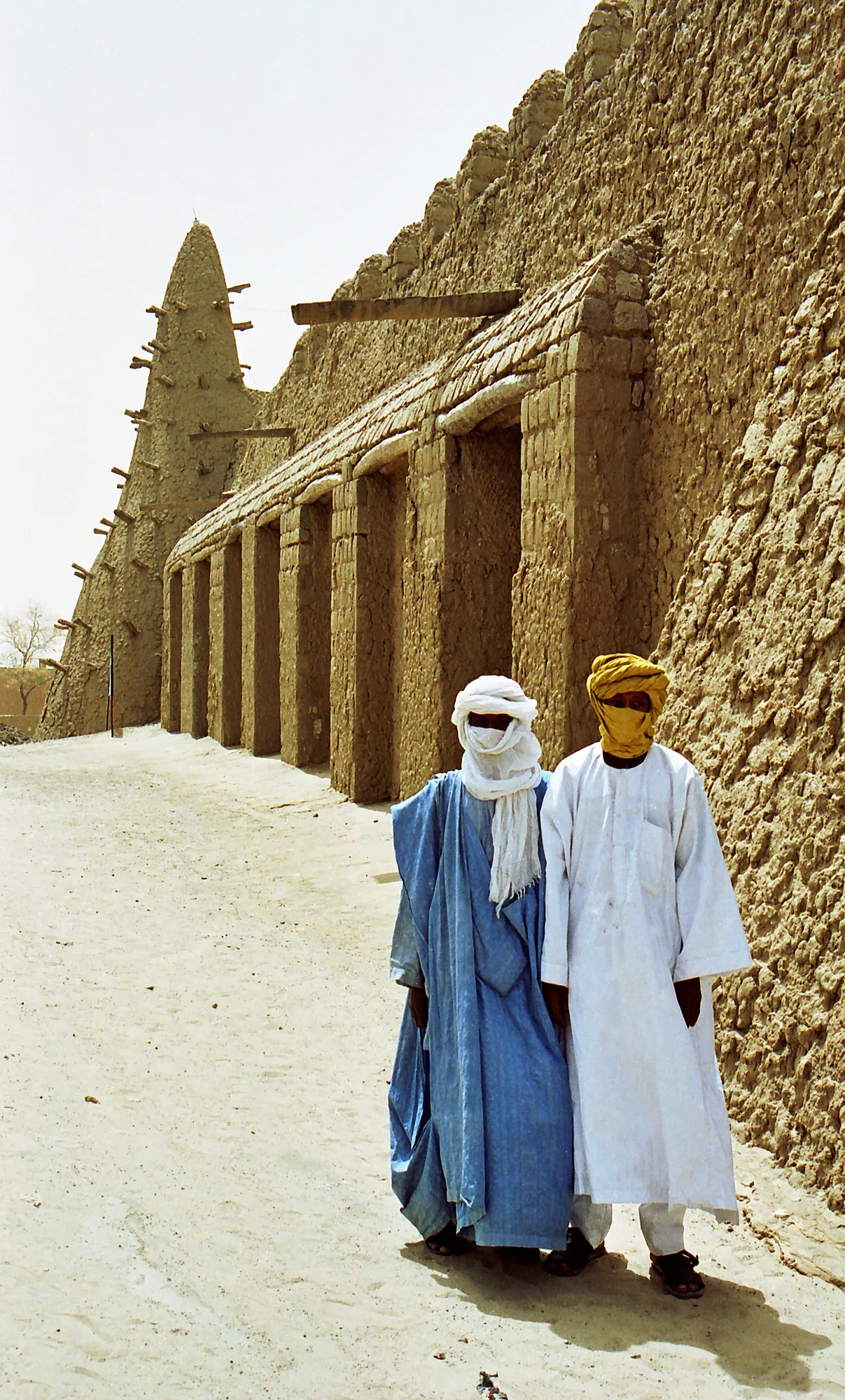
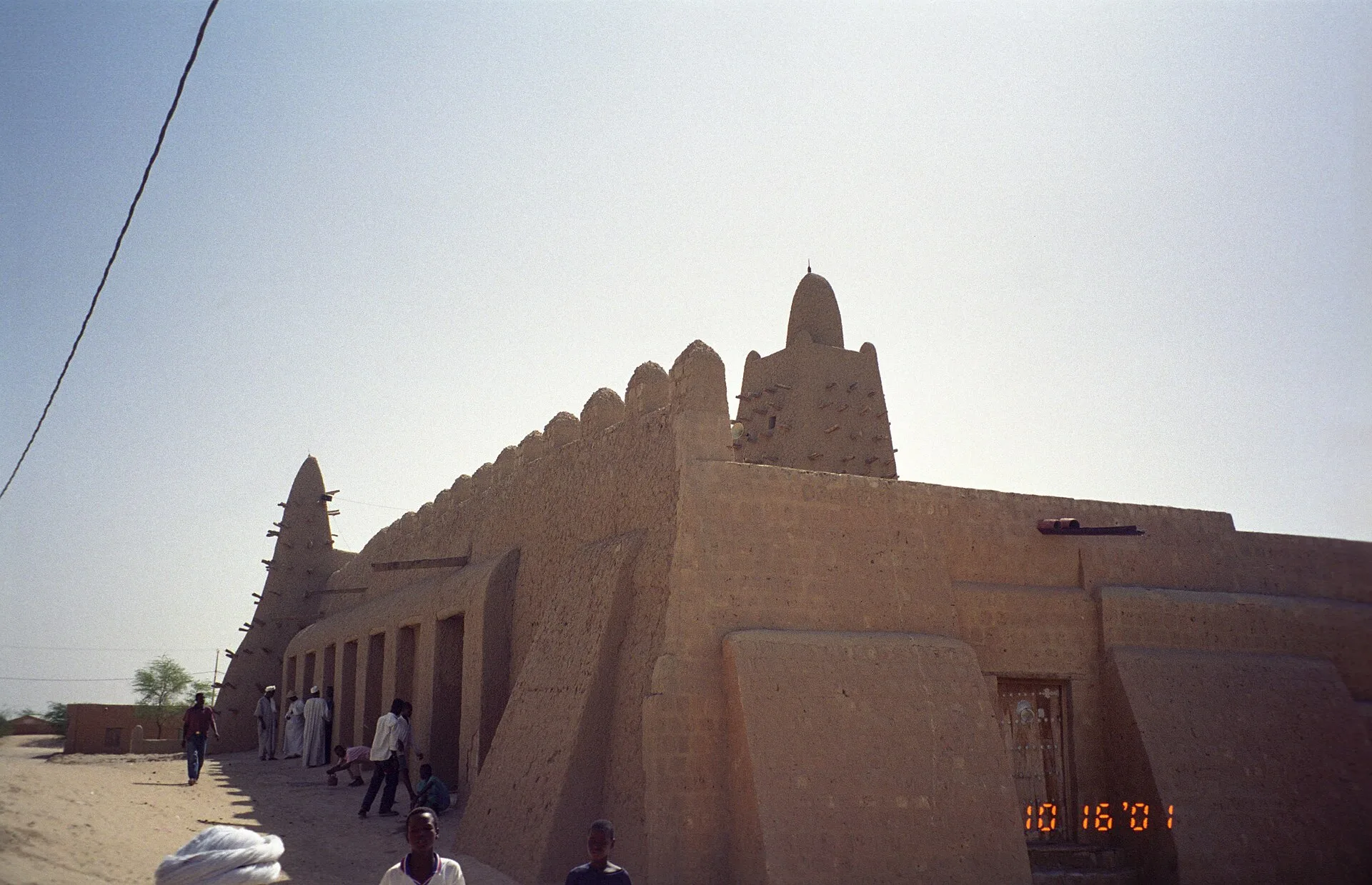
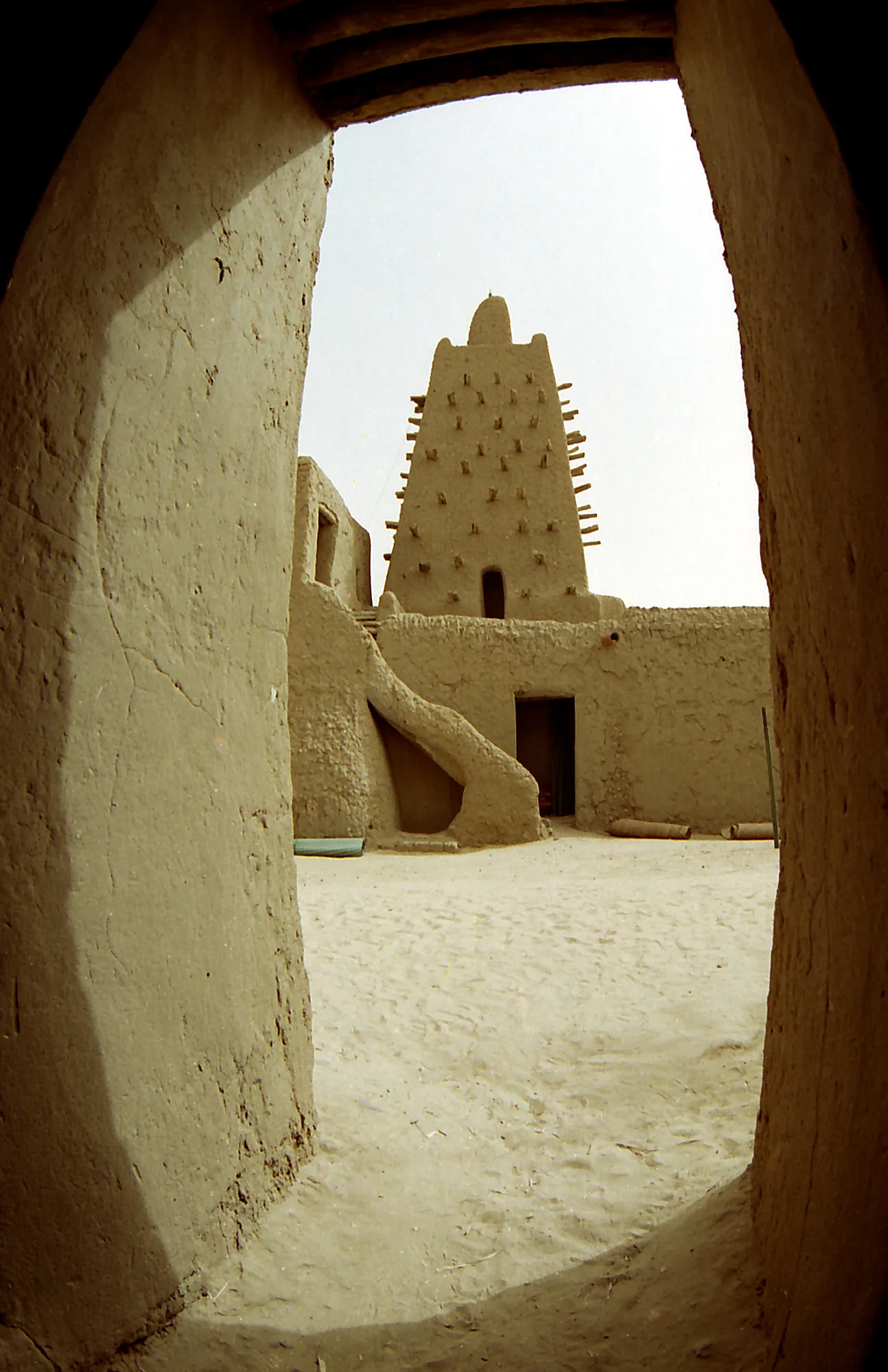
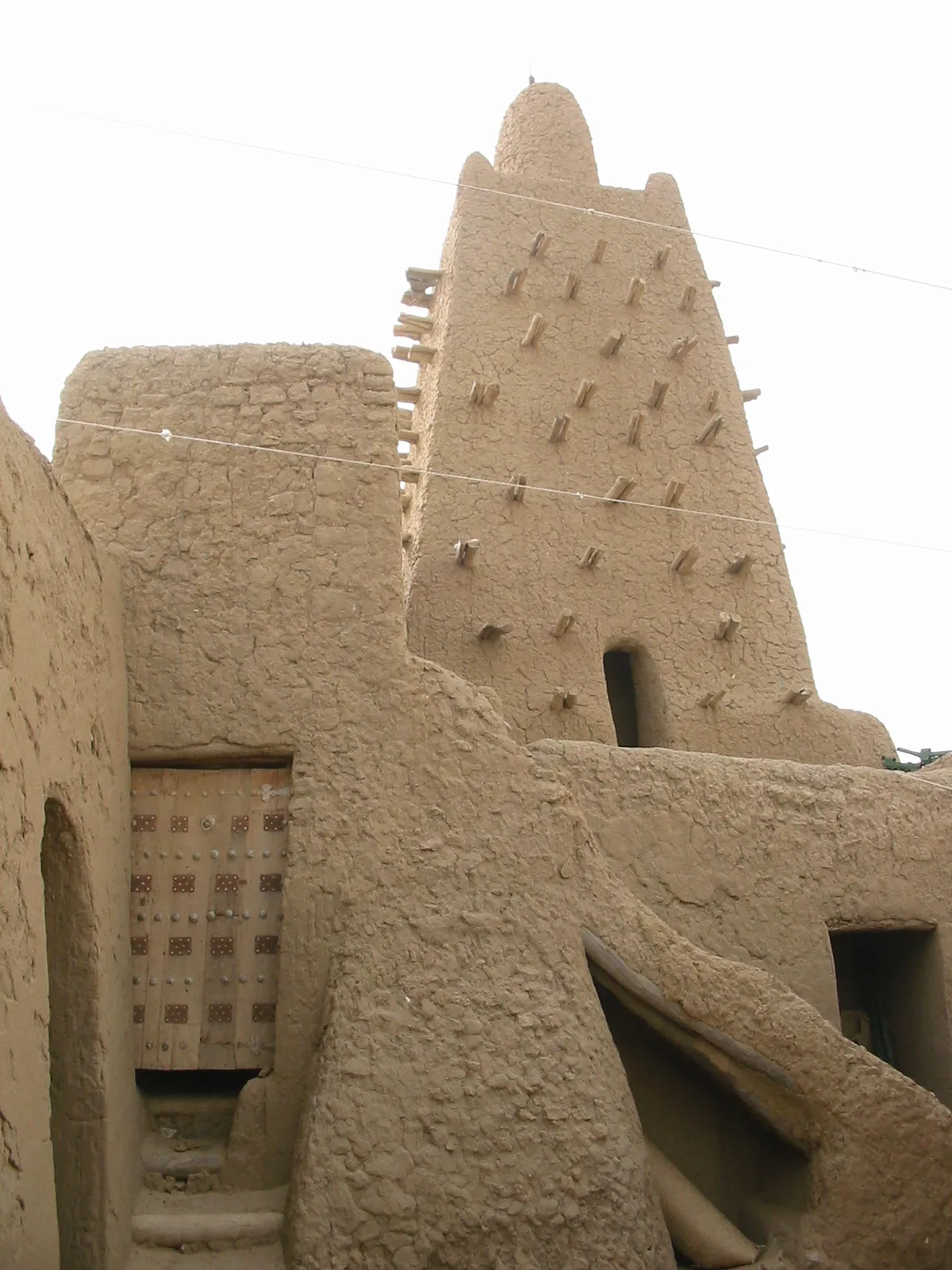
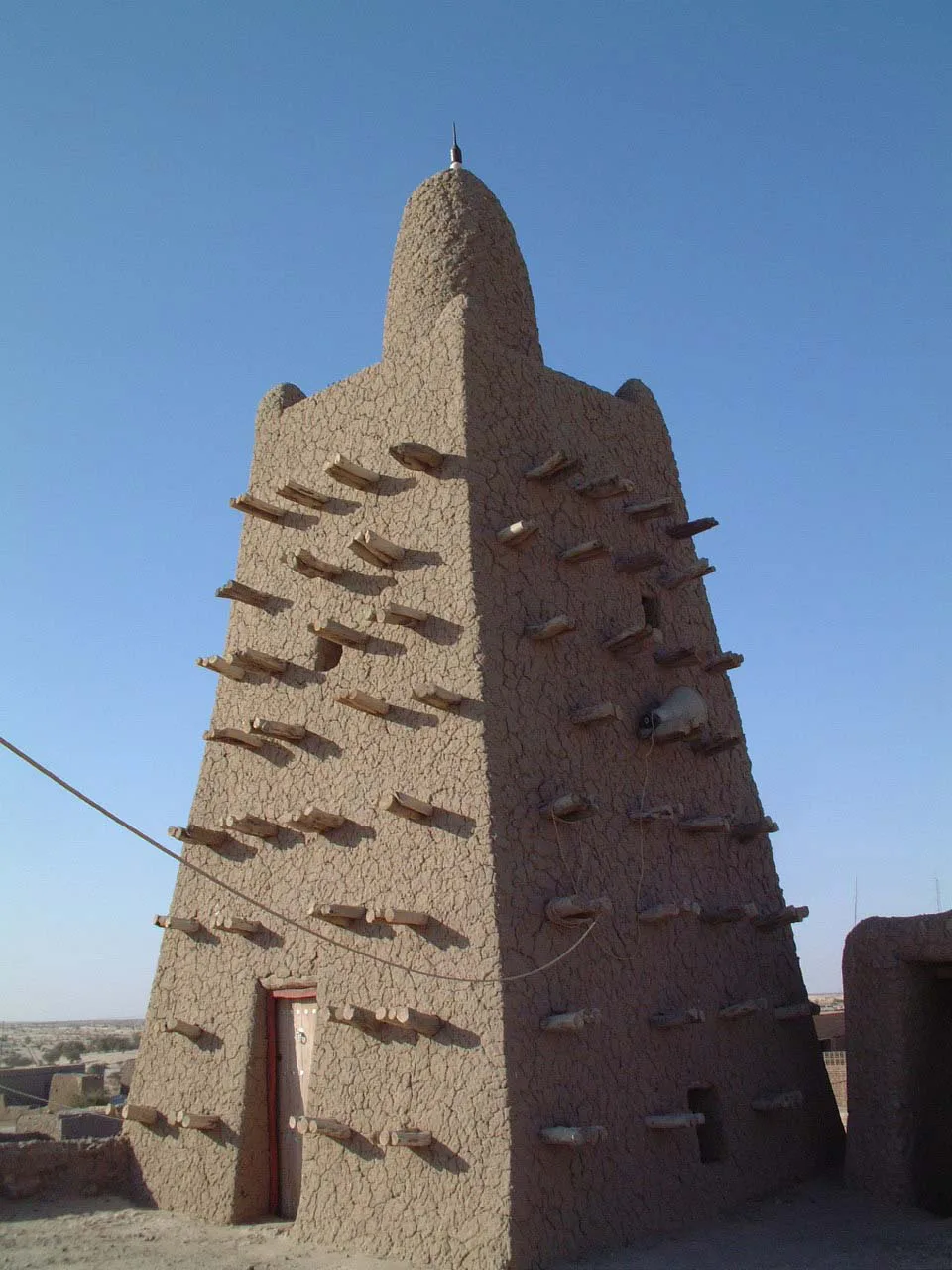
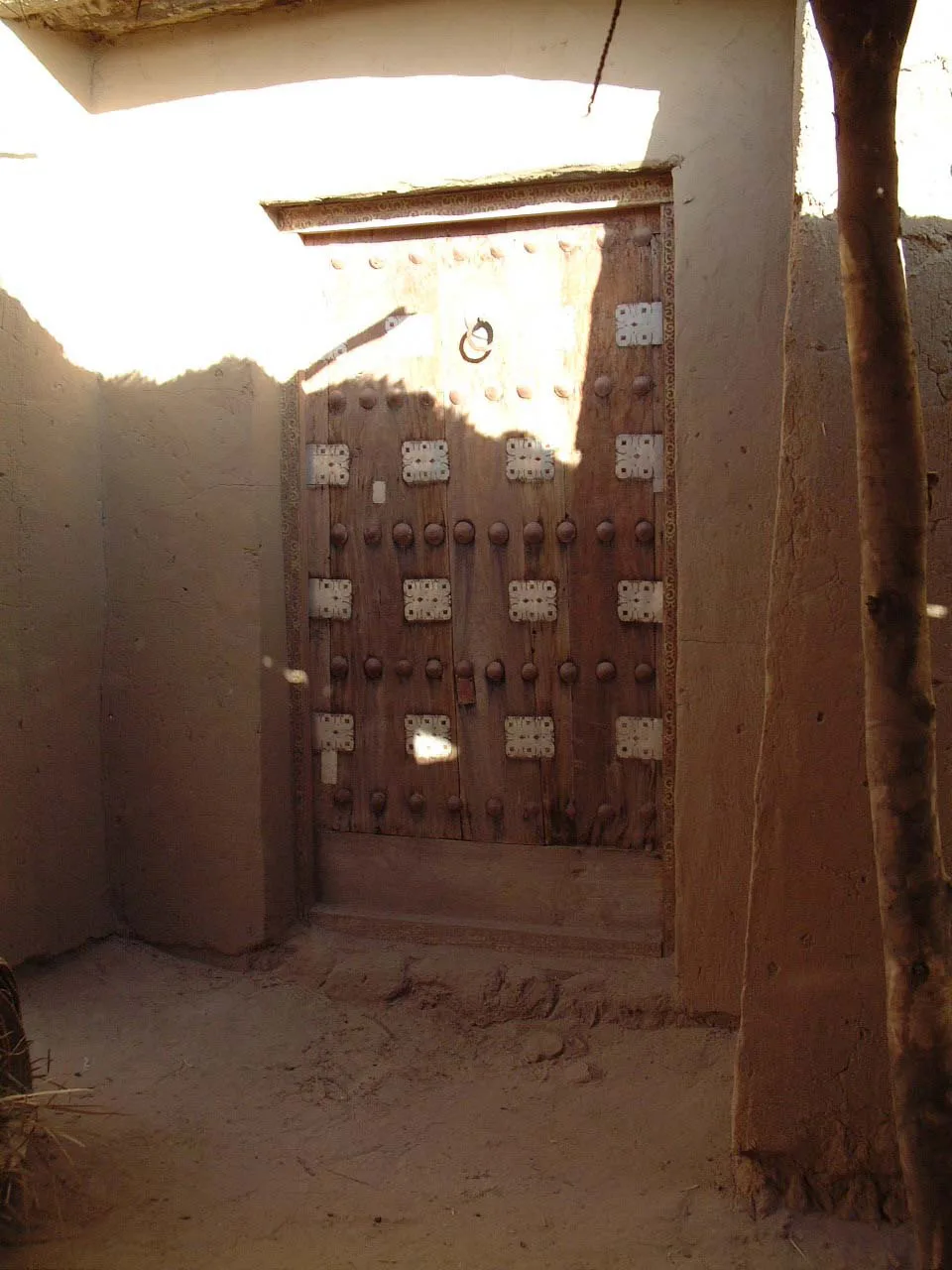
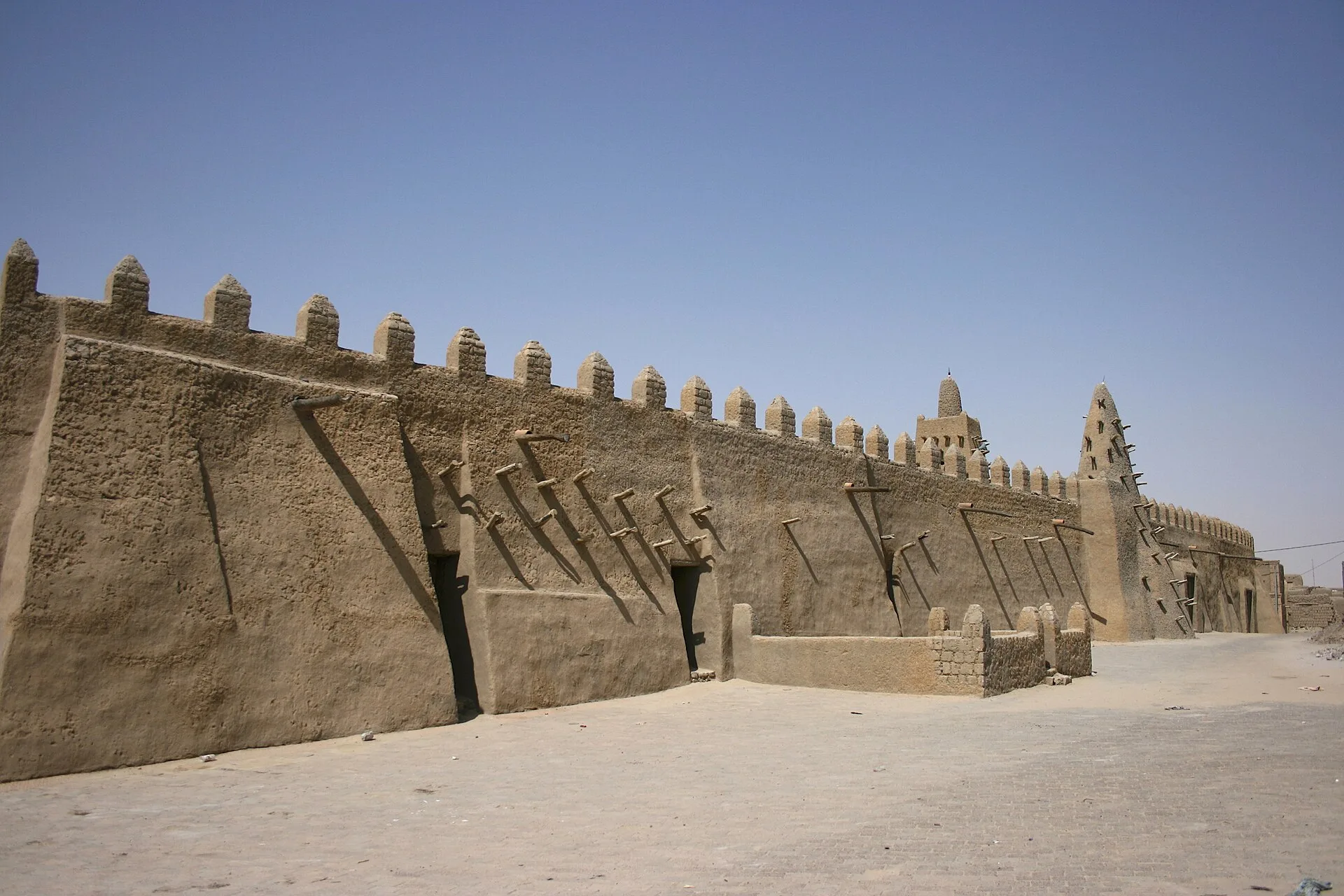
On his return from the pilgrimage, Mansa Musa brought back an architectural project. Construction of the Djinguereber Mosque began in 1327 in Timbuktu. According to tradition as recorded in the chronicles, the emperor is said to have brought in an Andalusian architect, Abu Ishaq al-Sahili, paid forty thousand gold pieces for his services. More recent research, however, qualifies this account: the building's architecture, in fact, owes much more to existing Sahelian and Saharan building traditions, the Andalusian architect's contribution likely having been amplified by legend. Built from mud brick, straw and wood, the mosque follows a typically Sahelian style, designed to withstand the heat and the region's rare but violent rains: three inner courtyards and a prayer hall supported by wooden beams that, projecting from the facade, also allow for the regular upkeep of the render.
A centre of learning as much as a place of prayer
Djinguereber was not limited to its religious function. It quickly became one of three mosques, alongside Sankore and Sidi Yahya, that together formed what came to be known as the University of Timbuktu, a hub of teaching and manuscripts that radiated across West Africa for several centuries. This reputation as a city of learning, carried forward by Mansa Musa's initial patronage, helped make Timbuktu a legendary name as far away as Europe, long associated with a near-mythical wealth and refinement.
Timbuktu through the eyes of Arab travellers
A few decades after Mansa Musa's reign, Timbuktu's reputation drew travellers from far afield. The great Moroccan explorer Ibn Battuta passed through around 1352 and 1353, shortly after the completion of the Djinguereber and Sankore mosques, and left a brief account of his stay. Nearly two centuries later, another traveller, known as Leo Africanus, who was captured at sea and later brought to Rome, where he published his Description of Africa in 1526, described a city where manuscripts and books were sometimes traded for more than any other merchandise, likely an exaggeration given that trade in gold, salt and enslaved people remained the true basis of local wealth, but a striking sign of the intellectual prestige the city had come to hold. These accounts, written well after Mansa Musa's own passage through the city, show just how far the ruler's imprint, through the mosque he had built and the centre of learning that grew up around it, continued to resonate long after his death.
Still standing, seven centuries on
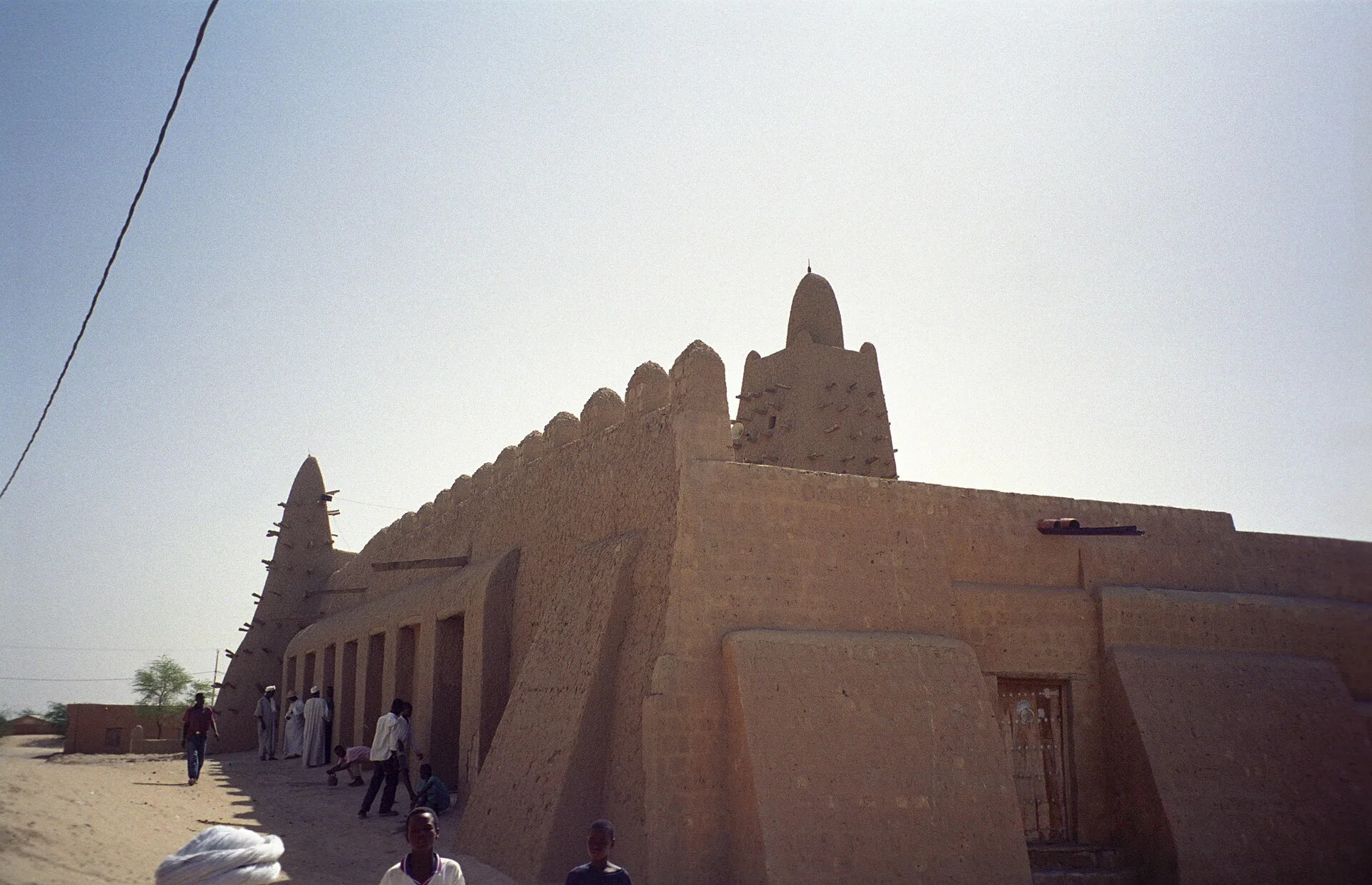
Listed as a UNESCO World Heritage site in 1988, the Djinguereber Mosque remains active today. Like the region's other mud-brick mosques, it requires regular collective upkeep, as rain and wind gradually erode the raw earth of its walls. In 2012, during the occupation of Timbuktu by armed groups that destroyed part of the city's ancient manuscripts, local librarians managed, with the help of a heritage preservation organisation, to smuggle several hundred thousand manuscripts out to Bamako, hidden in rice sacks and crates, to save them from destruction. Nearly all of the city's manuscripts were preserved this way, a late echo of the centre-of-learning status the city had acquired as far back as Mansa Musa's era. The Djinguereber Mosque remains one of the few architectural testimonies directly linked to his reign, more tangible than the sometimes exaggerated accounts of his fortune: an imprint of stone and earth, where the gold itself has long since scattered.
Read more
Related articles
Djenné, Larabanga, Bobo-Dioulasso: the art of banco in West Africa
Like the Djinguereber Mosque left behind by Mansa Musa, these three great rammed-earth mosques share the same Sudano-Sahelian architectural style, maintained every year by local communities.
The miqats: the five sacred boundaries before Mecca
Like Mansa Musa in 1324, every pilgrim crosses one of the five miqats set by prophetic tradition before entering the sacred state for the hajj.
About this page's content: this site offers editorial and cultural content written with care and respect for the religious traditions concerned; it does not constitute a theological opinion or a source of religious authority. Despite our checks, errors, inaccuracies or approximations may remain. If you spot one, please let us know via the Contact page or by email at qibla.mosk@gmail.com, we will correct it gratefully.