
Home › Blog › The mihrab, the niche that came later
History · Architecture · 7 min read · 2026-09-21
The mihrab: the niche that came a century after the first mosque
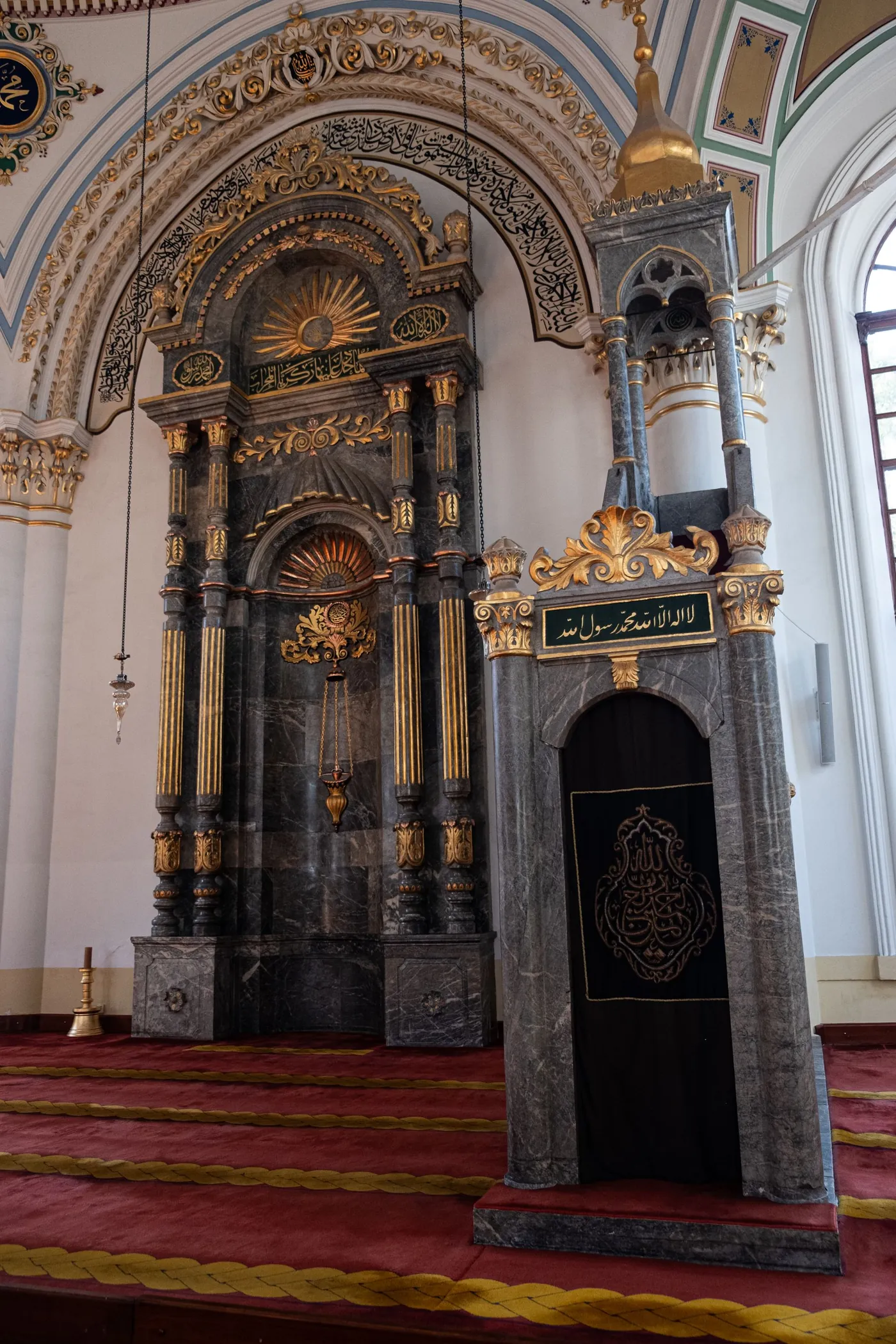
The niche hollowed into the qibla wall looks like the most obvious element in a mosque. It arrived late: the concave mihrab appears in 706 or 707, almost a century after the first mosque.
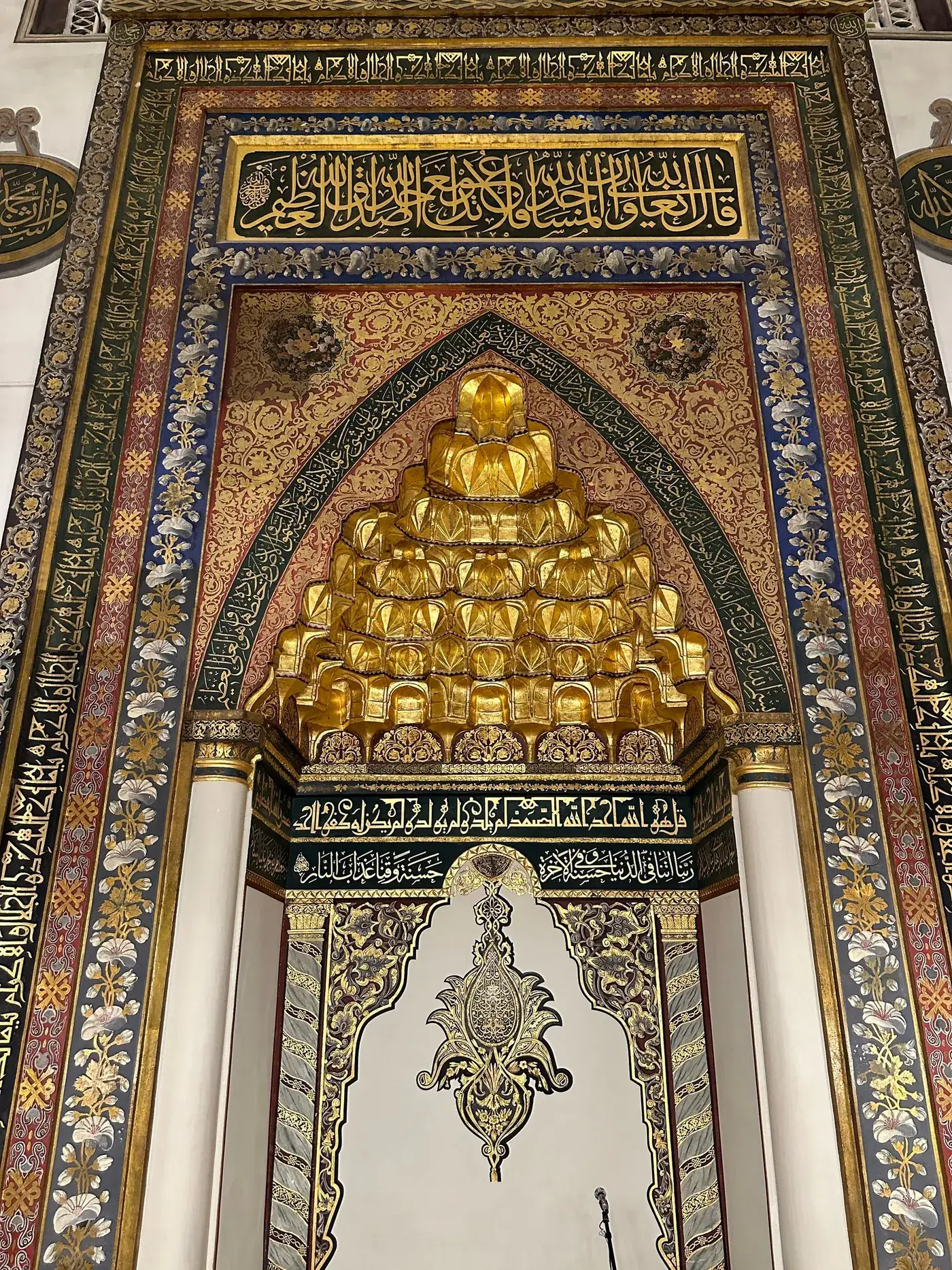
Before the niche, a flat wall
For the first decades the wall people turned towards looked much like the others. The earliest qibla markers on record are a simple stripe of paint, or a flat stone panel set against the wall. Sometimes nothing marked the direction at all: the worshippers knew which way to face, and the building did not have to say it.
In Medina the first known marker is a large block of stone. It first signalled the north wall, when prayer faced Jerusalem, then it was moved against the south wall in the year 2 of the hijra, 624, when the direction changed to Mecca. A block you can move is exactly what a flat wall allows, and what a built niche would forbid.
706 or 707, in Medina
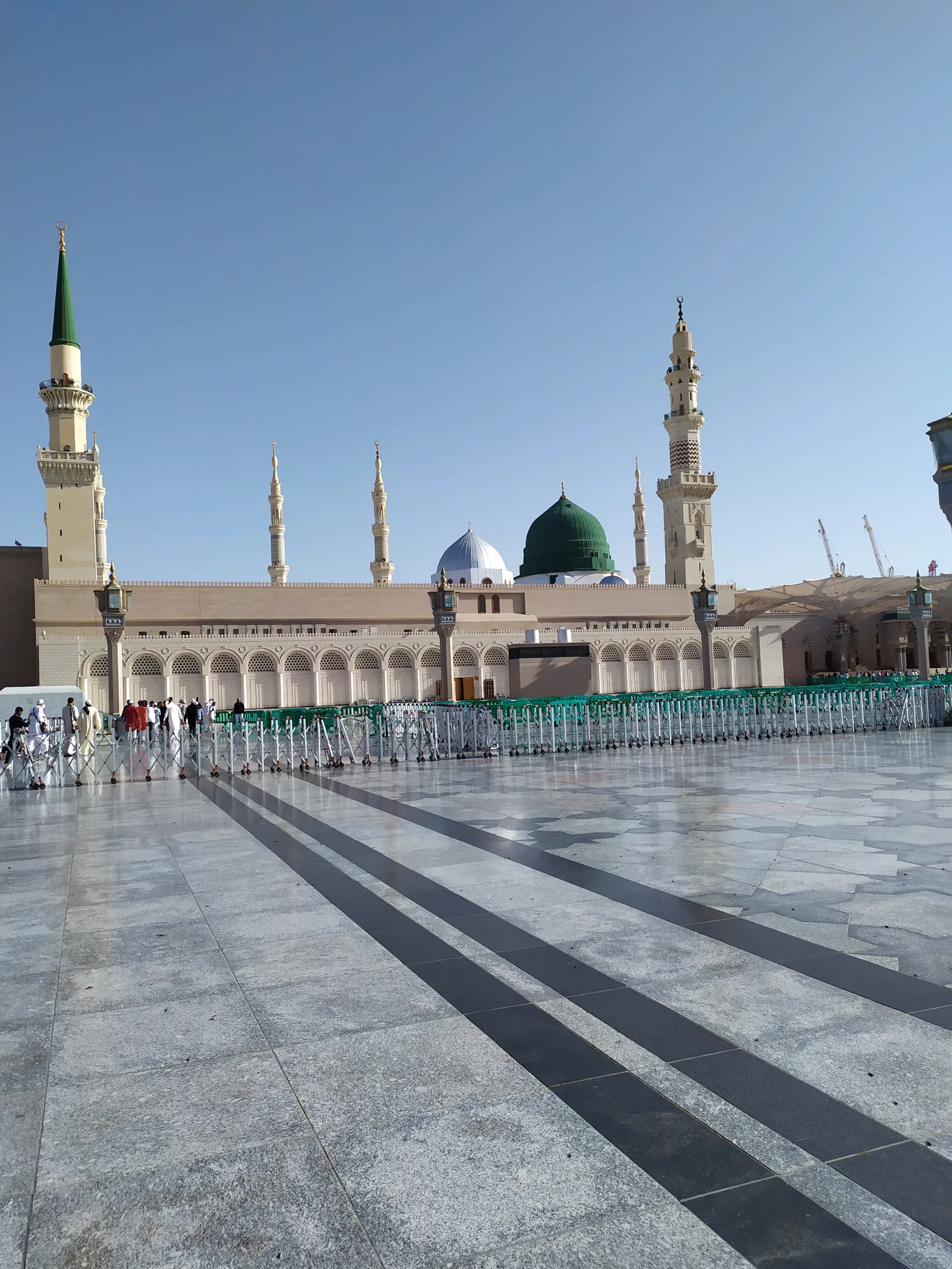
The concave niche appears during the rebuilding of the Prophet's Mosque (peace and blessings of Allah be upon him) in Medina. The Umayyad caliph al-Walid ibn Abd al-Malik had reigned since 705, and it was the governor of the city, Umar ibn Abd al-Aziz, who had the niche cut into the qibla wall.
What follows is fast. The Umayyad Mosque of Damascus, built by the same caliph between 706 and 715, receives one. The Mosque of Amr ibn al-As in Fustat receives one in 710 or 711. Within a generation the niche moves from novelty to obviousness and spreads across the Muslim world. The oldest surviving concave mihrab is a marble example attributed to the eighth century, now in the Iraq Museum.
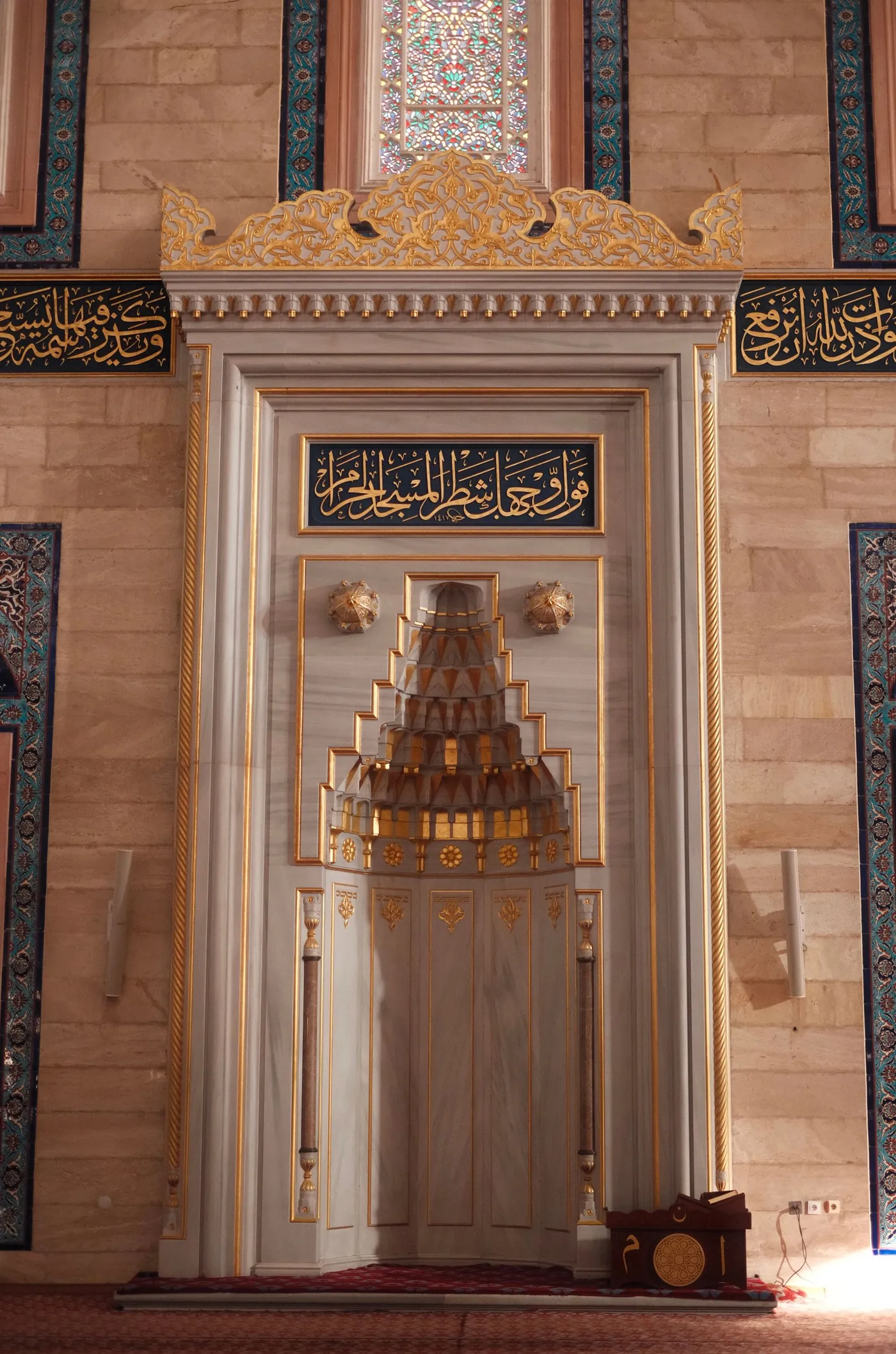
The word is older than the object
The term mihrab existed before the niche, and it named something else. In early usage it denotes a separate room in a house, or the throne room of a palace. The Quran uses it in the sense of a sanctuary, for instance when Zakariyya (peace be upon him) comes out of the mihrab to his people.
The vocabulary was transferred. A word that meant a reserved place, a seat of honour, settled onto a hollow in masonry and ended up naming nothing else. Arab lexicographers, for their part, tied the word to a root connected with fighting, which produced the readings of the mihrab as a place of struggle against evil.
Where does the shape come from? Three lines, none demonstrated
On the origin of the form, historians have not settled the question, and several filiations have been proposed for more than a century.
The first brings it close to the apse of churches, a half dome hollowed at the end of the sanctuary, familiar to every builder in the region. The second recalls that niches were everywhere in late antique architecture, cut into walls to hold a statue or simply to animate a surface. The third compares it to the alcove that sheltered the throne in audience halls, a device of power rather than of worship. Scholars have also pointed to the niches of Buddhist architecture.
None of these hypotheses is established. What is certain is that the form existed all around the first Muslim builders, in several uses at once, and that it was taken up for a new need.
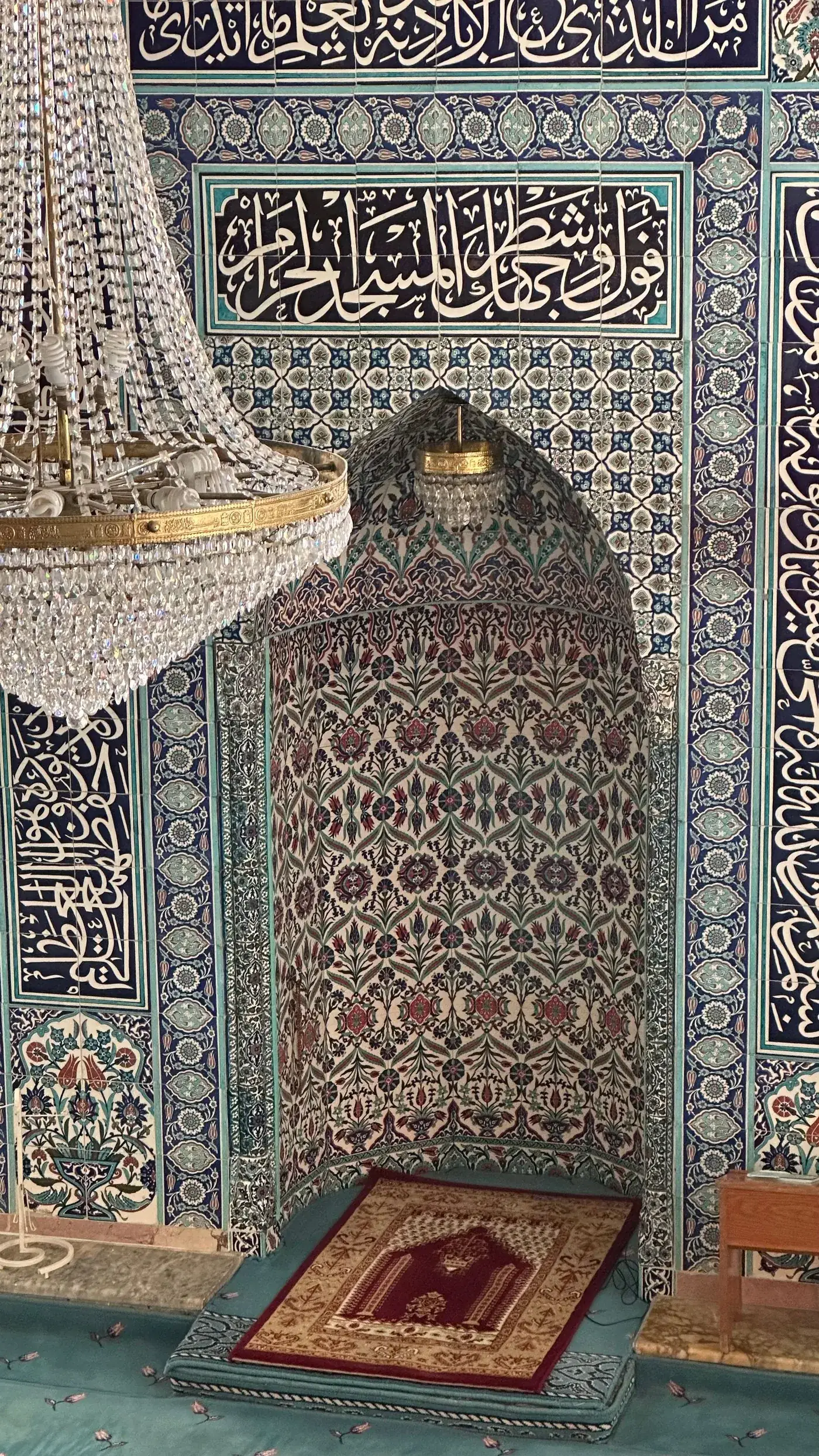
What the niche does in the hall
The qibla wall is the longest wall in the hall, and it is blind. The niche gives it a centre, a point on which the rows and the eye converge. It also marks the place of the one who leads the prayer, who stands in front of it, slightly ahead of the first row.
Specialists note that the device may originally have played a role close to that of the maqsura, the enclosure reserved for the ruler: the mihrab designates the place of the one who presides, and certain official functions, justice among them, were carried out there. An acoustic effect is often attributed to it as well, the hood sending the voice back into the hall. A concave surface does reflect sound, but the real share of that reflection in the audibility of a large hall is not established.
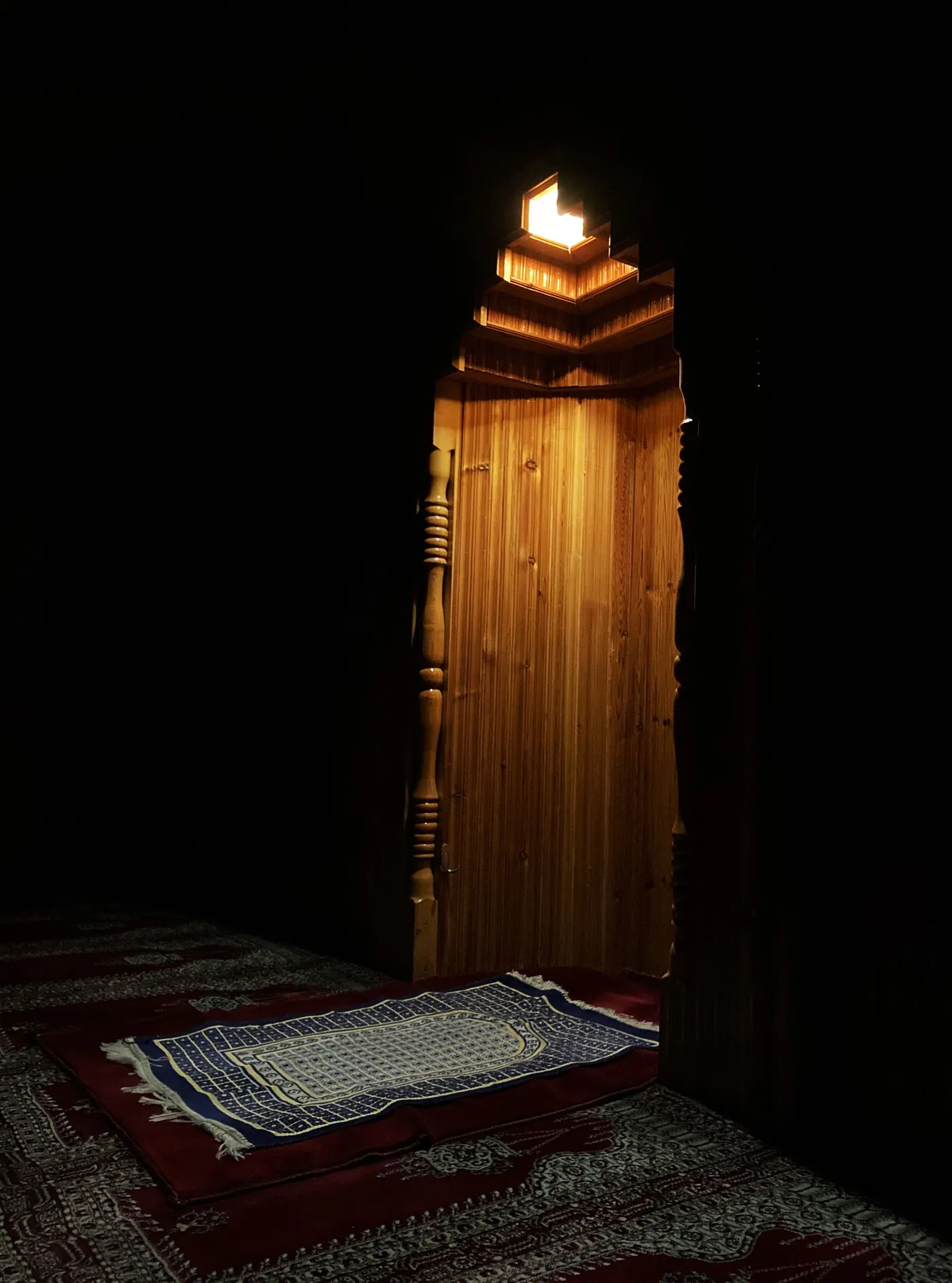
Once there, it draws all the decoration
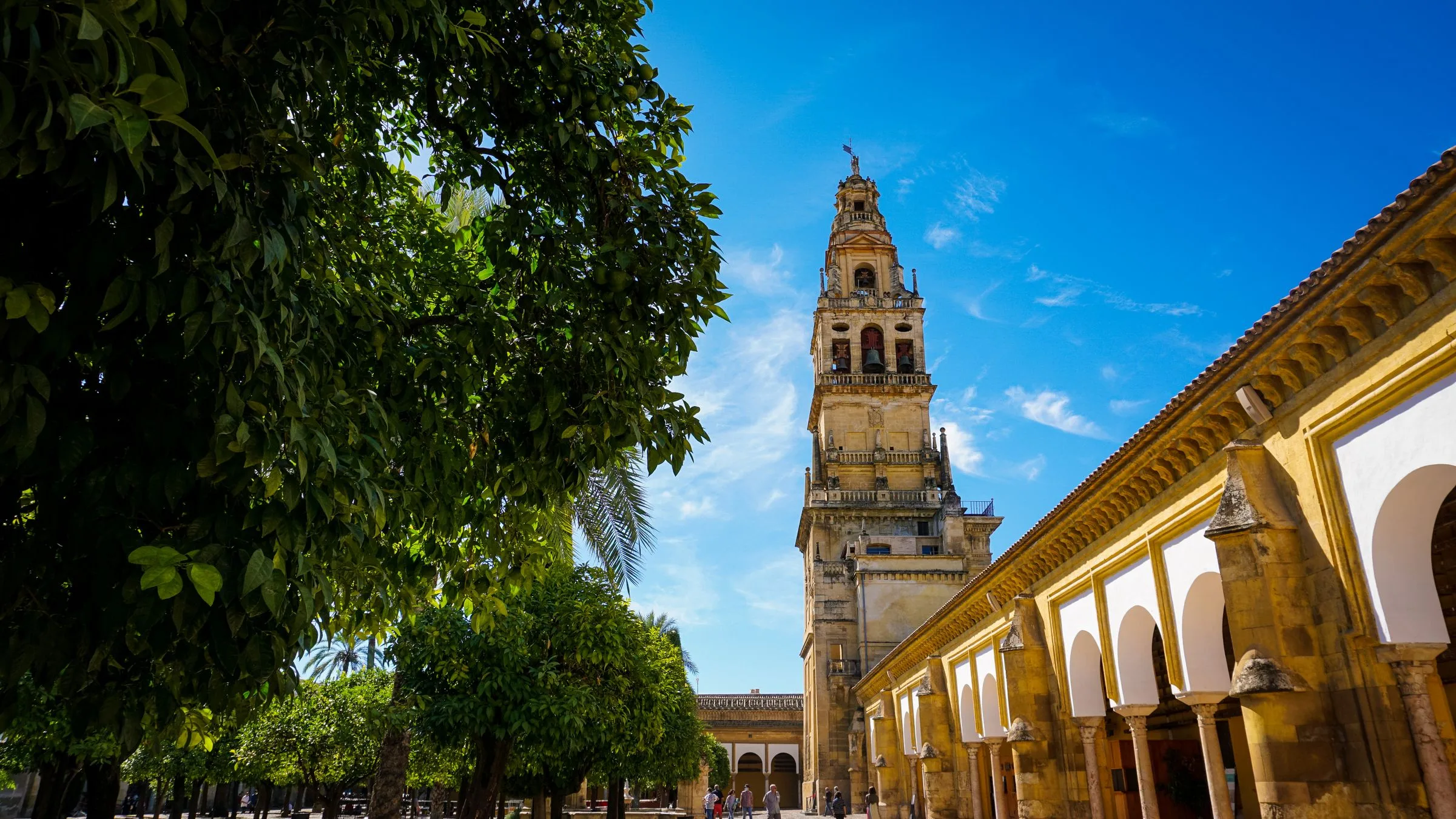
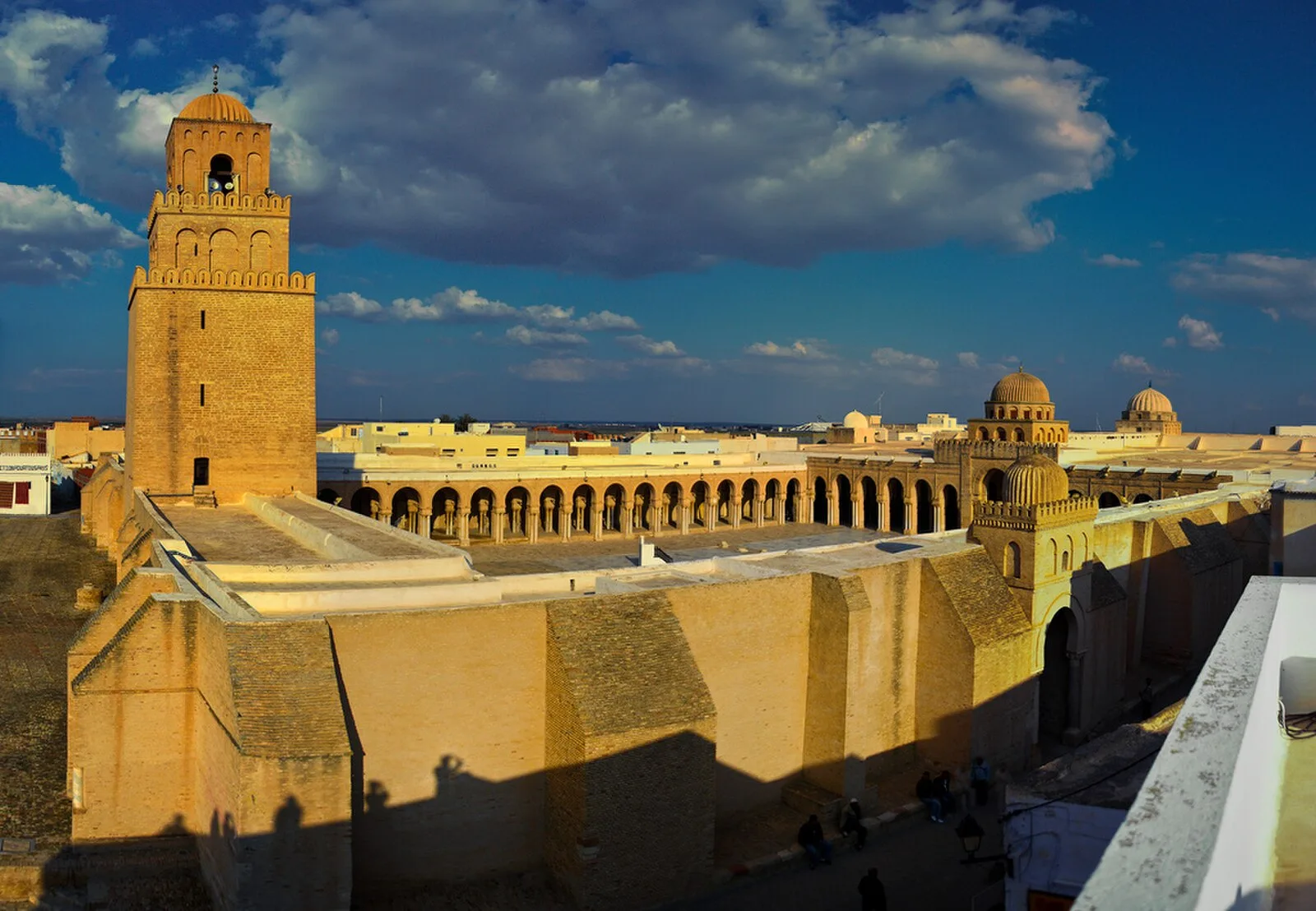
The niche has a consequence nobody planned: it becomes the place where the best of the workshop goes. At Kairouan the mihrab remade in 862 or 863 lines up twenty-eight panels of white marble, some cut through, in a frame of lustre tiles imported from Iraq. At Córdoba, the extension of caliph al-Hakam II, between 961 and 965, dresses the entrance of the mihrab with mosaics laid by craftsmen sent from Constantinople at his request.
Later, Ottoman architects cap the niche with a hood of muqarnas and frame it with a tiled panel, while the mosques of the Maghreb and Central Asia cut theirs into carved plaster. The starting point stays the same: a hollow in a wall, which served no purpose until someone decided to make it.
Be wary of "first mihrabs"
Many mosques present themselves as holding the first mihrab in the world, or the oldest preserved one. Caution is in order: most early prayer halls have been rebuilt several times, and the niche you see today is almost always later than the building. The date that counts is that of the qibla wall in its present state, rarely that of the foundation.
For another mosque element whose apparent obviousness hides a story, see the bent corridor of the Sheikh Lotfollah Mosque, which exists only because the entrance and the qibla did not point the same way.
Discover
Mosques mentioned in this article
Masjid an-Nabawi
The Prophet's Mosque in Medina, recognisable by its famous Green Dome and giant retractable umbrellas.
Mosque-Cathedral of Córdoba
The forest of two-tone arches of al-Andalus, a UNESCO-listed Umayyad masterpiece.
Great Mosque of Kairouan
The oldest great sanctuary of the Muslim West, a fortress of faith with 400 ancient columns.
About this page's content: this site offers editorial and cultural content written with care and respect for the religious traditions concerned; it does not constitute a theological opinion or a source of religious authority. Despite our checks, errors, inaccuracies or approximations may remain. If you spot one, please let us know via the Contact page or by email at qibla.mosk@gmail.com, and we will correct it gratefully.