
Home › Blog › Moroccan mosques: from Fez's ancient to Casablanca's marvels
Maghreb · 6 min read · 2026-02-16
Moroccan mosques: from Fez's ancient to Casablanca's marvels
Morocco has never stopped building mosques since the 9th century, without ever fully breaking from its Almohad vocabulary of green-tiled roofs, horseshoe arches and geometric zellige, found equally in Fez's ancient landmark and in Casablanca's contemporary giant.
Al Quaraouiyine, a mosque turned thousand-year-old university
Founded in 859 in Fez by Fatima al-Fihriya, a wealthy heiress, the Al Quaraouiyine Mosque houses one of the oldest educational institutions still active in the world, recognised as such by UNESCO and the Guinness Book of Records. Expanded over more than a millennium, it retains a hypostyle plan typical of early North African mosque architecture, with a courtyard of pools and a deep prayer hall supported by horseshoe arcades.
The Almohad imprint: the Koutoubia as model
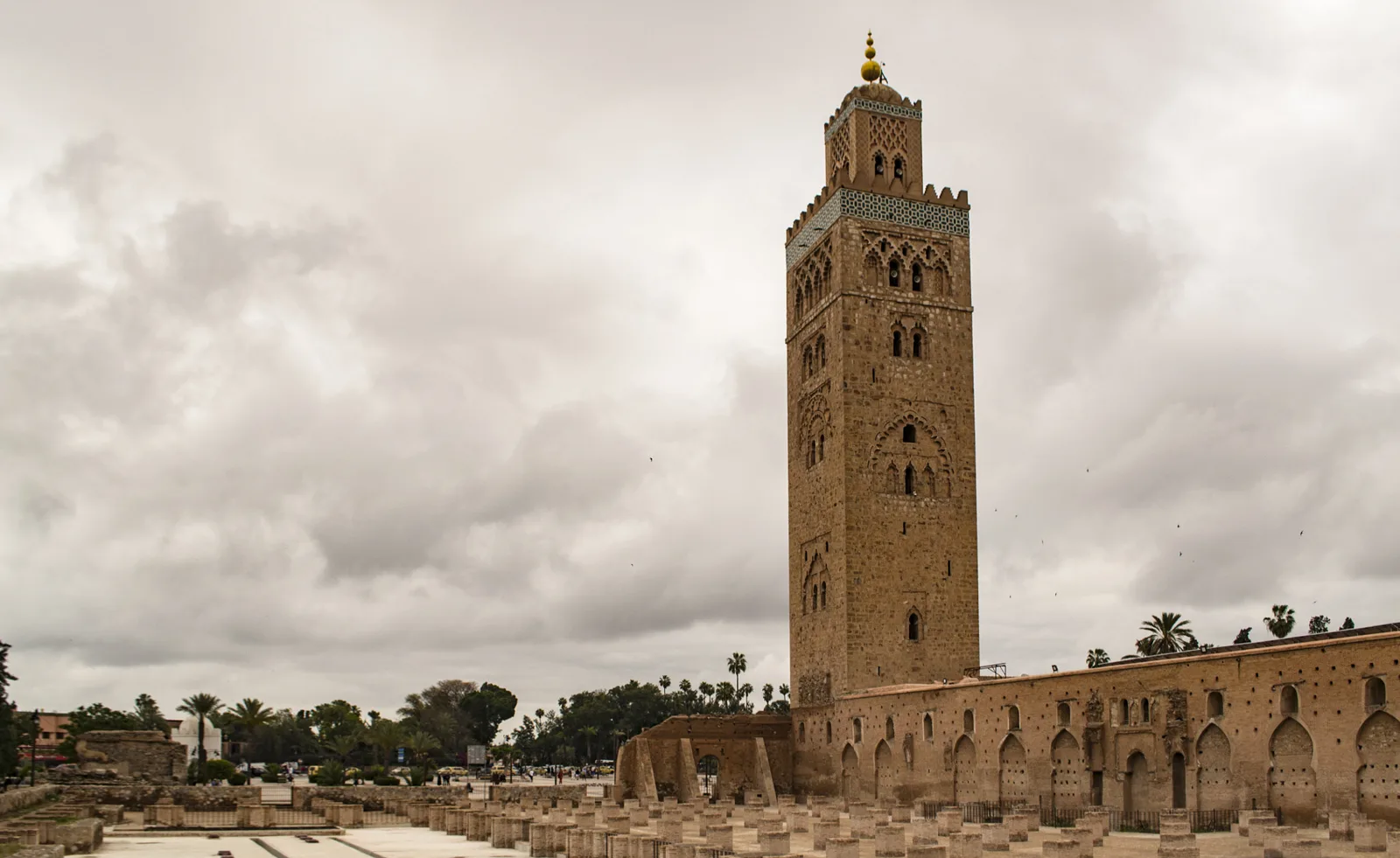
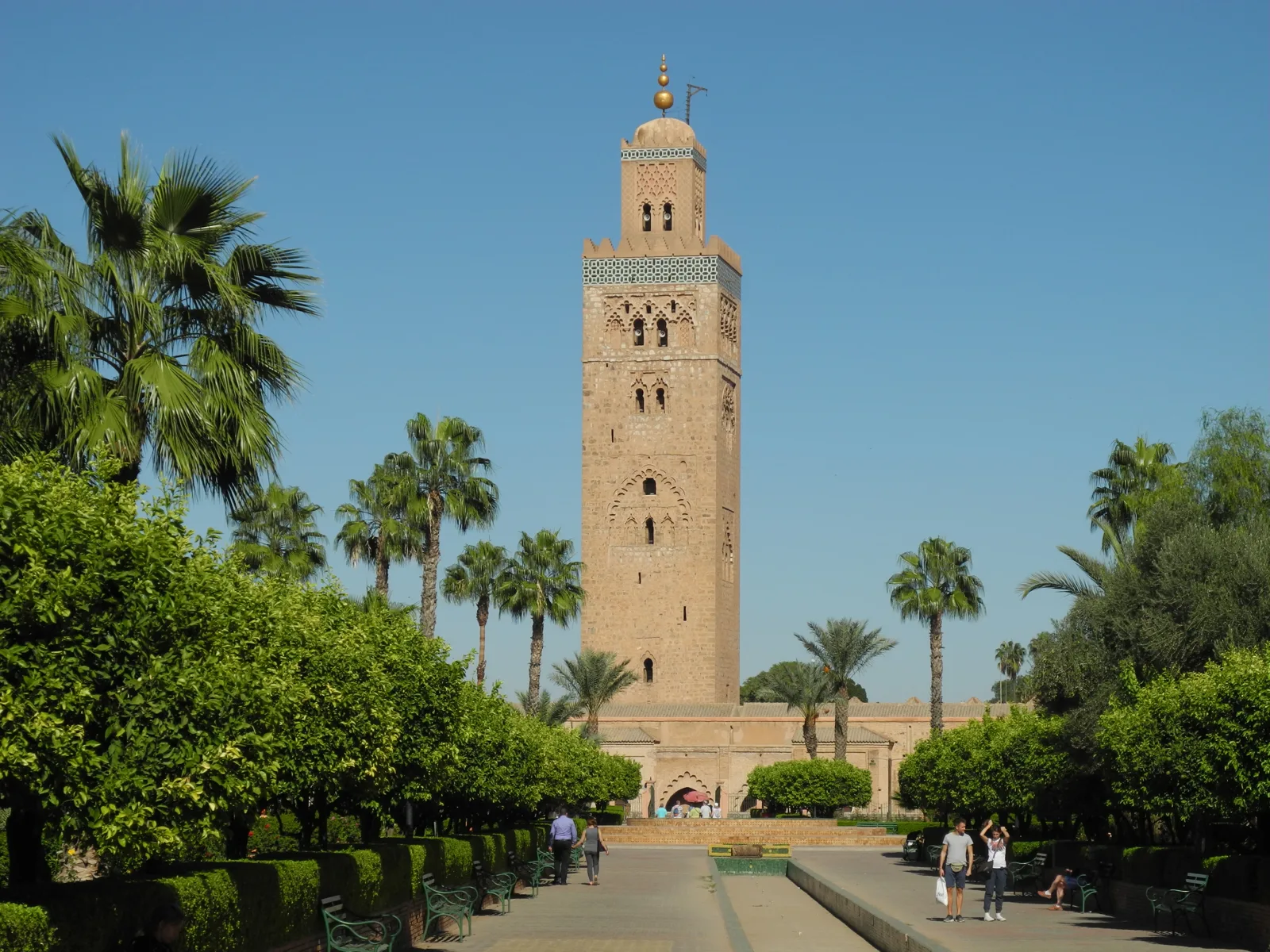
In the 12th and 13th centuries, the Almohad dynasty imposed a shared vocabulary across the Maghreb and al-Andalus: a massive square minaret, decoration of interlaced arches in carved stone, roofs of glazed green tiles. The Koutoubia in Marrakech is its most accomplished example, and its influence can be read directly in the Giralda in Seville or the Hassan Tower in Rabat, built at the same time by the same workshops.
Tin Mal, the founding sanctuary in the Atlas
Far from the great cities, the Tin Mal Mosque, isolated in the High Atlas mountains, marks the spiritual cradle of the Almohad movement: it was here that its founder, Ibn Tumart, established his base before the conquest of Marrakech. Stripped of superfluous ornament, the building strikes with the purity of its volumes and remains, eight centuries on, a place of architectural pilgrimage for understanding the origin of the Almohad style.
What the Almohad style actually means
The word turns up everywhere, often with little content. It does however describe a set of very identifiable technical choices, worked out in the twelfth century and repeated from one site to the next.
The first is the square-based minaret, massive, whose height is roughly five times its width. The second is internal and invisible from the street: you do not climb a spiral staircase but a ramp, a continuous inclined plane turning around a central core, wide enough to be ridden up on horseback. The third is decorative: a lattice of interlacing lozenges carved in stone, which specialists call sebka, running across the faces of the minaret and framing multifoil arches.
To this add a deliberate soberness. The Almohad movement grew out of a religious reform hostile to ornament, and its earliest buildings are striking for the bareness of their volumes. Decoration came later, as the dynasty settled in.
A family of three minarets
This vocabulary was not applied at random: three minarets came out of the same workshops within a few decades, and they resemble one another closely enough to be read as one idea in three versions.
The Koutoubia in Marrakech is the eldest and the prototype. The Giralda in Seville, begun in 1184, is the Andalusian sister: it is now the bell tower of the cathedral, capped with a Renaissance crown added in the sixteenth century, but its lower three quarters are Almohad and there too you climb by a ramp. Hassan Tower in Rabat is the youngest, and the only unfinished one: work stopped dead at the caliph's death in 1199, at forty-four metres out of the sixty-four planned.
Comparing the three is the best way to understand the style, because one is finished and converted, another finished and still in use, the third frozen mid-construction.
The two Koutoubias
A detail visitors rarely notice: beside the present mosque, the ground still holds the foundations of an earlier building. The Koutoubia was built twice, a few years apart, the second one adjoining the first.
The explanation traditionally given is a fault in the orientation of the first building, corrected in the second. Historians debate it, and other causes have been proposed, notably a simple enlargement. The archaeological fact is not disputed: the two prayer halls coexisted, and their axes are not identical. The question of how old mosques were oriented, and why two neighbouring buildings can face elsewhere, is the subject of our Series section.
Tin Mal, and what the 2023 earthquake took away
The cradle of the movement deserves a pause, all the more since its condition has just changed. Built around 1153 in the High Atlas, the Tin Mal mosque served as a model for the sites that followed, the Koutoubia included. Isolated and bare, it offered the purest reading of the style before decoration set in.
The Al Haouz earthquake of 9 September 2023 destroyed almost all of it. The minaret collapsed, the prayer hall filled with rubble, the enclosure walls came down. In Marrakech, the Koutoubia minaret was deeply cracked without collapsing. A reconstruction of Tin Mal has been undertaken, brick by brick, using the material recovered on site.
That changes how the other standing Almohad buildings should be looked at. They are not only witnesses to a style: they are now, in part, the only complete examples of what Tin Mal taught.
Hassan II, the contemporary synthesis
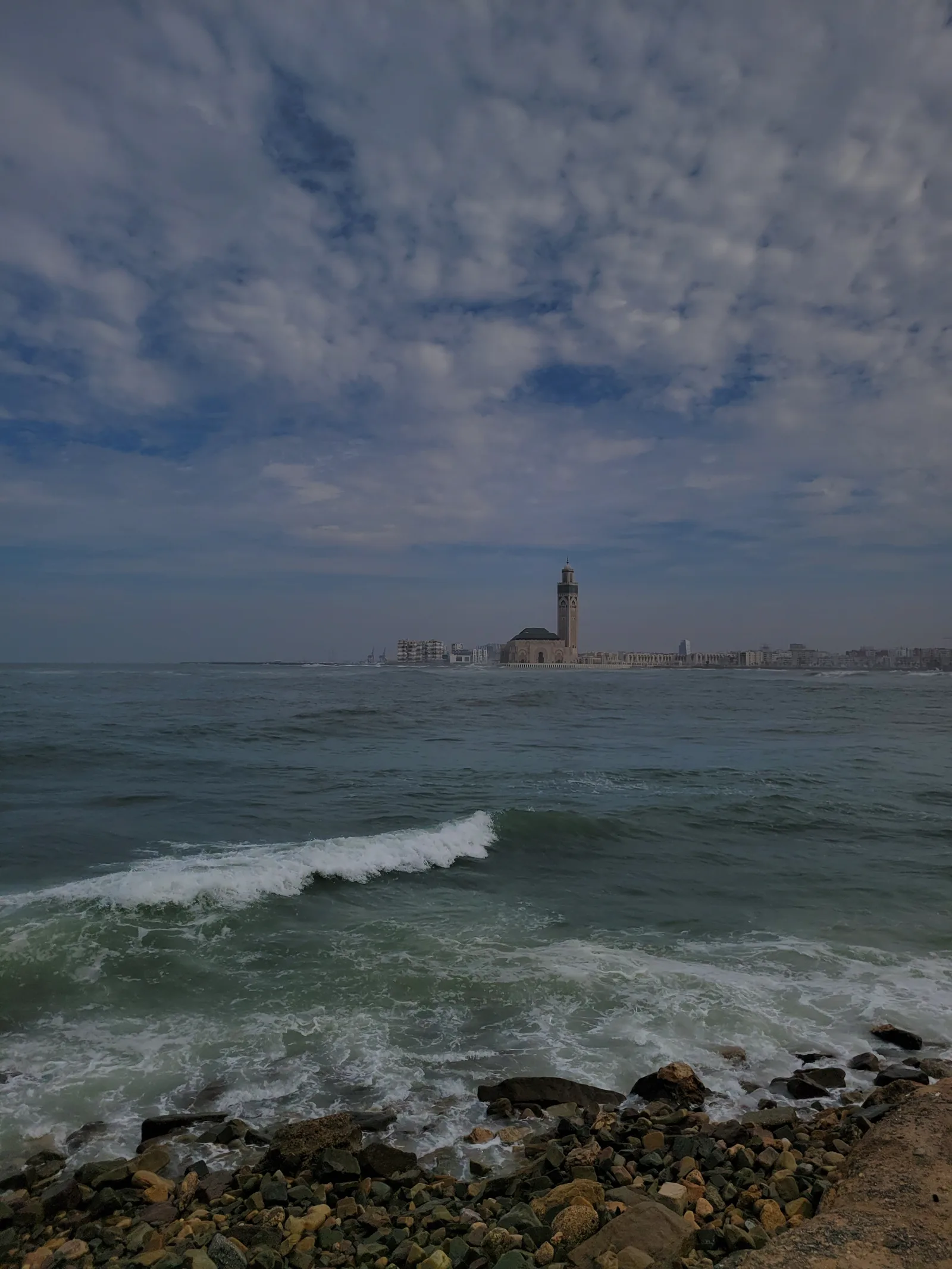
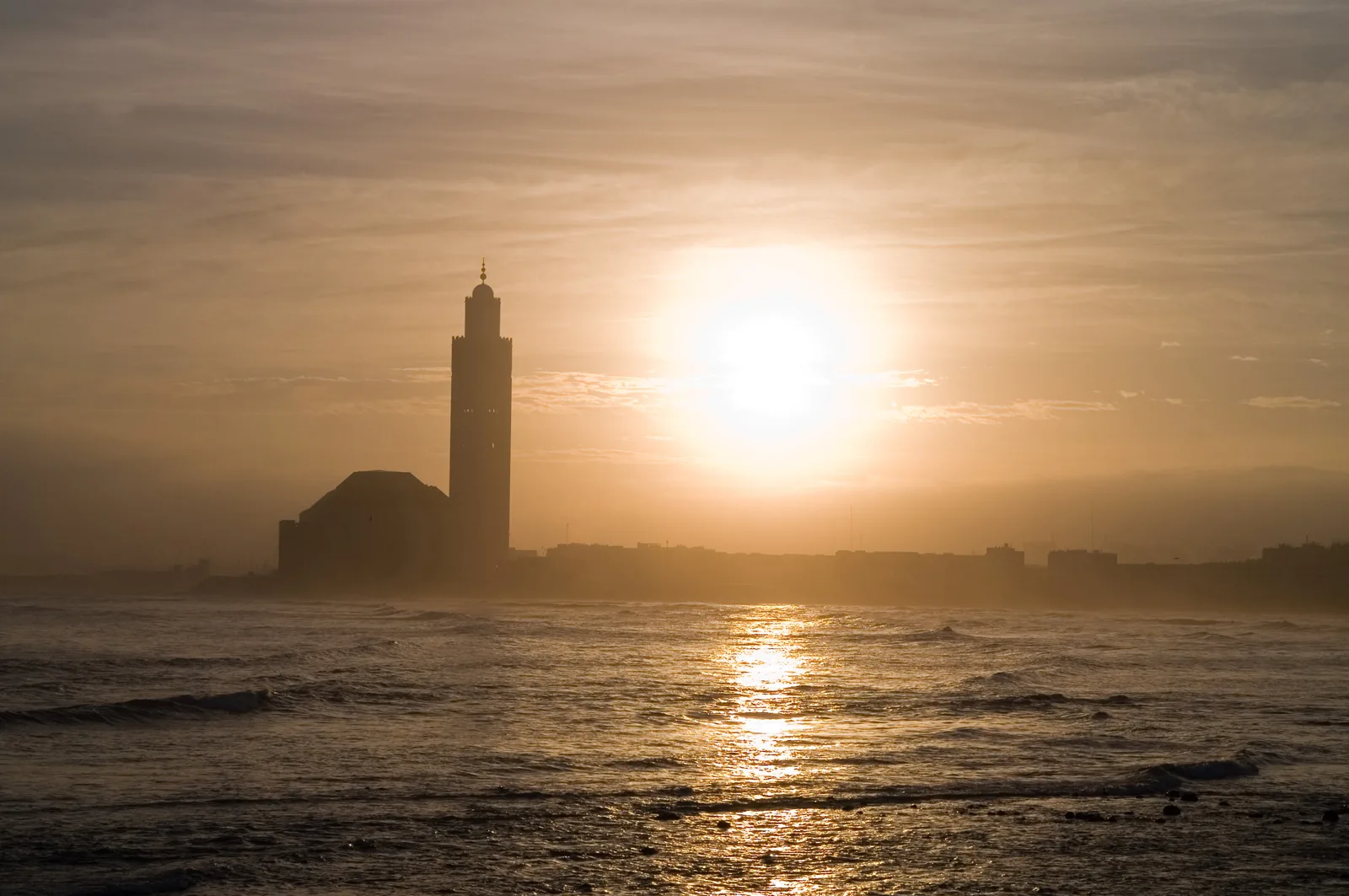
Completed in 1993 in Casablanca, the Hassan II Mosque consciously revives this Almohad vocabulary of zellige, carved plasterwork and green-tiled roof, on an unprecedented scale, with a minaret over 200 metres tall and a prayer hall with a retractable roof, built partly over the Atlantic Ocean. A way of asserting that Moroccan mosque tradition, eight centuries after Tin Mal, remains a living architecture rather than a frozen style.
Discover
Mosques mentioned in this article
Hassan II Mosque
A giant standing on the Atlantic: a 210-metre minaret, a retractable roof and Moroccan craftsmanship at its peak.
Koutoubia Mosque
Marrakech's beacon minaret, model for the Giralda in Seville and the Hassan Tower in Rabat.
About this page's content: this site offers editorial and cultural content written with care and respect for the religious traditions concerned; it does not constitute a theological opinion or a source of religious authority. Despite our checks, errors, inaccuracies or approximations may remain. If you spot one, please let us know via the Contact page or by email at qibla.mosk@gmail.com, and we will correct it gratefully.