
Home › Blog › Zitouna and Malek Ibn Anas: Tunisia's most beautiful and largest mosques
Maghreb · 6 min read · 2026-02-23
Zitouna and Malek Ibn Anas: Tunisia's most beautiful and largest mosques
Asking which is "the most beautiful and largest mosque in Tunisia" really means naming three: the Zitouna Mosque, spiritual and intellectual heart of the Tunis medina for over thirteen centuries, the Malek Ibn Anas Mosque, the contemporary giant of Carthage that holds the capacity record, and the Great Mosque of Kairouan, the oldest and the largest of the three.
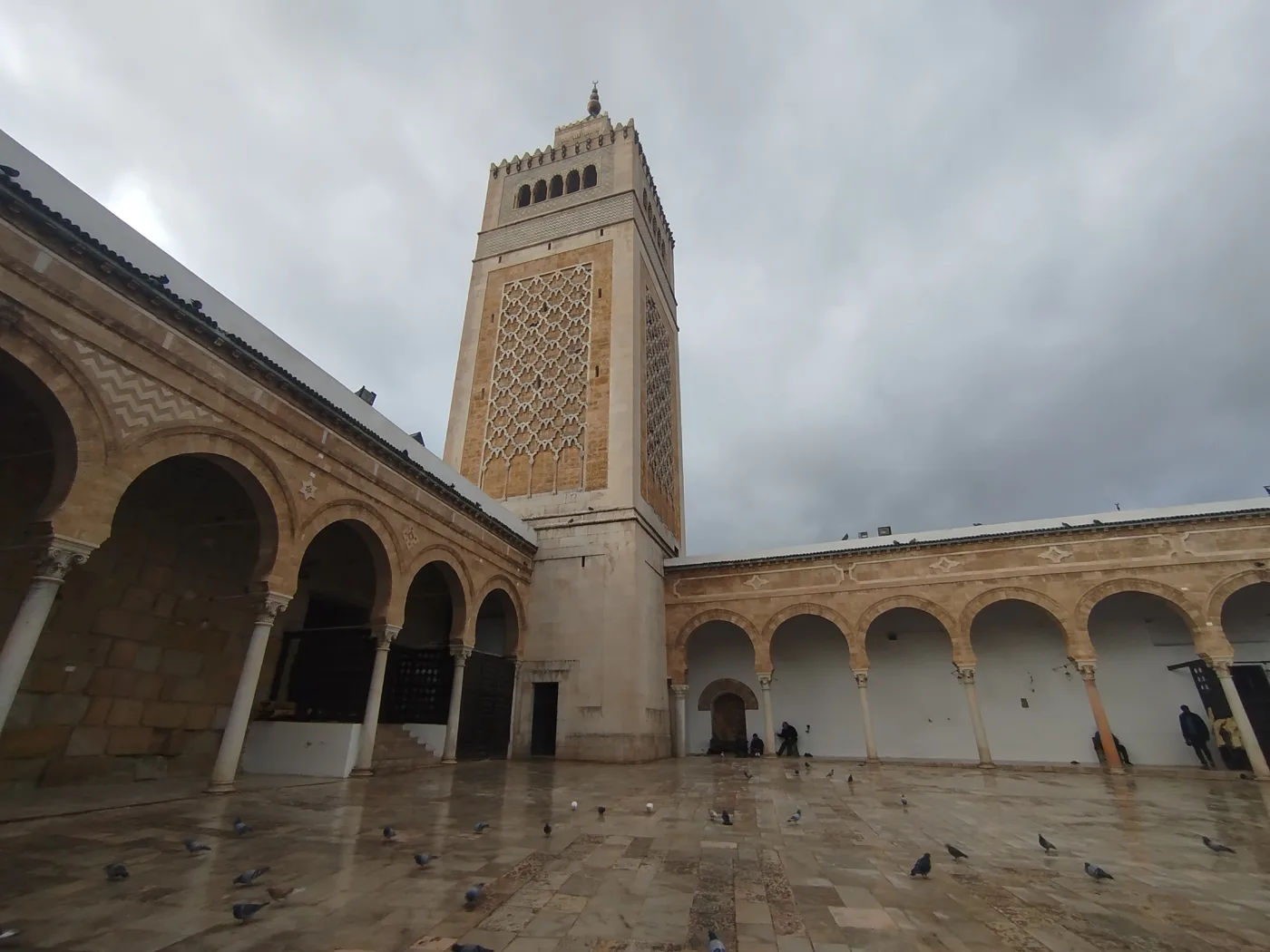
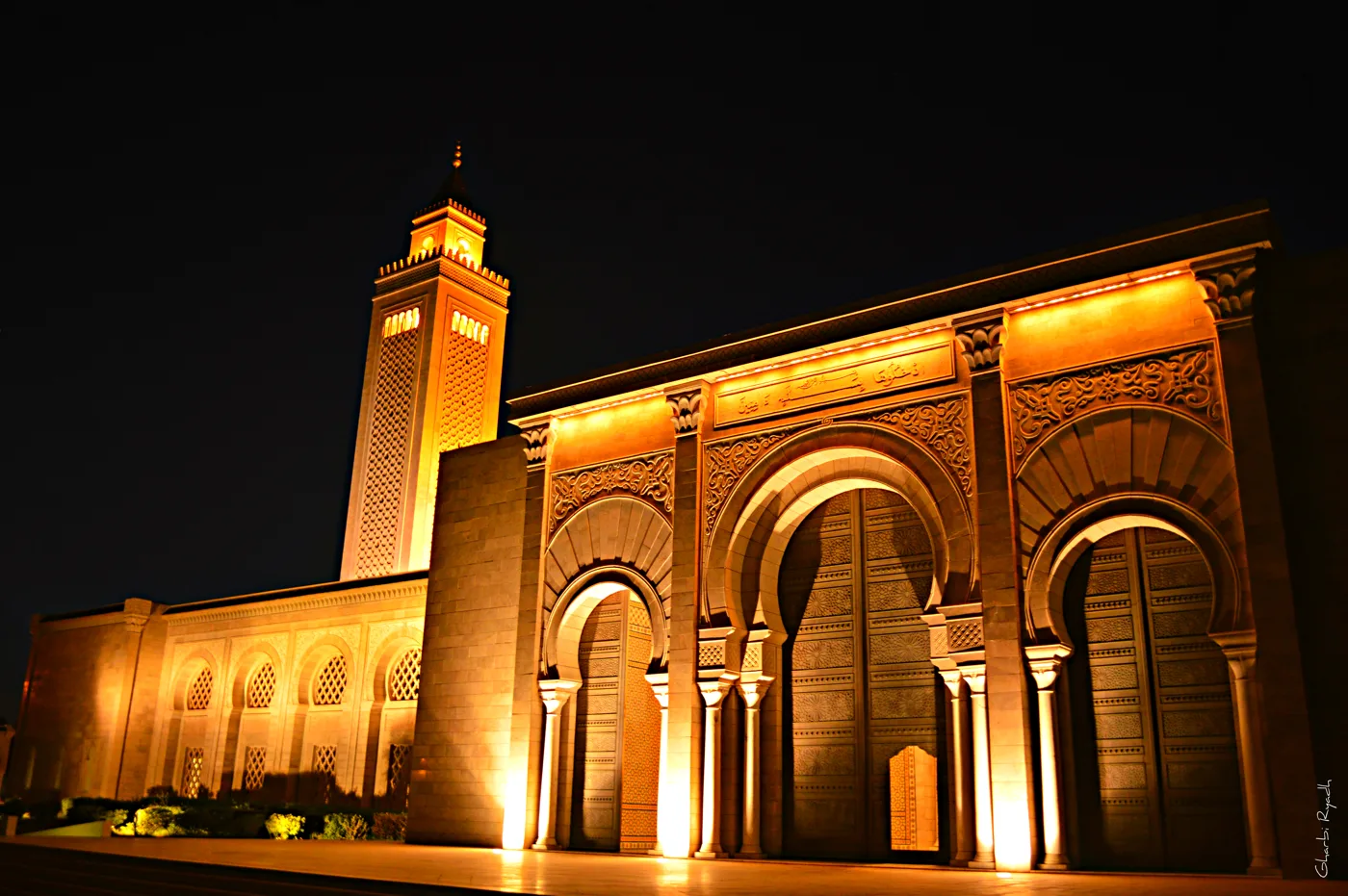
Zitouna, "the olive tree" at the heart of the medina
Founded at the very end of the 7th century and considerably expanded under the Aghlabids in the 9th century, the Great Zitouna Mosque ("mosque of the olive tree") is the oldest mosque in Tunis and one of the largest in the country, covering nearly 5,000 m² at the heart of the UNESCO-listed medina. Its hypostyle prayer hall, carried by more than 160 reused ancient columns (marble, granite, porphyry), and its square Almohad-style minaret make it one of Tunisia's most photographed monuments.
A university almost as old as the mosque
Like Al Quaraouiyine in Fez or Al-Azhar in Cairo, Zitouna is not merely a place of worship: as early as the 8th century, law, grammar and religious sciences were taught here, making it one of the oldest centres of higher learning in the Muslim world. This dual vocation, spiritual and scholarly, has run through Tunisian intellectual history all the way to the founding of the modern Ez-Zitouna University, which carries this heritage forward.
Malek Ibn Anas, the new capacity record
Some twenty kilometres away, on the hill of Carthage, the Malek Ibn Anas Mosque, also known as the El Abidine Mosque, is today Tunisia's largest mosque by capacity, holding tens of thousands of worshippers including the esplanade. Completed in the early 2000s, it revives the classic Almohad vocabulary (horseshoe arches, a slender minaret, carved portals) on a monumental scale, in the tradition of the great national mosques built elsewhere in the Maghreb at the turn of the 21st century.
The one missing from the ranking: Kairouan
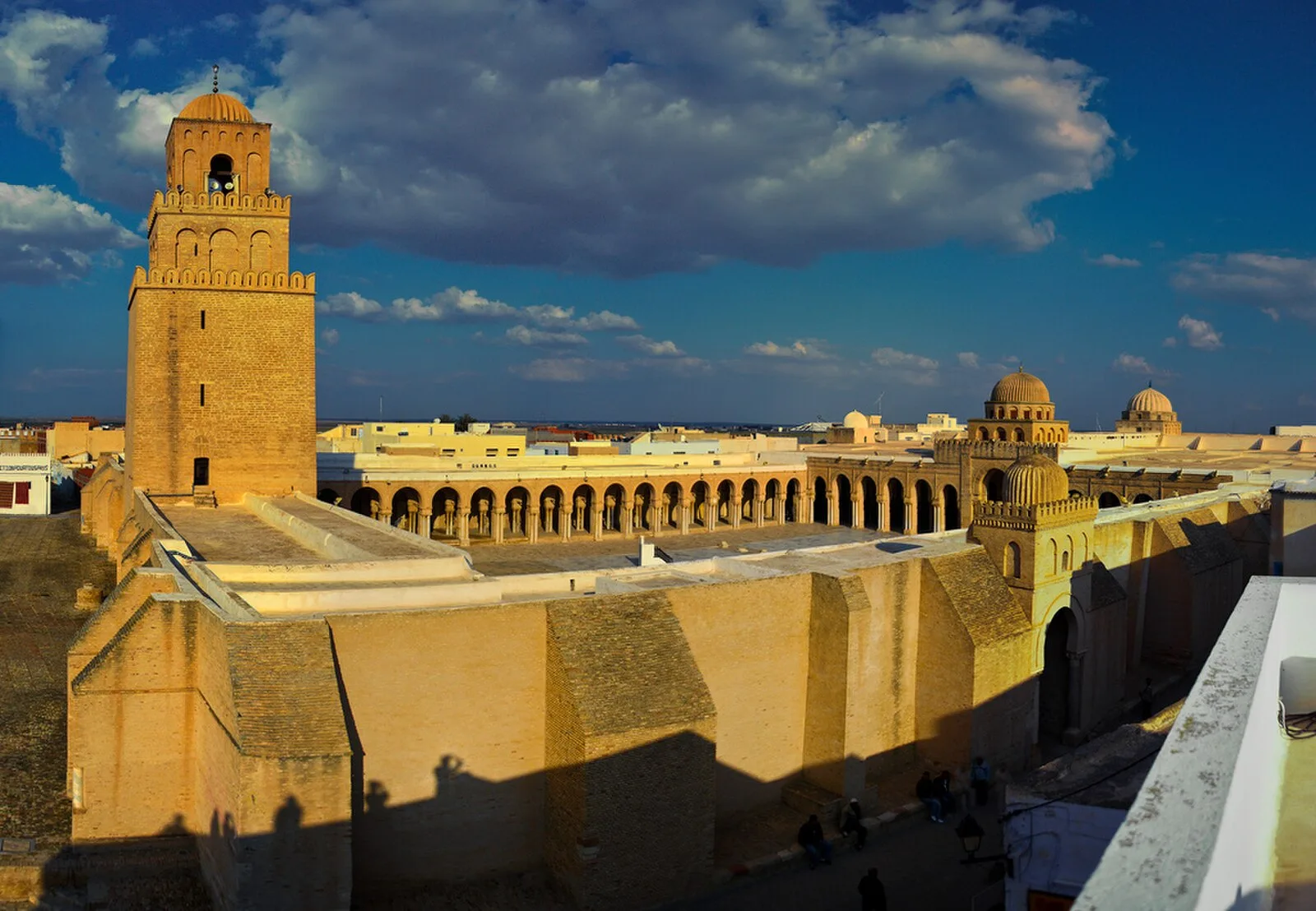
Asking which is the largest mosque in Tunisia without mentioning Kairouan means comparing two buildings while forgetting the one that came before them both. The Great Mosque of Kairouan, founded around 670, covers some nine thousand square metres, nearly twice the Zitouna. On built area alone, it is the largest historic mosque in the country.
Above all it holds a title nobody disputes: its minaret, whose lower levels date from the early ninth century, is regarded as the oldest minaret still standing in the world. A square, massive tower in three receding tiers, whose silhouette became the reference for the whole Muslim west, from the Maghreb to al-Andalus.
Its hypostyle prayer hall rests on several hundred ancient columns taken from Roman and Byzantine sites in the region, notably Carthage. The monument has been on the UNESCO World Heritage list since 1988, as part of the medina of Kairouan. The full page is here: the Great Mosque of Kairouan.
Three criteria, three different winners
The ranking depends entirely on what you measure, and that is what makes the question interesting rather than settled.
On age, Kairouan wins, founded in the seventh century, barely a generation after Islam reached North Africa. On built area, Kairouan wins again, with its nine thousand square metres. On capacity, however, Malek Ibn Anas wins, because it was designed in the twenty-first century with esplanades sized for large gatherings, something a medieval building hemmed in by its medina cannot offer.
On intellectual reach, finally, Zitouna holds a place of its own: its teaching trained the country's religious and legal elite for more than a thousand years, and the university bearing its name carries that legacy on.
What these three mosques say about the country
Taken together they trace a rare continuity. Kairouan sets a model in the seventh century and fixes the form of the square minaret for the whole Muslim west. Zitouna takes up that vocabulary in the heart of the capital and adds the scholarly function, becoming one of the oldest centres of higher learning in the Muslim world. Malek Ibn Anas, thirteen centuries later, reuses the same horseshoe arches and the same slender minaret at a contemporary scale.
No break in style across the three, despite thirteen hundred years between them. It is exactly what can be observed in neighbouring Morocco, where the Almohad tradition runs from Tin Mal to Casablanca, as our article on Moroccan mosques and the Almohad tradition describes.
Where to see them, in practice
All three can be visited on one trip, but not in one day. Zitouna sits in the heart of the Tunis medina, a few minutes' walk from the Bab Bhar gate, and is discovered through the souks that surround it. Malek Ibn Anas stands on the hill of Carthage, some twenty kilometres to the north-east, reachable by the suburban train line. Kairouan is about one hundred and sixty kilometres south of Tunis, which makes it an excursion in its own right.
As in many historic mosques of the Maghreb, access for non-Muslim visitors is generally limited to the courtyard, the prayer hall remaining reserved for worshippers. That is more than enough for the essentials: at Kairouan it is from the courtyard that the mass of the minaret reads best, and at Zitouna it is the arcaded gallery that gives the measure of the building.
Three buildings, one story
Zitouna wins on age, intellectual influence and heritage density; Malek Ibn Anas wins on floor area and capacity. Rather than a ranking, these buildings tell the same story from three angles: that of a country that has never stopped building mosques, from the 7th century to today, without breaking from its North African architectural vocabulary of horseshoe arches, square minarets and carved portals, inherited from Kairouan and passed down through generations of builders.
Discover
Mosques mentioned in this article
About this page's content: this site offers editorial and cultural content written with care and respect for the religious traditions concerned; it does not constitute a theological opinion or a source of religious authority. Despite our checks, errors, inaccuracies or approximations may remain. If you spot one, please let us know via the Contact page or by email at qibla.mosk@gmail.com, and we will correct it gratefully.