
Home › Blog › Blue Mosque and Süleymaniye: Istanbul's two Ottoman masterpieces
Architecture · 6 min read · 2026-02-09
Blue Mosque and Süleymaniye: Istanbul's two Ottoman masterpieces
Six slender minarets and a cascade of domes on the Sultanahmet side, a single dome dominating the Golden Horn on the Süleymaniye side: half a century apart, these two mosques fixed Istanbul's skyline and the vocabulary of imperial Ottoman architecture for centuries to come.
The Süleymaniye, Sinan's masterpiece
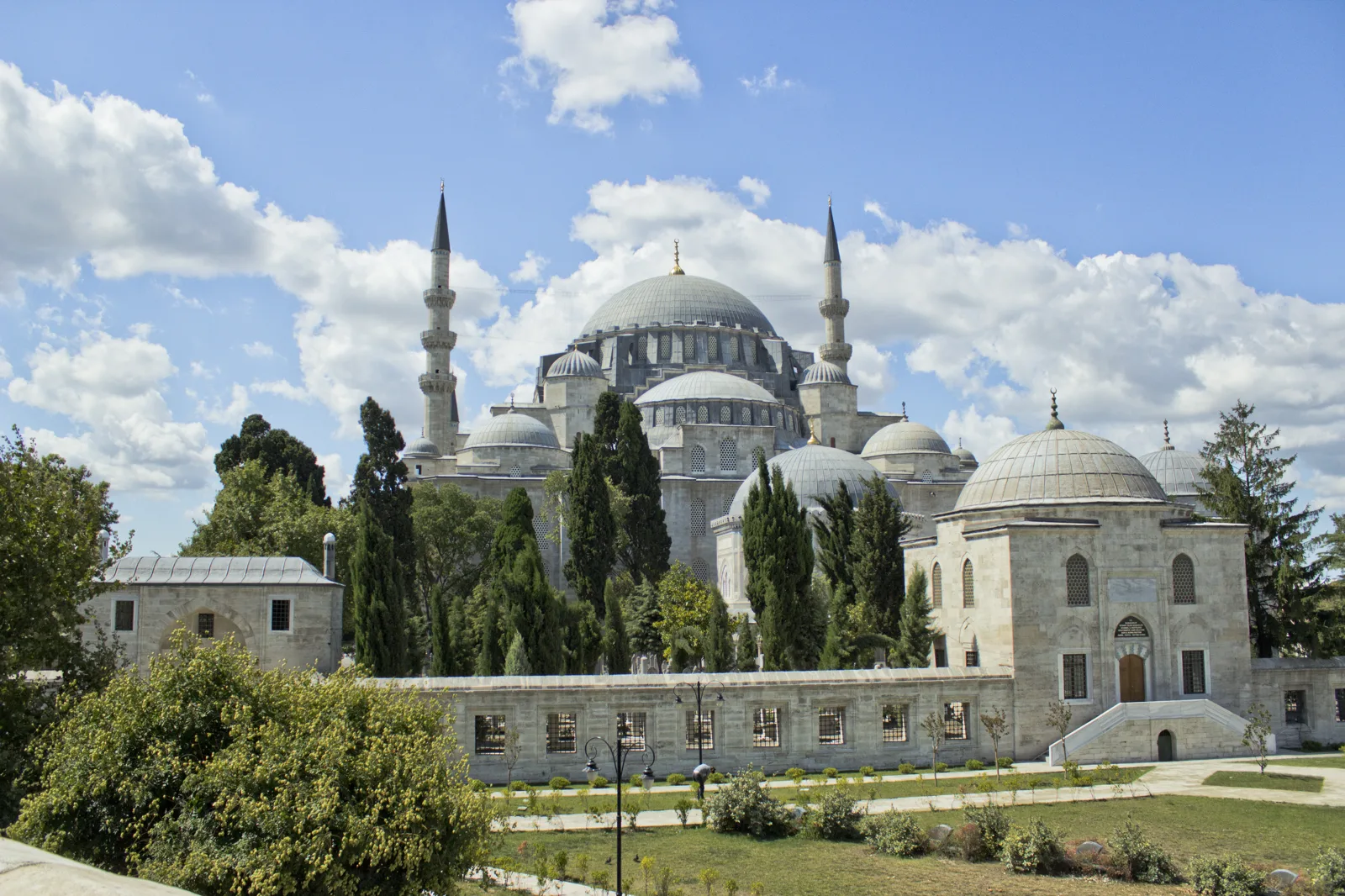
Built between 1550 and 1557 by the architect Mimar Sinan, considered the greatest Ottoman builder, the Süleymaniye Mosque is dedicated to Suleiman the Magnificent. Sinan, then in his seventies, regarded it as his "journeyman" work, still considering the Selimiye Mosque in Edirne his absolute masterpiece. A special room in the mosque collected soot from the oil lamps, used to make calligraphers' ink; ostrich eggs were hung from the chandeliers, believed to repel spiders and their webs.
The Blue Mosque, a feat and a controversy
Built between 1609 and 1616 by the architect Sedefkâr Mehmed Ağa, the Blue Mosque (Sultan Ahmed) owes its nickname to the thousands of Iznik ceramic tiles adorning its interior. Its six minarets then equaled those of the Masjid al-Haram in Mecca: the sultan reportedly had to finance a seventh minaret for the Meccan sanctuary to quell the controversy this unprecedented number had sparked. Legend even has it that the architect confused "gold" (altın) and "six" (altı) in the sultan's orders.
Two answers to the same structural challenge
Both mosques tackle the same challenge inherited from Hagia Sophia: covering a vast prayer space with a single great central dome, without pillars that would disrupt the alignment of the rows of worshippers. The Süleymaniye opted for a single dome carried by two half-domes; the Blue Mosque preferred a cascading arrangement of domes and half-domes, reinforced by four massive pillars nicknamed "elephant feet".
A shared legacy, two silhouettes
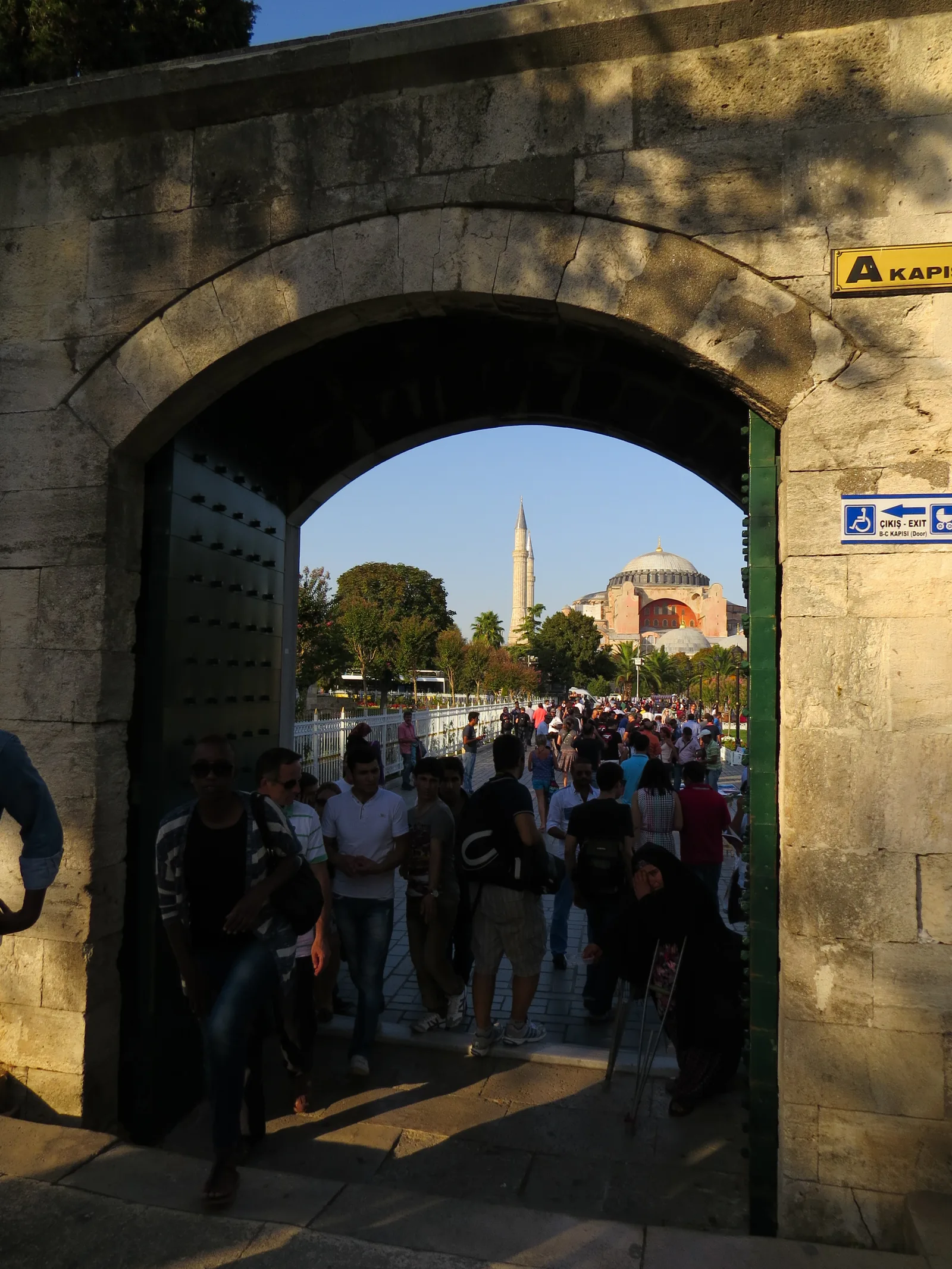
Demand for Iznik tiles for the Blue Mosque was so great that it exhausted the workshops and contributed to their decline in the following decades. Both mosques remain active places of worship today, and each is instantly recognizable on Istanbul's skyline: the Süleymaniye dominates the Golden Horn from its hill, while the Blue Mosque faces Hagia Sophia across the former Hippodrome square.
Discover more
Mosques mentioned in this article
Blue Mosque (Sultan Ahmed)
Six minarets, a cascade of domes, and over 20,000 Iznik tiles: the icon of Istanbul.
Süleymaniye Mosque
Sinan's masterpiece overlooking the Golden Horn, dedicated to Suleiman the Magnificent.
About this page's content: this site offers editorial and cultural content written with care and respect for the religious traditions concerned; it does not constitute theological advice or an authoritative religious source. Despite our checks, errors, inaccuracies, or approximations may remain. If you spot one, please let us know via the Contact page or by email at qibla.mosk@gmail.com, and we will gladly correct it.