
Home › Blog › The 255 jars hidden in the dome of the Süleymaniye
Istanbul · 9 min read · 2026-08-13
The 255 jars hidden in the dome of the Süleymaniye
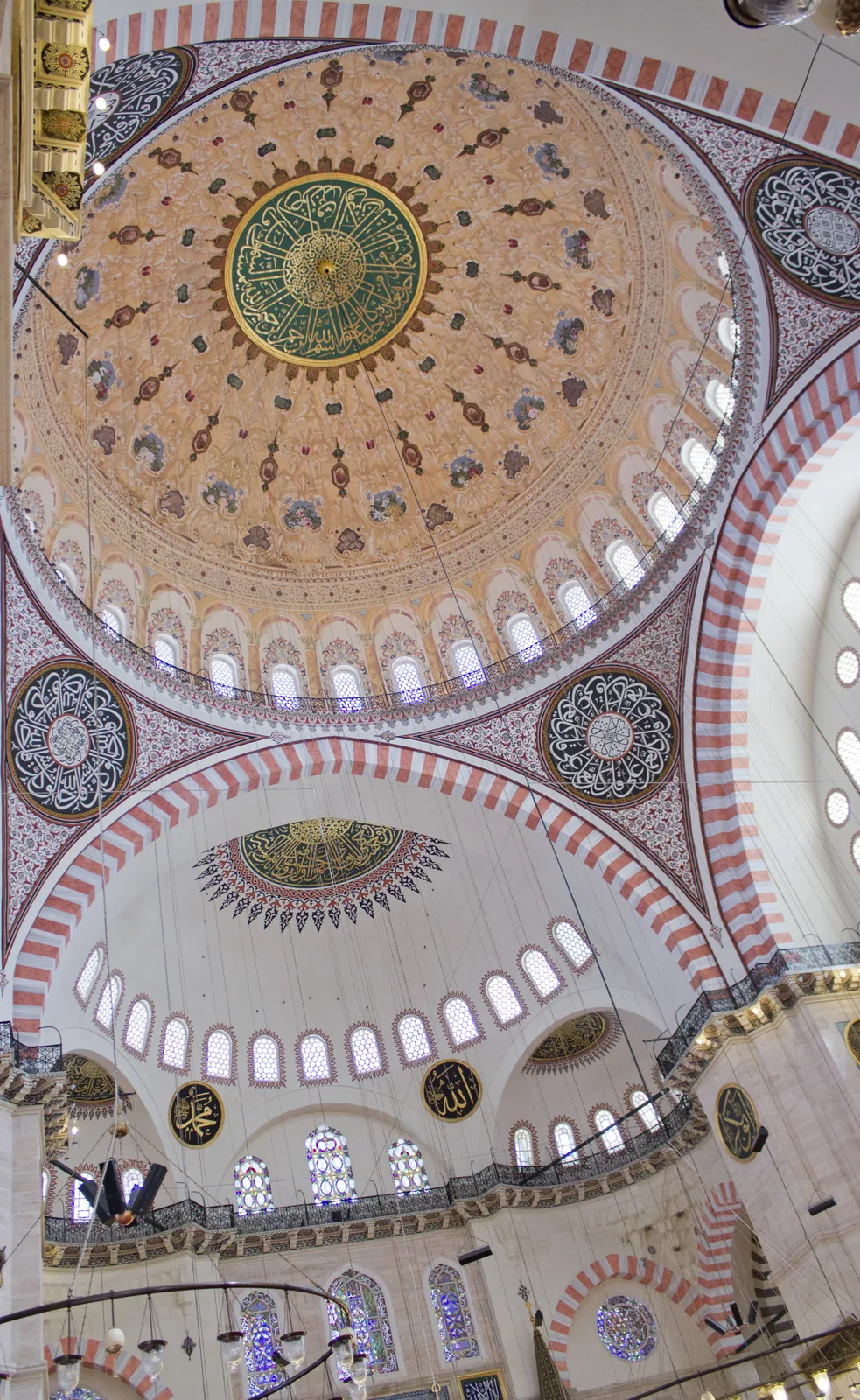
In the construction accounts of the Süleymaniye in Istanbul, one purchase stands out among the marble, the lead and the gold. Two hundred and fifty-five earthenware jars were bought at two aspers each, with a note that leaves no doubt about where they were going: for the dome of the noble mosque. Storage pots, purchased to be embedded in the vault of one of the greatest buildings in the Ottoman Empire. This was not a builder's economy. It was an acoustic device, and we have the invoice for it.


A problem nobody had solved
The difficulty is easy to state and brutal to solve. A great Ottoman mosque is a volume of stone and marble, almost entirely hard and reflective, crowned by a dome that concentrates sound instead of scattering it. In such a space the voice does not fade: it bounces, layers over itself and comes back as an echo on top of the following syllables. The Friday sermon, which rests entirely on the spoken word, becomes unintelligible beyond the first rows.
Acousticians measure this as reverberation time, the length of time a sound takes to decay to inaudibility. For speech to remain comprehensible in a hall of this size, the specialist literature sets a limit of around four to five seconds. Beyond that, every word encroaches on the one before. A volume like the Süleymaniye, left to itself, goes well past that threshold in the low frequencies, precisely where a carrying male voice sits.
Sinan, chief architect of the empire for nearly half a century, built or supervised hundreds of buildings. He had no equations and no measuring instruments. He had observation, the accumulated experience of earlier sites, and a body of technique that had been circulating since antiquity.
The resonator principle, in one image
Blow across the neck of an empty bottle: it sounds a note, always the same one. That is no accident. The volume of air trapped in the bottle behaves like a spring, and the air in the neck like a mass sitting on top of it. The whole thing has a natural frequency, exactly as a pendulum has its period. This is what is called a Helmholtz resonator, after the physicist who gave the theory in the nineteenth century, three centuries after Ottoman builders had used it without naming it.
The device works both ways. Excited by a sound at its own frequency, the resonator vibrates. And in vibrating it consumes energy: air rubs in the neck, and the vibration dissipates as heat. Placed in a hall, it becomes a trap that selectively absorbs the frequencies it was sized for and leaves the others alone. Which is exactly what is needed here: remove the low frequencies that cause the echo, let through the highs that carry the articulation of speech.
Two hundred and fifty-five jars, two aspers each
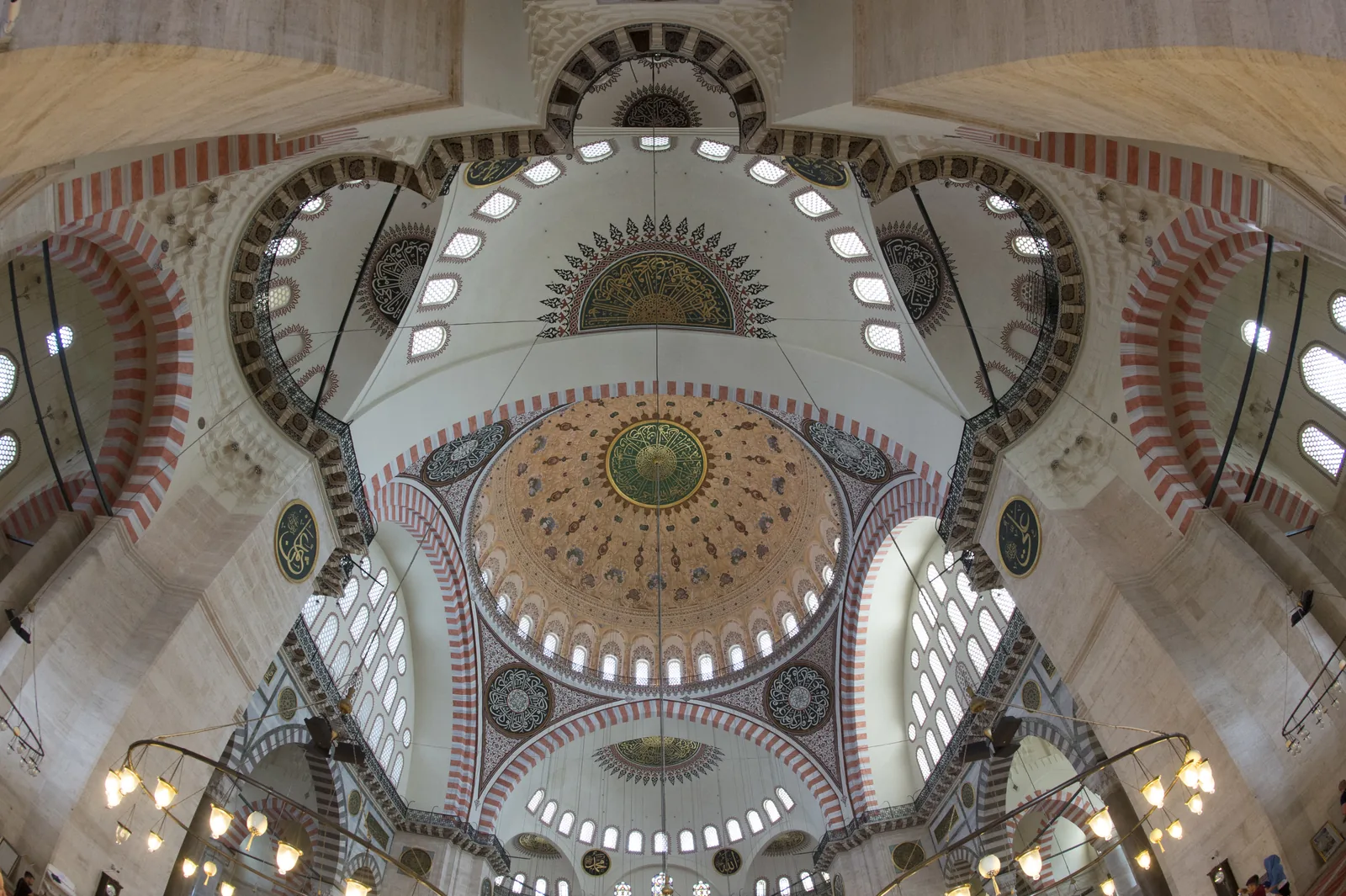
The Ottoman word is sebu, an earthenware jar with a narrow neck and a wide belly, the shape of an amphora. The construction registers of the Süleymaniye, built between 1550 and 1557, keep the accounting trace: two hundred and fifty-five sebu bought at two aspers apiece, with the explicit note that they are for the dome. It is an administrative detail, almost mundane, and it is what turns a hypothesis into an established fact. We do not assume that Sinan dealt with acoustics: we have the line of expenditure.
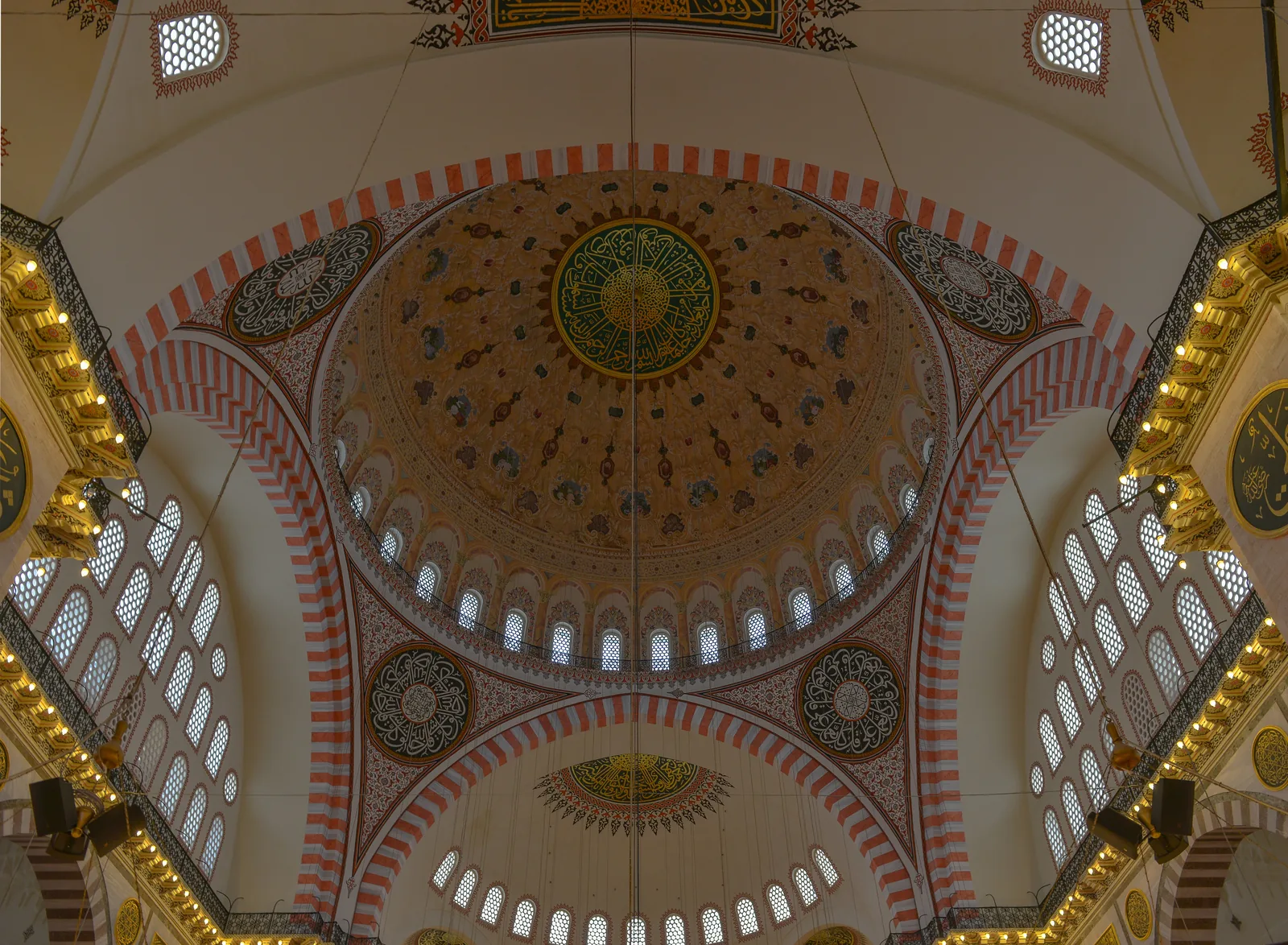
The jars are buried in the masonry of the dome, mouths open towards the interior of the hall. From the floor all you see is a row of small dark openings, which the eye reads as decoration. The exact count is still debated, and that is a piece of honesty worth keeping rather than hiding: older surveys describe sixty-four pots set in a circle on the central dome, about fifty centimetres long with a neck of two to six centimetres, while the restoration carried out between 2007 and 2011 reports detecting two hundred and fifty-six, forty-five centimetres long and opening through a fifteen-centimetre mouth.
That variety of sizes is probably not a manufacturing flaw. A resonator only acts on a narrow band of frequencies, around its own note. Multiplying the dimensions widens the range treated: the same reasoning as an organ builder tuning pipes of different lengths. The researchers who have studied the question say it plainly, however: no technical report has ever quantified what these jars actually contribute to the acoustics of the building. The device is documented, its precise effectiveness is not.
The same move elsewhere, in greater numbers
The Süleymaniye is not an isolated case, which is what rules out coincidence. Thirty-five resonators have been counted in the Şehzade Mosque, also by Sinan, and seventy-five in the Blue Mosque, spread over three rings in the dome. In the latter the pots do not all share the same opening: some have an orifice of one and a half centimetres in radius, the others three centimetres, which makes them work at around one hundred to one hundred and twenty hertz for the first group and one hundred and eighty to two hundred hertz for the second. Two families of traps, tuned to two zones of the low range.
The idea itself is far older. Vitruvius, the Roman engineer of the first century BC, already describes bronze vessels placed in the seating of theatres to support the actors' voices. Embedded jars have been found in Byzantine and medieval churches from Greece to Scandinavia. What Ottoman architecture contributes is therefore not the invention of the process but its methodical application to an entire family of buildings, on the scale of an empire, across half a century of construction.
What restoration destroyed
This is where the story turns. A long measurement campaign across several Ottoman mosques compared their real acoustic behaviour to recommended values. Four of them come out acceptably. Two fall clearly short in the low frequencies, and they are the two masterpieces: the Süleymaniye and the Selimiye in Edirne.
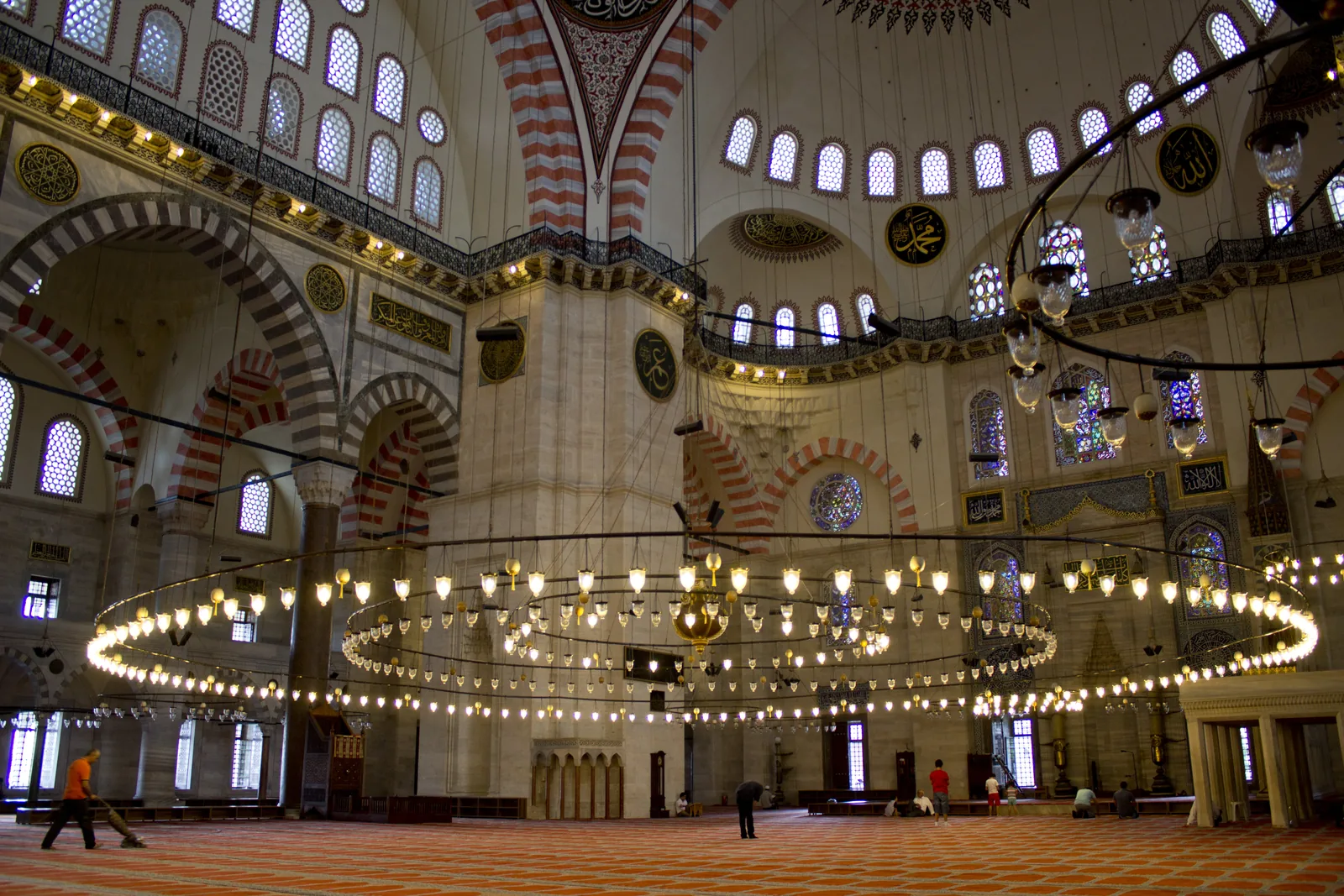
The explanation is not in the design, it is in the upkeep. At the Selimiye a large number of the dome resonators were blocked with brick during the last restoration, then covered over with gypsum plaster. The sound trap became a wall. At the Süleymaniye the problem lies in the renders: modern mortars, harder and more reflective than historic lime plasters, send sound back instead of damping it. The simulations give the measure of the damage. At one hundred and twenty-five hertz, reverberation time reaches seventeen seconds with the current renders, against a little over ten with plasters of historic composition, for an acceptable value set below five. Across speech frequencies it stays above six seconds where four would be needed.
In other words, a mosque designed in the sixteenth century so that a man speaking could be heard now sounds worse than it did on completion, and the cause is not the passage of time but works meant to protect it. The craft was not lost by accident: it was covered over.

The Süleymaniye in pictures
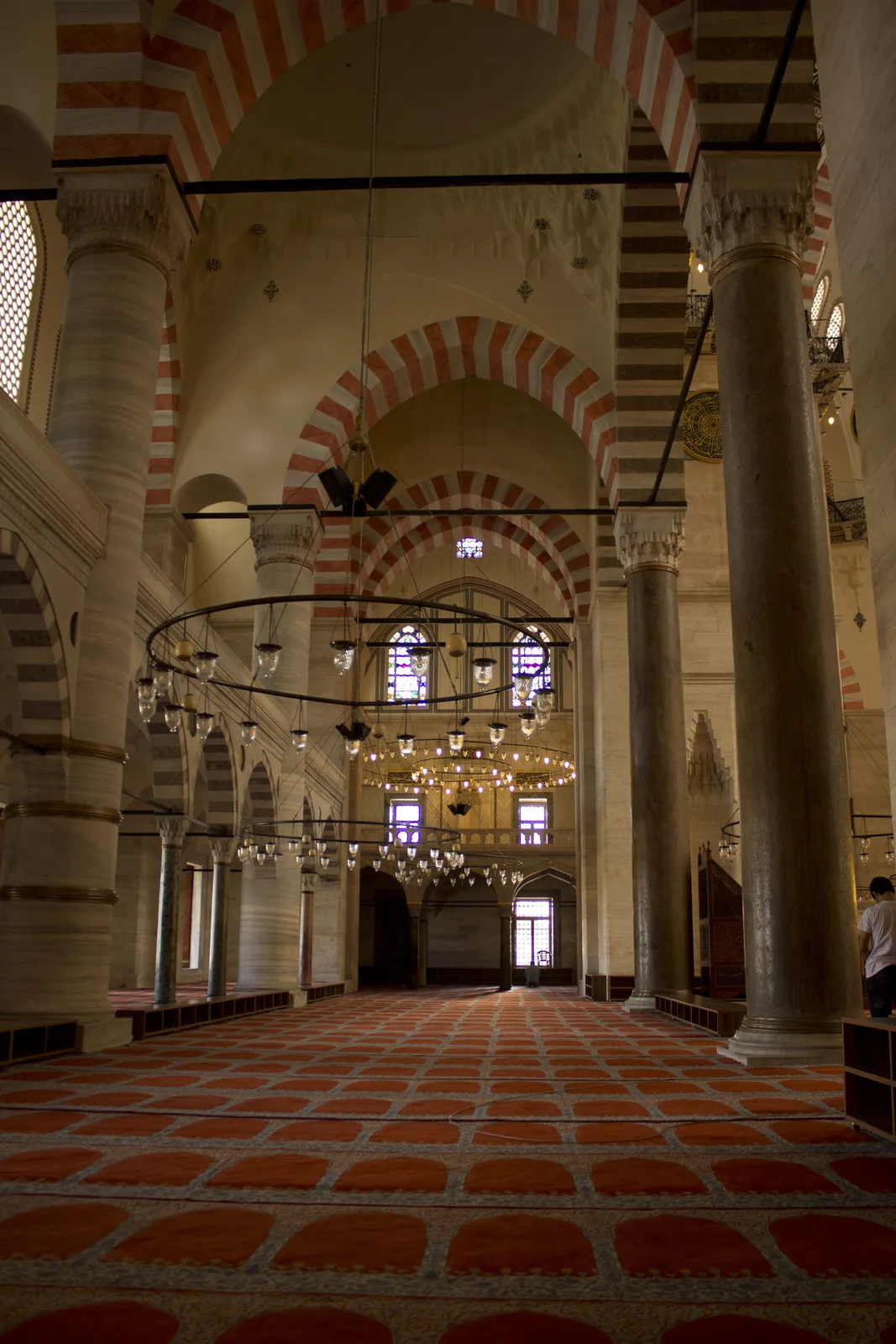

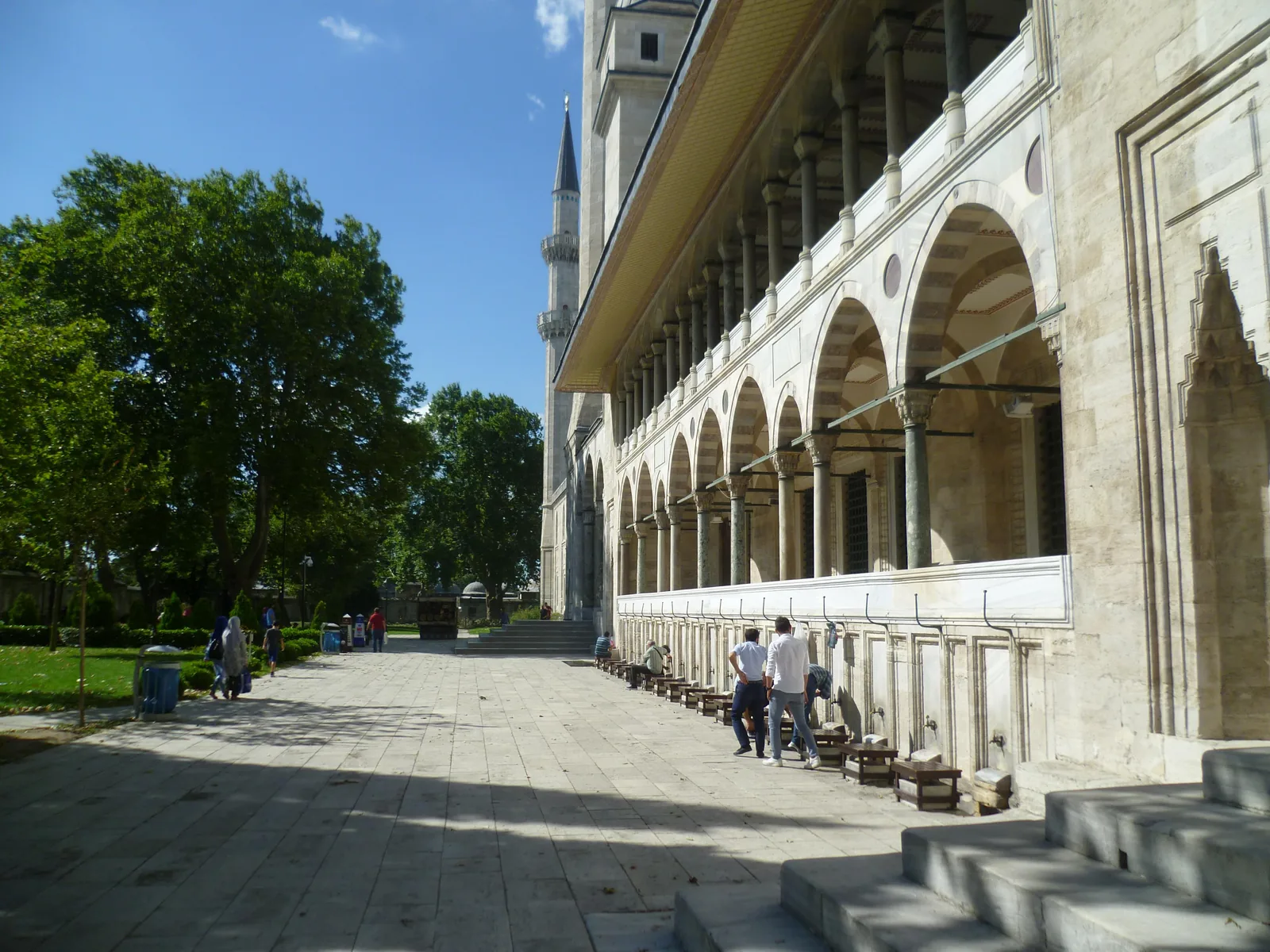

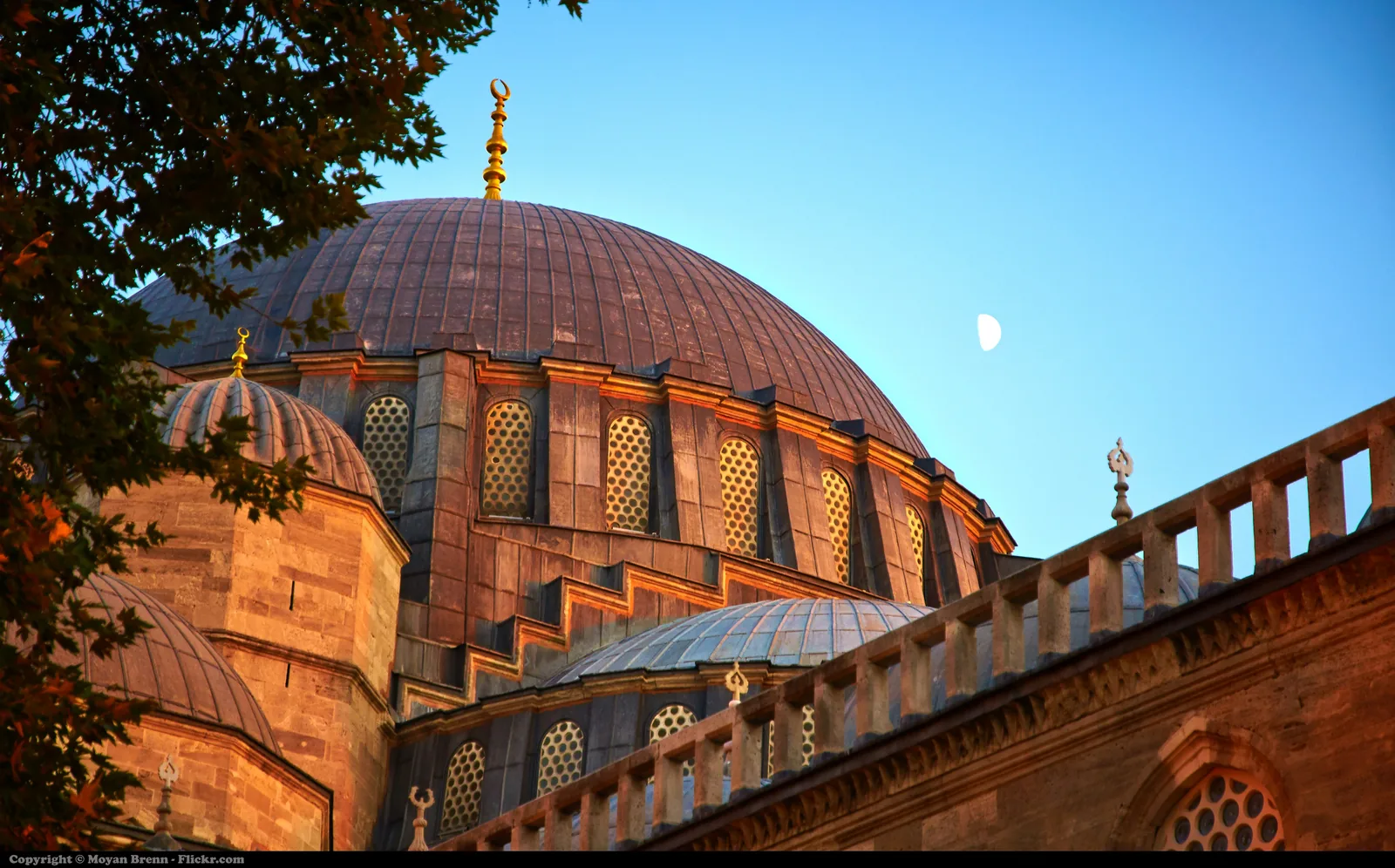
What it changes in the way you look
People visit the Süleymaniye for its volumes, its light and the virtuosity of its dome. They rarely look up wondering what this building was supposed to do. Yet a congregational mosque is first of all an instrument: it has to let thousands of people follow words spoken by one person, with no microphone, no loudspeaker and no relay. Everything else, the scale, the geometry, the placing of the openings, follows in part from that constraint.
The jars are the most concrete admission of that concern. They are invisible, they decorate nothing, they serve no display of power. They were bought, counted and paid for one reason only: so that the voice would carry. And finding their line in an expense register nearly five centuries old is worth more than all the legends that usually surround Ottoman architecture.
To go further, the full page on the monument is here: the Süleymaniye Mosque, and to place this project within the wider Ottoman work in Istanbul, the Ottoman mosques of Istanbul.