
Home › Blog › Touba: the Senegalese city that stops every year for the Grand Magal
History · 6 min read · 2026-08-06
Touba: the Senegalese city that stops every year for the Grand Magal
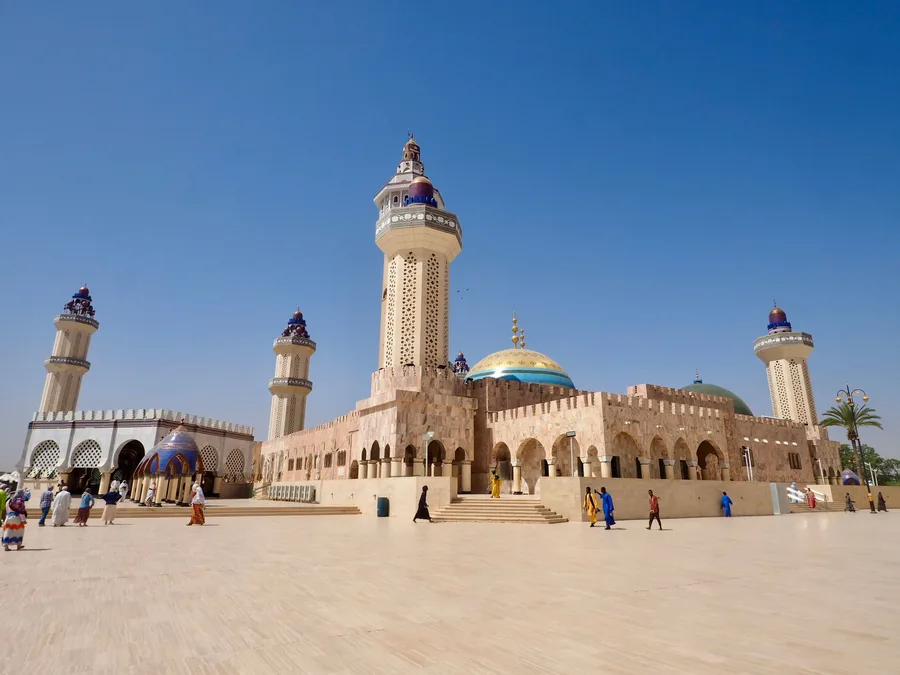
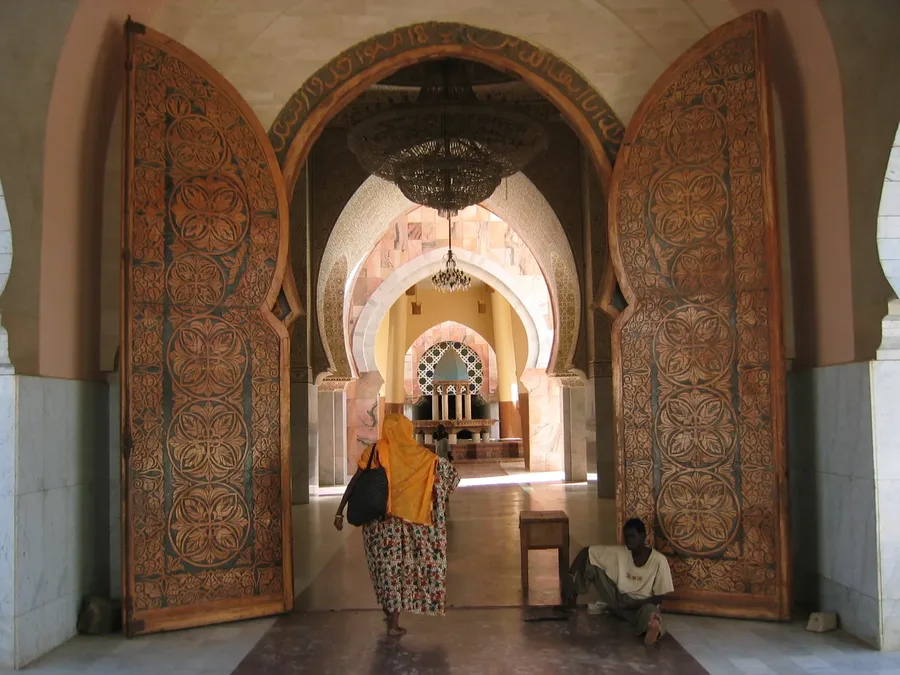
Once a year, the Senegalese city of Touba comes to a near standstill. Shops close, roads clog up, and millions of faithful converge on a single point: the Great Mosque of Touba, the central sanctuary of the Sufi Mouride brotherhood and the resting place of Cheikh Ahmadou Bamba, its founder. With its seven minarets, one of which rises above 86 metres, this imposing building is today one of the largest religious gathering sites in West Africa.
A holy city born in the Senegalese bush
Touba was founded around 1887 by Cheikh Ahmadou Bamba, a Sufi spiritual guide and the founder of Mouridism, who wanted to make it a city entirely devoted to God (its name evokes a tree of paradise mentioned in the Quran). Toward the end of his life, in 1926, he obtained authorisation from the French colonial authorities to build a great mosque there, a year before his death in 1927.
Thirty-one years of building, carried by the disciples
The project was entrusted to his eldest son, Serigne Mouhamadou Moustapha Mbacké, the first general khalif of the Mourides, who laid the first stone on 4 March 1932. The building site had to contend with the colonial context, the global economic crisis and a lack of infrastructure: materials were hauled in from Diourbel, about 45 kilometres away, through the mobilisation of the disciples themselves. After Serigne Mouhamadou Moustapha's death in 1945, his brother Serigne Fallou Mbacké took over and accelerated the work. The mosque was finally inaugurated on Friday, 7 June 1963, in the presence of President Léopold Sédar Senghor, thirty-one years after the first stone was laid.
Lamp Fall, a tribute to a devoted disciple
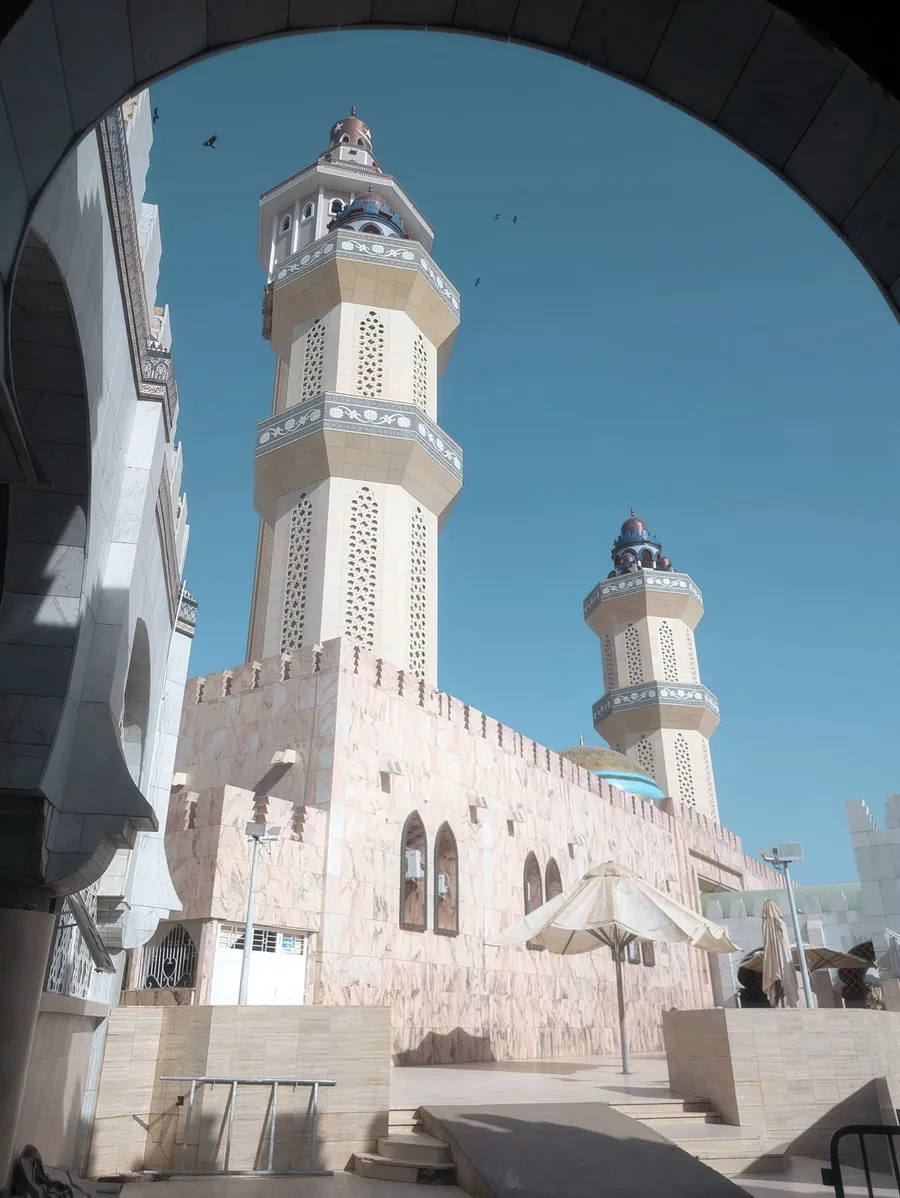
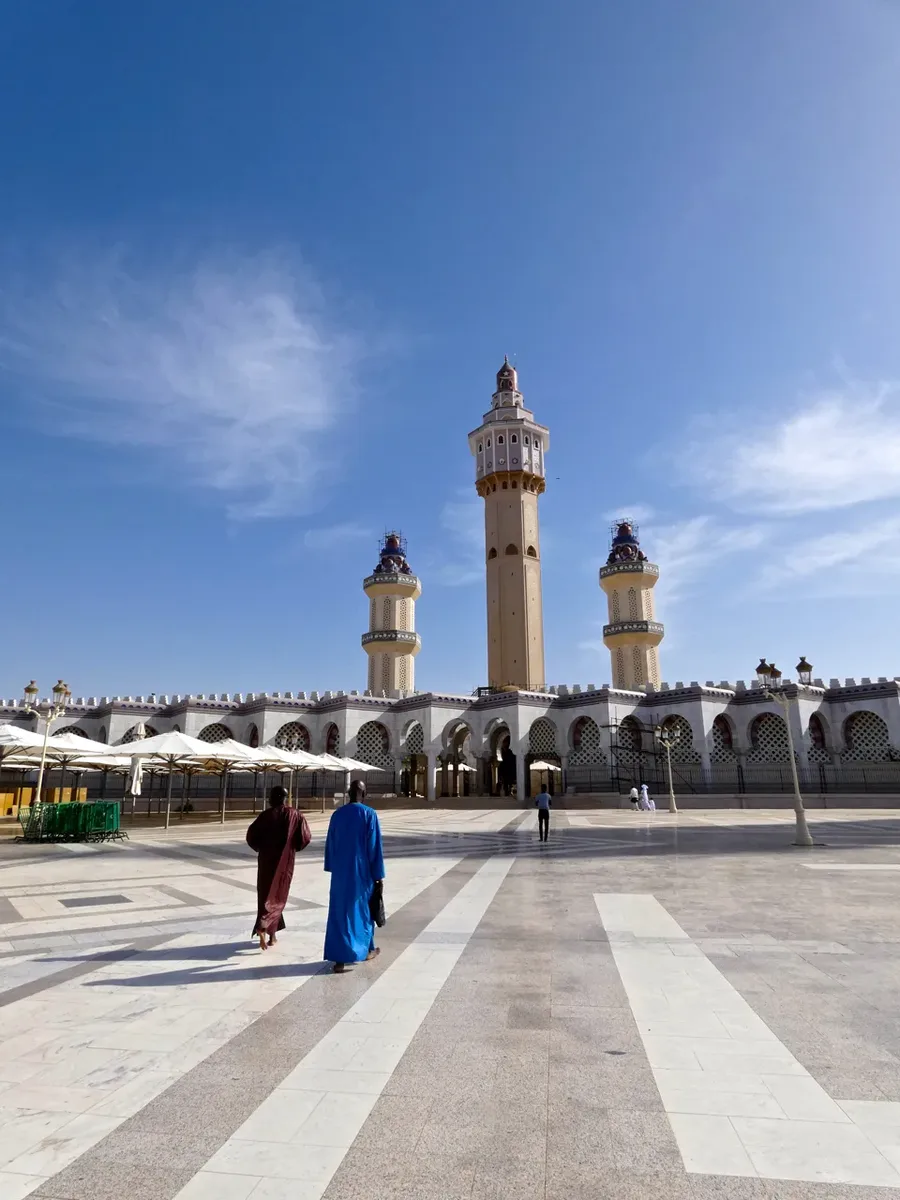
The building now has seven minarets. Four rise at the corners of the structure, 66 metres tall, while the tallest, the central minaret, reaches 86.8 metres (often rounded to 87 metres in oral tradition). It is named "Lamp Fall" in honour of Cheikh Ibrahima Fall, one of the closest disciples of Cheikh Ahmadou Bamba and the founder of the Baye Fall community. Two further minarets were added in 2013 by the caliph Serigne Sidy Moukhtar Mbacké. On a clear day, the tower remains visible from up to ten kilometres away.
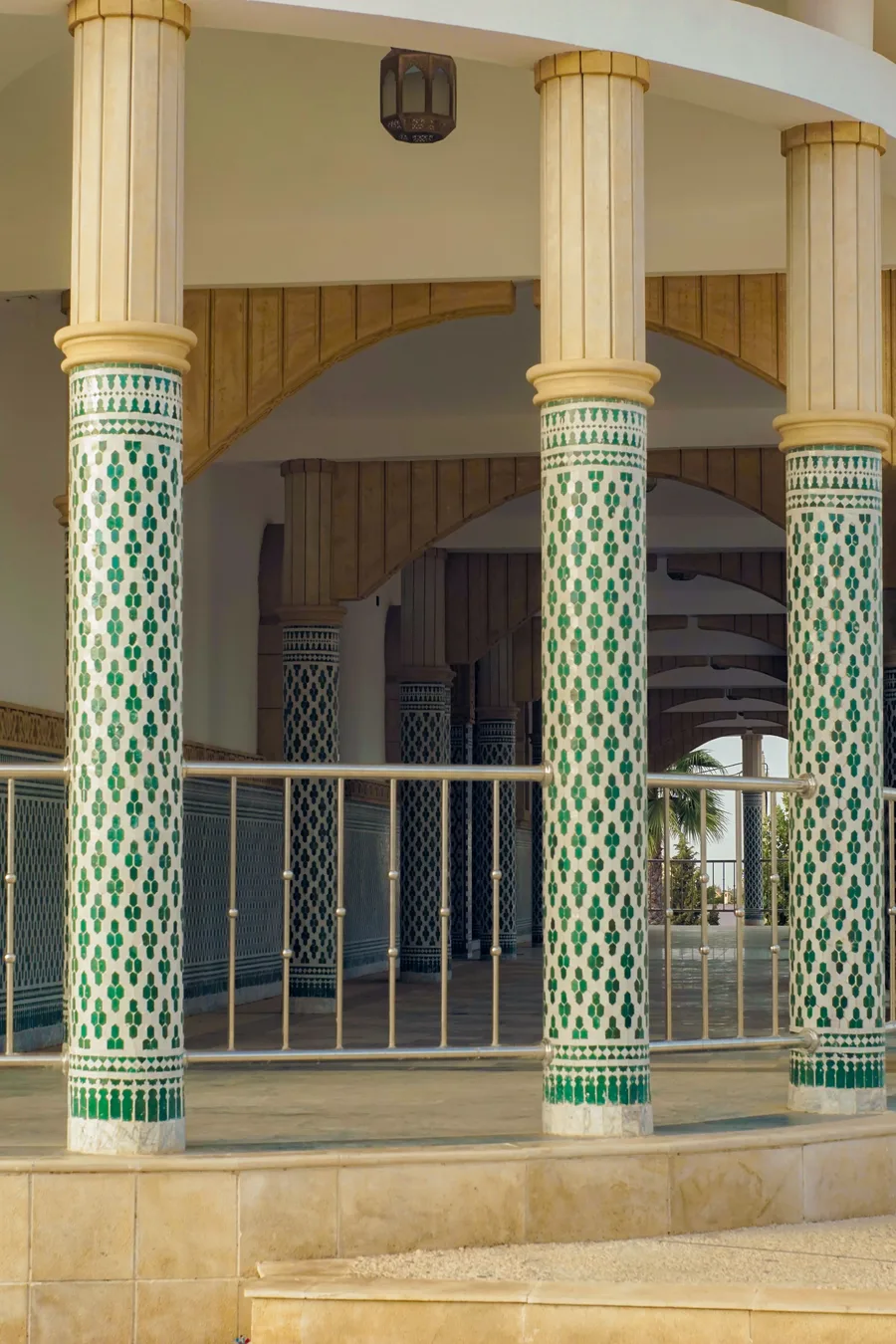
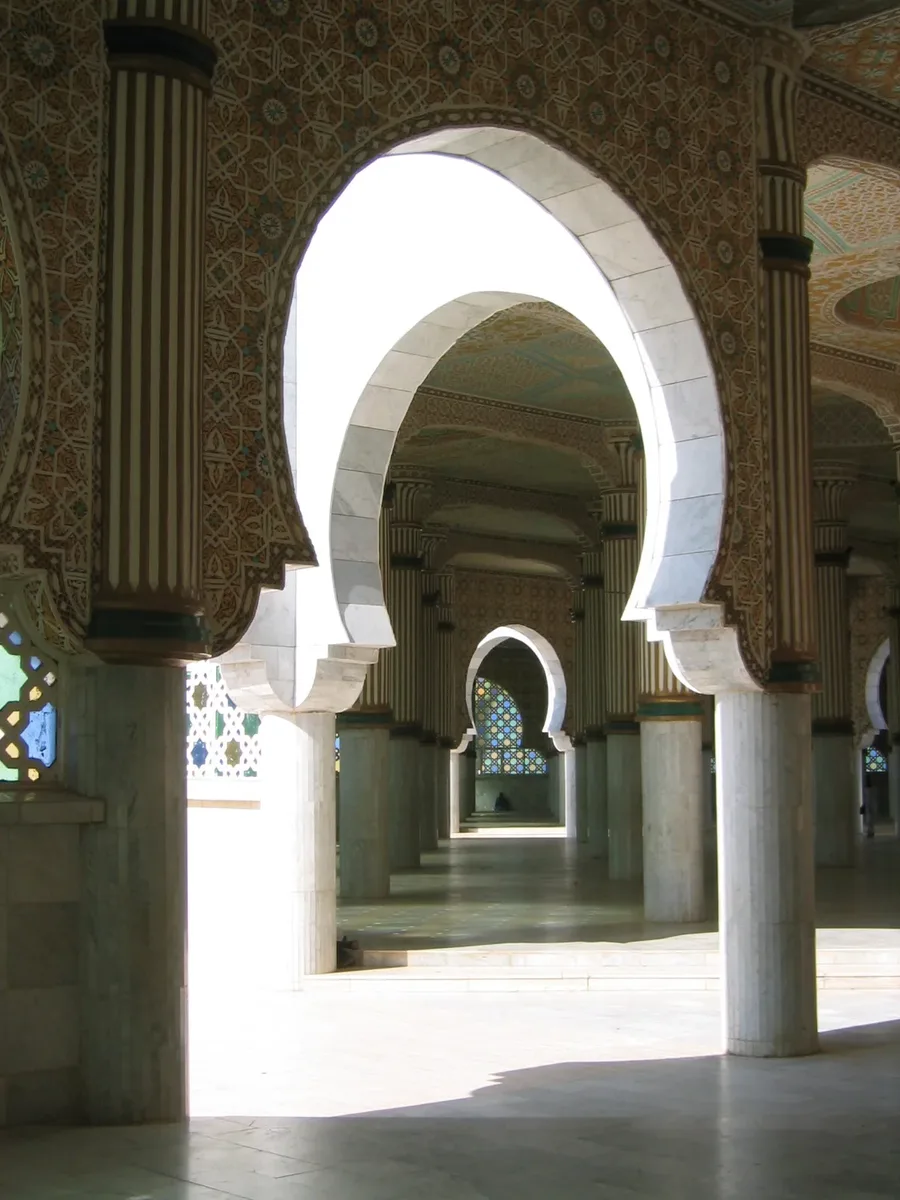
The mausoleum of Cheikh Ahmadou Bamba
The mausoleum of Cheikh Ahmadou Bamba stands at the north-eastern corner of the mosque, right next to the prayer hall. It is there, according to tradition, that the Quran is recited continuously, thirty-three times a day, by teams of reciters who take turns. This mausoleum is also a place of quiet devotion, visited year-round by the faithful from across Senegal and beyond.
Visiting and reflecting at a mausoleum is rooted in the Sufi tradition of Mouridism, but is not universally accepted across Islam: other currents hold that only Allah should be invoked, without intermediary, and take a more austere view of tombs. In the Mouride tradition, Cheikh Ahmadou Bamba is honoured as a spiritual guide and scholar, not as an intercessor before Allah.
A city unlike any other in Senegal
Touba is not simply a town with a large mosque, it is a town organised around one. The plan is radioconcentric: the avenues converge on the esplanade and the districts are arranged in rings around the sanctuary, which is unusual in West Africa where towns tended to grow along trade routes.
Its administrative status is unusual too. The city enjoys wide autonomy in its management, and a number of rules of daily life there belong to the community that runs it. That singularity partly explains its growth: from a hamlet in the bush, Touba has become in a century one of the largest urban areas in the country.
Building without a state budget
What surprises most on close inspection is the financing. The mosque was not built by public commission but through the contributions and the labour of disciples, over several decades and several generations.
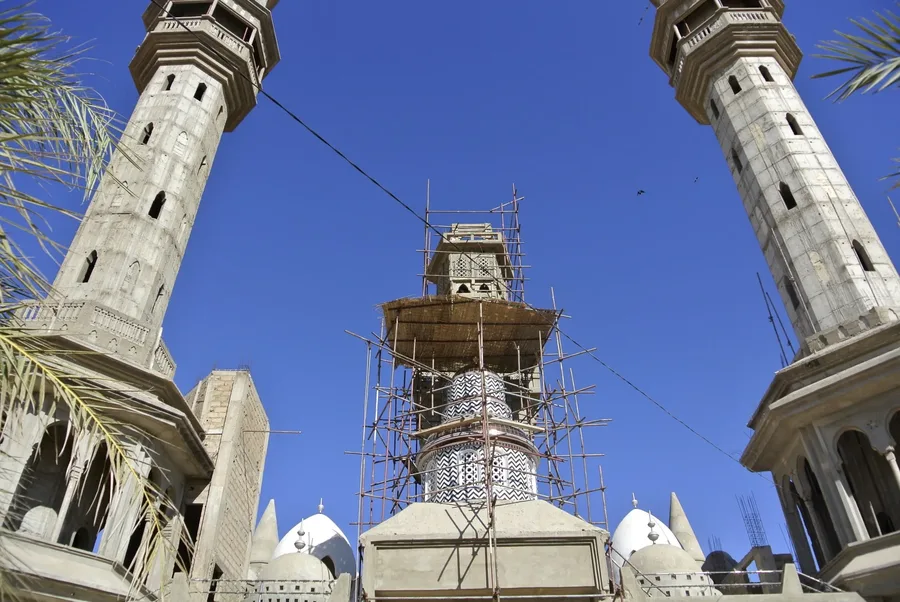
It shows in the chronology: thirty-one years of work, with interruptions, resumptions and successive enlargement campaigns long after the inauguration. It shows too in the materials, where imported marble sits alongside more modest work depending on the period.
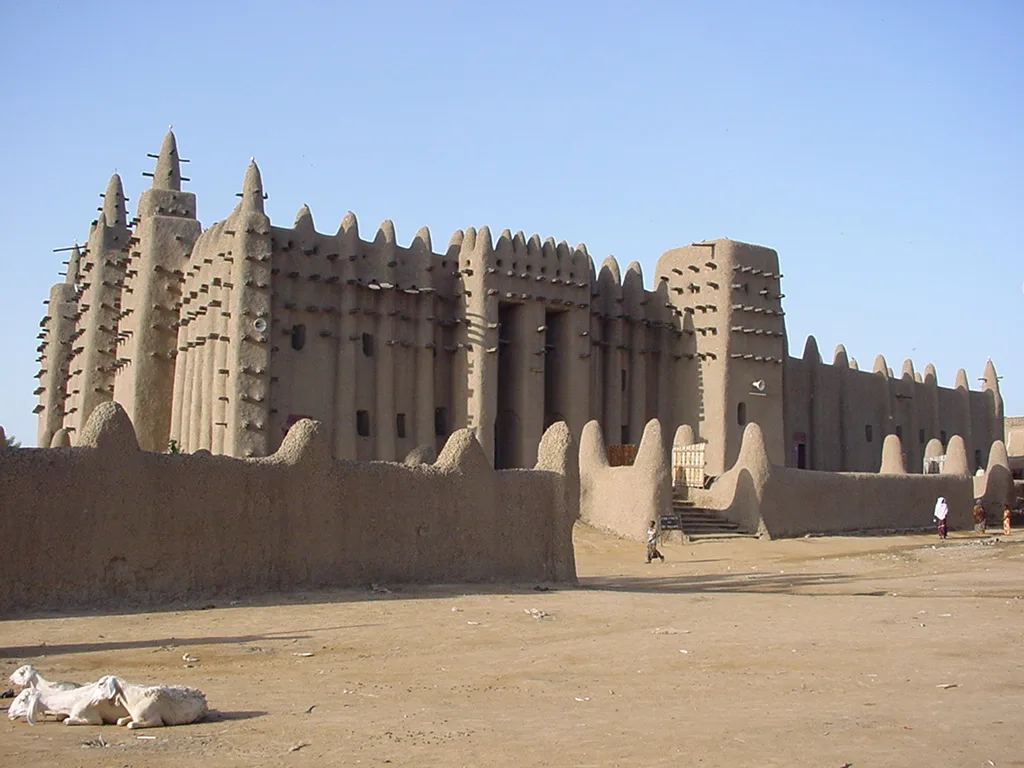
This way of building, with no single client and no budget fixed at the outset, is the same as that of the great earthen mosques of the Sahel: it is not money that makes the building, it is the continuity of a community. At Djenné that continuity takes the form of the annual re-plastering, at Touba that of a permanent building site, as our article on the mud-brick mosques of West Africa describes.
The Grand Magal: when a whole country stops
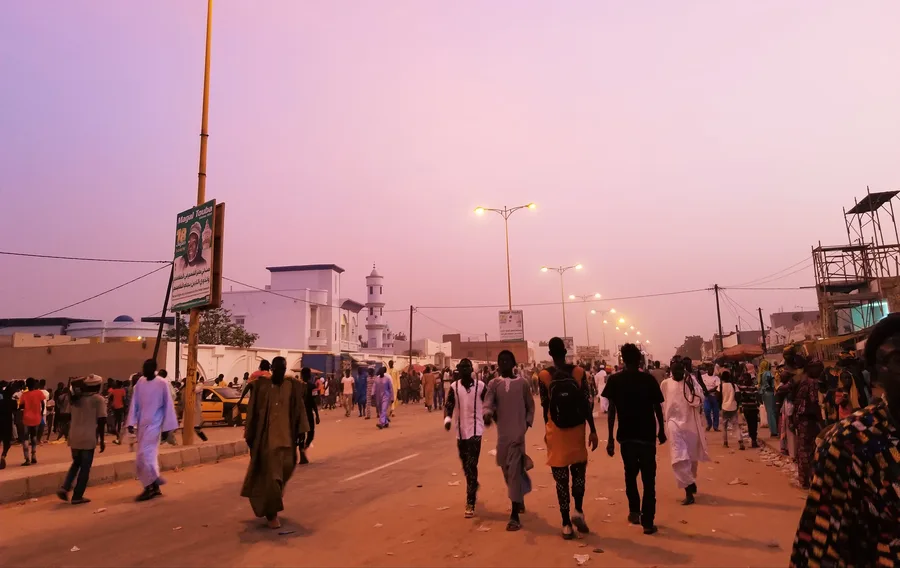
Every year since 1928, a year after Cheikh Ahmadou Bamba's death, the Mourides gather in Touba to celebrate the Grand Magal. The festival commemorates his departure into exile: in 1895, the French colonial authorities, wary of his growing influence, deported him to Gabon for nearly eight years, then, after a brief return, exiled him a second time to Mauritania in 1903 for four more years. Far from being seen as a punishment, this exile is understood by the Mourides as a trial turned into a spiritual victory. Today, the Grand Magal has become one of the largest religious gatherings in Africa: the 2026 edition, held on 2 August, brought together more than six million faithful. On that day, Touba and much of Senegal slow to a crawl, roads clogged, shops shut, families mobilised to house and feed, free of charge, visitors from across the country and the diaspora. In Islam, only the Hajj, the pilgrimage to Mecca, is recognised as a religious obligation; the Grand Magal, sometimes loosely called a "pilgrimage," remains a practice specific to the Mouride tradition.
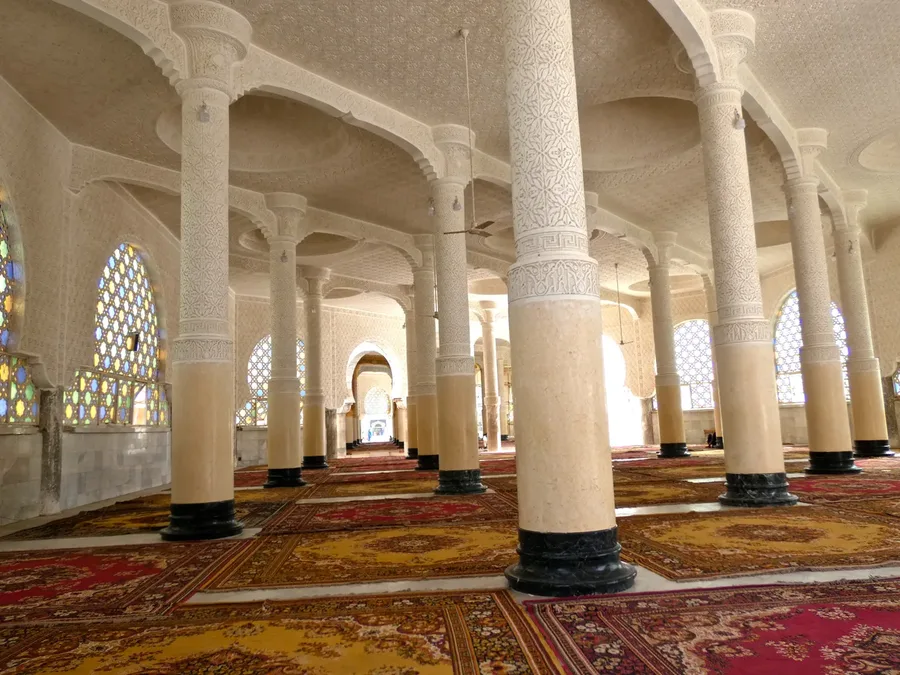
Worth exploring
Another mosque built and maintained by an entire community
Go further
Similar articles
Djenné, Larabanga, Bobo-Dioulasso: the art of mud brick in West Africa
From Mali to Ghana and Burkina Faso, one architectural tradition crosses borders: mud brick, re-plastered every year by an entire community.
The miqats: the five sacred boundaries before Mecca
Around Mecca, five sites mark a boundary that every pilgrim heading to Hajj or Umrah must not cross without already being in the state of Ihram.
About this page's content: this site offers editorial and cultural content written with care and respect for the religious traditions concerned; it does not constitute a theological opinion or a source of religious authority. Despite our checks, errors, inaccuracies or approximations may remain. If you spot one, please let us know via the Contact page or by email at qibla.mosk@gmail.com, we will correct it gratefully.