History
History
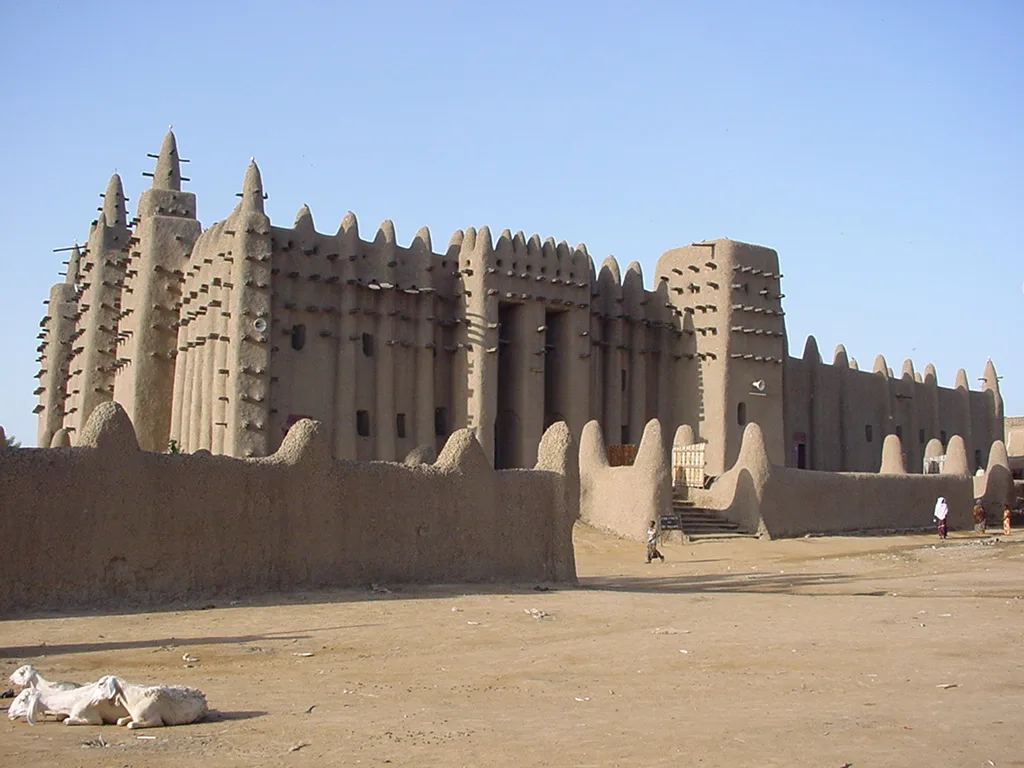
Heir to a 13th-century mosque built by King Koi Konboro, who converted to Islam, the current Great Mosque was rebuilt in 1907 under the direction of master mason Ismaïla Traoré and Djenné's guild of masons, in the inland Niger Delta of Mali. Built entirely of banco, rammed earth mixed with straw and rice husks, on a raised platform that protects it from seasonal floods, it is the largest earthen building in the world and the icon of Sudano-Sahelian style.
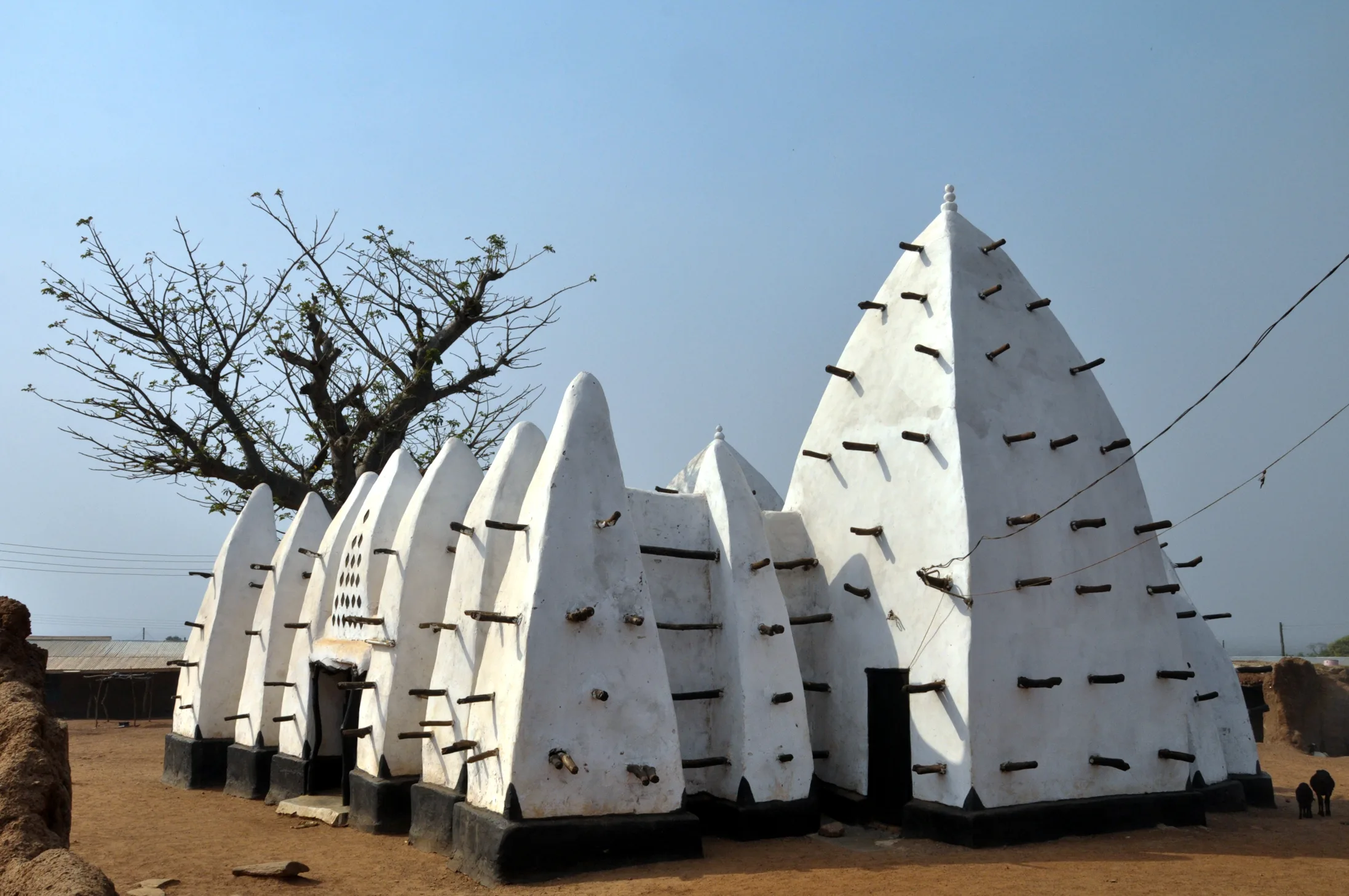
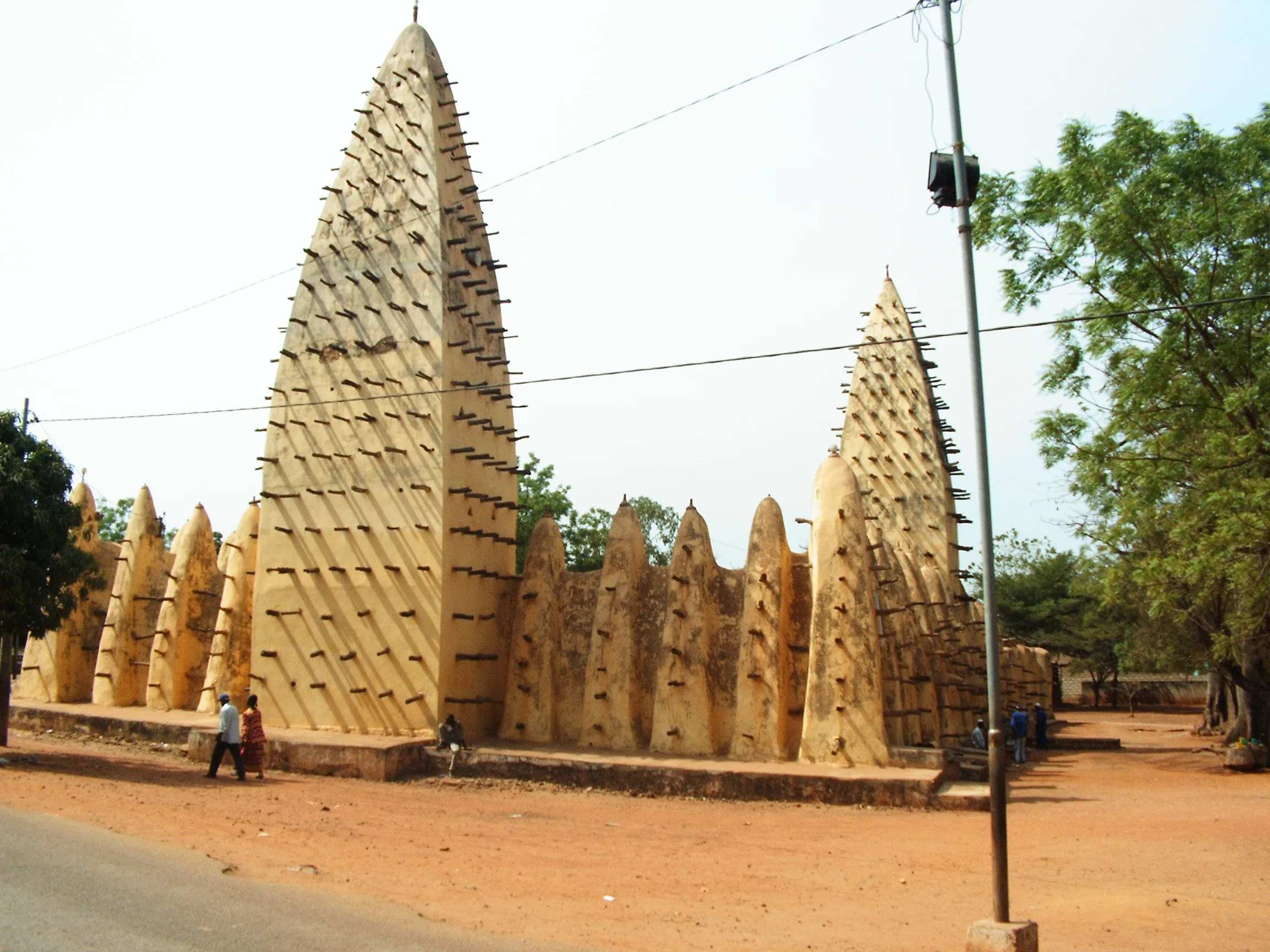
Its walls bristling with bundles of rônier palm or wood serving as permanent scaffolding, its three massive towers rising on the qibla wall oriented towards Mecca, and its countless conical pinnacles crowned with ostrich eggs create a unique silhouette. The old town of Djenné, built on a site occupied since roughly 250 BCE, has been listed with its mosque as a UNESCO World Heritage site since 1988.
Banco is not a trivial material: it demands constant upkeep, since rain and humidity erode it relentlessly. This cycle of fragility and repair has shaped, more than for any other mosque in the world, a genuine collective culture of architectural maintenance, passed down through generations by the guild of masons.
Anecdotes & highlights
- Every year, before the rainy season, the "crépissage" (or "Sortie de la banco") mobilises the entire town in a festive, friendly spirit of competition between neighbourhoods: men, women and children carry fresh mud plaster while young men climb the wooden bundles to re-coat the walls in a single day, to the rhythm of drums.
- The wooden bundles bristling from the facades are not decorative: they are permanent scaffolding built into the structure, letting masons reach the tops of the walls every year without erecting temporary scaffolding.
- The ostrich eggs atop the pinnacles symbolise fertility and purity, a tradition shared with several other Sudano-Sahelian mosques in the region.
- Access to the mosque's interior has been restricted to Muslims since 1996, following a video shoot deemed disrespectful; non-Muslim visitors can still admire the building and its square from the outside.