History
History
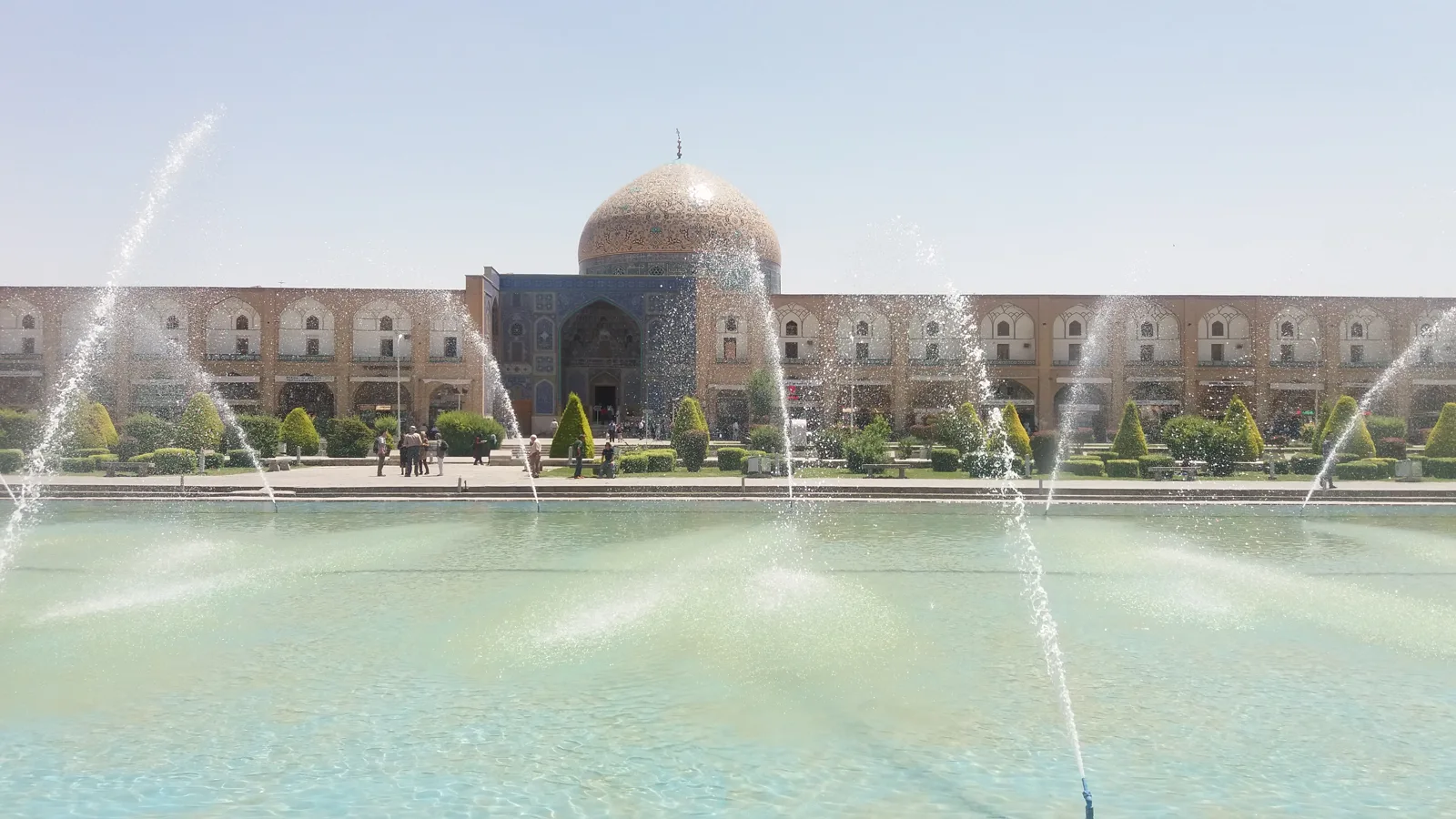
Completed in 1619 on Isfahan's royal square for Shah Abbas I, the Sheikh Lotfollah Mosque was reserved for the royal family: hence its lack of minaret and courtyard, unique among Iran's great mosques. A bent corridor discreetly connected it to the Ali Qapu Palace, on the other side of the square.
Its cream-coloured dome, covered in arabesques, changes hue through the day, from pinkish to caramel. Beneath the cupola, the tiles form a network of medallions converging on a central motif: in certain light, one can make out the wheel of a peacock's tail formed of sunbeams.
Anecdotes & highlights
- The dome's "peacock": from the room's entrance, the play of light forms the spread tail of a peacock whose body is painted at the summit.
- The access corridor is deliberately bent and dark, so the dazzling brilliance of the dome hits all the harder.
- Its dome, with no visible drum or minaret, is considered the most perfect in Persian architecture.