
Home › Blog › Cheraman Juma Masjid
Kodungallur, Kerala · 9 min read
An Indian king said he had seen the moon split
On the coast of Kerala, in an old spice port, stands a mosque that does not look like a mosque. No dome, no minaret, a tiled roof and a timber frame just like the houses of the region. Inside burns a brass lamp that visitors of every faith come to fill with oil.
An event, and a king
The Quran reports an event: the moon was split. It opens surah al-Qamar, and the majority position among commentators places it before the hijra.
And thousands of kilometres from Mecca, on the western coast of India, Kerala tradition reports that a king said he had seen the same thing.
We set the two facts side by side, and stop there. It is not our place to conclude, in either direction.
Kodungallur, the port
The place matters as much as the story. Kodungallur, on the Malabar coast, was one of the great spice ports of the ancient world. Pepper, ginger, cinnamon: this is where the cargoes that crossed the Indian Ocean set out from.
Arab merchants had been calling there for centuries before Islam. The point matters, and it changes how the whole story reads: when Islam reaches this coast, it does not arrive with a conquest. It arrives along an already old trade route, travelled by people who already knew one another.
It is that community of merchants, tradition says, who explained to the king what he had seen in the sky.
The departure
The king leaves his kingdom and sets out for Arabia. He will not return: the accounts have him die in Oman on the way back, and several sources place his grave at Salalah.
His companions carry the journey through to here. And they build.
A building that does not look like a mosque
Here is what makes this place remarkable, and it is architectural.
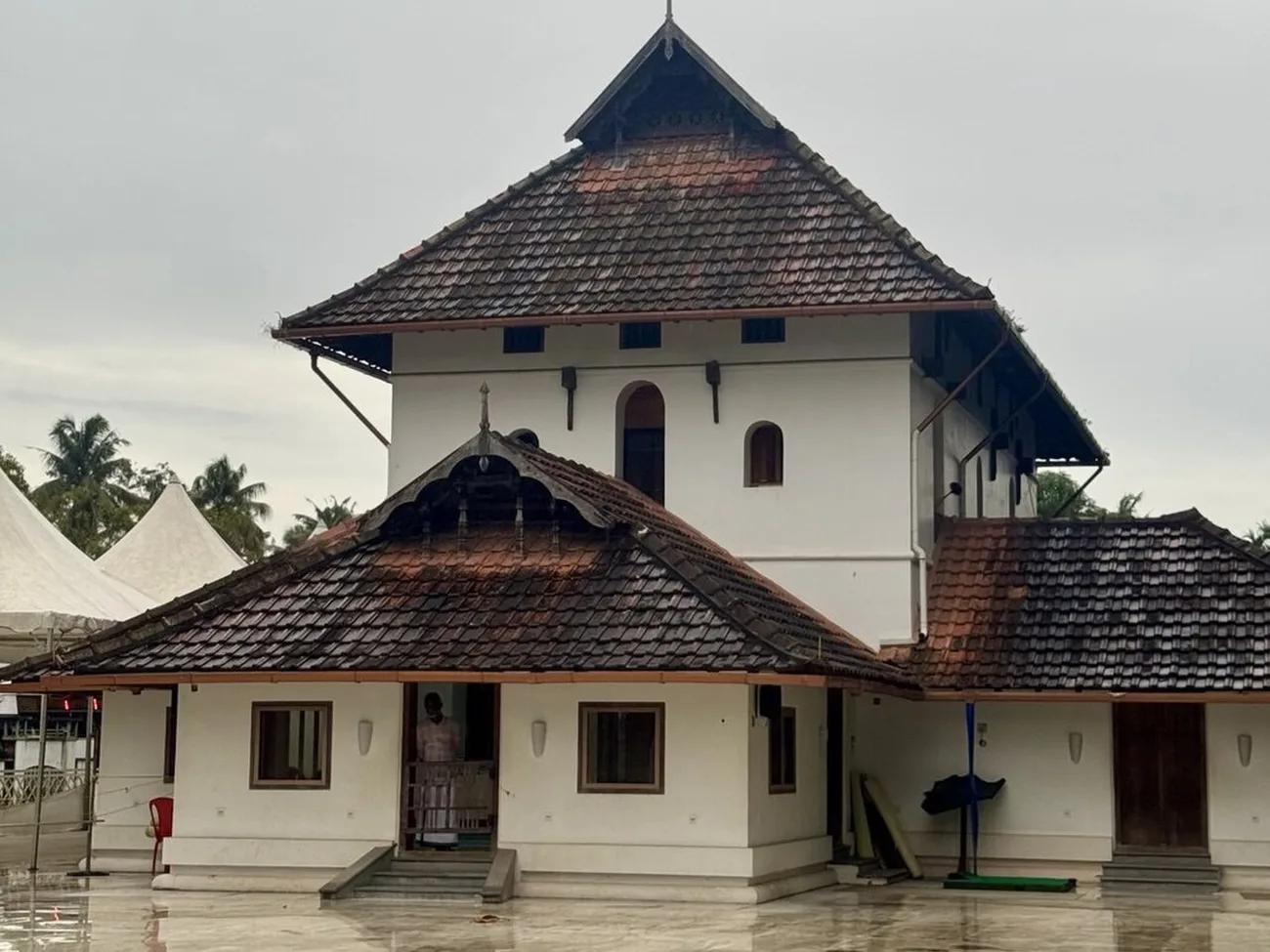
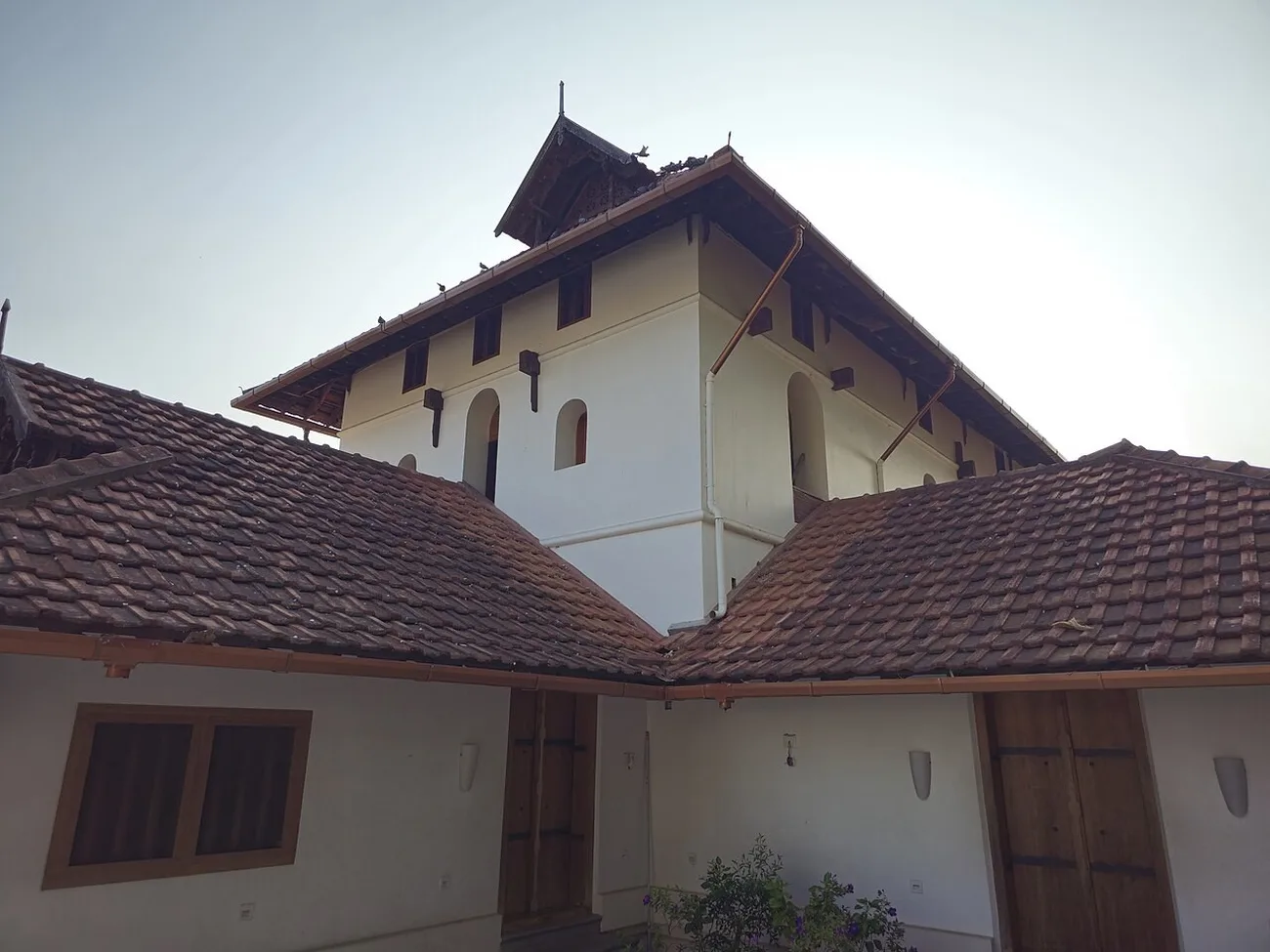
What they build borrows nothing from the forms of Arabia. No dome. No minaret. A steeply pitched tiled roof, as the Kerala monsoon demands. Carved wooden doors. A frame of assembled timbers, exactly the constructional system of the houses and buildings of the region.
The mihrab and the pulpit are cut by local carpenters, in the vocabulary of their own trade.
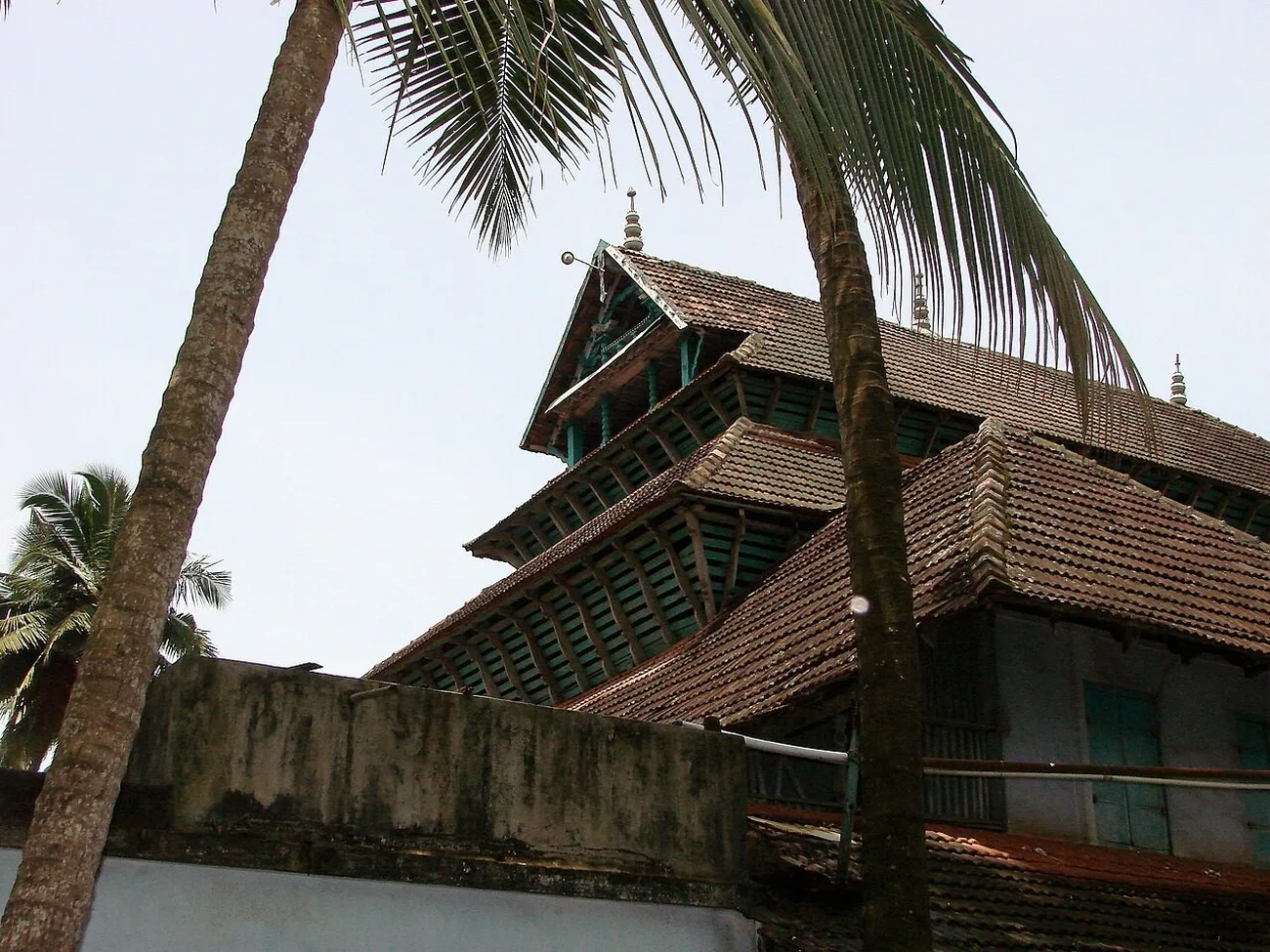
It is not an isolated case. A whole family of Malabar coast mosques follows the same principle: the Mishkal Mosque and the Mithqalpalli Mosque at Kozhikode, among others, are timber buildings with tiered roofs that nothing distinguishes from a distance from a traditional Kerala structure.
The parallel with the Great Mosque of Xi'an is hard to miss. At opposite ends of the world, the same thing happens: everything that could become local did, and only the direction of prayer did not give way.
The lamp
And inside, there is a lamp.
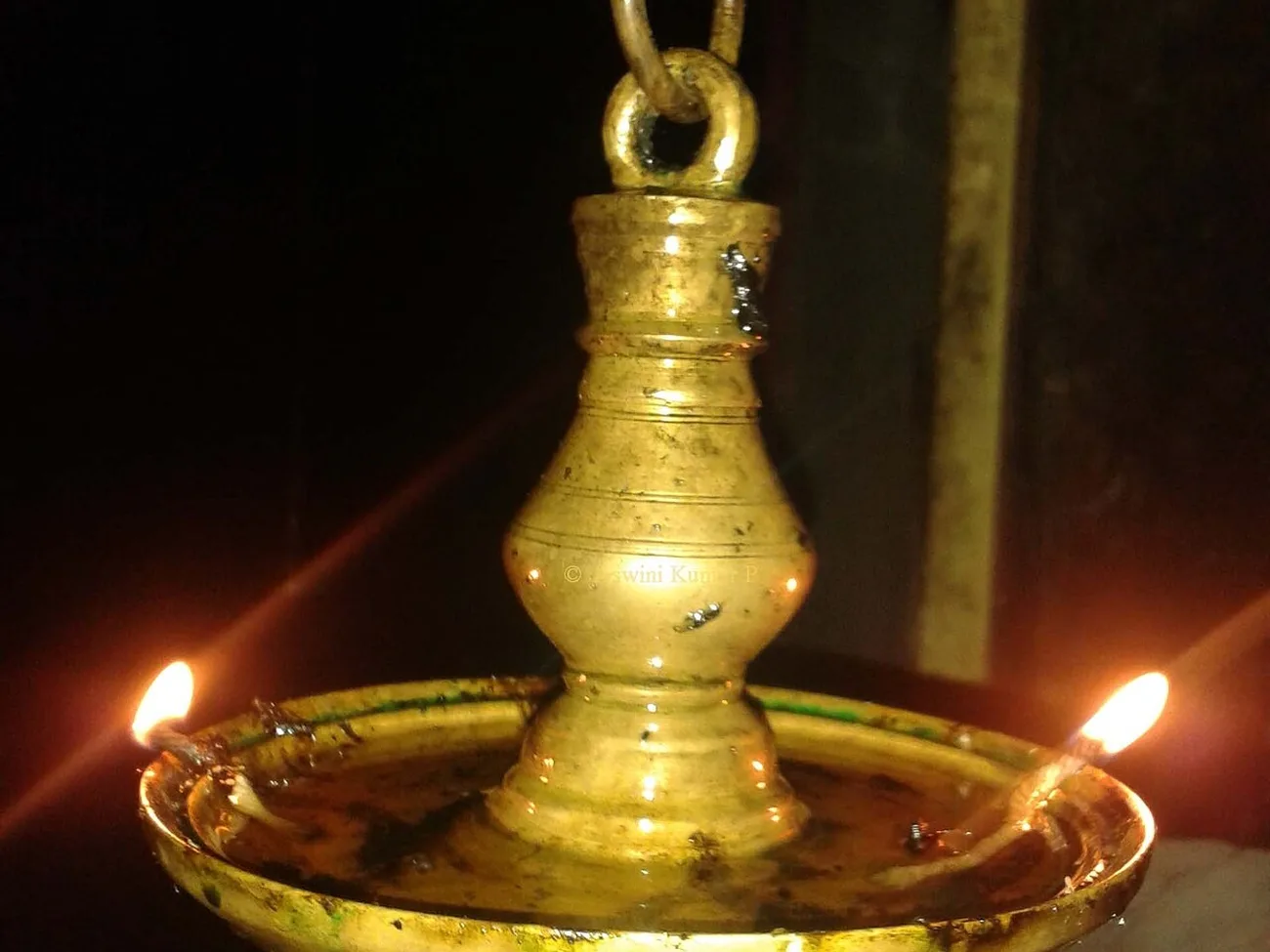
A hanging brass oil lamp, of the kind found in the houses and temples of Kerala. It is said to have burned for centuries without going out.
What keeps it burning is the visitors. And not only the Muslims: Kerala Tourism itself writes that people of all faiths bring the oil that maintains it.
We stop there too. The fact is enough on its own, and we will draw no lesson from it.
What we cannot tell you
We should be straight about the state of knowledge here, because it is uncertain, and because a great many pages on this subject are far less so than they ought to be.
The founding date is not established. You will very often read 629, and that date appears on Kerala Tourism's destination pages. But its page on the history of Kerala's Muslims writes that Malik Dinar, the first missionary, "is thought to have arrived around the 8th century". A century and a half of difference, inside the same institution. So we cite no year at all.
There is not one origin account, there are three. The king who left for Arabia. An earlier ruler, Shankavarma Perumal, who is said to have given the Muslims a former Buddhist place of worship, a vihara, which became the mosque. And a ruler of Calicut who converted much later and died at Salalah after taking the name Abd al-Rahman.
The same Kerala Tourism page publishes all three, and writes in as many words that the story, "whether factual or legendary", holds deep cultural and religious significance for Kerala's Muslim community. That is an honest formulation, and we take it as it stands.
We do not write "the oldest mosque in India". The claim is common but it depends entirely on the contested dating. Nor do we write "the second mosque in the world", which is more fragile still.
A note on the images
The building has been reworked several times, heavily so in recent years. Some recent photographs show a modern facade with a dome and minarets, very different from the traditional form. We have deliberately set those views aside: every photograph in this article and in the accompanying video shows the tiled-roof form.
Two images are not of Cheraman Juma Masjid, and they say so on screen: the timber frame is that of the Mithqalpalli Mosque, and the lamp is a Kerala hanging lamp. No freely licensed photograph of this mosque's own lamp exists.
Finally, there are graves within the enclosure. No image in this article or in the video shows one, in keeping with our standing rule.
The museum in the complex
The site is now part of the Muziris Heritage Project, the heritage programme that reconstructs the history of the ancient port of Muziris. A museum of Islamic history has been set up within the complex: the first of its kind in Kerala.
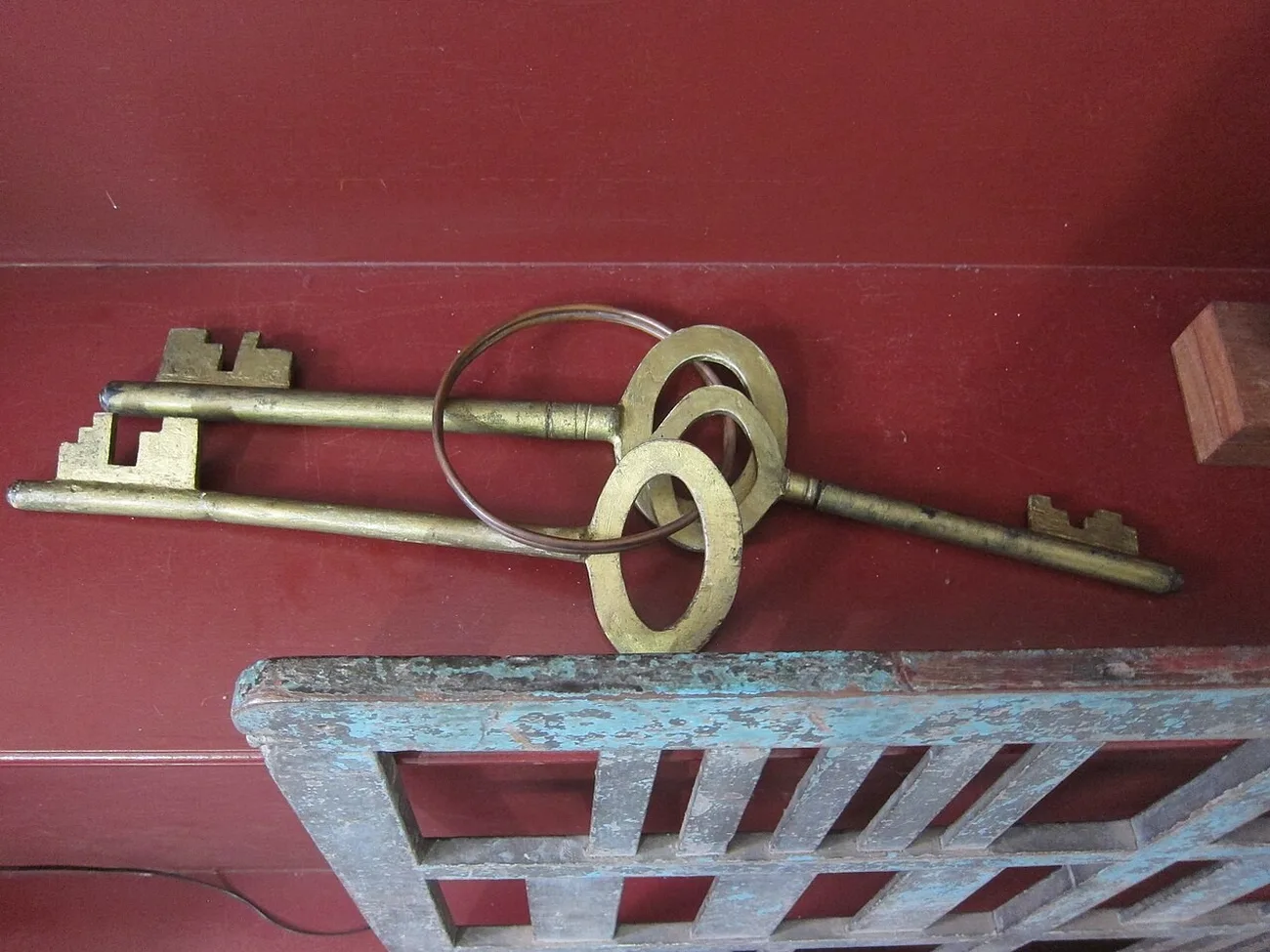
It holds objects kept on site, among them old keys and pieces of brasswork, along with a model of the building in its older form. For anyone wanting to understand what the building looked like before its remodellings, that model is worth more than a recent photograph.
Our sources
We give the links in the open, so that anyone can check them without going through us. Kerala Tourism is a first-hand source here, since it is the body that publishes the accounts and qualifies them.
- Kerala Tourism, page on the Cheraman Perumal episode, which gives all three accounts and the "factual or legendary" wording: keralatourism.org.
- Kerala Tourism, the mosque's entry in the Muziris Heritage Project, for the lamp and the heritage listing: keralatourism.org/muziris.
- Kerala Tourism, the Islamic history museum in the complex: keralatourism.org/muziris/museums.
Read on
If the idea of a wholly local architecture serving an Islamic function interests you, read our episode on the Great Mosque of Xi'an, and our article on the mosques of Vietnam, another case of Islam arriving by trade.