
Home › Blog › The endowments of Hürrem Sultan
Cordoba, al-Andalus · 9 min read
For three generations, one family ran this mosque and judged the city
In the eleventh century, a great mosque of al-Andalus is not merely a place of prayer. It is the seat of the city's authority. The proof is not an argument: it is one man holding both offices at once, and a family that keeps them across a change of dynasty.
Two offices, one man, one building
His name is Ibn Rushd, distinguished from his grandson by the epithet al-Jadd, the elder. Born in 1058, he is the foremost Maliki jurist of his time in al-Andalus and the Maghreb.
He holds two functions that nothing requires be combined: chief qadi of Cordoba, that is supreme judge of the city, and imam of the Great Mosque of Cordoba. The same man leads the prayer and settles disputes, under the same arches.
It is that combination that tells you what the building was. Not a sanctuary set apart from the city, but the place from which the city was held.
The building, in a few strokes
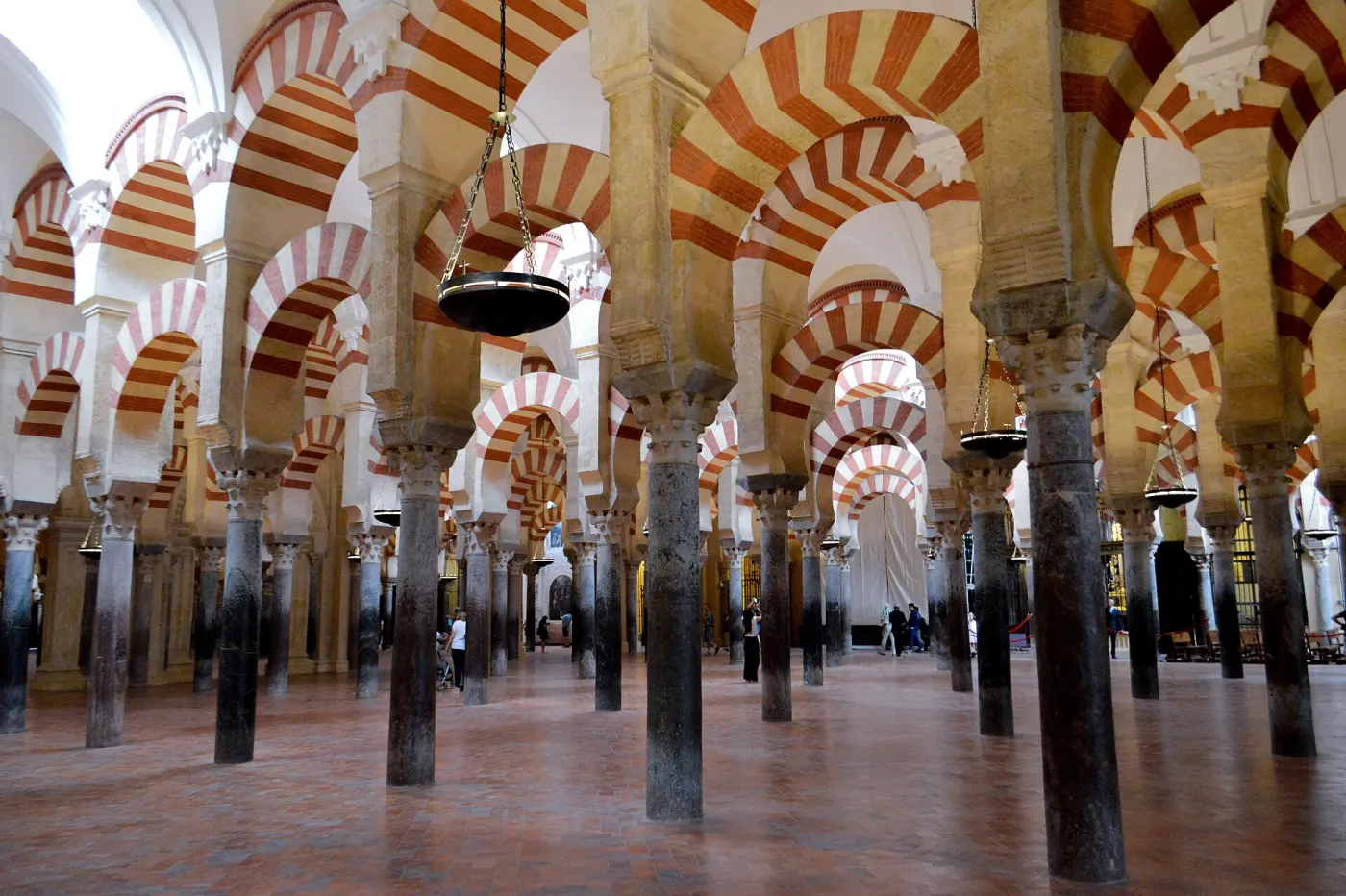
A few markers on the edifice itself, to place the setting. Construction begins in 785 and continues through successive extensions for more than two centuries, each enlargement lengthening the hall without changing its principle.
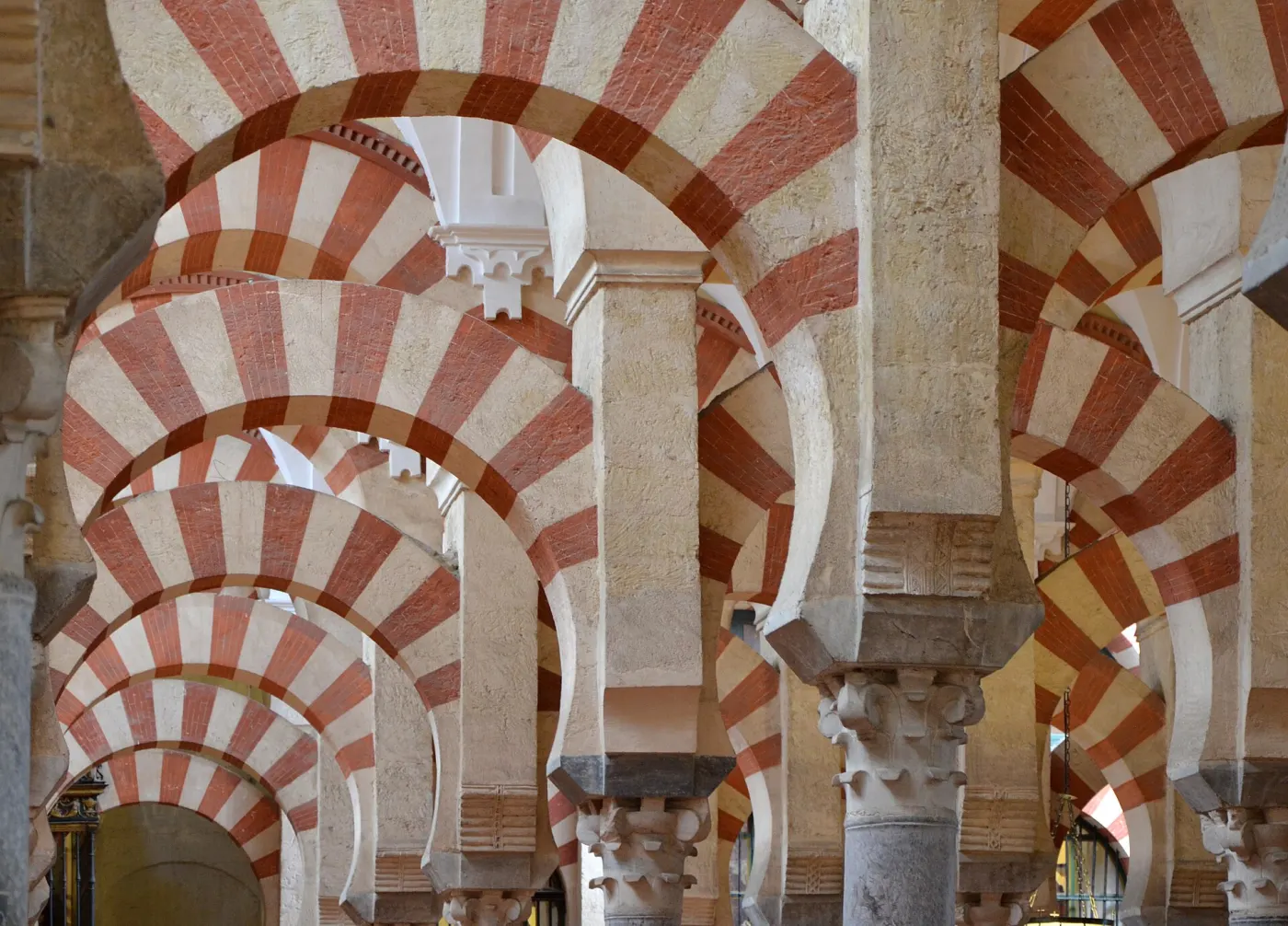
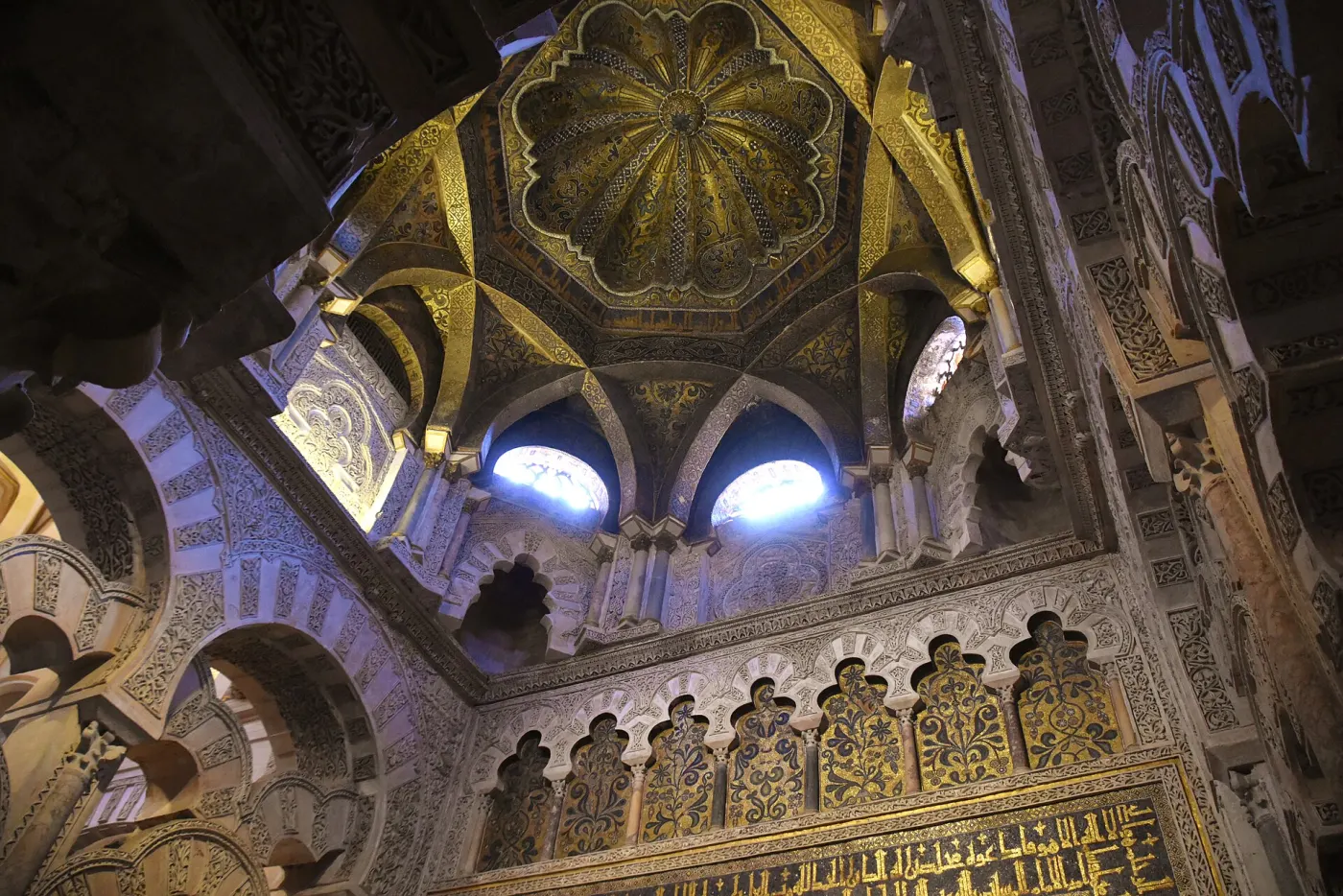
That principle is the hypostyle hall: a forest of columns carrying a double tier of superposed horseshoe arches, alternating pale stone and red brick. The device solves a practical problem, gaining height on reused columns that were too short, and produces along the way the effect the place is famous for.
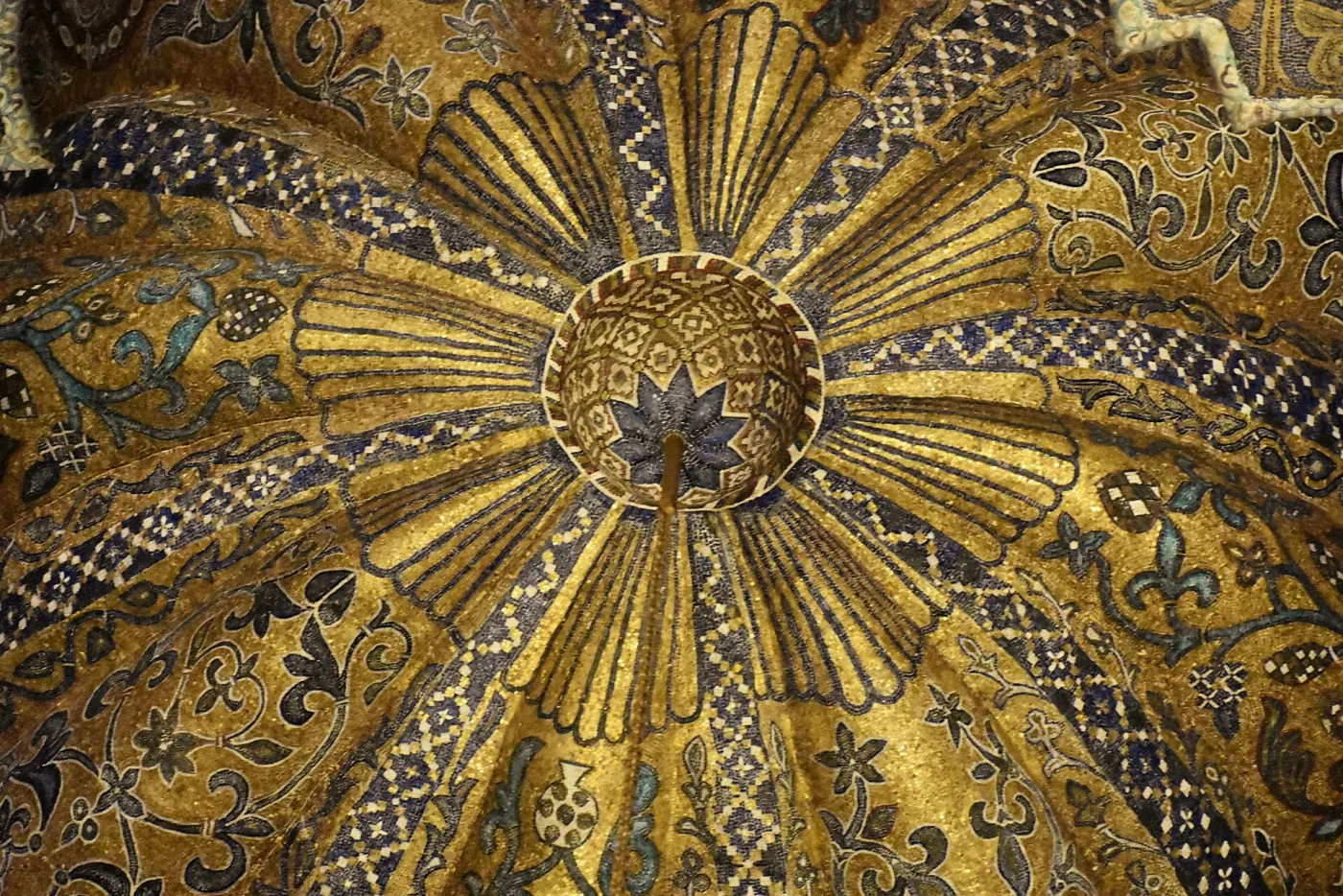
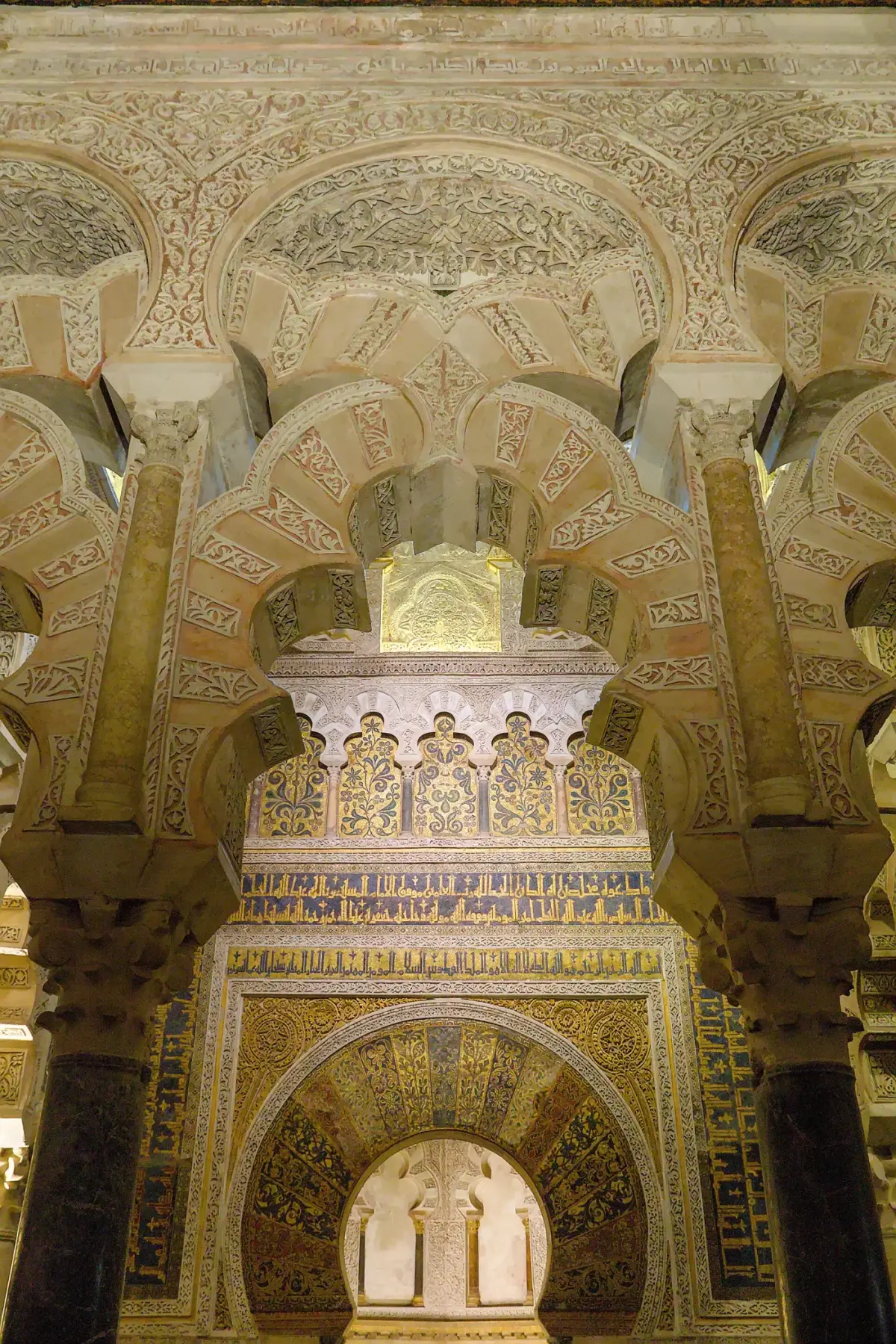
Towards the south, the mihrab area receives special treatment under al-Hakam II: interlacing arches, ribbed domes, gold-ground mosaics. That is where the maqsura stands, the space reserved for the ruler.
When Averroes' grandfather leads the prayer there in the eleventh century, the whole has been complete for a century and the building has the form we know.
The son, then the grandson
The son holds judicial office in his turn. Then comes the grandson, born in Cordoba in 1126, the very year the elder dies. The two men never met.
He will carry the same name, Ibn Rushd, and hold the same judicial office. Judge in Seville in 1169, transferred to Cordoba in 1171 where he sits for ten years. Summoned to Marrakesh in 1182 as physician to the caliph, then chief qadi of Cordoba in his turn.
That grandson is the one Europe will call Averroes.
The dynasty changes, the mosque does not
Between the elder and the grandson, power changed hands. The first judged under the Almoravids. The second will judge under the Almohads, and serve their caliphs.
This is the most interesting observation in the file, and it bears on the building more than on the men. A great mosque of al-Andalus is more durable than the power that governs it. The dynasty falls, the building remains, the office attached to it remains, and it even remains in the same family.
What he wrote from that seat
It is while holding these offices that Averroes comments on Aristotle. His commentaries fall into three formats, and the distinction is useful for grasping the scale of the work: the epitome, which presents the subject; the middle commentary, which interprets it with considerable expansion; and the long commentary, where the text is quoted and discussed section by section.
He also writes on medicine, law and astronomy. He rejects Ptolemy's model and defends the Aristotelian homocentric spheres, and he leaves a medical encyclopedia that will circulate in Latin for centuries.
It is worth holding on to the setting. This is not a man writing in retreat from the world: he is the city's supreme judge, and he writes while carrying that office.
1195, and the exception that says everything
In 1195 he falls from favour. He is accused, interrogated, and banished to Lucena, not far from Cordoba. His books are burned.
But the measure has to be read in full, because its most telling part is the one least often quoted: his works on medicine, arithmetic and elementary astronomy are spared.
The exception names precisely what was targeted. It is not hostility to learning, it is a focused dispute in one domain. And the measure does not last: the banishment is lifted in his lifetime, he is recalled to Marrakesh, returns, and dies in 1198 in the caliph's service.
What we refuse to write
This subject lends itself to a ready-made story: "Islam burned its philosopher." It is false by omission, and three verified facts dismantle it.
First the exception above. Then the lifting of the banishment in his lifetime. And finally this, which is the very subject of this page: his family had run the religious and legal life of Cordoba for two generations. He is the product of that institution, not its opponent.
A part only, and it must be put that way
It is often read that Averroes' work survived thanks to Europe. That is inaccurate, and the inaccuracy is easy to correct.
The bulk of his work survived in Arabic. Only a part subsists solely in Hebrew or Latin translation, the Arabic original having been lost. The counts differ according to what is included: one source gives 28 of 38 commentaries preserved in Arabic, another 14 of 49 works not preserved.
What is true, and enough: a part of what was thought in this city reached us only through those who translated it.
The link we looked for and did not find
In fairness, let us also say what we could not establish. We looked for a still more direct link between Averroes and the building: documented teaching under its arches, an instrument, a clock, a ruling by the elder on the fabric itself, or a treatise by Averroes on determining the qibla.
None of these yields anything documented. The last would have made the perfect link, and that is precisely why we do not invent it.
To go further
Our Qibla series devotes an episode to the Great Mosque of Cordoba and its orientation, which does not point at Mecca, and that is not a mistake. See also the building's page.