
The series
Qibla, the direction that built a world
Every mosque in the world faces one single point. That constraint produced mathematical problems, instruments, mistakes that stood for centuries, and a few buildings deliberately built askew.
Look closely at those lines. They are curved. Yet none of them is a detour: each is the shortest path between a city and Mecca. On a flat map, the shortest path between two points is almost never a straight line, and this whole series follows from that single fact.
What the word means
Qibla means the direction. Not a wall, not an object, not a rite: an orientation. In every mosque a wall marks it, the one called the qibla wall, and it is usually in that wall that the niche of the mihrab is cut. But the wall is only the material trace of a decision taken before it: deciding which way to turn.
That decision looks simple. It is not. It requires answering a question of geometry that the best scholars of the Islamic world took several centuries to handle properly, and for which they invented methods, tables and instruments that existed nowhere else.
Why it is a hard problem
On a sphere, the shortest path between two points follows what is called a great circle, a circle whose centre is the centre of the Earth. Projected onto a map, that path looks curved, the more so as the distance grows and as you move away from the equator. This is why a plane from Paris to Tokyo flies over Siberia rather than following the straight line of the world map.
Working out the qibla therefore means calculating the starting angle of that great circle, what navigators call the initial azimuth. Doing it from any point on Earth, with no modern measuring instrument and no completed spherical trigonometry, was a real problem. General solutions do not appear all at once: they are built, lost, rediscovered, and sometimes credited to the wrong author for centuries.
And when nobody calculated
Most old mosques were not oriented by calculation. They were oriented by markers in the sky and the landscape: sunrise at the winter solstice, the setting of a known star, the direction of a prevailing wind, or simply the layout of existing streets. These methods belong to what historians call folk astronomy, and they were perfectly accepted.
The result is gaps, sometimes considerable ones, between the real orientation of an old building and the direction a modern calculation would give. This series treats them as facts in the history of science, never as faults. Research shows that these gaps stayed within margins accepted at the time, and that several conventions could coexist in one region.
How to read this section
This is not a course on the qibla, and it is not a news feed. It is a corpus: the episodes answer one another, and reading order matters more than publication date. The first sets out the problem, the following ones each explore one precise anomaly, instrument, method or building.
No number of episodes is announced. The series will stop when the subjects run out, not before. Each episode exists as a short video and as a written page: the video tells the story, the page gives the detail, with the figures, the sources and whatever a fifty-second format forces you to sacrifice.
If you simply want the direction from where you are, it is calculated on the Qibla Compass page, along with the mosques nearest to you.
The episodes
In order
All these mosques face the same point
A pagoda in China, a tower of earth in Mali, a dome in Iran. Nothing in common but an invisible axis. And because the Earth is round, that axis is not a straight line on a map.
This mosque does not point towards Mecca
The largest mosque in the west faces due south, fifty degrees from the calculated direction to Mecca. It is not a mistake, and around thirty others do the same.
Iraq, Syria, Yemen: the corners of the Kaaba are named after countries
Iraqi corner north, Syrian corner west, Yemeni corner south, and the fourth named after the Black Stone. So it is not the walls that face the cardinal points: they are aligned with the sky, eighty-four degrees apart.
The mosque of two directions has only one left
In Medina, a mosque held two mihrabs for centuries, one facing Jerusalem and one facing Mecca. The 1987 rebuilding left only one.
His discovery was credited to a man born four centuries after him
Finding the qibla from anywhere on Earth occupied scholars of the Muslim world for two centuries. Around the year 1000 Ibn al-Haytham gave the first universal method, and modern historians credited it to someone else.
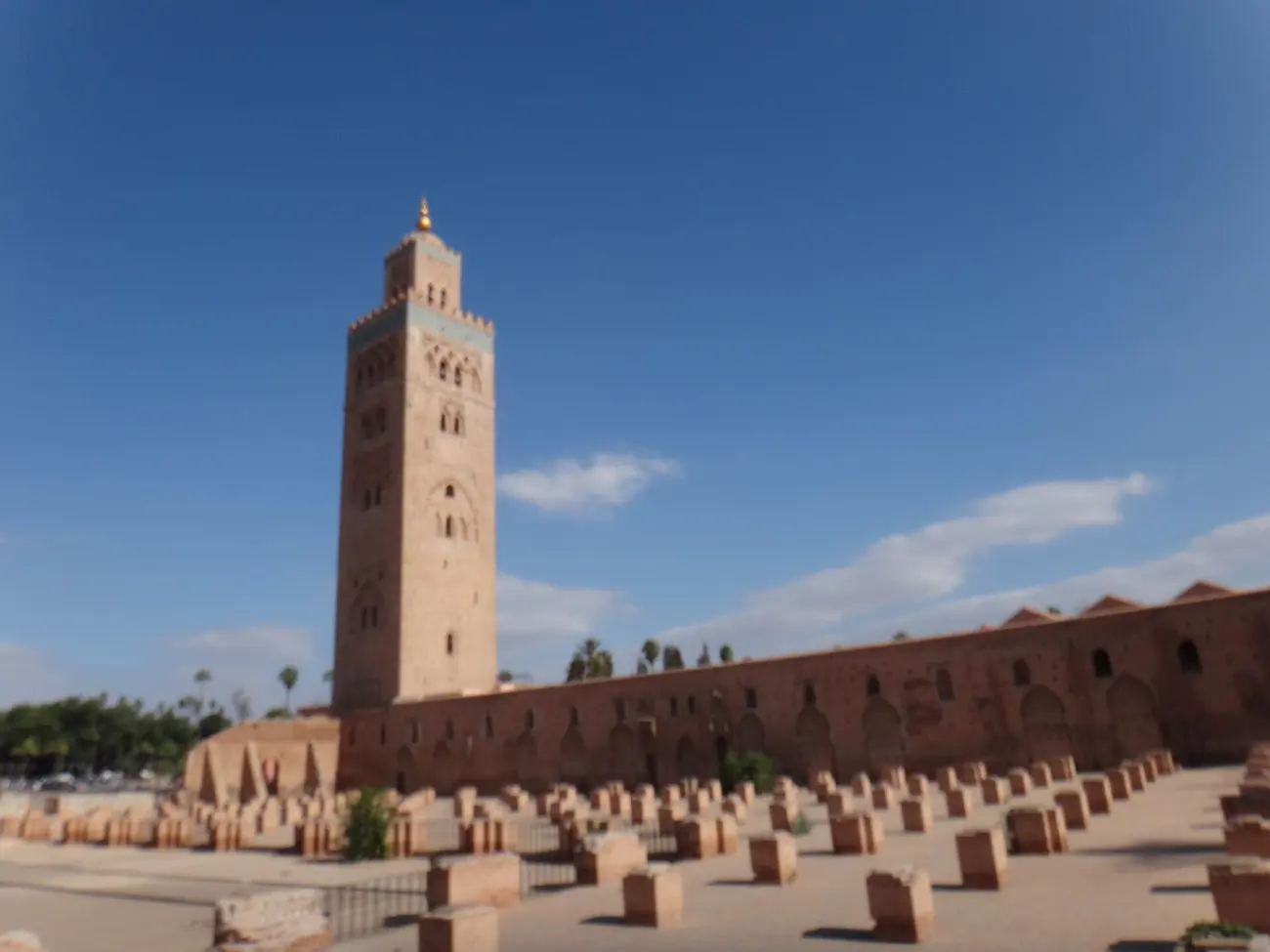
They rebuilt an entire mosque for five degrees
Two twin mosques less than a decade apart, five degrees apart. The gap to the shortest path to Mecca is more than sixty.

Everything about this building is Chinese, except its direction
Five courtyards in a row, a timber frame, a minaret that looks like a pagoda. One element escapes China: the axis, turned a quarter turn towards Mecca.
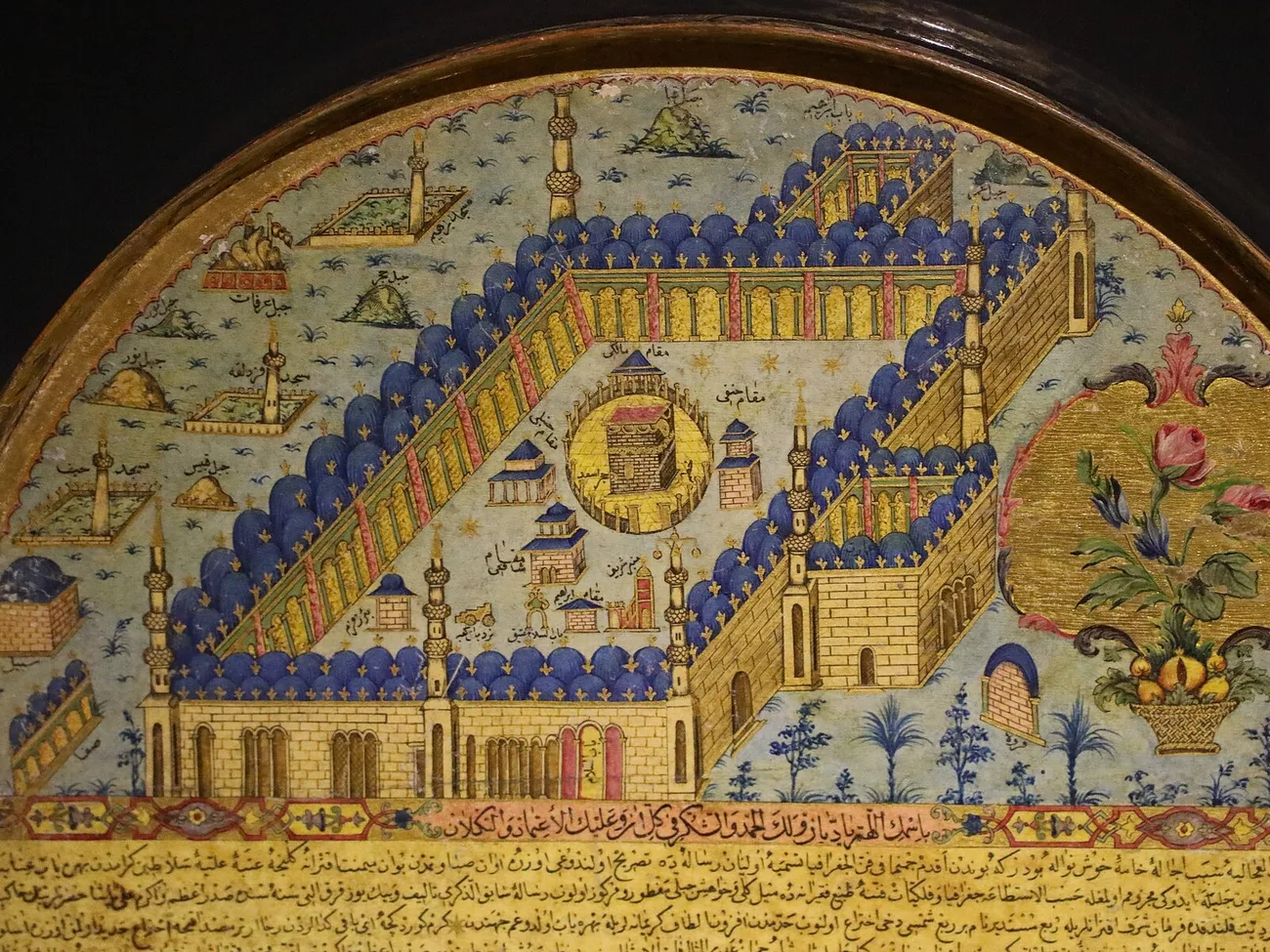
This map was thought to be a European invention of 1909
Three brass discs engraved around 1675 give the direction and the distance to Mecca from any city between al-Andalus and China.
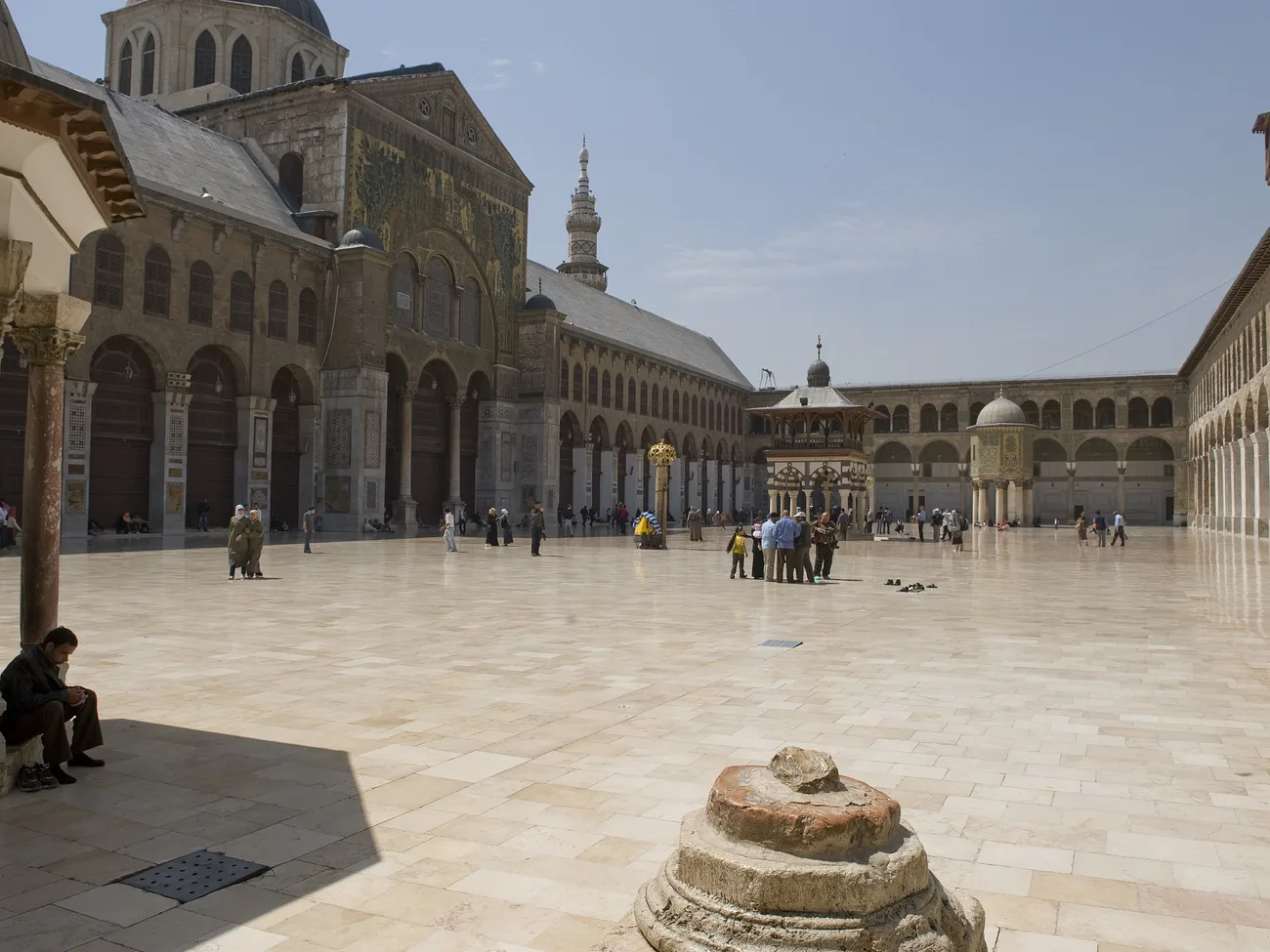
The maths problem nobody had managed to tabulate
A straight line on a map is not the shortest path on a sphere. The complete solution, 2,880 directions, was computed by hand inside a mosque.
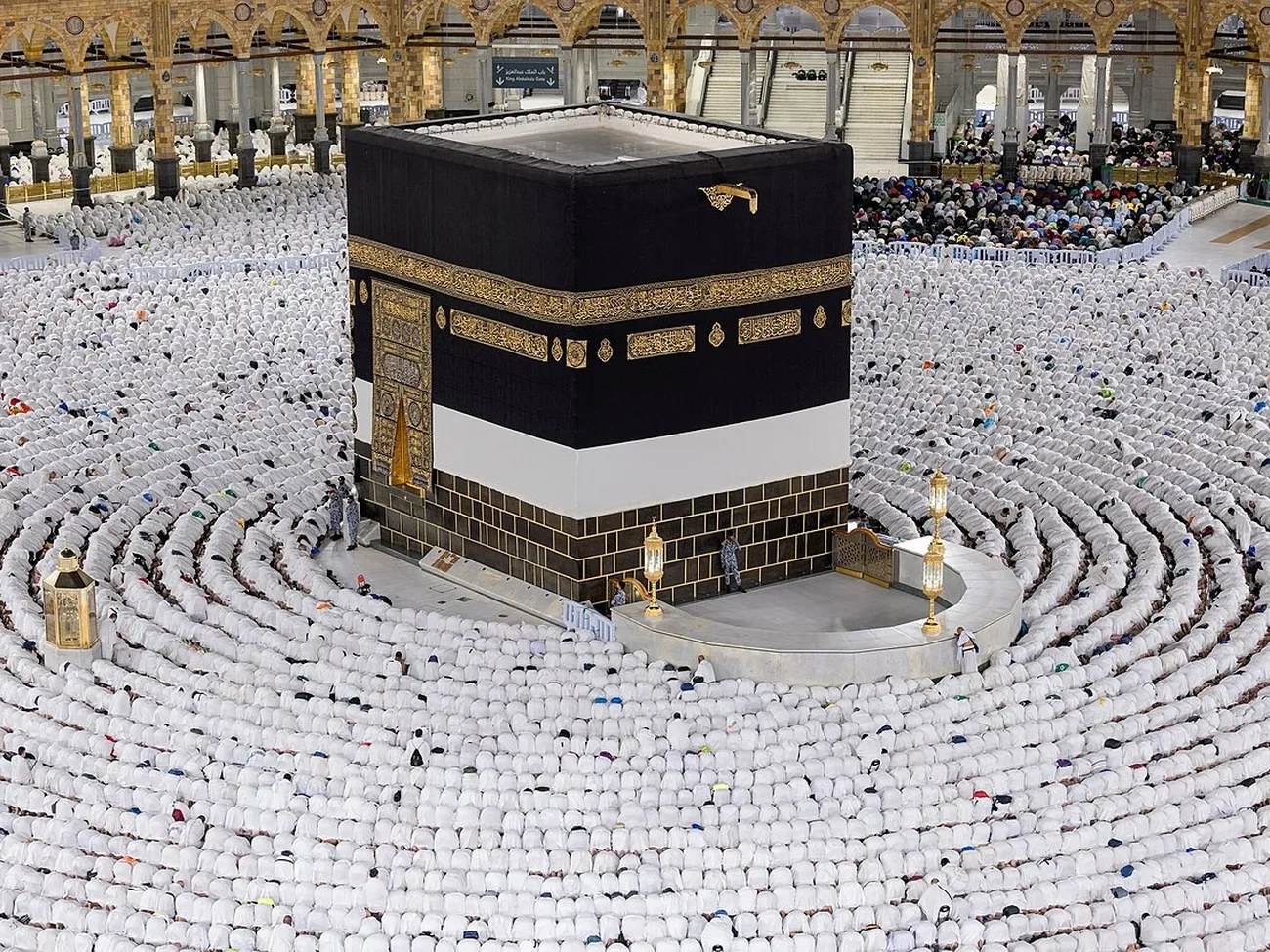
Two mosques in the same city, two different directions
For centuries two methods coexisted for finding the direction of Mecca: read the sky, or calculate. About a hundred answers to a single question.