
Qibla, episode 10 · 9 min read
Two mosques in the same city, two different directions
Two mosques in the same city can face two different directions. It is not an error, and it is not carelessness. These are two traditions that coexisted for centuries, each perfectly coherent, and they were not quite answering the same question.
Two ways of looking
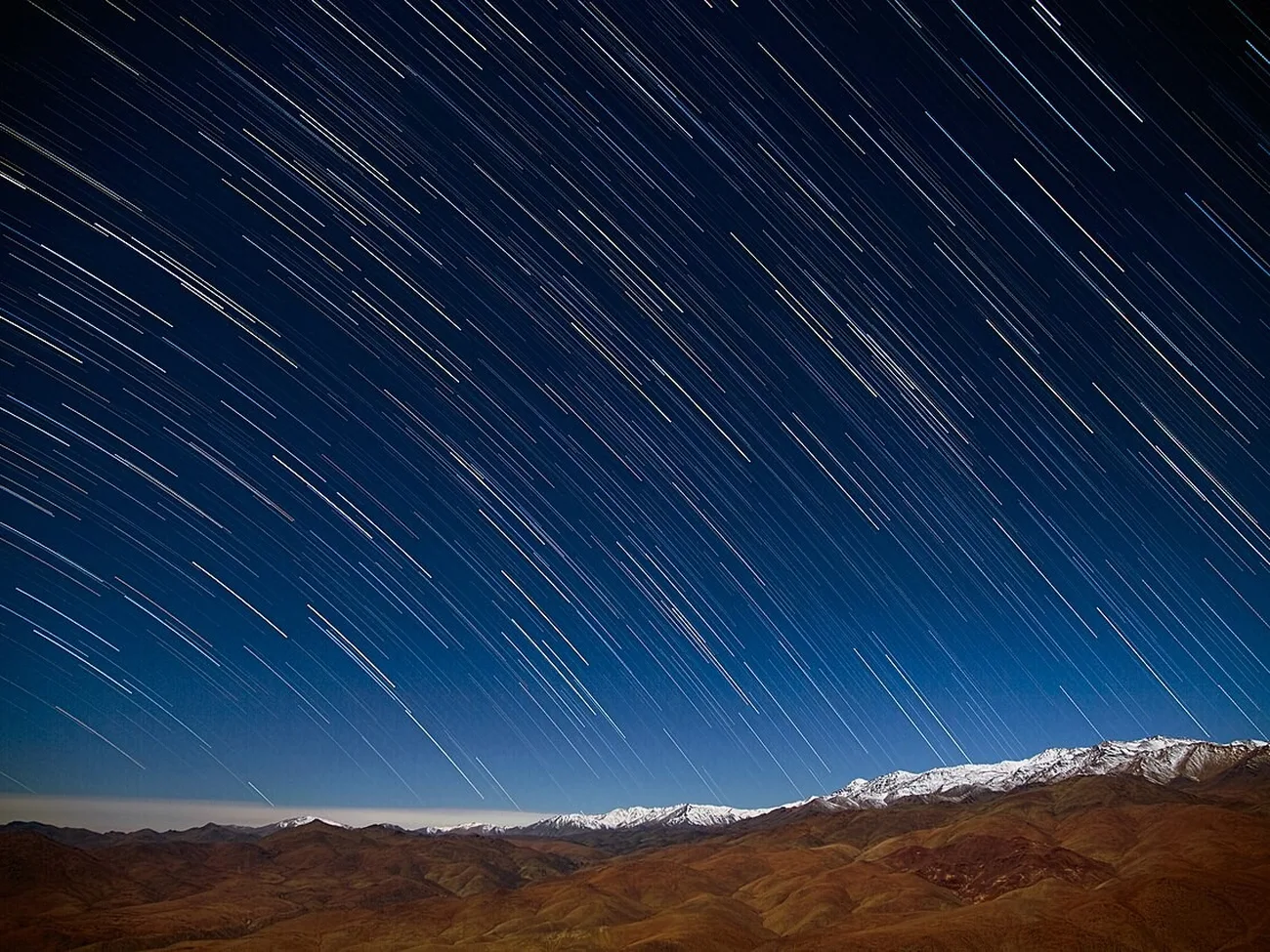
The first calculates nothing. It looks at the sky.
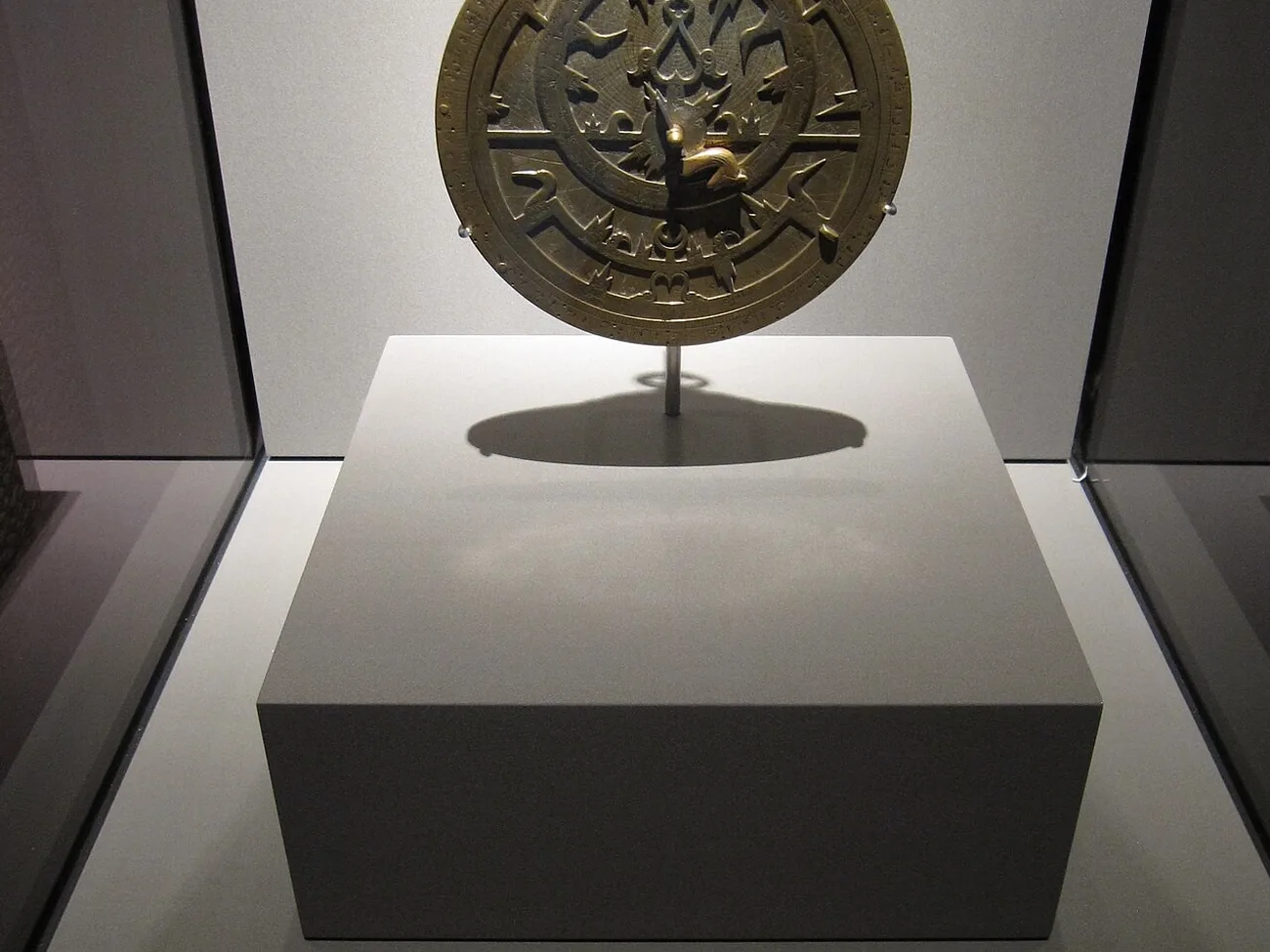
The second observes the sky in order to derive numbers from it, and then calculates.
The historian of science David A. King, who devoted his career to this question, draws the line sharply. On one side what he calls folk astronomy, which he defines as "based on what one can see in the sky, without observation, theory or calculation". On the other, mathematical astronomy, with its observation programmes, its models and its tables.
The first belonged to the scholars of religious law, who governed practice. The second belonged to the astronomers.
Why looking at the sky makes sense
Here is the point almost always left out, and without it the first method looks naive. It is nothing of the kind.
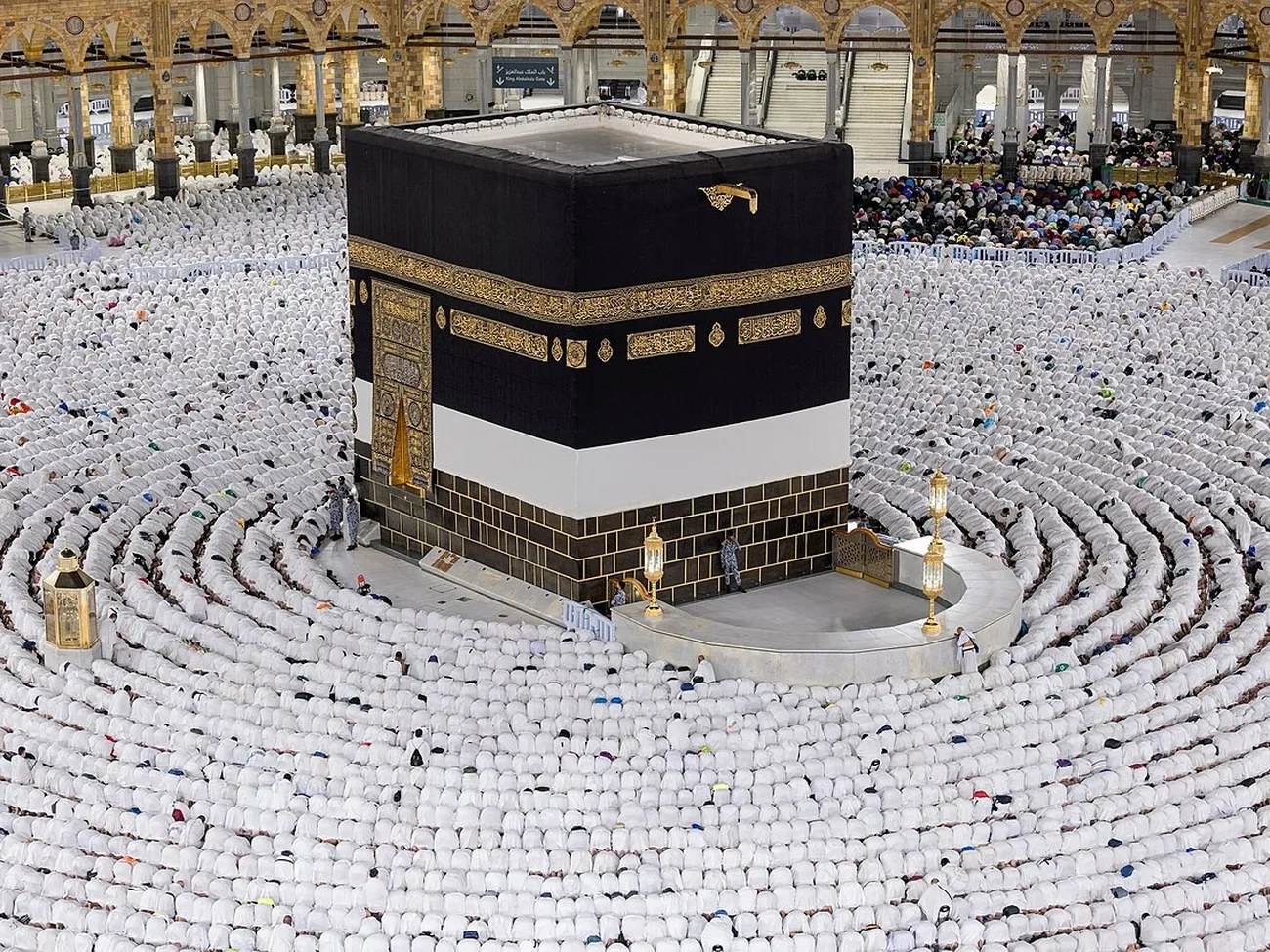
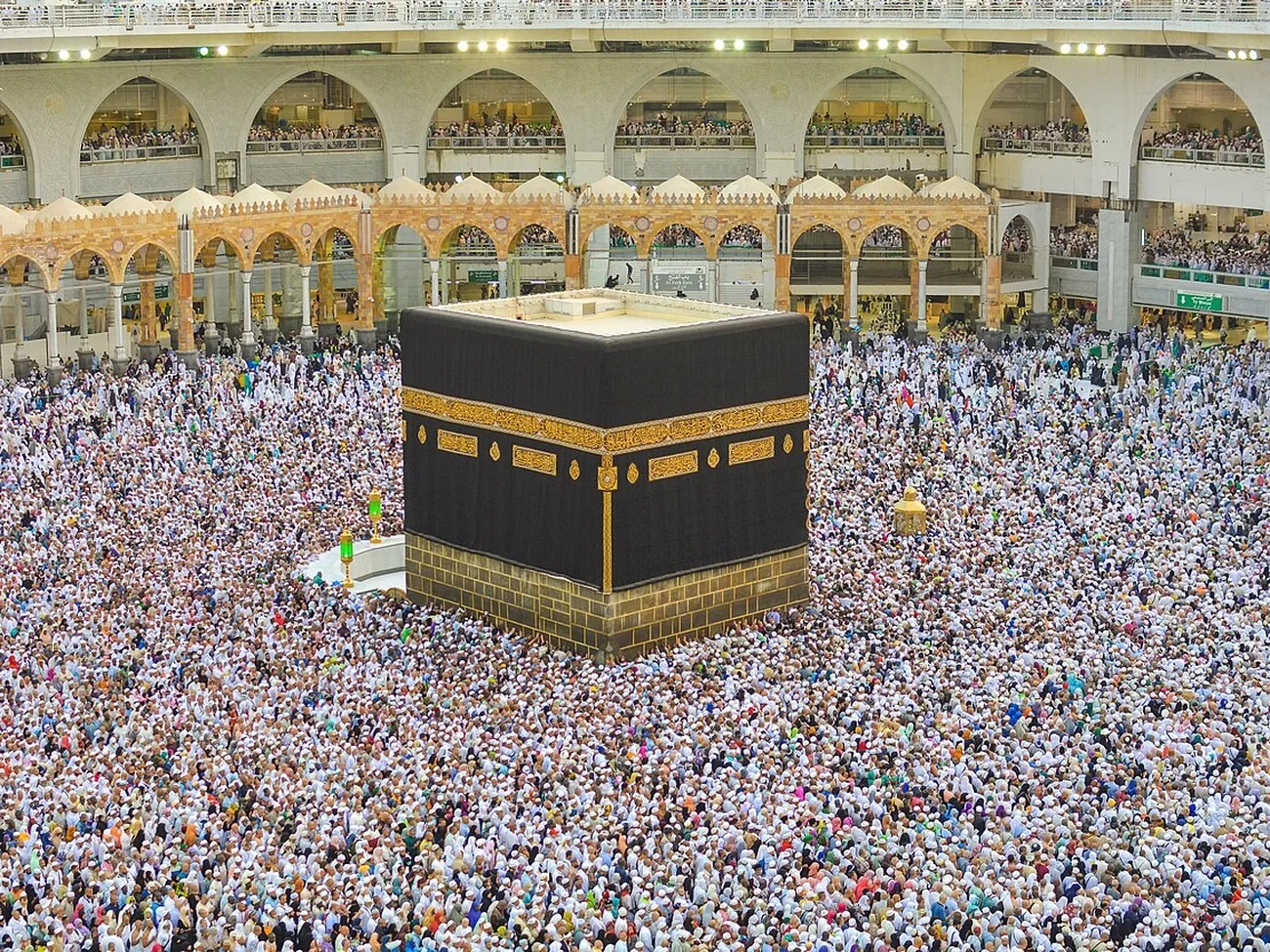
The Kaaba itself is oriented on celestial markers.
Its base is a rectangle, and that rectangle is not set down at random. Its long side is aligned on the point of the horizon where Canopus rises, the brightest star of the southern sky, which the Arabic tradition calls Suhayl. Its short side faces sunrise at the summer solstice, and sunset at the winter solstice.
The fact was known to several medieval writers, then forgotten, then recovered by modern scholarship.
The reasoning
Once that fact is in place, the method of the legal scholars becomes clear.
If you stand in Mecca facing one side of the Kaaba, a particular star or a particular sunrise lies before you or behind you. So, wherever in the world you are, place yourself facing the same celestial body and you place yourself facing the same side of the Kaaba.
This is not an approximation for want of anything better. It is a geometric idea, and it has the immense advantage of requiring no instrument, no table, and no knowledge of your own latitude. You only need to know where a star rises.
The legal scholars drew some twenty different schemes from it, varying by region and by school.
The other route
The astronomers went about it entirely differently.
For them the question is a problem of geometry on a sphere: given the latitude and longitude of your city and those of Mecca, find the bearing of the great circle joining them. It is a hard problem, and we have given it a whole episode.
They worked at it for centuries. Al-Battani in the ninth, al-Biruni in the eleventh, al-Tusi, Ibn al-Shatir, and many others. The result is a formidable body of work: eighty tables of geographical coordinates and a dozen different computational procedures.
One point needs stating, because it is often read the wrong way round. The astronomers observed the sky too, and often the very same bodies. But they used the observations to establish coordinates, not to give a direction outright. Observation was the beginning of the work, not the end of it.
A hundred answers
Do the addition. Some twenty schemes on one side, eighty tables and a dozen procedures on the other.
For a single question that makes about a hundred possible answers, every one of them defensible within its own frame.
And since both traditions were alive at the same time, in the same cities, it is no surprise that two neighbouring mosques do not face the same way. They had not consulted the same authority.
What this explains
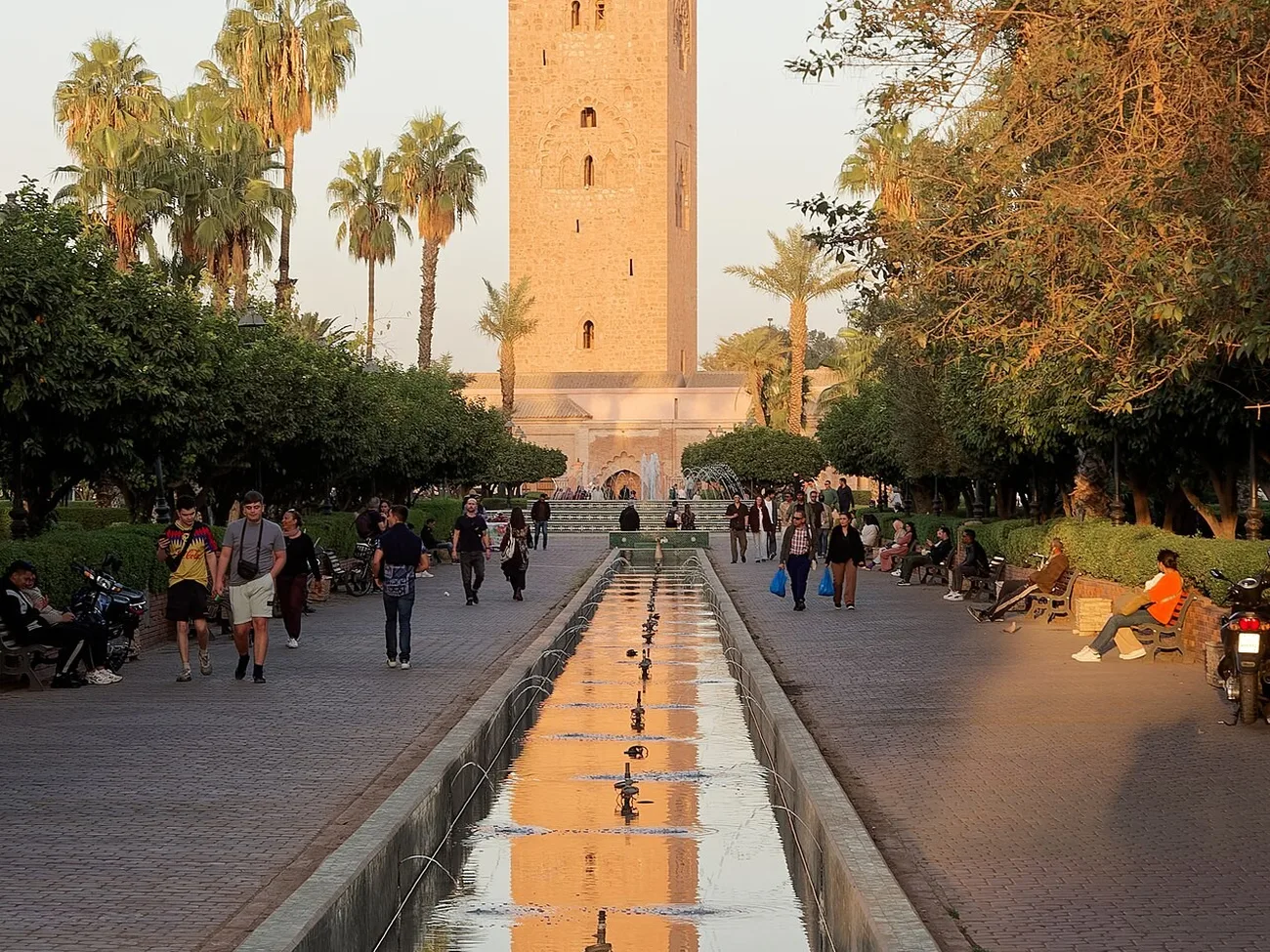
Return to Marrakesh, which we left unresolved.
The Koutoubia faces 154 degrees. We calculated the shortest path to Mecca from Marrakesh using the great-circle formula: it gives 91 degrees, over 4,851 kilometres.
Sixty-two degrees apart. We gave the figure then without being able to explain it beyond "two different methods". We can now say which.
The older mosques of Morocco cluster around 155 to 160 degrees, that is roughly due south. This is not a local drift: the Muslim West held southward orientation to be the oldest and the surest, because it is the side of the Kaaba you face when you set yourself by the celestial markers.
The Koutoubia is not facing the wrong way. It is not answering the same question.
What we refuse to write
This needs saying explicitly, because it is a standing rule of this series and because the literature on the subject sometimes lacks it.
We never write that an older orientation is "wrong", "mistaken" or "incorrect". A difference in orientation is measured between two methods, never between a method and the truth. To say that a twelfth-century mosque "got it wrong" is to judge a practice with a tool it did not have and against a question it was not asking.
We also separate, wherever we can, a scholar's measurements from their theses. Orientation surveys are facts. The explanations drawn from them are interpretations, and they are open to argument.
What this article does not settle
We are not saying that every old mosque belongs to the first tradition and every modern one to the second. The reality is more mixed, and each building calls for its own case file.
Nor do we give the twenty schemes or the eighty tables: these are orders of magnitude established by King's work, not a list we have checked one by one.
Finally, the animation accompanying this episode is a diagram. The azimuths it draws are indicative, chosen so that the perpendicularity of the two axes can be seen. It is not a survey.
Our sources
- David A. King, "Islamic Sacred Geography and Finding the Qibla by the Sun and Stars", open access: muslimheritage.com. The source for the distinction between the two traditions, the celestial alignments of the Kaaba, and the orders of magnitude of twenty schemes and eighty tables.
- David A. King, "Qibla Charts, Qibla Maps, and Related Instruments", chapter 9 of The History of Cartography, vol. 2 book 1, University of Chicago Press, open access: press.uchicago.edu.
- His collected work, emeritus professor of the history of science at the Goethe University of Frankfurt: uni-frankfurt.academia.edu/DavidAKing.
- The bearings and distances from Marrakesh are computed by us, great-circle formula, and repeatable by anyone. Coordinates of Mecca: 21.4225 N, 39.8262 E.
Read on
The episode on the Kaaba aligned with the sky sets out the fact that underpins the first tradition. The episode on the maths problem tells the second. And the Koutoubia episode is the case this one explains.