
Home › Qibla › This mosque does not point towards Mecca
Episode 2 · Cordoba · 8 min read
This mosque does not point towards Mecca, and it is deliberate
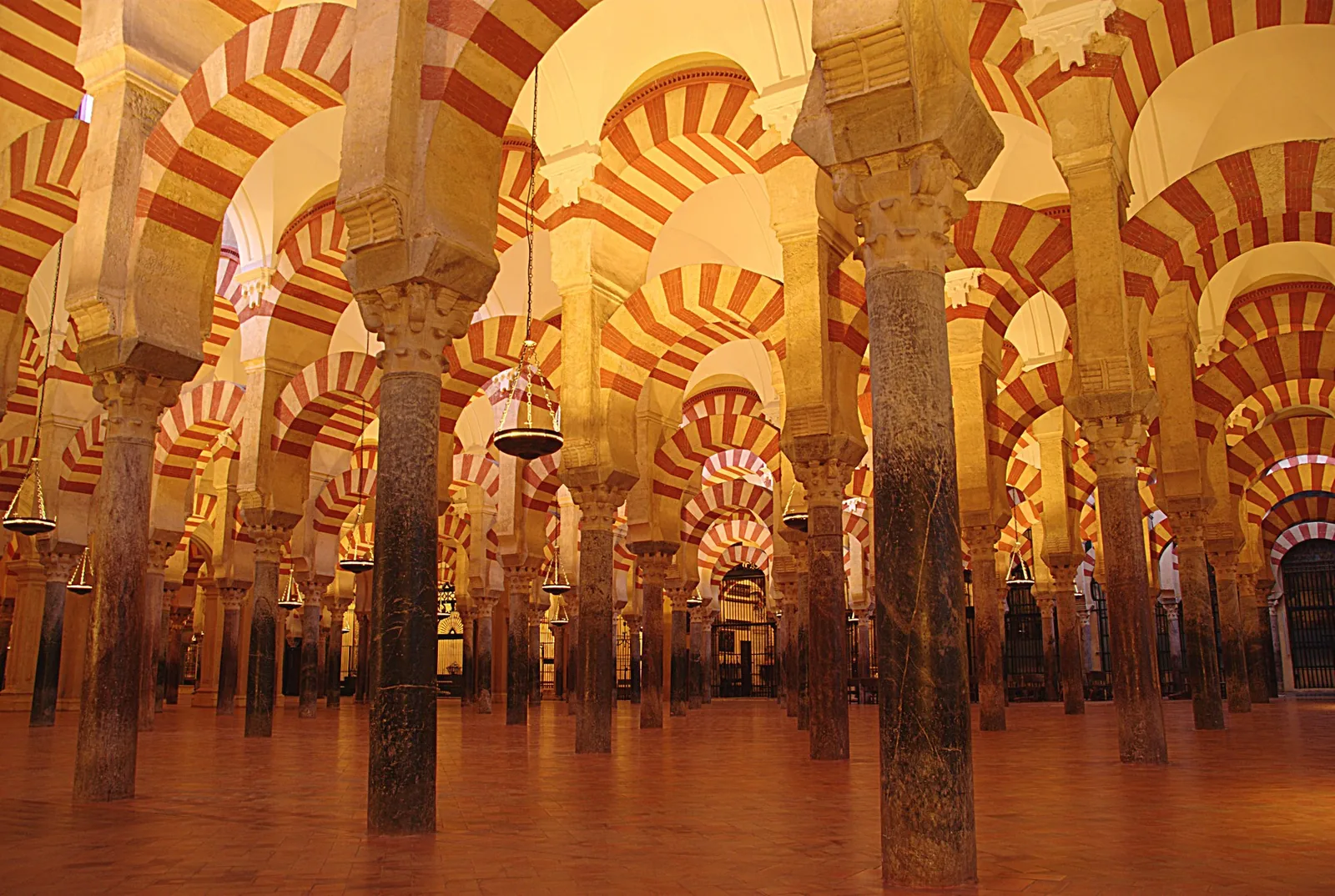
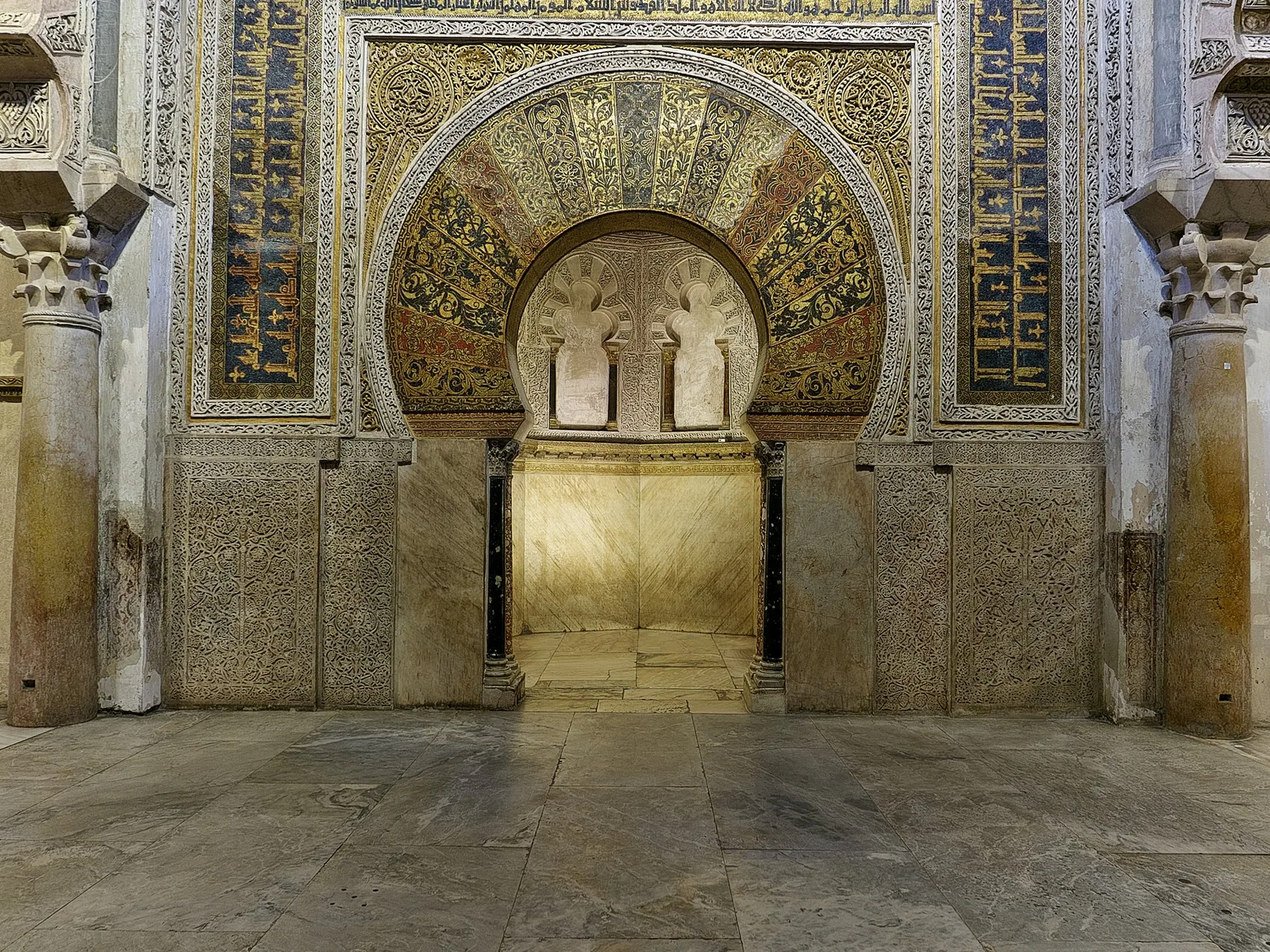
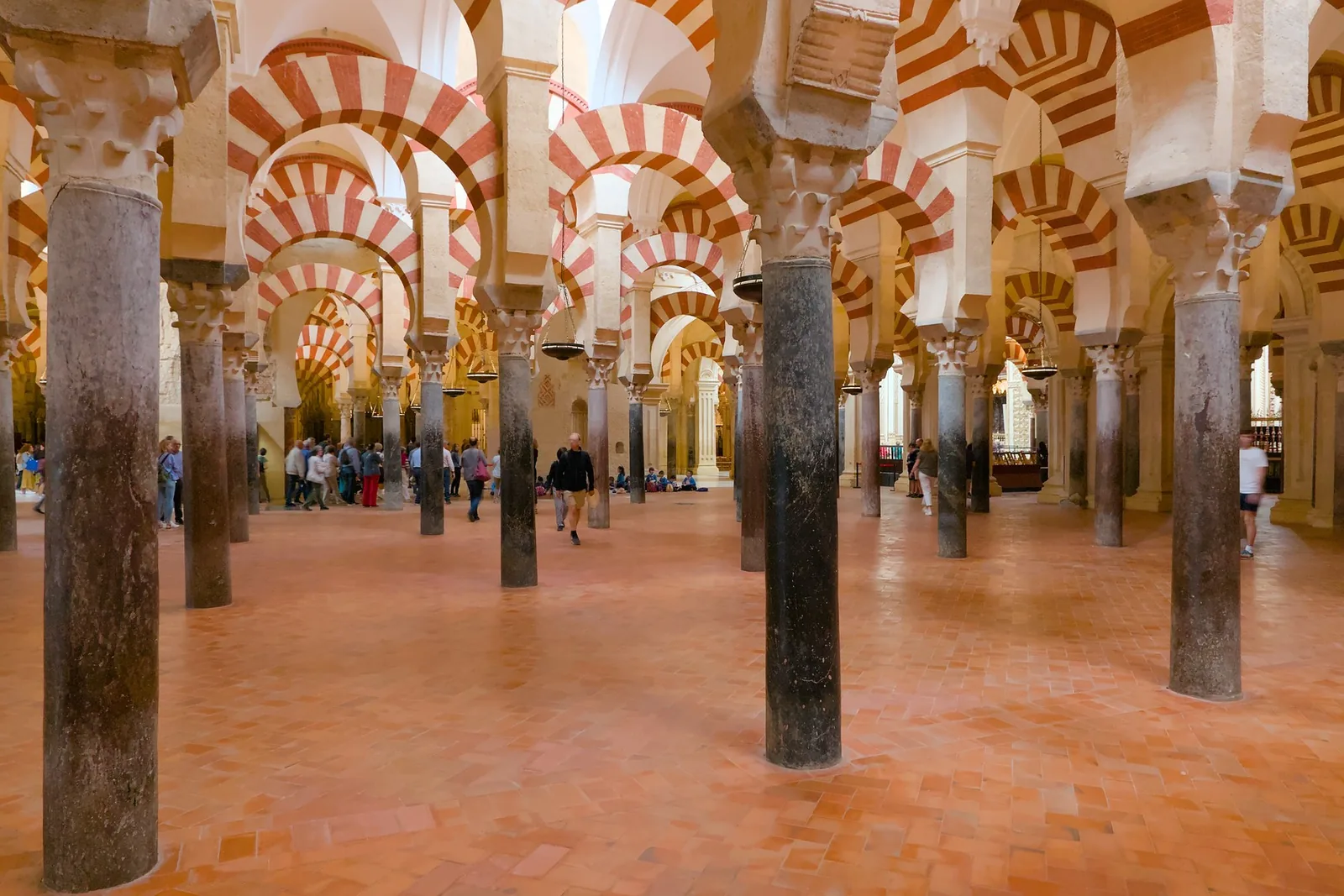
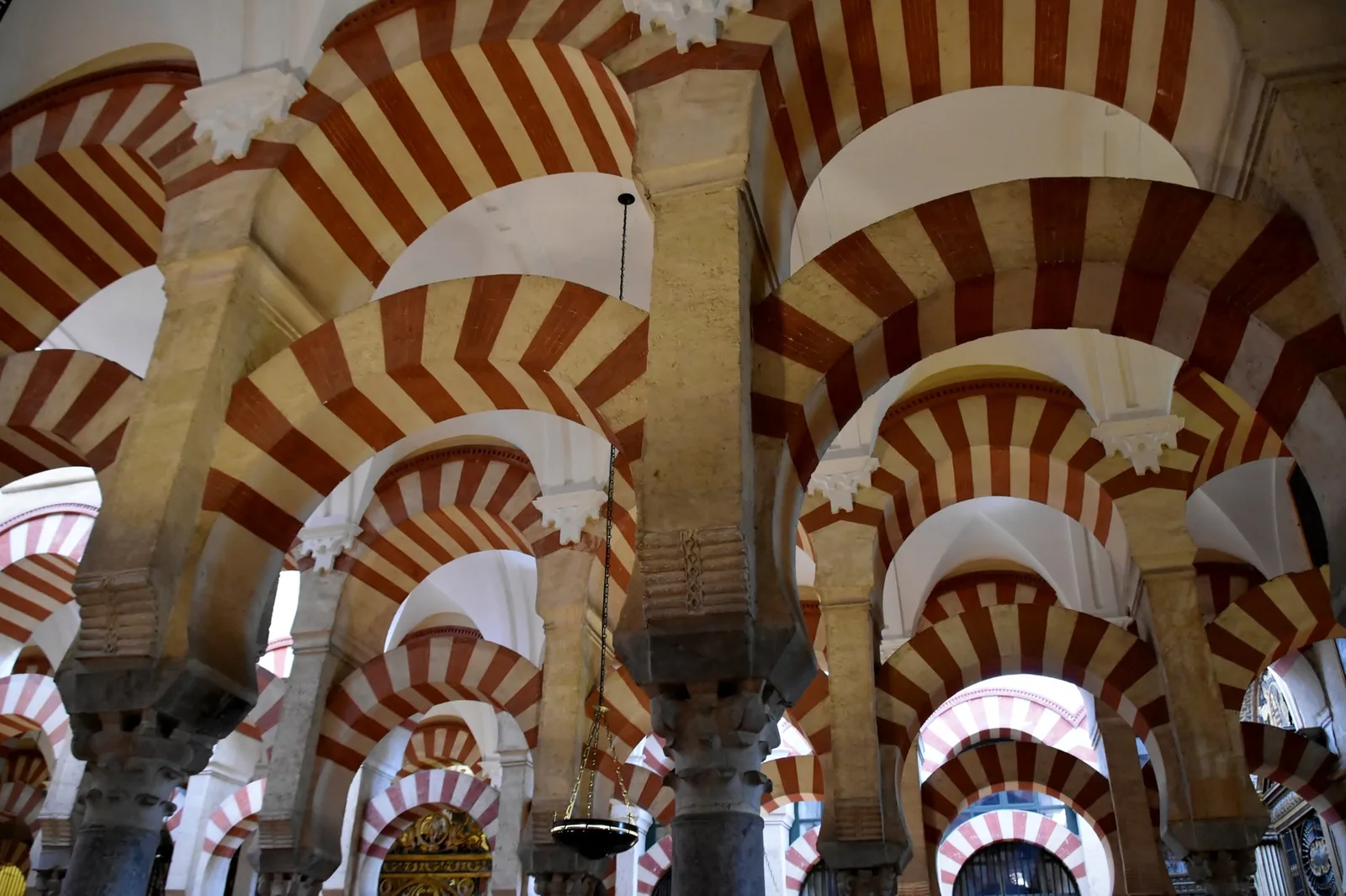
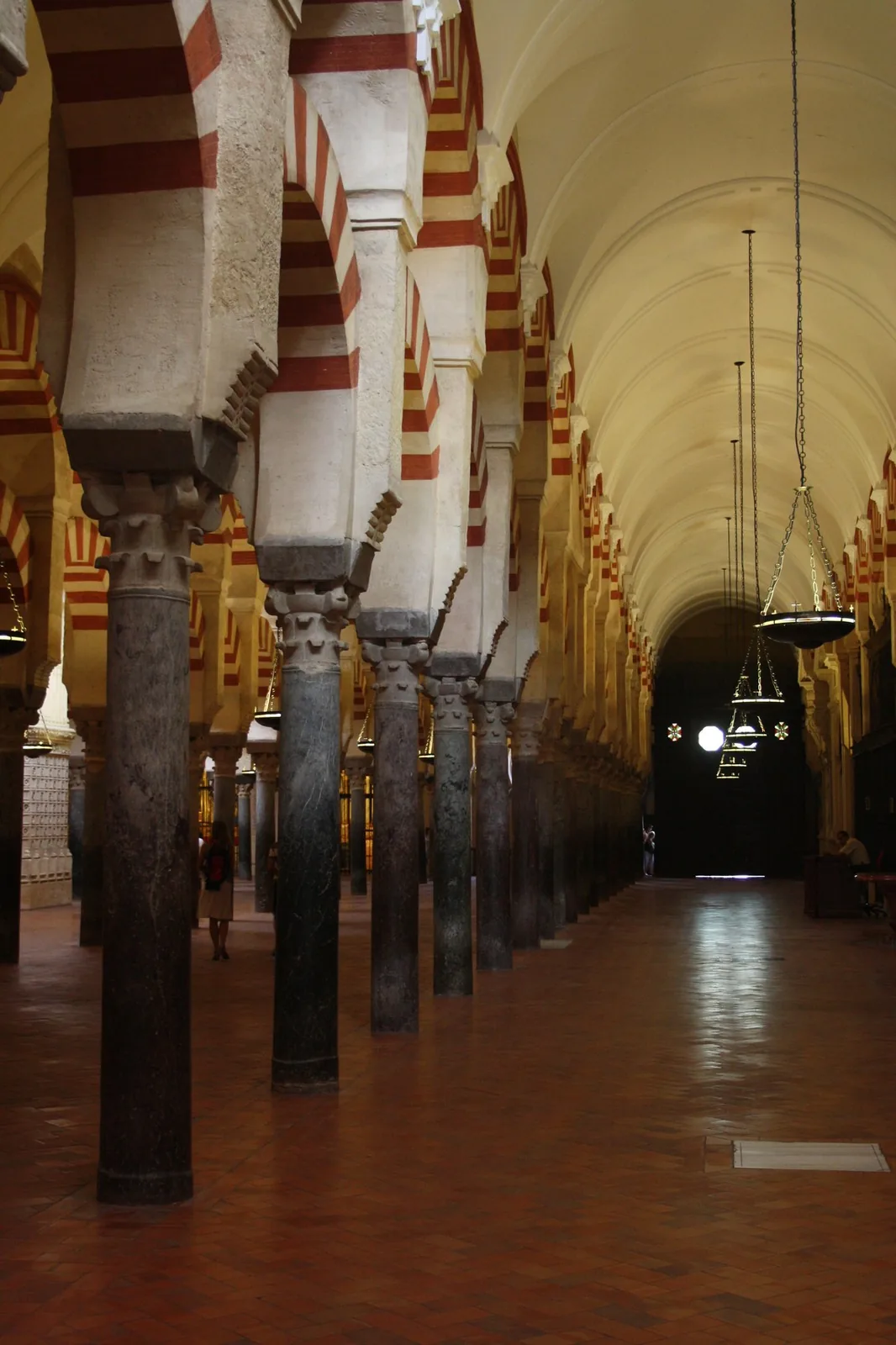
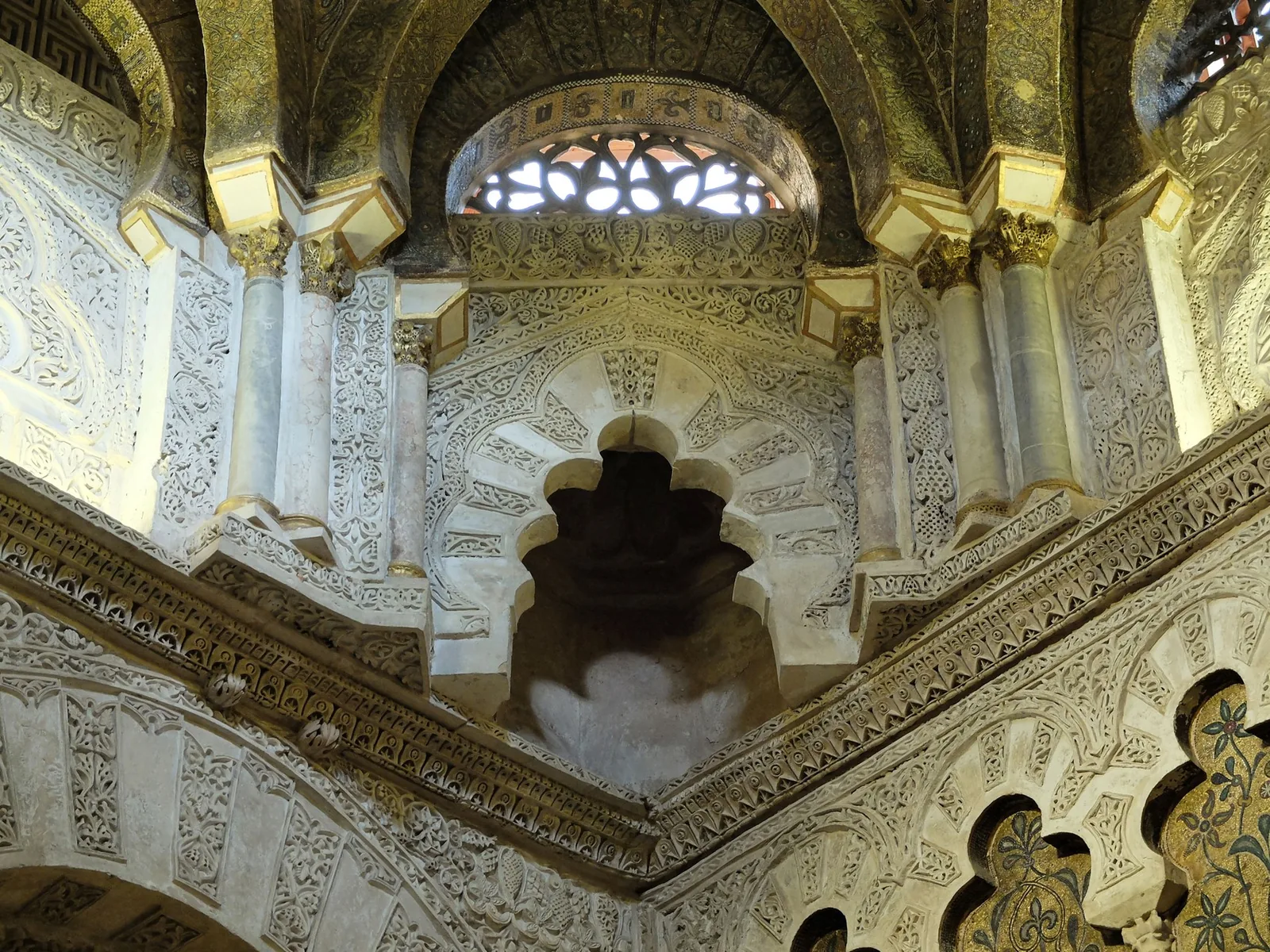
The Great Mosque of Cordoba faces due south. Yet from Cordoba, Mecca lies to the east. The gap is not a few degrees you could blame on an imprecise instrument: it is fifty degrees, on the greatest religious monument of the Muslim west. And it is not a mistake.
The figures first
An Andalusi treatise on the astrolabe, written in the twelfth century by Ibn al-Nattah, gives the axis of the mosque as one hundred and fifty degrees, that is south-south-east. The direction obtained by calculating the shortest path from Cordoba is one hundred degrees, east-south-east, over a distance of 4,630 kilometres. Fifty degrees separate the two.
To picture that gap, compare it to a clock face: it amounts to a little over an hour and a half on the dial. Someone standing before the qibla wall in Cordoba is not looking in the same direction at all as someone who had followed the calculation.
A fifty-degree gap stays abstract as long as it is left in degrees. Here is the same thing as a distance. Cordoba is 4,630 kilometres from Mecca. Leave Cordoba along the axis of the building, at one hundred and fifty degrees, and travel exactly that distance: you do not reach Arabia, you reach the equator, in Central Africa, some 3,600 kilometres from Mecca. It is that missing distance, not the angle, that measures the discrepancy. What that discrepancy actually measures is another question: it compares the building's axis with a rule that did not yet exist. Measured against the rule its builders did apply, the gap falls to a few degrees, as we shall see below.
First explanation: the city that was there before
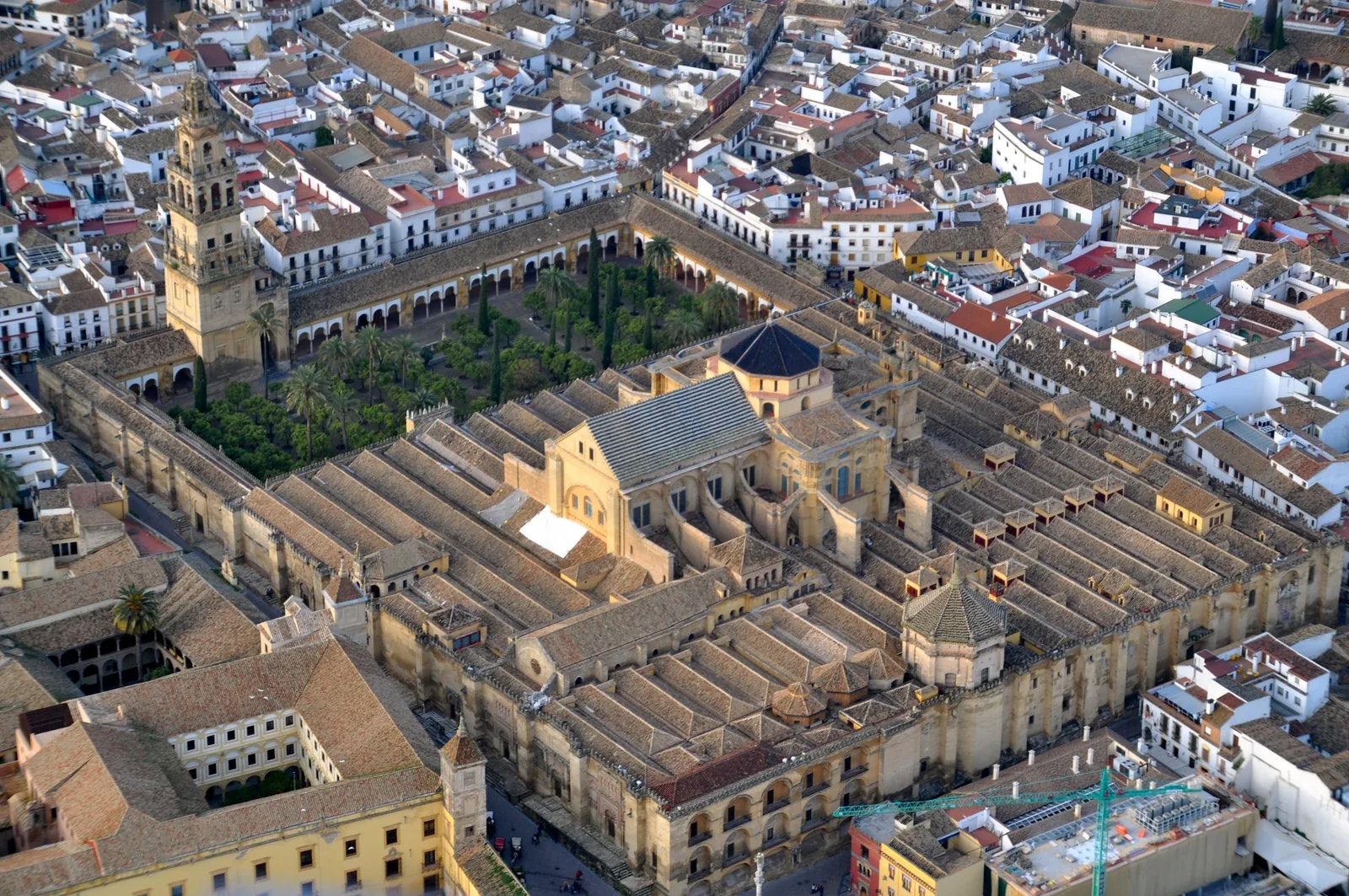
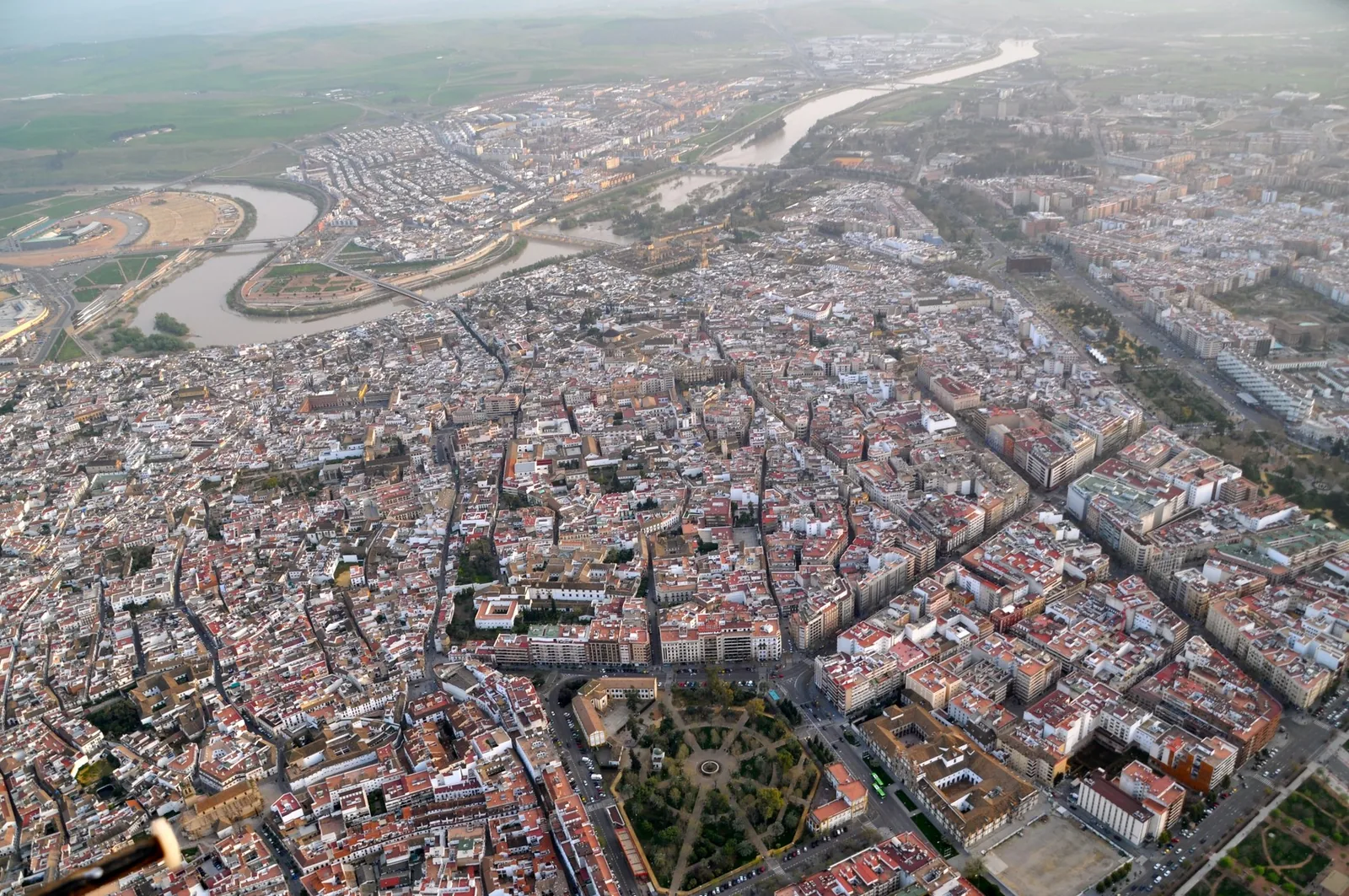
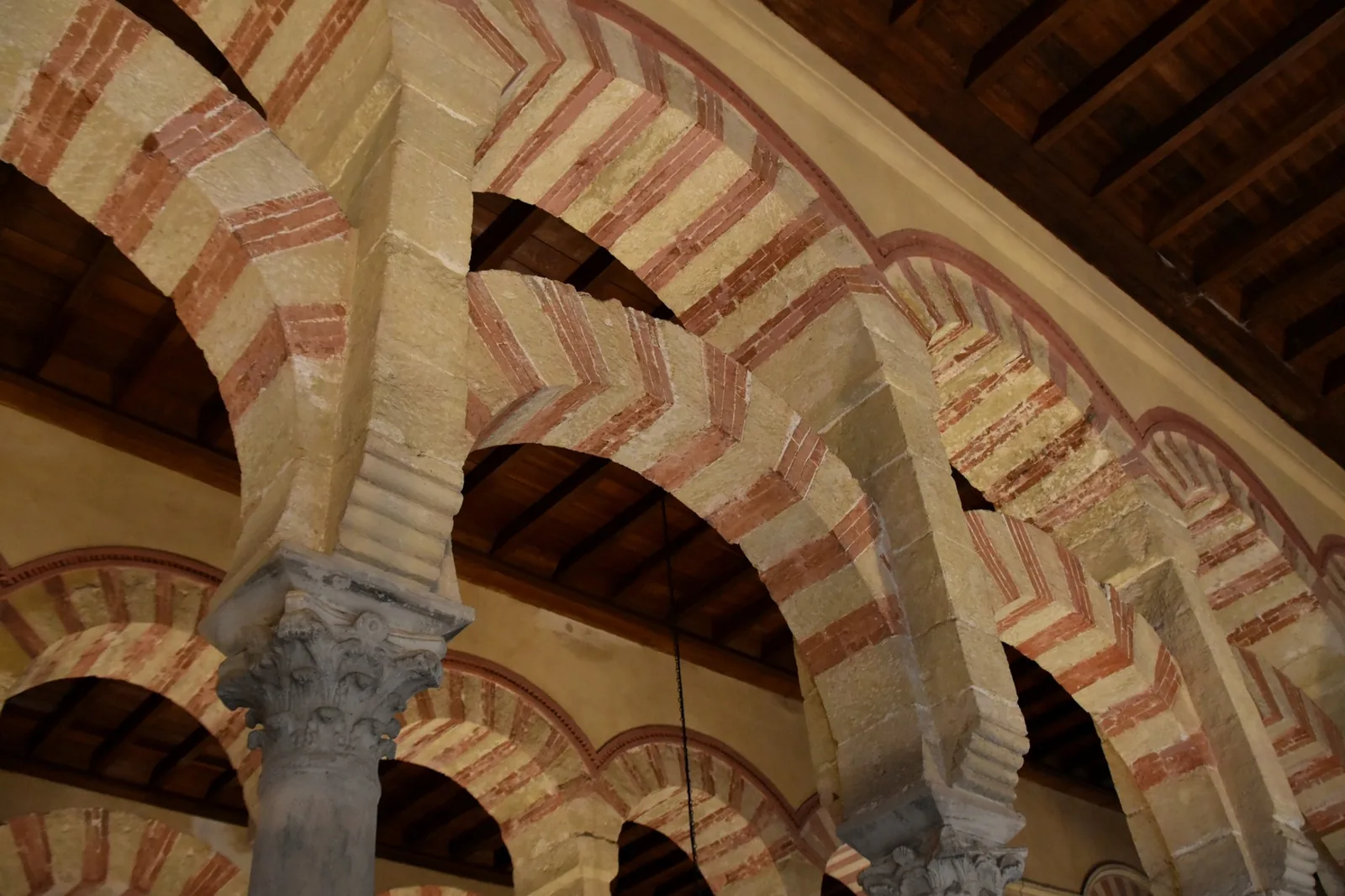
Construction began in 785, on ground that was not empty. Cordoba is a former Roman colony, and excavations carried out some twenty years ago revealed the orthogonal plan of an ancient suburb on that exact spot. The mosque settles into that grid and takes on its orientation.
This is not laziness on the builders' part. Reusing an existing layout means reusing foundations, boundary walls, street alignments and drainage. On a building of this size the saving is considerable, and the result sits neatly within the urban fabric rather than askew in the middle of it.
Second explanation: that direction was accepted
The decisive point lies elsewhere. Had Cordoba's orientation been seen as faulty, it would stand alone. It does not: around thirty mosques in Spain and North Africa face exactly the same way. This is not a local anomaly, it is a regional convention.
Old texts on sacred geography explain it in a way that puzzles a modern reader. They do not reason in coordinates but in sectors arranged around the Kaaba. The known world is divided into regions, and each region is associated with one precise side of the building. Facing correctly does not mean aiming at a point on a map, it means standing as you would before the face that is yours.
In that system, Spain faces the north-west wall of the Kaaba. And the Kaaba itself is not oriented at random: its major axis and its corners are set on old astronomical references. Reproducing the orientation of one of its faces therefore meant aligning on a celestial geometry everyone knew, with no trigonometry required.
One question is rarely asked: where do those walls actually point? The answer is more concrete than it sounds. It is the four corners of the Kaaba that roughly face the cardinal directions, which their names still record: the Iraqi corner to the north, the Syrian corner to the west, the Yemeni corner to the south, the Black Stone corner to the east. The walls therefore face the intermediate directions: north-east, south-east, south-west and north-west.
Standing before the north-west wall, when you are north-west of Mecca as Spain is, therefore means looking south-east. Which is precisely the one hundred and fifty degrees of the Cordoba axis. The coincidence can even be measured. The north-west wall is one of the two short sides of the building: its outward perpendicular points to 334.7 degrees, so standing in front of it means facing 154.7 degrees. The measured axis of Cordoba is 150 degrees. Less than five degrees separate the two. Where the modern computation diagnoses a fifty-degree error, the rule actually in use at the time lands on target. The convention was not arbitrary: it followed from the orientation of the building itself, which is set on celestial reference points detailed in episode 3.
A note on method: the 154.7 degrees above is a geometric result, derived from the astronomical axes of the building recalculated for this series, not a value quoted as such by any medieval text. The treatises reason in faces and sectors, not in degrees. The figure shows that the two approaches agree; it does not claim to restore a period prescription.
Two logics, not an error
Both explanations have to be held together, and that is what makes the case interesting rather than polemical. The Roman layout supplies the axis, available on site and economically rational. Sacred geography supplies the legitimacy: that axis happened to match one of the directions accepted in the region.
The researchers who have worked on the subject, notably David King in a study published in the journal Suhayl, do not settle on a single cause. They describe a meeting between a constraint of the ground and a scholarly convention. It is more prosaic than a mystical intention, and far more instructive.
What this case teaches about the others
Cordoba is not an exception, it is a revealer. Most old mosques were not oriented by calculation, and judging their direction by a modern azimuth means applying a rule that did not yet exist. The same research shows that the gaps observed stayed within margins accepted at the time, and that several conventions sometimes coexisted in one region.
This is also why the series treats these gaps as facts in the history of science and never as faults. The interesting question is not whether an eighth-century building matches a twenty-first-century calculation, but by what logic its builders decided on the direction, with the means and the ideas of their time.
For the origin of the problem, go back to episode 1. For the direction from where you are, the Qibla Compass page calculates it. And for the building itself, the page on the Mosque-Cathedral of Cordoba covers its history and architecture.