
Home › Blog › Floating mosques
Red Sea and South-East Asia · 9 min read · 2026-08-16
Floating mosques do not float: they stand on piles
They are called floating mosques. Jeddah, Kuala Terengganu, Malacca, Makassar, Penang: at high tide their base disappears under the water and the building seems to rest on the sea. None of them floats. All of them stand on concrete piles driven into the seabed, and that is precisely what makes their story interesting.
Jeddah, 1985: the first building set on the sea
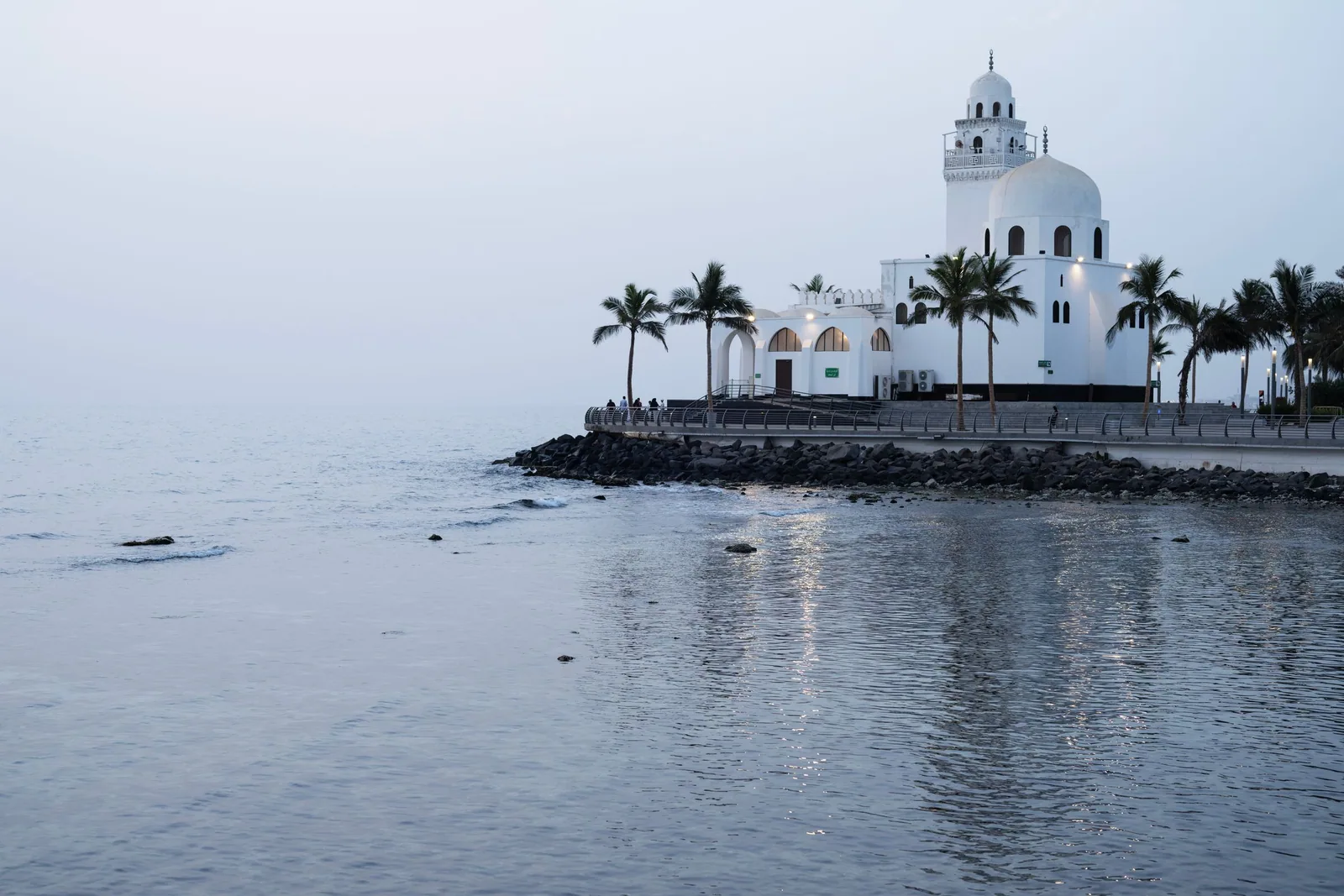
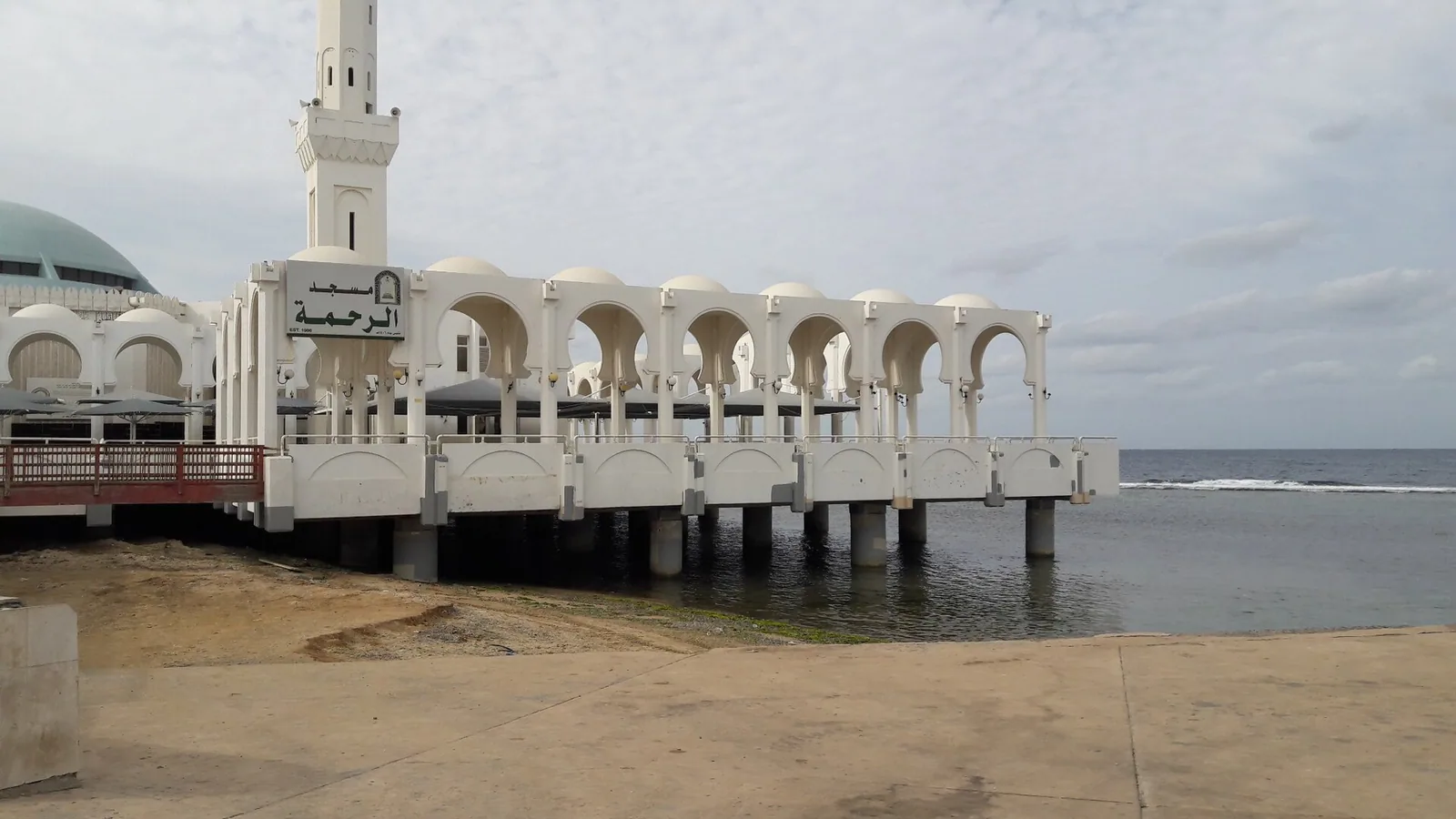
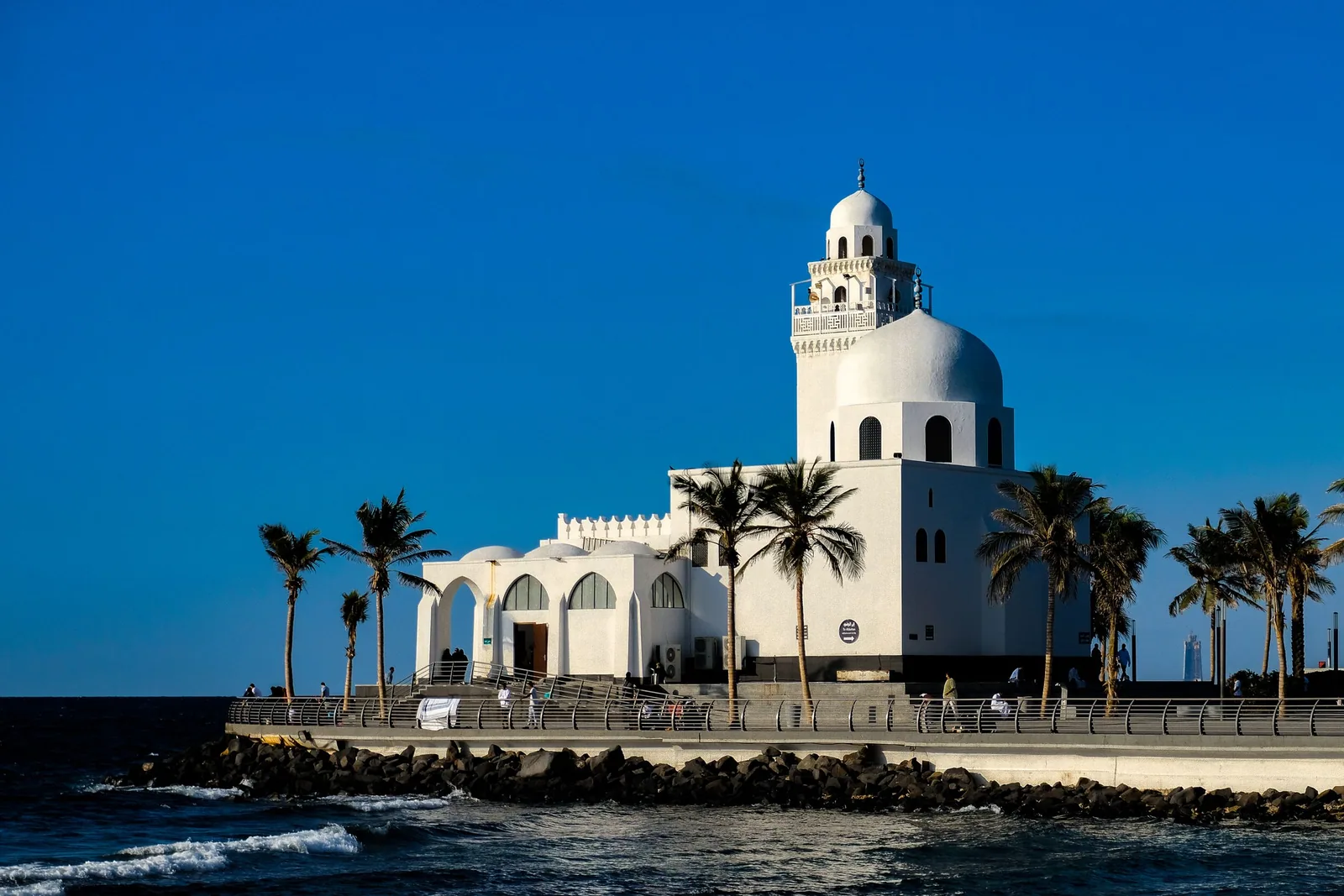
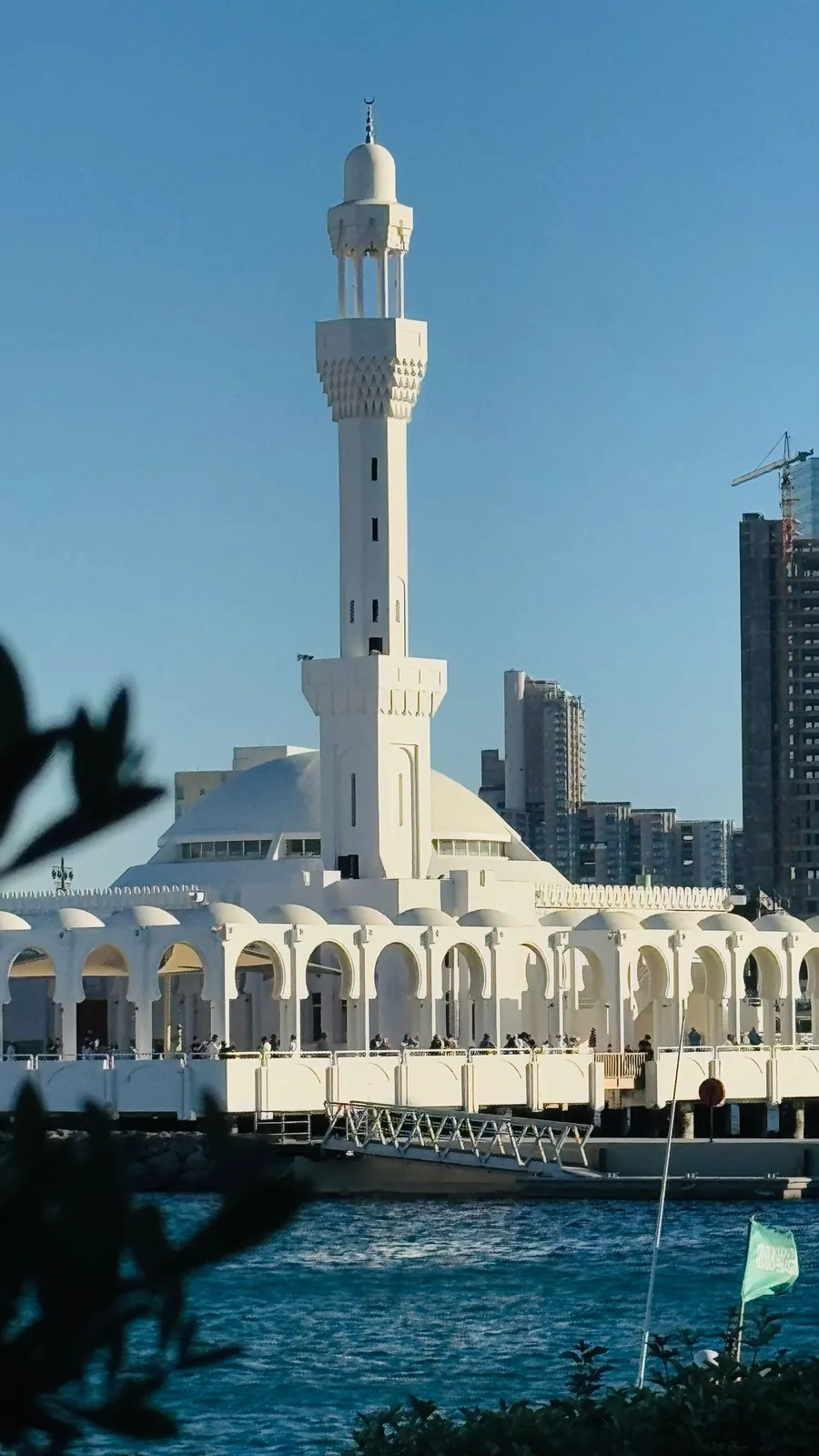
The Al-Rahmah Mosque was built in 1985 on the corniche of Jeddah, Saudi Arabia, above the waters of the Red Sea. It is white, crowned by a main dome and some fifty smaller domes, with a prayer hall of about 2,400 square metres and fifty-six windows.
What made its reputation, however, is neither its size nor its decoration: it is its position. The building stands beyond the shoreline, linked to land by a platform. When the sea rises the supports vanish from view and the building appears to float. The nickname was born there, and it travelled the world faster than the architecture itself.
What actually happens under the floor
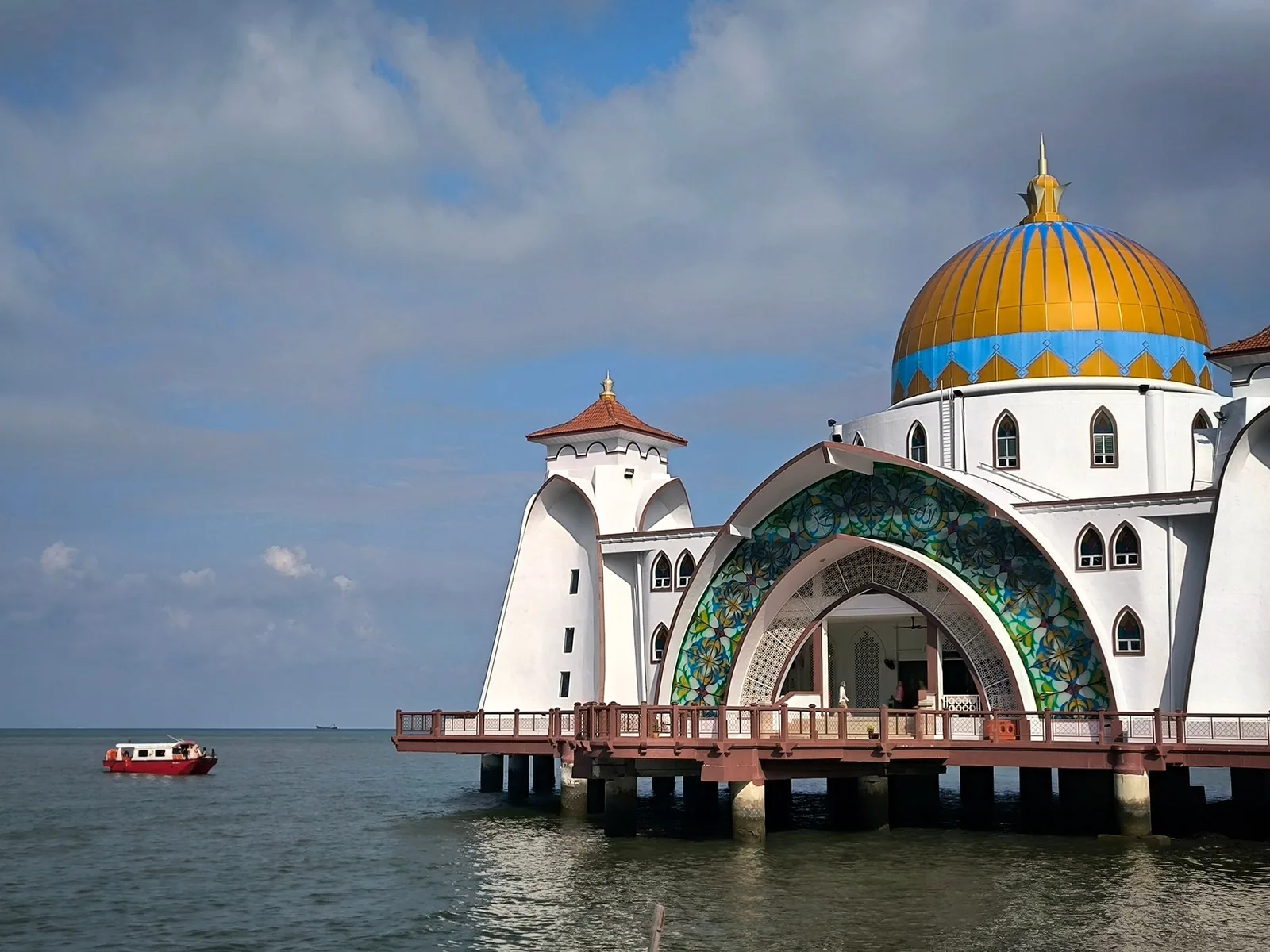
Look at one of these mosques at low tide and the illusion collapses at once. Under the slab there is a forest of concrete piles, driven down until they reach ground firm enough to carry hundreds of tonnes. It is ordinary maritime civil engineering, the same principle as a pontoon, a quay or a harbour platform.
The word "floating" therefore belongs to the image, not to the technique. It describes what a visitor sees at a certain moment of the day, when the water covers the supports. The rest of the time, the building shows exactly what it is: a structure on stilts, a technique as old as the fishing villages of South-East Asia.
The Malaysian wave
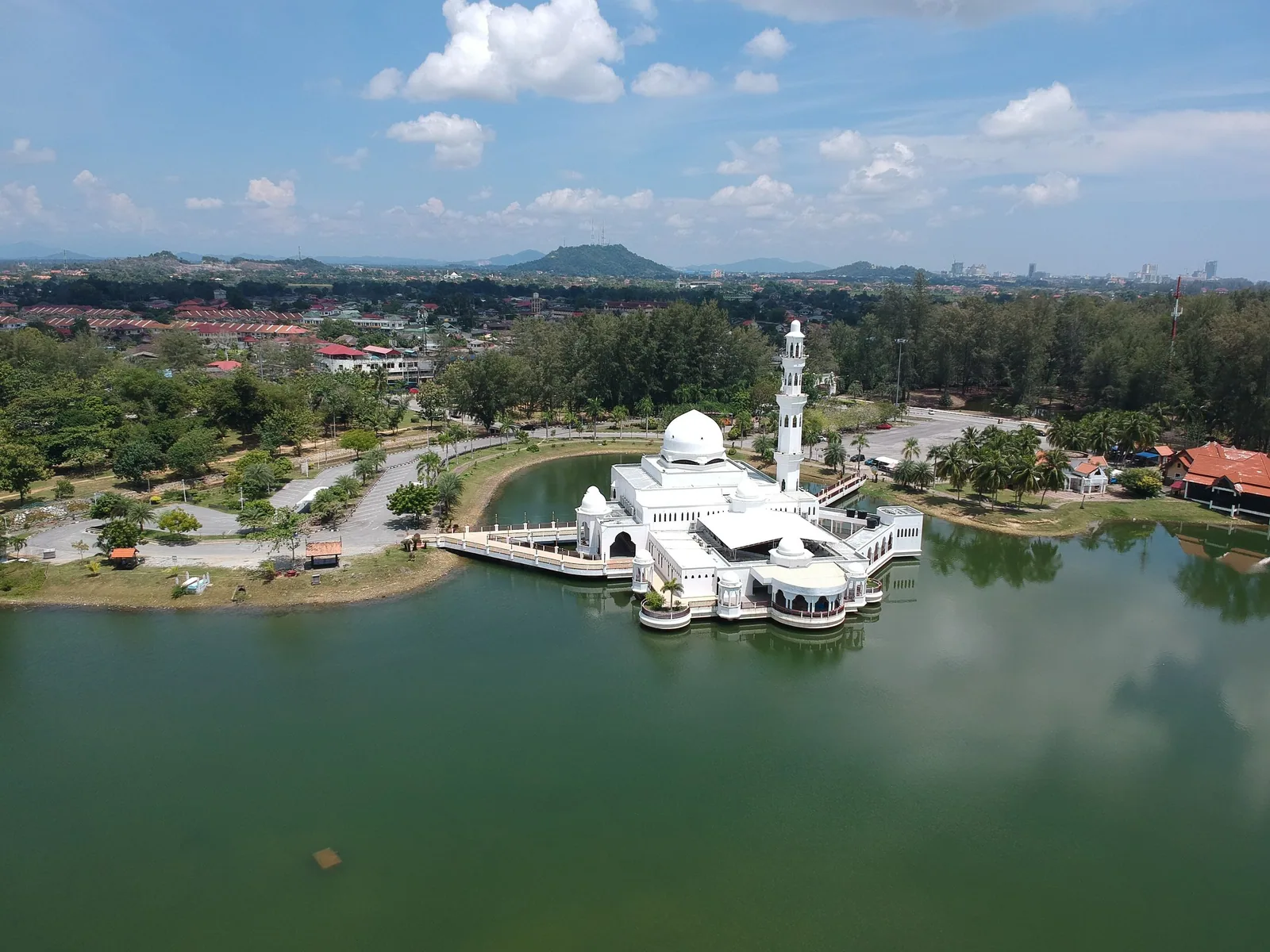
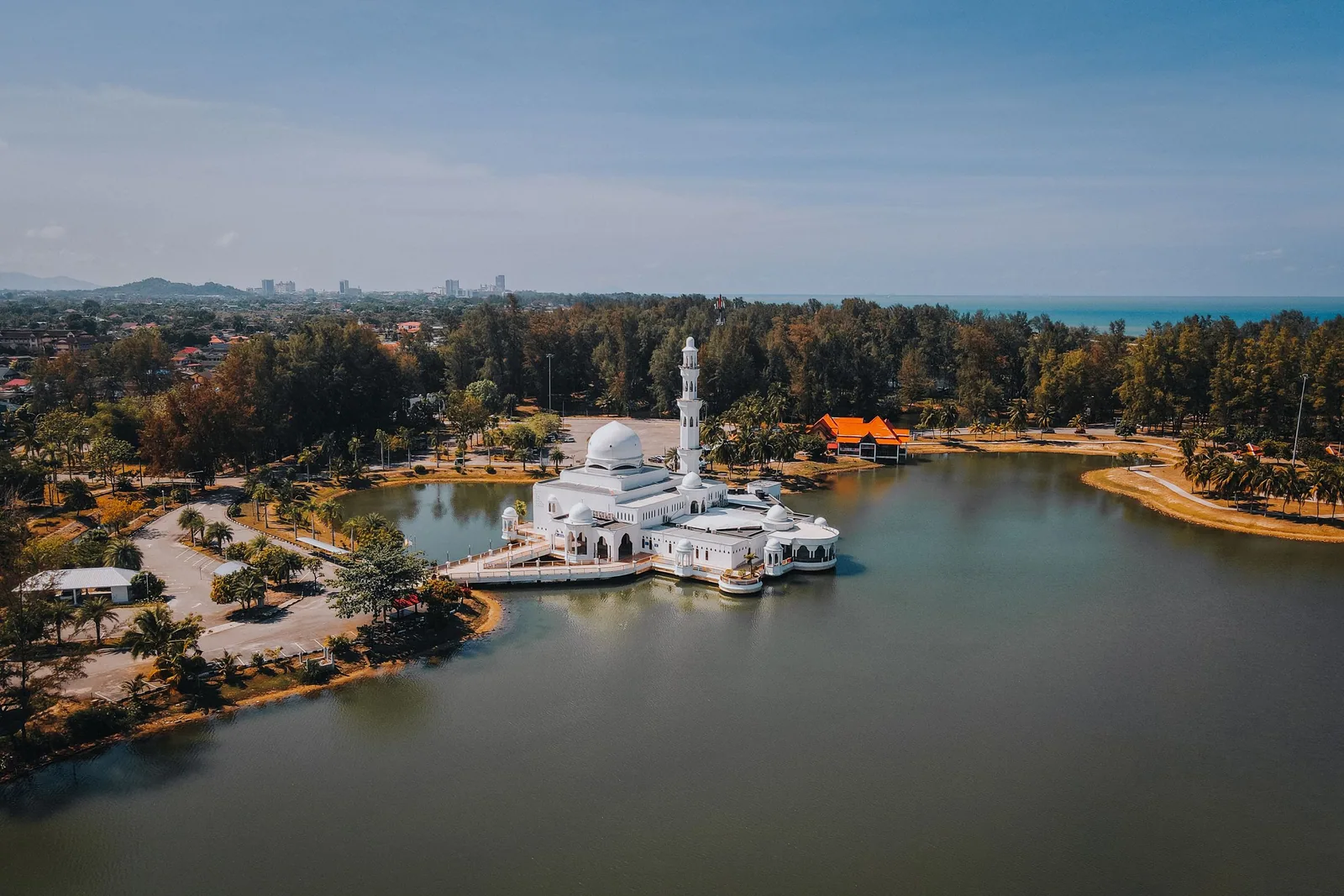
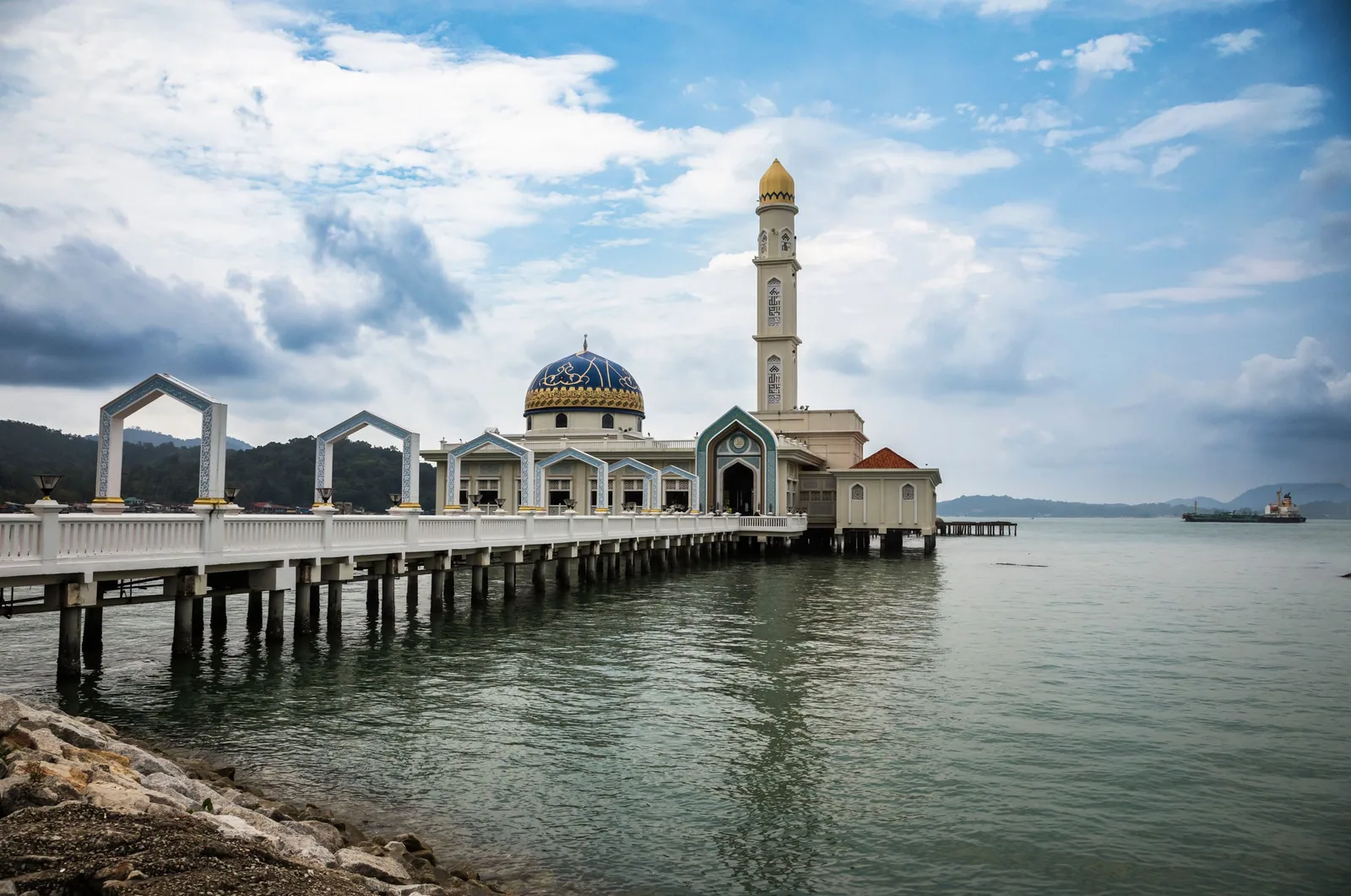
Malaysia pushed the idea further than anywhere else. The Tengku Tengah Zaharah Mosque, on the Kuala Ibai lagoon near Kuala Terengganu, was begun in 1993 and inaugurated in July 1995. It covers about five acres and can hold two thousand worshippers. The country presents it as its first genuine floating mosque.
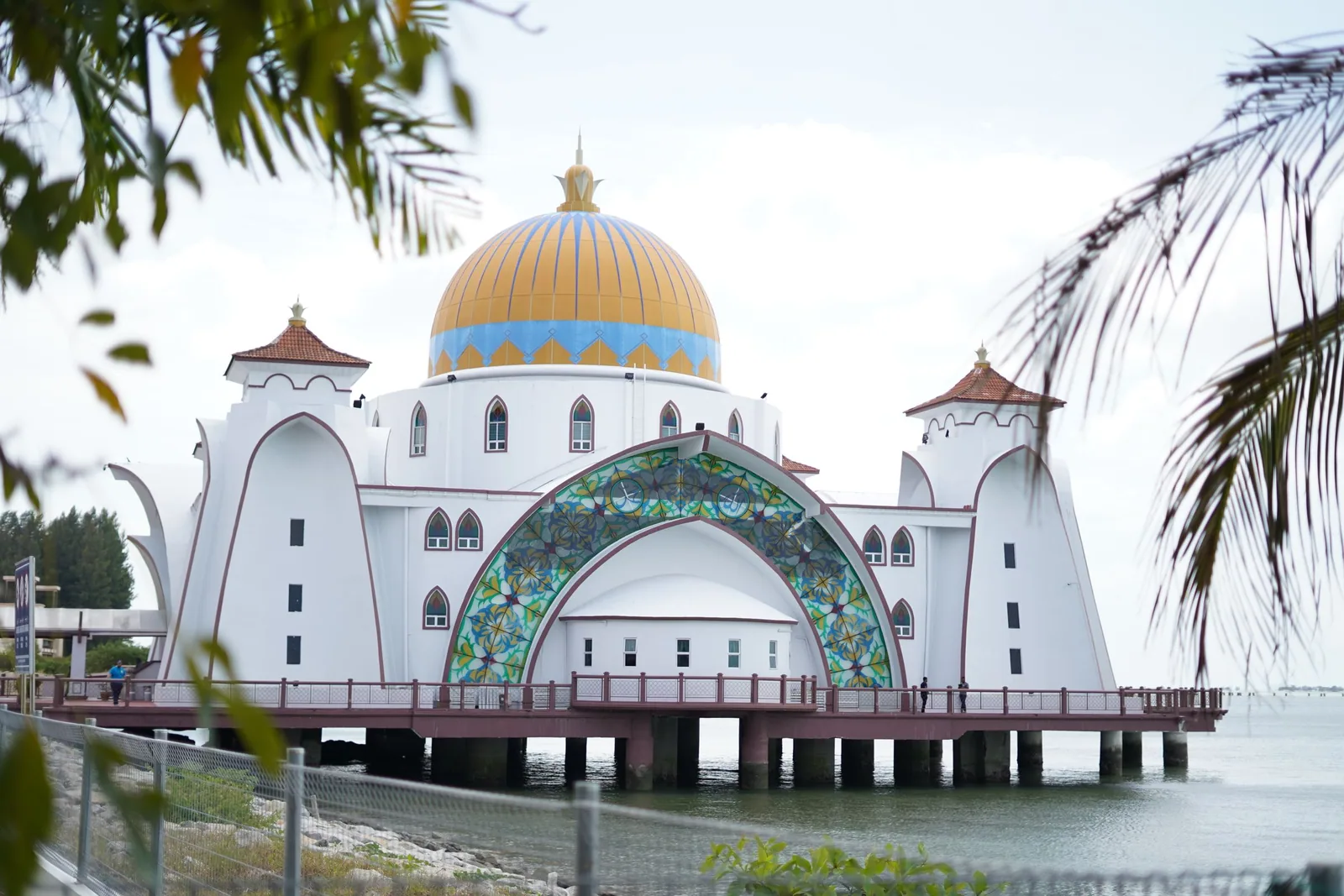
Eleven years later, in November 2006, came the Malacca Straits Mosque on the artificial island of Pulau Melaka, for a cost of around ten million ringgit. Its thirty-metre minaret has a second function that is rarely mentioned: it also serves as a lighthouse for ships passing through the strait. Few minarets can say as much.
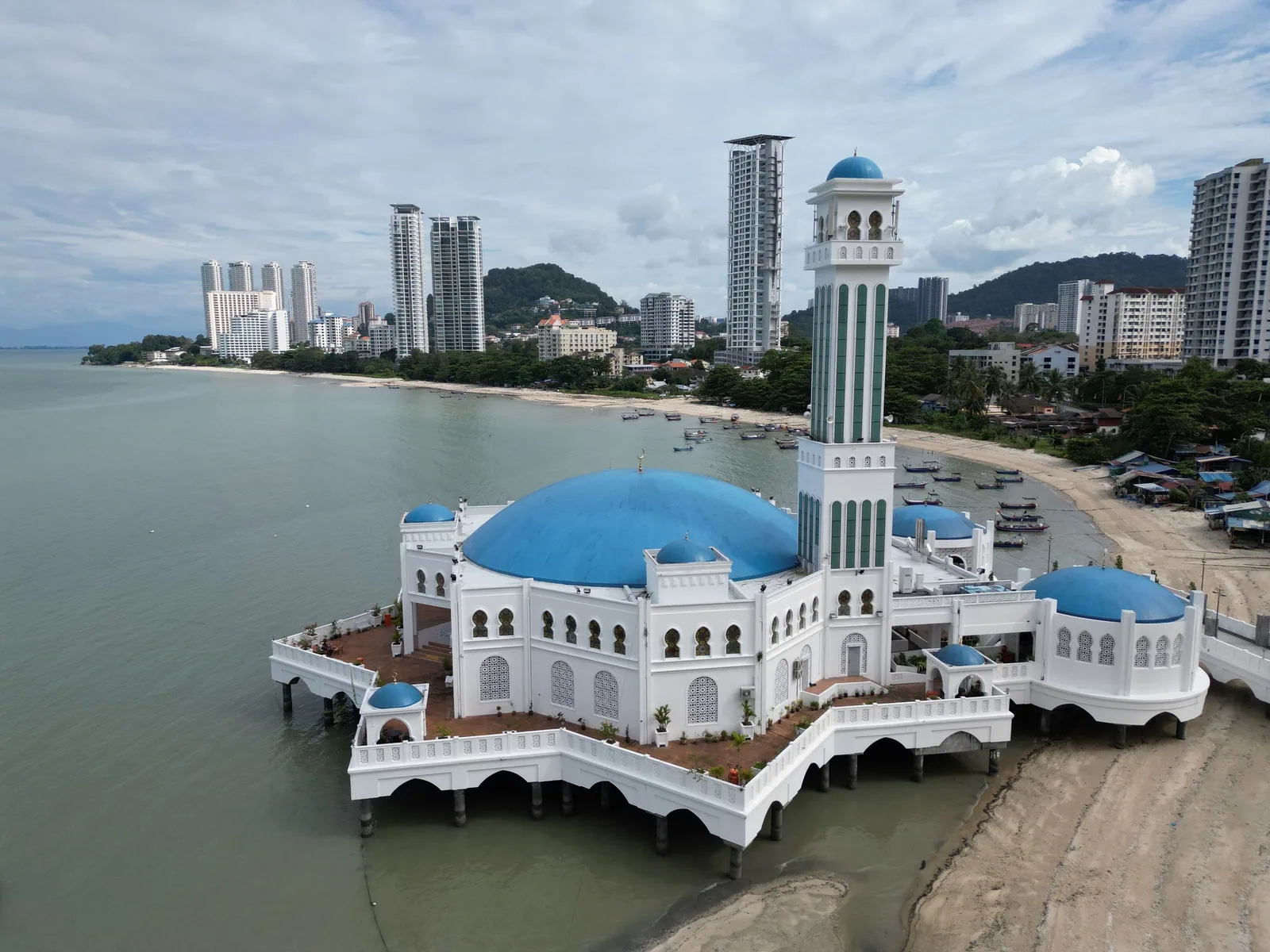
Penang followed with its own mosque on the water, this one backed by a line of high-rise towers. From one coast of the country to the other, the motif has become an architectural signature as much as a place of prayer.
Makassar, the stilt house turned mosque
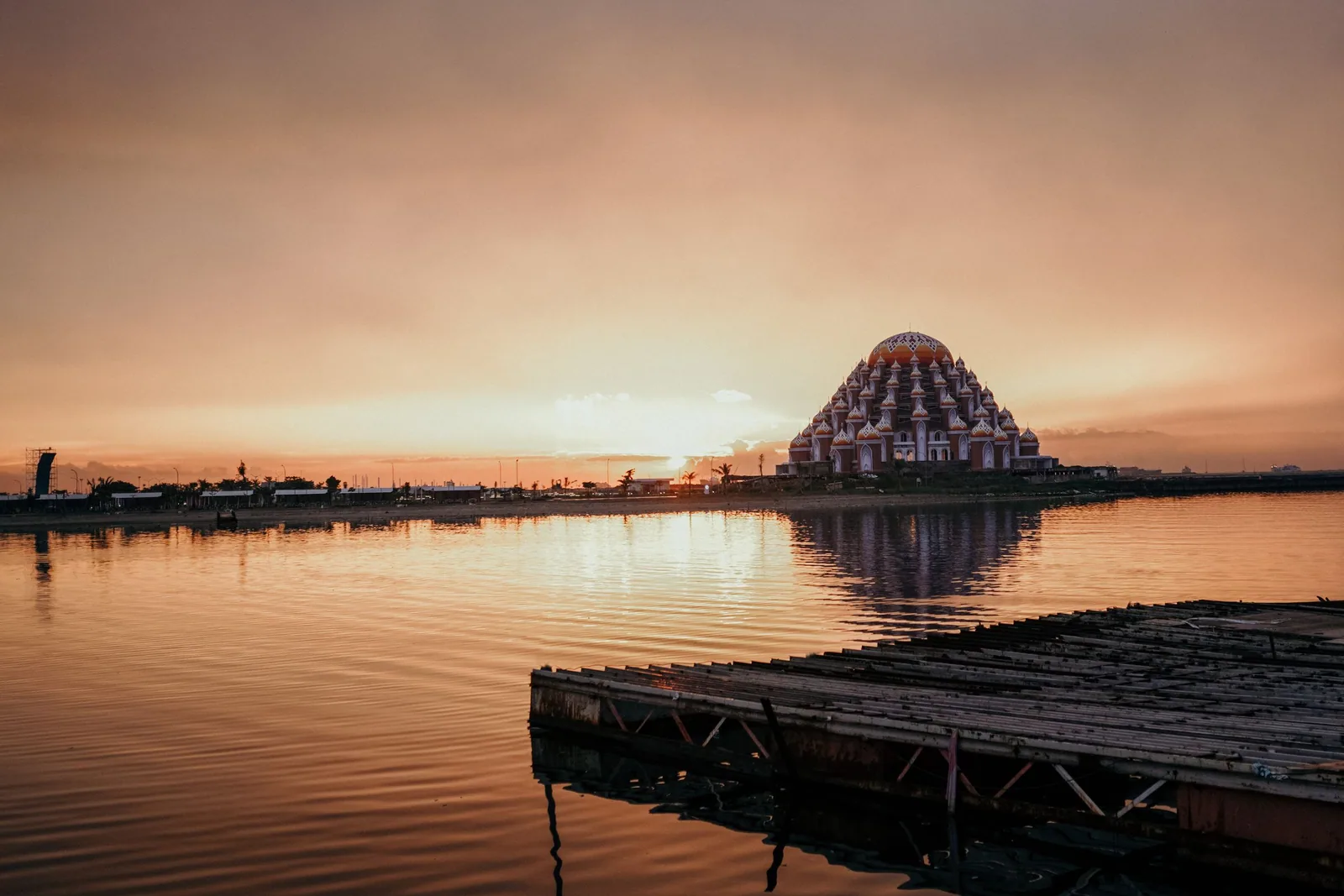
In Indonesia, the Amirul Mukminin Mosque opened in 2012 on Losari beach in Makassar, on the island of Sulawesi. It is presented as the country's first floating mosque, and it holds about five hundred people.
Its interest lies elsewhere than in the figures. Its silhouette echoes the stilt houses of the Bugis and Makassarese, the seafaring peoples of the region, whose traditional dwellings have stood above the water for centuries. Here the mosque does not bring a foreign shape out over the sea: it applies to a religious building a way of building that was already that of the houses.
Ko Panyi, the village that really does live on the water
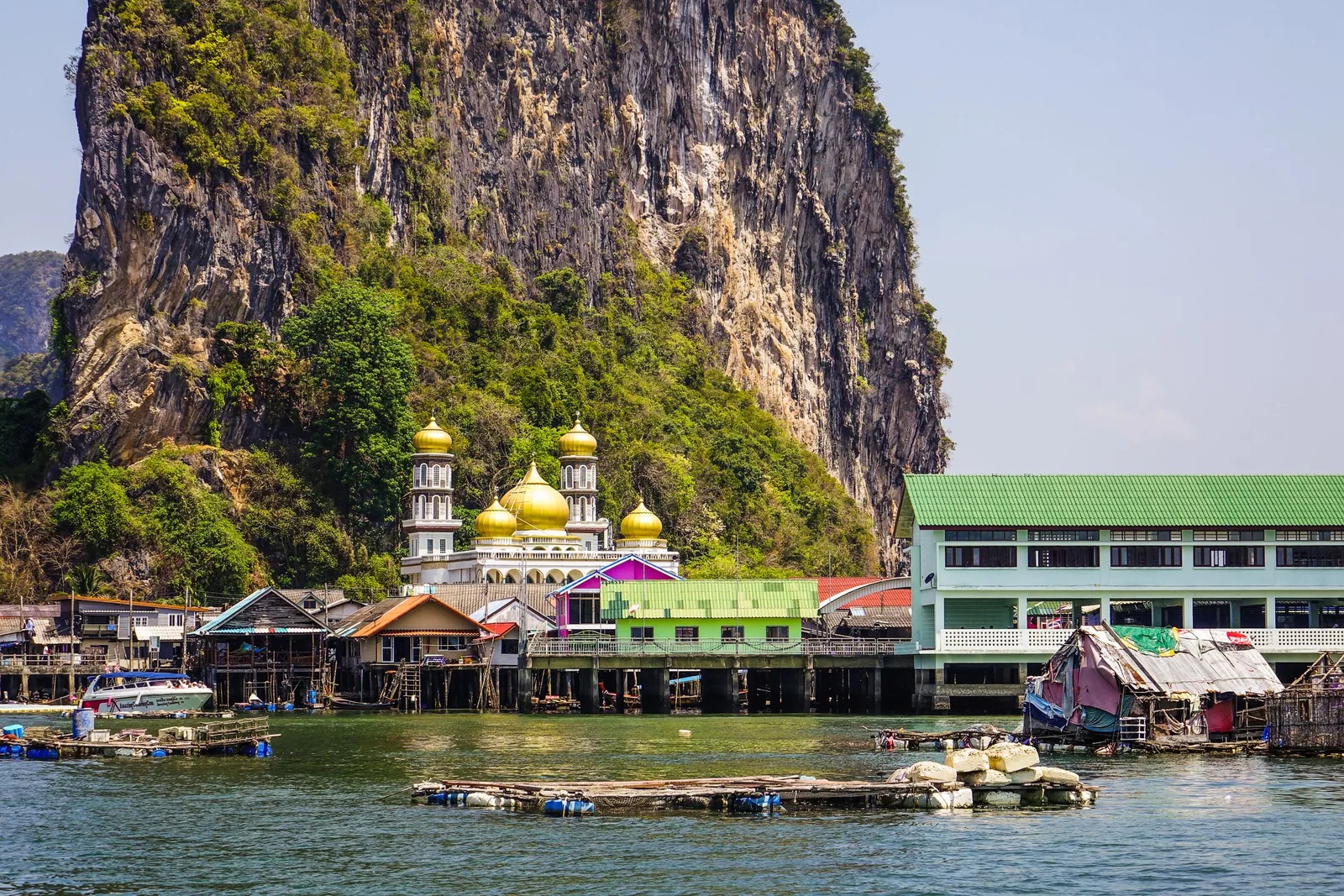
To see what an entire community built on stilts looks like, you have to go to Thailand, to Phang Nga Bay. Ko Panyi is a fishing village founded in the late eighteenth century by Muslim families from the Indonesian archipelago. About one thousand six hundred people live there, in some three hundred and sixty families, in houses raised above the water because land ownership was closed to them.
The village has its mosque, and one further curiosity: a football pitch built by the children out of salvaged planks and fishing rafts, after the 1986 World Cup. The team formed on that floating pitch won six southern Thailand youth championships between 2004 and 2010. It is probably the best illustration of the ingenuity that life on the water produces.
Palu, the one that ended up in the water
The floating mosque of Palu, on the coast of Sulawesi, was built like the others, on supports planted in the floor of the bay. The earthquake and tsunami of September 2018 carried away its supports and the walkway that linked it to the shore. The building remained standing, but half submerged and cut off from land. It has not returned to use, and a new mosque has been built nearby.
Told soberly, that story says the essential thing about the subject. These buildings do not float: they stand as long as their supports stand. The difference between the image and the technique is not a matter of vocabulary, it is a fact of construction.
Why build above the water
Three reasons come back, and none of them is mystical. The first is land: on a dense urban corniche or a seafront promenade, space is missing, and the sea is the only room left. The second is comfort: above the water the air moves and the heat drops, which matters at these latitudes. The third is the view, for the building as much as for the city that looks at it.
To which a more prosaic reason must be added, the one behind the fishing villages: when land is expensive, out of reach or legally closed, people build on the water because there is nowhere else to build. That is the case at Ko Panyi, and it is from that tradition that the stilt mosques of South-East Asia descend, formally speaking.
The price to pay
Building on the sea is expensive, and stays expensive. Salt water attacks concrete and reinforcement, spray eats away renderings, swell works the supports without pause. A mosque set on the water needs maintenance that a mosque set on the ground does not, and the bill never stops at the inauguration.
It is also what makes these buildings fragile in the face of extreme events, as Palu showed. The motif is spectacular, and it has become a tourist argument in several countries, but it commits its owners to permanent upkeep that visitors never see.
To go further: our selection of the three most beautiful mosques in Malaysia, including the glass mosque of Terengganu, and our survey of the most unusual mosques.