
Home › Blog › 6 unusual mosques off the beaten path
Unusual · 7 min read · 2026-03-09
6 unusual mosques off the beaten path
No dome, no minaret, a jarring colour or an unlikely material: these six mosques share the fact that each, in its own way, breaks with the most expected image of mosque architecture. Two already feature among our 20 must-see mosques; the other four also deserved the detour.
The Great Mosque of Djenné, an entire city made of rammed earth
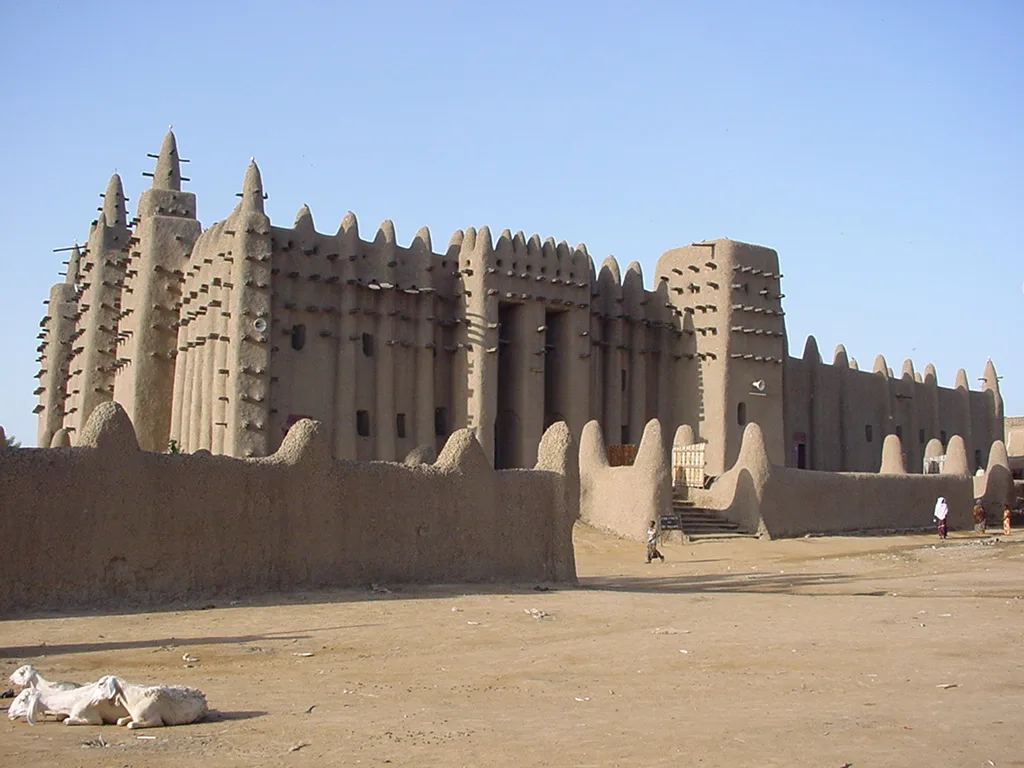
It's impossible to talk about the unusual without starting with Djenné, Mali: it is simply the world's largest building made of rammed earth (banco). Every year, before the rainy season, the whole town takes part in the "crépissage", a collective celebration where fresh mud is applied to the walls by hand. The palm bundles bristling from the facade are not decorative: they are permanent scaffolding, embedded in the wall, enabling this yearly maintenance essential to the building's survival.
The Great Mosque of Xi'an, without dome or minaret
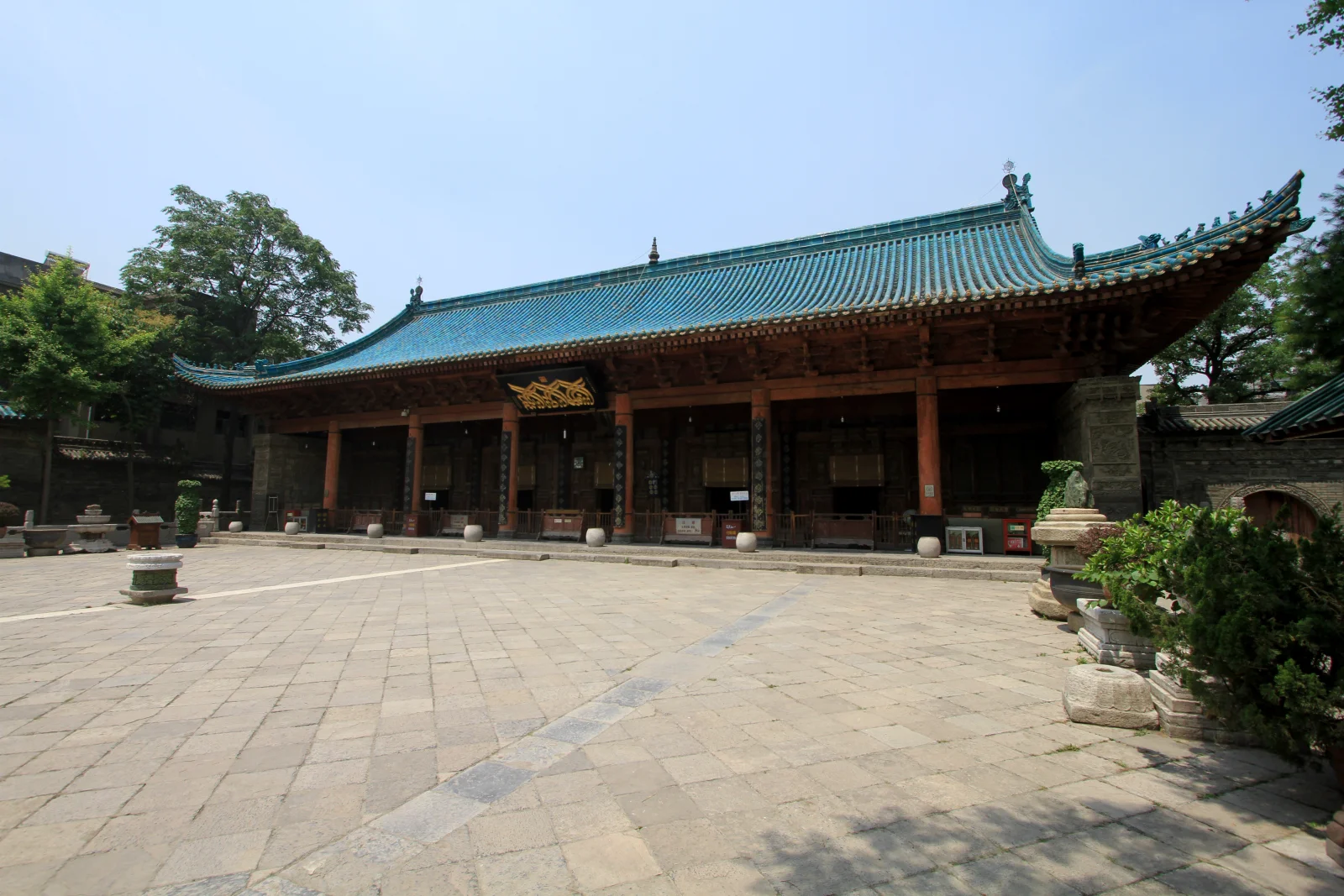
At the opposite aesthetic extreme, the Great Mosque of Xi'an, in China, resembles no other mosque in the world: no visible dome or minaret, but a succession of courtyards and wooden pavilions with curved roofs, in composition strictly identical to traditional Chinese temples. Only the east-west orientation of its axis, contrary to classic Chinese temples oriented north-south, betrays its function: it points towards Mecca.
The mosque with 99 domes in Makassar
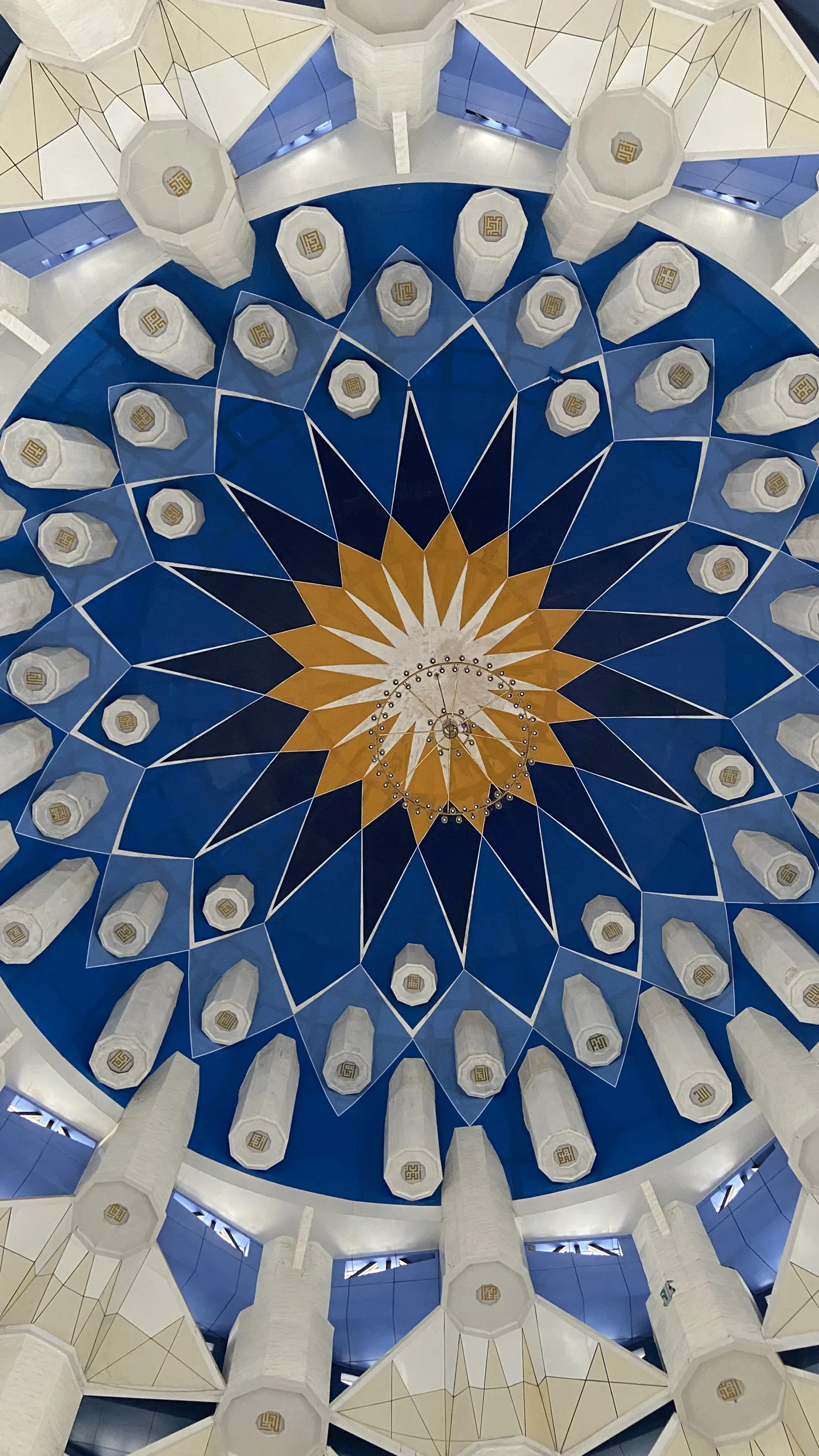
In Indonesia, the Al-Asmaul Husna Mosque, better known as the "mosque of 99 domes" (Masjid 99 Kubah), pushes an Islamic symbol to an architectural extreme: its roof is literally composed of 99 small domes, one for each of the 99 names attributed to God in Muslim tradition (the Asmaul Husna). Built on land reclaimed from the sea in Makassar, in the south of Sulawesi island, seen from inside, the central dome forms a radiant star surrounded by this string of mini-domes, a motif found in no other mosque in the world.
The golden-domed mosque of Depok
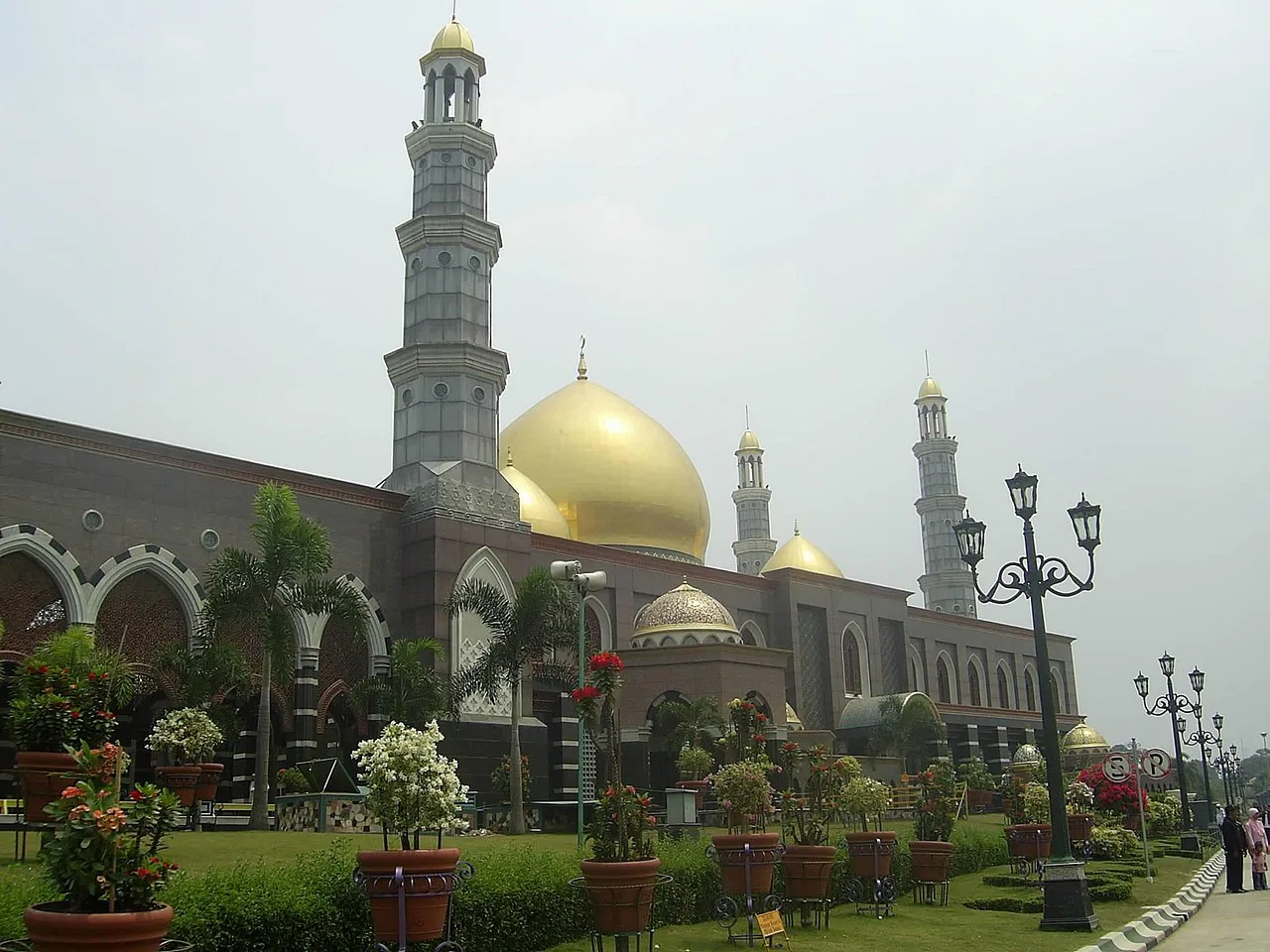
Also in Indonesia, the Dian Al-Mahri Mosque, nicknamed the "golden dome mosque" (Masjid Kubah Emas), embraces another kind of excess: its domes are covered in genuine gold leaf. Funded by a private foundation and inaugurated in 2006 in the suburbs of Depok, near Jakarta, it has become one of the country's most photographed religious monuments, visible from afar thanks to the shine of its golden domes, which contrasts sharply with the usual green and white of Southeast Asia's great mosques.
The mosque dug into a hillside, in Turkey
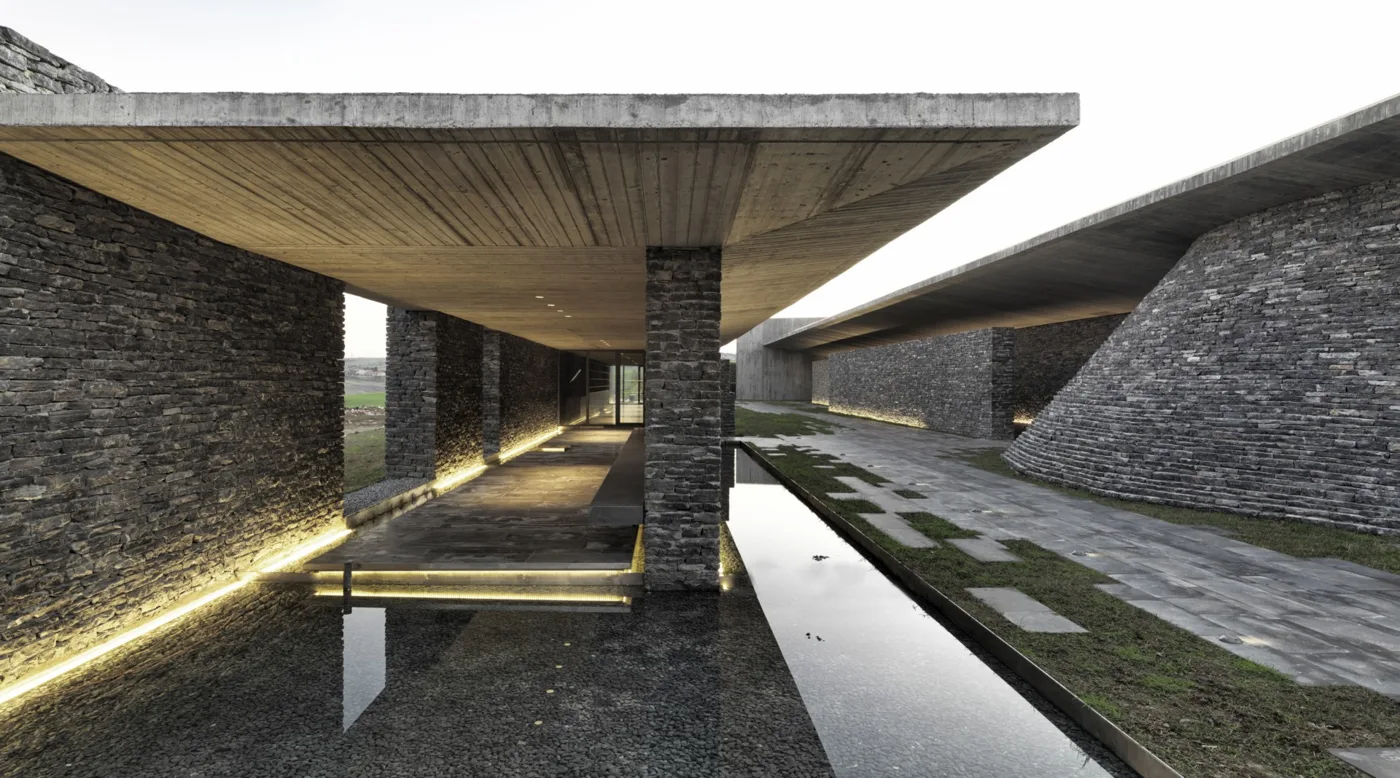
Near Istanbul, the Sancaklar Mosque takes the complete opposite of classic imagery: designed by architect Emre Arolat and completed in 2012, it is literally buried into a hillside, with no dome or traditional minaret : only a thin stone column, barely taller than a lamppost, stands in for it. Inside, light filters in from a slit at the top of the volume, in an almost monastic, mineral atmosphere. The project was recognised with one of the most prestigious international architecture prizes, the Aga Khan Award for Architecture.
The mosque with a starry ceiling in Dhaka
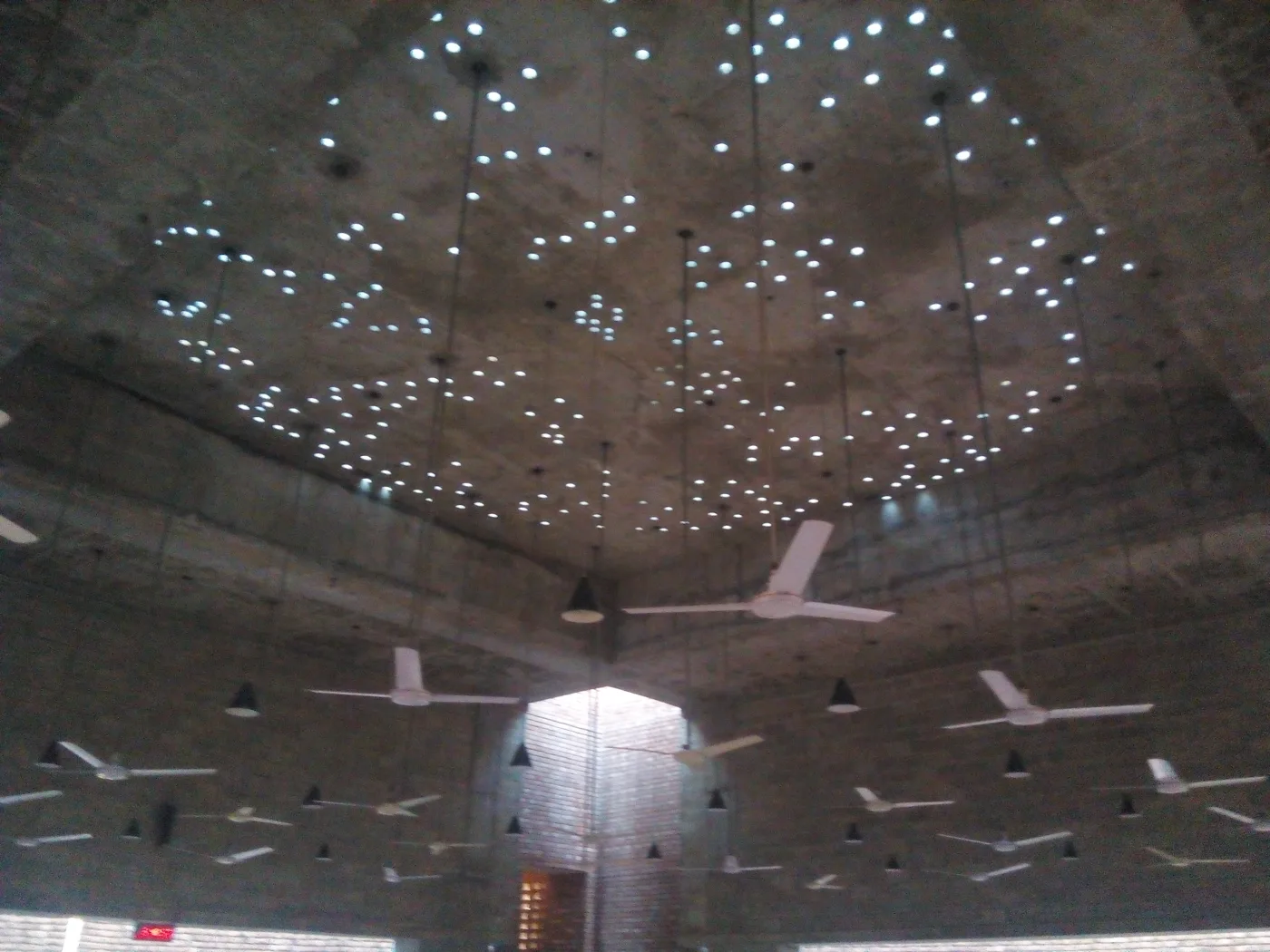
In Dhaka, capital of Bangladesh, the Bait ur Rouf Mosque, designed by architect Marina Tabassum and completed in 2012, also forgoes the dome and minaret: a simple bare-brick cylinder, funded by a private donor on a modest neighbourhood plot. Its feat is hidden in the ceiling: circular skylights pierce the concrete vault and cast, once night falls, a scattering of points of light evoking a starry sky above the worshippers. The building won the Aga Khan Award for Architecture in 2016, a rare accolade for a neighbourhood mosque with such a modest budget.
Discover
Mosques mentioned in this article
Great Mosque of Djenné
The world's largest building made of rammed earth, replastered every year by the entire town in celebration.
Great Mosque of Xi'an
A mosque without dome or minaret: pavilions, pagoda and gardens, masterpiece of Chinese Islam.
About this page's content: this site offers editorial and cultural content written with care and respect for the religious traditions concerned; it does not constitute a theological opinion or a source of religious authority. Despite our checks, errors, inaccuracies or approximations may remain. If you spot one, please let us know via the Contact page or by email at qibla.mosk@gmail.com, and we will correct it gratefully.