
Home › Blog › Qol Sharif, Kazan
Kazan, Tatarstan · 9 min read
They rebuilt a mosque nobody had ever seen
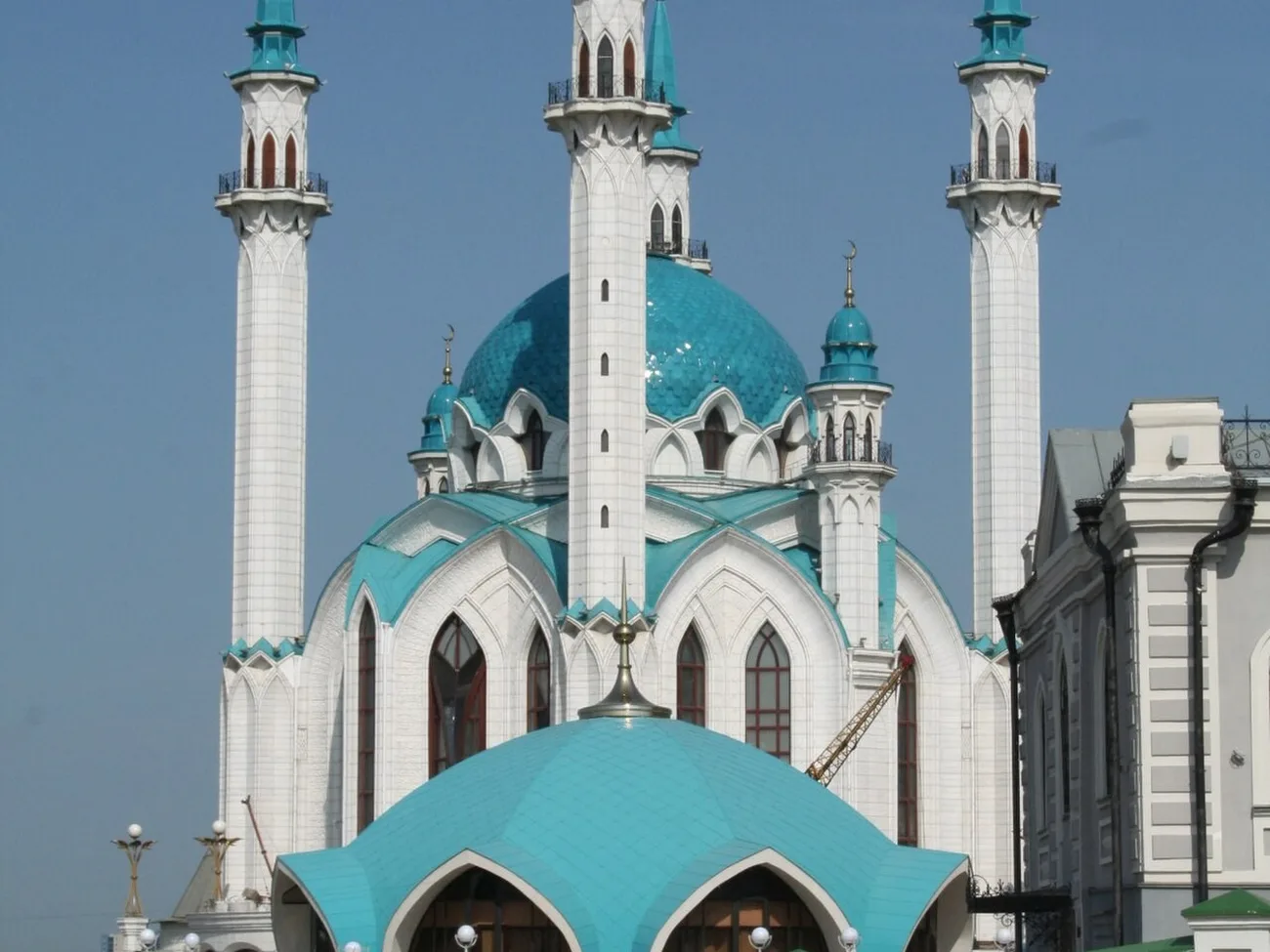
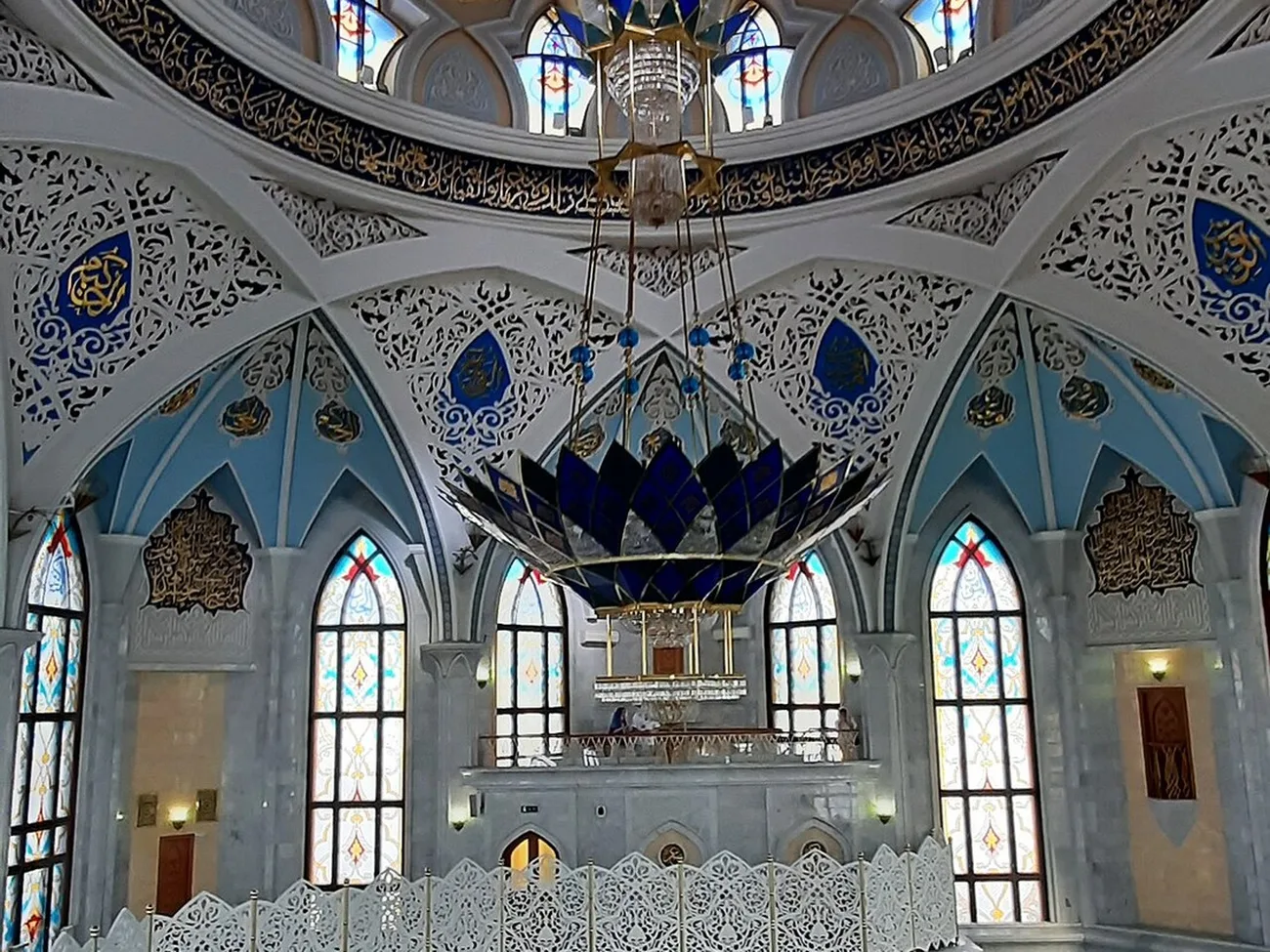
A mosque stands in the middle of the Kazan Kremlin. It was completed in 2005. It replaces another, destroyed in 1552, of which not a wall, not a plan and not a drawing survives. The question this building poses is therefore the hardest one in heritage: how do you rebuild something nobody has ever seen?
What happened, plainly
We say it without circling, because both halves of this fact matter equally.
Who destroyed Qol Sharif: the army of Ivan IV, known as Ivan the Terrible, at the capture of Kazan on 2 October 1552. The mosque bears the name of the imam who defended it and died that day.
The second sentence is what gives the first its meaning. The name of this building is not that of a founder, a patron or a ruler, as is usual. It is that of a man who died defending it. Today's mosque is a memorial as much as a place of prayer.
The man whose name it bears
One would like to be able to say more, and here is a second documentary gap.
What is retained of him takes a few lines: he was the imam of the citadel's main mosque, he directed its teaching, and he died on the day the city fell, defending it. The rest belongs to a tradition formed after the fact, and we will not repeat it as though it were a civil record.
There is something consistent in this double absence. We do not know what the building looked like, and we know almost nothing of the man whose name it bears. What survives of both is a name and a date. Today's mosque is built on exactly that.
Kazan, on the Volga
The city lies eight hundred kilometres east of Moscow, on the left bank of the Volga where the Kazanka joins it. It is today the capital of Tatarstan.
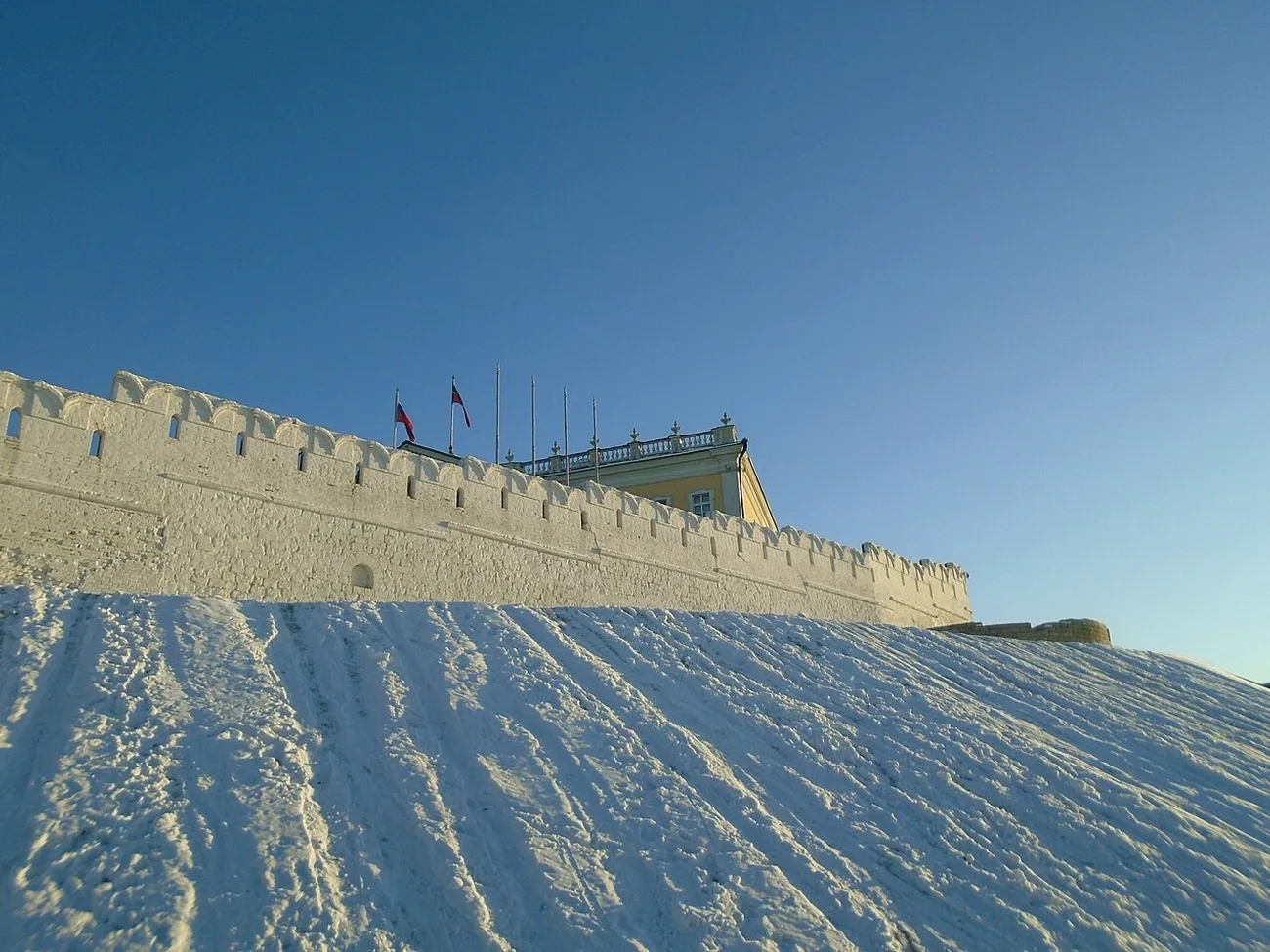
Its Kremlin, that is its citadel, has been a UNESCO World Heritage Site since 2000. The grounds for inscription are interesting for our subject: the committee notes that this is the only surviving Tatar fortress retaining traces of its original town-planning conception, and a synthesis of Bulgar, Golden Horde, Tatar, Italian and Russian influences.
What was lost
Before 1552, the main mosque of this citadel was the religious and intellectual centre of the Khanate of Kazan. A library and a teaching tradition are attributed to it.
Afterwards there is nothing. And "nothing" should be taken literally: not a wall, not an identified foundation, not a plan, not a drawing, not a precise architectural description. It is a complete documentary disappearance, and that is what makes the case singular.
For four hundred and fifty years, the fortress of Kazan had no mosque.
The rebuilding
Work began in 1996. The foundation stone was laid the following year, the frame and basements completed in 1998, then came the domes and minarets.
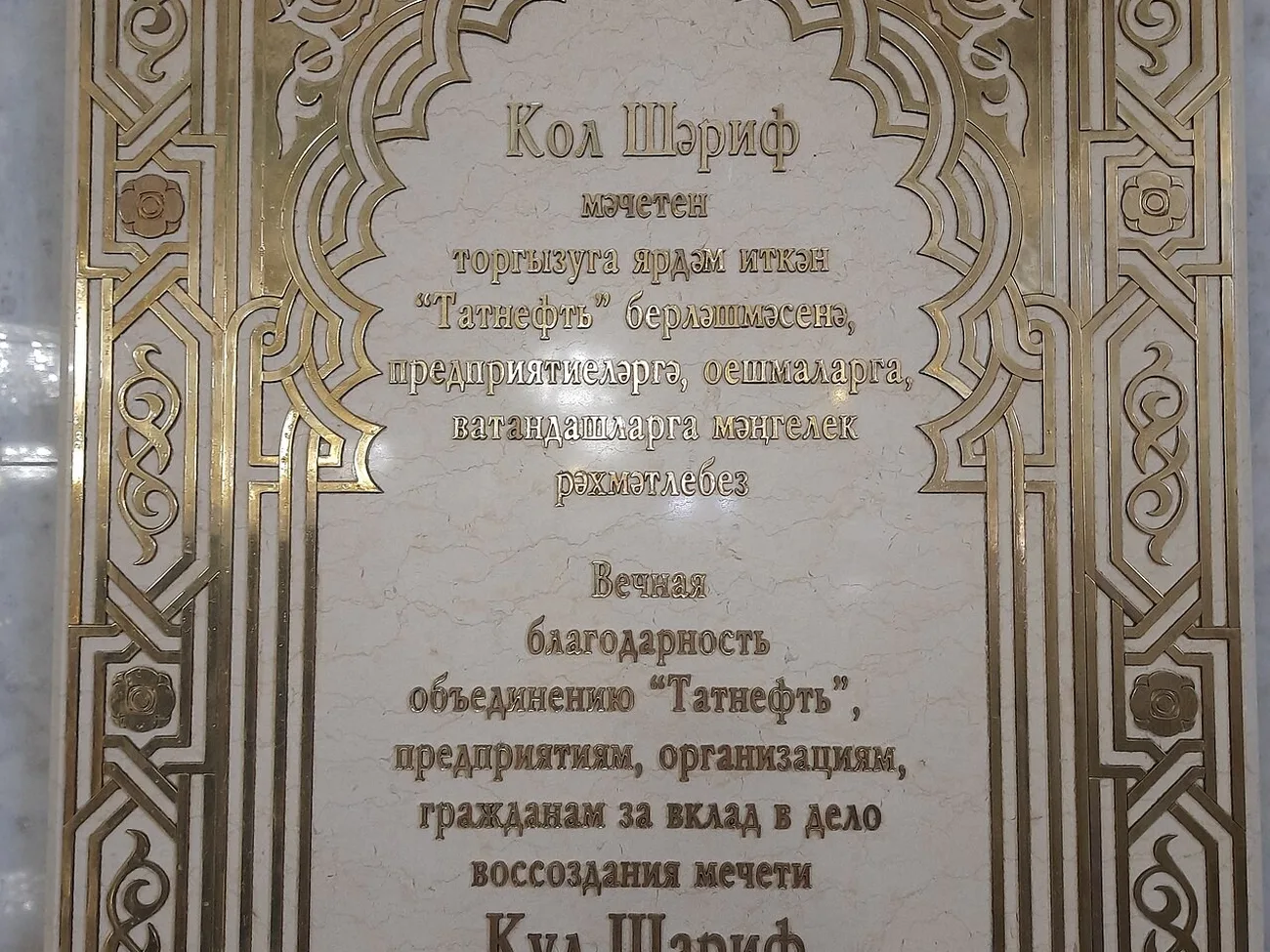
The funding is worth pausing on, because it says something about the meaning of the operation: the money came from more than forty thousand donors, private individuals, businesses and organisations. A plaque of thanks is on display on site, and it names them.
The mosque opened in 2005, for the city's millennium.
But rebuild what?
Here is the problem the architects had to solve, and it has no good solution.
They had no image at all. No survey, no engraving, no old view. Rebuilding identically was therefore impossible, not for want of means but for want of an object: you cannot copy what has left no visual trace.
So they looked elsewhere. And they found an object.
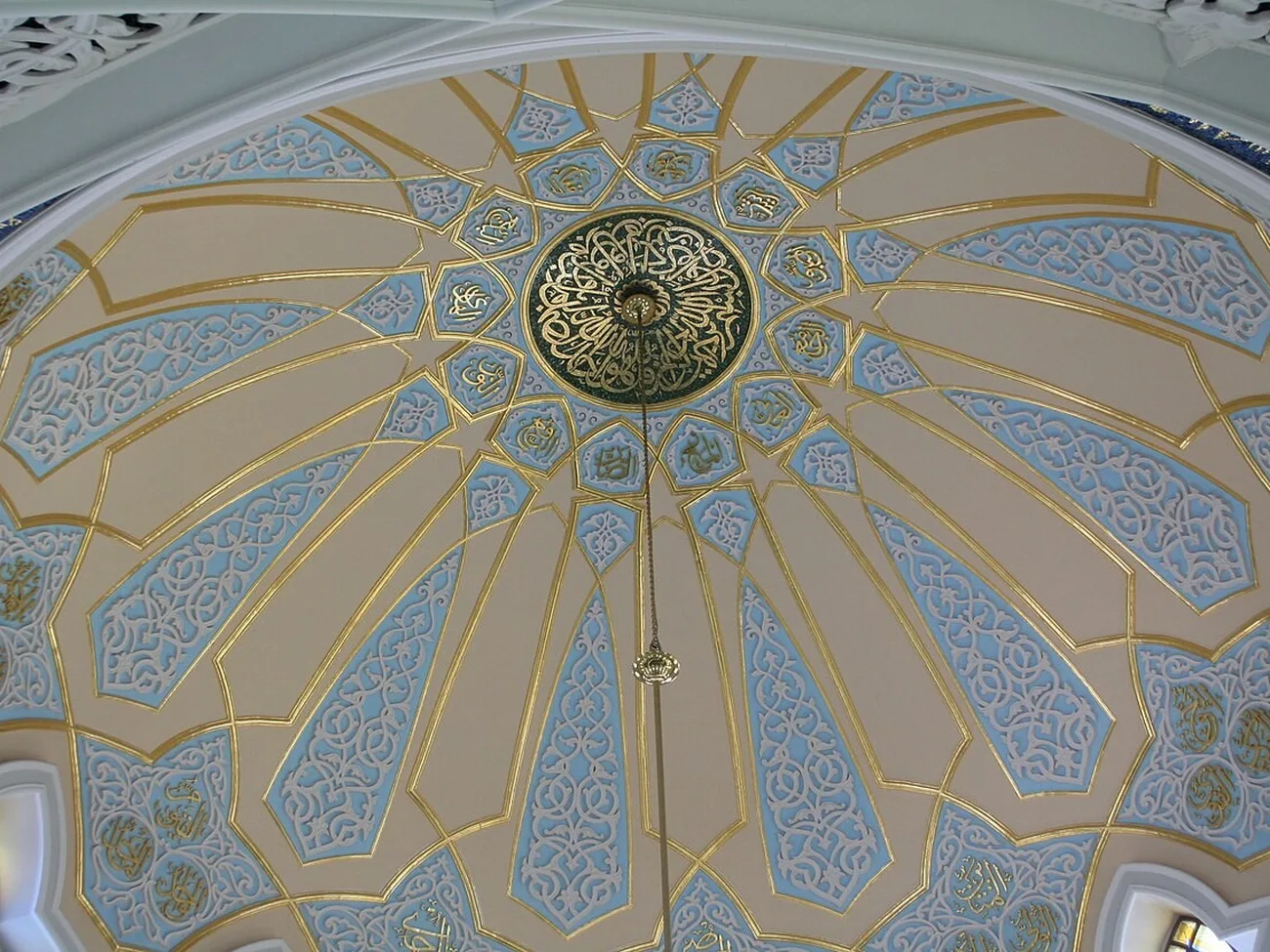
The Kazan cap is a coronation headpiece, that of the city's former rulers, kept today in the Kremlin Armoury in Moscow. Its silhouette served as the model for the new mosque's main dome, some thirty-five metres high.
Rebuilding a building after the shape of a crown is an unusual procedure, and it says a great deal about what was left to work from.
What the building does not claim to be
Credit is due to the designers: the building does not present itself as a restitution. Its design openly prioritises symbolism over historical replication, and this is acknowledged.
The clearest sign is the count of minarets. The old mosque is thought to have had eight, oriented towards the eight parts of the world. The new one has four.
Nobody has tried to suggest that the original number was recovered. What is missing is unknown, and the building lets that show.
It is an intellectually honest position, and a fairly rare one. Many heritage reconstructions present themselves as restitutions when they are interpretations. This one does the opposite.
What we do not say
We pass no judgement on the reconstruction itself, nor on the architectural choices. That is not our role, and the subject does not lend itself to it.
Nor do we enter into the political context, old or current. The facts are set down, with their dates, and we stop there.
Finally, attributing eight minarets to the old mosque is a hypothesis, not an established fact. No contemporary source fixes it. The animation accompanying the video says so in as many words: the eight silhouettes it shows are not a plan of the vanished building, that plan being unknown.
Our sources
- UNESCO, Historic and Architectural Complex of the Kazan Kremlin, inscribed in 2000 under criteria (ii), (iii) and (iv): whc.unesco.org. For the listing and the characterisation of the site as the only surviving Tatar fortress.
- Visit Tatarstan, the republic's official portal, page on the mosque: visit-tatarstan.com. For the dates of the works, the funding by donation and the dome modelled on the Kazan cap.
Read on
Another building whose name poses a question to anyone looking at it: the sixty dome mosque of Bangladesh, which has seventy-seven. And for a wholly local building serving an Islamic function, the timber mosque of Kerala.