
Home › Blog › Birds do not land on this Istanbul mosque
Üsküdar, Istanbul · 7 min read · 2026-08-21
Birds do not land on this Istanbul mosque
The people of Üsküdar call it Kuşkonmaz, literally "where the bird does not land". It is neither a legend nor a story of miracles. It is a story of wind, and the architect who built there knew exactly what he was doing.
A name given by the neighbourhood
The Şemsi Ahmed Pasha Mosque stands on the Asian shore of Istanbul, at Üsküdar, with its feet in the water. Its official name is that of its patron, a grand vizier of the sixteenth century. But that is not the name that has travelled the centuries in the mouths of the people who live there.
They call it Kuşkonmaz. The word also means asparagus in Turkish, which produces a misleading nickname in guidebooks, but its literal sense is simpler: the bird does not land here.
Şemsi Ahmed Pasha, who had it built, was a grand vizier of the late sixteenth century, in office under Selim II and then Murad III. Like every dignitary of his rank he endowed a foundation bearing his name. What sets his apart is neither its size nor its wealth, it is the ground he chose, and nobody would have bet on that choice.
Why birds avoid this roof
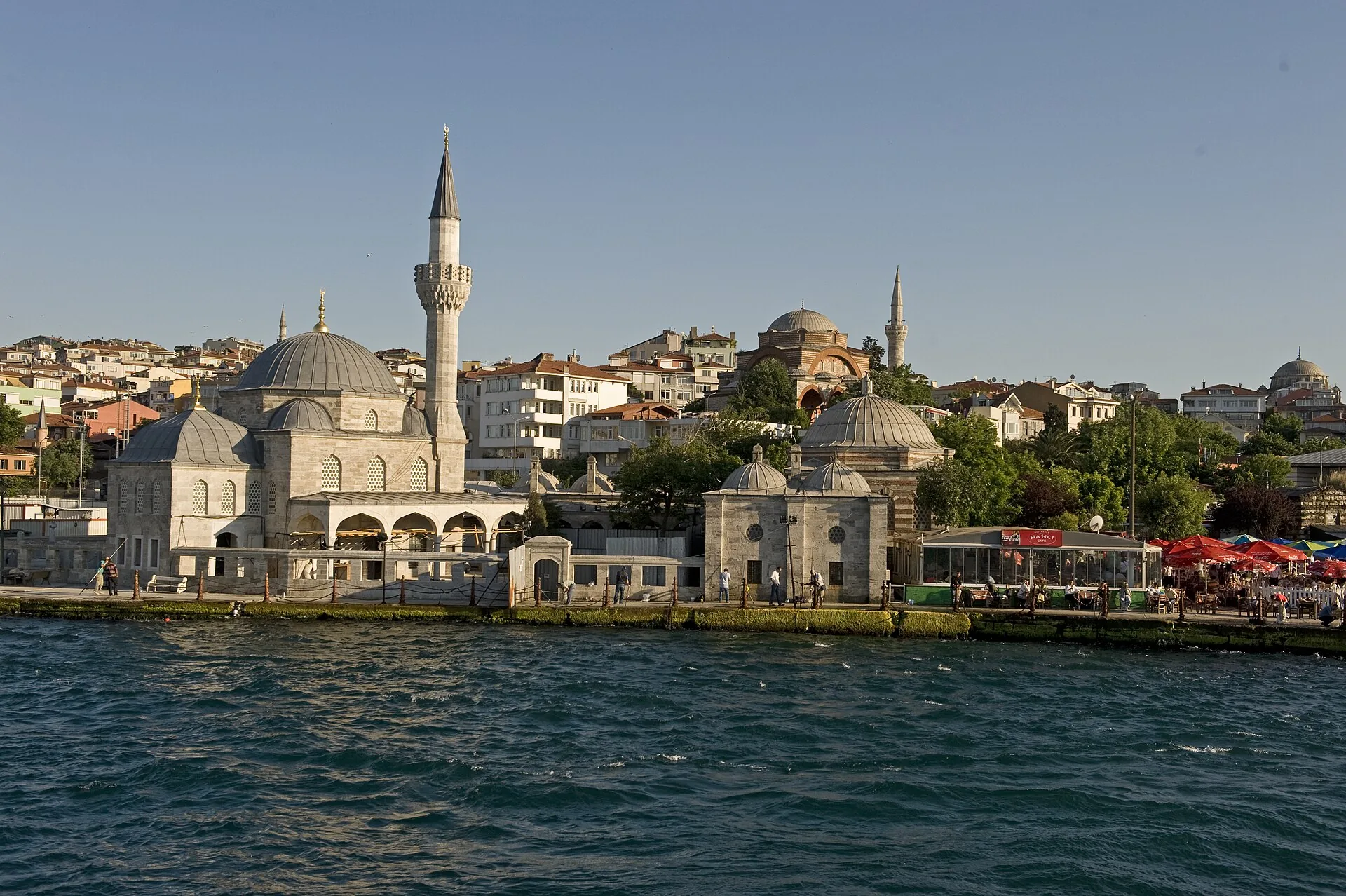
The reason is physical and it lies in the location. The mosque is built exactly where the Bosphorus opens onto the Sea of Marmara. It is a corridor, and the air moves through it constantly: the north winds, which Turks call poyraz, rush in and strike the building head on, while the lodos, the south-westerly, comes back the other way.
On the domes and cornices the air never stops moving. A bird trying to settle is thrown off balance before it has folded its wings. It leaves. Repeat that observation for four centuries and you get a name.
An architect of ninety
The portal inscription gives the date of completion: 1580. The architect is Sinan, chief architect of the Ottoman Empire, the man behind the Süleymaniye and the Selimiye of Edirne.
Nobody knows his date of birth with certainty, the sources placing it around 1490. Which means that in designing this mosque he was about ninety. This is no youthful work and no exercise in style: it is one of the last projects of a man who had been building for half a century.
It helps to know what this place is. Üsküdar is the Asian gate of Istanbul, the arrival point of caravans from Anatolia and the start of the road to Mecca. To build there, on the quay, is to build on the thoroughfare, and to accept everything the thoroughfare imposes: the noise, the crowd, and a climate nobody controls.
The second problem: the sea
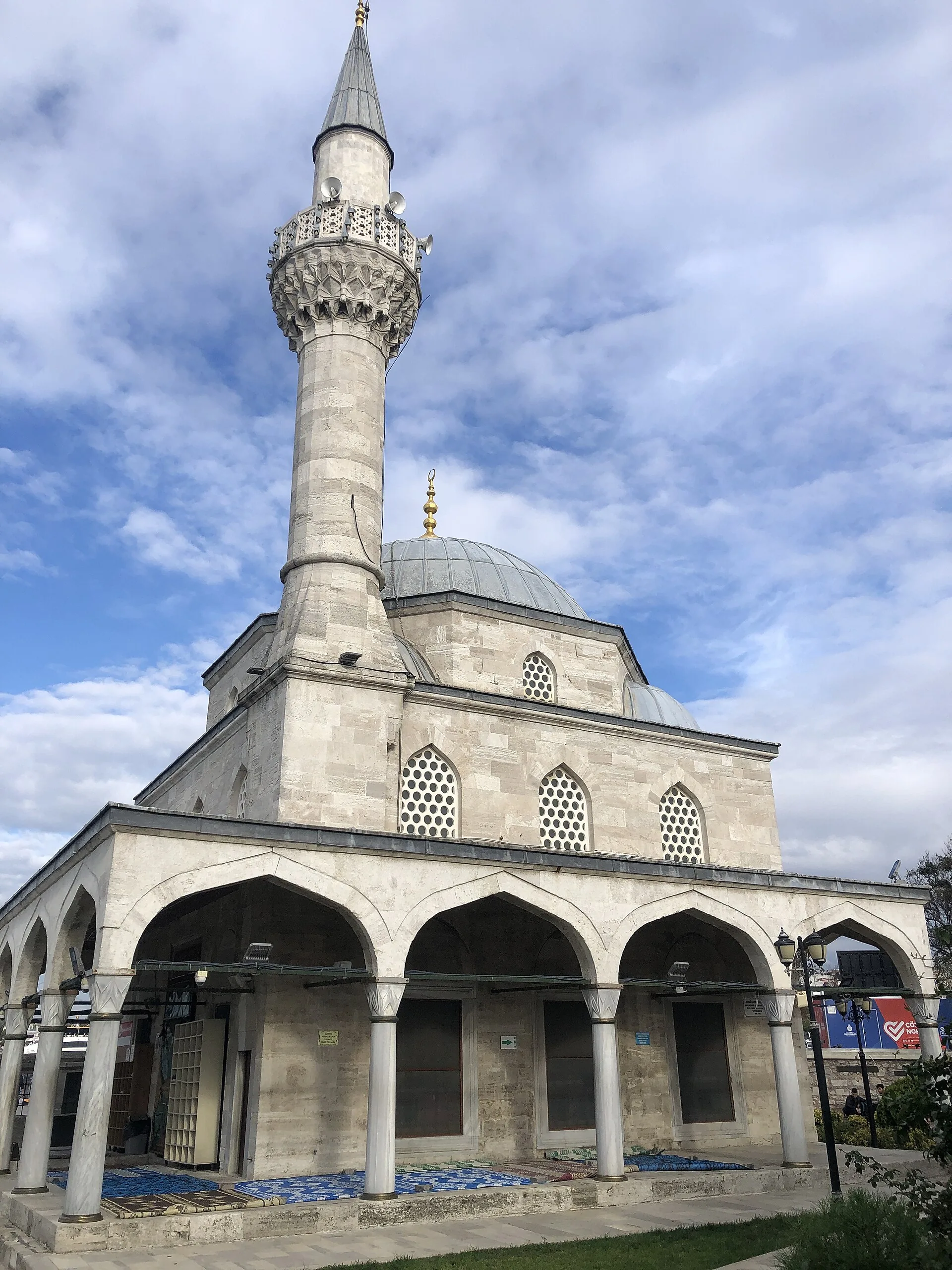
Building at water level settles one question and raises another.
In heavy south-westerly weather, the sea does not merely beat against the wall. It crosses it, sweeps the courtyard and enters the building through the windows. An ordinary architect would have set the building back or raised the wall, and lost what makes the place worth anything, the immediate closeness of the water.
Sinan does something else. In the courtyard between the mosque and the madrasa he installs a drainage system: the water that gets in is collected and sent straight back to the Bosphorus through a manhole. The building does not fight the sea, it lets it through and shows it out.
The detail almost nobody knows
Here is what makes that arrangement remarkable, and the fact is documented by the municipality of Üsküdar: of the hundreds of buildings Sinan raised in his lifetime, this drainage system exists only here. It was reproduced nowhere else in his work.
Which makes sense. He was not answering a general need but a unique situation, that of a building set where no other was set. Sinan did not repeat forms, he solved problems, and this one came up once.
Twenty-five people
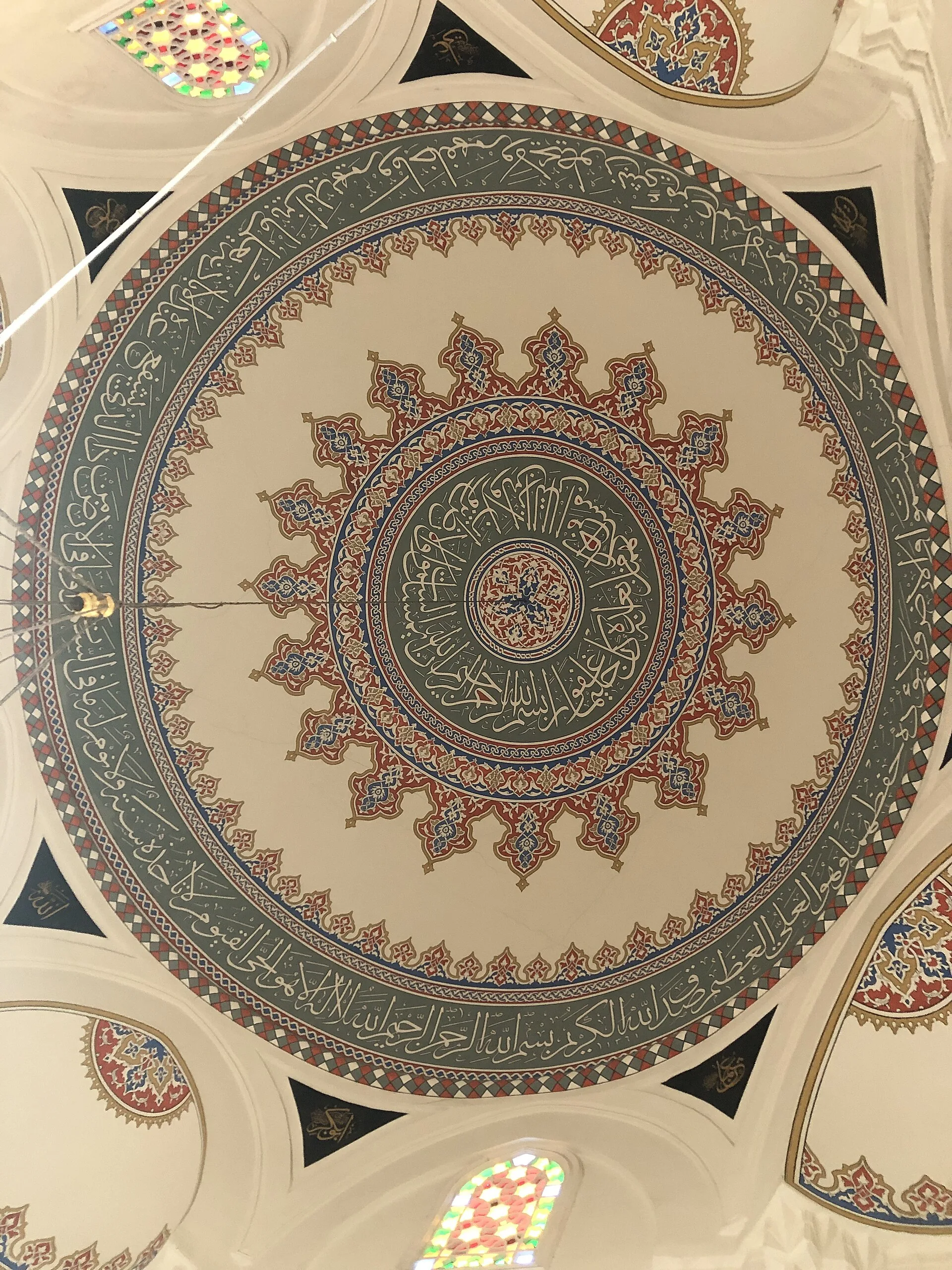
The scale of all this needs stating. The prayer hall of Şemsi Pasha takes twenty-five people at most. It is one of the smallest of Sinan's buildings in Istanbul: a square volume, a single dome, and a complex that includes a madrasa set in an L around the courtyard.
In other words, the greatest Ottoman builder solved a wind problem, then a sea problem, for a building that holds twenty-five worshippers. That may be the best statement of what his trade actually was.
The mosque does not stand alone either. It forms a complex with a madrasa set in an L around the courtyard, the school opening onto the same space as the prayer hall. Everything here is held within a few dozen metres, which is unusual for an imperial-scale patron.
What the small size allowed
That tight plan is also what makes the drainage possible: water crossing the wall lands in an enclosed courtyard, and can therefore be channelled instead of spreading.
Its small dimensions, together with its position on the quay, have made it one of the most photographed mosques in Istanbul. The building meets the shore at an angle, which opens the view from the promenade and gives the silhouette its lightness.
The paradox is complete: a tiny building, raised for a handful of worshippers, at the least comfortable spot on the shore, has become one of the most recognisable images of the Bosphorus.
What we do not say
We do not say that no bird ever lands there. It is a name given by residents, not a scientific survey, and it describes a tendency caused by wind, not a law of nature.
We give no firm date of birth for Sinan, because the sources give none, and his age in 1580 therefore remains approximate.
And we do not count his buildings. The figures in circulation vary a great deal depending on what one decides to include, and they change nothing about the fact that matters here: this drainage system is found nowhere else.
Further reading: our article on Sinan, architect of the Empire, and the one on Hürrem Sultan's endowments, whose complex was his first imperial commission.
Newsletter
One mosque, one story, every month
Get our stories of architecture, history, and travel. Zero spam, unsubscribe in one click.