
Home › Blog › Why mosques are blue
Tilework · Iznik · 7 min read · 2026-09-20
Why mosques are blue and turquoise
Tiled mosques are blue and turquoise. Almost never red, almost never yellow. The reason lies not in the taste of their patrons but in the kiln.
What the firing allows
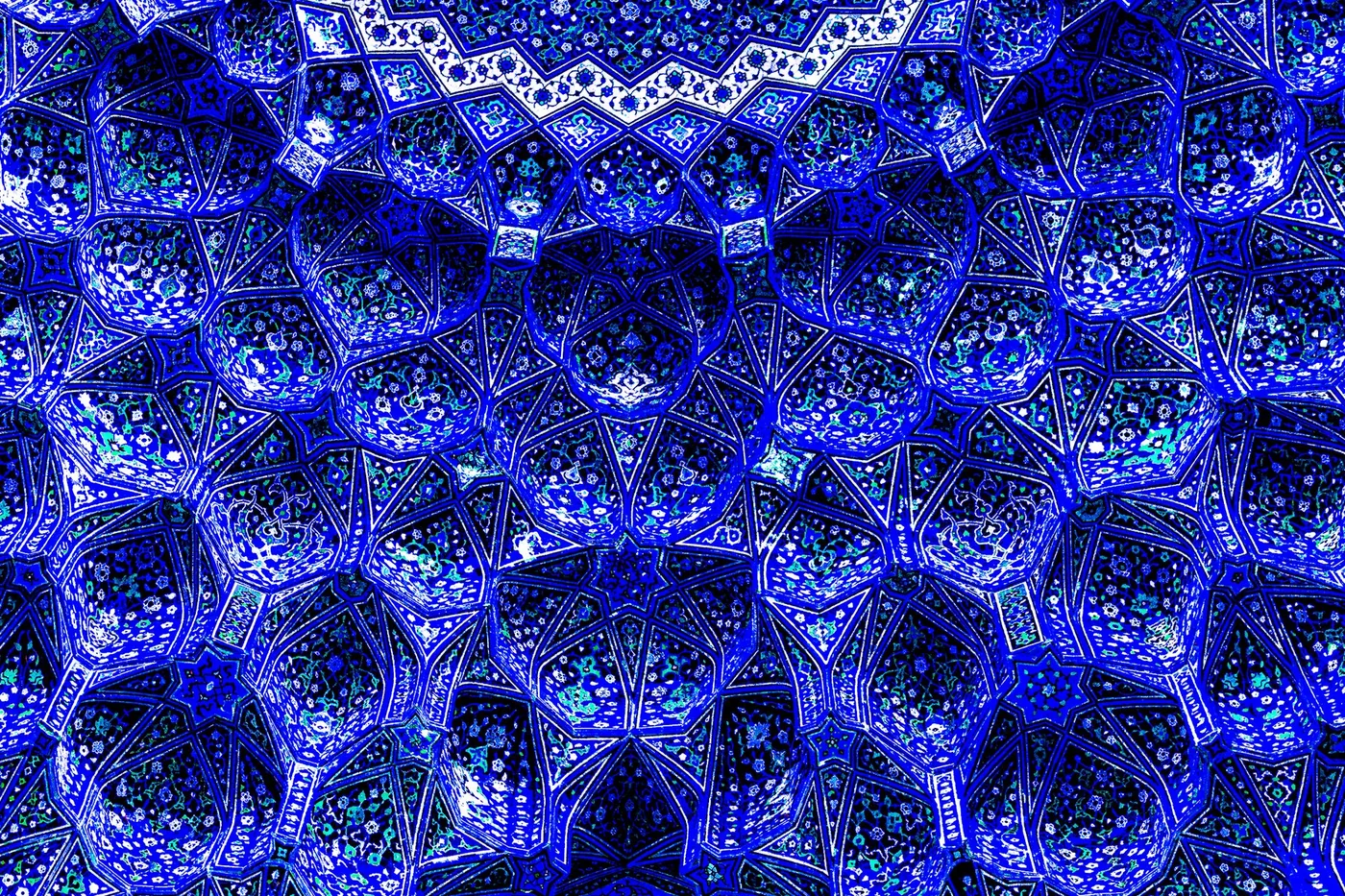
A wall tile is not a painting. The decoration goes under a glaze, the whole thing is fired, and heat fixes everything. At that temperature most colourants do not survive as they are: some shift, others break down and vanish. The choice of colours is therefore chemical before it is aesthetic.
Two families hold, and they are the ones that give mosques their colour. Cobalt gives a deep blue, and it is one of the few pigments stable at high temperature whatever the firing atmosphere. Copper gives turquoise.
The turquoise of the domes
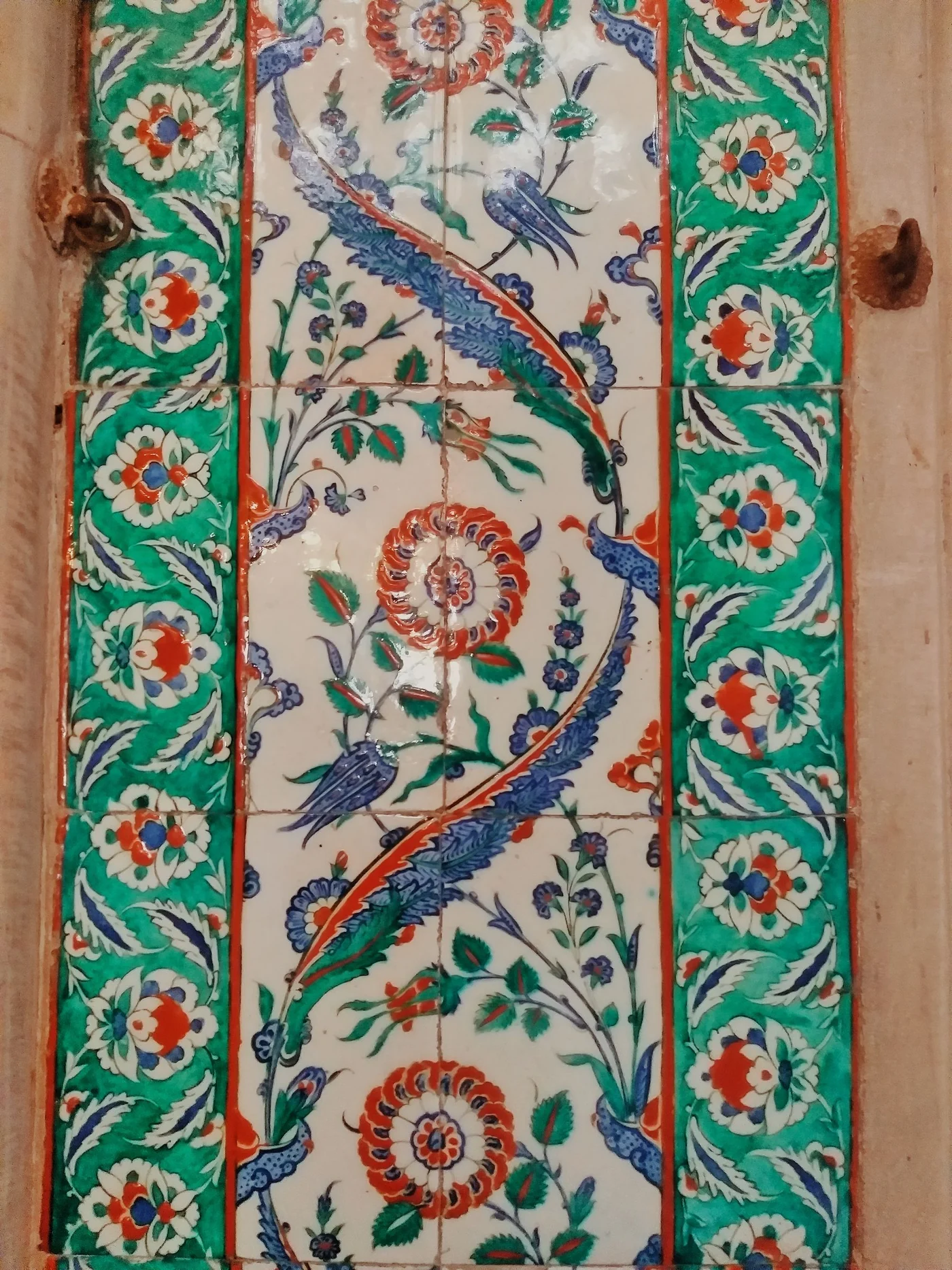
Copper turquoise is the colour of the great domes of Central Asia and Iran. You recognise it in Samarkand, in Bukhara, on the domes of Isfahan. It has a quality blue does not: it shifts with daylight, from almost green in the morning to a frank blue in full sun.
That stability in the fire also explains the geography of the technique. Wherever an entire building was to be clad in ceramic, from the Maghreb to Central Asia, these two colours carried the programme, because they are the only ones that come out of the kiln as they went in.
Red, the colour that held out
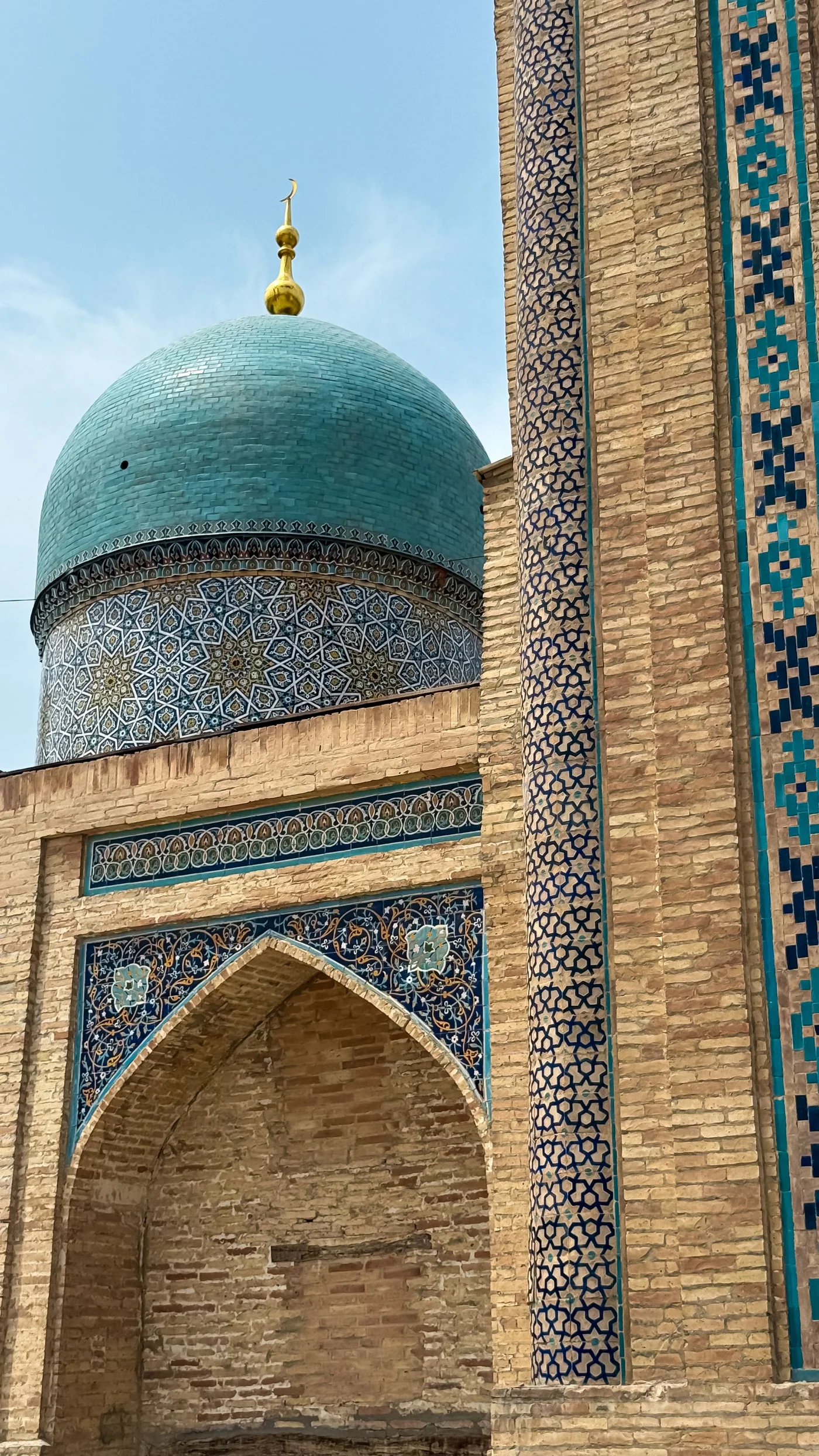
Red is the classic problem of the potter. It held out against Islamic workshops for centuries, and it appears at Iznik only in the middle of the sixteenth century.
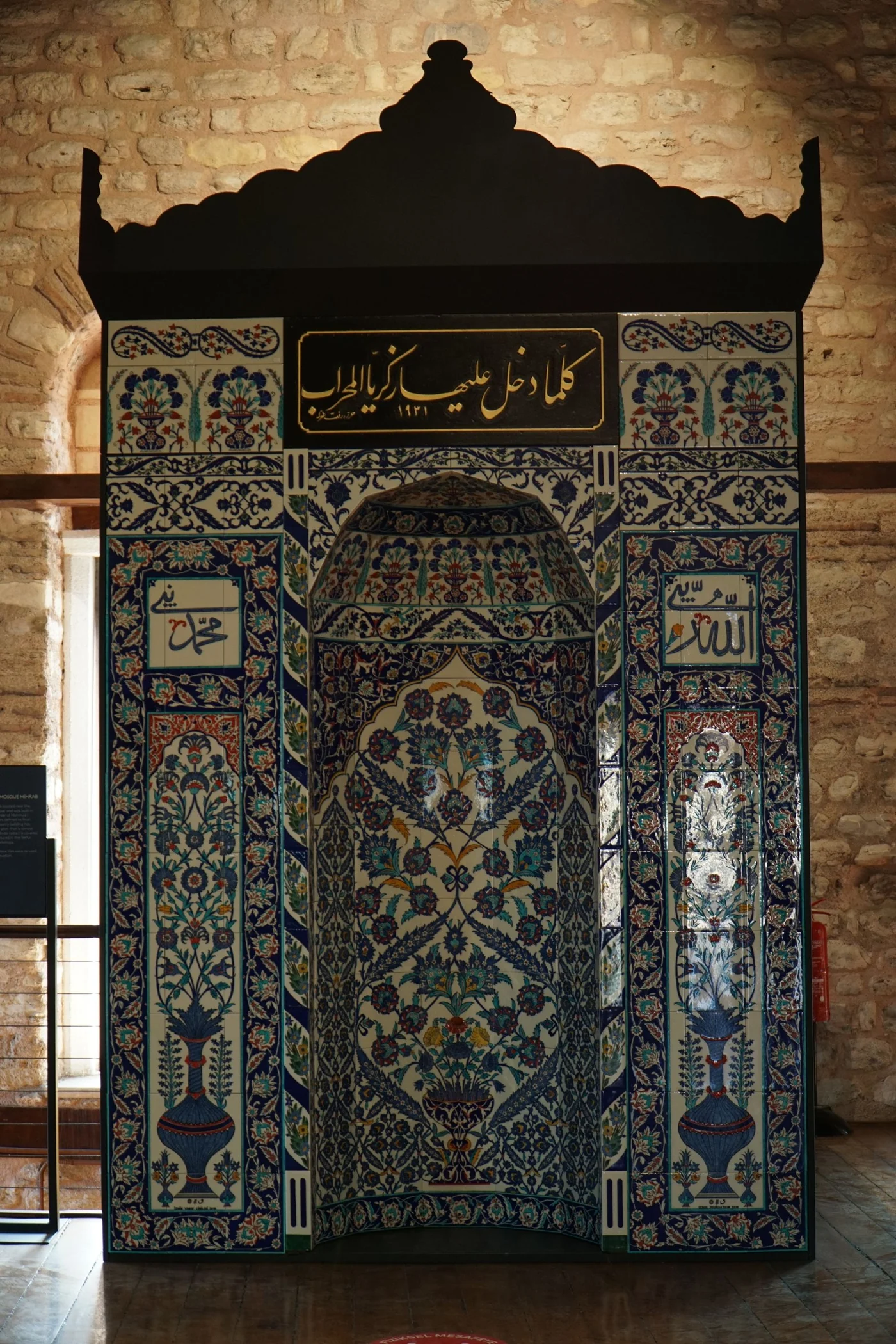
When it comes, it comes in an unusual form. It is not a thinned oxide like the others but an iron-rich earth, known as Armenian bole, laid on so thickly that it stands in relief. On the finest tiles you can feel the red with a finger: it rises above the surface, and it catches the light differently from the rest of the decoration.
The first major appearance of that red on a wall is dated: the decoration of the Süleymaniye in Istanbul, between 1550 and 1557. Bright green arrives in the same years, and the so-called four-colour palette is finally complete.
Where the blue comes from
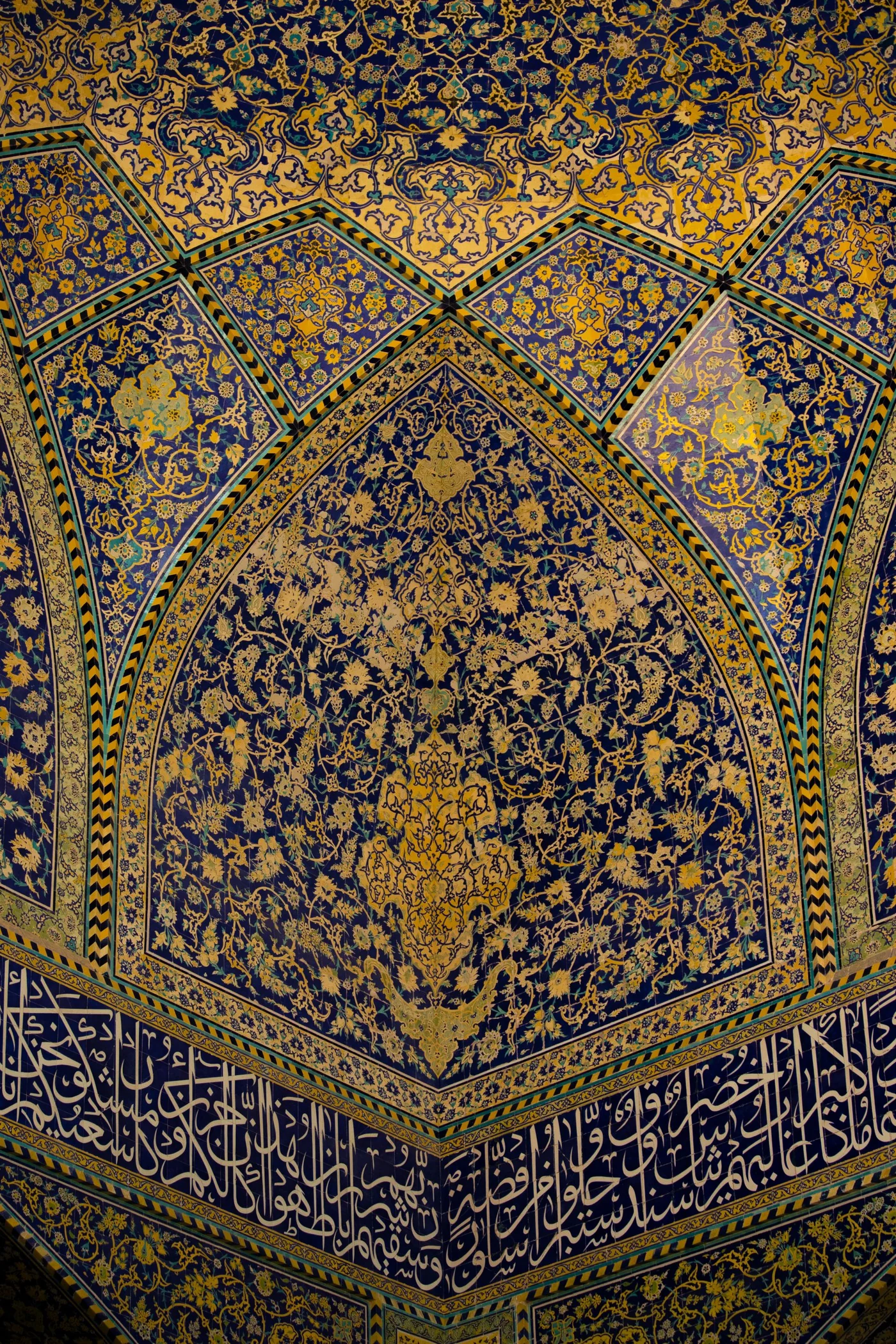
Cobalt is not a local colour. It is extracted from specific ores, and one long-worked deposit lies near Kashan in Persia. That rarity made it a trade material, carried over long distances well before anyone spoke of silk roads in brochures.
The most spectacular journey is the one towards China. Persian cobalt was used to paint part of Chinese blue-and-white porcelain, which then travelled back west as a luxury good. Ottoman workshops imitated it before settling into their own manner. The blue of the mosques therefore carries the trace of a round trip between two worlds.
The white that holds the rest together
One last ingredient explains the brilliance of these walls, and it is invisible: the body. Iznik tiles are not ordinary terracotta but a siliceous paste, very white, covered with a slip that is whiter still. That ground returns the light through the glaze and gives the blues their depth.
On a red clay the same oxides would give muted tones. The colour of a tile does not depend on the pigment alone: it depends on what lies underneath.
A constraint that became an identity
It would be wrong to conclude that blue meant nothing to the people who used it. Workshops made choices, patrons made choices, and blue took on a real symbolic charge over time, associated with sky and water in regions where both matter.
But the order of causes deserves to be put back in place. The palette was not chosen and then made possible by technique: it was made possible by technique, then adopted, worked, and finally charged with meaning. It is a story about a kiln before it is a story about symbols.
The black line
One more element belongs to this palette, and it is the one nobody notices: the black outline. On the classic Iznik tiles the drawing is laid down as a supple dark line that runs almost like calligraphy, and every colour sits inside it.
That line does the work of separation. Without it, under a thick glaze, blue and turquoise would run into each other and the pattern would lose its edges. It is a painter's device as much as a technical one, and it is part of why a wall of Iznik reads clearly from far away.
How to look at a tiled wall
Next time you stand in front of an Iznik wall, three markers are enough. The dark blue is cobalt, and it has been there from the beginning. The turquoise is copper, from the same period. The red is the youngest of all the colours around it, and if the light is raking you will see that it is not quite flat.
For another technical constraint that became a signature, see the retractable roof of the Hassan II Mosque, where weight rather than heat dictated the solution.
Discover
Mosques mentioned in this article
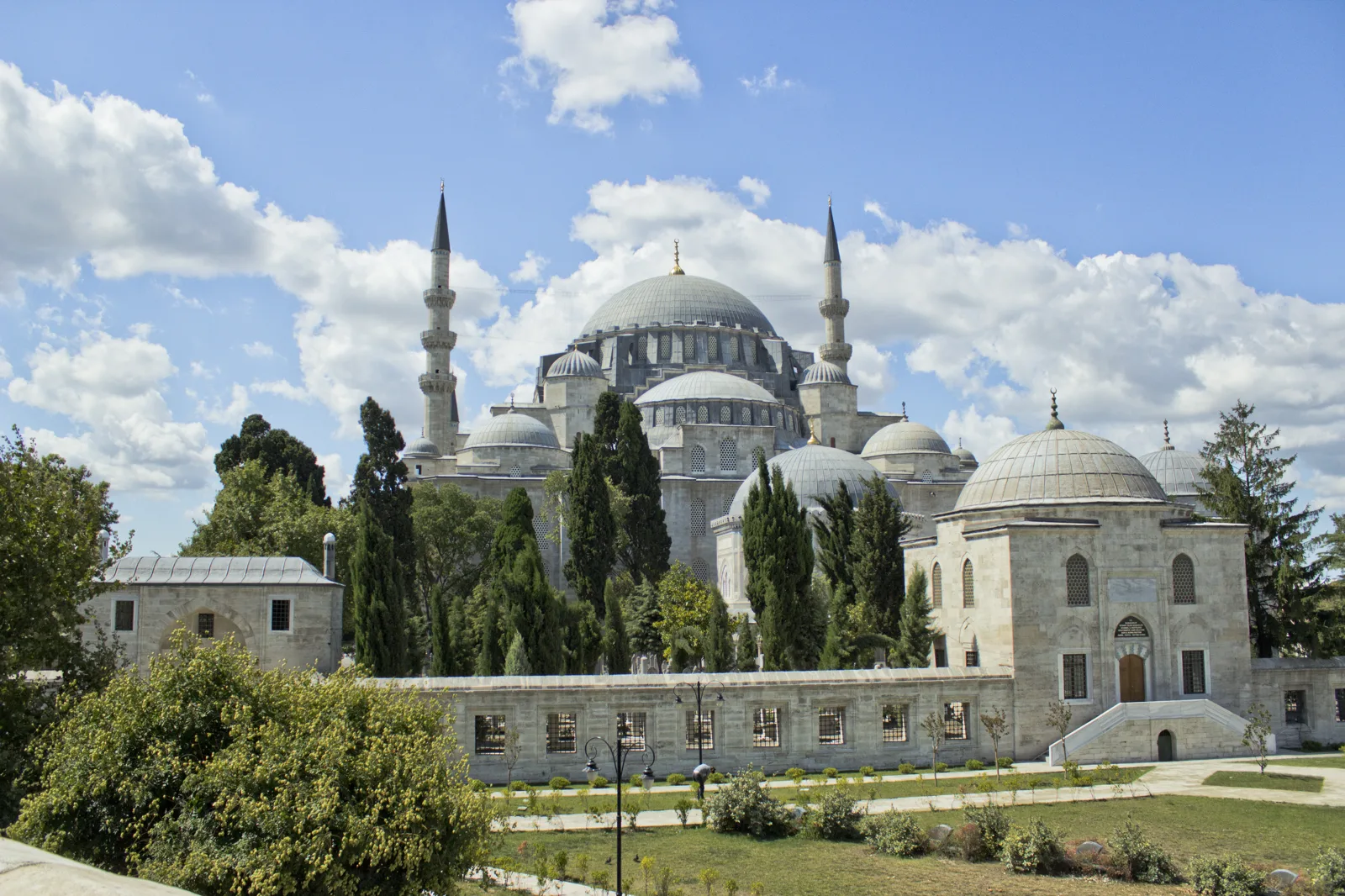
Süleymaniye Mosque
Sinan's journeyman work, and the first great wall where the Iznik red appears.
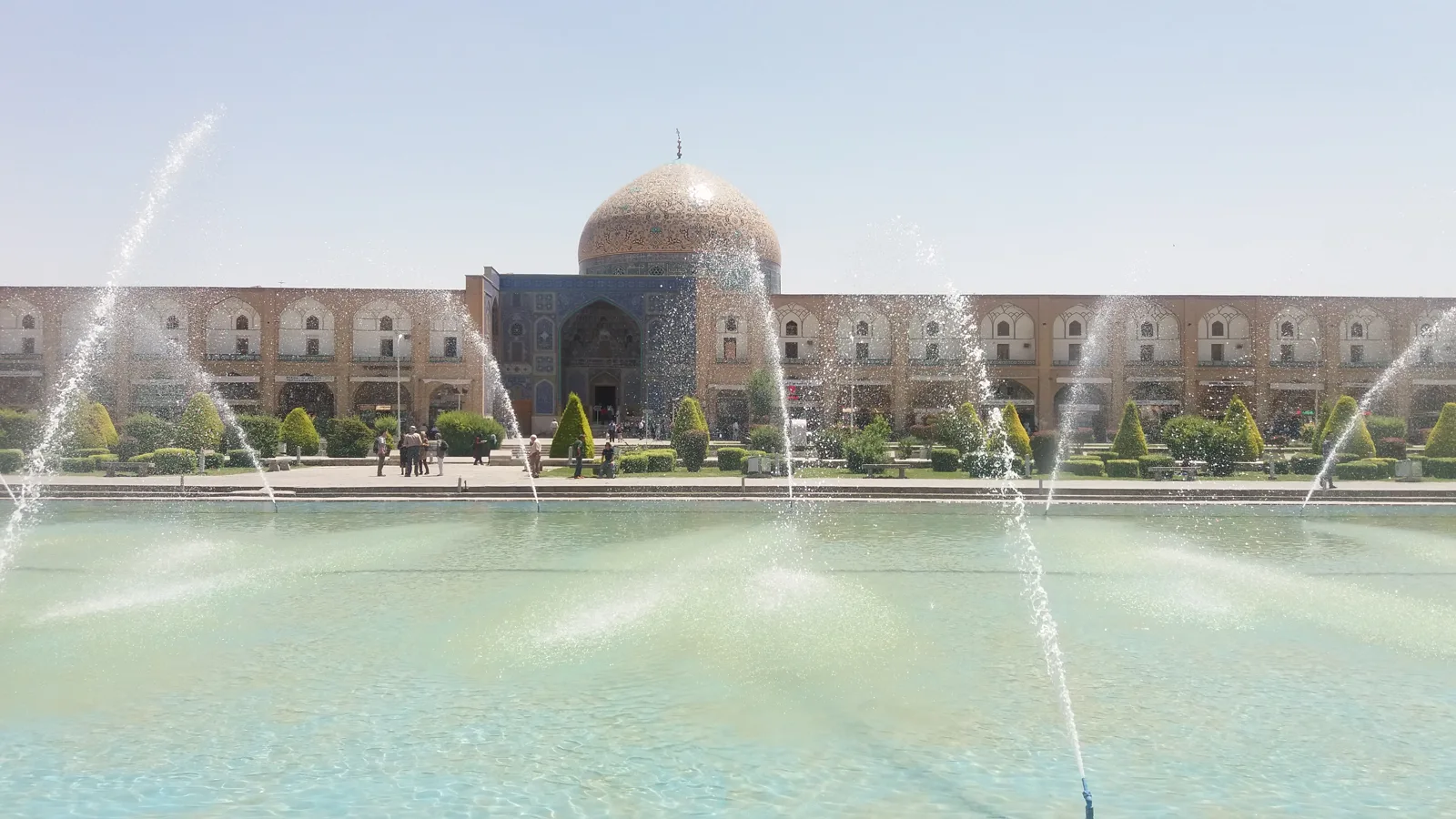
Sheikh Lotfollah Mosque
The Safavid jewel of Naqsh-e Jahan square: no minaret, no courtyard, but the finest dome in Iran.
About this page's content: this site offers editorial and cultural content written with care and respect for the religious traditions concerned; it does not constitute a theological opinion or a source of religious authority. Despite our checks, errors, inaccuracies or approximations may remain. If you spot one, please let us know via the Contact page or by email at qibla.mosk@gmail.com, and we will correct it gratefully.