
Home › Masjid al-Haram › The mount that is a repair
Masjid al-Haram, chapter 4 · Mecca · 8 min read
What you see is not a stone, it is a repair
The Kaaba has four corners, and each has a name. Three refer to regions: Iraq, Syria, Yemen. The fourth carries the name of a stone.
It is the eastern corner, and it is from there that the circling begins. At shoulder height a black stone is set there in a silver mount. The visible face measures about twenty centimetres by sixteen, less than a sheet of paper.
This chapter is about the mount, and about what it actually is. It is not an ornament. It is a repair.
A projectile, a siege, and a stone in pieces
In 683 Mecca was under siege. A catapult projectile struck the corner of the Kaaba and broke the stone.
Abdullah ibn al-Zubayr, may Allah be pleased with him, who then held the city, had the fragments bound with a silver ligament. That was the first mount, and it was born of damage, not of a decorative intention.
The consequence is still visible today, except that it is no longer read as such. What is seen at the corner is not a block but several fragments held together by a band. A historian of Mecca, Muhammad Tahir al-Kurdi, drew a survey of them in 1956, showing how the pieces sit within the mount.
The silver you see is not the silver of 683
A mount does not last for ever. It is exposed, touched, rubbed, heated by the sun, and it wears. So it is remade, and several have been over the centuries.
What persists is neither the metal nor the object: it is the function. There must at all times be a device holding the fragments in the wall, and it must be sturdy enough to last between two replacements, in a place where scaffolding cannot stand for weeks.
That is already the logic of the whole series. The sanctuary does not preserve materials, it preserves devices, and it replaces them one by one.
More than twenty years away
A crack is not the worst thing that has happened to this corner.
In the tenth century the stone was carried away from Mecca. It remained absent for more than twenty years. It was eventually returned, wrapped in a sack and left in a mosque at Kufa, and the goldsmiths of Mecca then made a new mount to set it back in place.
We do not name here the group that took it, and that is not an oversight. The series deals with the enclosure and its engineering, not with the conflicts that have crossed it, and this chapter stays within its remit.
What matters about those two decades lies elsewhere, and it is the central point. Throughout that time the corner remained the corner. The circling still began there. The building did not change the way it worked because an object was missing.
A stone smaller than people imagine
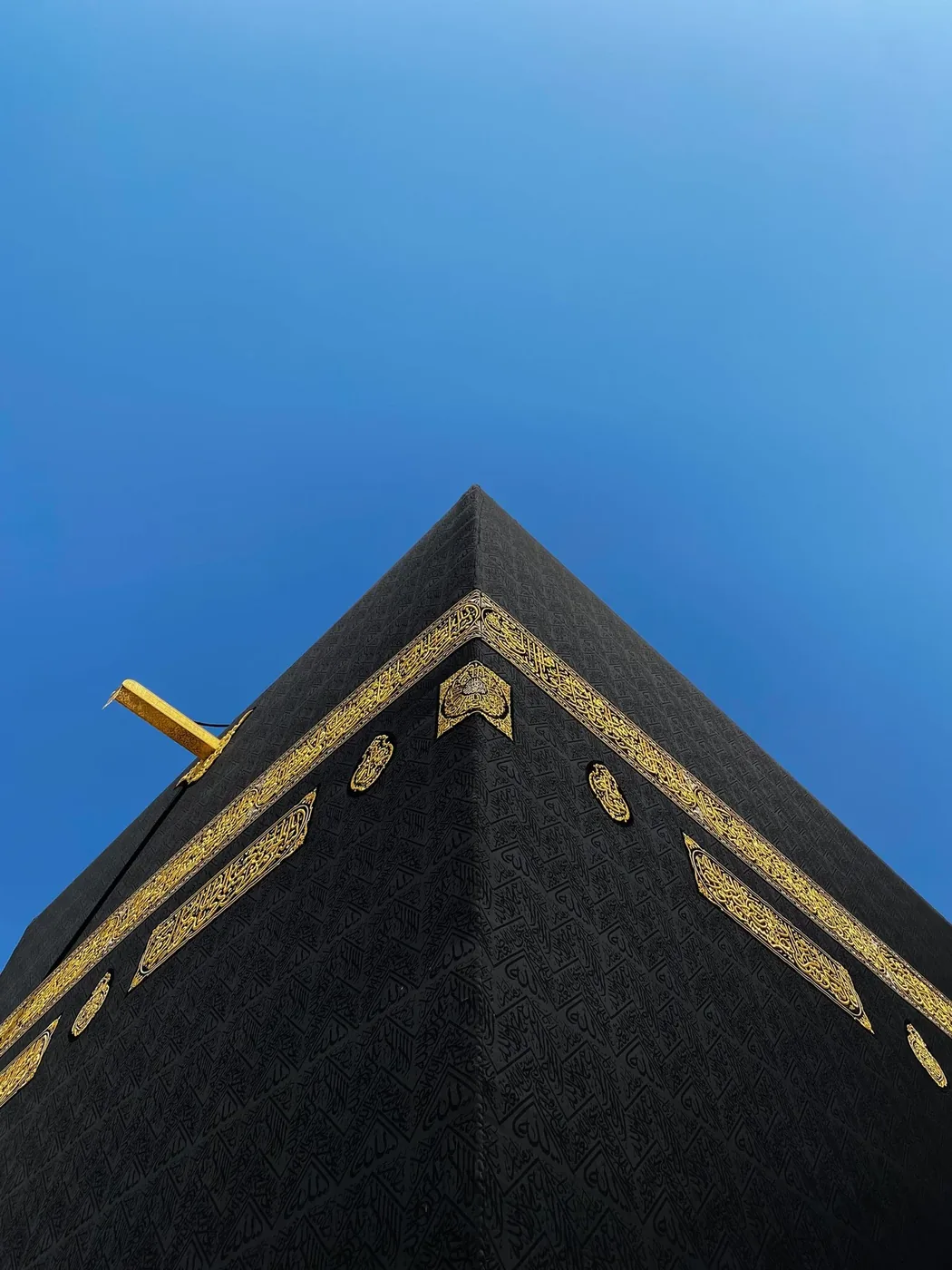
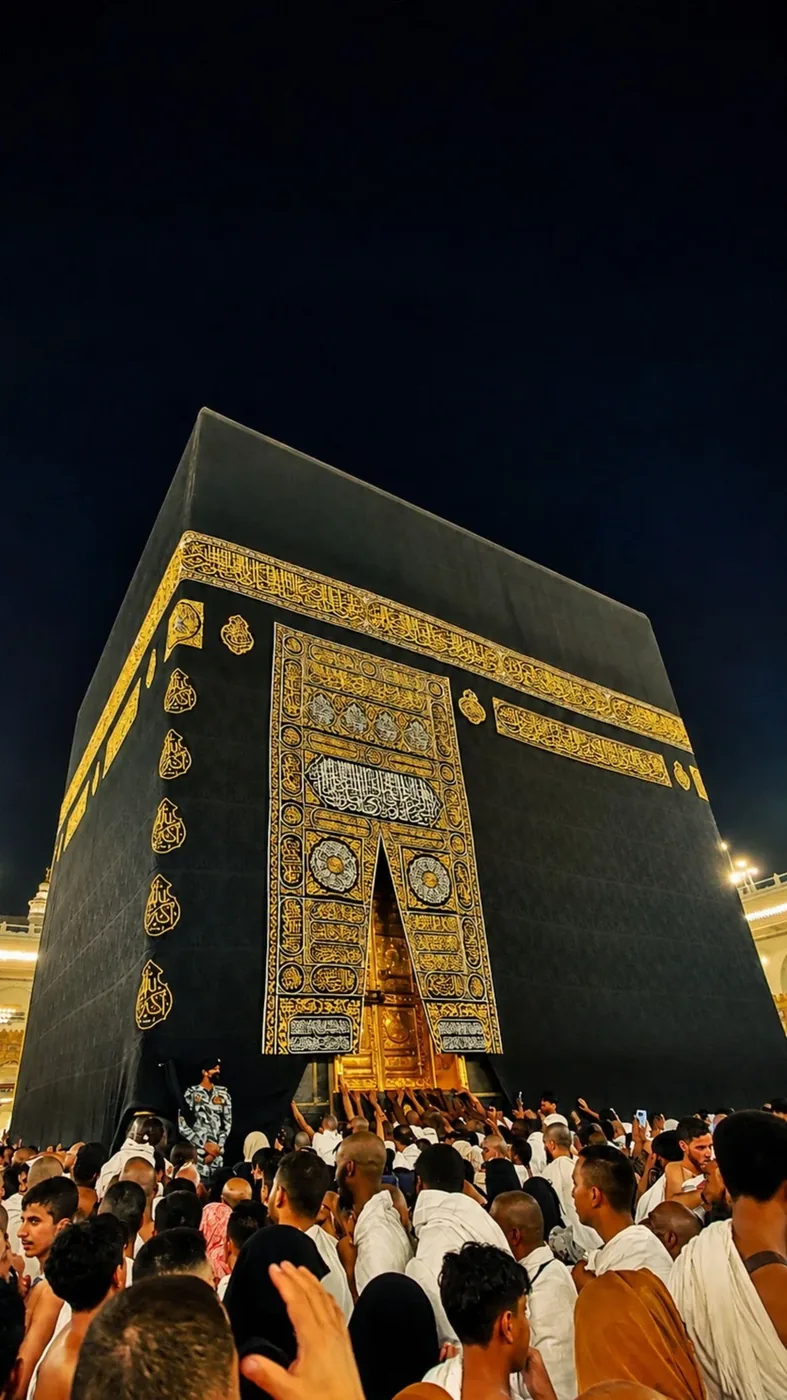
Tight photographs often give a false sense of scale. The visible surface is modest, about twenty centimetres by sixteen, on a building some thirteen metres high whose base measures about twelve metres by eleven.
That disproportion has a practical consequence which the sanctuary has had to treat as a flow problem, and which will return in later chapters: a single, very small point towards which a very large crowd converges, in a space where people are circling.
A starting point before it is an object
To understand what twenty years of absence represent, one has to know what this corner does in the practice of the circling.
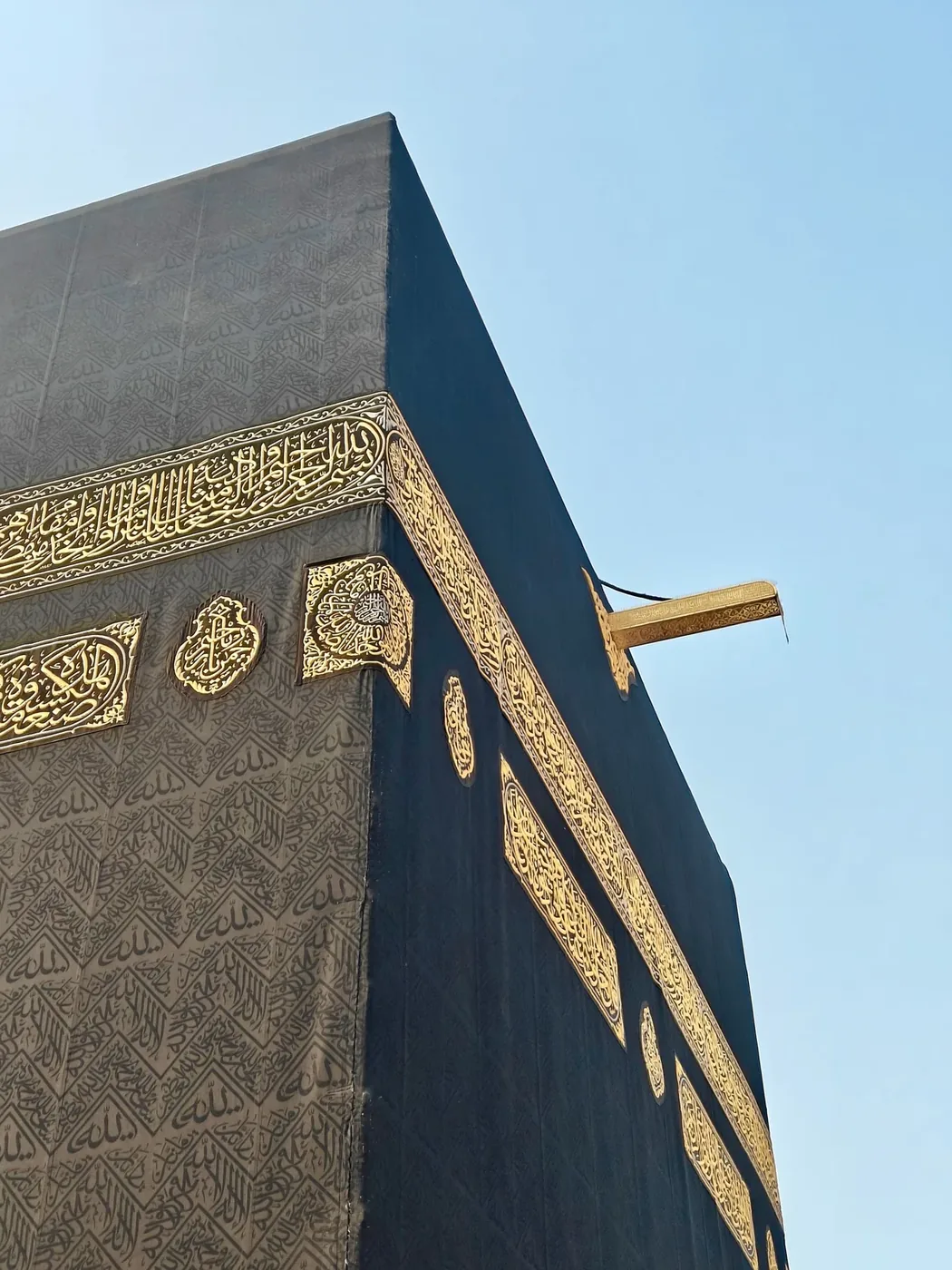
The circling of the Kaaba, the tawaf, is performed seven times, anticlockwise. It begins at the eastern corner and each circuit is counted from that same point. The corner is therefore first of all a marker: it says where you set off and where you have come round.
That function is geometric, not material. It depends on a position in plan, not on what is set into the wall at shoulder height. That is precisely why the absence of the stone in the tenth century did not interrupt the working of the building: the corner was still there.
The other three corners bear the names of regions, and we have devoted an episode of our qibla series to them. The Iraqi corner faces north-east, the Syrian corner north-west, the Yemeni corner south. Only the fourth is named after what it contains.
Repairing a building that does not stop
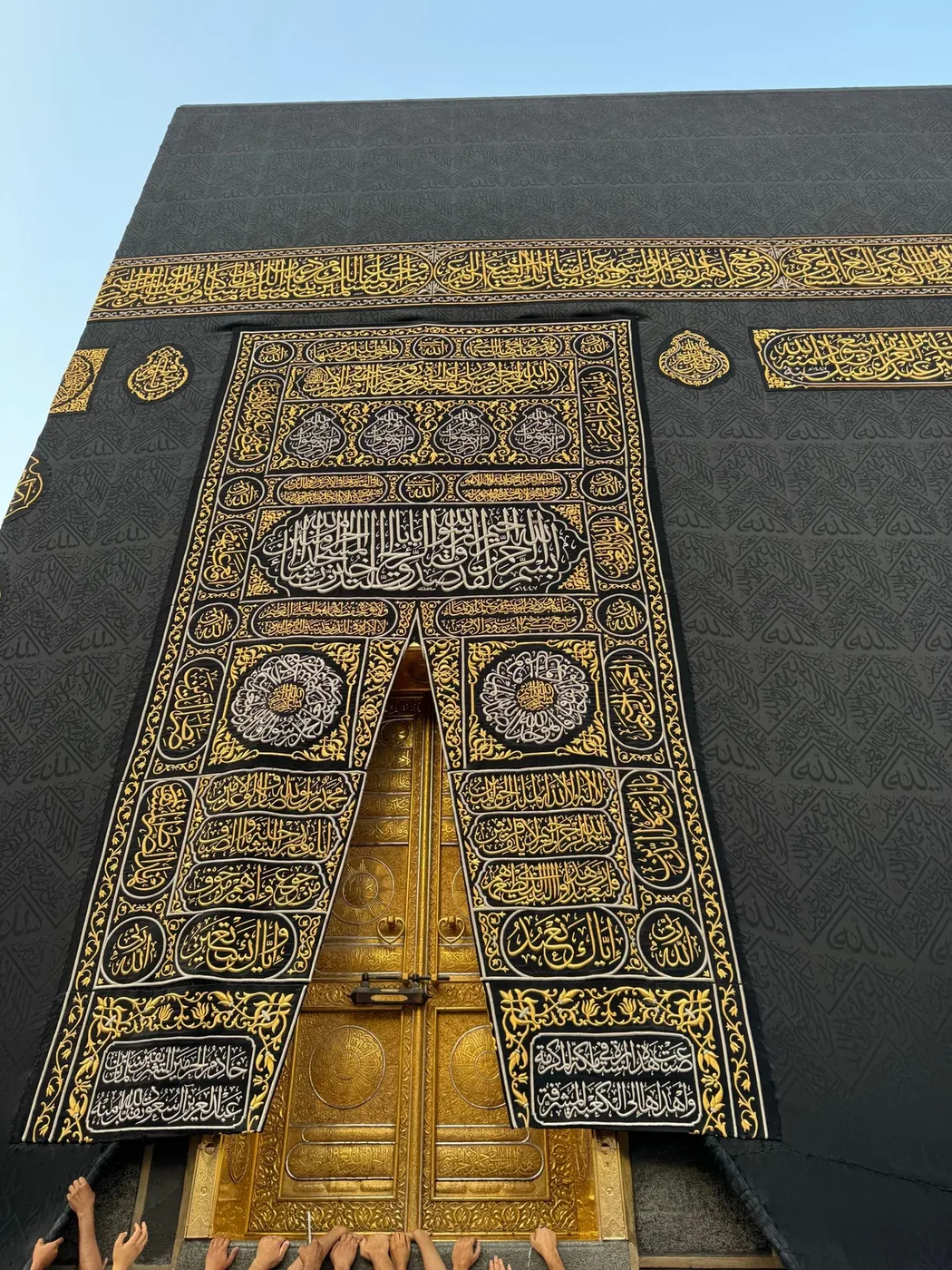
Remaking a mount is a maintenance operation, and it raises the same problem as everything this series recounts: work has to be done on a building people never stop circling.
The piece is small, which helps. But it sits at shoulder height, at the exact point where the density of the crowd is greatest in the whole sanctuary, since that is where every circuit begins and ends. Work there is not work on a façade: it is work in the middle of the flow.
The next chapter will show the same problem at an entirely different scale, with close to a tonne of cloth to be replaced across the whole building, and the solution long relied upon: waiting for the one morning of the year when the circling area empties.
Our sources
- On the survey of the fragments, the work of the Meccan historian Muhammad Tahir al-Kurdi, published in 1956.
- On the dimensions of the building and the description of the corner, standard reference notices on the Kaaba.
- Photographs: Pexels and Wikimedia Commons.
What the corner says about the rest
Earlier chapters showed a mosque that had no mosque to begin with, a fire stopped by a flood, and a Kaaba raised again after walls had fallen. This one adds the smallest item in the file, and perhaps the most telling.
Nothing here is intact. The stone is in fragments, the mount has been remade, the building has been rebuilt, the porticoes burned, the ground flooded. What holds from one century to the next is not the material.
What holds is the place, and the act of repairing.