
The series
Masjid al-Haram, the building that cannot stop
It is the one building in the world whose centre cannot move, around which millions of people must circle, whose numbers keep growing, and which cannot close for works. Fourteen centuries of technical answers to a constraint that never changes.
What this series is about
It does not tell the story of a monument, it follows a problem. As early as 638 the circling crowd spills into the neighbouring houses, and the answer is already the one used today: buy, demolish, push the boundary out. What changes across the centuries is the scale and the price. The method does not, because the constraint does not either.
The constraint is religious, the answer is technical. We deal with the second and never settle the first.
Where the Series series covers the direction and its geometry, this one covers the enclosure and its engineering. For general facts about the building, see its page in our selection.
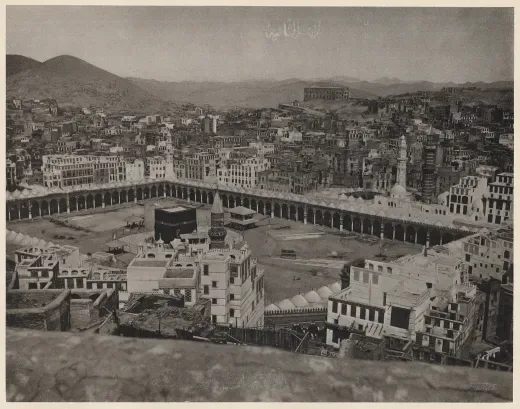
They had to demolish a neighbourhood
In 638 there is no mosque in Mecca. What triggers its construction is not prestige but the fact that the circling crowd spills into the neighbouring houses.
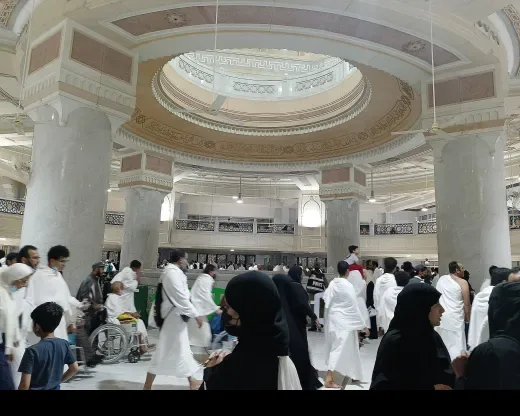
The fire was put out by a flood
In 1399 a fire takes a third of the sanctuary. A flood puts it out, bringing down more porticoes on its way. From that night follows the reason the building's oldest stone is only 450 years old.
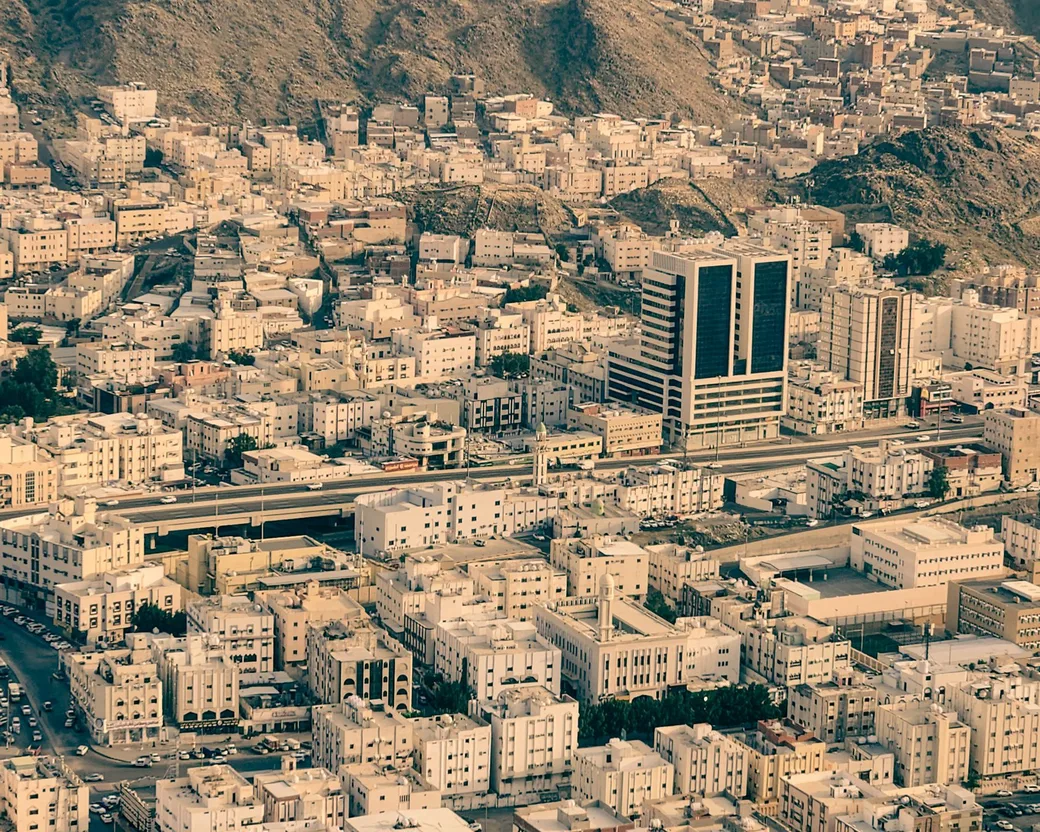
The Kaaba you see was rebuilt after a flood
Mecca lies in a valley and the sanctuary at its lowest point. In April 1630 a flood brought down walls of the Kaaba. The building we see today is the one raised again afterwards.
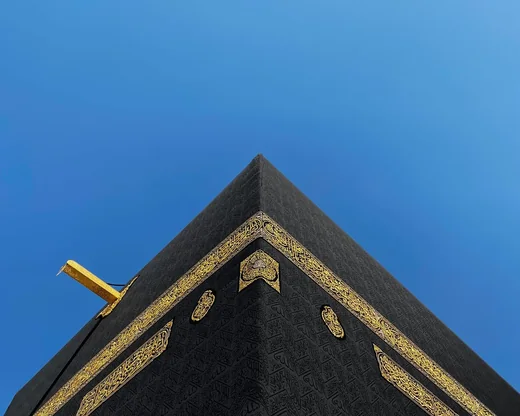
What you see is not a stone, it is a repair
At the eastern corner a black stone sits in a silver mount. That mount is not an ornament: it repairs a stone broken by a catapult in 683.
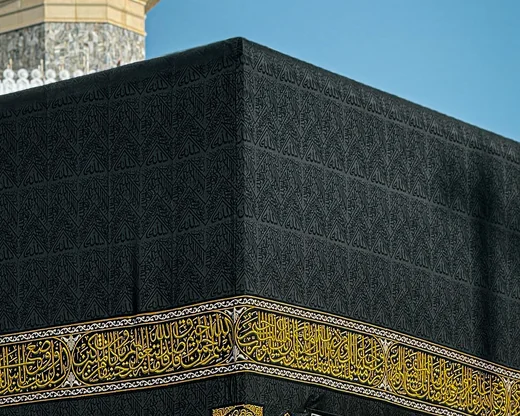
It used to take an empty mosque
Close to a tonne of silk to be fitted every year on a building people circle without pause. For decades the answer was a date, and it had nothing religious about it.
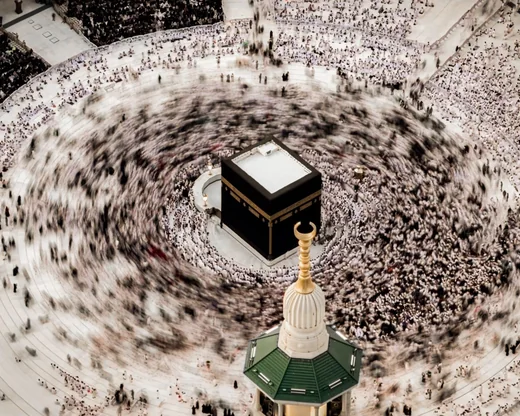
The only solution: rings stacked on rings
A ring's throughput does not depend on its distance from the centre but on its width. And doubling the width triples the area to build, drain and pave with a stone that does not burn bare feet.
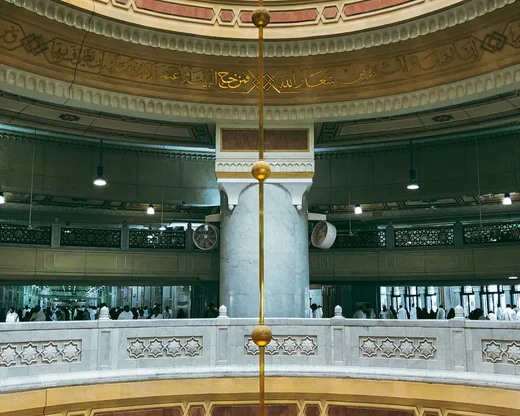
Three times as many people, without a single extra square metre
The circling ring cannot be widened without demolishing the mosque. So it was stacked on four levels. A temporary ring showed what that costs when a floor bears on the courtyard.
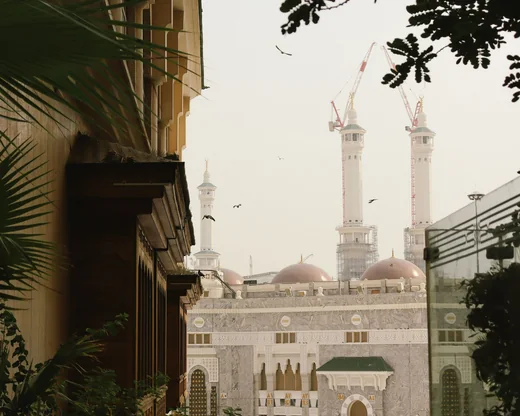
A million fewer pilgrims, three years running
The works did not interrupt the prayer. But in 2013 the Hajj fell from 3.16 to 1.98 million pilgrims, quotas cut because of the site, and the ceiling stayed for three years.
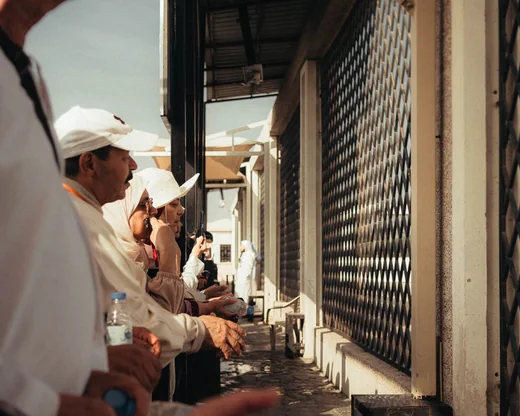
Nothing can stand in the ring, not even Zamzam
The well sits twenty-one metres from the Kaaba, squarely in the circling ring. In 1964 the building over it was demolished, in 2003 the staircase sealed. The water travels five kilometres to come back.
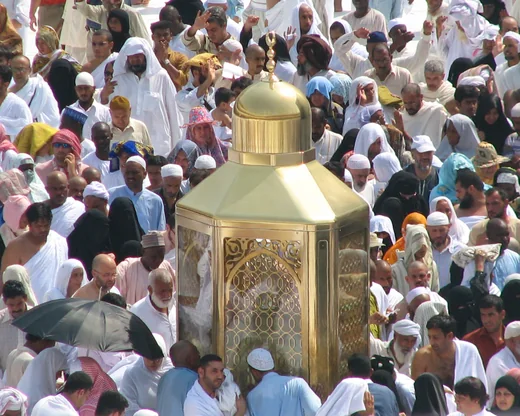
It was not the stone that was in the way
The Maqam of Ibrahim (peace be upon him) can neither move nor be replaced. Only its wrapping could shrink: a structure three metres by six, dismantled in 1967, fifteen square metres returned.
The series is complete
Ten chapters, published as they were verified. Each one stands on its own, and they can be read in any order.