
Home › Blog › The endowments of Hürrem Sultan
Masjid al-Haram, chapter 1 · Mecca · 9 min read
They had to demolish a neighbourhood to build the world's largest mosque
In the year 638 there is no mosque in Mecca. The Kaaba is there, the prayer is there, the pilgrimage is there. The building is not. What brings it into being is not a monumental intention but a circulation problem, and that problem will never be solved for good.
What was there before
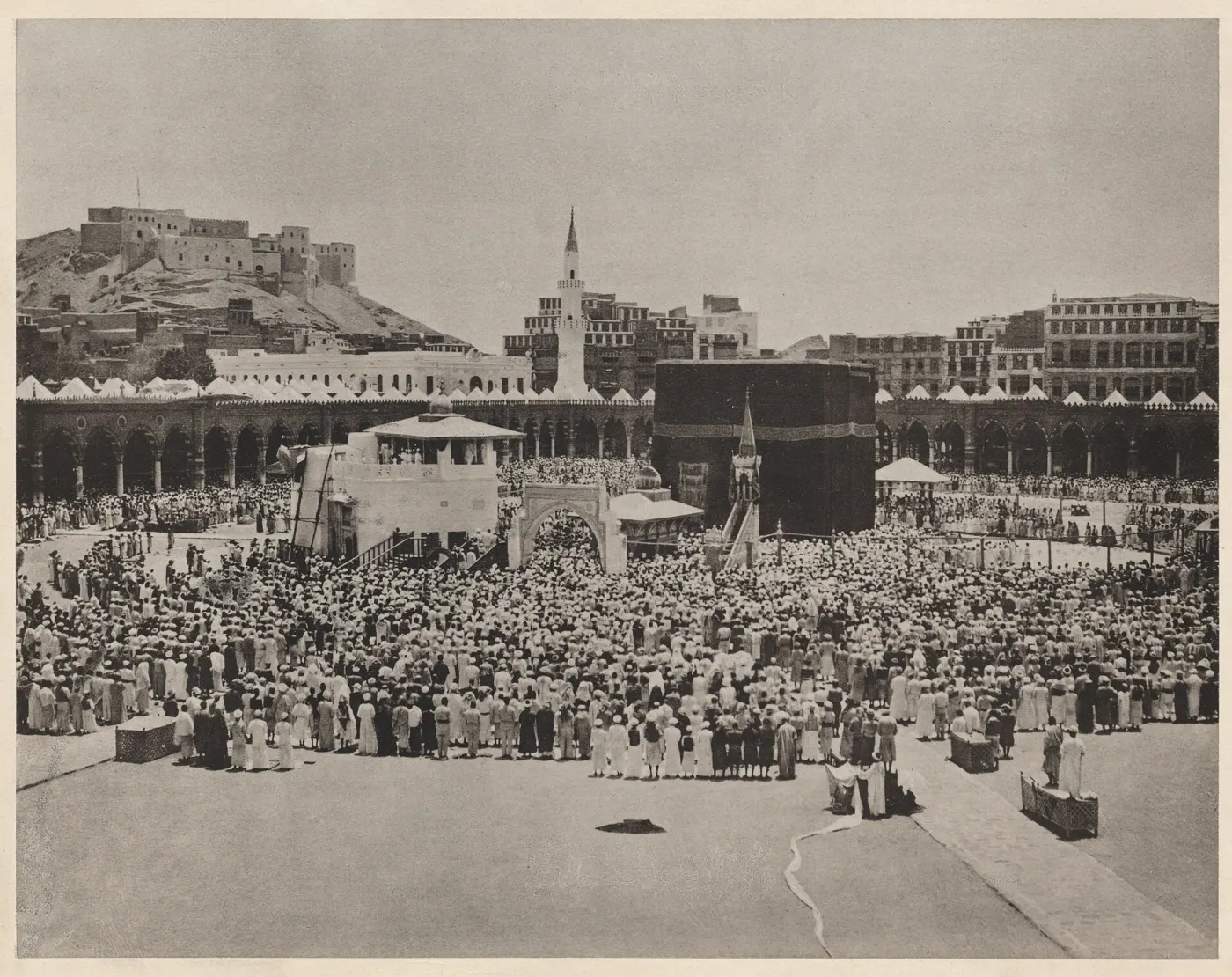
The Kaaba stands at the bottom of a valley, in the middle of an open space. Around that space there are houses, and they touch it. There is no enclosure, no portico, no wall. What we now call Masjid al-Haram, the largest mosque in the world, has at that point no built existence at all.
That does not mean nothing happens there. People pray, circle, come from far away. It is simply that the place of worship is a piece of ground, not a building. The edge of that ground is set by the walls of the neighbouring houses, which is to say by the accident of who built where.
The reason is not prestige
One readily imagines that such a project begins with a will to grandeur. Here the cause is more prosaic, and it is decisive for everything that follows.
The circling crowd was spilling into the houses. The number of pilgrims had grown to the point where the circumambulation area no longer sufficed, and the residents complained: their walls served as the edge of the pilgrimage, and disputes broke out.
In other words, the first problem of Masjid al-Haram is a throughput problem. It appears in the year 17 of the Hijra, and it has never stopped since. The whole history of the building is a sequence of technical answers to that same constraint.
Buying and demolishing
The answer from Umar, may Allah be pleased with him, the second caliph, is direct: buy the houses bordering the area, demolish them, and widen the space so cleared.
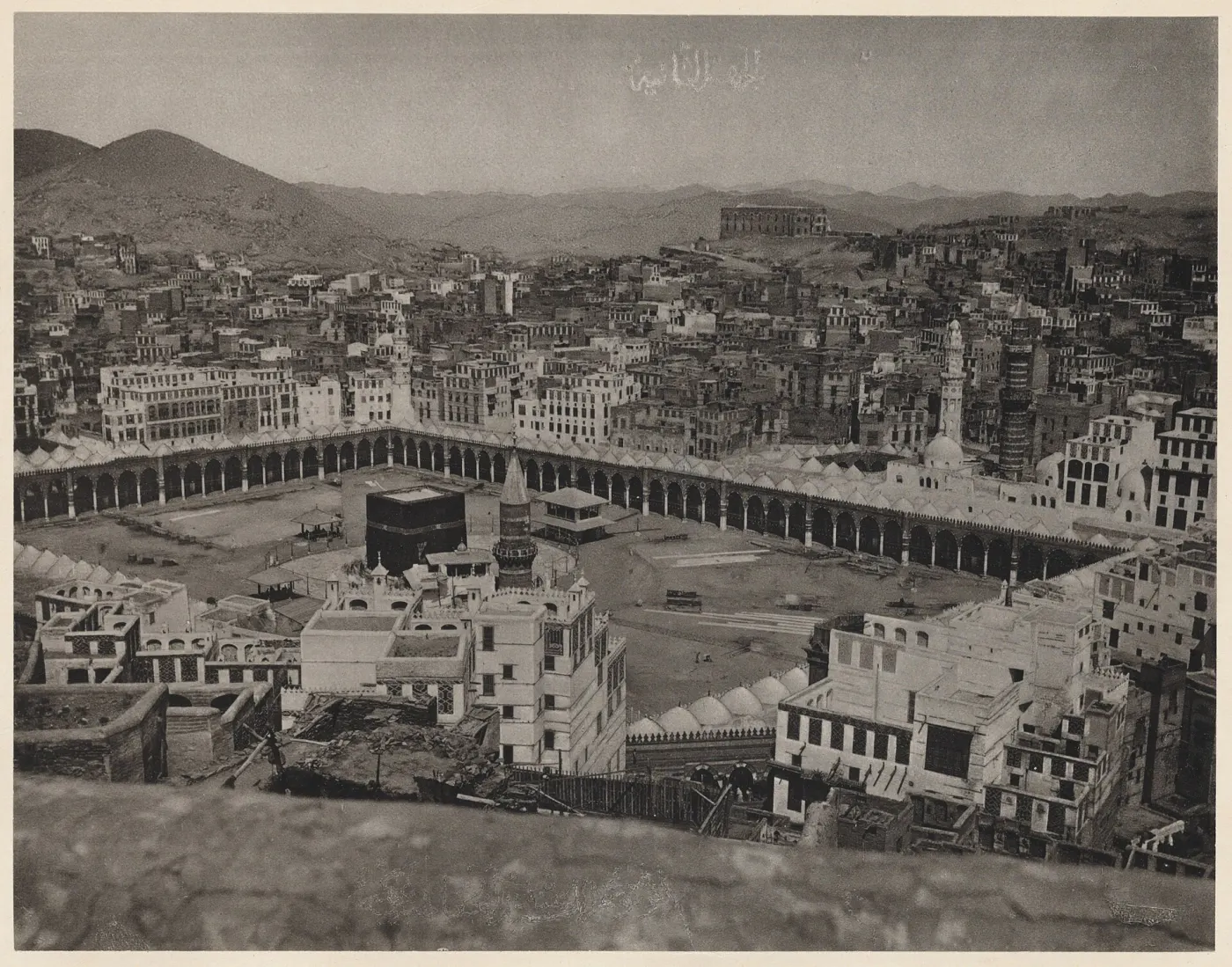
It is the first expansion in the sanctuary's history, and it sets the pattern for every one that follows. To enlarge the mosque, the city around it has to be erased. That gesture will be repeated for fourteen centuries.
A wall lower than a man
On the newly cleared edge, Umar has a wall raised. The sources describe it as lower than the height of an average man, pierced by a gate, and carrying lamps to light the enclosure after dark.
It is worth pausing on this object, because it is stranger than it looks. This wall carries no roof. It stops no one, you can step over it. It protects against nothing.
It does one single thing, and it is a thing nothing did before it: it says where the sanctuary begins and where the city ends.
What drawing a line means
Before 638 that boundary did not exist as an intention. It existed as an accident: it was given by the façades of the houses, and it shifted whenever a resident built or demolished on his own plot.
Umar's low wall turns an accident into a decision. He does not put up a building, he sets a border. And it is worth weighing what that means: the very first architectural act of the world's largest mosque was not to build, it was to draw a line.
That order of priority is not incidental. It follows from the nature of the place. In an ordinary mosque you face a wall, and that wall organises everything else. Here you circle a point. A building that surrounds a centre can only be, first of all, a boundary.
The lamps
The detail of the lamps deserves more than a mention. They light the enclosure after nightfall, which has a concrete consequence: from then on you can be there at night.
It was not a place before. It was an interval between houses, a residual void. With a boundary and light, it becomes a place in the proper sense, a space you can be in rather than merely pass through.
Uthman, and the moment it becomes a building
Eight years later, in the year 26 of the Hijra, that is 646, the caliph Uthman, may Allah be pleased with him, repeats exactly the same gesture: he buys further neighbouring houses and demolishes them to widen the area again.
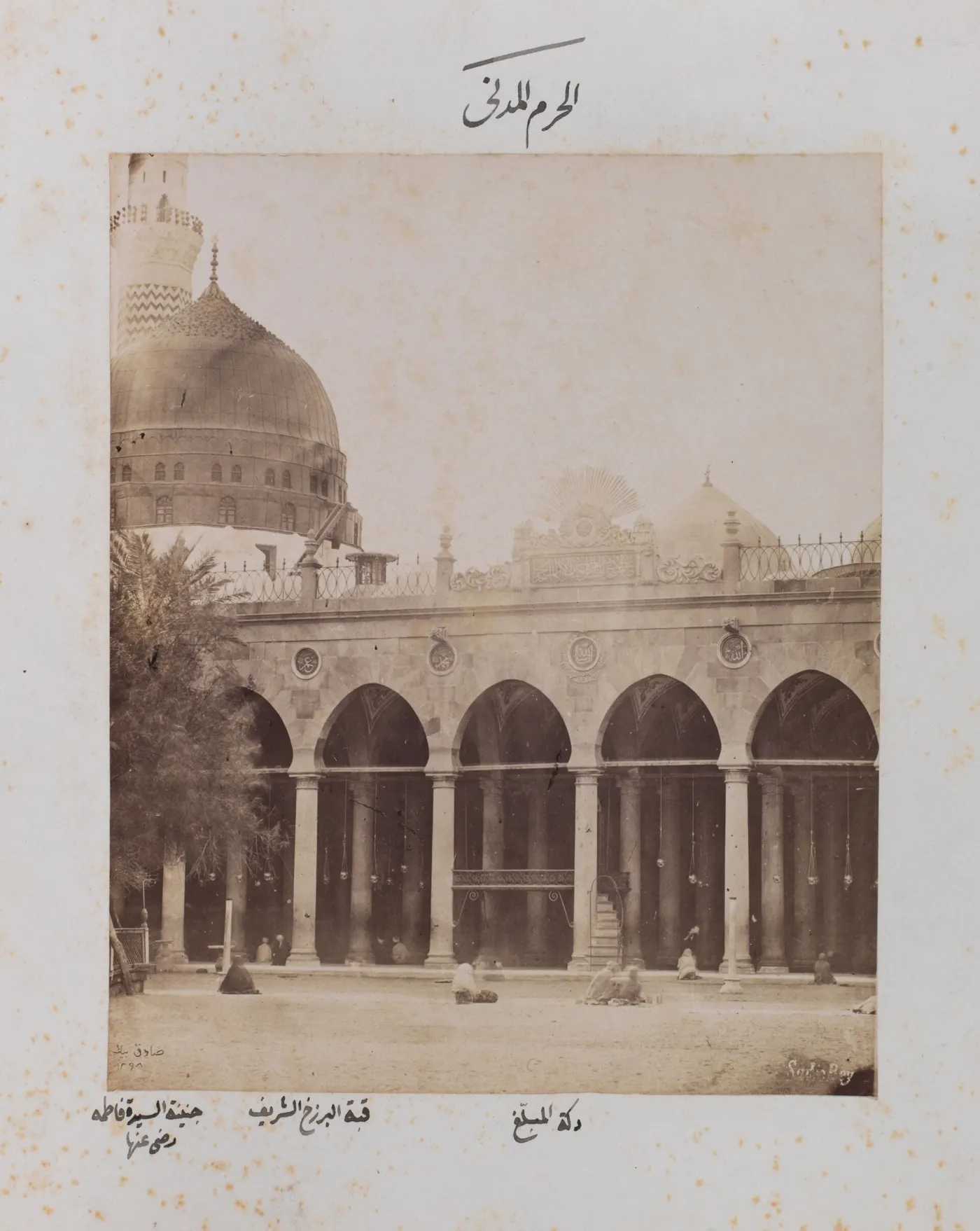
But he adds something else. He has part of the prayer area covered with a roof carried on columns, and introduces marble columns and covered porticoes. It is the first use of porticoes in Masjid al-Haram, and that is the moment the whole thing stops being an enclosure and becomes a building.
The sequence is therefore clear: a boundary first, a construction only afterwards. Never the other way round.
A second enemy, water
Another of Umar's decisions is rarely cited, and it announces a whole chapter of this history: he also had a dam built against flooding.
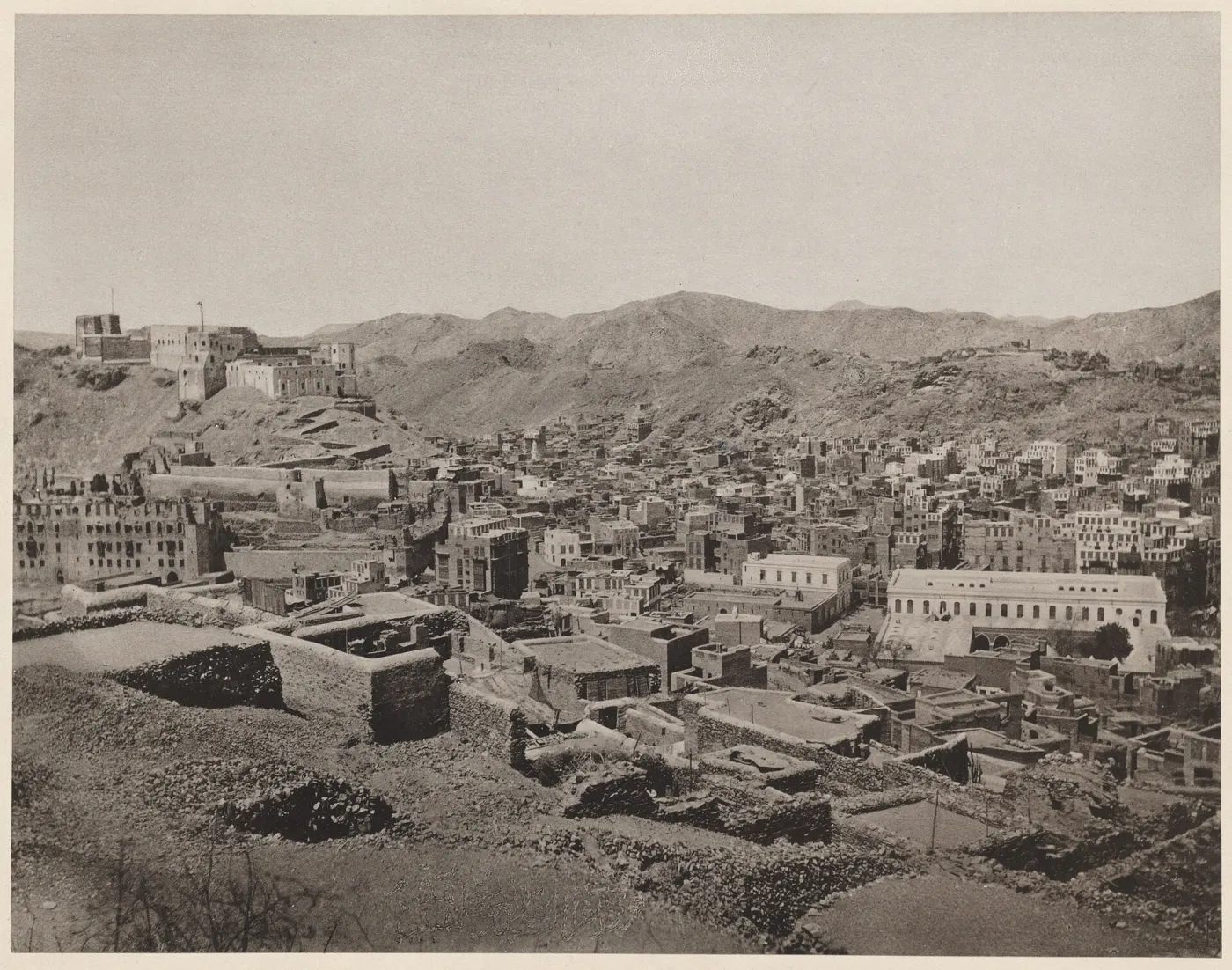
Mecca is a valley, and the sanctuary sits at the low point. What is an advantage for gathering a crowd is a formidable defect as soon as it rains. The sanctuary will have to answer that second problem for as long as the first, and we will return to it.
The line never stopped moving
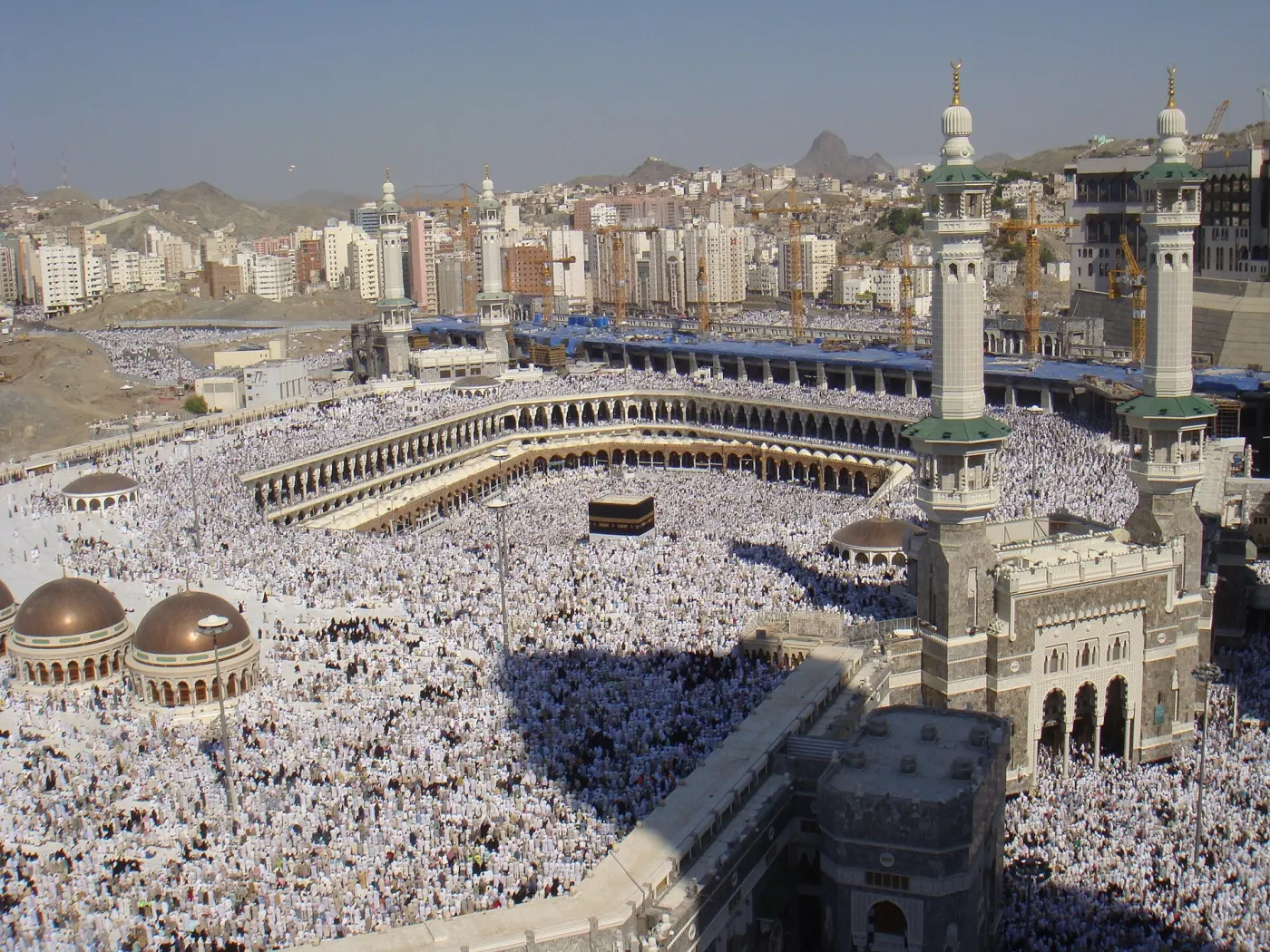
Once drawn, that line began to move and never stopped. Uthman pushes it out eight years after Umar. Everyone after him does the same. Right up to today's cranes.
And every time it is the same three gestures, in the same order: buy, demolish, push the line out. What changes is the scale and the price. What does not change is the method, because the problem does not change either.
The closing contrast gives the measure of this history. The oldest part of the building still standing today dates from 1571, more than nine centuries after Umar. Not one stone from 638 survives. The building has been replaced entirely, several times over. The line is fourteen centuries old.
What we do not say
We give no dimensions for the 638 enclosure, and no count of houses bought. The sources that offer them disagree, and it is not the point.
The animation accompanying this episode is a schematic, labelled as such on screen. We know neither the exact plan of the houses nor the course of the low wall: what is documented is the gesture, not its geometry.
Nor do we write that the sanctuary "has never closed". It has closed, notably in 2020. The exact wording, and it is enough, is that the works have never interrupted the prayer.
To go further
This chapter opens the Masjid al-Haram series, devoted to the one building in the world whose centre cannot move, around which a growing crowd must circle, and which cannot stop for works.
See also the mosque's page in our selection, and the Series series, which covers the direction and its geometry where this one covers the enclosure and its engineering.