
Home › Masjid al-Haram › Stacking the levels
Masjid al-Haram, chapter 7 · Mecca · 9 min read
Three times as many people, without a single extra square metre
Around the Kaaba, people circle in a ring, and that ring cannot easily grow. It lies at the centre of the mosque, not at its edge: what borders it is not the city but the porticoes and galleries of the building itself. Widening the ring therefore means demolishing the mosque before anything else.
So it is not widened. It is stacked. This chapter is about how, and above all about what that solution cost the first time it was got wrong.
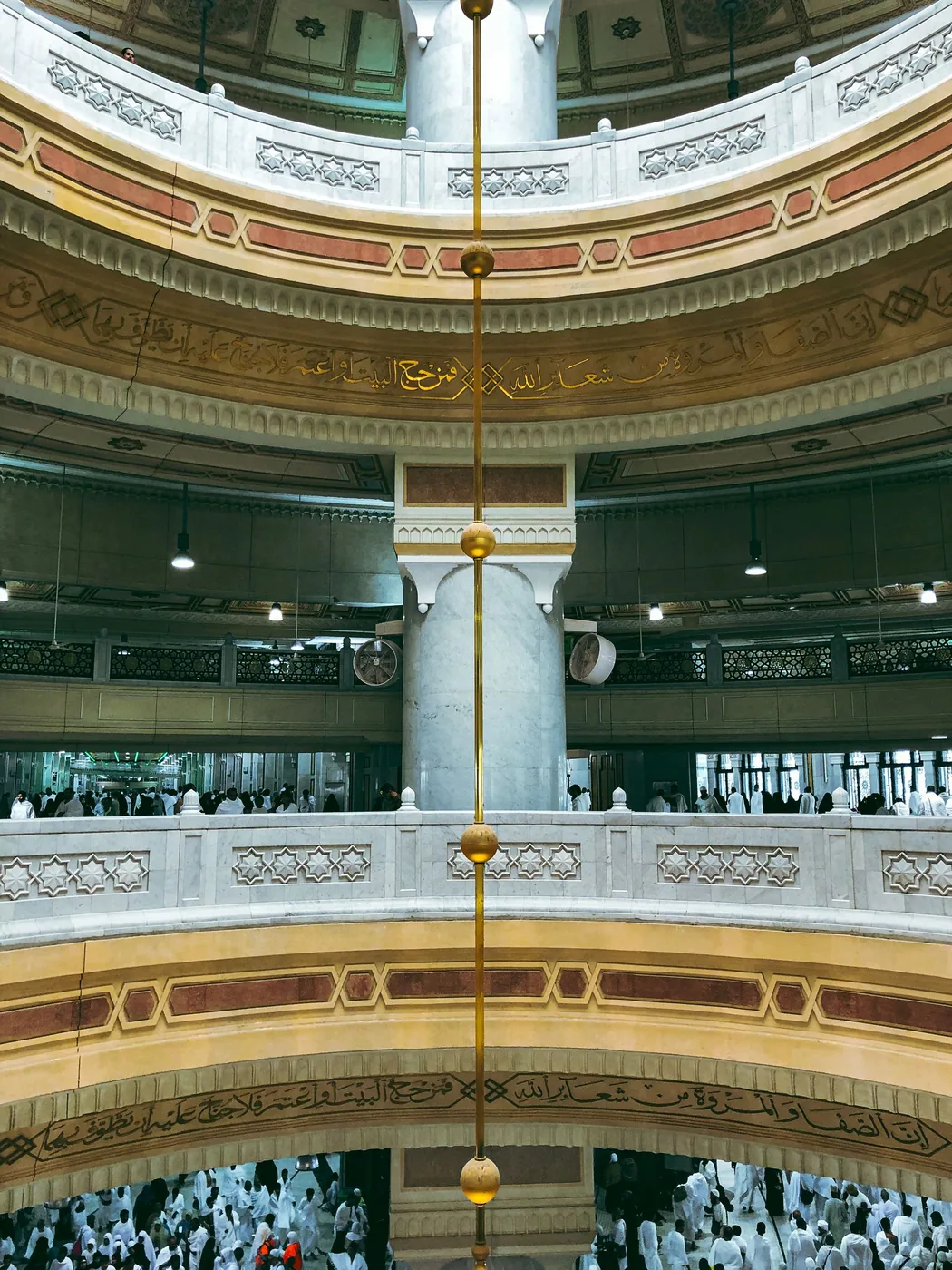
Four levels, one footprint
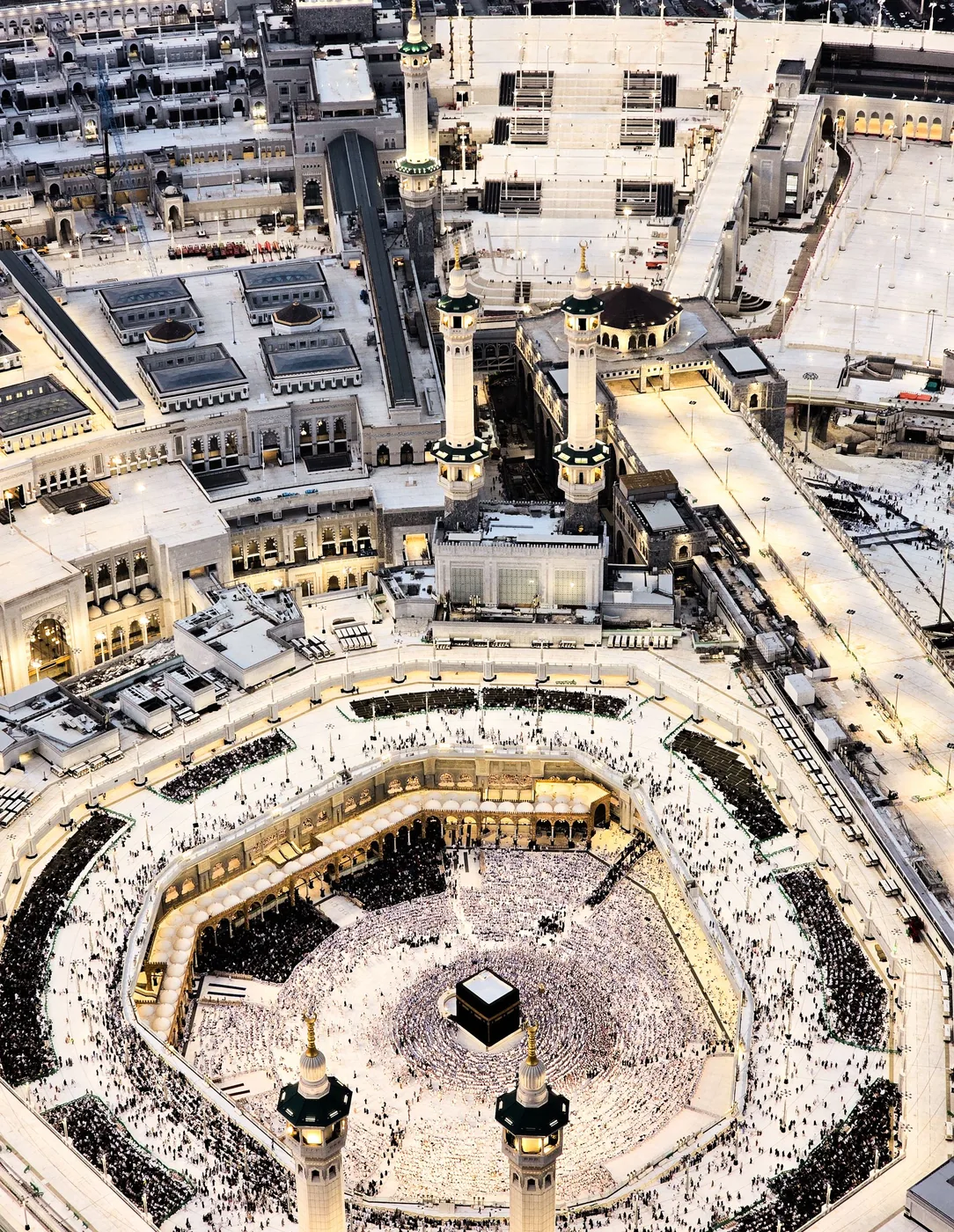
The circling is now done on four levels: the ground, a first floor, a mezzanine and the roof. On the ground, capacity is about thirty thousand people an hour. Across all the levels it reaches a hundred and seven thousand.
The ratio is three and a half, and that is the whole point of the operation: the three upper levels supply nearly eighty per cent of total throughput without occupying a single extra square metre of ground.
That answers exactly the problem set out in the previous chapter. A ring's throughput depends only on its width, but the area to be built grows as the square of the radius, so that doubling the width triples the area. A second level set on the same radii supplies the same useful width, and a ground area of strictly zero.
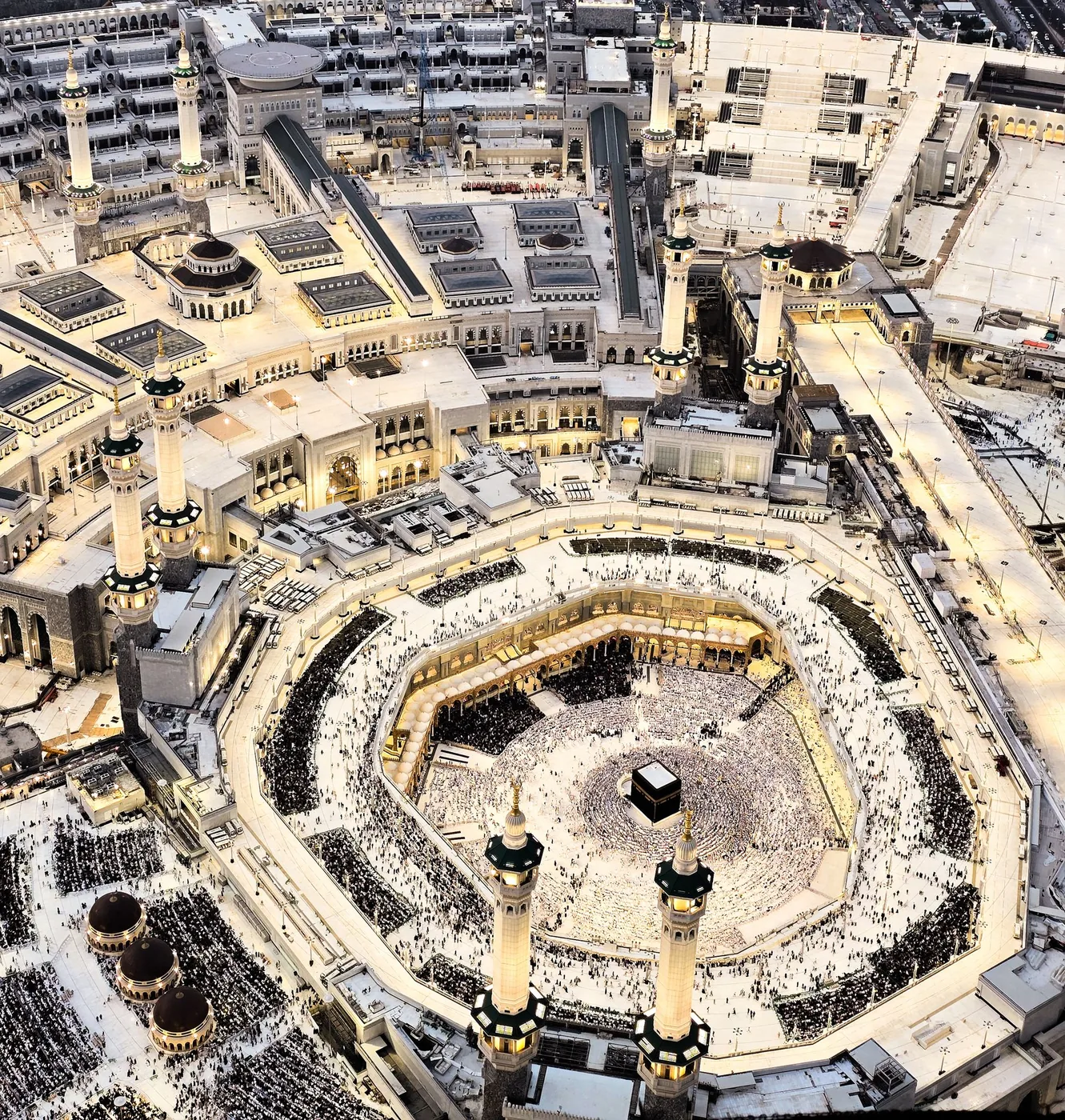
A floor has to rest on something
This is where the solution meets its own difficulty, and recent history provides a measured demonstration of it.
In 2013, during the enlargement works, a temporary two-level ring was erected around the Kaaba to maintain the capacity of the circling during construction. It was ninety-six metres in diameter, twelve metres wide and a little over twelve metres high, with a surface of about three thousand one hundred and thirty square metres.
Its structure was carbon fibre reinforced polymer. The choice was no affectation: the highest possible load capacity was needed for the lowest weight, on a circular frame both extremely stiff and free of vibration. It also had the property of being assembled and dismantled in a few days without heavy machinery.
Its first level was reserved for the sick, the elderly and wheelchair users, to whom it offered a barrier-free circuit that did not otherwise exist. That point matters, because it is a reminder that the structure was not a mistake but a trade-off.
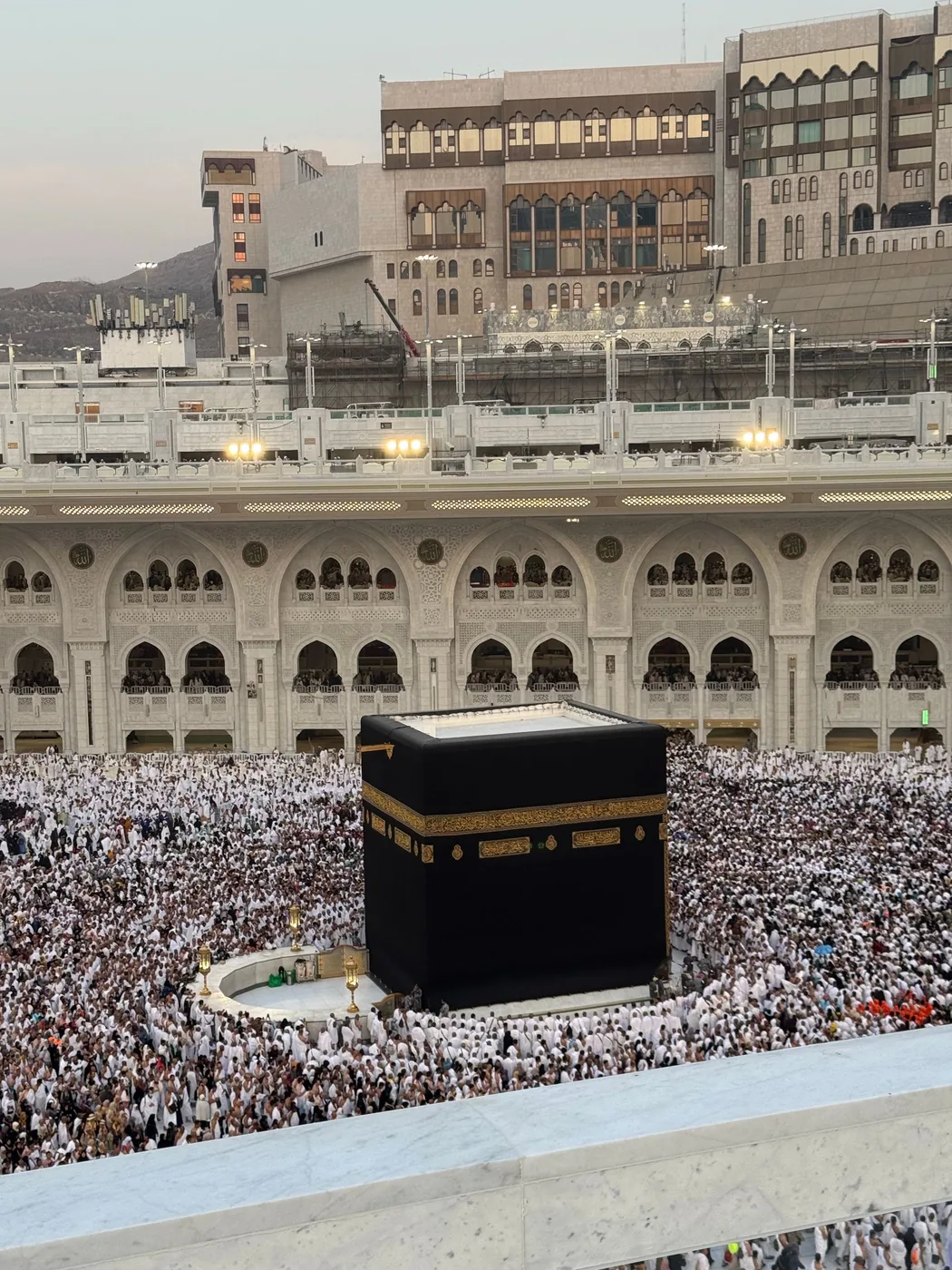
What the structure cost the ground
For that structure, light as it was, still had to set its supports somewhere, and that somewhere was the courtyard. In other words, the very ring it was meant to relieve.
The figure is clear. Through the three years it stood, the capacity of the circling on the ground fell to nineteen thousand people an hour. The ring was dismantled in 2016, ten thousand four hundred and eighty-nine pieces removed in thirty-five days, and ground capacity rose again to thirty thousand.
Eleven thousand circuits an hour: that is what the extra floor took from beneath itself. The general rule, that stacking costs no ground, holds on one condition, and that condition is that the floor must not bear on the band it serves.
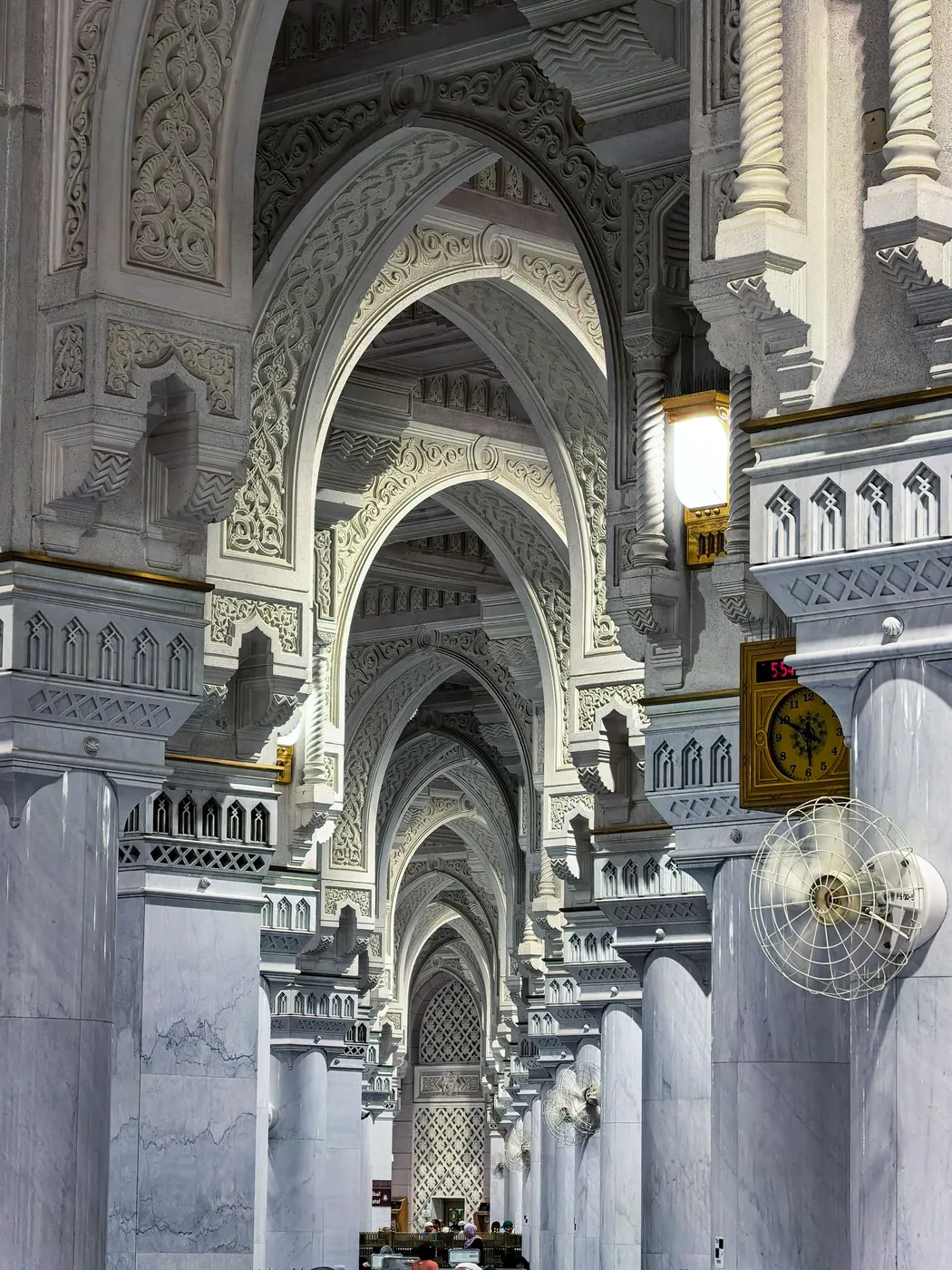
What replaced the porticoes
The permanent solution draws precisely that consequence. In the works launched in 2011, the structure behind the Ottoman portico was pulled down, then rebuilt with a basement, three floors and a roof, entirely free of pillars and reserved for circling alone.
The same approach shows in the mosque's overall figures, where the number of pillars was cut by about forty-four per cent, including seventy-five per cent on the first floor. The width of the mataf's covering went from about twenty metres to about fifty.
It is worth measuring what that implies. A circular deck spanning several tens of metres, able to carry a dense crowd, and unable to place any support in the space it overlooks: the loads have to come down elsewhere, outside the band where people move.
What stacking displaces
Stacking does not make the problem disappear, it changes its nature. A ring on the ground fills by itself, through the gates. A ring on the third level does not: people have to get up to it, and back down.
The throughput of a floor is therefore worth no more than its accesses. If the stairs and ramps leading to it pass fewer people than the ring itself can absorb, the access becomes the limit, and the level stays half empty. The constraint moves from the plan to the section.
It is also why a circuit on an upper floor cannot be improvised for a crowd that is not evenly able. Some of those performing the rite do so in a wheelchair, or with difficulty, and for them the choice of level depends entirely on there being a ramp. The temporary ring of 2013 had grasped that before anyone, since it reserved its first level for exactly those people.
One law, for two chapters
This chapter and the previous one read together, and a single rule explains both.
In this building, the enemy of throughput is anything standing in the ring. A temporary bridge leg, a gallery pillar, an old portico. Chapter six shows that nearly half the mosque's pillars were removed; this one shows that it was rebuilt without putting a single one back in the ring, and what was paid when the opposite had been done.
The result comes down to one sentence. The circling passes three times as many people as on its ground floor alone, without a single extra square metre.
Our sources
- On the temporary structure, its geometry, material and two levels, the project record of the engineering practice that designed it.
- On the hourly capacities and the 2016 dismantling, official Saudi releases and their coverage in the press.
- On the pillar-free rebuilding and the reduction in the number of supports, the publications devoted to the works launched in 2011.
- On the throughput law of a ring, see chapter 6 of this series, where the calculation is set out.
- Photographs: Pexels, free licence.