
Home › Masjid al-Haram › The fire put out by a flood
Masjid al-Haram, chapter 2 · Mecca · 9 min read
The fire was put out by a flood
In 1399 the world's largest mosque burns. What stops the fire is not a bucket chain but a flood, and on its way it brings down more porticoes. From that night follows everything that comes after, including the reason the oldest surviving part of the building is only four hundred and fifty years old.
A school, one night in 1399
The fire starts in a ribat, a school built against the western façade of the sanctuary. It reaches the porticoes and takes about a third of the mosque: one hundred and thirty marble columns, and part of the ceiling, which collapses.
The event is dated to the year 802 of the Hijra. It is not an incident, it is a major disaster, the worst the building has known.
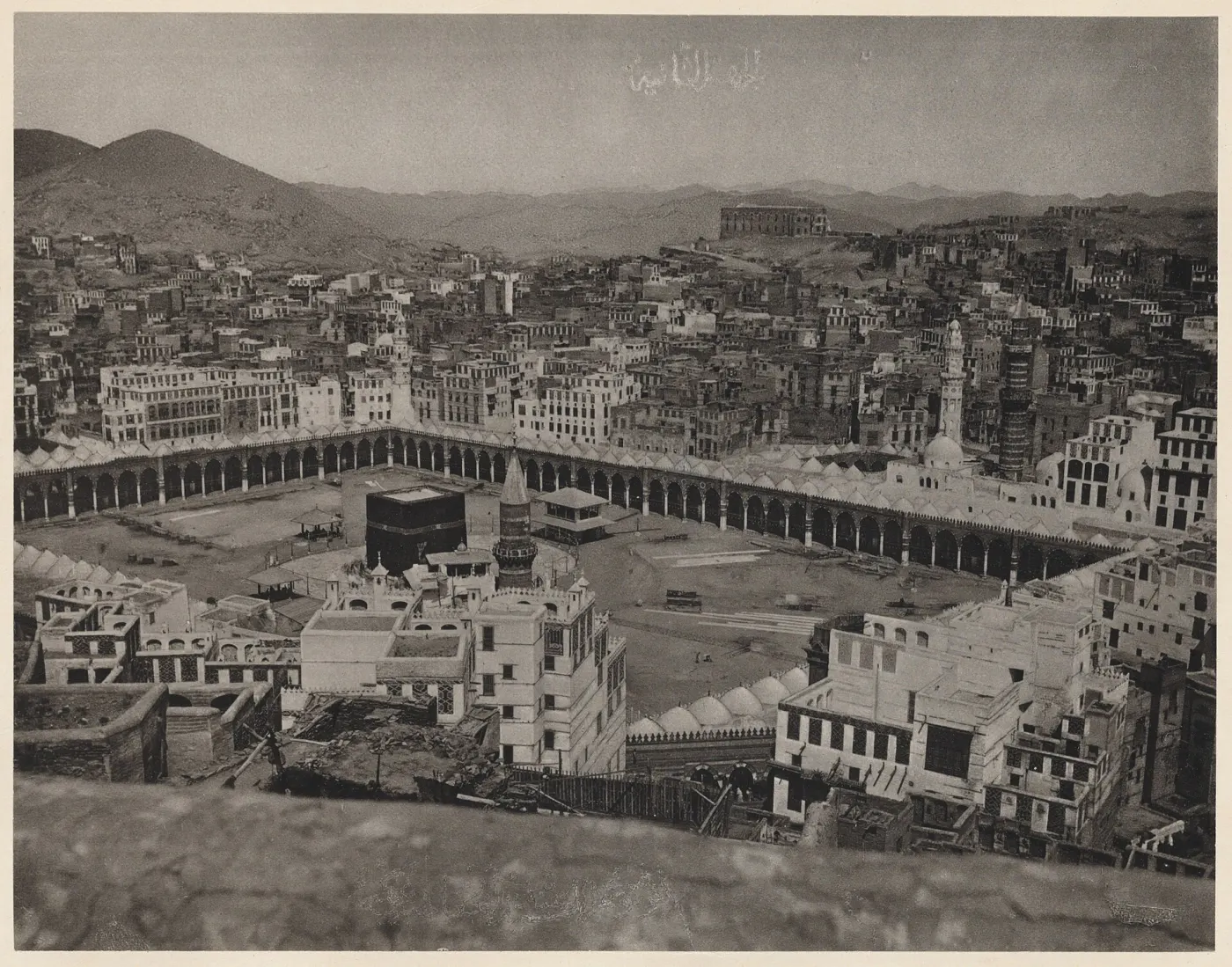
What stops it
The account does not end there, and that is what makes it singular. A flood puts an end to the fire. The water comes down the valley, reaches the sanctuary, and the fire goes out.
But it does not merely save the building. Crossing the enclosure, it brings down further porticoes the fire had not reached. The sanctuary is struck twice in the same night, by two opposite elements.
That says something about the place, and a whole chapter will return to it: Mecca is a valley, and the sanctuary sits at the low point. What serves to gather a crowd also serves to receive water.
Rebuilt with what had burned
The rebuilding is carried out by the Mamluks, under Sultan Faraj, between 1399 and 1405.
The destroyed columns are replaced with stone columns quarried in the Hijaz, the surrounding region. And the roof is patched with wood taken from the mountains of Ta'if.
Wood. Which is to say exactly what had just burned. The choice is not absurd for the period: timber is the only workable covering for large spans and it is available nearby. But it means the sanctuary remains exposed to the same risk for another century and a half.
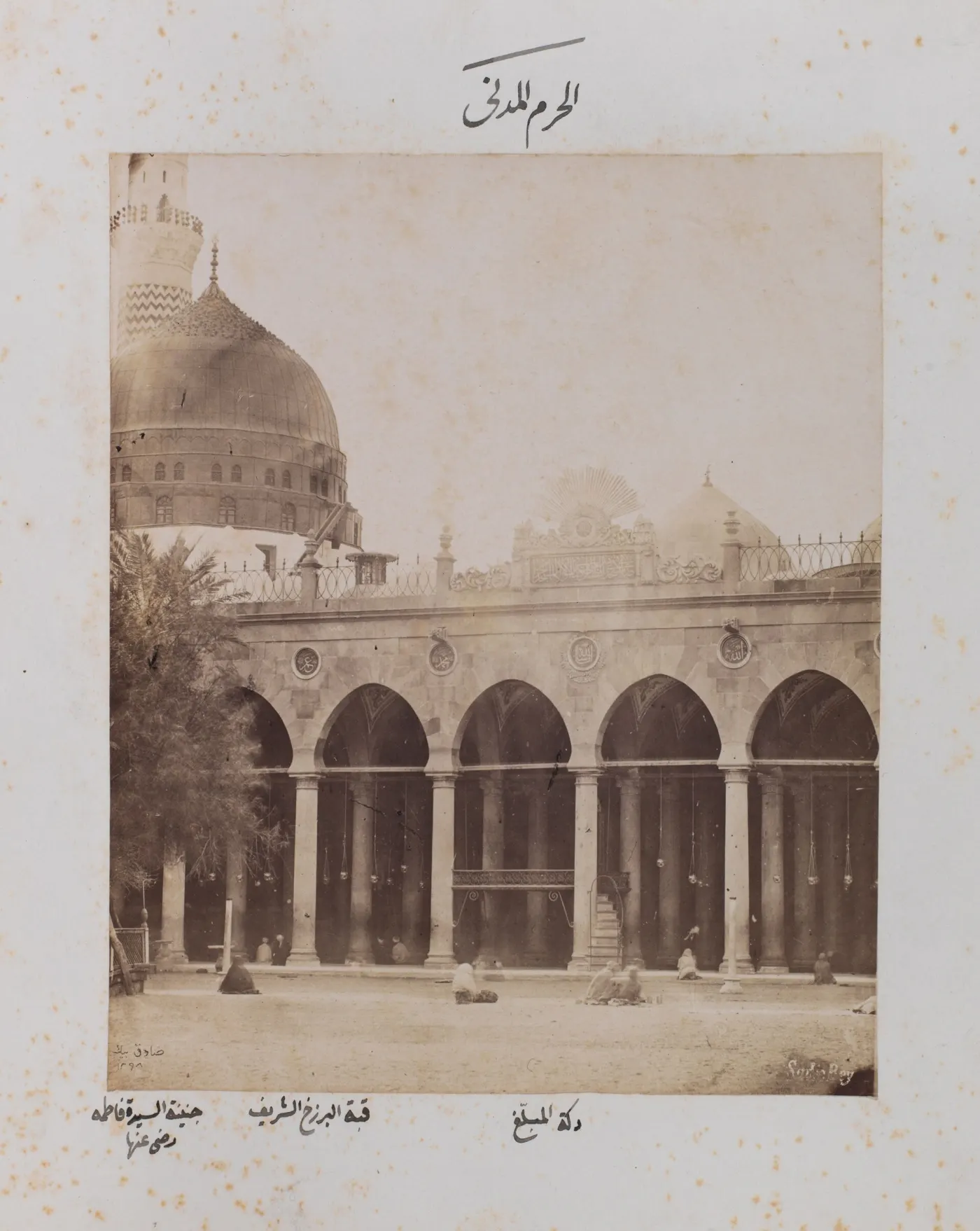
1571, and a design made two and a half thousand kilometres away
It takes one hundred and seventy-two years. In 1571, Sultan Selim II orders a complete overhaul of the sanctuary and entrusts the design to Sinan, his chief architect.
Sinan works in Istanbul. Nothing indicates that he made the journey to Mecca, and we do not claim it: what is established is the place of design, two and a half thousand kilometres from the site.
The approach is clear. The flat roof goes. In its place come around five hundred domes, carried on columns, some of them added to take the new loads. The interiors of the domes receive gilded calligraphy.
The works outlive the man who ordered them. Selim II dies, and it is his son Murad III who sees them through, in 1576.
The scale of the works
The figures in circulation give the measure of the undertaking, and they should be taken for what they are, orders of magnitude passed from source to source rather than surveys.
Close to nine hundred and eighty columns are cited as reworked or replaced around the Kaaba, in marble and stone, along with new columns quarried in the neighbouring mountains to carry the new covering.
The change is not only one of appearance. A flat roof on beams is limited by the length of the available timber and weathers badly under rain and sun. A covering of masonry domes carries its loads down to the columns and can be repaired bay by bay. It is a different constructional system, not a decoration laid over the old one.
Why it lasted
We have found no source giving the reasoning of those who commissioned it, and we will not attribute one to them. But the sequence of facts speaks for itself.
What burned in 1399 was the roof. What replaced it was wood. What replaced that in 1571 was not, and it is the part that has crossed the following four and a half centuries.
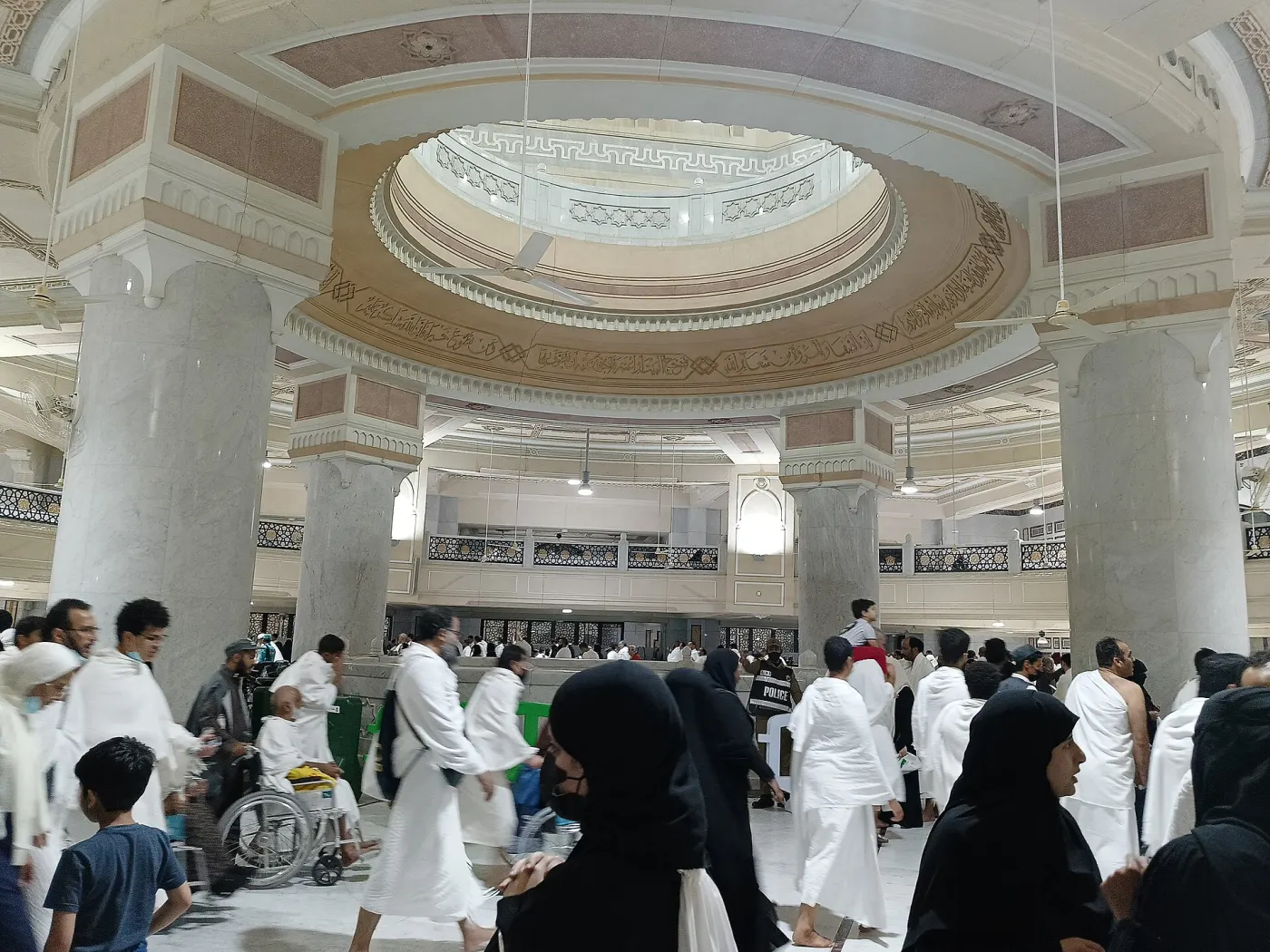
The oldest thing still standing
Here is the outcome, and it is surprising: those columns and those domes are today the oldest surviving elements of Masjid al-Haram.
Everything older is gone. Burned in 1399, carried away by floods, or demolished by the successive expansions, the very ones described in the previous chapter.
In a history that begins in 638, the oldest stone still in place is four hundred and fifty years old. The low wall of Umar, may Allah be pleased with him, the porticoes of Uthman, may Allah be pleased with him, the Abbasid extensions: none of it exists any longer except in the texts.
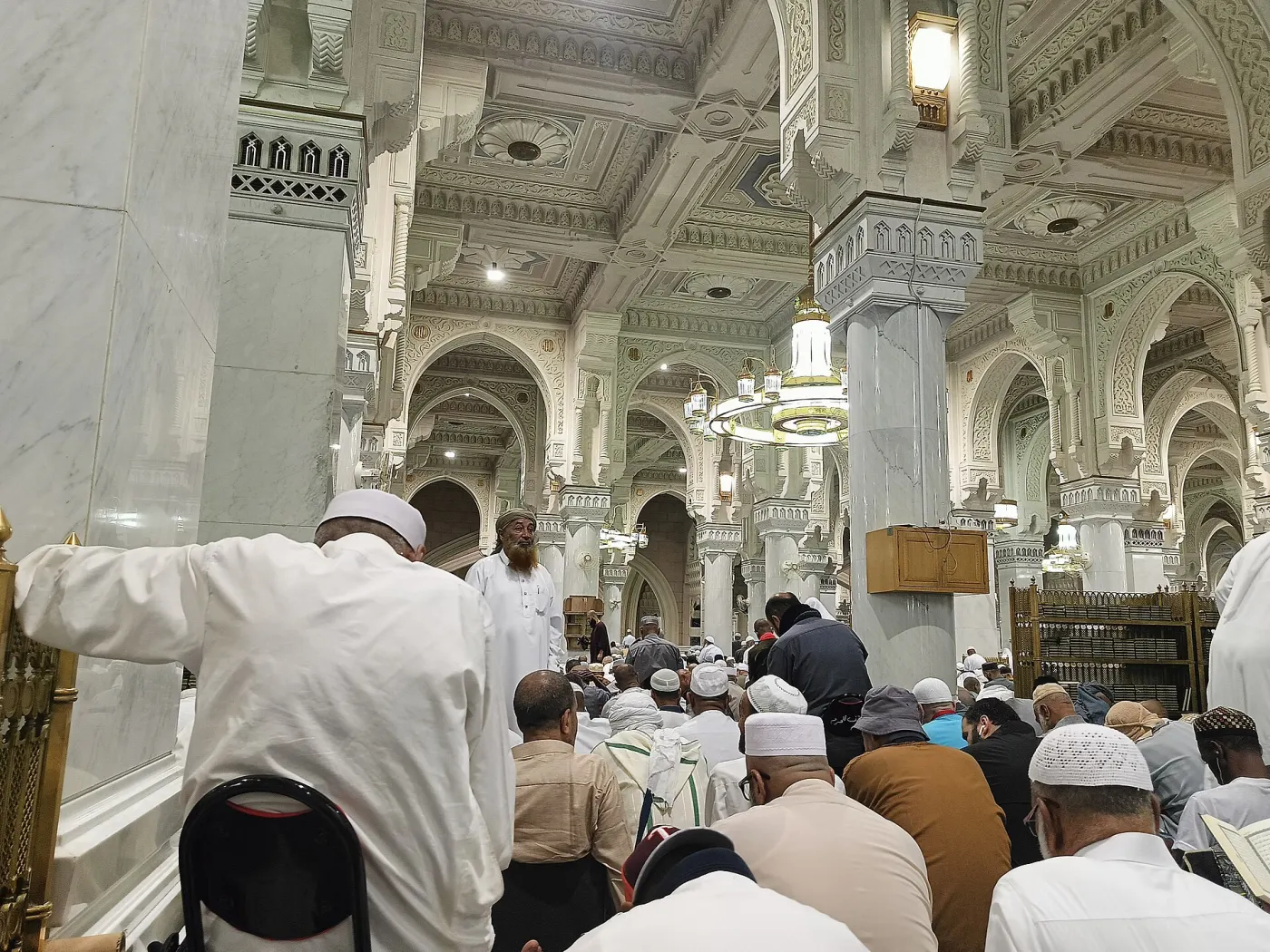
And even that has moved
The observation has to be followed to its end, because it is the subject of this series.
The 1571 work has not crossed the centuries intact. Part of it was removed during the first Saudi expansion, between 1955 and 1973. Part was kept, and the porticoes bordering the mataf on three sides today come from it. Some were rebuilt about fifteen years ago, after damage sustained during earlier works.
We report these facts without commenting on them and without naming anyone. What interests us here is something else: even the oldest thing in the building has been moved. It stops for nothing, not even for that.
What we do not say
We do not give an exact number of domes. "Around five hundred" is the figure most commonly cited, and counts vary with what is included.
We attribute no intention to those who commissioned the 1571 works, for lack of a source establishing one.
And we do not say that Sinan went to Mecca. It is unlikely and it is not documented, so we speak of the design and not of a journey.
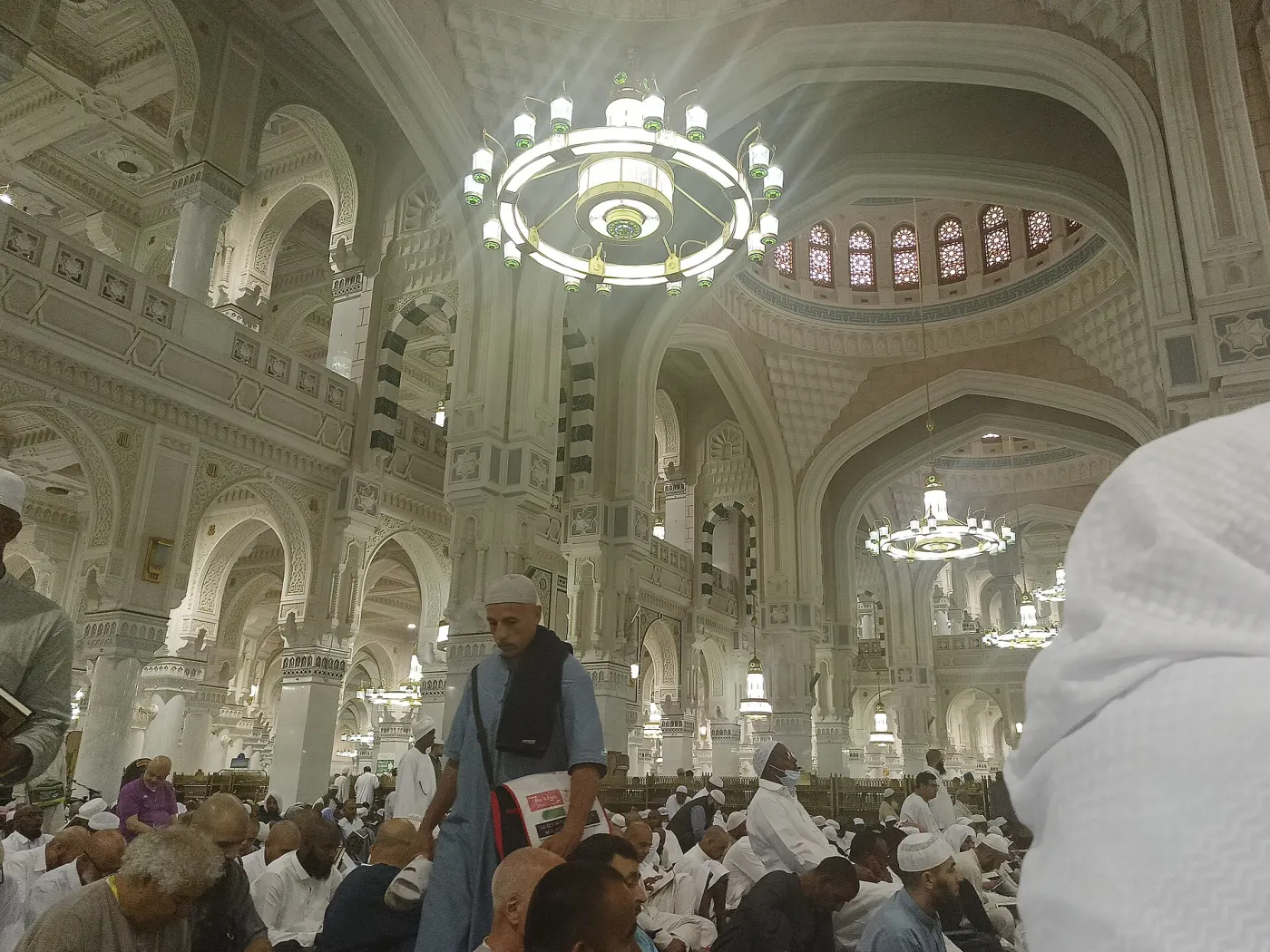
Finally, a warning that holds for the video as much as for this page: the colour photographs show the building today, they do not show the 1571 work. It is the nineteenth-century plates that show it, and they alone carry the corresponding caption.
To go further
This chapter belongs to the Masjid al-Haram series, devoted to the one building in the world whose centre cannot move and which cannot stop for works.
Chapter 1 tells the story of the first wall, in 638. The valley and its floods will have a chapter of their own. See also our article on Sinan, architect of the empire, and the sanctuary's page.