
Home › Qibla › The mosque of two directions has only one left
Episode 4 · Medina · 8 min read
The mosque of two directions has only one left
This mosque in Medina had two directions. Two mihrabs in the same wall, the niches that show which way to turn to pray, one toward Jerusalem, the other toward Mecca. Today only one is left.
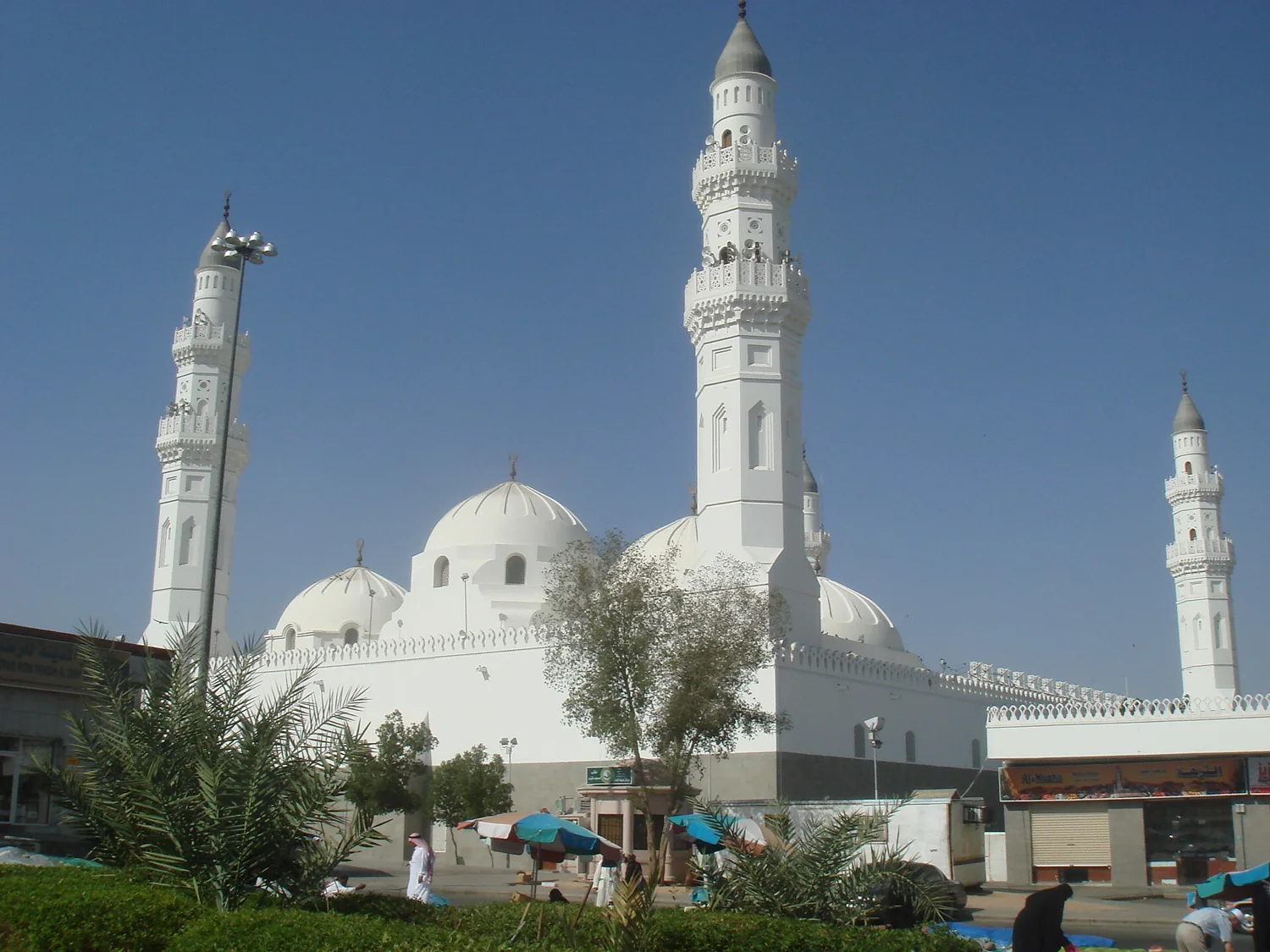
The founding episode of the series
Everything this section describes follows from what happened in this building. Before, people prayed toward Jerusalem. After, toward Mecca. Every mosque built since, from Djenné to Xi'an, has sought that direction, and with it came all the calculations, all the instruments and all the orientation errors the earlier episodes describe.
A prayer begun in one direction and finished in another
At first, Muslims did not pray toward Mecca. For years they turned toward Jerusalem. One morning, in this mosque, the prayer begins like any other: the rows are formed, everyone faces north.
According to tradition, the order to change comes during the prayer. Neither before nor after. The one leading it turns around, and behind him the whole congregation turns too. They had Jerusalem in front of them, from then on they had Mecca.
One precision matters here, and we hold to it: traditions differ as to who was leading the prayer, some reporting the Prophet (peace and blessings of Allah be upon him), others naming a companion. We do not settle it.
The passage is recorded in the Quran, surah al-Baqara (2), verse 144. In the video it is shown on screen and never recited: the text is displayed, the voice falls silent.
What the change decided, for fourteen centuries
The half-turn lasted a few seconds. It oriented everything built afterwards. That is why a mosque in Cordoba, a mosque in Djenné and a mosque in Xi'an, separated by thousands of kilometres and by centuries, all face the same point on the globe.
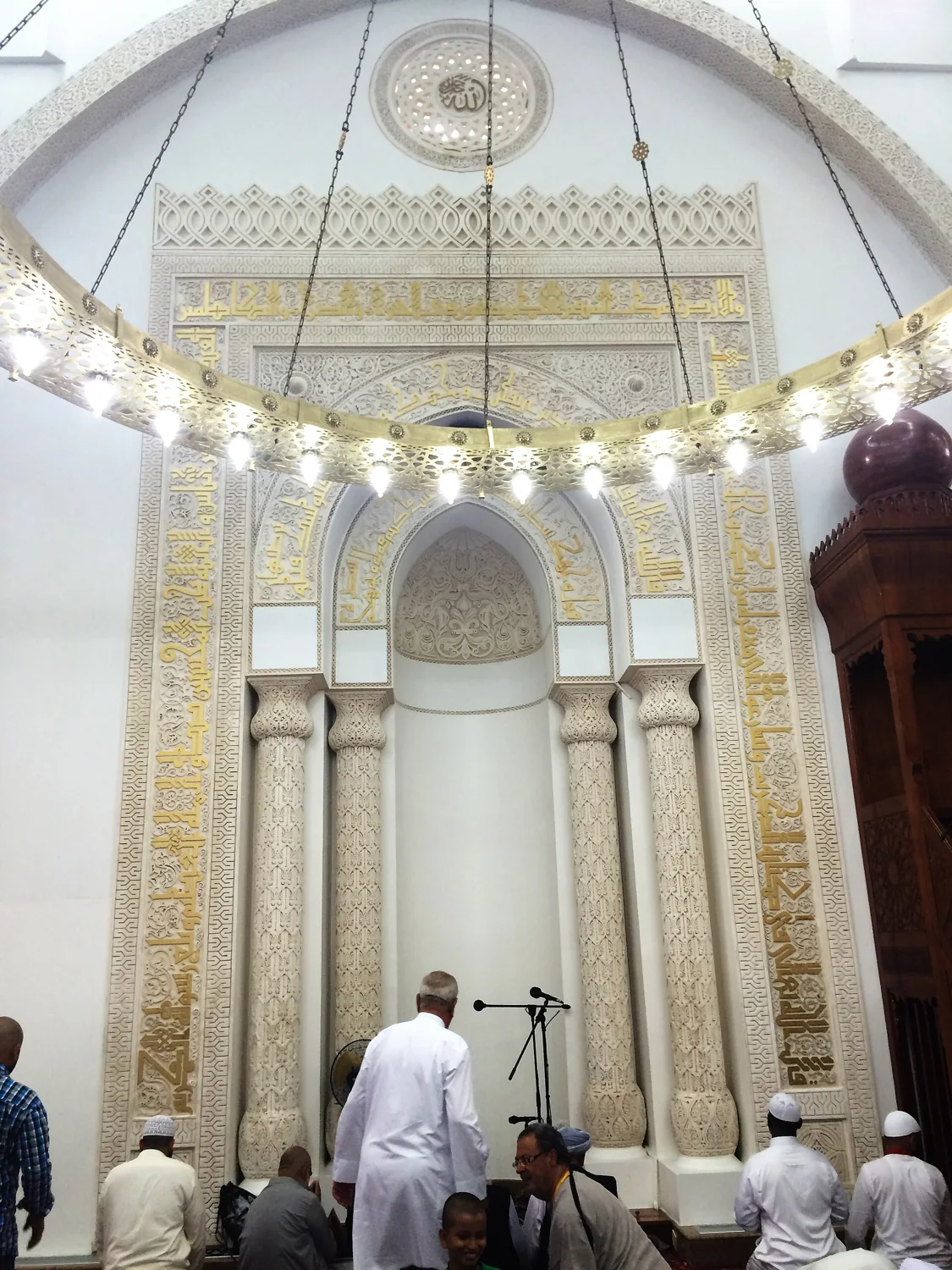
Two mihrabs in a single wall
In this mosque both were kept for a long time. One niche for the old direction, one for the new, in the same wall, facing two different points of the world. It is a rare case, but not unique: the Mandhry Mosque in Mombasa also held two mihrabs, and another al-Qiblatayn mosque stands at Zeila. So we will never write "the only one in the world".
Founded in the year 2 of the Hijra by Sawad ibn Ghanam ibn Ka'ab, under the name of the mosque of the Banu Salama, it was maintained by Caliph Umar and later rebuilt by Sultan Suleiman the Magnificent. The two niches crossed the centuries.
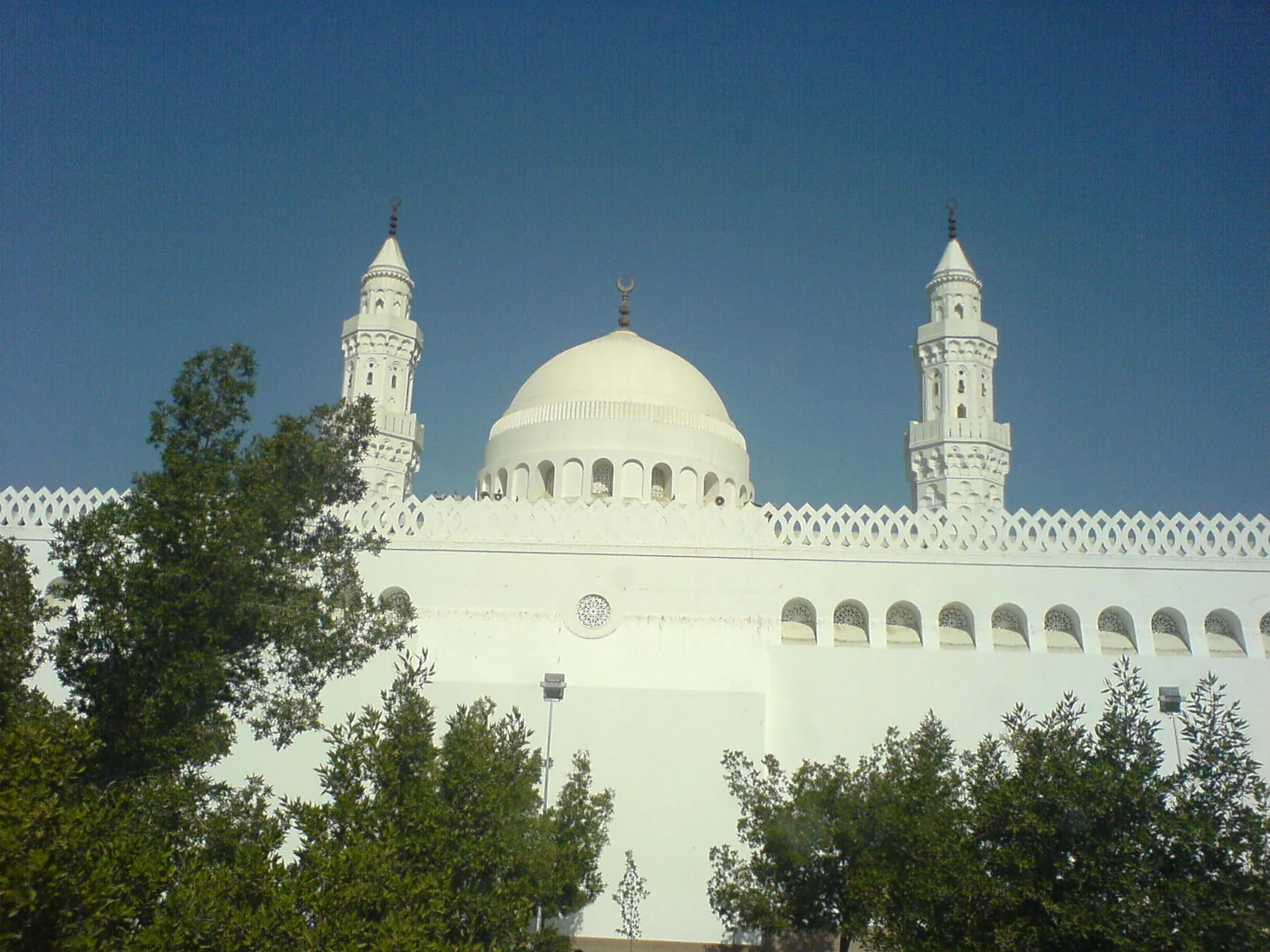
A niche, and nothing else
A mihrab is a recess cut into a wall. It holds nothing, it serves no purpose other than to indicate a direction. It is probably the most frugal element in all architecture: one concavity, and the entire building orders itself around it.
And it is indeed the whole building that follows. The wall carrying the mihrab commands the orientation of the hall, hence the siting of the mosque on its plot, hence sometimes the layout of the surrounding streets. A niche two metres wide decides the geometry of several hectares. That is what makes this mosque's anomaly so telling: two niches in one wall means a building that carried two geometries at once.
1987: entirely rebuilt
In 1987 the mosque was demolished and rebuilt on a larger scale, under the patronage of King Fahd and to the designs of the Egyptian architect Abdel-Wahed El-Wakil. The mihrab facing Mecca stayed. The one facing Jerusalem was removed. The mosque of two directions has only one left.
We report this without making a grievance of it. It was a planning decision, and what follows shows that it erased nothing.
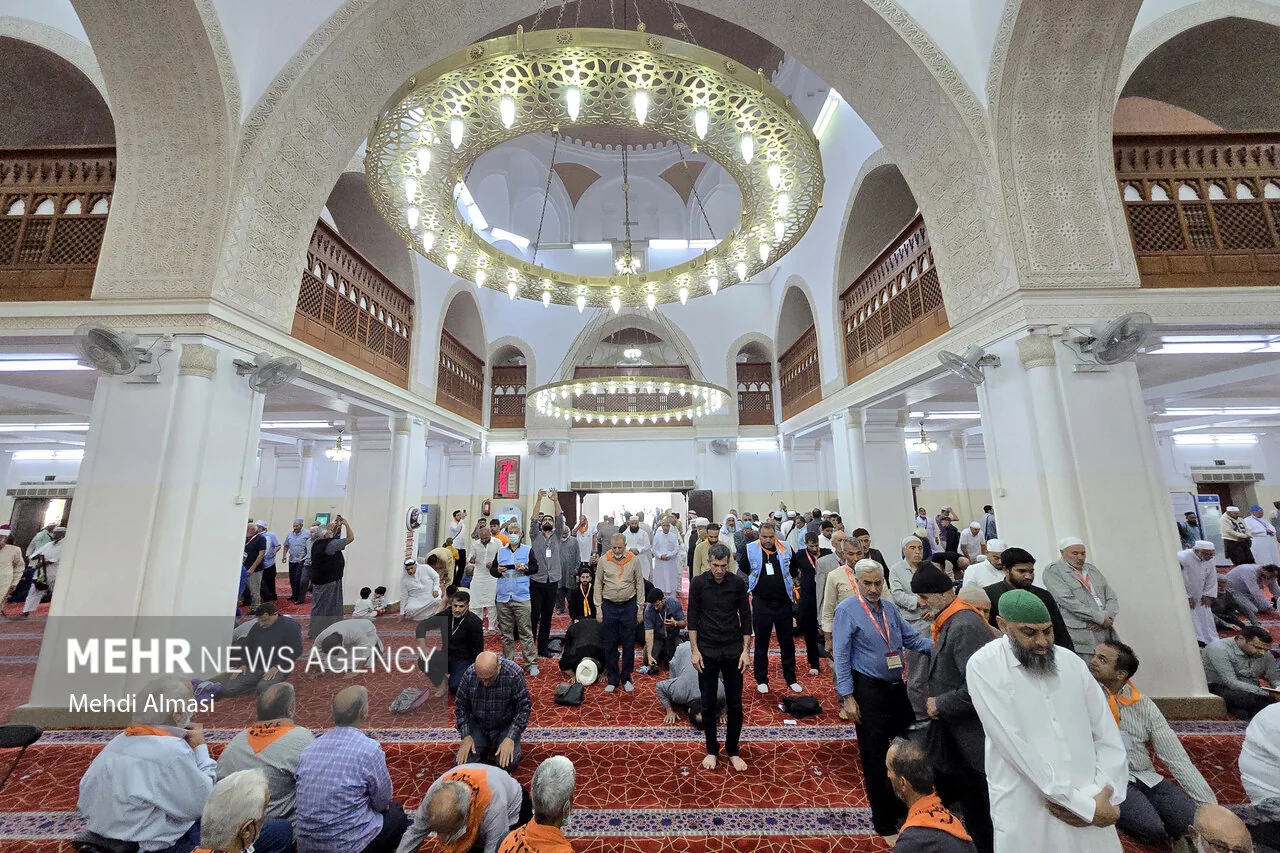
The architect did not erase the memory, he built it
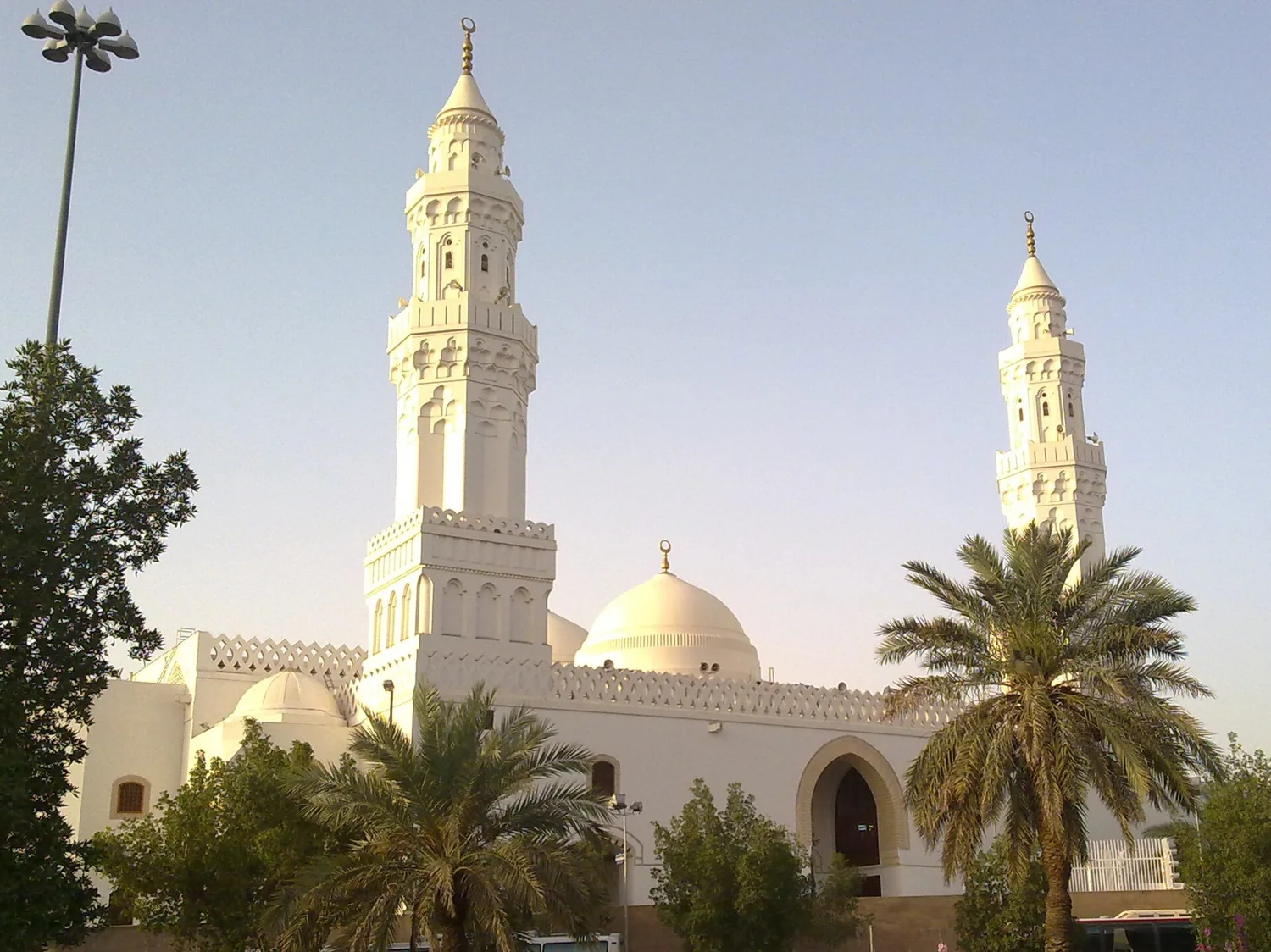
Where the old niche stood, El-Wakil placed a marker, set beneath a second, false dome linked to the real one. That is why the building carries two domes when only one covers a prayer space.
In other words, the building itself tells the passage from one direction to the other. It no longer keeps the two niches, but it keeps the fact that there were two, and it says so in its silhouette, visible from the street.
What the change cost the builders
One detail often goes unnoticed in this story: the day the direction changes, a technical problem appears, and it never goes away again.
As long as you pray toward a point, you must know where it is. From Medina, a few hundred kilometres away, the answer is intuitive. From Cordoba, Djenné or Xi'an it is not intuitive at all: finding the direction of a point on a sphere requires geometry, tables and instruments. Muslim astronomers would devote centuries of work to it, and the earlier episodes of this section describe what that produced, mosques oriented by the sky rather than by a compass, and errors measured in hundreds of kilometres at the far end.
So this half-turn of a few seconds did not merely change a direction. It created a permanent problem of calculation for everyone who would build afterwards, everywhere, and that problem is the real subject of this series.
What this episode does not say
Three cautions. No year is shown for the change of qibla: it is dated to 15 Sha'ban of the year 2 of the Hijra, which converts to 623 or 624, and showing a figure would settle what the sources do not.
We do not name the ruler reigning in 1987: that is political ground and adds nothing to the subject. The architect is named, because his work explains the end of the story.
Finally, we say nothing of the contemporary status of Jerusalem, nor of any event later than the Ottoman period. The seventh-century fact stands on its own.