
Home › Blog › The endowments of Hürrem Sultan
Fez, Morocco · 8 min read · 2026-08-23
Founded by a woman in 859, saved by a woman in 2016
The well-known fact is the record: the oldest teaching institution still operating anywhere in the world. What is less known is that two women, twelve centuries apart, made the same building exist, and that the restoration works uncovered a room nobody knew was there.
An heiress who does not invest her money
In 859, in Fez, according to the account the institution's tradition hands down, Fatima al-Fihri is the daughter of a wealthy merchant. When their father dies, she and her sister Maryam inherit a considerable sum. Both had received an education, which was far from a given.
Fatima neither invests that money nor keeps it. She puts all of it into one building project: a mosque, then a school around the mosque, then a library. Her sister Maryam, for her part, founds the Andalusian mosque in the same city.
Sources place the foundation between 857 and 859, depending on whether they count the start of the works or their completion. We keep 859, the year most commonly cited.
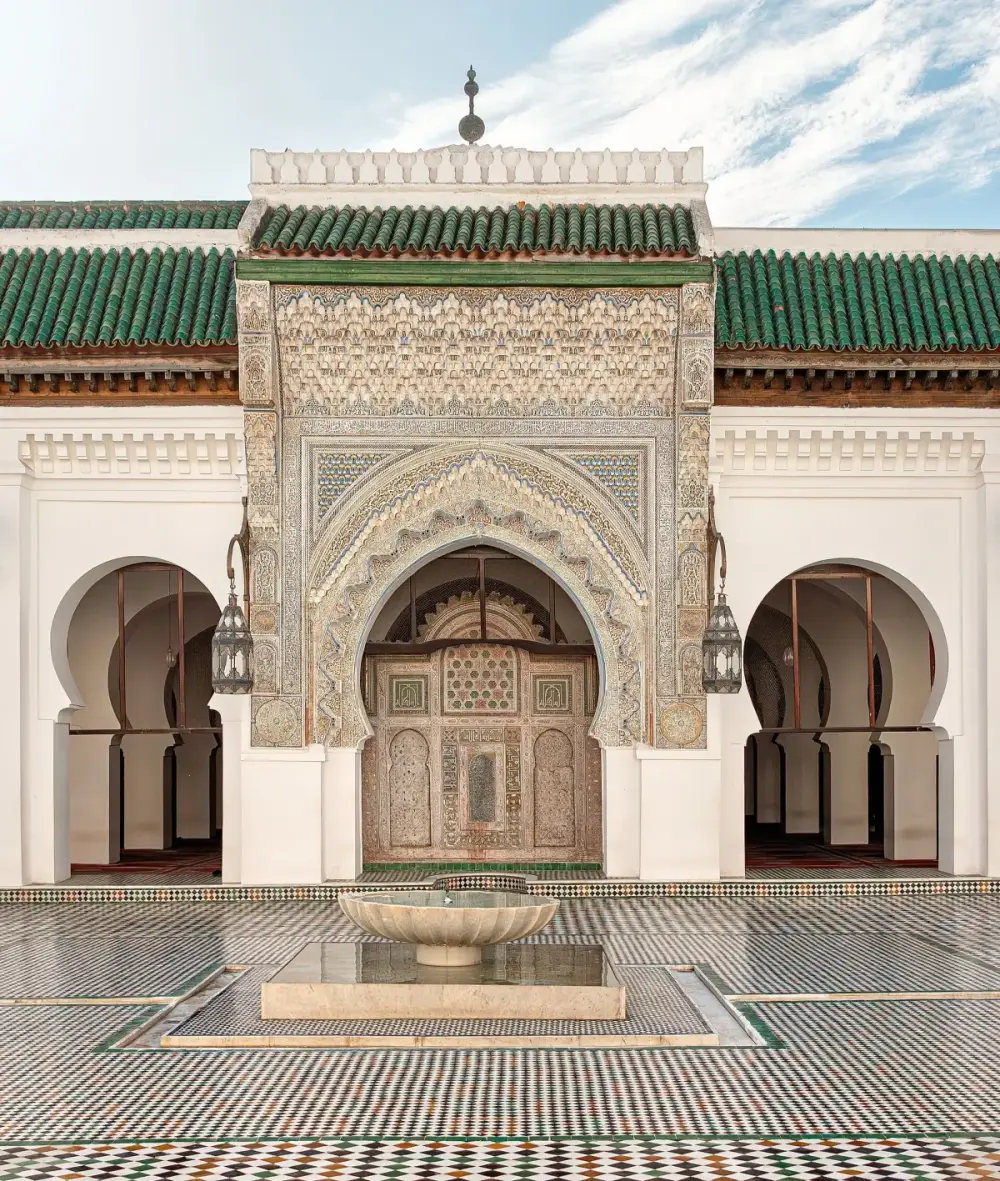
The name comes from a city two thousand kilometres away
The al-Fihri family is not from Fez. It comes from Kairouan, in Tunisia, more than two thousand kilometres away, and that is the name Fatima gives her foundation: al-Qarawiyyin, literally "those of Kairouan".
The detail says something about the period. A family of migrants gives its host city a public building named after the city it left, and that name outlives them by twelve centuries.
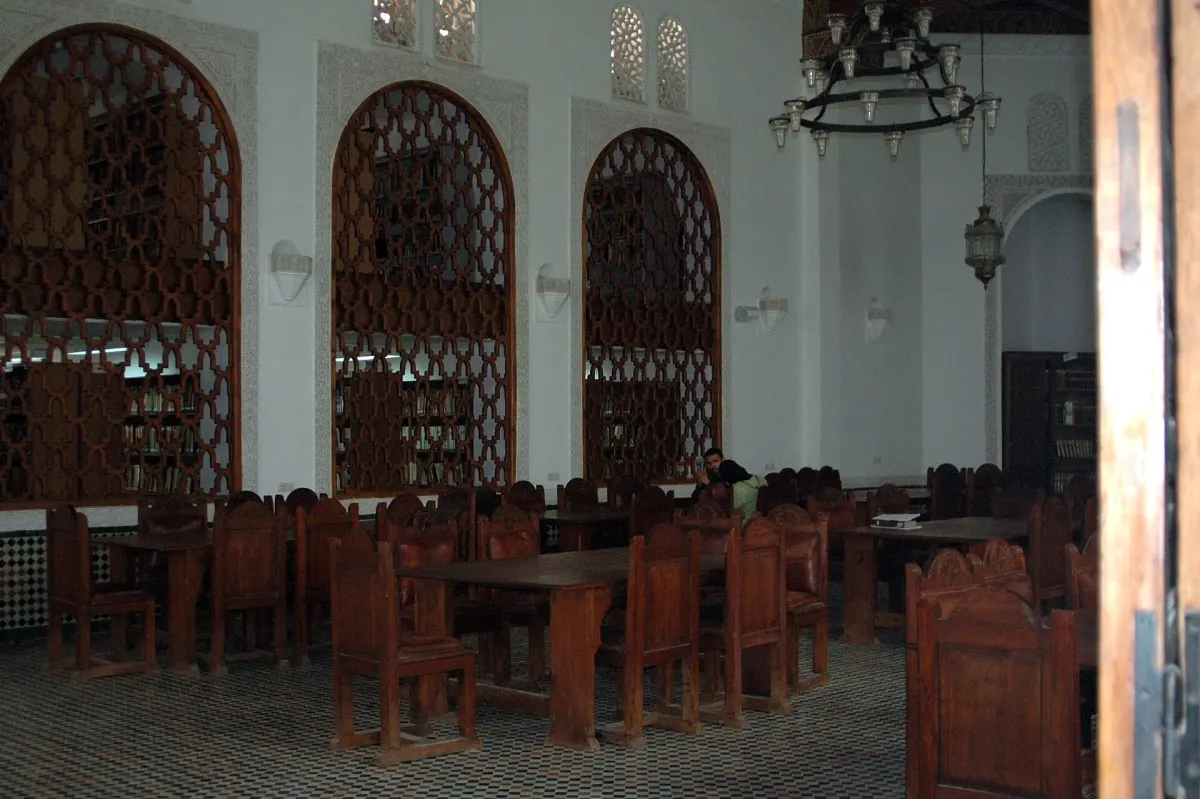
What the library holds
The collection numbers roughly four thousand rare manuscripts and books. Among them are a ninth-century copy of the Quran and a manuscript on jurisprudence in the hand of Averroes, Ibn Rushd.
Other items are commonly cited, including a copy of Ibn Khaldun's Muqaddimah and what is presented as the oldest known medical diploma, dated 1207. We report both mentions as they circulate: they rest on how the collection is presented, not on a comparative study we have consulted.
The library is described as having operated continuously since the tenth century, which would make it the oldest still open in the world.
The university claim, and why we do not settle it
Al-Qarawiyyin is often presented as the oldest university in the world. Guinness and UNESCO recognise it as such.
Historians dispute the claim, pointing out that the institution functioned as a madrasa until it was integrated into the Moroccan state university system in 1963, and that the word "university" describes an institution of a different kind, born in medieval Europe.
We do not settle that debate, and so we will never write "the first university in the world". What is uncontested, and more than enough, is that the same teaching establishment has been running on the same spot for eleven centuries.
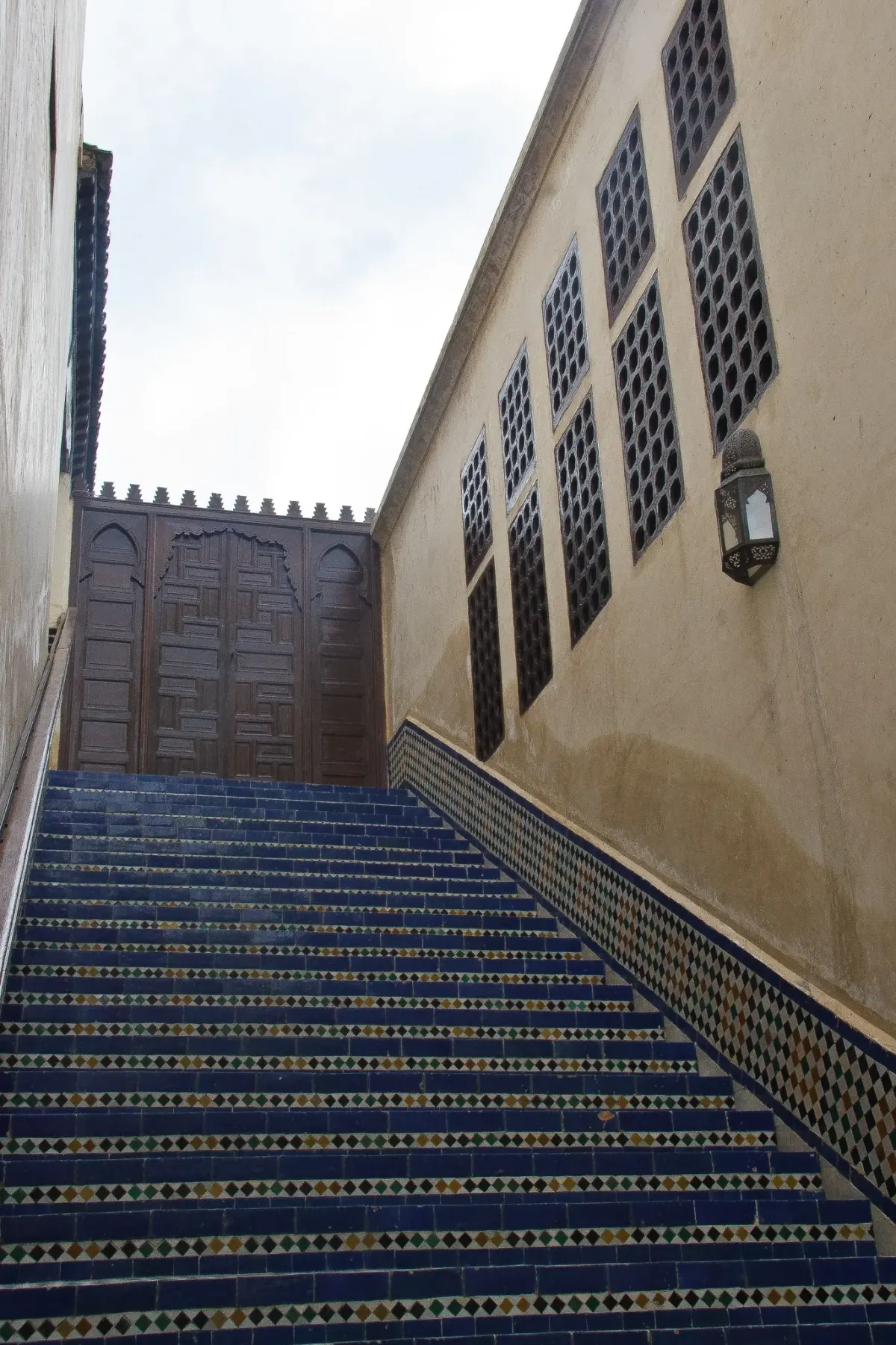
The second woman
By the early twenty-tens, the building is in a bad way. Damp, blocked gutters, cracked beams, broken tiles: the library and its manuscripts are at risk.
In 2012, the Ministry of Culture entrusts the survey and then the works to an architect, Aziza Chaouni. She was born in Fez. The person who saves the building comes from the city that houses it.
Four years of work follow: humidity and temperature control, a complete overhaul of the drainage system, solar panels. The library reopens in 2016.
What was taught there
The teaching was never limited to theology. Alongside Quranic sciences and Maliki law, the curriculum covered grammar, mathematics, medicine and astronomy, in the tradition of the great centres of learning of the period.
Several well-known figures are regularly named among those who studied or taught there, Ibn Khaldun and Leo Africanus first among them. These attributions come from the institution's own tradition and from later accounts, so we mention them without turning them into established biography.
One point is worth holding on to. In an eleventh-century city, an establishment founded by a woman was teaching the sciences of its time to generations of students, and it did so for long enough that the thread was never broken.
A library open again
The 2016 reopening did not only concern researchers. The restoration made room for a reading space accessible to visitors, and the most fragile manuscripts were placed under controlled humidity and temperature.
The oldest pieces are no longer handled freely, which is what allows them to still exist. That is the ordinary paradox of a living heritage: it stays open by being protected.
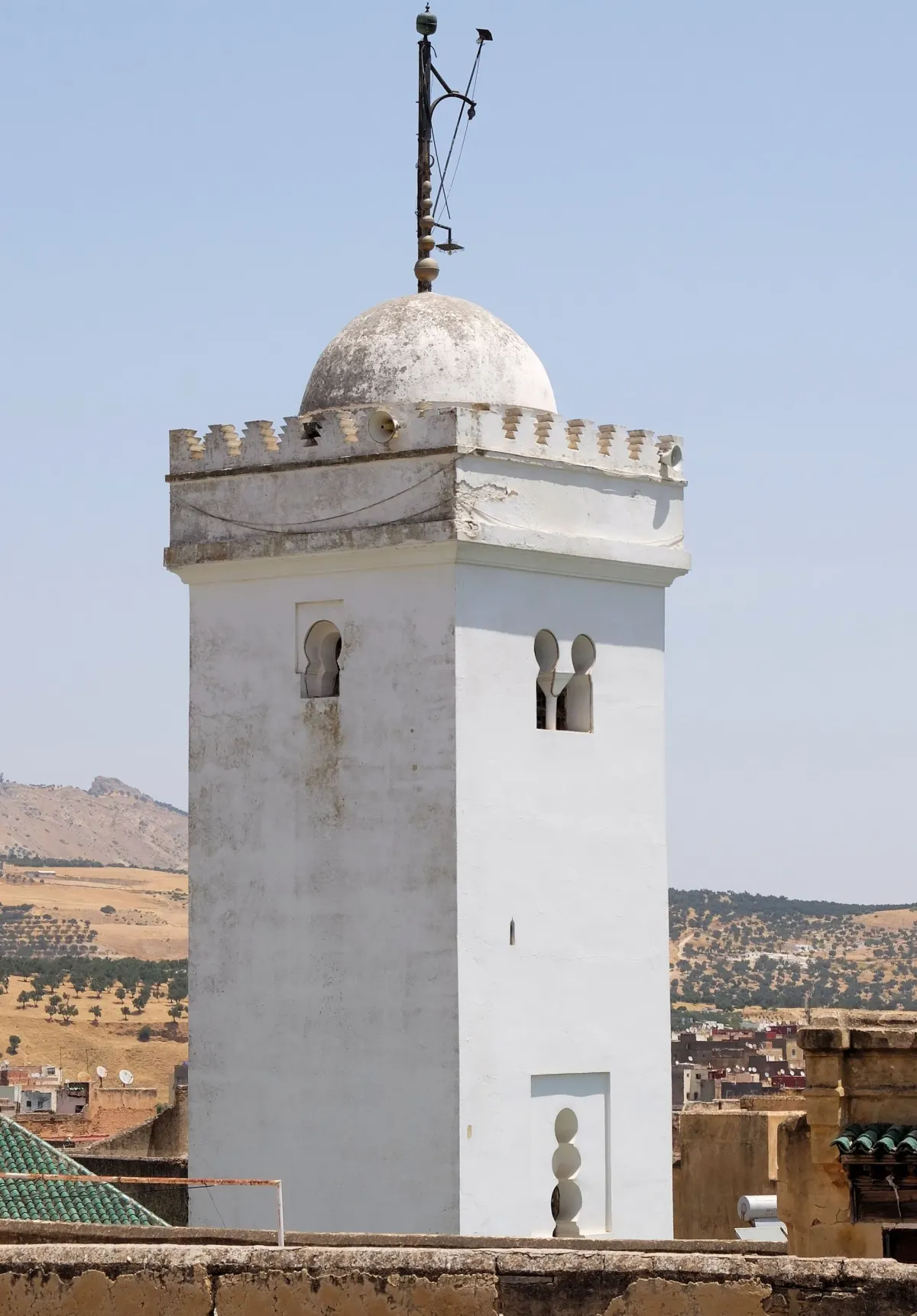
The room nobody expected
The discovery comes during those works.
Taking down partitions and opening sealed doors, the team uncovers several forgotten spaces. In one of them stands a twelfth-century openwork wooden cupola, described as a roofing type of rare delicacy, hidden for no one knows how long.
Nobody knew it was there. In a building studied, visited and documented for centuries, an entire room had escaped everyone's notice.
What we do not say
We give no life dates for Fatima al-Fihri. Tradition places them around 800 to 880, but they are too uncertain to assert.
We add no fine biographical detail about her. The account of her foundation comes to us from a fourteenth-century chronicle, five centuries after the events, and it is more or less the only source we have.
This has to be said plainly: several historians doubt it. They note that no earlier text mentions Fatima al-Fihri, and that the account surfaces very late. We do not remove her from the record for that, because it is the institution's constant tradition and nothing contradicts it. So we write what that tradition reports, without turning it into a demonstrated fact.
What is not in question, on the other hand, is the building. It is there, it is dated, and it works.
And we write that the building "never closed" rather than "without interruption". The nuance is not cosmetic: continuity of use across eleven centuries is attested in broad terms, not documented year by year.
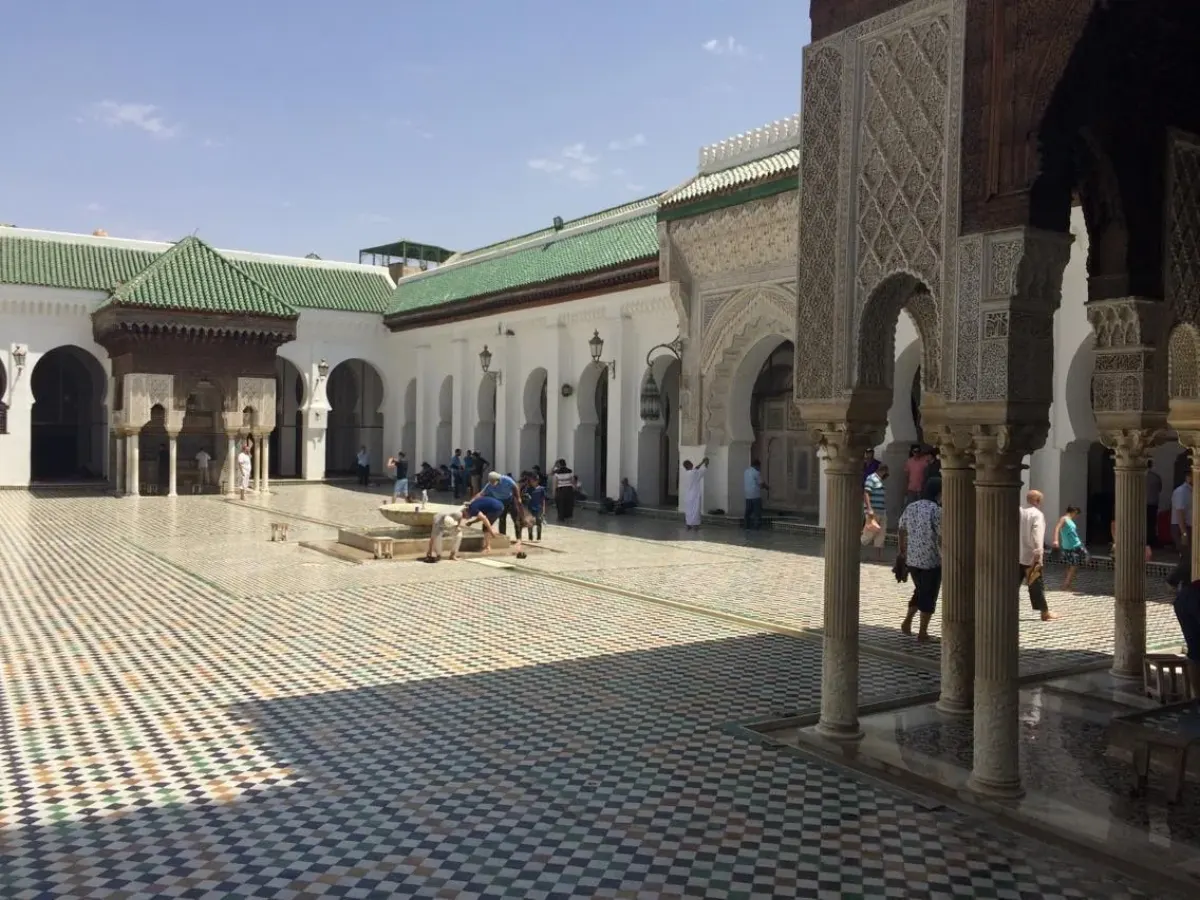
Two women, one building
The pattern is not isolated. We met it already on the pilgrimage road, where Zubayda, wife of caliph Harun al-Rashid, endows a water supply system towards Mecca in the ninth century, and where Mihrimah Sultan funds its major repair seven centuries later.
Here the gap is twelve centuries, and it concerns the same building. One woman founds it with her inheritance in 859. Another saves it with public money in 2016. Between the two, eleven centuries during which it never closed.
To go further, our article on Hürrem Sultan's endowments, and the one on Sinan, architect of the empire.