
Home › Blog › Badshahi, built in two years
Pakistan · Mughal architecture · 7 min read · 2026-09-21
Badshahi: the largest Mughal mosque, built in two years
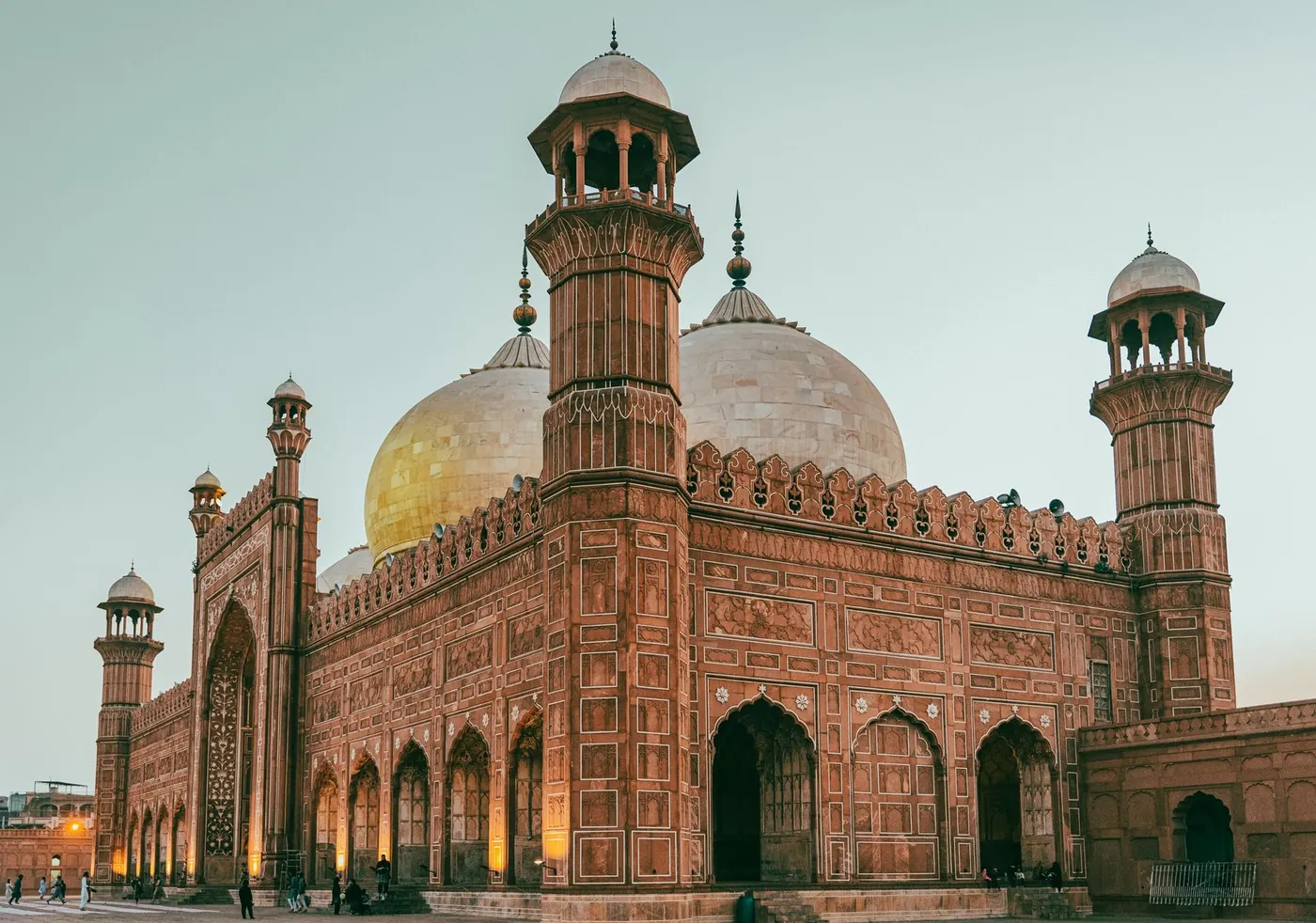
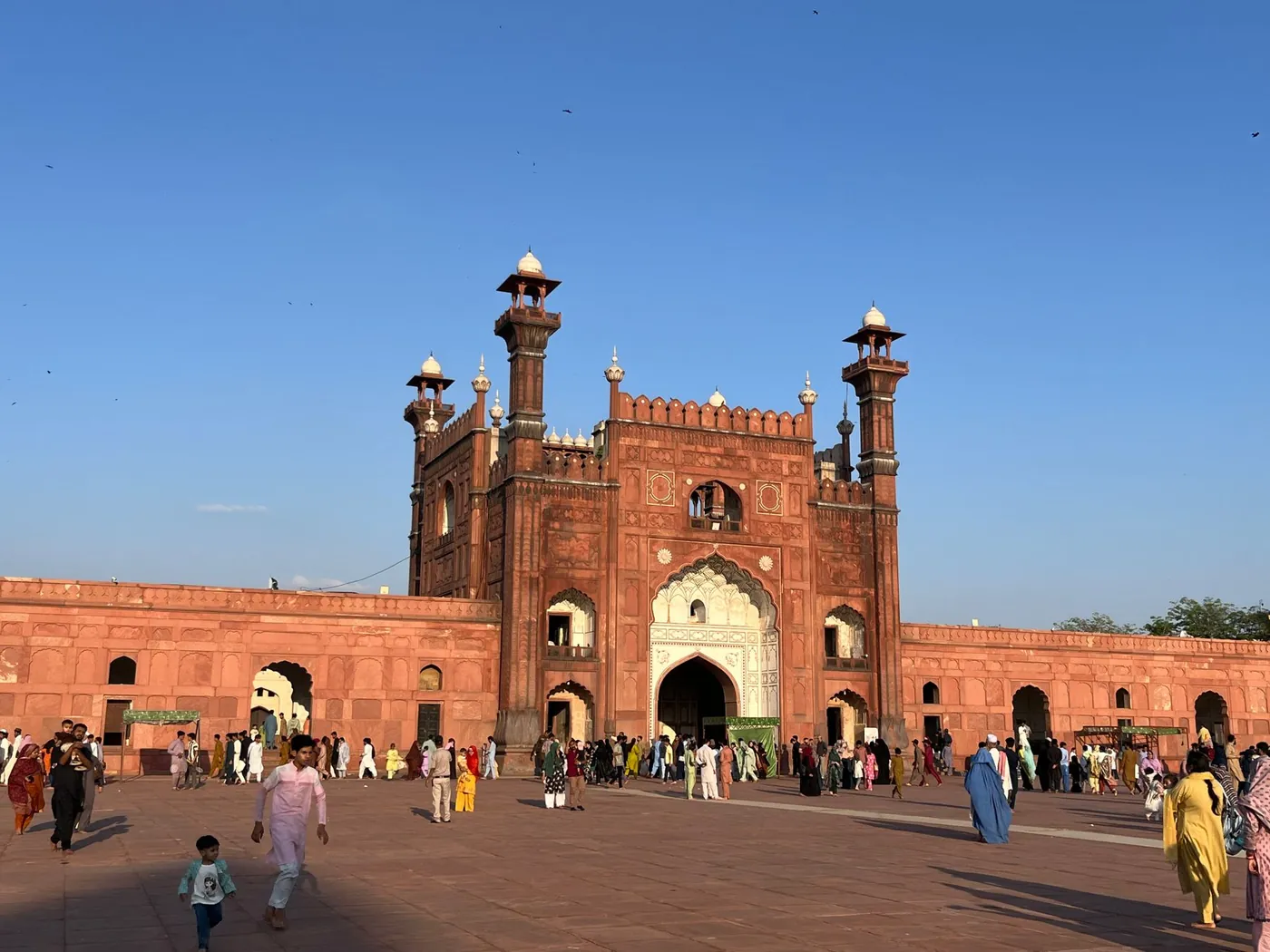
Work on the Badshahi Mosque in Lahore began in 1671 and finished in 1673. Two years for the largest religious building the Mughals ever put up, when comparable mosques took six or seven.
An imperial commission, a two-year site
The mosque was commissioned by Aurangzeb, the sixth Mughal emperor, and the work was entrusted to Muzaffar Hussein, known as Fidai Khan Koka, the emperor's foster brother and governor of Lahore. The building opened in 1673. Two full years between commission and opening.
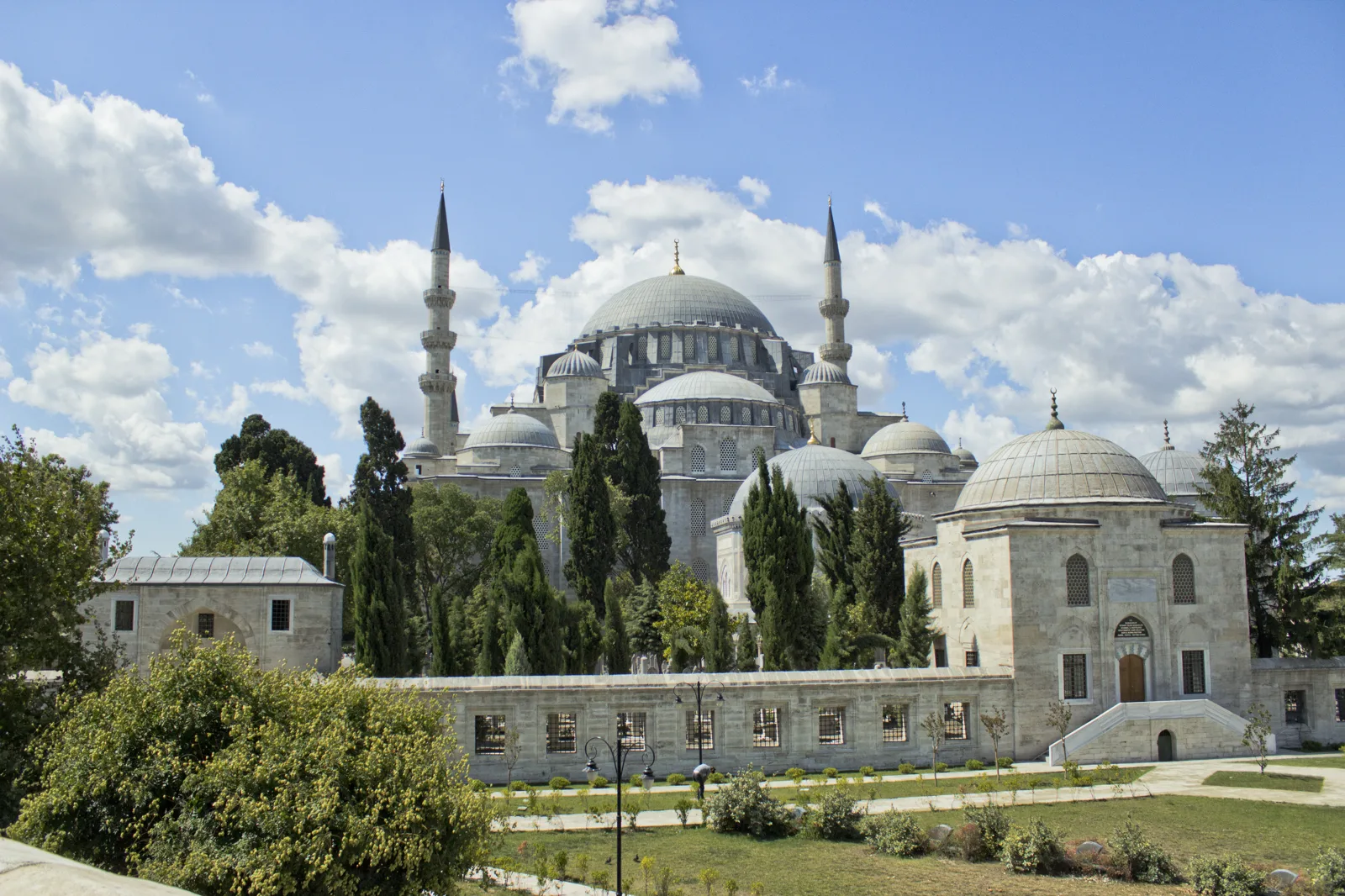
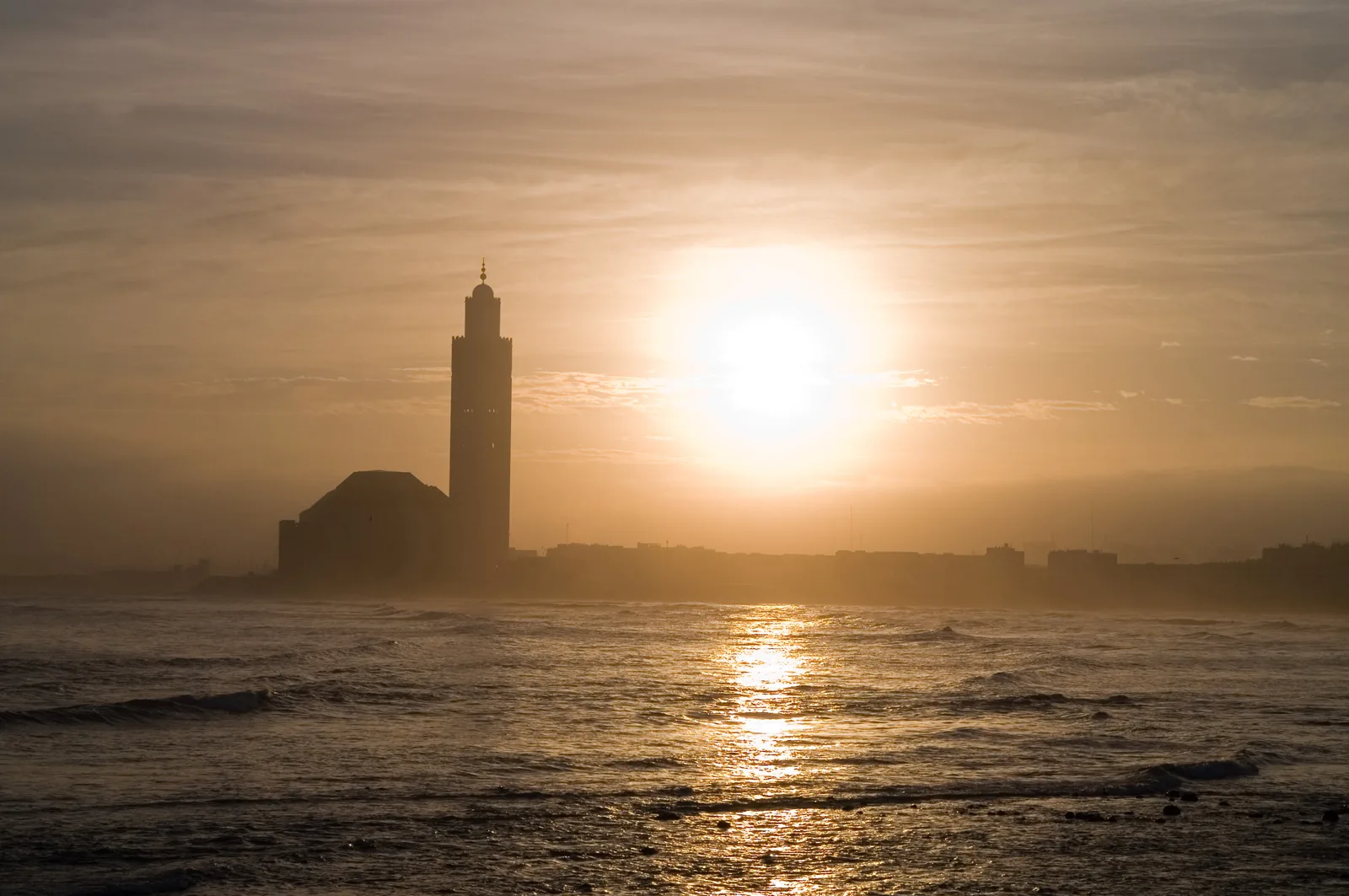
The figure stands out because nothing in the same class matches it. The Süleymaniye in Istanbul took seven years, from 1550 to 1557. The Selimiye in Edirne took six, from 1569 to 1575. Closer to us, the Hassan II Mosque in Casablanca kept its contractors busy for seven years, from 1986 to 1993, with cranes and prestressed concrete. And the Jama Masjid of Delhi, Badshahi's Mughal elder sister, employed some five thousand workers from 1650 to 1656.
What brick allows
Part of the answer lies in how the walls went up. They are not solid sandstone but small fired bricks, bedded in a hydraulic lime mortar made from kankar, the nodular limestone common in the Punjab plain. The red sandstone you see is a facing laid over that brick structure, and white marble appears only as inlay and on the domes.
On a calendar, the difference from cut stonework is considerable. Brick is made in series beside the site, it dries and fires in batches, it is laid quickly, and it tolerates a large workforce advancing on several fronts at once. Stone imposes the quarry, the haul, cutting to template and fitting piece by piece, four operations that follow one another.
It faces the fort, and the fort faces it
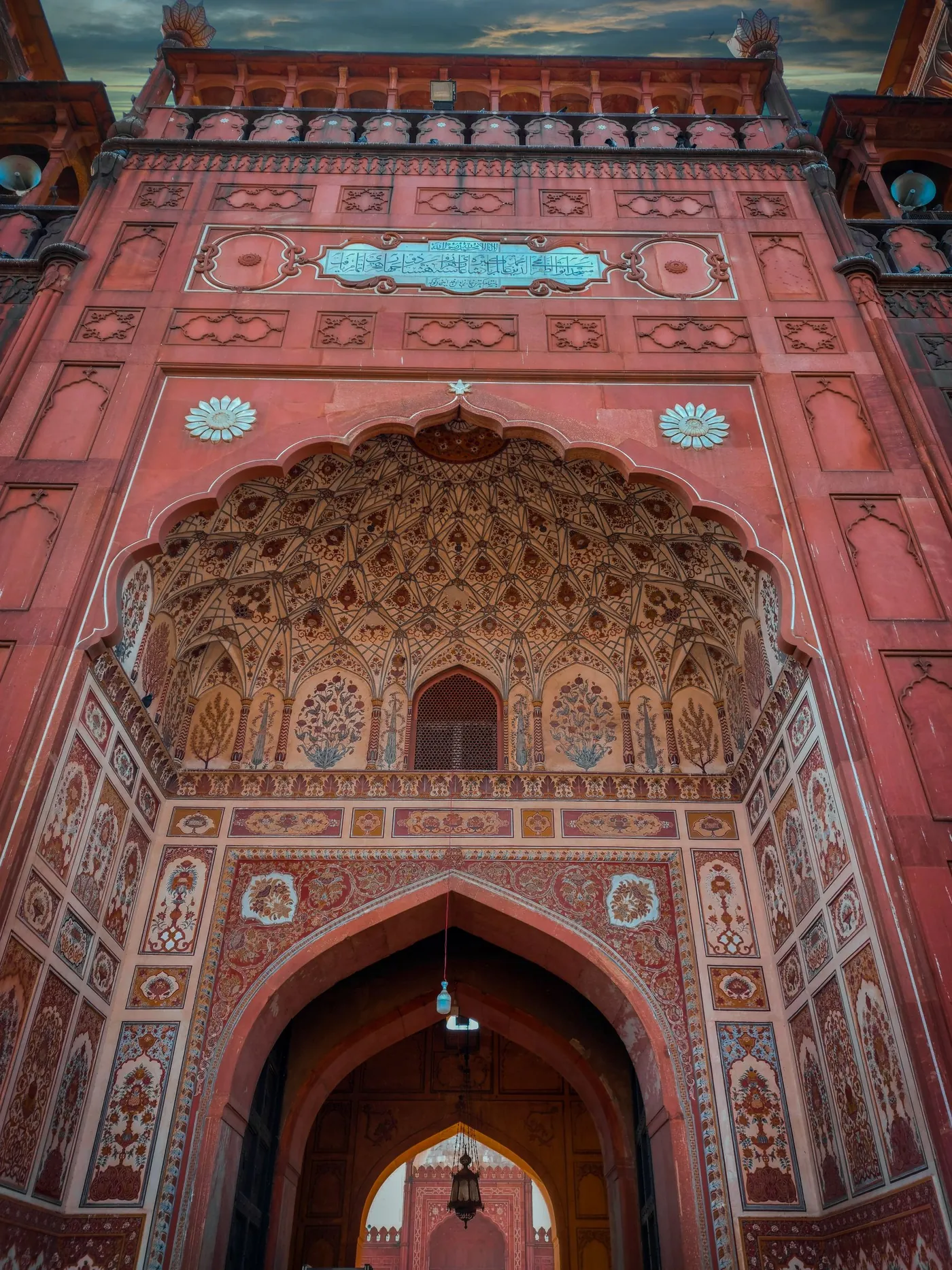
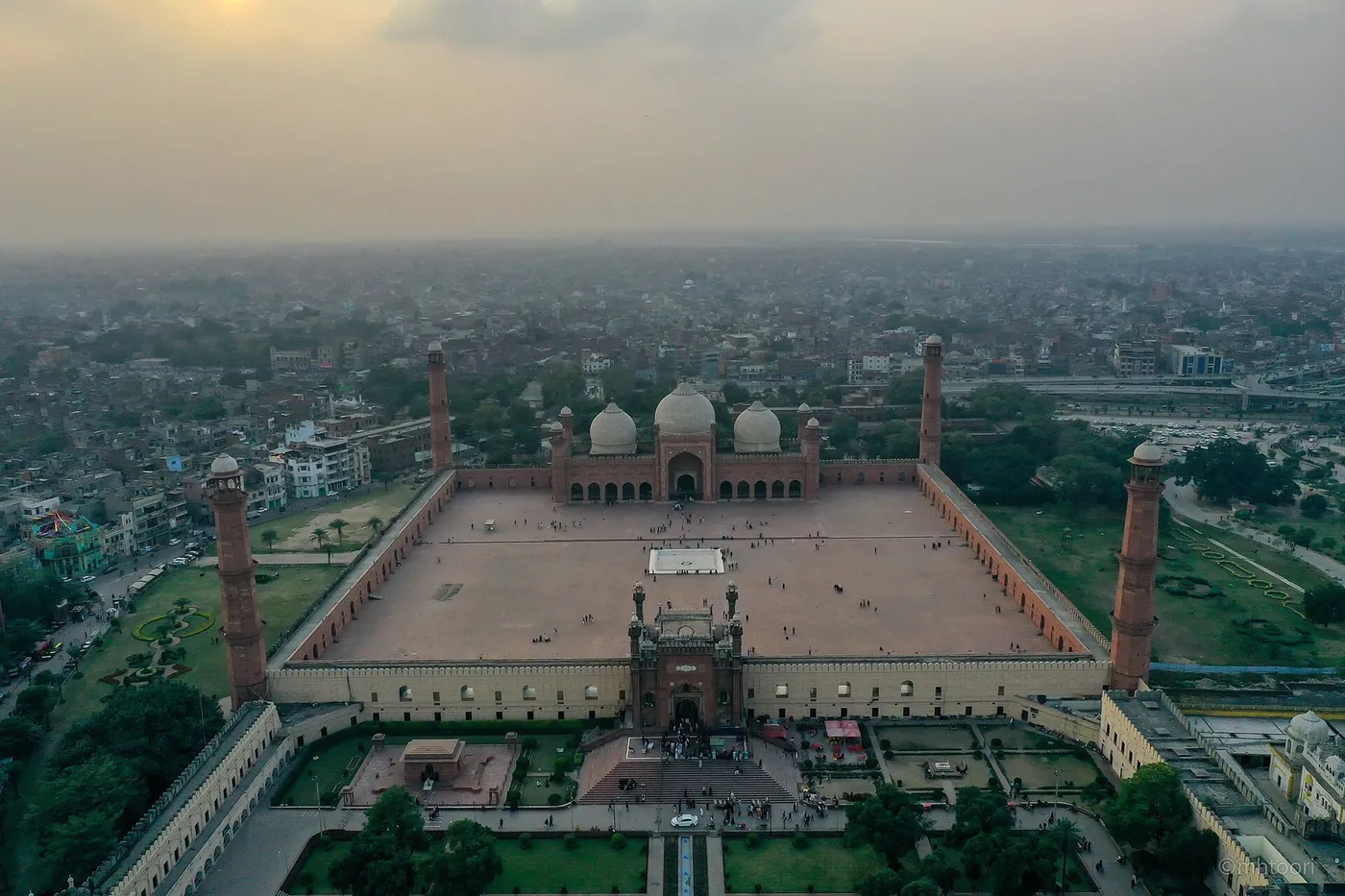
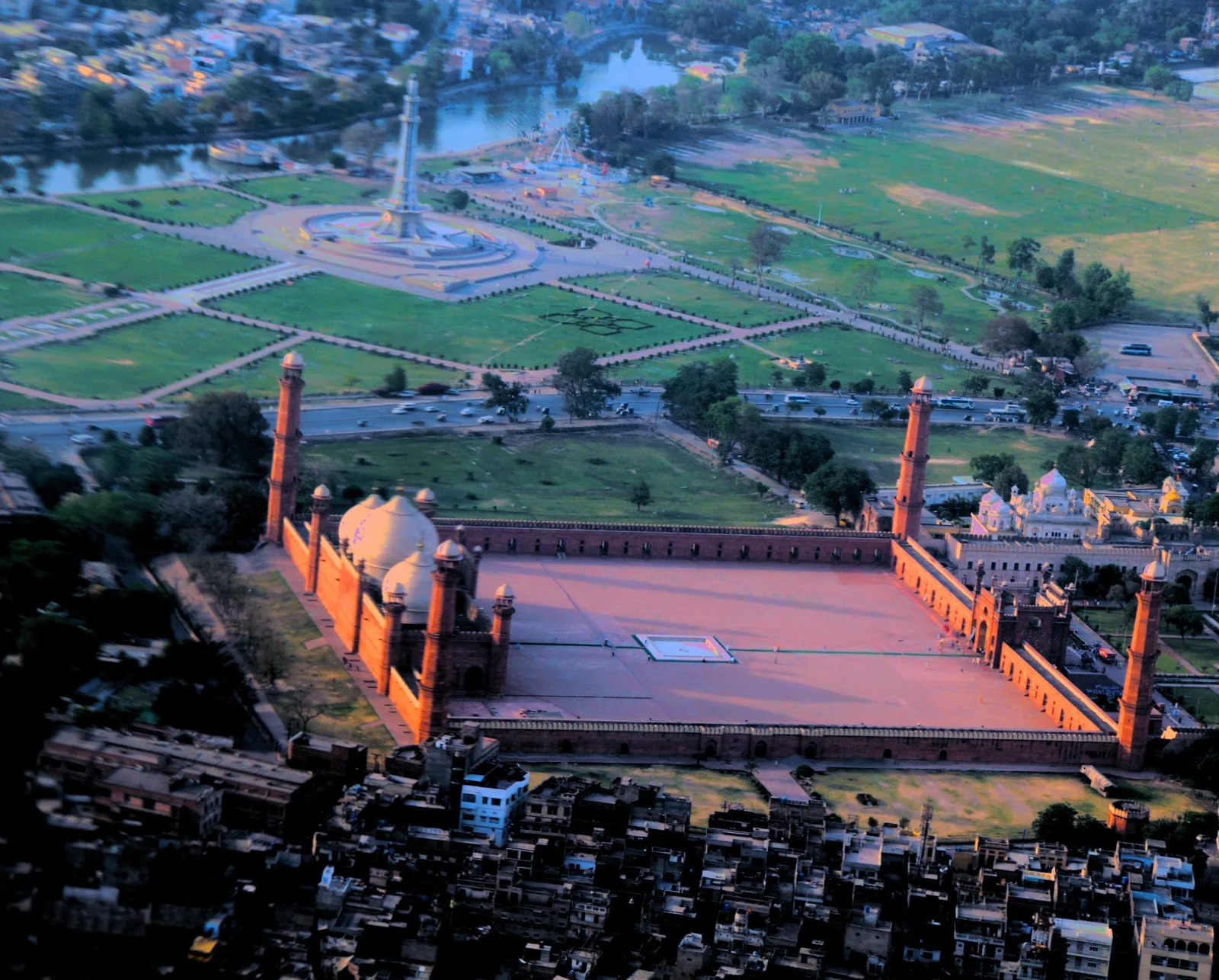
The mosque stands opposite Lahore Fort, across an esplanade. The two buildings are tuned to each other: the Alamgiri Gate, the fort's monumental entrance facing the mosque, was opened by Aurangzeb in the same years. The emperor treated both works as a single piece of city-making, a palace gate and a mosque gate answering each other on one axis.
That proximity also explains some of the speed. The imperial workshops, the suppliers, the brickyards and the trades were already on site, gathered for the fort. Building the mosque meant extending an existing operation rather than starting one from nothing.
Fifty-five thousand or one hundred thousand: what is being counted?
Published capacity figures do not agree, and the gap is too wide to be rounding. You read fifty-five thousand, you read one hundred thousand. The courtyard measures about 25,600 square metres, roughly 276,000 square feet, and it carries most of the difference: depending on the density assumed per square metre, the same surface yields widely separated results. The prayer hall is credited with something on the order of ten thousand.
A capacity figure therefore depends on an assumed density as much as on a surface. When two sources contradict each other here, the first question to put to them is what they are filling, the hall alone or the hall and the courtyard, and with how much room per person.
Three centuries without a rival
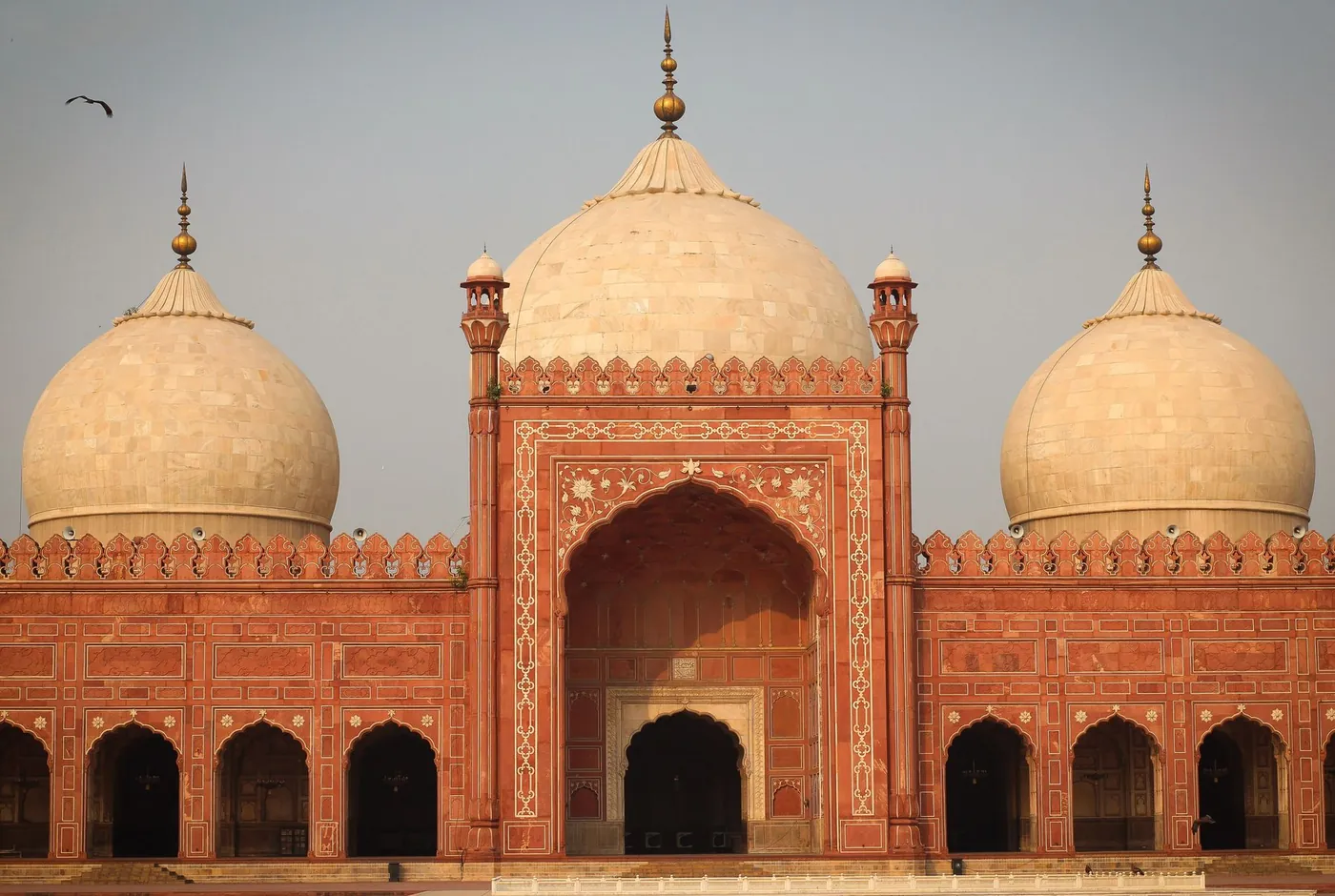
The ranking is better established. The Badshahi Mosque remained the largest in the world for more than three centuries, until the late twentieth century and the completion of the Faisal Mosque in Islamabad in 1986. No mosque built between 1673 and that date exceeded it in area.
It has been on the tentative list for World Heritage status, the step that precedes any inscription, since 1993. The neighbouring fort has been a World Heritage Site since 1981.
Two centuries of other uses
The building's history after the Mughals is made of breaks. In the nineteenth century, under the Sikh empire and then under British administration, the mosque served as a garrison and its surroundings as a military store. In 1852 the British authorities set up a commission, the Badshahi Mosque Authority, to return the building to worship, which was done in 1856.
A full restoration was launched only in 1939, driven by Sikandar Hayat Khan, and it ran for two decades, completed in 1960 at a cost of 4.8 million rupees. The minaret domes were replaced and the facings repaired. The building visitors see today therefore took twenty-one years to repair, ten times longer than to build.
What two years mean
The speed at Lahore comes from a sum of ordinary choices: a brick structure produced on site, a stone facing rather than solid masonry, a repetitive plan in which the same bays and the same arches return from end to end, teams already assembled for the fort next door, and a patron able to pay without interruption.
The same logic runs the other way on slow sites. A mosque whose every stone is cut to template, or whose dome demands successive trials, advances at the pace of its slowest operation. For another material constraint that decided a form, see why tiled mosques are blue and turquoise.
Discover
Mosques mentioned in this article
Badshahi Mosque
Lahore's "imperial mosque", a Mughal colossus of red sandstone that remained the world's largest for over three centuries.
Süleymaniye Mosque
Sinan's masterpiece overlooking the Golden Horn, dedicated to Suleiman the Magnificent.
Hassan II Mosque
A giant standing on the Atlantic: a 210-metre minaret, a retractable roof and Moroccan craftsmanship at its peak.
About this page's content: this site offers editorial and cultural content written with care and respect for the religious traditions concerned; it does not constitute a theological opinion or a source of religious authority. Despite our checks, errors, inaccuracies or approximations may remain. If you spot one, please let us know via the Contact page or by email at qibla.mosk@gmail.com, and we will correct it gratefully.