
Home › Blog › The Friday Mosque of Khiva
Central Asia · 7 min read · 2026-08-30
The Friday Mosque of Khiva: 212 columns, 25 older than the building
At Khiva, in Uzbekistan, the Friday Mosque looks like no other: no courtyard, no dome, no portal. From outside, a brick box. Inside, two hundred and twelve wooden columns carry a flat ceiling, and twenty-five of them are older than the building that shelters them.
A mosque with no façade
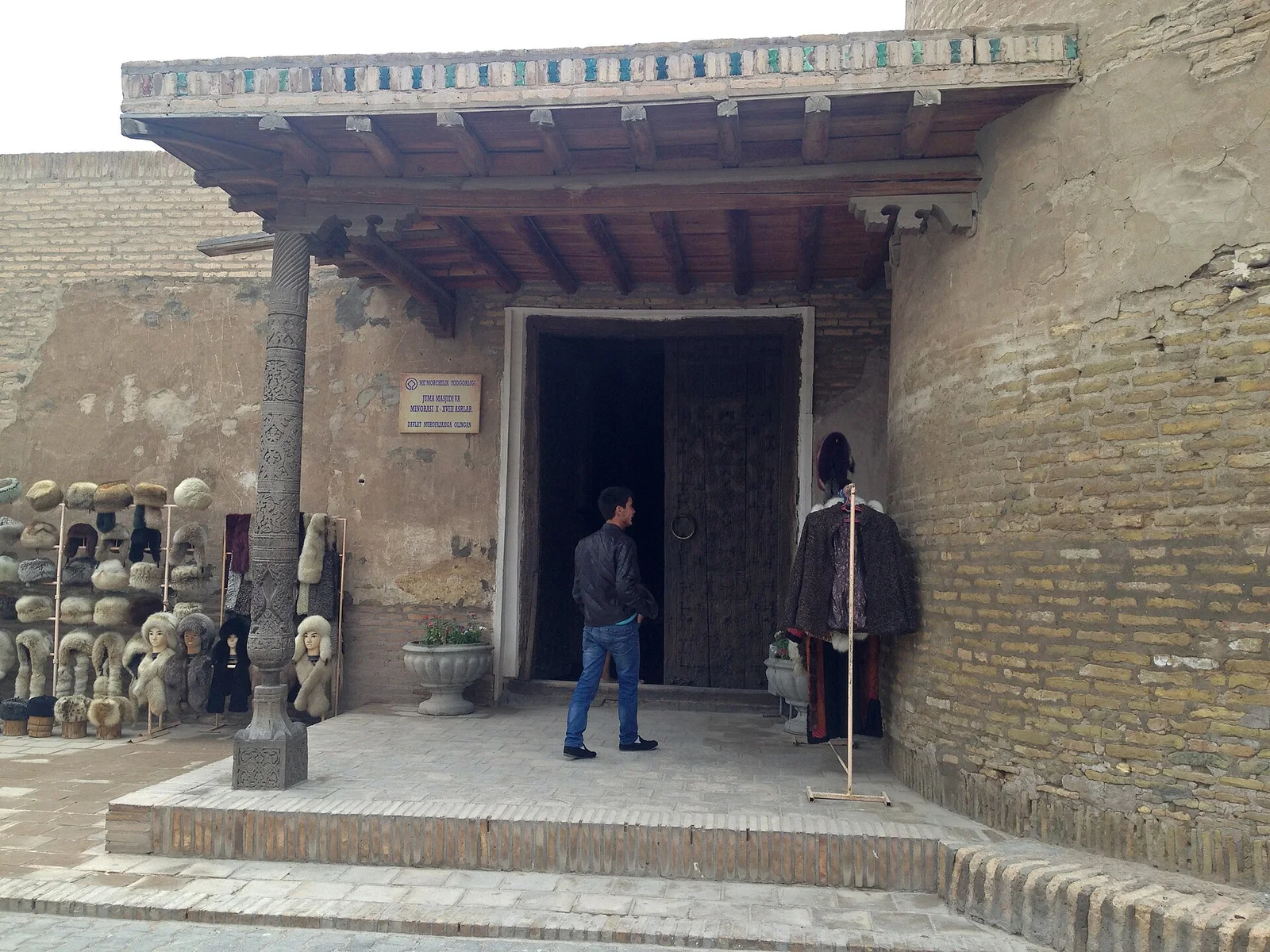
Islamic architecture has its signals: the dome you see from far off, the monumental portal announcing the way in, the courtyard organising the passage from outside to inside. The Friday Mosque of Khiva has none of them. From the street it is a low volume of mud brick with an ordinary door. From the neighbouring minaret it is a flat roof among the flat roofs of the old town. Nothing announces what is inside.
This is not a renunciation. It belongs to a family of Central Asian and Turkic mosques where the whole architecture is interior, and where the hypostyle hall, that is a hall carried by a forest of supports, replaces both dome and courtyard. The building is not there to be looked at; it is there to be walked through.
Two hundred and twelve columns, seventeen rows
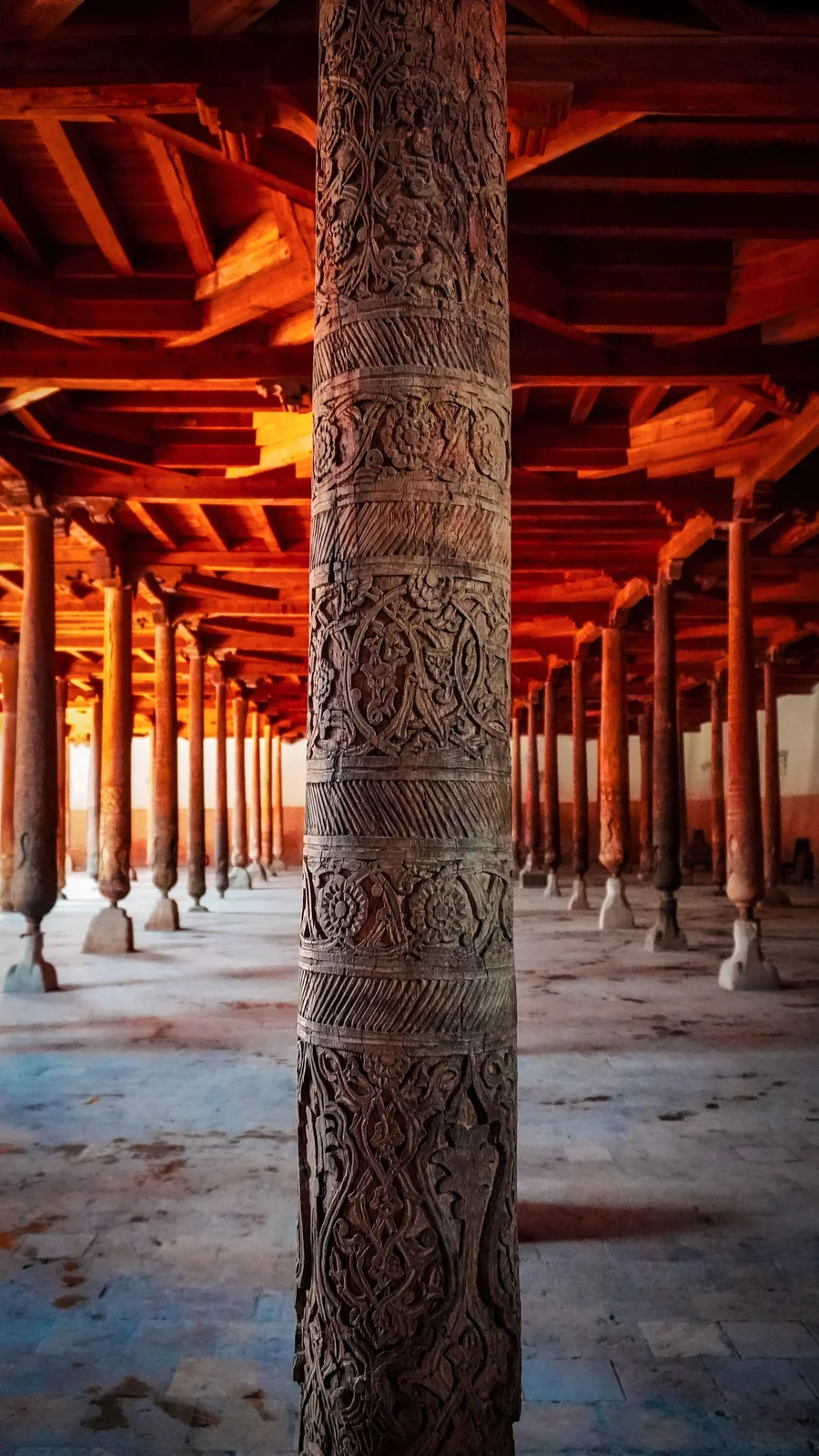
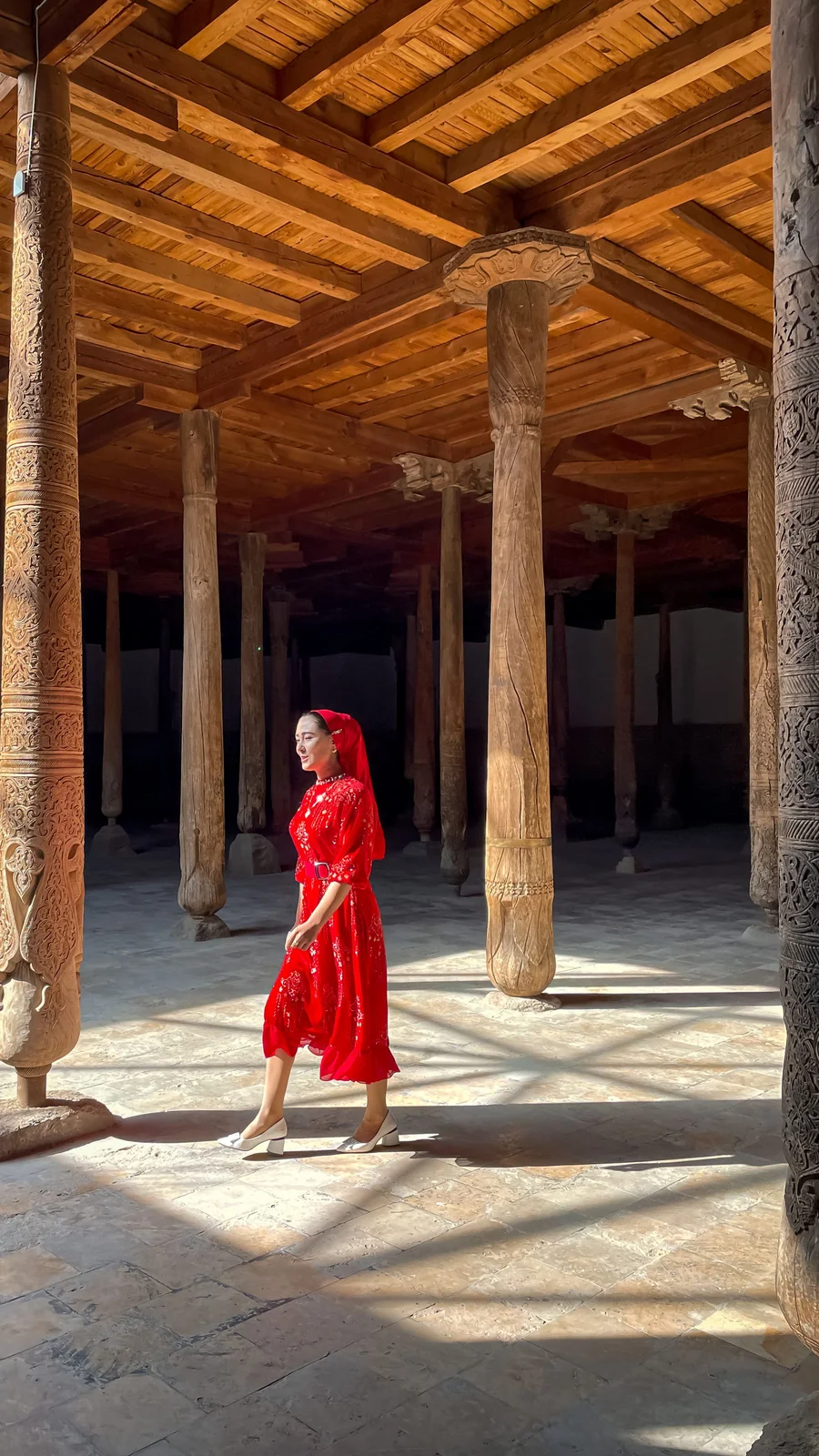
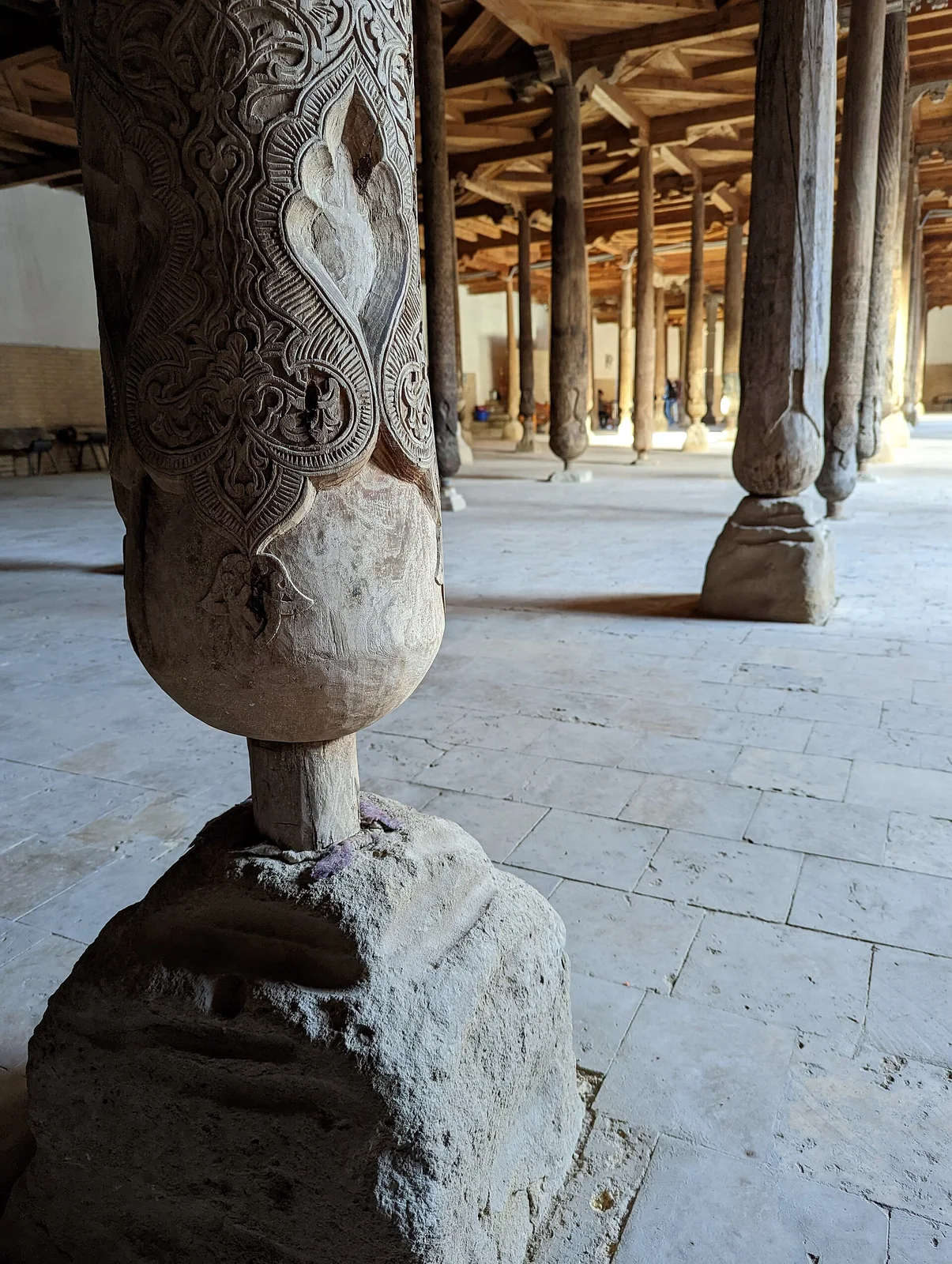
The hall measures roughly fifty-five metres by forty-six. The ceiling is flat, made of wood, and it rests on two hundred and twelve wooden columns set in seventeen rows. No column quite matches its neighbour: shafts are carved, capitals are carved, and the patterns change from one to the next.
There is no window. Not one. Blind walls on all four sides, and inside a half-light crossed by trunks. This is the point where the building stops being merely curious and becomes a technical answer to a climate: in a city where summer runs well past forty degrees, a hall with no side openings stays cool.
Three wells of light
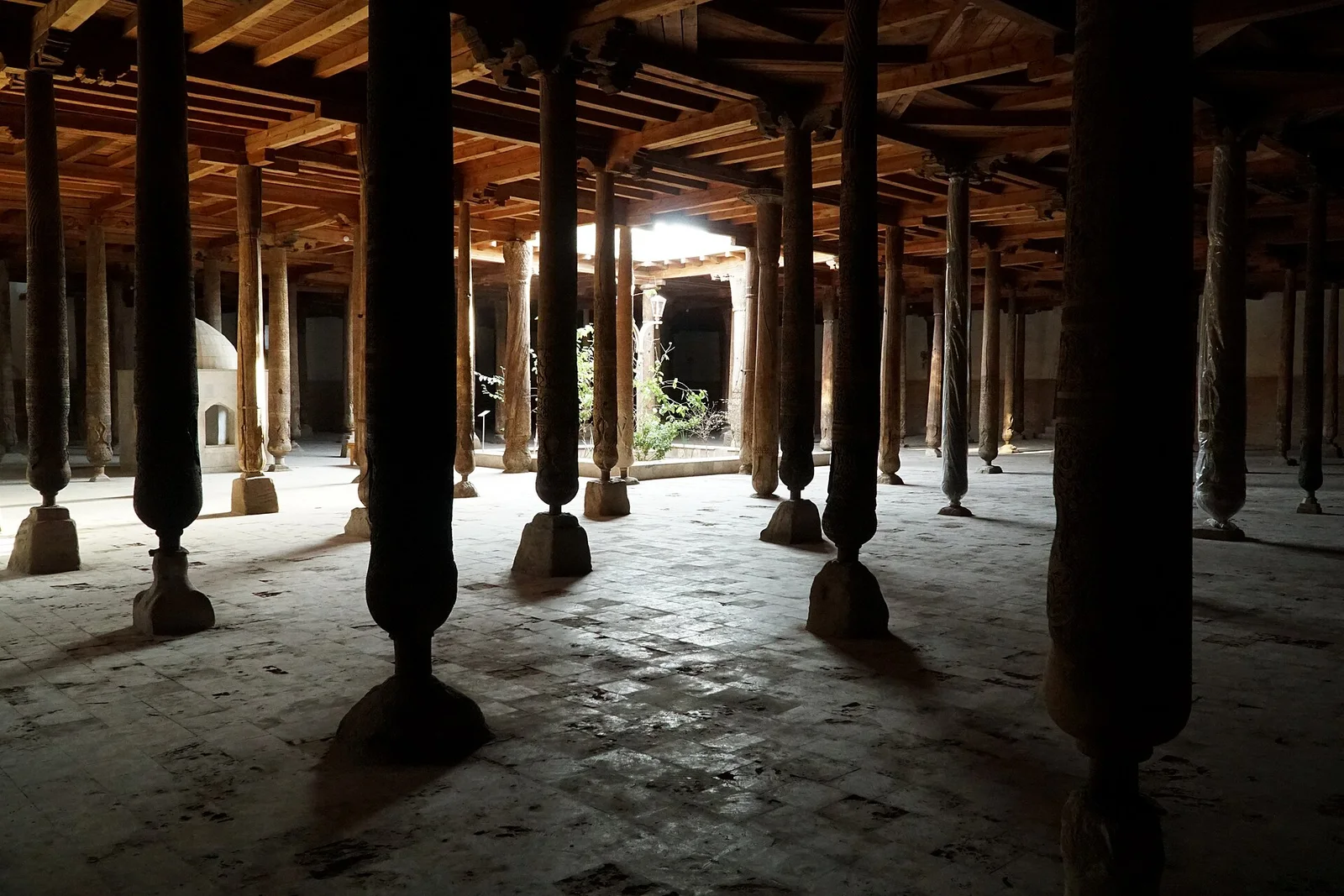
Light comes from above. The Uzbek state heritage register describes three wells opened in the roof: three gaps, three patches of daylight that travel across the floor through the day, and the rest of the hall left in half-darkness. Under one of these openings a tree has grown, and it is now one of the things visitors look for.
It is a very different lighting scheme from the great domed mosques, where light comes down from a pierced drum in a single mass. Here it is fragmented, mobile, and it never shows the whole hall at once.
The columns are not the same age
This is the main fact, and it cannot be seen. Of the two hundred and twelve columns, twenty-five are much older than the hall that shelters them: according to the state register they date from the tenth to the sixteenth century. Four of them go back to the tenth or eleventh century and carry a Kufic inscription carved in high relief; they are now kept in the museum in Tashkent, and replaced on site.
| Period | Number | What sets them apart |
|---|---|---|
| 10th-11th century | 4 | Kufic inscription carved in high relief |
| Up to the 16th century | 21 more | Older carving, reused in the present hall |
| 18th-19th century | the rest | Cut for this building, ornament often painted |
The Soviet archaeologist V. L. Voronina sorted these columns into three periods by their ornament. That classification is what lets us say today that a single hall holds timbers eight centuries apart.
Kath, and what we do not know about it
Where do the older columns come from? The present hall was rebuilt at the end of the eighteenth century under Abdurrahman Mihtar, a senior official of the Khanate of Khiva; a marble slab kept in the mosque carries the deed of endowment, assigning land in two villages to its upkeep. The carpenters on that site did not recut everything: they salvaged timber from ruined buildings.
Local tradition brings that timber from Kath, the old capital of the region, and some accounts add that it was recovered from the river. The status of this information needs to be clear: the Uzbek heritage register itself presents it as a legend, not as an established fact. Many pages copy it without that caveat. We give it for what it is, a tradition, consistent with the dates but not demonstrated.
Where the sources disagree
Three figures circulate in two versions, and it is worth knowing before quoting them.
- The number of columns. Travel sites almost all write 213. The National Encyclopaedia of Uzbekistan and the state heritage register both write 212. We follow the two state sources.
- The year of the rebuilding. 1788-1789 in most authors, 1778-1782 in the state register. The gap is ten years and we have no way to settle it, so we write "at the end of the eighteenth century".
- The height of the minaret. 32.5 metres in the state register, 42 metres in the National Encyclopaedia. That gap is too large to be a rounding, and we give no figure at all.
A fact copied across ten sites is not ten sources. When two official records fail to agree, the honest thing is to say so rather than choose in silence.
A mosque inside a walled town
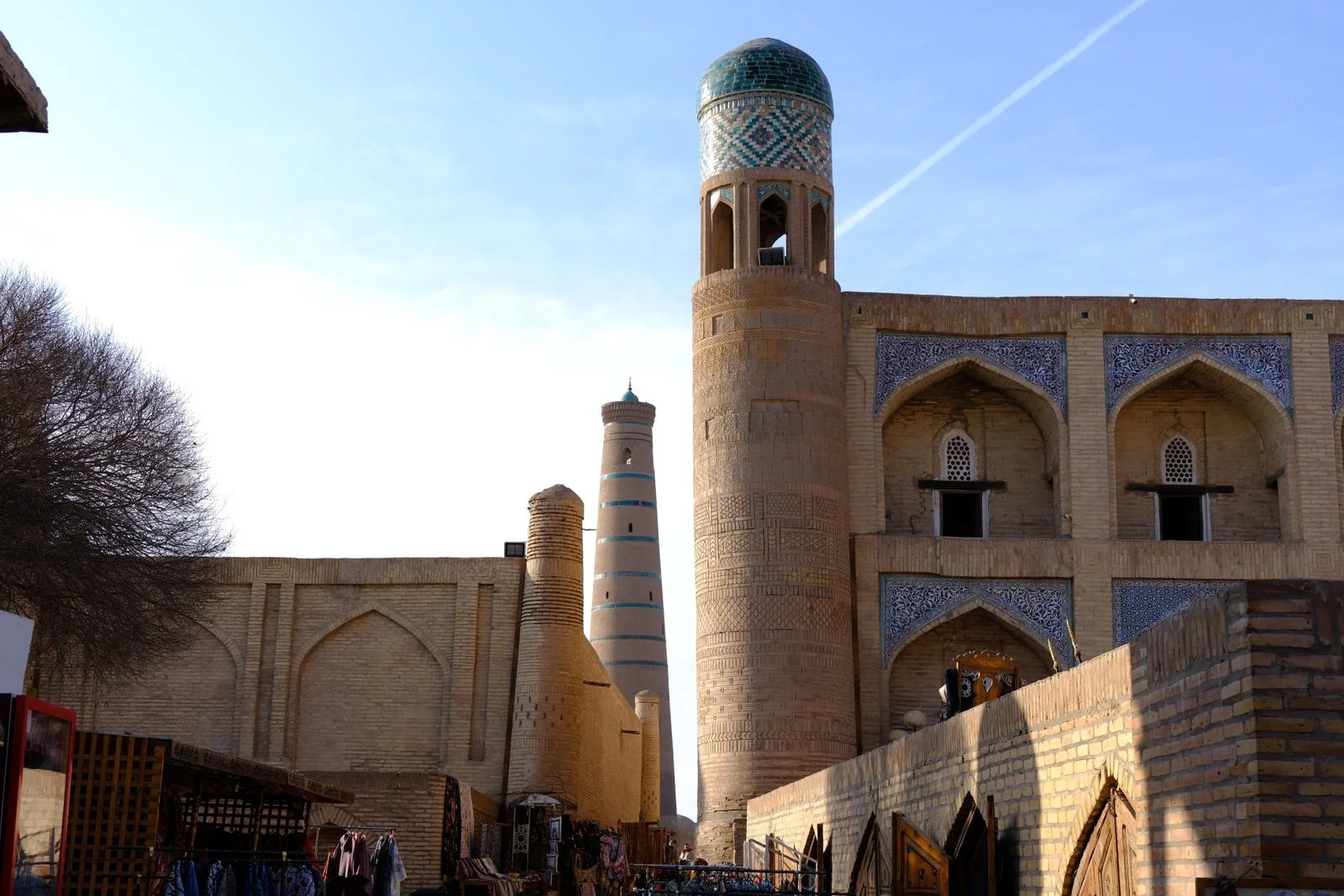
The mosque stands in the middle of Itchan Kala, the inner town of Khiva, ringed by mud walls and inscribed on the UNESCO World Heritage List in 1990. It is a complete urban ensemble, with its madrasas, gates and market, where the historic fabric was never dispersed. The Friday Mosque holds the position its function gives it: on the axis linking the west gate to the east gate, where everyone passes.
The site is mentioned as early as the tenth century by the geographer al-Muqaddasi, which gives the place of worship a continuity far older than the building standing there today.
The building was remade; the columns changed roofs
We are used to telling monuments through their walls: the foundation date, the architect, the dome. Here the walls are the youngest part of the whole. What crosses the centuries is a set of timbers taken down from one building and put back up in another, sometimes hundreds of kilometres away, sometimes eight hundred years later.
That is another idea of conservation, and a very common one in earth and timber architecture: you do not preserve an object, you preserve a use, and you pass on the pieces worth passing on. The building was remade. The columns only changed roofs.
See also: Samarkand, Sarajevo, Tirana: the mosques of Central Asia and the Balkans and the Kalyan minaret of Bukhara.
Discover
Mosques mentioned in this article
Blue Mosque (Sultan Ahmed)
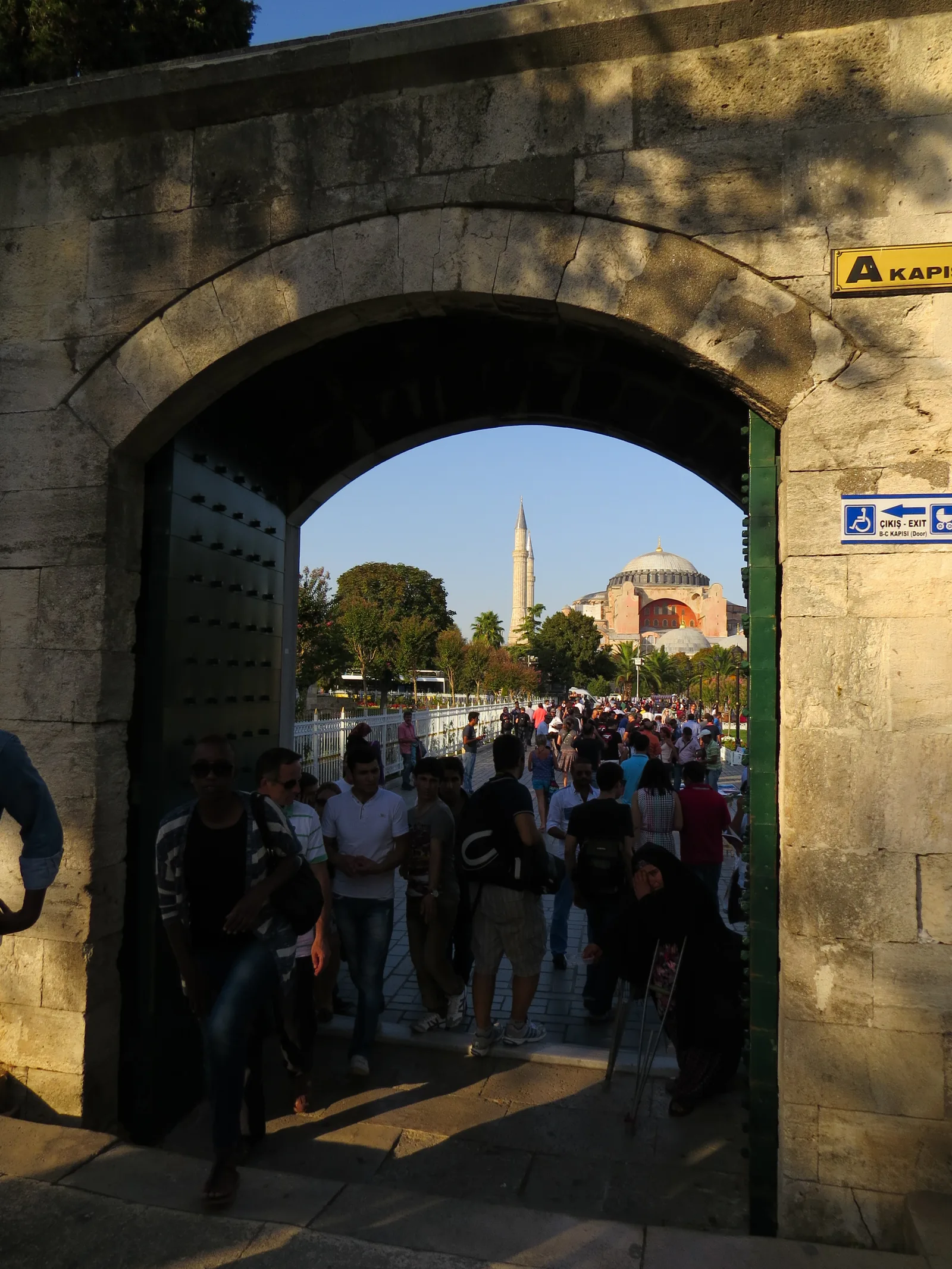
Six minarets, a cascade of domes and over 20,000 Iznik tiles: the icon of Istanbul.
Nasir al-Mulk Mosque
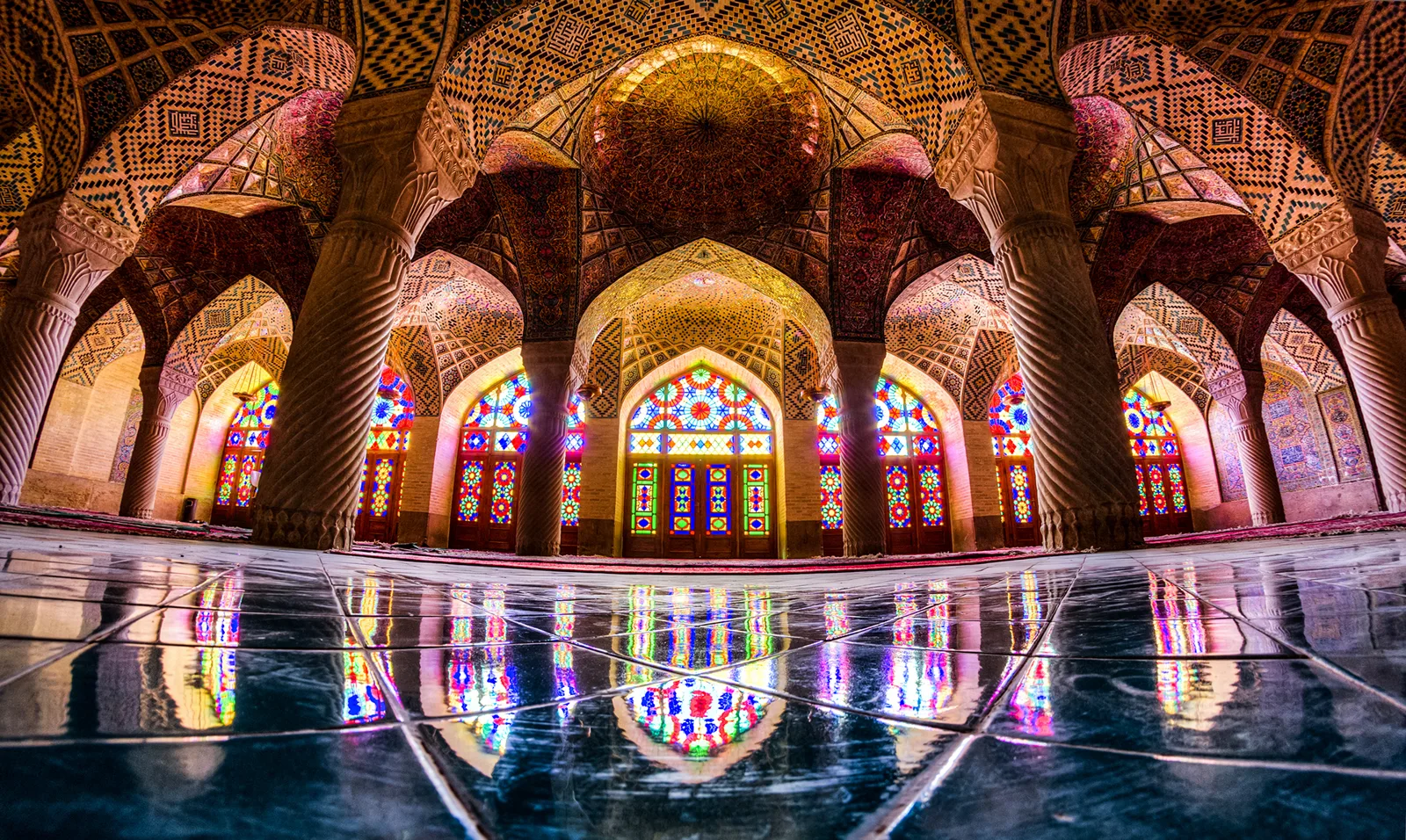
Shiraz's "Pink Mosque", whose stained-glass windows turn every morning prayer into a kaleidoscope.
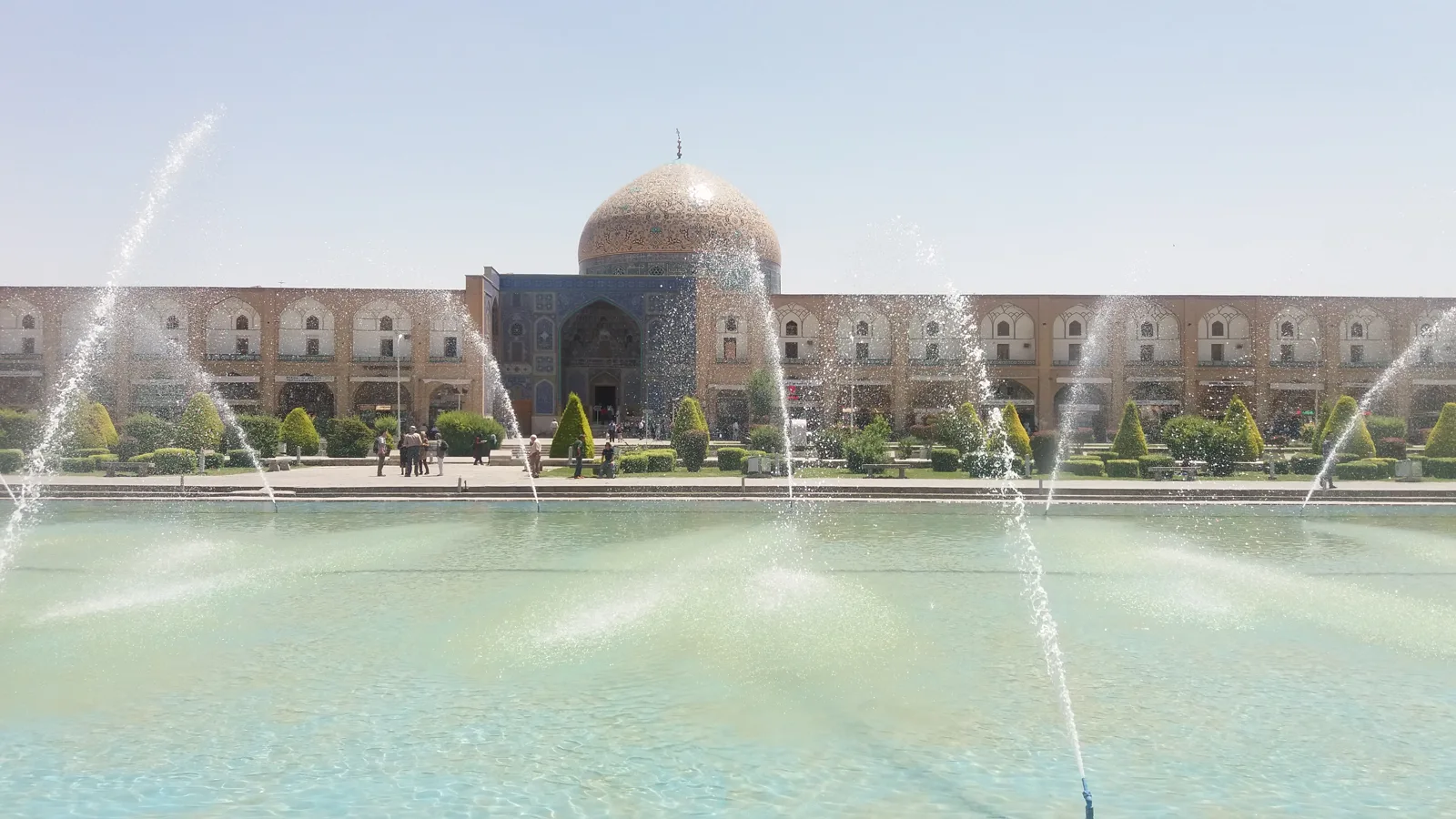
Sheikh Lotfollah Mosque
The Safavid jewel of Naqsh-e Jahan Square: no minaret, no courtyard, but Iran's most beautiful dome.
About this page's content: this site offers editorial and cultural content written with care and respect for the religious traditions concerned; it does not constitute a theological opinion or a source of religious authority. Despite our checks, errors, inaccuracies or approximations may remain. If you spot one, please let us know via the Contact page or by email at qibla.mosk@gmail.com, and we will correct it gratefully.