
Home › Blog › Mosque lattice screens
India · Technique · 7 min read · 2026-09-21
Mosque lattice screens: light, air and the gaze
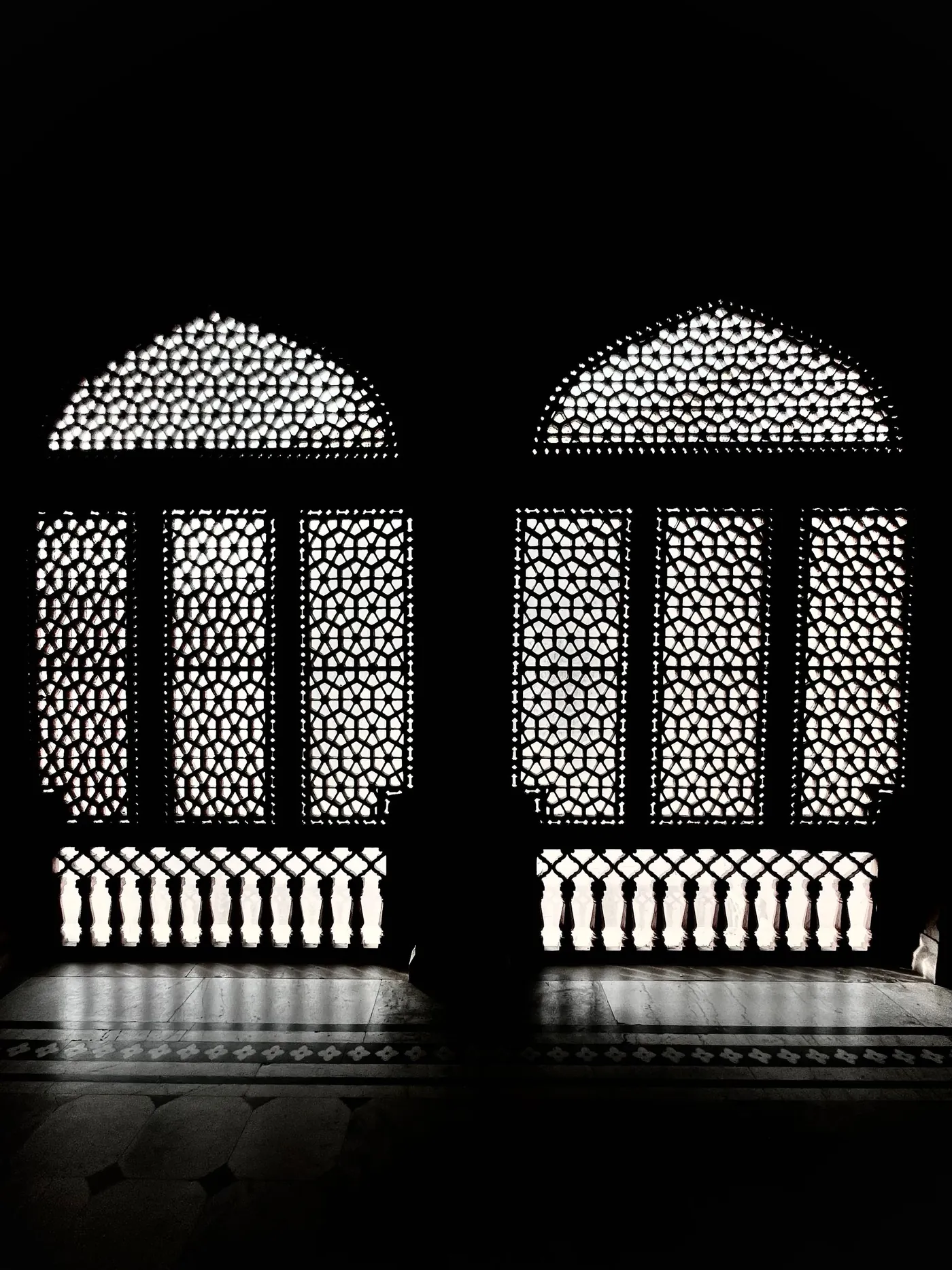
A stone screen pierced with hundreds of openings, in a mosque, works as much as it decorates. It does three jobs at once: it breaks up the light, it cools the air passing through it, and it hides whoever stands behind it.
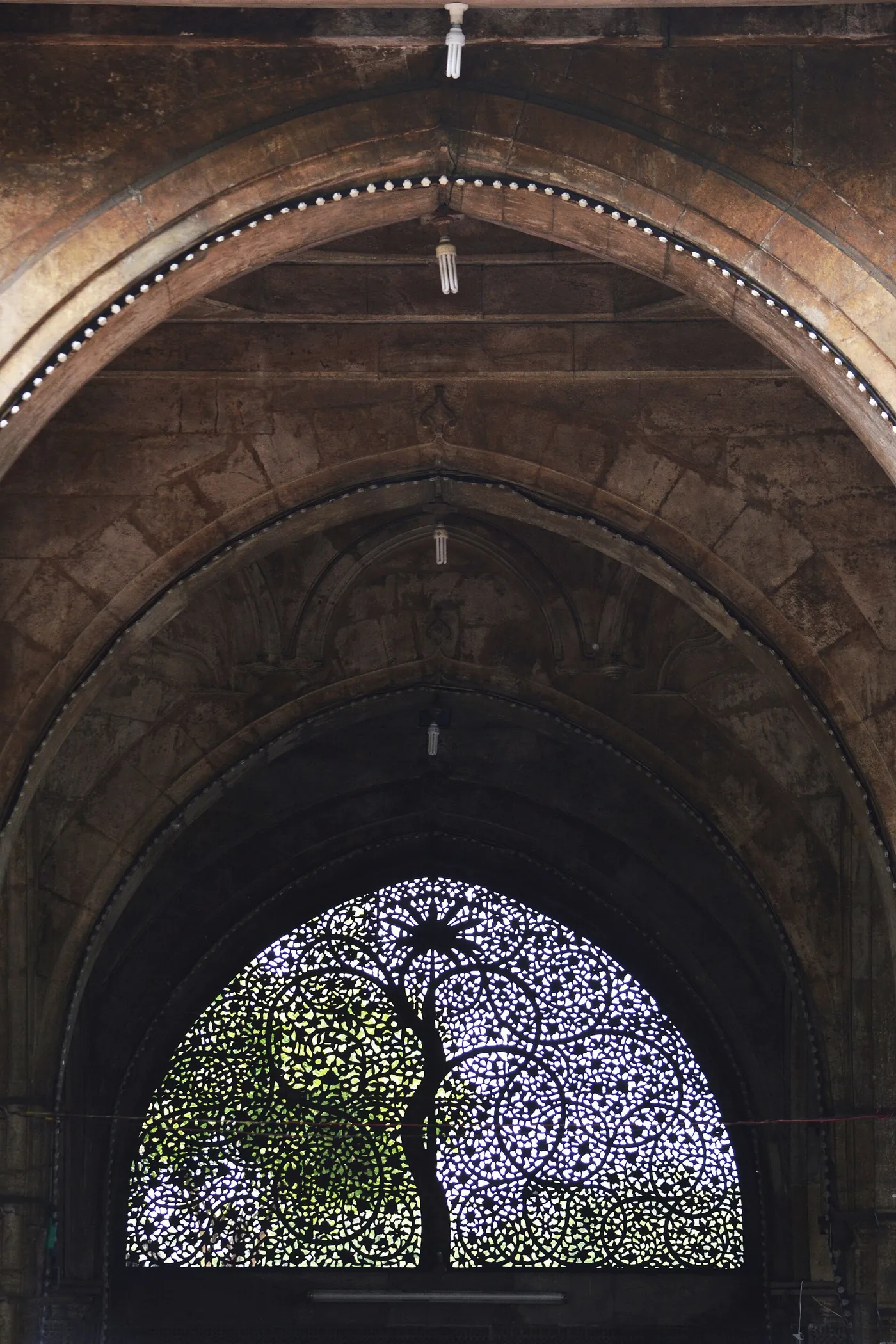
A mosque from 1573 and its ten windows
The clearest example sits in a modest building in Ahmedabad, in Gujarat. The Sidi Saiyyed Mosque was completed in 980 AH, that is 1572 or 1573, at the very end of the Gujarat sultanate. Its founder, Sidi Sayyid, was a nobleman of Abyssinian origin in the service of the last sultans of the province.
The building carries ten pierced stone windows along its side arches and its rear wall. Two of them are cut as lacework in which you can make out a tree, its branches, its foliage and a palm motif. That design, known as the tree of life, has become the unofficial emblem of the city, down to serving as the logo of the Indian Institute of Management Ahmedabad.
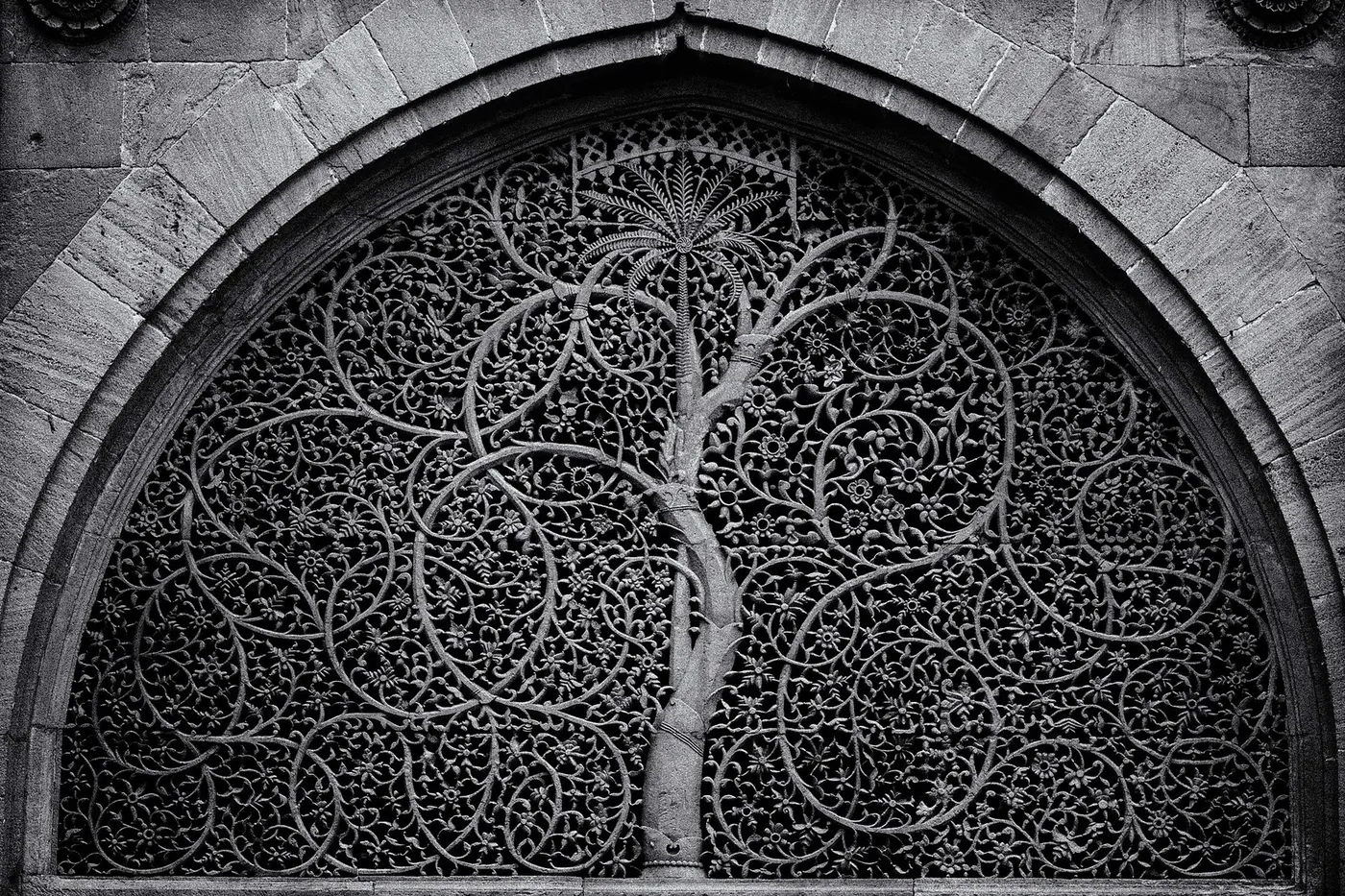
Light: cutting the day into pieces
An open bay, under an Indian plain or a desert sky, lets in a violent glare. In a dark hall the eye cannot hold that difference in brightness: the window becomes a white hole and nothing around it is visible any more.
A screen pierced with small openings handles the same flow differently. Each hole becomes a point source, and the sum of those sources spreads brightness across the whole wall with no dazzle. The thickness of the slab adds a second effect: when the sun is high, every perforation shades itself at its edges, so the screen admits less direct radiation exactly when that radiation is strongest.
The floor tells the rest. The patches of light thrown by the screen travel through the day, and their shape changes with the height of the sun. It is an accidental sundial, better known to photographers than to visitors.
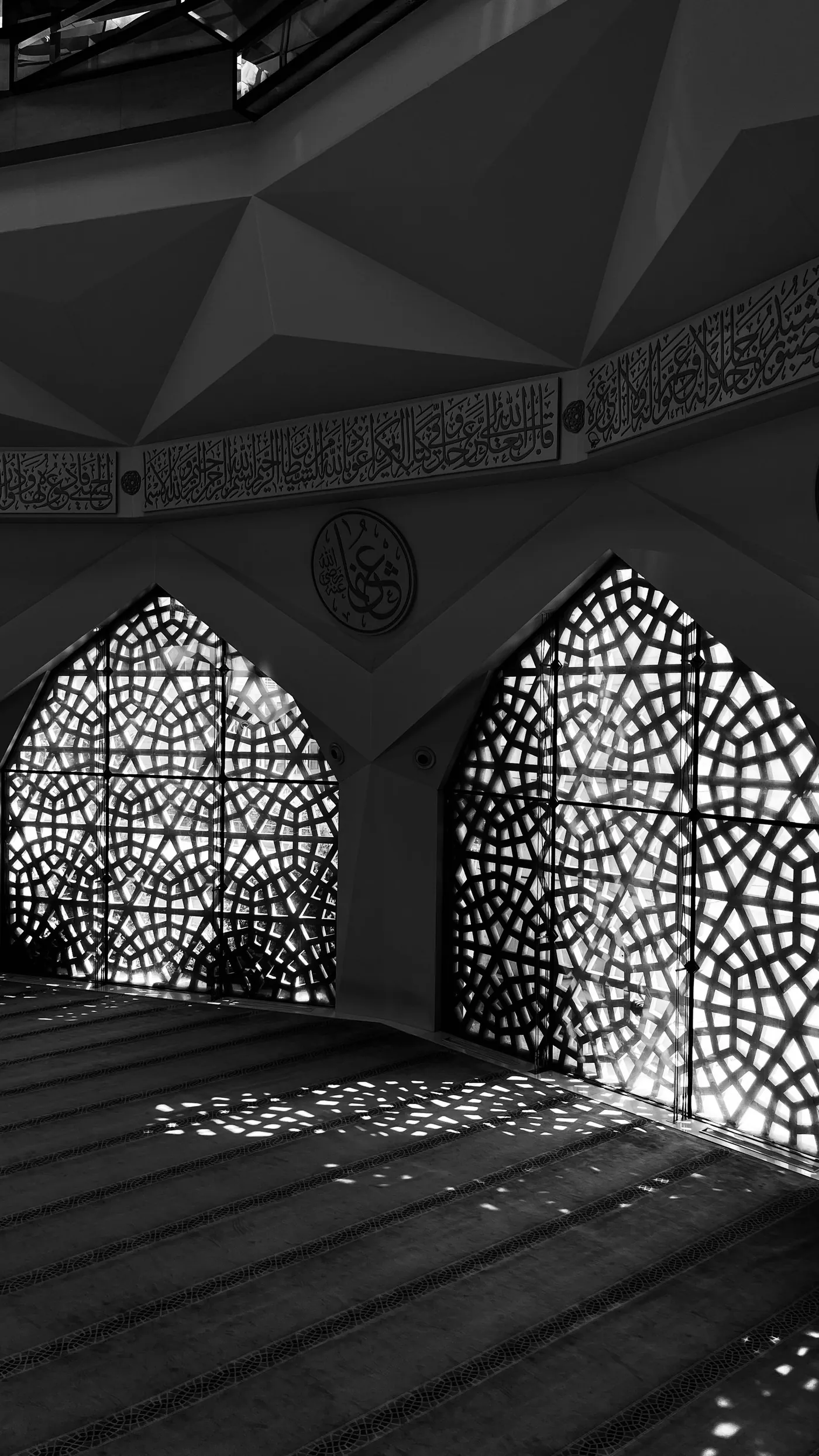
Air: squeeze it, then cool it
The second job works on air. Squeezed into narrow openings, the flow picks up speed at the face of the screen, and faster air carries more heat away from the skin.
The device goes further once water is added. Behind these panels, porous clay jars filled with water were set. The clay seeps, the water evaporates at the surface of the vessel, and evaporation takes heat from the air going past. The air enters cooler than it was outside, with no machine and no energy.
The effect has been measured. A field study published in 2020 in Energy and Buildings followed traditional devices of this kind at outdoor temperatures of 40 to 41.6 degrees, and documented the cooling obtained by combining the shading of the screen, ventilation and evaporation.
The name states the function, and it is disputed
The commonest Arabic word for these panels, mashrabiya, keeps the trace of that water story. One etymology ties it to the root sharaba, to drink, so the word would name the place where cooling jars were kept.
A second etymology, equally documented, derives it from mashrafiya, from the root meaning to overlook or to observe: the panel would first be the projecting part of the window from which the street is watched without being seen. Both readings survive side by side in the literature, and each describes a real function of the object.
The gaze: seeing without being seen
The third job rests on a simple asymmetry. From the lit side, the eye catches on the stone and the background stays black: the screen looks opaque. From the dark side, each hole frames a fragment of street or courtyard, and the gaze goes through.
In a mosque that property has a precise use: the galleries and tribunes set aside for women, the boxes of dignitaries, sometimes the maqsura that screened the ruler. In a house it is the window of the women's rooms. The same panel serves in both cases, which is why it turns up on religious buildings and private facades alike.
Stone in India, wood in Egypt
The technique follows the available material. In India the screen is a jali, a slab of sandstone or marble cut through, sometimes in a single block, which allows continuous curves like the branches of the Sidi Saiyyed tree. The Gujarat sultanate, and then the great Mughal building sites, covered their walls with them.
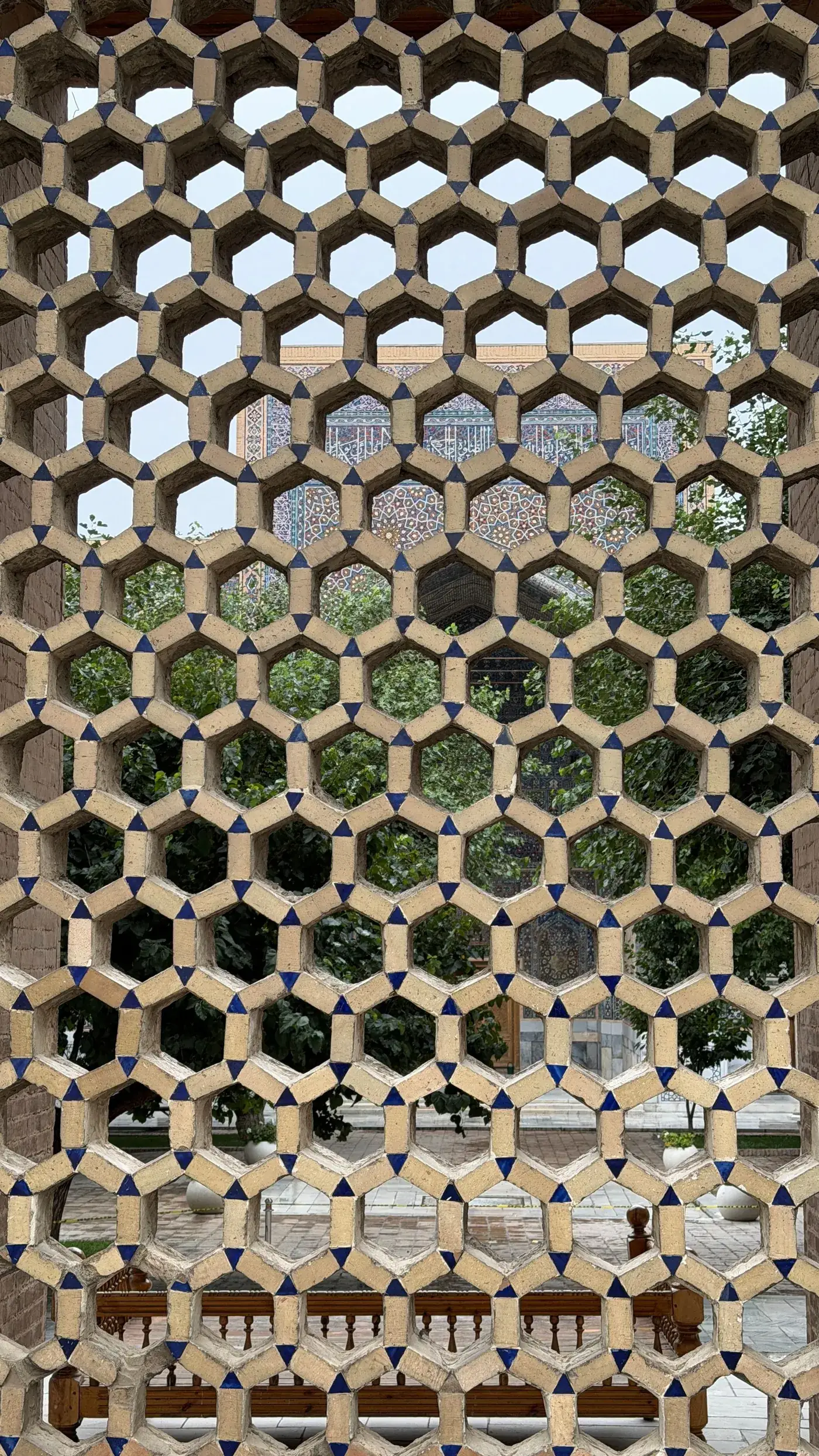
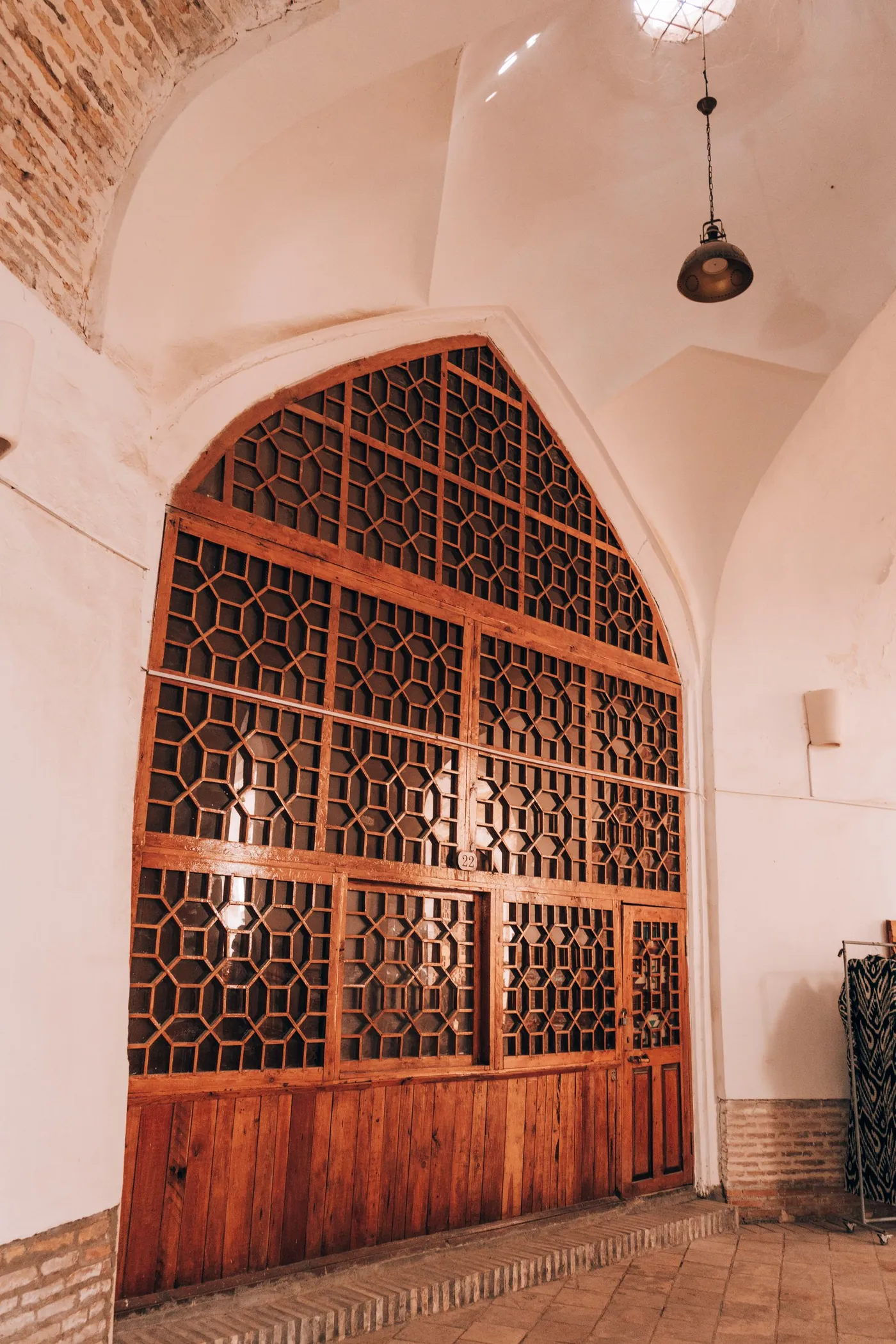
In Egypt, Syria and the Hijaz the same need is met in wood: spindles turned on a lathe, assembled without glue into tight nets, make light panels that can be hung projecting from a facade. In Central Asia you find both, wooden lattices in the galleries and pierced ceramic in the tympana.
The most copied window belongs to an unfinished building
One detail is usually left out of the guidebooks. At Sidi Saiyyed the central arch, where the finest jali of all would be expected, is simply blocked with a stone wall. The site was interrupted by the Mughal conquest of Gujarat in 1573, and it never resumed.
The design the city now puts on its logos and its souvenirs therefore comes from a building left unfinished. For another geometry that works as much as it decorates, see muqarnas and geometric patterns.
Discover
Mosques mentioned in this article
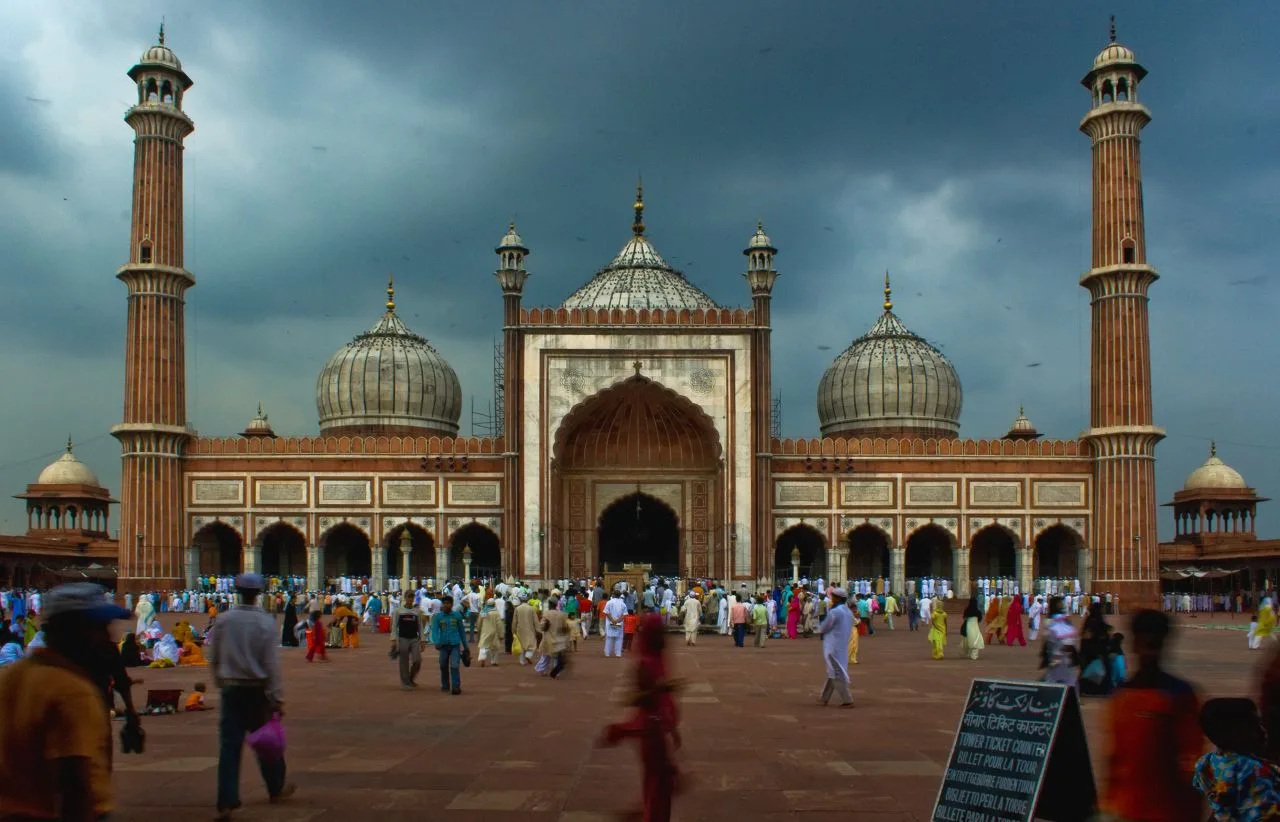
Jama Masjid
Shah Jahan's great mosque: red sandstone, white marble and one of the largest courtyards in India.
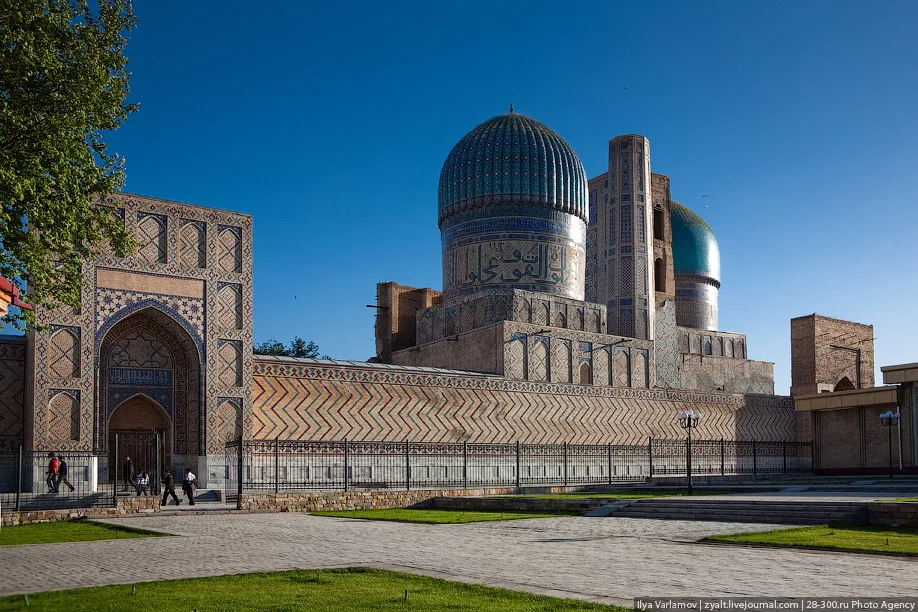
Bibi-Khanym Mosque
Intended by Timur as one of the largest mosques in the Islamic world, at the heart of Samarkand.
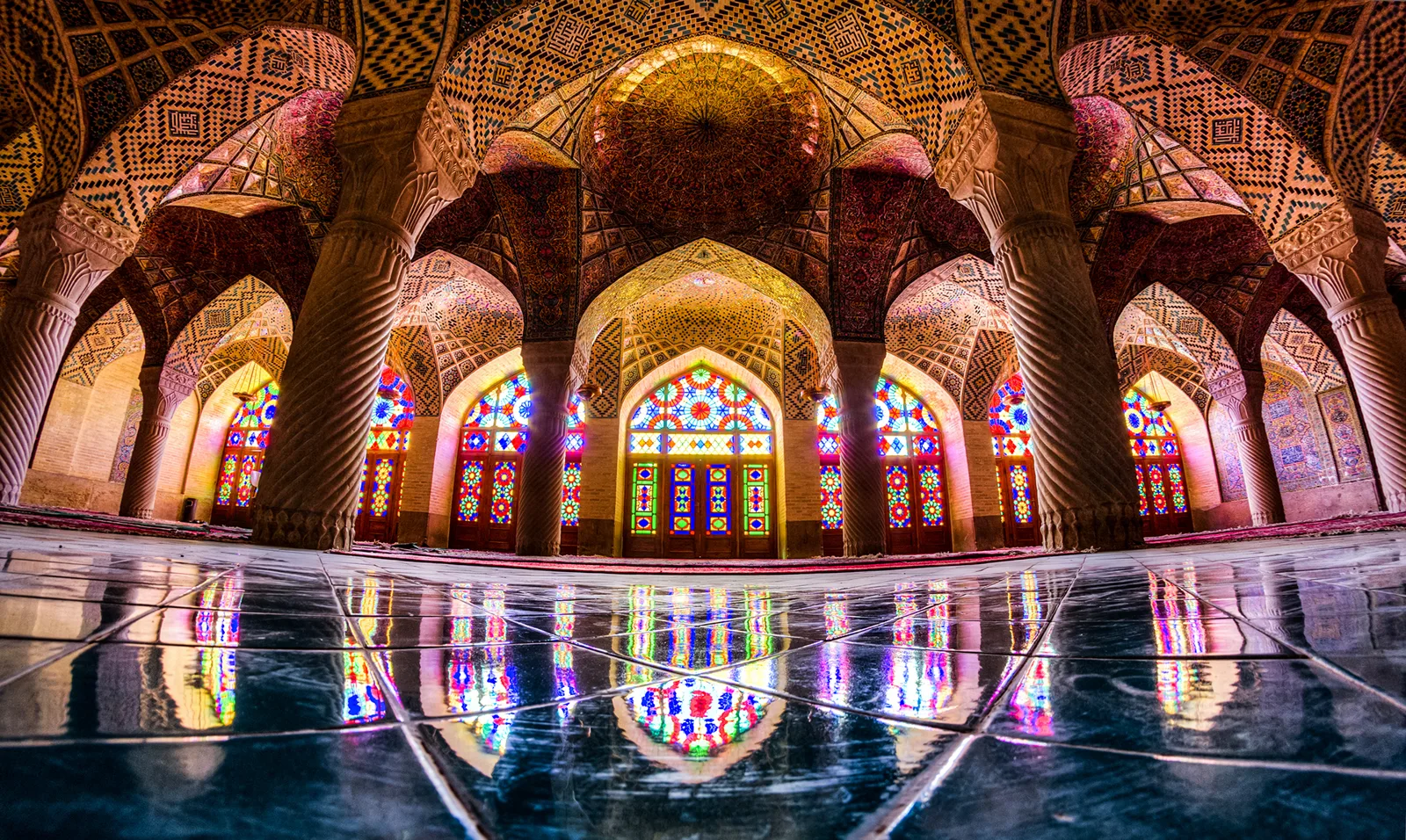
Nasir al-Mulk Mosque
Shiraz's "Pink Mosque", whose stained-glass windows turn every morning prayer into a kaleidoscope.
About this page's content: this site offers editorial and cultural content written with care and respect for the religious traditions concerned; it does not constitute a theological opinion or a source of religious authority. Despite our checks, errors, inaccuracies or approximations may remain. If you spot one, please let us know via the Contact page or by email at qibla.mosk@gmail.com, and we will correct it gratefully.