
Home › Blog › Muqarnas and geometric patterns: the mathematical secrets of Islamic art
Design · 9 min read · 2026-01-26
Muqarnas and geometric patterns: the mathematical secrets of Islamic art
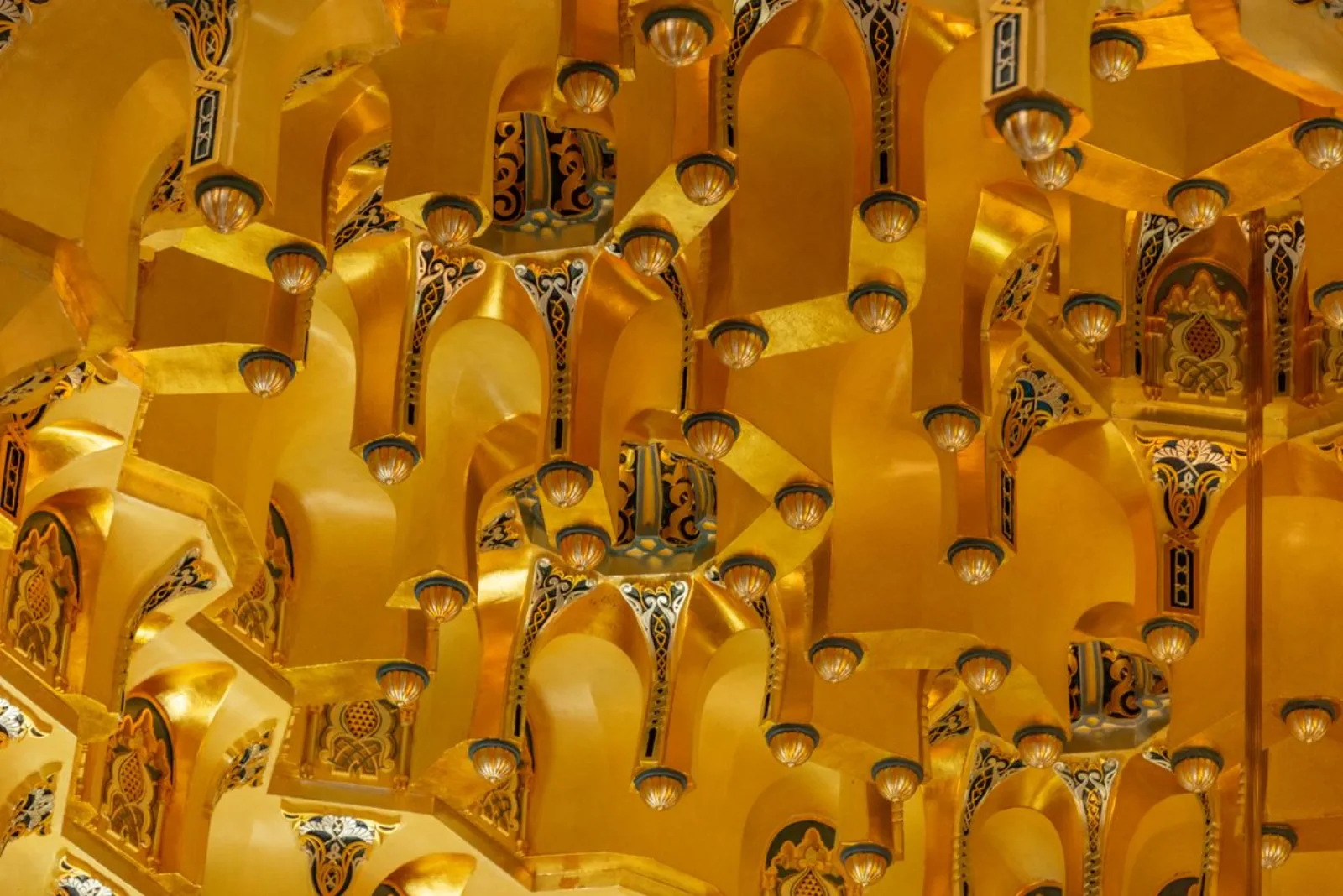
Look up at a honeycomb ceiling in a mosque and you will swear it was carved by hand, cell by cell, by some patient craftsman. It is exactly the other way round. It was assembled from a set of standard pieces, and it was drawn flat on a sheet of paper before the first block was laid. Islamic ornament is almost never improvised: it is combined.
Why geometry rather than the figure
You will find no portrait and no animal on the walls of a mosque. That restraint is often summed up in one word, "aniconism", which moves a little too fast: there is no explicit Quranic ban on representation, but a tradition that settled very early in places of prayer, out of caution towards anything that might resemble an object of worship. The result is not in dispute. Denied the human figure, craftsmen pushed three other languages to a degree of refinement that is rare in the history of art: geometry, relief, and writing itself.
What those three have in common is that none of them proceeds by free invention. Each rests on a small number of basic elements that are repeated, flipped and interlocked. The complexity of the whole does not come from the richness of the repertoire. It comes from the rules of combination.
Muqarnas: not carved, stacked
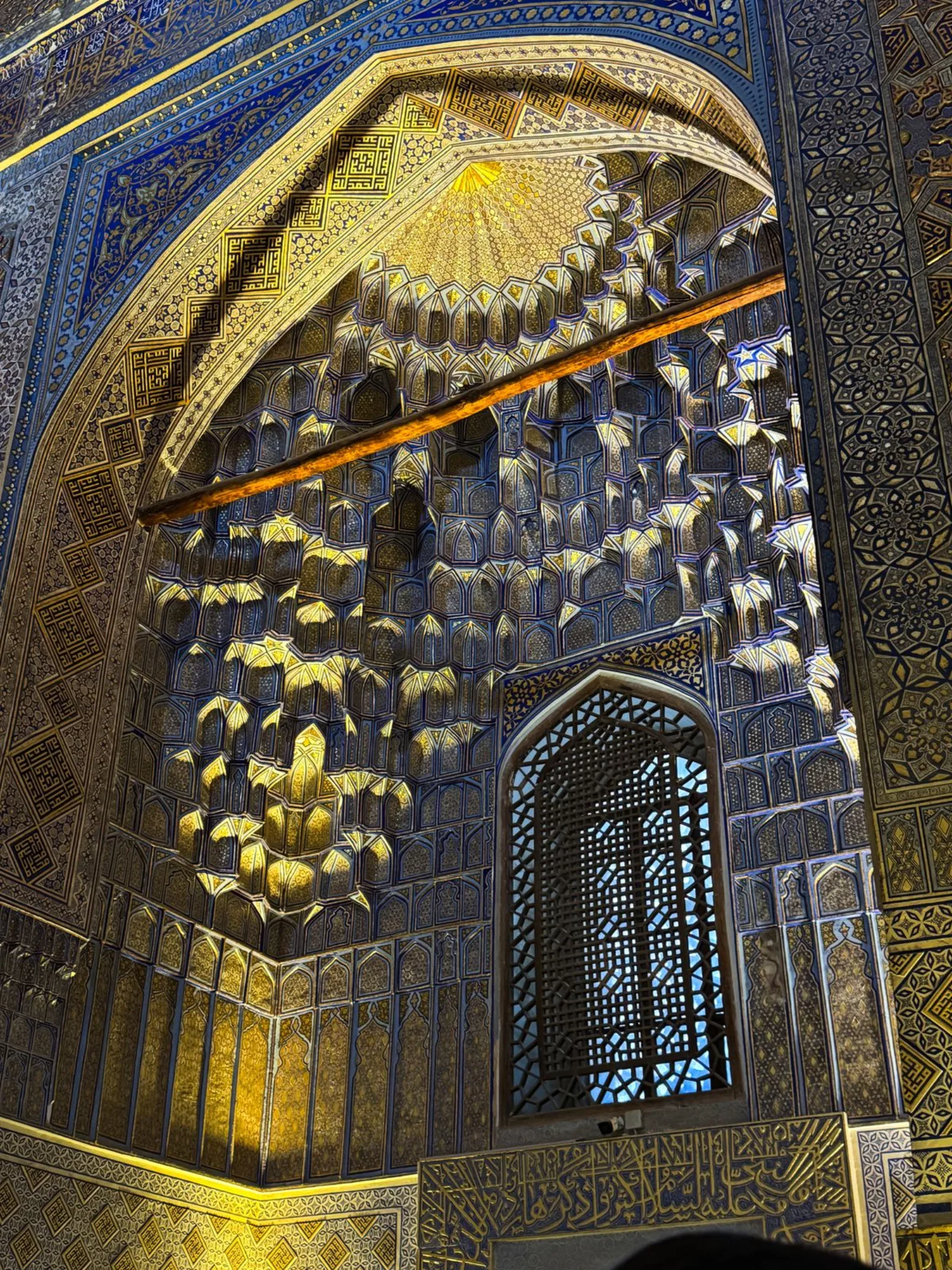
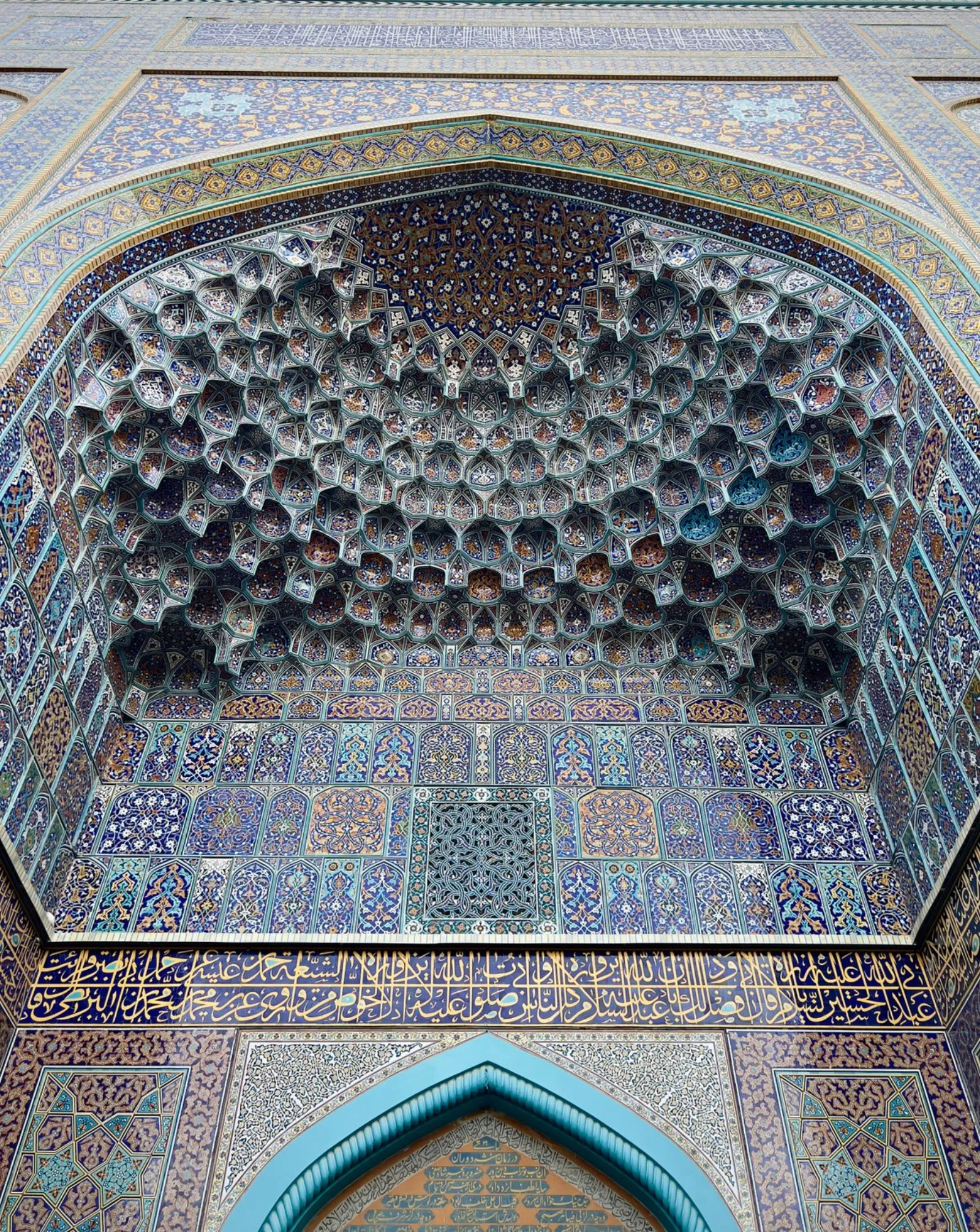
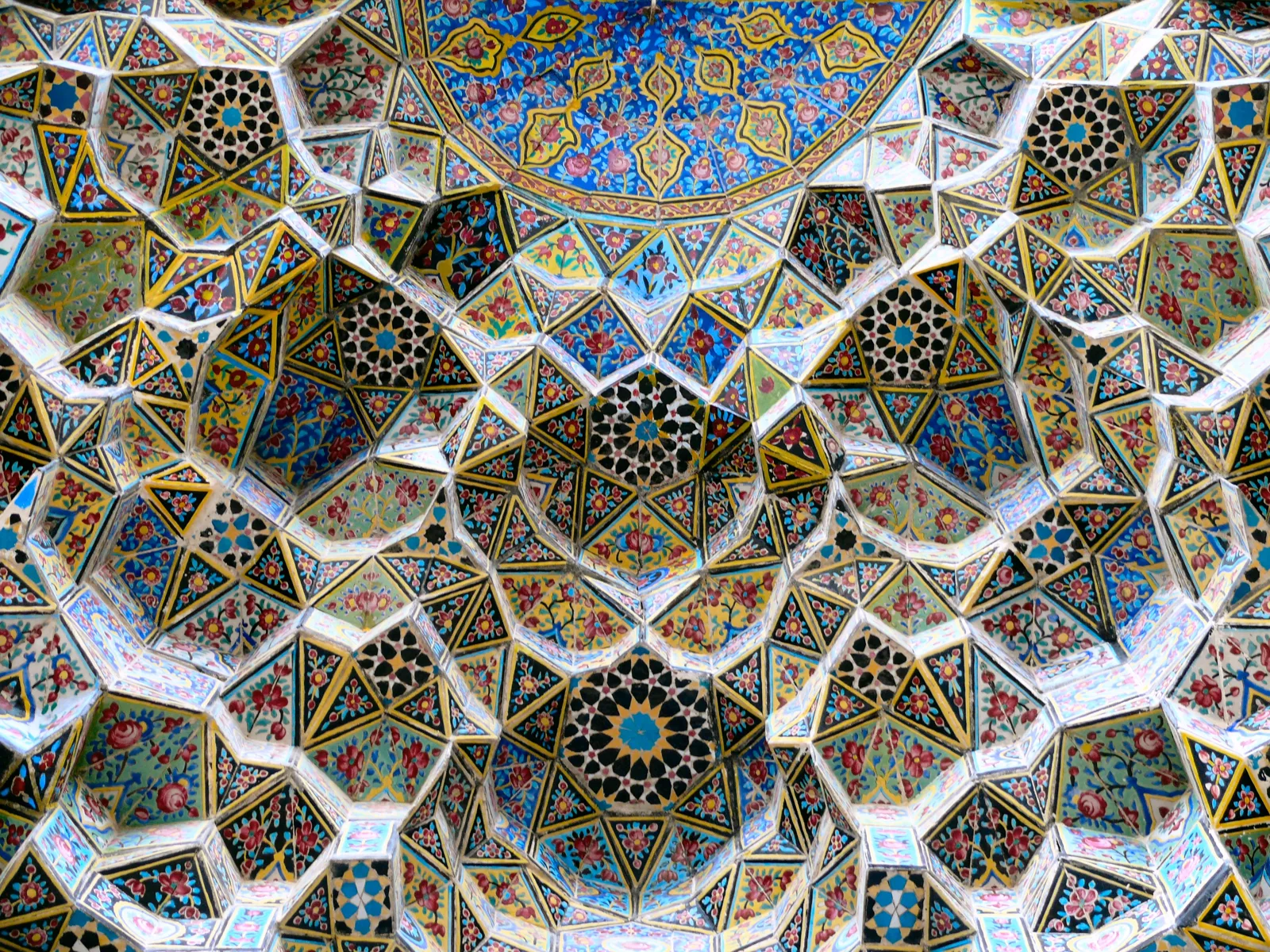
Muqarnas is that structure of superimposed cells, often compared to stalactites, which dresses a portal, a niche, a ceiling, or the awkward passage from a straight wall to a round dome. Each cell is a small prismatic niche, set slightly forward of the one below it. Stack the rows and you get a volume that seems to hang from the ceiling.
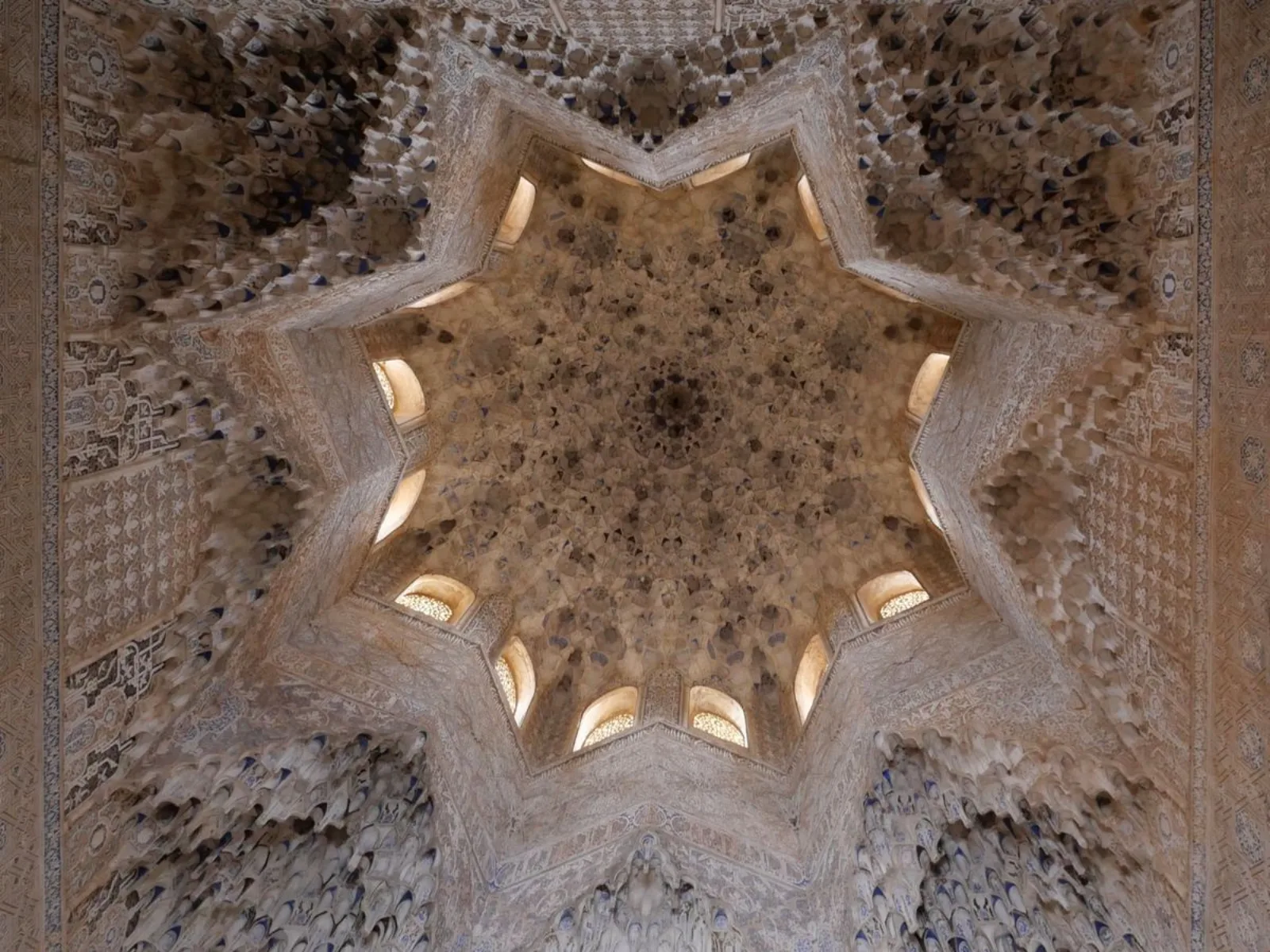
Those cells are not one-off pieces. Muqarnas is made of "a limited set of simple prismatic elements which are combined according to precise rules". In the Islamic West, across North Africa and al-Andalus, craftsmen always used the same repertoire of eight possible shapes, however complex the overall composition. Eight pieces. That is what made the craft transmissible from one building site to the next, and from one generation to another.
The plan comes before the volume
The most surprising part fits on a sheet of paper. A muqarnas is not conceived in three dimensions. It is drawn flat, seen from above. The drawing looks like a rosette of concentric rows of small compartments. Each compartment stands for one cell, and its place in the drawing tells the mason which row it belongs to and how far it steps forward over the row beneath. The plan is a notation, rather like a musical score: it does not look like the result, yet it contains all of it.
Such plans have survived. The scroll held in the library of the Topkapı Palace in Istanbul is a Timurid document from the late fifteenth or early sixteenth century. It carries 114 patterns for wall surfaces and vaulting. Its study by the art historian Gülru Necipoğlu shed light on how architectural design was conceived, recorded and transmitted in the Islamic world between the tenth and sixteenth centuries. In the same volume, an essay by Mohammad al-Asad takes one of those flat patterns and shows, drawing by drawing, how it generates a three-dimensional vault.
The material changes, the rule does not
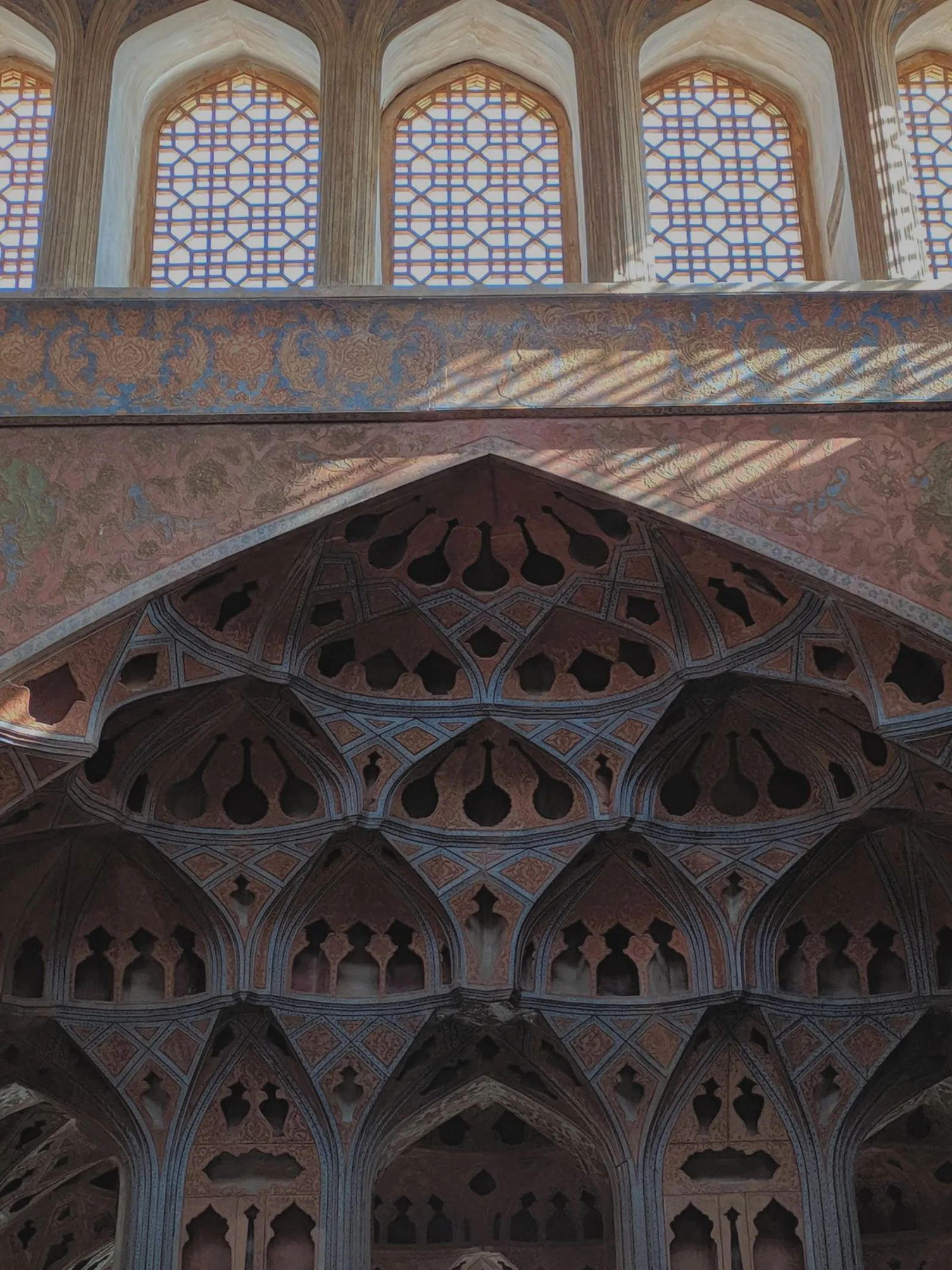
The method travels; the materials do not. In Syria, Egypt and Turkey, muqarnas is cut from stone. In North Africa it is built up in plaster or cedar. In Iran and Iraq it is laid in brick. The same combinatorial principle therefore yields very different effects: stone gives a severe mass, plaster a lacework, brick a dry and regular relief.
One thing never changes: muqarnas carries nothing. Its function is ornamental. It masks a structural transition, above all the always ungainly join between a square plan and a circular dome. What we take for an engineer's feat is a decorator's feat, and that is perhaps more impressive still: all of it had to hold up while serving no purpose beyond being beautiful.
Girih, or the art of the interlace
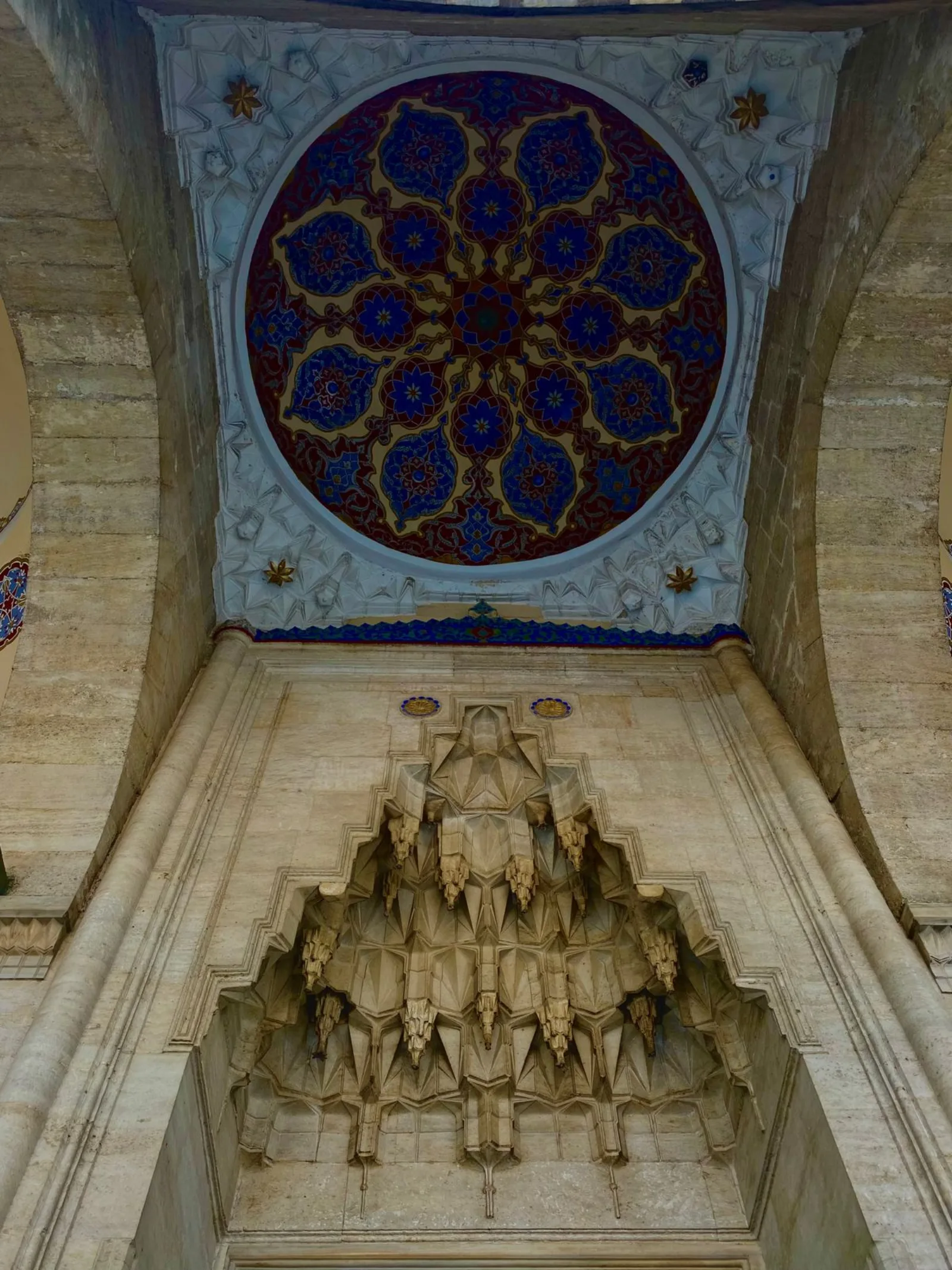
Girih, "knot" in Persian, is the name for those networks of interlacing lines that build six, eight and sixteen-pointed stars, polygons and rosettes nested without end. Here too, appearances mislead. One imagines a line drawn stroke by stroke with rule and compass. In practice these networks are built mostly by assembling a small number of polygonal figures, each carrying a fragment of the design: the fragments join up from one piece to the next, and the interlace emerges on its own. The same logic as muqarnas, this time flat.
A famous reading, and a disputed one
These patterns earned Islamic art a scientific controversy that has to be told carefully, because it is usually summarised wrongly.
An ordinary tiling repeats. Slide it a certain distance in the right direction and it lands exactly on itself: mathematicians call it periodic. There are also tilings that never repeat, whatever shift you apply, and that are nonetheless in no way disordered: not a gap, not an overlap, the same figures recurring everywhere without ever forming a regular grid. These are called quasi-periodic. The mathematician Roger Penrose described some in the 1970s, using only two tile shapes.
In 2007 two physicists, Peter Lu and Paul Steinhardt, proposed in Science that certain fifteenth-century decorations should be read this way, notably those of the Darb-i Imam shrine in Iran. The proposal travelled the world in a simplified form: Persian craftsmen were said to have discovered Penrose tilings five centuries before him.
The reading is contested. The crystallographer Emil Makovicky replied the same year that the Darb-i Imam pattern does repeat, on a very large scale, and is therefore periodic. Peter Cromwell proposed in 2008 a simpler construction method that accounts for the pattern without invoking quasi-periodicity. Even sympathetic readings acknowledge that the subdivision is not perfect, particularly on the portal itself. And Makovicky pointed out that he had published an analysis of this kind as early as 1992.
What is not in question is the method: these designs really are built from a limited repertoire of repeated pieces, rather than traced one stroke at a time. That is the solid fact, and it is more than enough for admiration.
Calligraphy, a decoration that is read
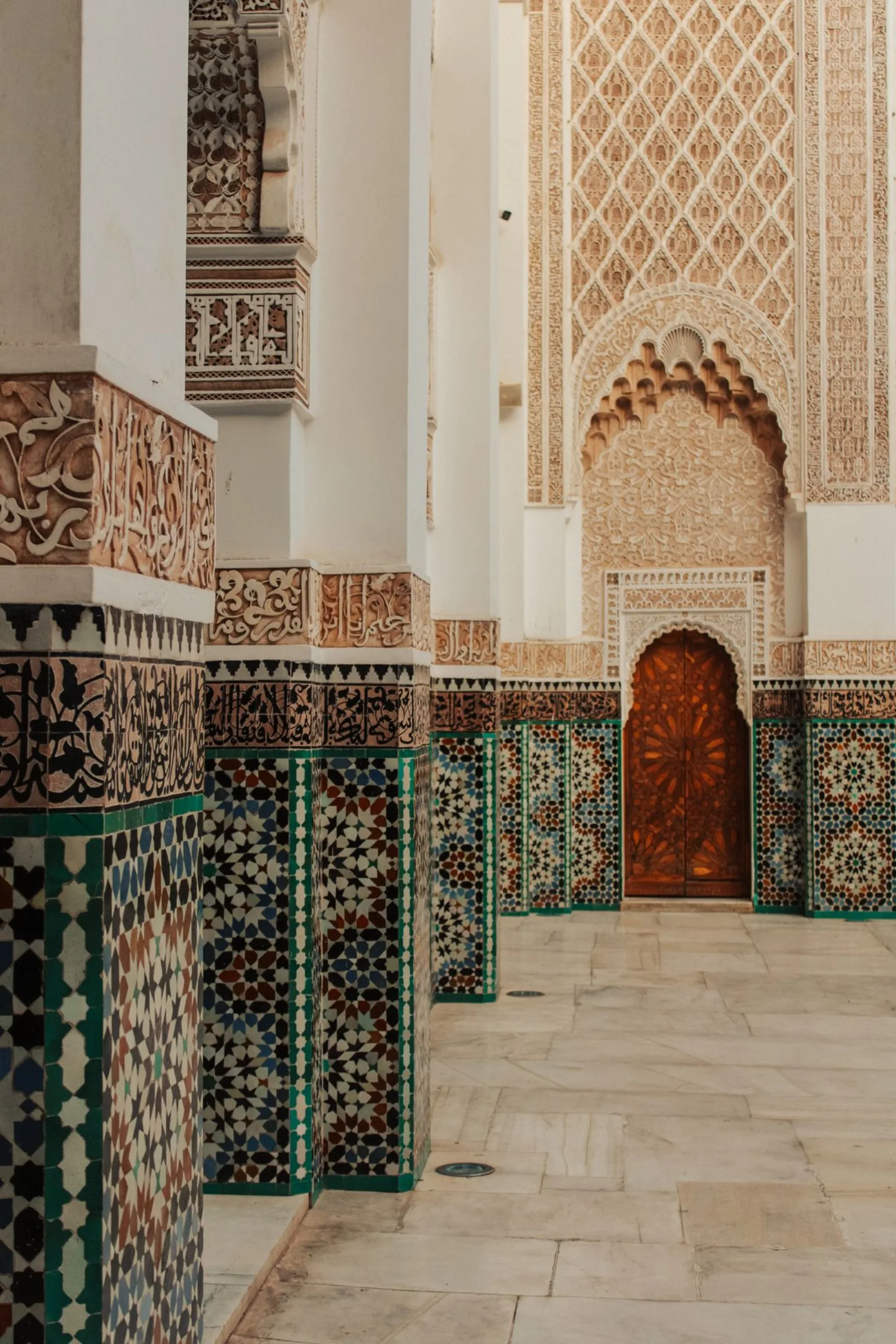
The third language is writing. Quranic verses, divine names and pious formulas are stylised into angular Kufic friezes or flowing cursive, and folded into the geometric networks until they become, to an eye that does not read Arabic, one more pattern. This is a deep difference from European ornament: here part of the decoration is legible, and the worshipper who deciphers the frieze does not see the same thing as the visitor who admires it. The fusion is at its most spectacular in the polychrome ceramics of Ottoman and Persian mosques, such as those lining the interior of the Blue Mosque in Istanbul.
Light as a material in its own right
A fourth language remains, particular to the Persian world: stained glass. At the Nasir al-Mulk Mosque in Shiraz, square metres of coloured glass cast rainbow patches over the prayer hall carpets each morning, then fade as the sun climbs. Muqarnas does the same with shadow: each cell catches and returns the light differently, so the ceiling changes character through the day. In both cases the decoration does not dress the space, it animates it.
Where to look at them
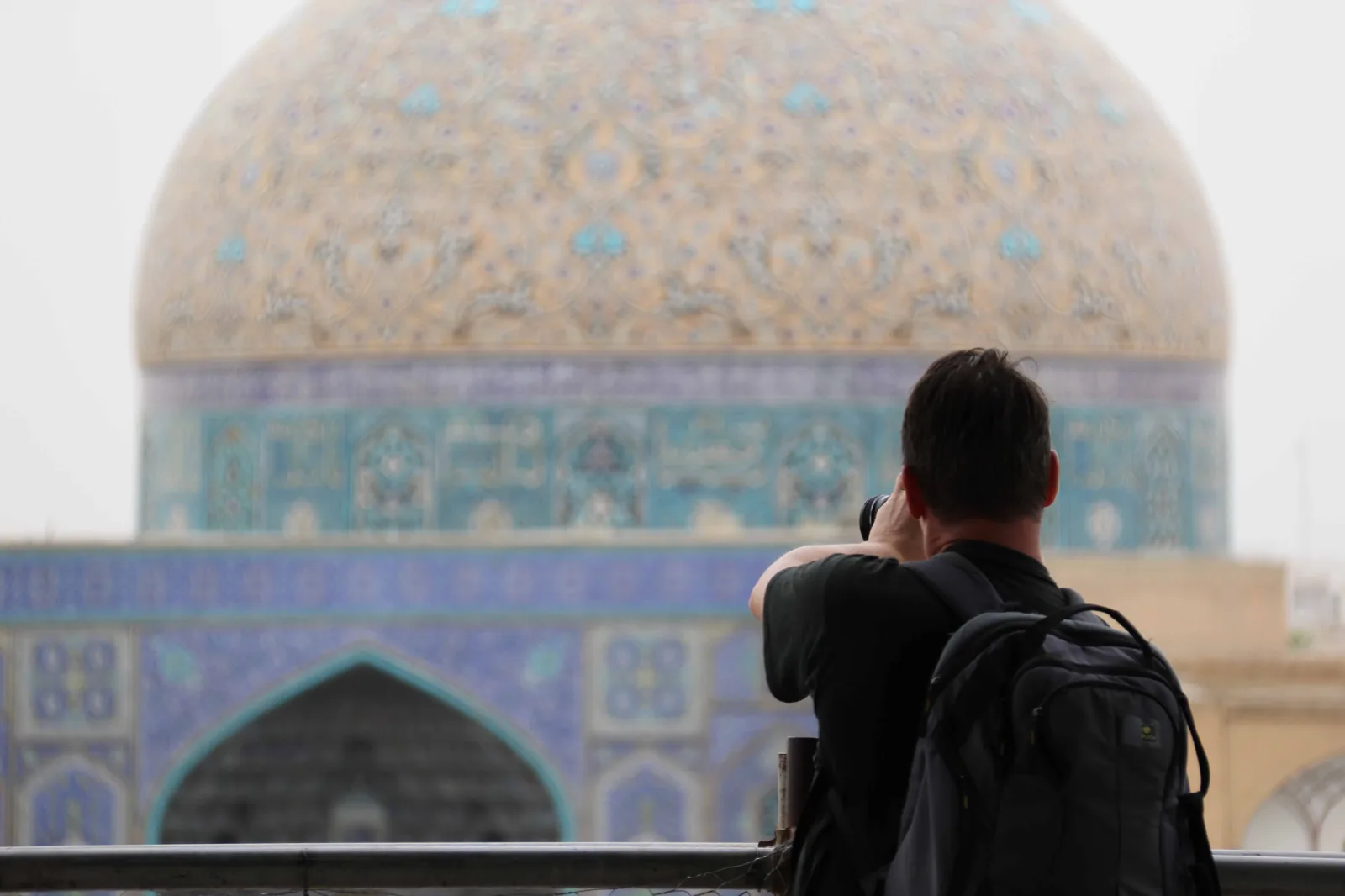
In Isfahan, the portal of the Imam Mosque and the dome of the Sheikh Lotfollah Mosque give the Persian version, in brick and tile. In Granada, the domes of the Alhambra give the western version, in carved plaster, with its eight shapes. In Marrakesh and Fes, the madrasas show the same thing in cedar. Different places, different materials, different centuries, and yet the same idea: not to invent afresh each time, but to combine better.
Discover
Mosques mentioned in this article
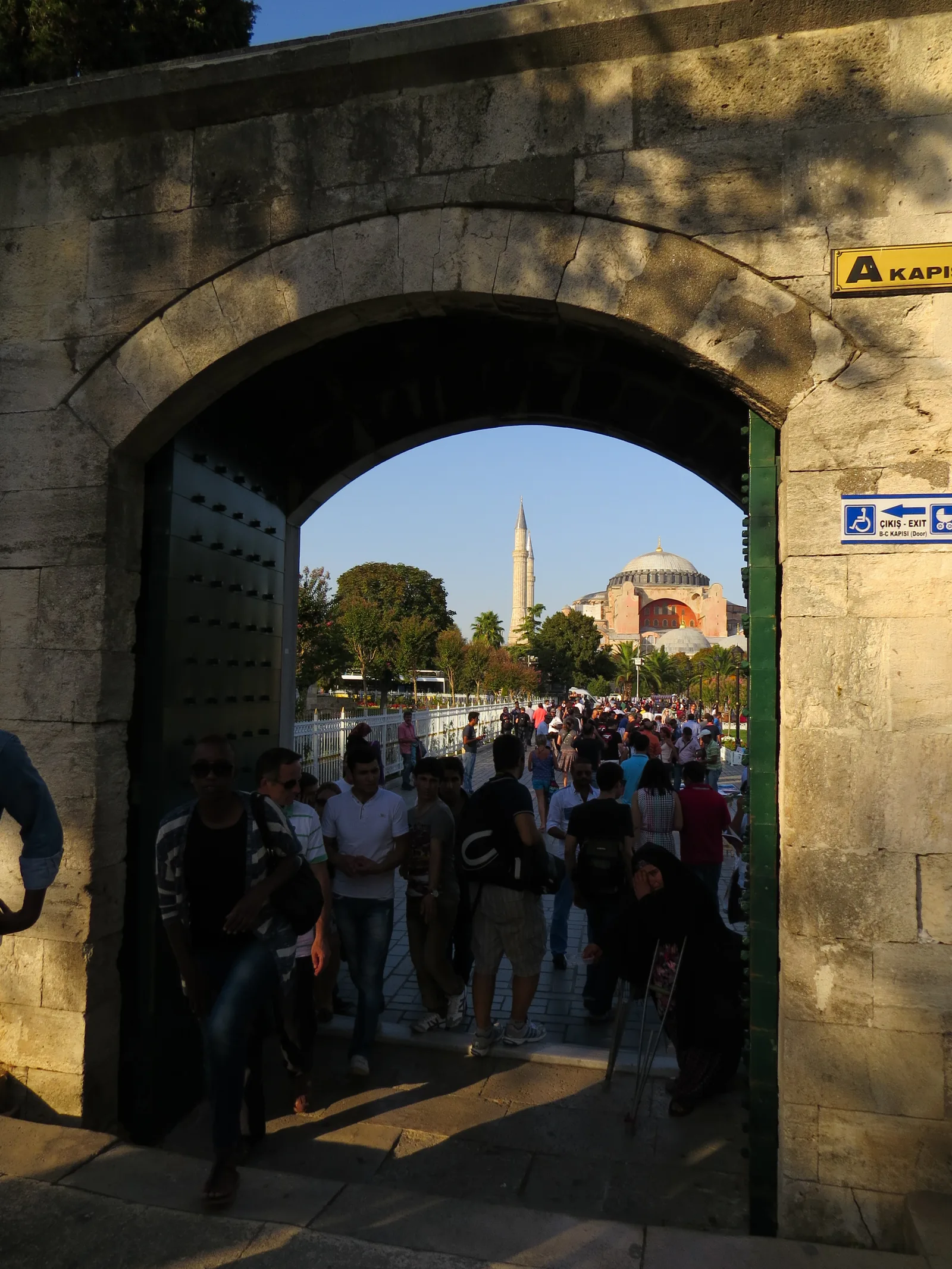
Blue Mosque (Sultan Ahmed)
Six minarets, a cascade of domes and over 20,000 Iznik tiles: the icon of Istanbul.
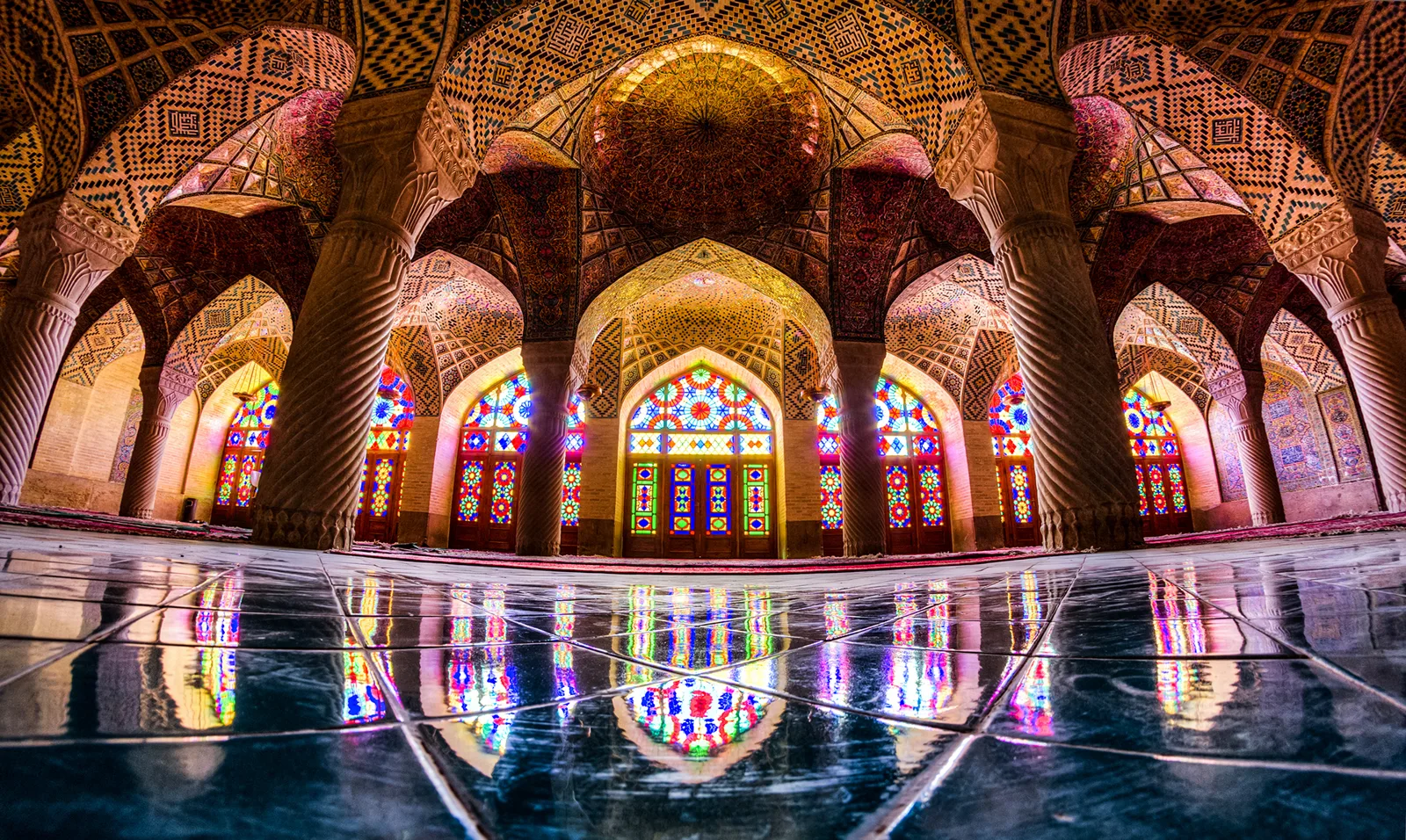
Nasir al-Mulk Mosque
Shiraz's "Pink Mosque", whose stained-glass windows turn every morning prayer into a kaleidoscope.
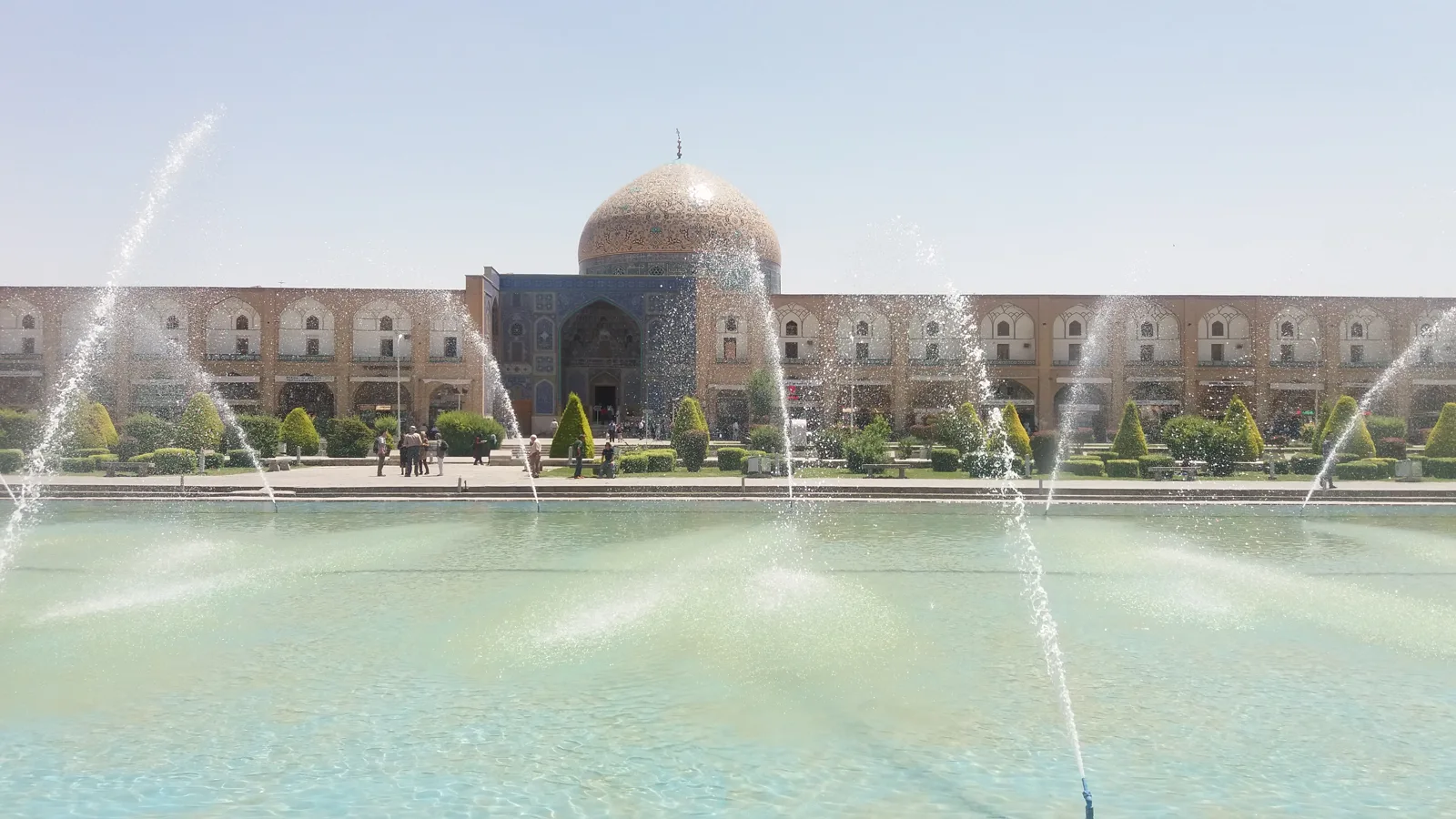
Sheikh Lotfollah Mosque
The Safavid jewel of Naqsh-e Jahan Square: no minaret, no courtyard, but Iran's most beautiful dome.
About this page's content: this site offers editorial and cultural content written with care and respect for the religious traditions concerned; it does not constitute a theological opinion or a source of religious authority. Despite our checks, errors, inaccuracies or approximations may remain. If you spot one, please let us know via the Contact page or by email at qibla.mosk@gmail.com, and we will correct it gratefully.