
Home › Blog › The endowments of Hürrem Sultan
Constantinople and Edirne · 9 min read
He had a mosque built for his son, and the architect called it his apprentice work
Sinan ranked his own three great works in the vocabulary of the guilds: apprentice work, journeyman work, master work. The mosque bearing his patron's name is only second on that list, and the first is the memorial of a boy dead at twenty-two.
A bridge in thirteen days
In 1538 Suleiman is looking for a chief architect. He does not pick a man of the trade but an engineer officer from his own army, noticed for throwing a bridge across a river in thirteen days during a campaign.
The man is nearly fifty. He has spent his life building bridges, roads, water conduits and field fortifications. He has never built a mosque. His name is Sinan.
No gloss is needed, and we will offer none: neither on his recruitment nor on his origins. The vocabulary of that file is not neutral and it is not ours to settle.
And his first commission does not come from the sultan
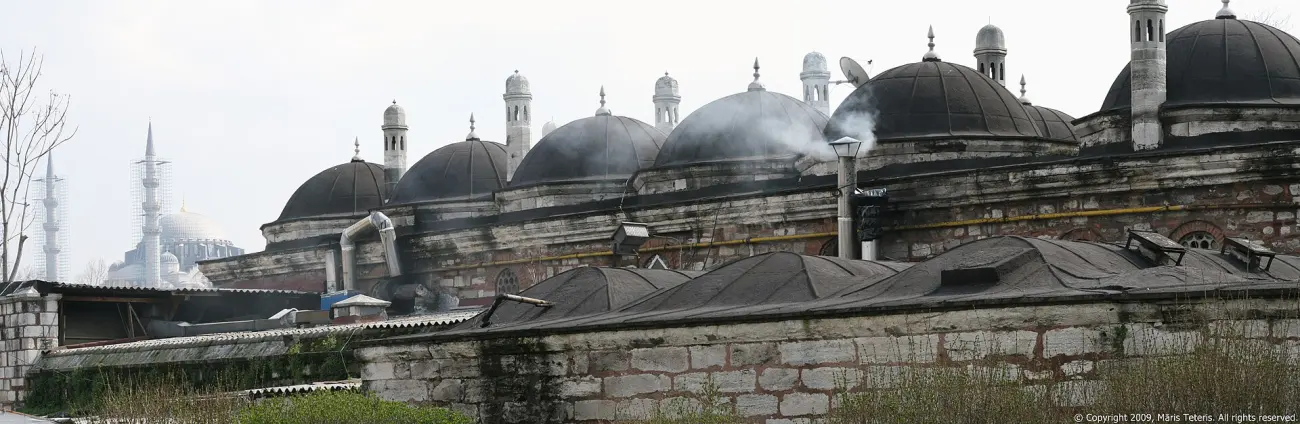
A detail that matters, and one we verified outside our own pages before rewriting it: Sinan's first work as chief imperial architect is the Haseki complex, 1538-1539, commissioned in the name of the sultan's wife.
The sovereign appoints the architect; his wife gives him his first building site. We devoted a whole article to her endowments.
1543
Five years after the appointment, the couple's son dies. Şehzade Mehmed, born 1521, died 1543. Twenty-two years old.
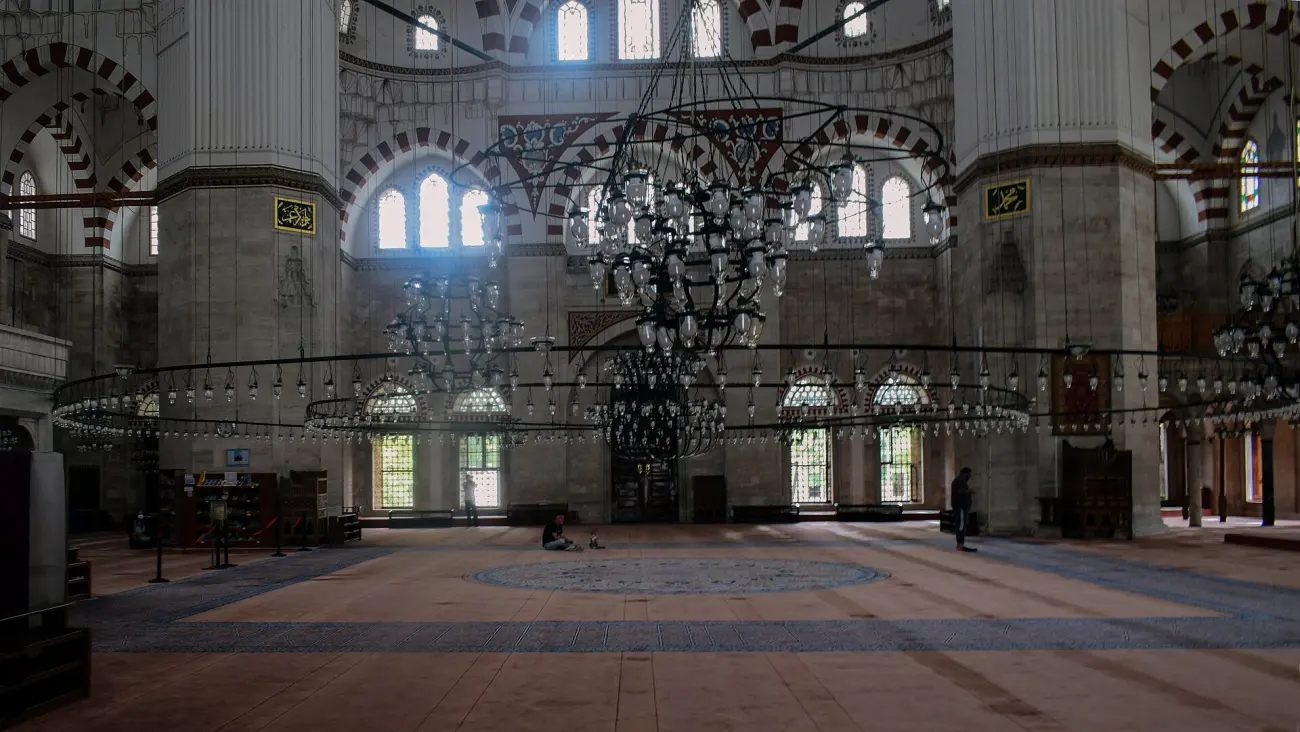
His father has a memorial built for him: the Prince's mosque, the Şehzade Camii in Constantinople, under construction from 1545 to 1548.
First degree: what shows
Architecturally the approach is classical and legible. A great central dome, buttressed by four half-domes set symmetrically around it. The structure holds, and you can see exactly how.
That is the one Sinan will call his apprentice work.
Second degree: what hides
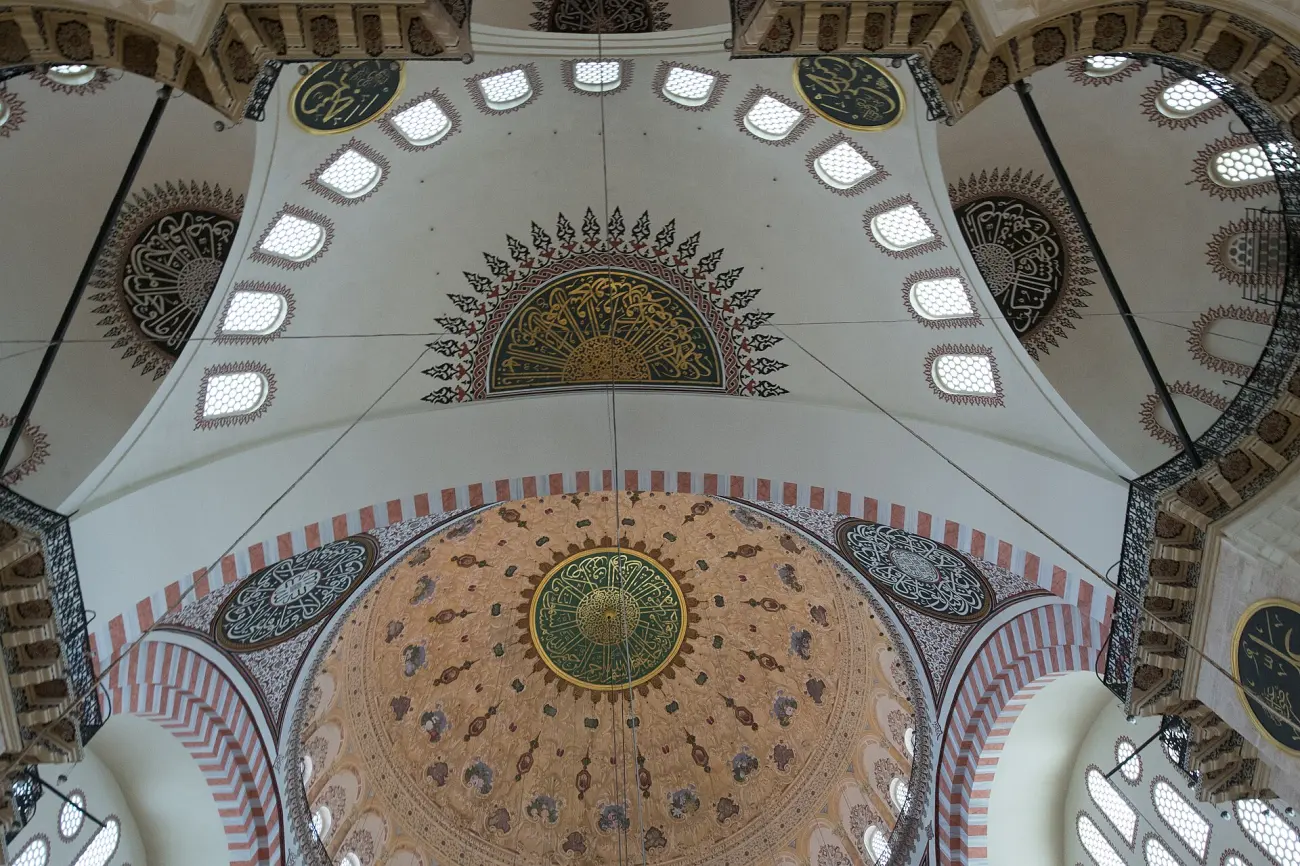
Next comes the mosque bearing the sultan's own name, the Süleymaniye, completed in Constantinople in 1557.
The change is clear and it is structural. The buttresses taking the dome's thrust are no longer volumes added outside: they are concealed within the thickness of the walls. You can no longer see what holds it up.
This is his journeyman work. Not his summit.
Third degree: what disappears
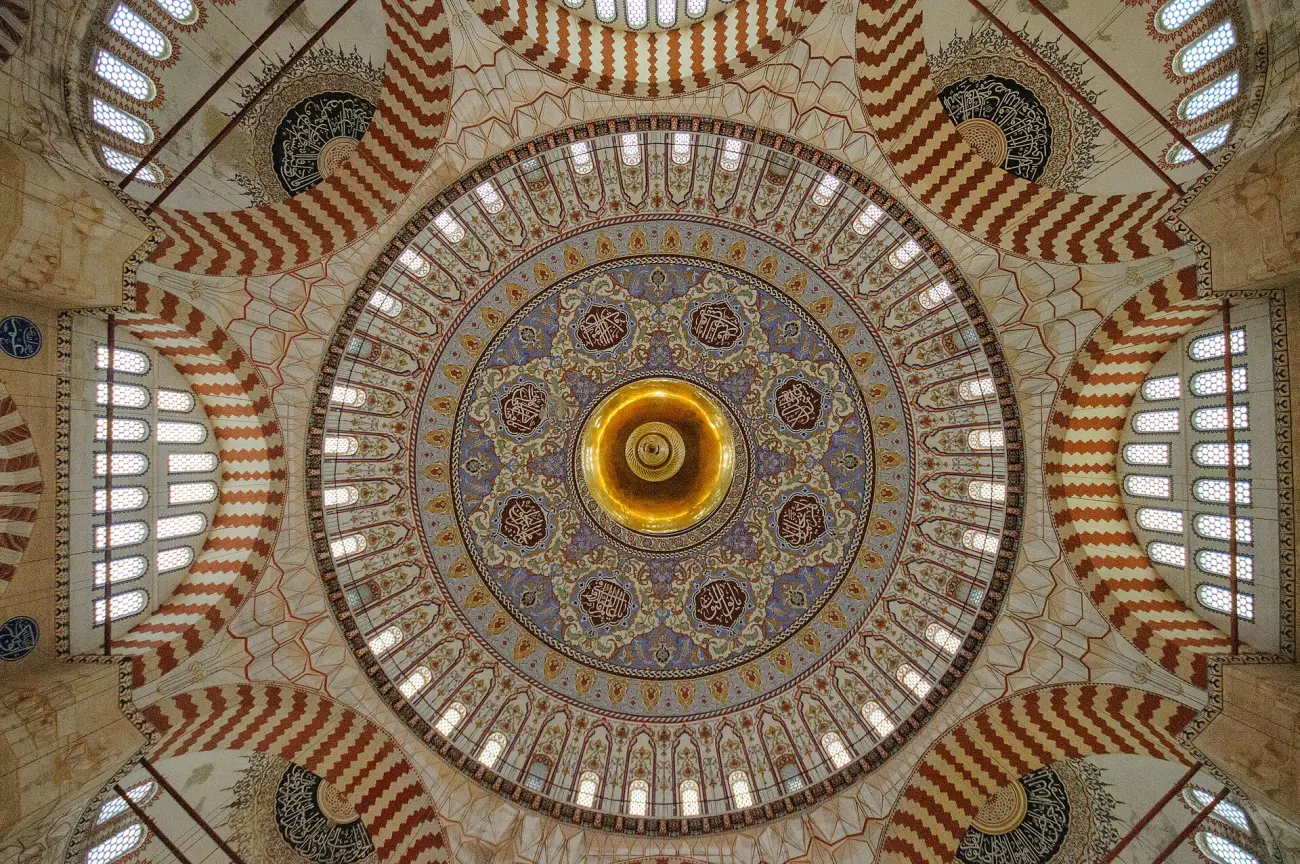
The sultan dies in 1566. Nine years later, in 1575, the mosque of Selim opens for worship, the Selimiye at Edirne, built for the son who survived.
A single dome, thirty-one metres across, carried not on the usual four heavy piers but on eight piers set in an octagon. No half-dome cuts across it. The central space is entirely clear, and the effect sought is that of a covering that does not weigh.
This is his master work, and he says so himself.
Why the dome is the problem
To grasp what the ranking measures, you have to understand what a great masonry dome demands.
A dome does not only push downwards. It spreads: its weight travels obliquely and tends to push the supports outwards. Something has to take that thrust, or the supports tilt and the structure cracks.
The answers available in the sixteenth century are few. You can set half-domes all around, buttressing the great one by leaning against it. You can thicken the walls and bury the buttresses in them. Or you can multiply the points of support and distribute the load differently.
Those are exactly the three solutions of the three mosques, in that order. Sinan's ranking therefore reads as a scale of difficulty overcome, not as a matter of taste.
One question, three answers
Put end to end, the three buildings tell a single search pursued over twenty-seven years: how to hold a dome up without the device that holds it taking over the view.
First a visible, avowed buttressing. Then a buttressing absorbed into the walls. Then a transfer of load onto eight points instead of four, which frees the volume instead of compartmenting it.
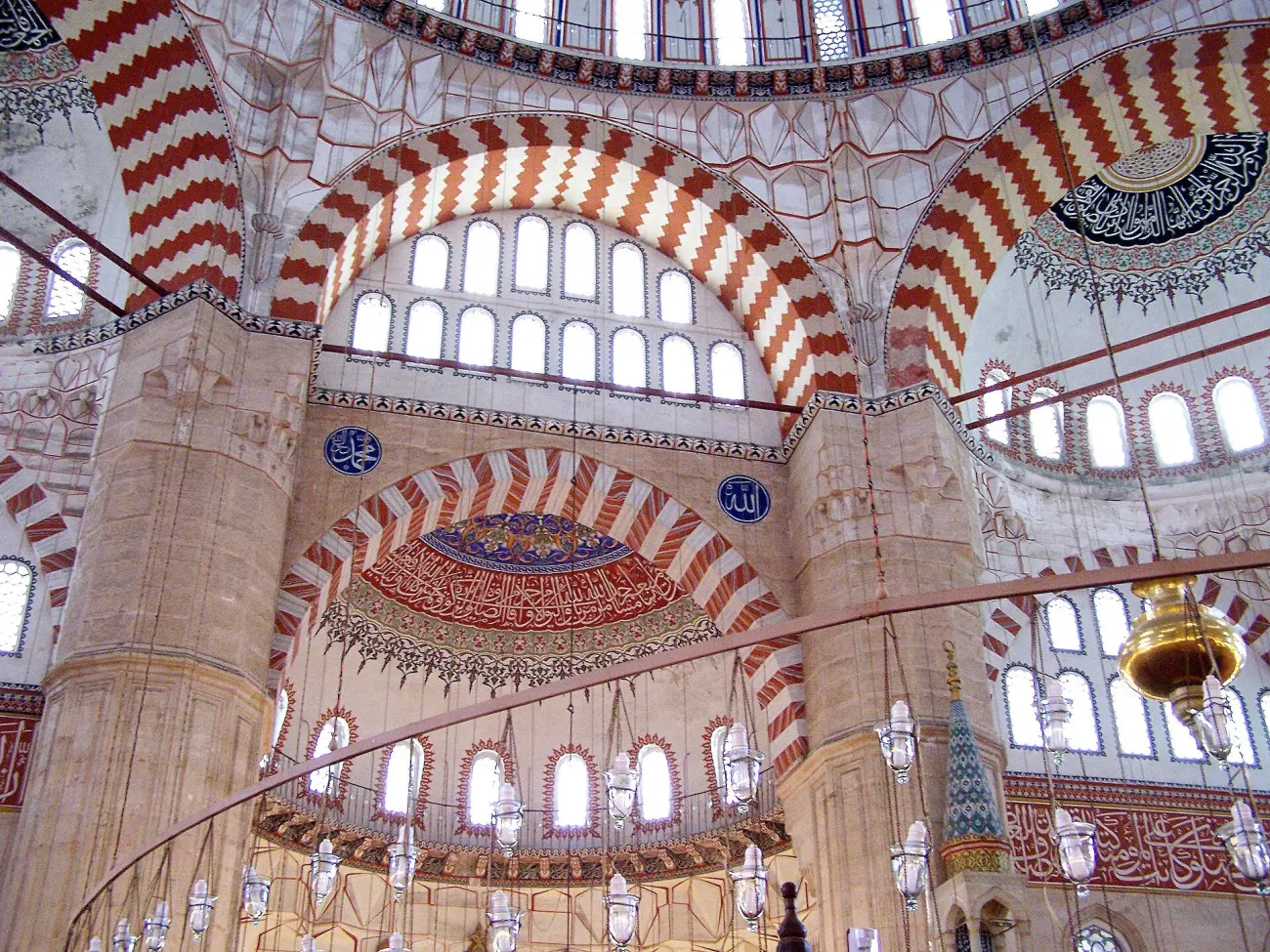
Twenty-seven years, one city, then another
One last thing the three dates make visible. The first two mosques stand in Constantinople, within sight of one another; the third is at Edirne, some two hundred kilometres to the north-west.
Between the completion of the first and the opening of the third, twenty-seven years pass. Sinan is roughly sixty when the Prince's mosque is finished and well past eighty when the Selimiye opens. The ranking he gives them is therefore also a ranking made late, by a man looking back over a working life rather than announcing a programme.
What the patron did not see
What remains is the gap, and it gives this episode its title.
Suleiman made Sinan's career. He took him out of the army, put him at the head of the imperial architects, gave him his son's mosque and then his own. He dies in 1566.
Mastery arrives nine years later. The man who had bet on him saw neither that degree nor the building that carries it.
What we do not say
We never give a number of buildings put up by Sinan. The tallies disagree with one another, and that disagreement is itself part of the subject: it is not to be settled in passing.
We show and mention no mausoleum, including the prince's, in line with our editorial rule. Half the photographs available for this subject show one: all were set aside at sourcing.
Finally, we attribute no intention to Sinan beyond what he formulated himself. The three-degree ranking is his. The structural explanation we give for it is a reading of the buildings, not a quotation.
A note on making
In the video, the voice says the names in French: the Prince's mosque, the mosque of Suleiman, the mosque of Selim. The screen gives the real names: Şehzade Camii, Süleymaniye Camii, Selimiye Camii.
There are two reasons. Our French synthetic voice cannot pronounce the Turkish spellings, whatever orthography we try. And the viewer needs the real name to find the building. Each does what it is good at.
To go further
Our article on Sinan, architect of the empire, the one on the jars hidden in the dome of the Süleymaniye, and the one on the endowments of the sultan's wife, who gave him his first commission.