
Home › Blog › Al-Bukhari and the chains of transmission
Bukhara and Samarkand · 9 min read
What al-Bukhari memorised was not sentences
At Baghdad, ten men recite a hundred hadiths to Muhammad al-Bukhari, and every one of them is wrong. They have attached each text to the wrong chain of transmitters, deliberately. The story is famous; what it reveals is less so. What this man memorises is not sentences, it is sequences of names. And that is the key to a figure everybody repeats without understanding it.
The Baghdad test
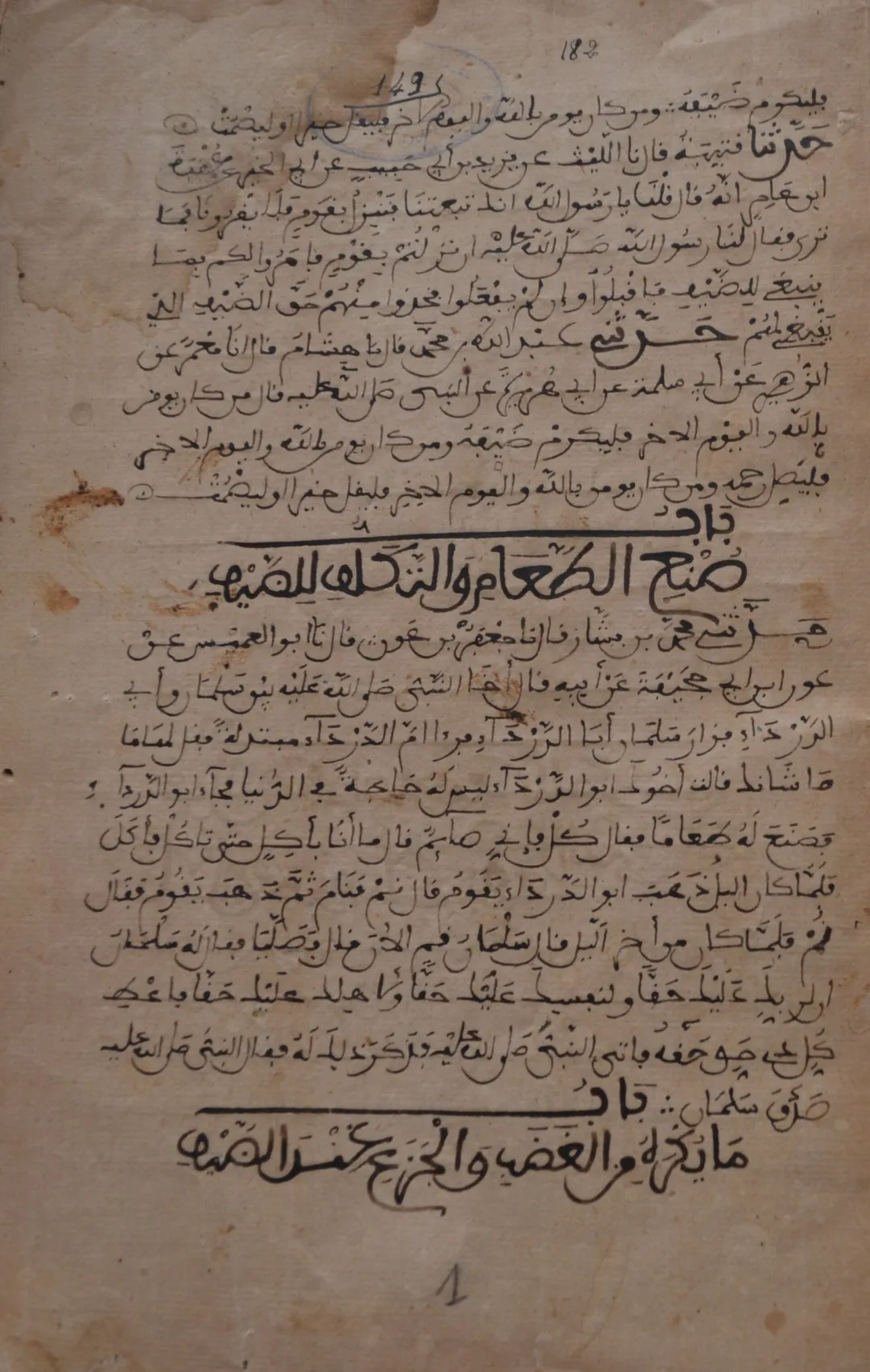
The scene is reported by al-Khatib al-Baghdadi in his History of Baghdad, and relayed later by Ibn Hajar.
When al-Bukhari arrives in the city, the hadith specialists decide to test him. They assemble a hundred hadiths, separate each text from its chain of transmission, then recombine them wrongly: the text of one with the chain of another. The hundred are divided among ten men, ten each.
The first recites his ten. To each, al-Bukhari answers that he does not know that hadith. Then the second, then the other eight, with the same answer every time. The audience believes it is watching a failure.
Once the hundred have been recited, he returns to the first man. He takes up his first hadith and returns the text to the chain that belongs to it. Then the second. Then all hundred, in the order they were given.
What Ibn Hajar underlines is not the correction, it is something else: he had heard those hundred falsifications only once.
A qualification that matters
This account comes from the biographical tradition. That has to be said before going further, because it determines the weight it can carry.
These texts have a function: they establish a scholar's authority by displaying the quality of his memory. They cannot be verified independently, and we do not present them as established facts. We report them as what they are, transmitted accounts, and we take an interest in what they tell us about the craft.
On that count they are valuable. The very form of the test says what was considered difficult.
What the test actually probes
Look at what the ten men rigged. They did not invent false texts. They did not alter the wording. They moved the chains.
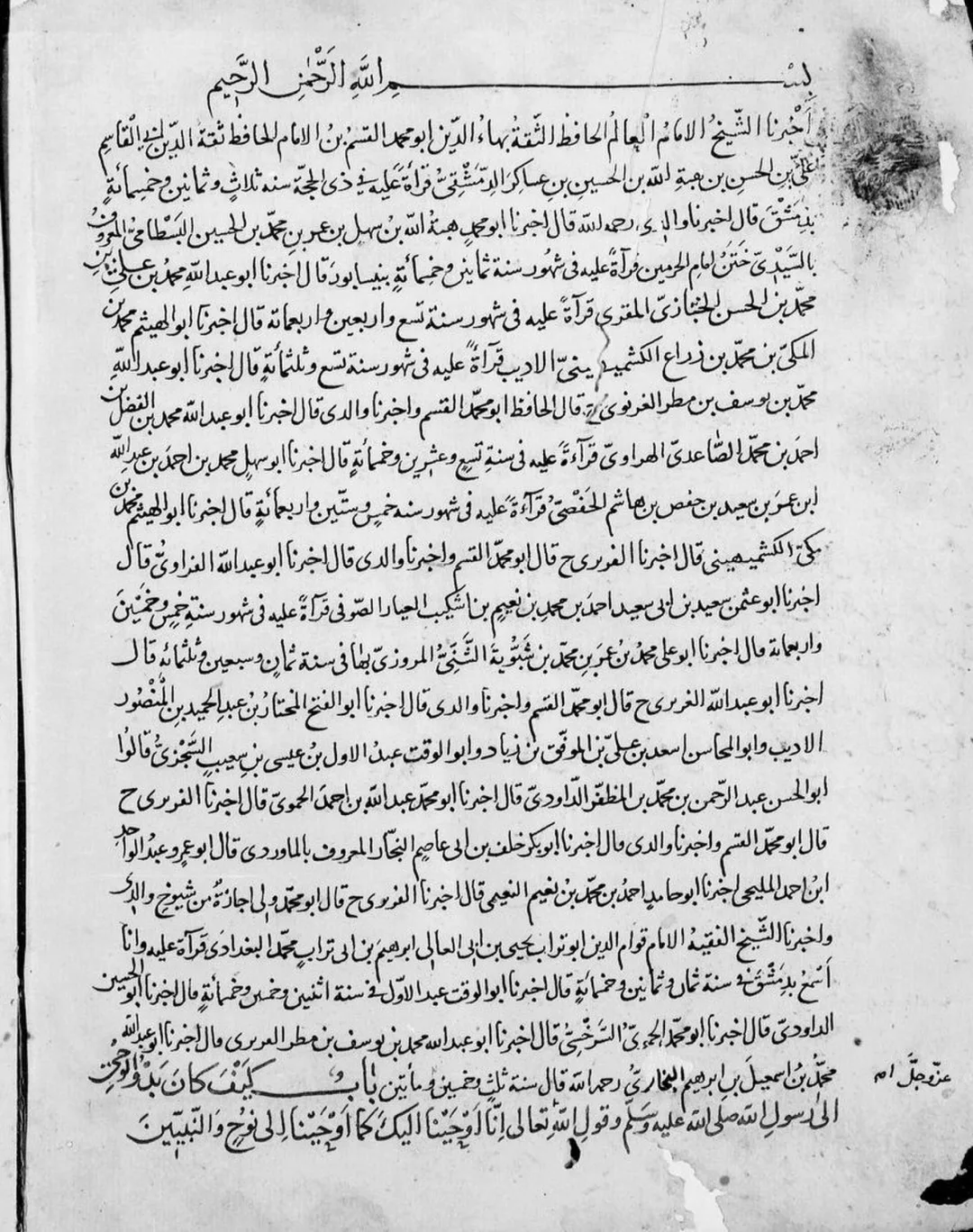
A chain of transmission, an isnad, is the list of people through whom a saying reached the reporter: so-and-so heard it from so-and-so, who heard it from so-and-so, and onwards. It is a sequence of names, with dates, places, meetings that are possible or impossible.
The test is therefore not about knowledge of the texts. It is about knowledge of the routes. And that is precisely the work: to assess a hadith is to assess the chain that carries it, person by person.
That is why al-Bukhari can detect the falsification at once. He is not comparing sentences, he is observing that a chain he knows has been attached to a text that is not its own.
The figure of six hundred thousand
It is written everywhere that al-Bukhari sifted six hundred thousand hadiths to keep only a few thousand. The figure circulates so widely that it ends up meaning nothing at all.
Read as a number of distinct sayings, it does not hold. Several writers have pointed this out: at three sentences per hadith, that would be close to two million sentences to collect, examine, assess and record. No human life is long enough, and the objection is fair.
But it rests on a misreading, and the misreading is instructive.
In hadith science the unit counted is not the saying, it is the saying together with its chain. The same text, transmitted by ten different routes, counts not as one hadith but as ten.
The figure of six hundred thousand therefore does not enumerate six hundred thousand different sayings. It enumerates text-and-chain pairs. The number of distinct sayings behind it is far smaller, and the number of chains far larger than a modern reader imagines.
What it does not mean
The opposite reading has to be ruled out at once, because it is tempting: no, this does not mean the work was ten times heavier.
It means the figure is inflated relative to the number of sayings, and that the difficulty is not where one instinctively puts it. It is not in the volume of text to retain. It is in the volume of names to retain, and above all in being able to say which list of names goes with which text.
That is a different order of skill from memory for recitation. It is sorting work, exercised on an enormous body of material, with a criterion bearing on people more than on words.
Bukhara, and a name that is a city
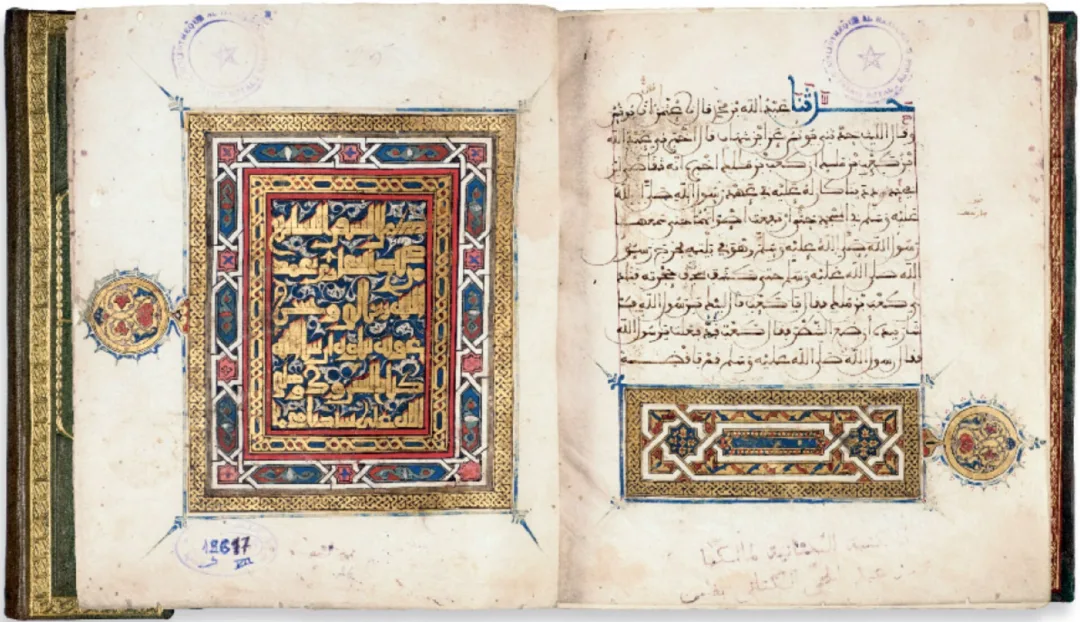
He was born at Bukhara, in Transoxiana, in 810. His full name is Muhammad ibn Isma'il al-Bukhari, and that last part is not a patronymic: it is an adjective of origin. Al-Bukhari means "the one from Bukhara".
The confusion is common and worth clearing up: Bukhara the city and al-Bukhari the man are two distinct subjects. The Kalyan minaret, which we have covered separately, stands in his birthplace, but it postdates him by three centuries.
Where the book was written
Here is the point that interests us most, because it is architectural.
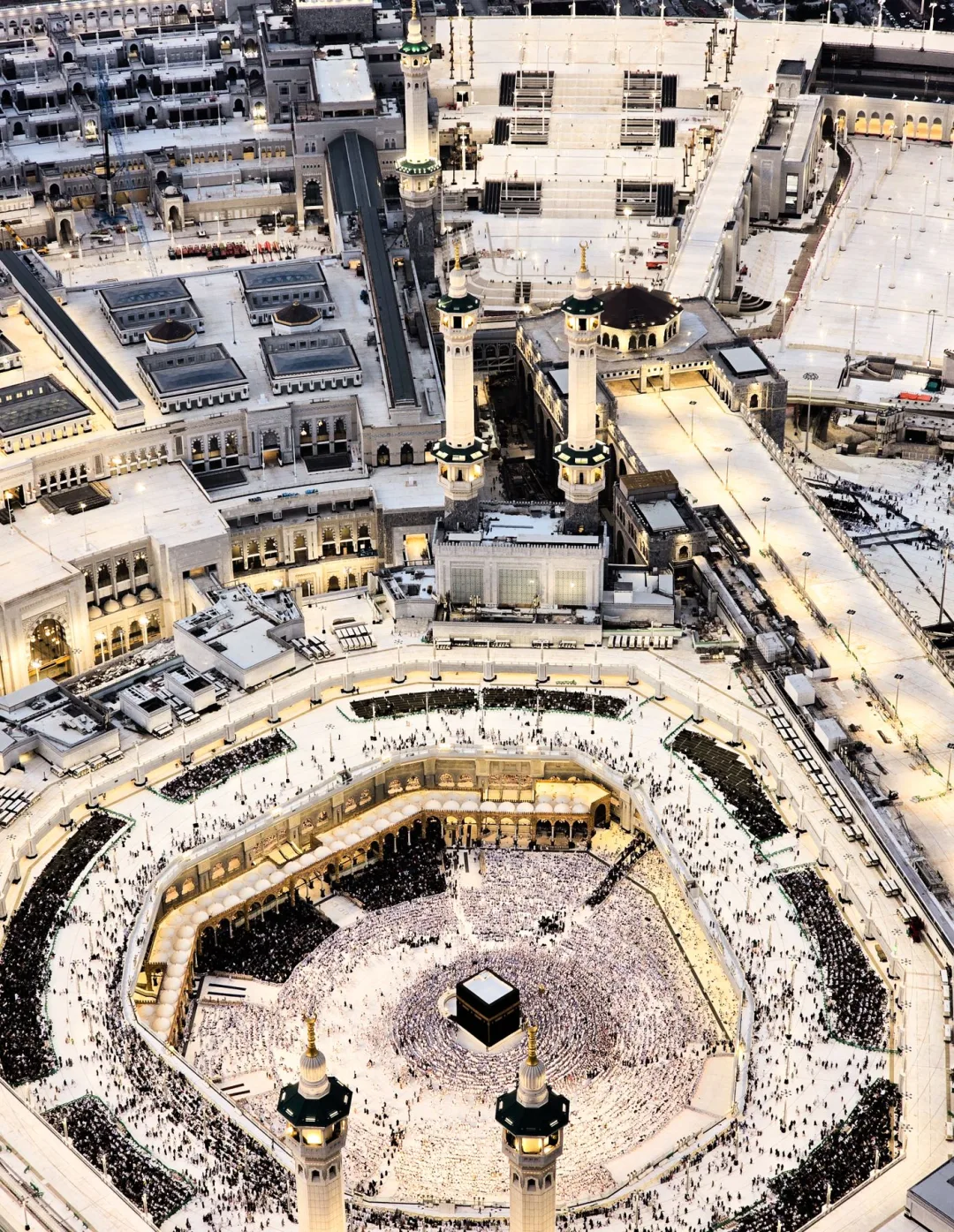
The tradition reports that the collection was gathered in Khurasan, arranged in the sanctuary at Mecca, and finished at Medina, in the Prophet's Mosque (peace and blessings of Allah be upon him).
In other words, the most copied book of the Sunni tradition was ordered in one building and completed in another, and they are the two buildings to which we have devoted our two series: the series on Masjid al-Haram and the one on Masjid an-Nabawi.
There is something here that corrects a too-common image, that of the scholar isolated in a study. A medieval mosque is not only a place of prayer, and our chapter on the functions of the Prophet's Mosque sets that out in detail: people taught there, worked there, wrote there.
Samarkand
He died in 870, at Khartank, a village near Samarkand. A complex was raised there in his memory, with a mosque, turquoise domes and a wide courtyard.
Two mosques to write his book. A third in his memory.

What we do not say
No "the first". Neither for the collection nor for the method. Those are questions of chronological priority that the literature debates, and they are not settled in an article for general readers.
The standing of the collection is a standing, not a fact. The Sahih is held by the Sunni tradition to be among the most reliable collections. That is how we put it, and we compare it to no other.
No count of retained hadiths is given here. The totals vary according to whether repetitions are counted, and according to the edition. Giving a single number would create a false impression of precision, on a subject whose heart is precisely a question of counting.
Our sources
The Baghdad test is reported by al-Khatib al-Baghdadi in Tarikh Baghdad and relayed by Ibn Hajar al-Asqalani, whose commentary on the Sahih, the Fath al-Bari, remains the reference.
The principle of counting by chains, which makes the figure of six hundred thousand intelligible, is set out in the literature on the size of hadith corpora, where it is contrasted with the naive reading of the number.
The places of composition come from the biographical tradition, and we report them as such.
Discover
Mosques mentioned in this article
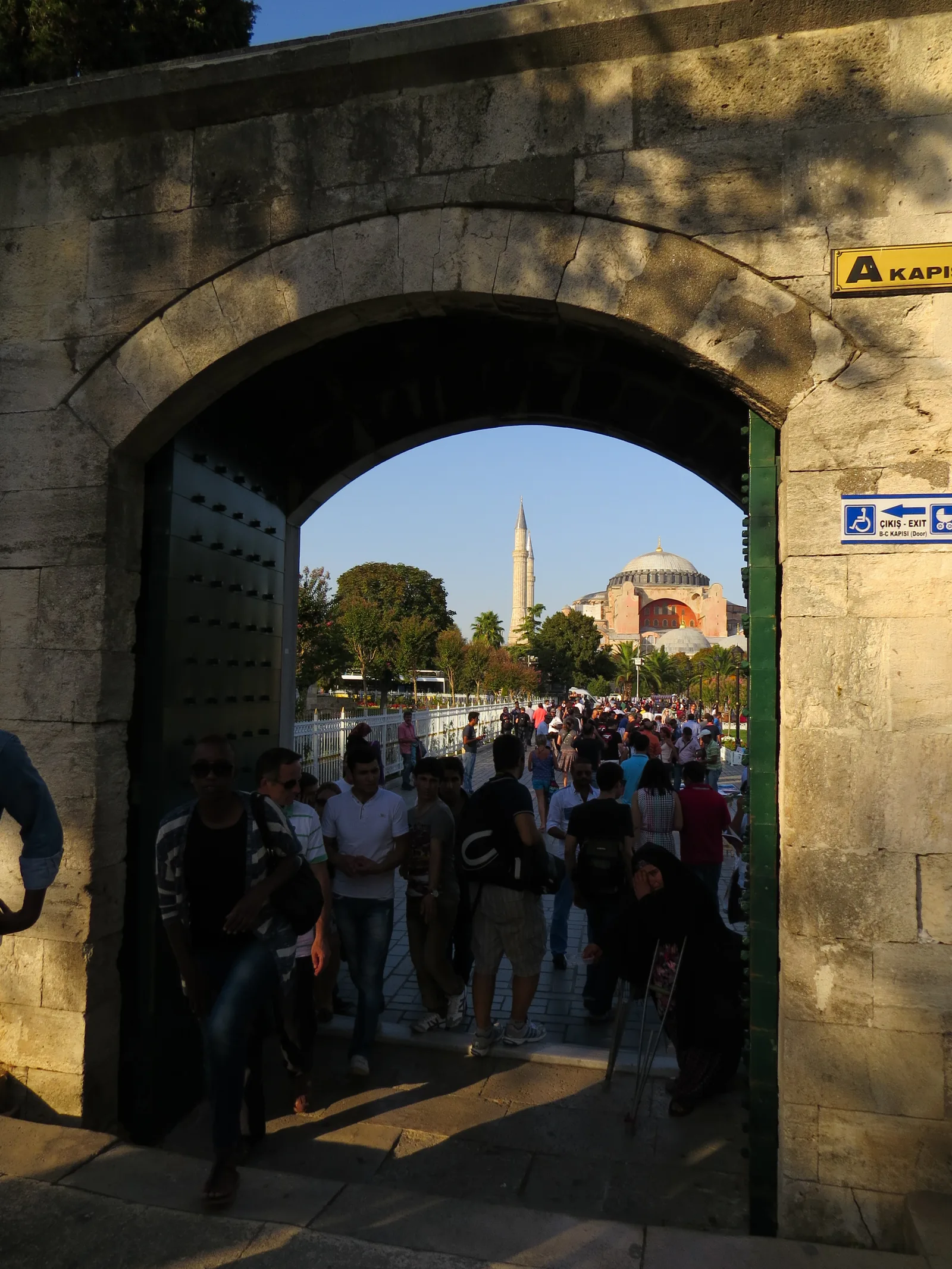
Blue Mosque (Sultan Ahmed)
Six minarets, a cascade of domes and over 20,000 Iznik tiles: the icon of Istanbul.
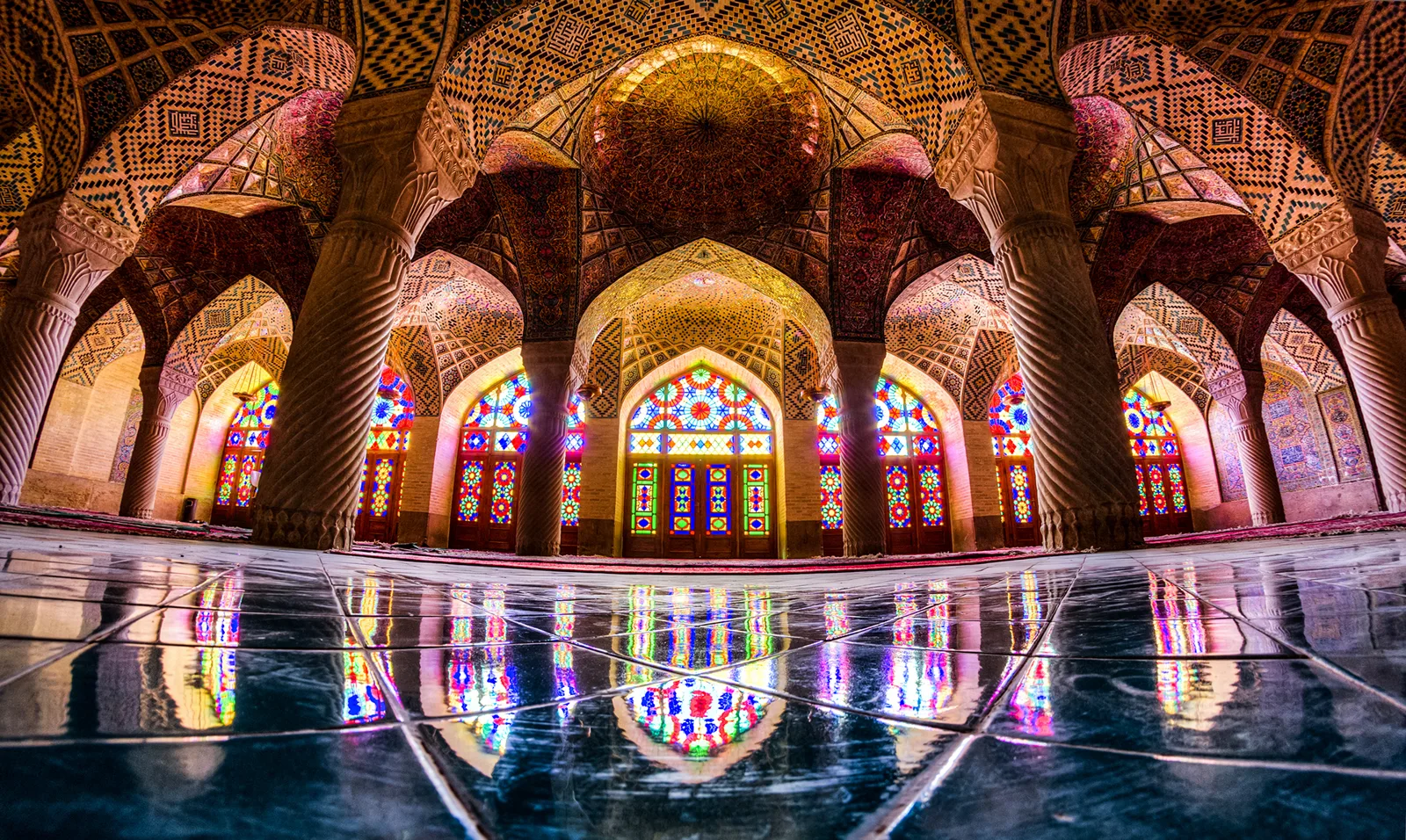
Nasir al-Mulk Mosque
Shiraz's "Pink Mosque", whose stained-glass windows turn every morning prayer into a kaleidoscope.
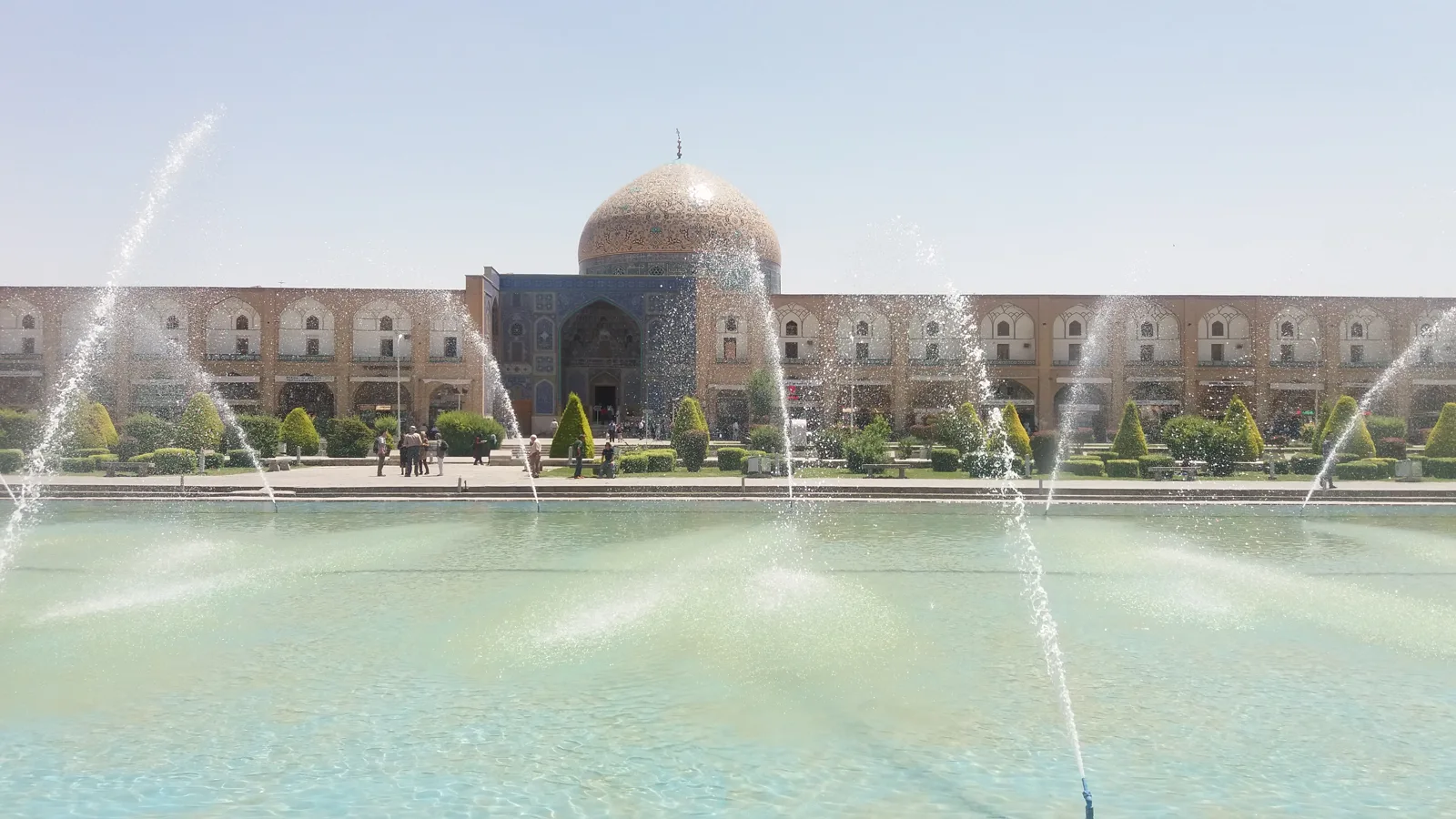
Sheikh Lotfollah Mosque
The Safavid jewel of Naqsh-e Jahan Square: no minaret, no courtyard, but Iran's most beautiful dome.
About this page's content: this site offers editorial and cultural content written with care and respect for the religious traditions concerned; it does not constitute a theological opinion or a source of religious authority. Despite our checks, errors, inaccuracies or approximations may remain. If you spot one, please let us know via the Contact page or by email at qibla.mosk@gmail.com, and we will correct it gratefully.