
Home › Masjid an-Nabawi › A mosque was not only for prayer
Masjid an-Nabawi, chapter 6 · Medina · 9 min read
A mosque was not only for prayer
Today a mosque is for prayer. The first one, at Medina, did a great deal more: people prayed there, slept there, were taught there, delegations were received there and disputes were settled there. One enclosure, one covered hall, one courtyard, and all of those functions inside it. Here is how they arrived, and how they left again.
Five uses in a single building
Start with the list, because it surprises even readers who know the subject.
People prayed there, obviously, and that is the only function the building has kept all the way to us.
People slept there. A strip of the roof, at the back, sheltered those with no house in town. That was the case for emigrants from Mecca, with no family there, and therefore without the network of kinship that housed everyone at the time.
Teaching happened there, sitting in a circle, which is the shape teaching takes when it has no room of its own yet.
Delegations were received there as they arrived from across the peninsula. One column of the building was remembered as the spot where people sat to welcome them.
Disputes were settled there.
In other words the building was at once a place of worship, a shelter, a school, a reception hall and a courthouse. That is not a picturesque accumulation: it is what a building becomes when it is the only one of its kind in the town.
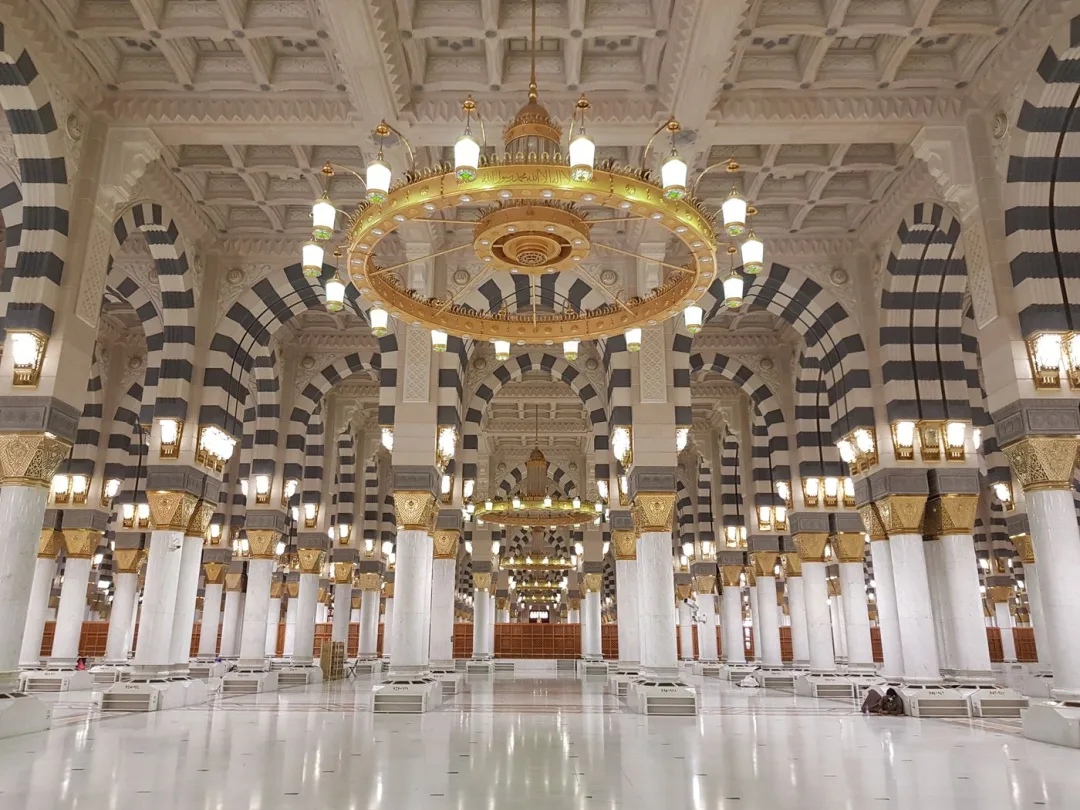
A piece of furniture added for a function
In 628 a pulpit is added to the mosque. The Prophet (peace and blessings of Allah be upon him) stands on it to be seen and heard by the whole assembly, and it is from there that he states the law and settles disputes.
The detail is worth noting because it is architectural. A new function, or rather a function growing in weight, produces an object in the building. Not a room, not a wing: a piece of furniture. That is the scale of the means available at the time, and it is also proof that the building is adapting to its uses rather than having been designed for them.
Why it all fitted in one place
The question deserves to be put plainly: why not build a school, a courthouse, a shelter?
Because there was nothing else. The town of 622 has no teaching institution, no court building, no relief institution. The only collective building is the mosque, and it is therefore the only place where a community can do everything a community has to do.
Its form allows it, moreover, and that is what makes the case interesting. Chapter 3 describes that building: an enclosure some thirty metres a side, a covered part on one side, an open courtyard for the rest. There are no rooms. There is only a sheltered surface and an open one, and any use at all can occupy either, depending on the hour and the weather.
A building without rooms is a multi-purpose building by construction. It is the exact opposite of the architecture that would follow, in which each function gets its own volume.
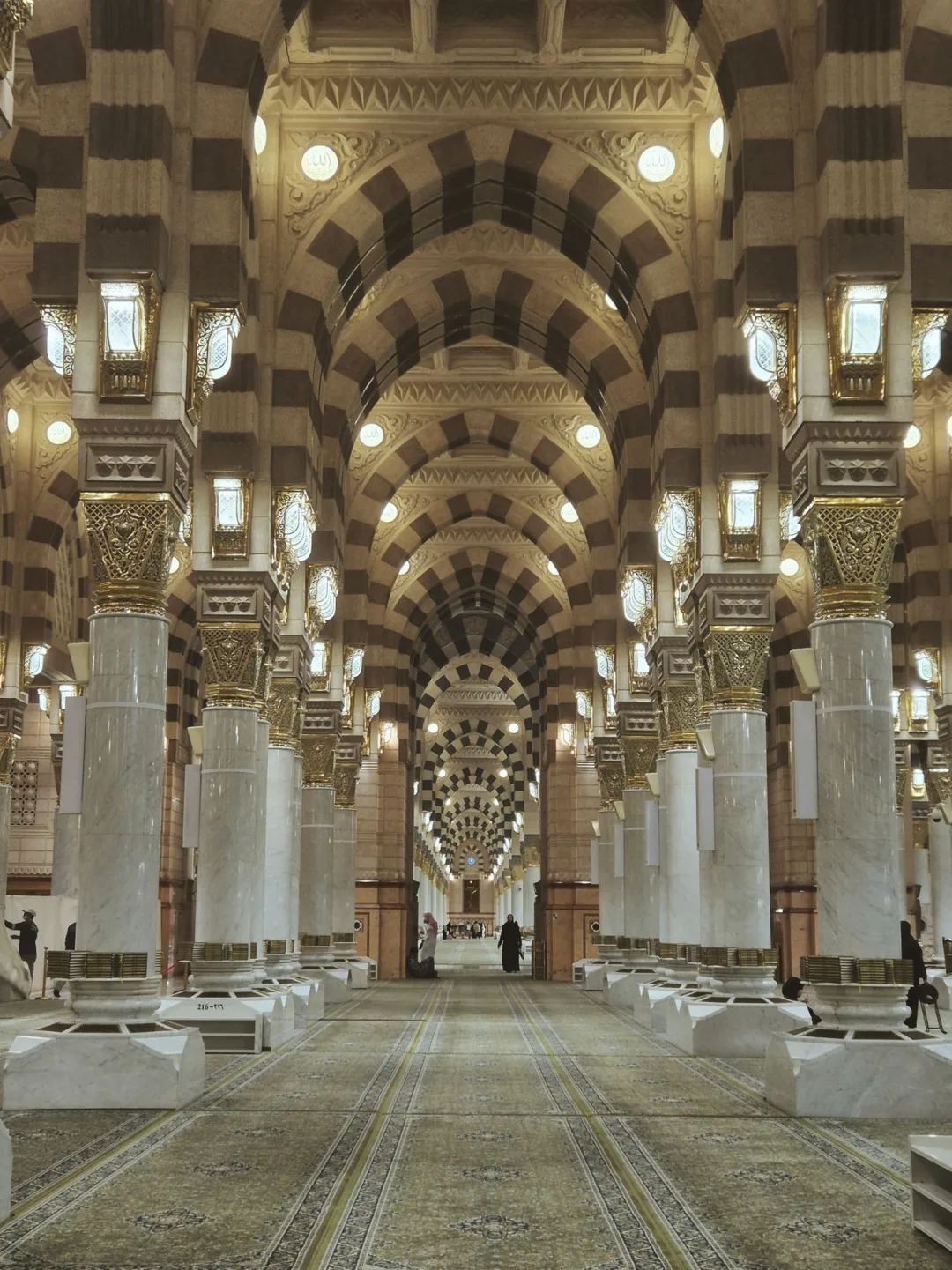
The suffa, the shade at the back
The covered strip at the back has a name: the suffa, and the word means the shade. The thing is named for what it does, not for its shape.
It was made like the rest of the cover: palm trunks, wooden cross beams, fronds and stalks over them. It was therefore not an annexe, nor furniture, nor a separate construction. It was the rear of the same roof.
A widespread image needs correcting here, without making a great affair of it. The suffa is almost always drawn as a stone bench, or a masonry platform. A study published in the Journal of Historical Researches of Iran and Islam writes that the suffa was a shade behind the place where people prayed, and that its fame as a bench or veranda has no historical precedent.
On the number of its residents, a precision is needed. One day Abu Hurayra (radiya Allahu anhu) counted seventy of them. That is a witness account reported by al-Bukhari, describing a scene. It is not a census, and that population certainly varied over time.
It is also written that the suffa was Islam's first university. The sources do not allow that. Teaching is abundantly attested there, but the same study specifies that not everyone lodged there came to learn. A shelter in which teaching happens is not a teaching establishment in which people lodge, and the difference is not a detail.
Then each function left
Here is the second half of the story, and it is told far less often.
Teaching left first, for a very concrete reason: a mosque is not a place to lodge students for years. Teaching that lasts requires beds, meals, storage, and quiet at hours when the building is being used for something else.
The answer was a compromise at first. In the tenth century, annexes are built against mosques, hostels where students can lodge, backing onto the place of teaching without being inside it.
Then, in the eleventh century, the school gets a building of its own. That is when the madrasa becomes an autonomous architectural type, with foundations of its own, notably under the vizier Nizam al-Mulk.
We are careful not to write "the first madrasa". Earlier forms are reported, in Khurasan, from the tenth century, as an adaptation of the teacher's house to receive students. What is solid is the overall movement and its century, not an inaugural foundation.
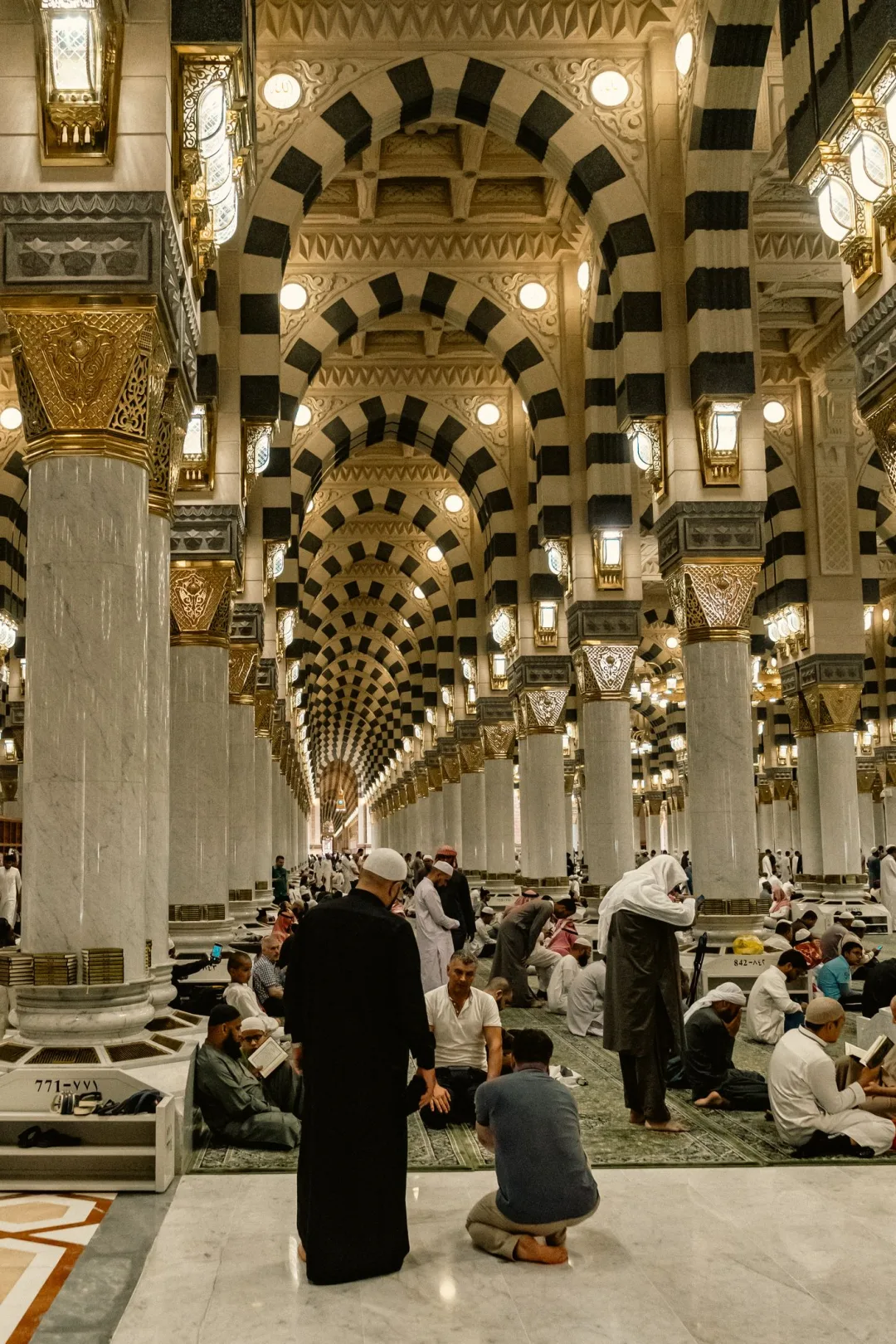
What stayed
The other functions followed the same path, each at its own pace, and we do not date them here: the sources do not allow it with the same clarity as for teaching.
The result, however, is visible everywhere. A historic Muslim town lines up a mosque, a madrasa, a hospital, a caravanserai, a courthouse, and each one is a building. What was gathered inside a thirty-metre enclosure now occupies a district.
And in the mosque, prayer remains.
That is what explains the gap between today's idea of a mosque and what it was at the start. We are not looking at a building that always had this single use: we are looking at what is left after everything else has gone.
What we do not say
No compass orientation. The sources contradict one another on which side the suffa stood. The figure in the video says "we pray towards this side", a position relative to the building, never a compass point.
No dimension, no height. Chapter 3 keeps three metres sixty of headroom on the authority of one source; others describe the height of a man with his arms raised, which is not the same thing. Until that gap is settled, we abstain here.
No "first". Neither for the madrasa, nor for the suffa as a teaching institution.
The boxes at the end of the video are boxes. No real building is represented in them, and two of them deliberately stay empty and undated.
Our sources
Omer Spahic, The Form and Function of the Prophet's Mosque during the Time of the Prophet and History and Architecture of the Prophet's Mosque (2019), drawing on al-Samhudi, Ibn Sa'd, al-Tabari, Creswell and Hillenbrand, for the multifunctional character of the building and for the composition of its roof.
The Prophet's Mosque entry in the Encyclopædia Britannica for the pulpit added in 628 and for its use.
Civilizational Approach to the Residents of Suffa, Journal of Historical Researches of Iran and Islam, volume 8 number 15, 2014, for the nature of the suffa, for the absence of any historical precedent for its reputation as a bench, and for the qualification on teaching.
For the departure of teaching: the literature on the history of the madrasa, which describes the succession of the mosque, then the khan built against it in the tenth century, then the madrasa as a distinct institution in the eleventh.
The rest of the series
Chapter 2 tells the other half of the movement: while the functions were leaving, the building itself was growing around a point that has never been moved.
Discover
Mosques mentioned in this article
Blue Mosque (Sultan Ahmed)
Six minarets, a cascade of domes and over 20,000 Iznik tiles: the icon of Istanbul.
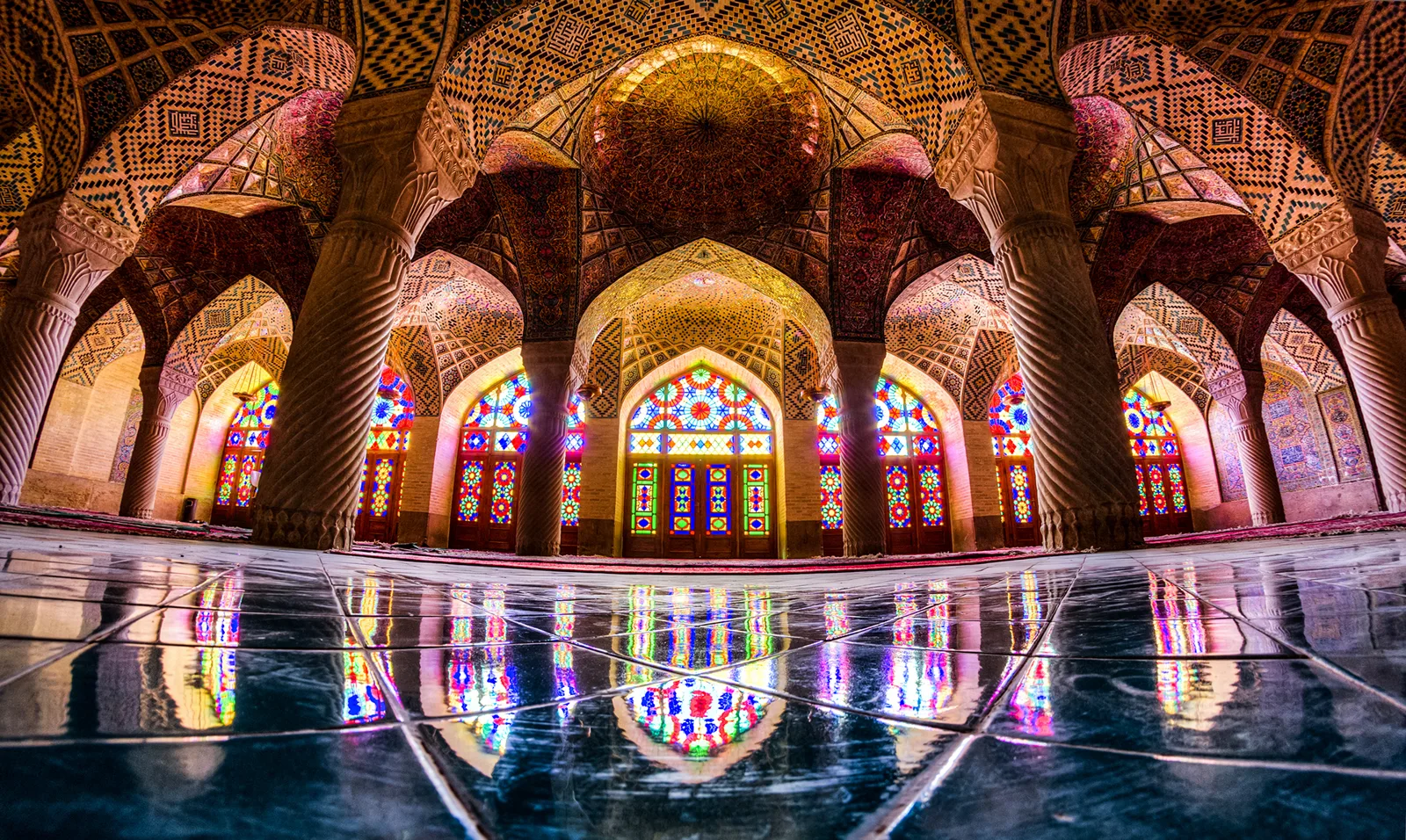
Nasir al-Mulk Mosque
Shiraz's "Pink Mosque", whose stained-glass windows turn every morning prayer into a kaleidoscope.
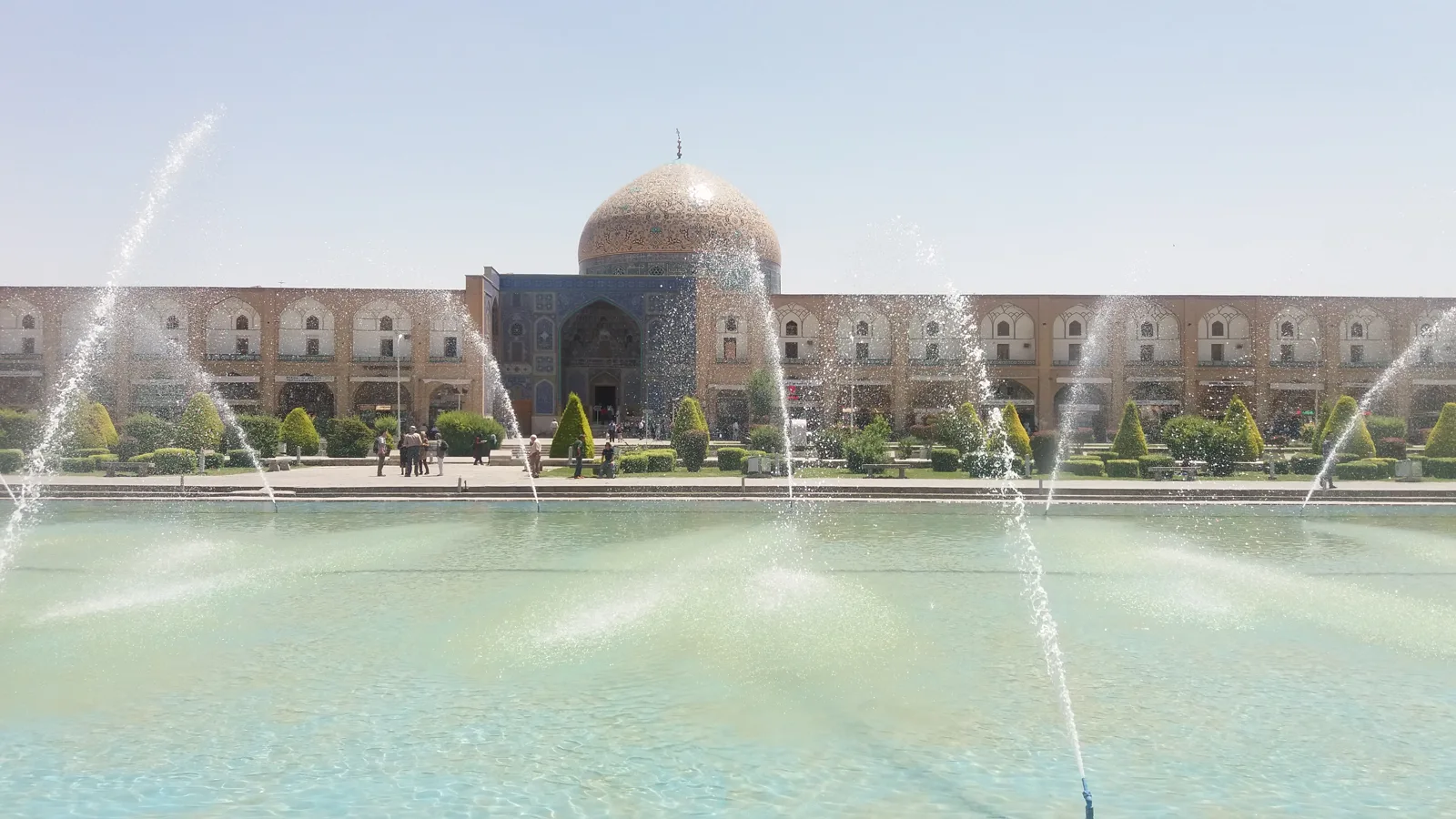
Sheikh Lotfollah Mosque
The Safavid jewel of Naqsh-e Jahan Square: no minaret, no courtyard, but Iran's most beautiful dome.
About this page's content: this site offers editorial and cultural content written with care and respect for the religious traditions concerned; it does not constitute a theological opinion or a source of religious authority. Despite our checks, errors, inaccuracies or approximations may remain. If you spot one, please let us know via the Contact page or by email at qibla.mosk@gmail.com, and we will correct it gratefully.