
Home › Masjid an-Nabawi › The first version was palm trunks
Masjid an-Nabawi, chapter 3 · Medina · 8 min read
The first version was palm trunks
In 622, at Medina, the first mosque of the Prophet (peace and blessings of Allah be upon him) fits into a square of roughly thirty metres by thirty-five. The walls are mud brick, the roof rests on palm trunks, and it stands three metres sixty above the ground. You can touch it by raising your arm.
A word first about images
No image of the building of 622 exists, and none can. No excavation has recovered its plan. What we know comes from written descriptions, and that has to be said before anything else, because it governs how this chapter is illustrated.
The figure in the video is therefore a reconstruction, and the screen says so throughout. It sets out elements attested by the sources: a base, walls, supports, a partial cover. It does not claim to restore a plan.
The dimensions
The footprint is about thirty metres fifty by thirty-five metres sixty, a square some thirty metres a side. That is the size of a large courtyard, not of a monument.
The figure is worth setting beside the one in the previous chapter: a thousand and fifty square metres, against over a million today. The ratio is past a factor of a thousand, and the rest of this article should be read with that gap in mind.
The material
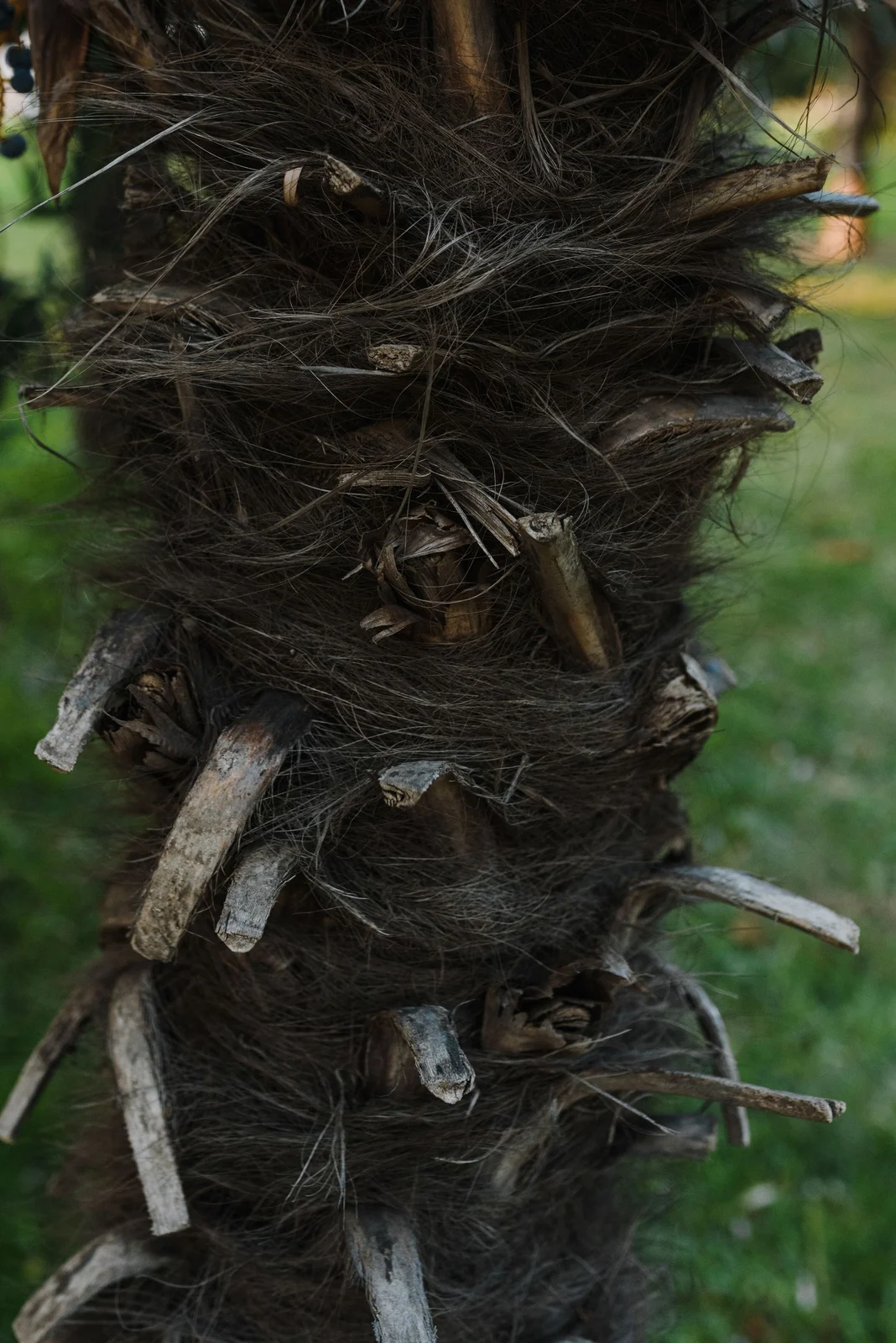
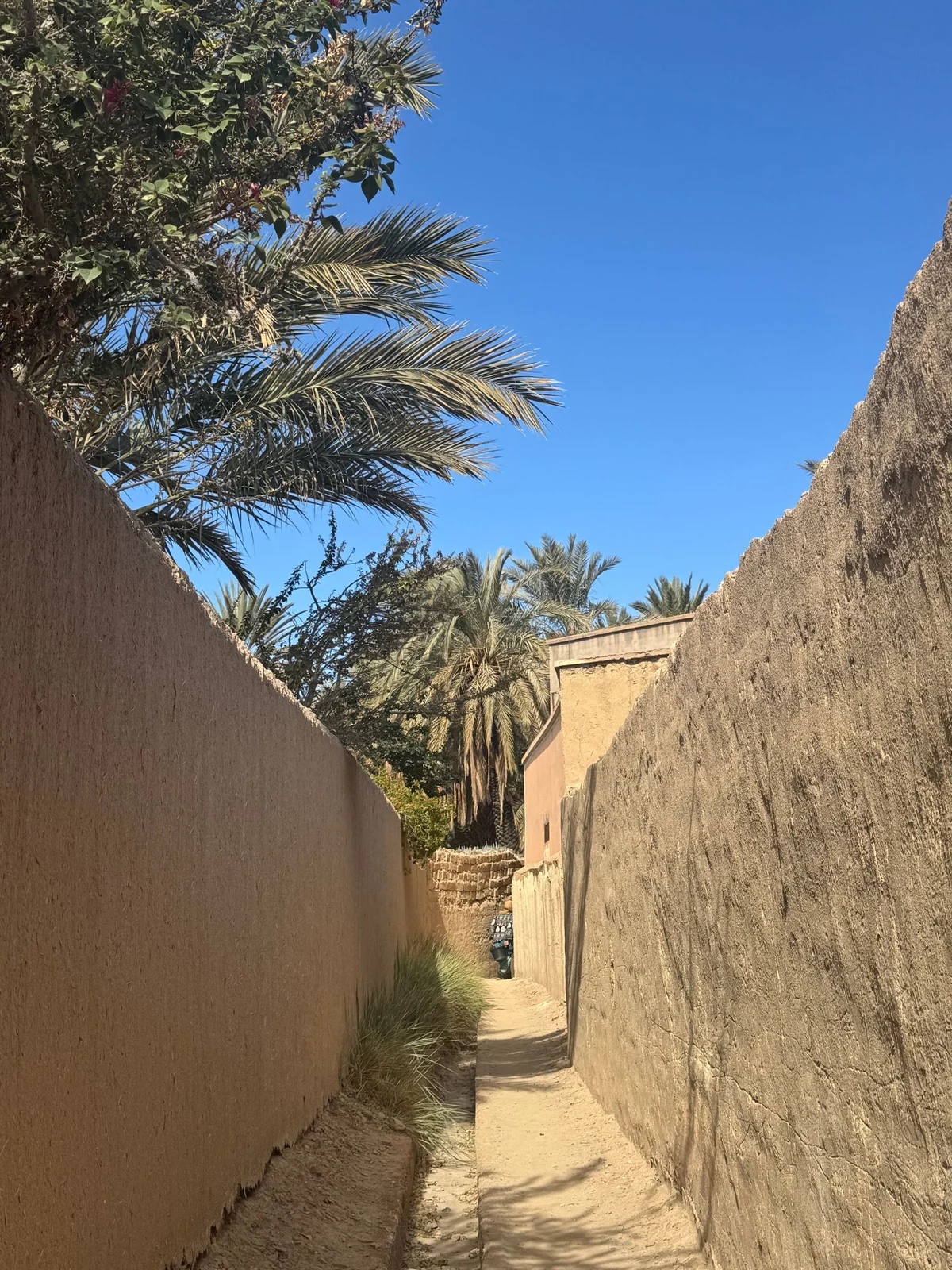
The walls are mud brick, that is earth moulded and dried in the sun, unfired. They stand on a stone masonry base about a metre and a half high.
That base is not decorative. Mud brick fears water, and above all rising damp from below. A stone plinth isolates the wall from the ground and lets it survive. It is a solution found wherever people build in earth, and it is why earthen buildings cross centuries when they are assumed to be fragile.
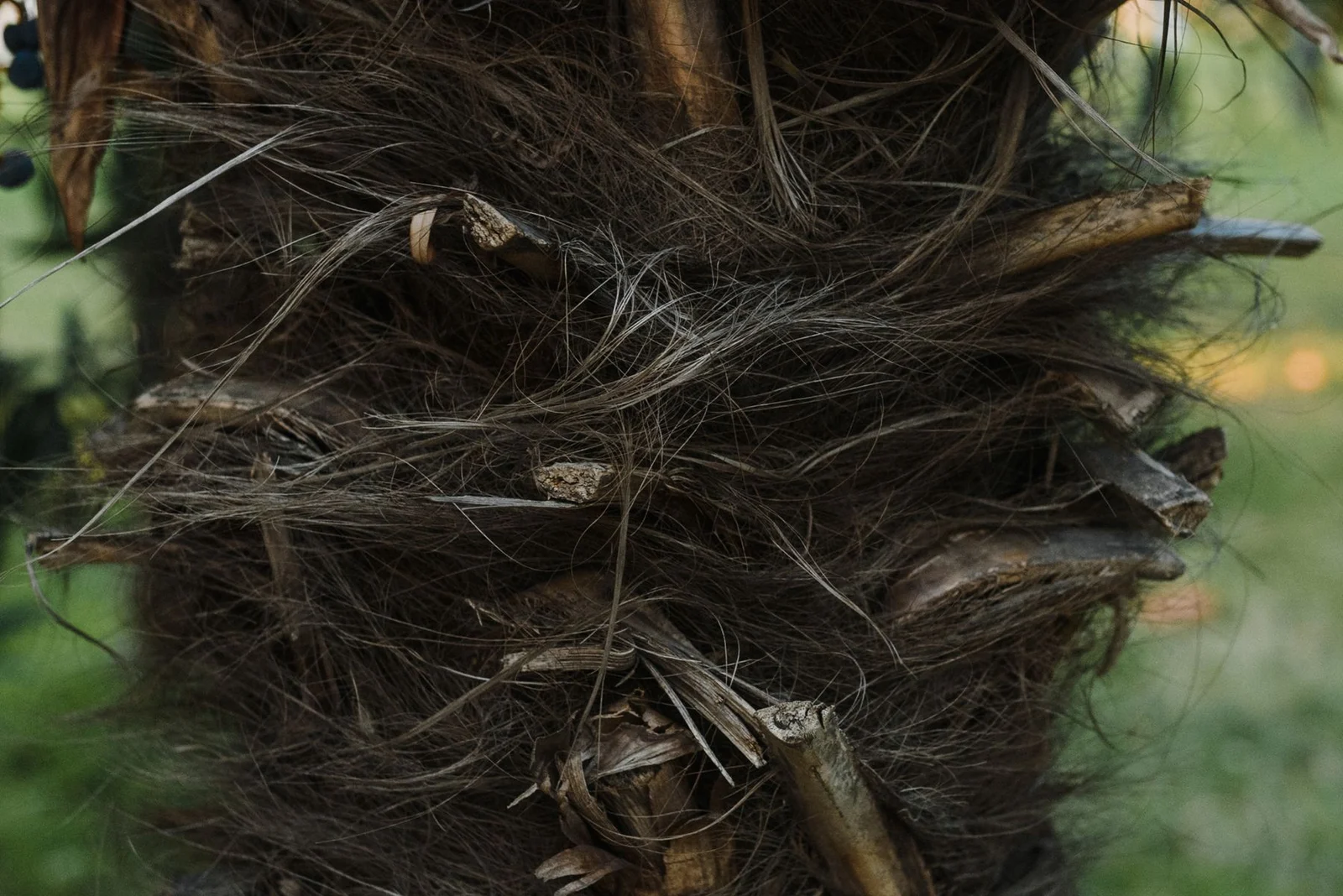
The cover rests on upright palm trunks with cross beams, and is made of palm fronds and beaten clay.
In other words the whole building is made of what the oasis produces. Earth from the ground, stone from the hills, palm from the grove. Nothing is imported.
Three metres sixty
The headroom is about three metres sixty. That figure says more than it appears to.
An adult standing with a raised arm reaches roughly two metres twenty. Three metres sixty is therefore not a ceiling you touch with your fingertips, but it is a ceiling you see, whose structure you can read, under which there is no sense of vertigo or of scale for its own sake.
Set it against what mosque architecture would later produce: domes at thirty metres, naves at twenty. Nothing of the kind here. The scale is domestic.
We must flag a divergence, because it exists. Some sources describe the height not by a number but by a formula, the height of a man with his arms raised, which would give closer to two metres twenty or two metres fifty. The two values do not overlap. We keep three metres sixty because it is a figure, and we flag the other because suppressing it would give a false impression of certainty.
The roof does not cover everything
This is a point often lost in modern reconstructions, which readily draw a complete hall.
The cover occupies only part of the enclosure, on the side people pray towards. The rest is an open courtyard.
This arrangement is not an intermediate stage on the way to a finished building. It is a type: an enclosure, a sheltered zone on one side, a courtyard. All courtyard mosque architecture descends from that organisation, and it is still recognisable today in enormous buildings that have nothing else in common with this one.
What is not there
There is no minaret, no dome, no ornament.
The call is given from the roof of the tallest house nearby. The minaret as an architectural element appears later, and is therefore in no sense an original attribute.
What the building is, on the other hand, goes beyond prayer alone: people gather there, speak there, settle matters there. It is a place of worship and a public place, and that double nature explains part of its form, not least the importance of the courtyard.
What Uthman (radiya Allahu anhu) does with it
Later the caliph Uthman (radiya Allahu anhu) has the whole thing taken up: the walls are rebuilt in dressed stone, the palm trunks are replaced by stone shafts, and the cover by a teak roof.
Note what that means. In a single campaign the three original materials are replaced by durable ones, and one of them, teak, is imported. The building changes in kind: it moves from the architecture of the oasis to the architecture of an empire.
It is also why nothing material survives of the building of 622. It was not destroyed. It was replaced piece by piece.
Why this chapter is hard to illustrate
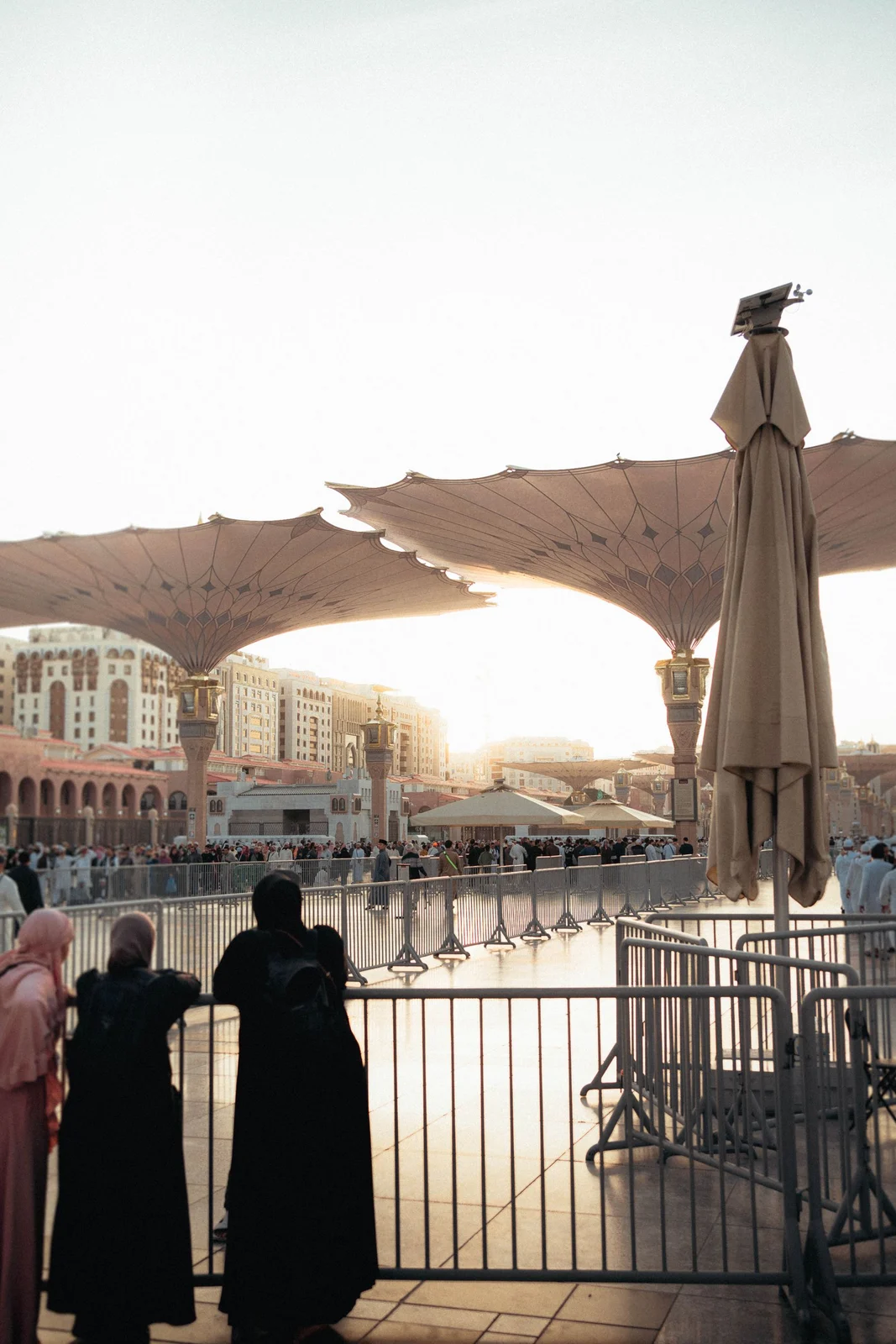
The difficulty is not finding photographs of Medina; there are many. It is that none of them shows the subject, since the subject disappeared fourteen centuries ago.
So we did two things. The photographs in this article show materials, palm, stone, earth, rather than places they cannot show. And the mechanism is carried by a drawn figure, announced as a reconstruction from beginning to end.
It is a rule we apply across the series: when an image cannot tell the truth, it must not try to suggest it.
Our sources
Referenced encyclopaedic literature on the Prophet's Mosque for the dimensions, the materials, the headroom, the partial extent of the cover and the works of Uthman (radiya Allahu anhu).
We flag the divergence on height explicitly, and we repeat that no archaeological survey of the building of 622 exists.
The rest of the series
Chapter 2 tells what became of that thirty-metre square. Chapter 6 shows everything that went on under this frond roof, besides prayer.
Discover
Mosques mentioned in this article
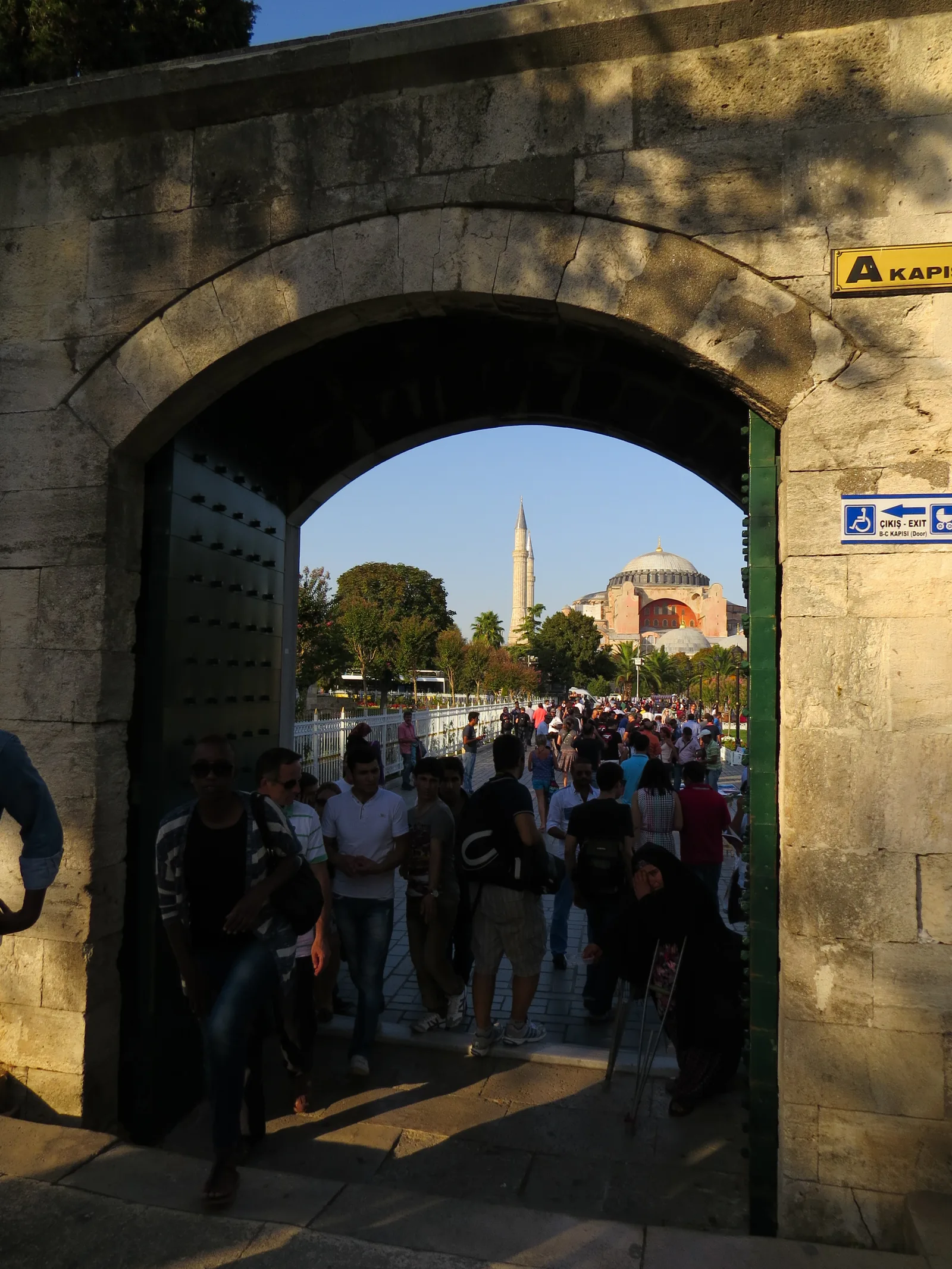
Blue Mosque (Sultan Ahmed)
Six minarets, a cascade of domes and over 20,000 Iznik tiles: the icon of Istanbul.
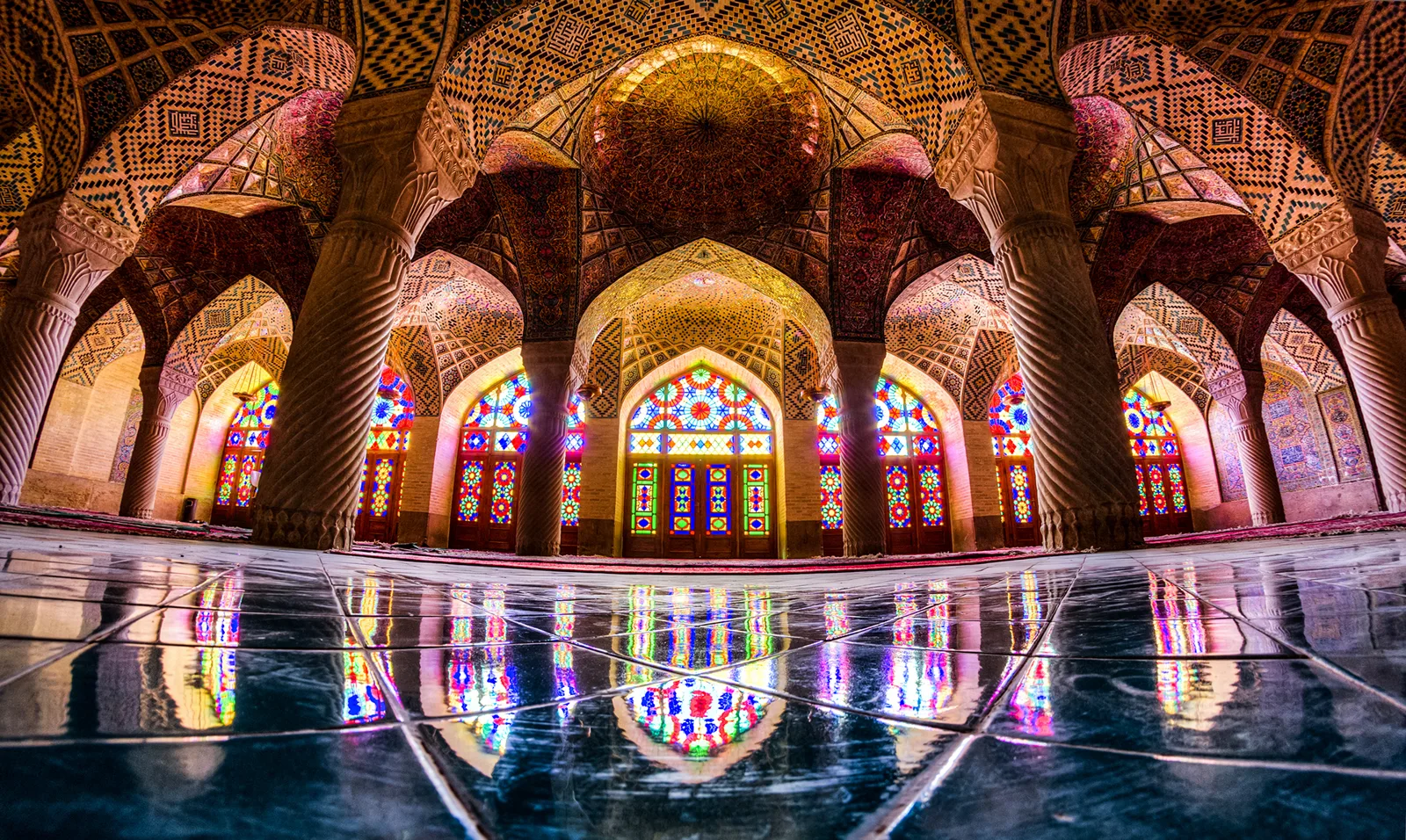
Nasir al-Mulk Mosque
Shiraz's "Pink Mosque", whose stained-glass windows turn every morning prayer into a kaleidoscope.
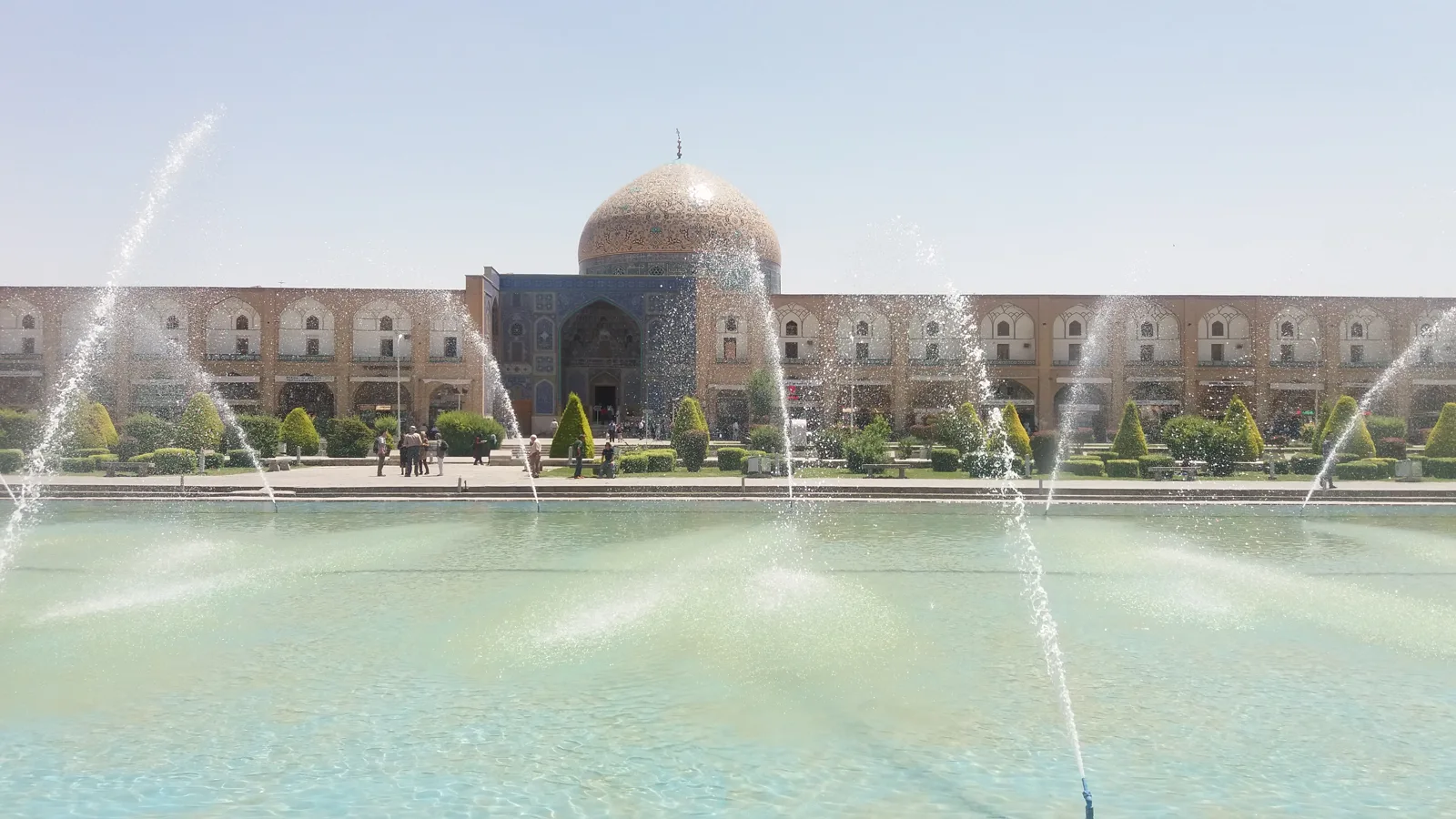
Sheikh Lotfollah Mosque
The Safavid jewel of Naqsh-e Jahan Square: no minaret, no courtyard, but Iran's most beautiful dome.
About this page's content: this site offers editorial and cultural content written with care and respect for the religious traditions concerned; it does not constitute a theological opinion or a source of religious authority. Despite our checks, errors, inaccuracies or approximations may remain. If you spot one, please let us know via the Contact page or by email at qibla.mosk@gmail.com, and we will correct it gratefully.