
Home › Blog › What is Islamic architecture? History and founding principles
History · 7 min read · 2026-01-12
What is Islamic architecture? History and founding principles
"Islamic architecture" refers to a body of building traditions born in the Muslim world from the 7th century onward, which share common concerns : orienting the worshipper towards Mecca, gathering the community, decorating without depicting living beings : while transforming radically across eras and regions.
A starting point: the mosque of the Prophet (peace and blessings of Allah be upon him)
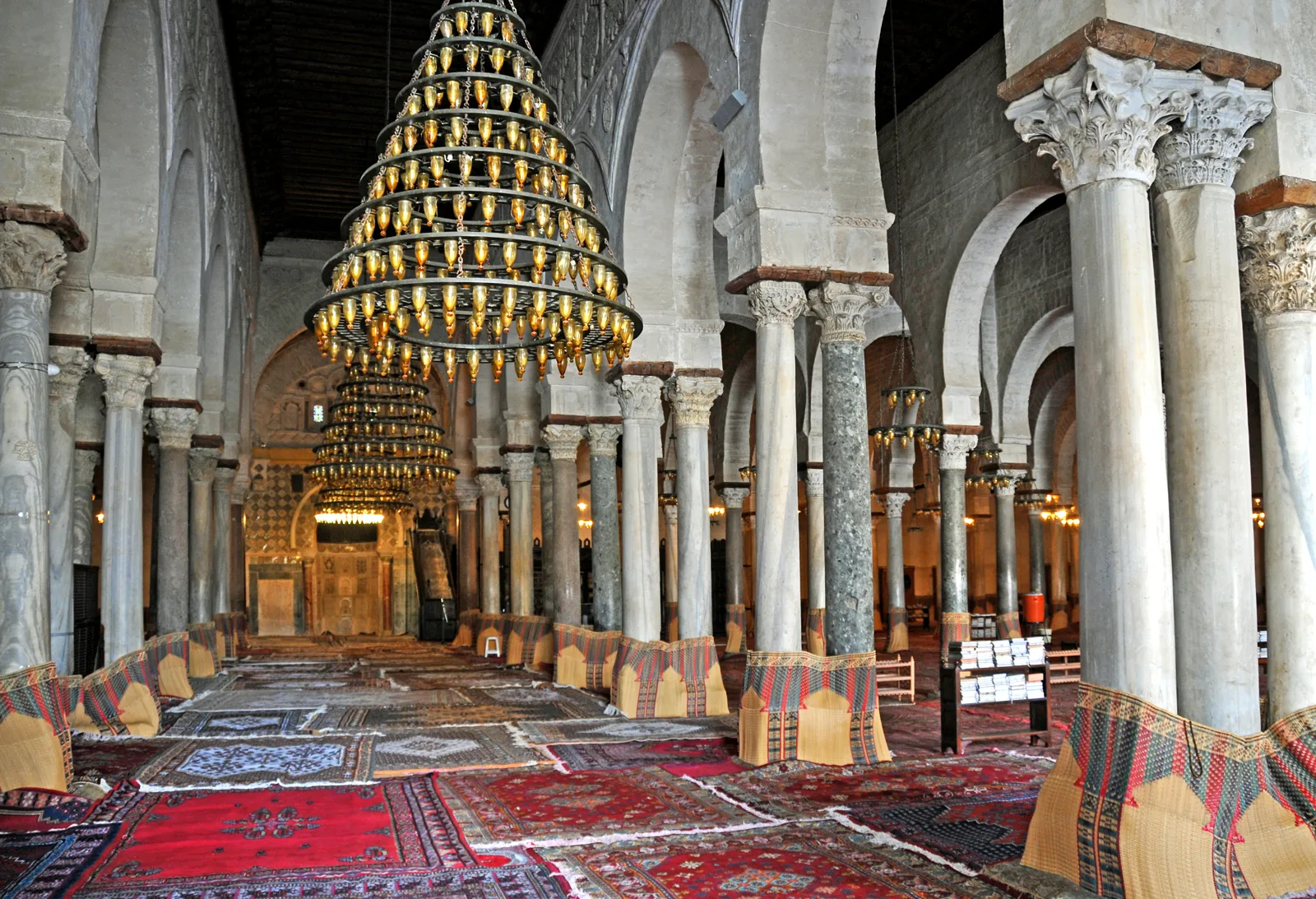
The first mosque in history is, in effect, the house of the Prophet Muhammad (peace and blessings of Allah be upon him) in Medina, a compound of packed earth surrounded by huts and shaded by palm fronds. This simple form, a courtyard, a wall oriented towards the qibla, a covered space for prayer, would remain the template for the so-called "hypostyle" mosque, made of rows of columns supporting a flat roof, found centuries later at the Great Mosque of Kairouan or in the prayer hall of the Mosque-Cathedral of Córdoba.
Byzantine and Persian influences
From the Umayyad and then Abbasid conquests onward, Muslim builders inherited the skills of the civilisations they encountered: the dome and stone masonry of the Byzantine empire, the art of decoration and fired brick of Sassanid Persia. The Masjid al-Haram in Mecca and the Mosque of the Prophet (peace and blessings of Allah be upon him) in Medina would in fact keep expanding through successive dynasties, adding porticoes, domes and minarets while never renouncing their founding function: to surround a sacred place.
The Ottoman apex: the dome as signature
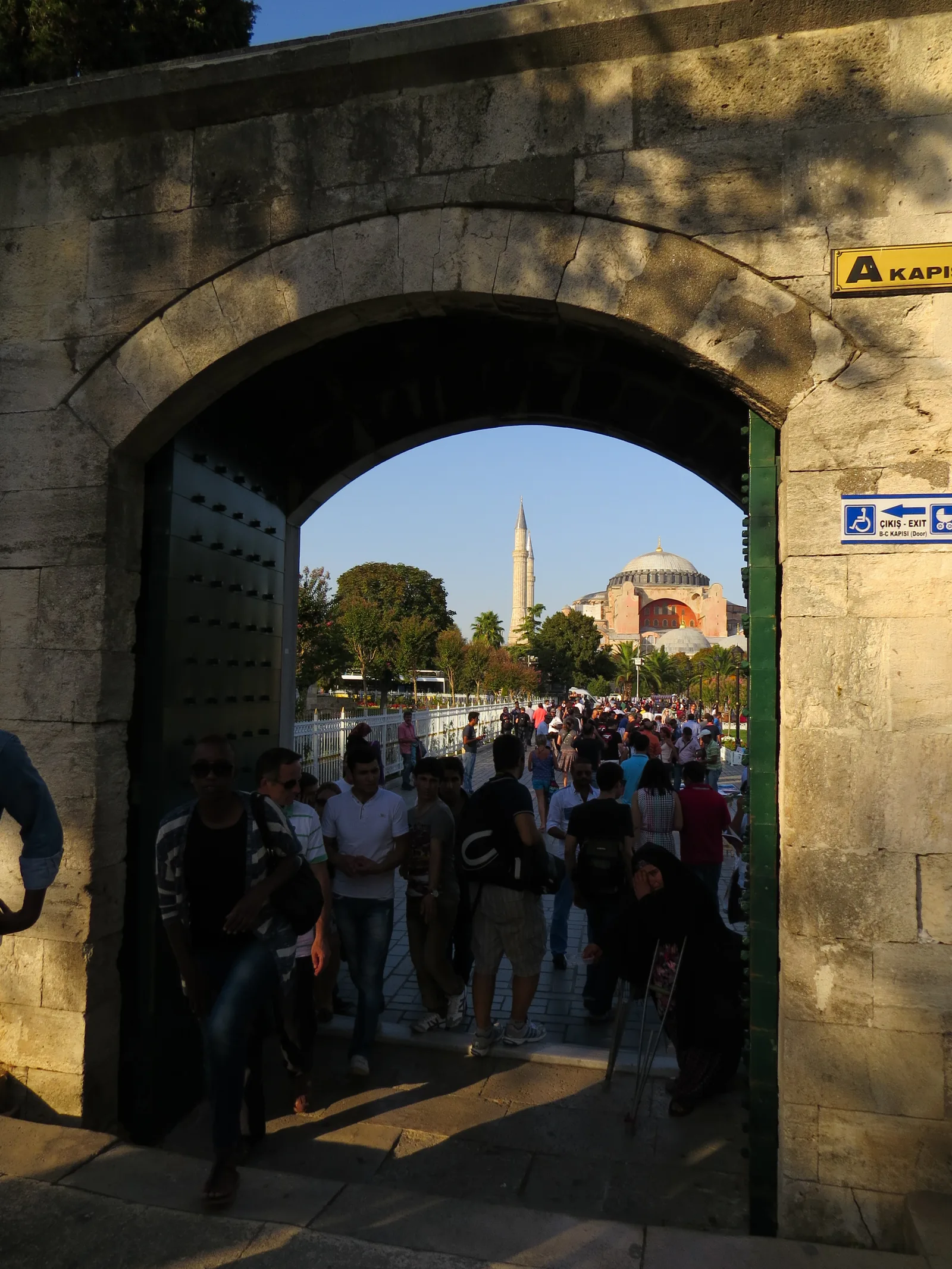
From the 15th century onward, Ottoman architects, Sinan foremost among them, perfected the art of the great central dome carried by a cascade of half-domes, a structural feat directly inspired by Hagia Sophia. The Blue Mosque and the Süleymaniye Mosque in Istanbul illustrate this balance between exterior monumentality and luminous interior intimacy, tiled with Iznik ceramics.
The Persian and Mughal world: the reign of ornament
In Iran and South Asia, the emphasis shifts towards adornment: polychrome ceramics, carved muqarnas, coloured stained glass. The Sheikh Lotfollah Mosque in Isfahan or the Nasir al-Mulk Mosque in Shiraz, nicknamed the "Pink Mosque", turn architecture into an almost pictorial experience, where light filtered through tinted glass becomes a building material in its own right.
A still-living architecture
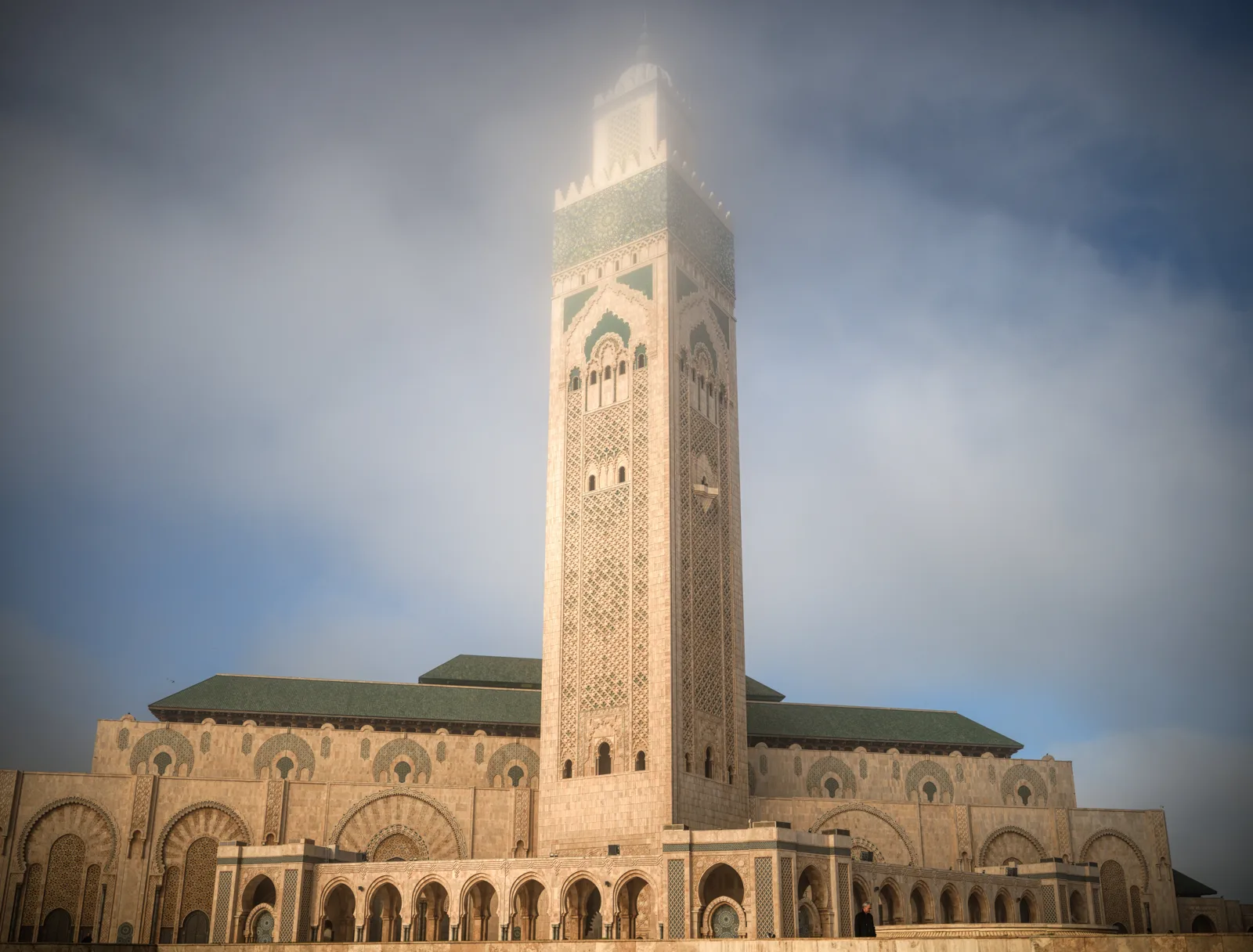
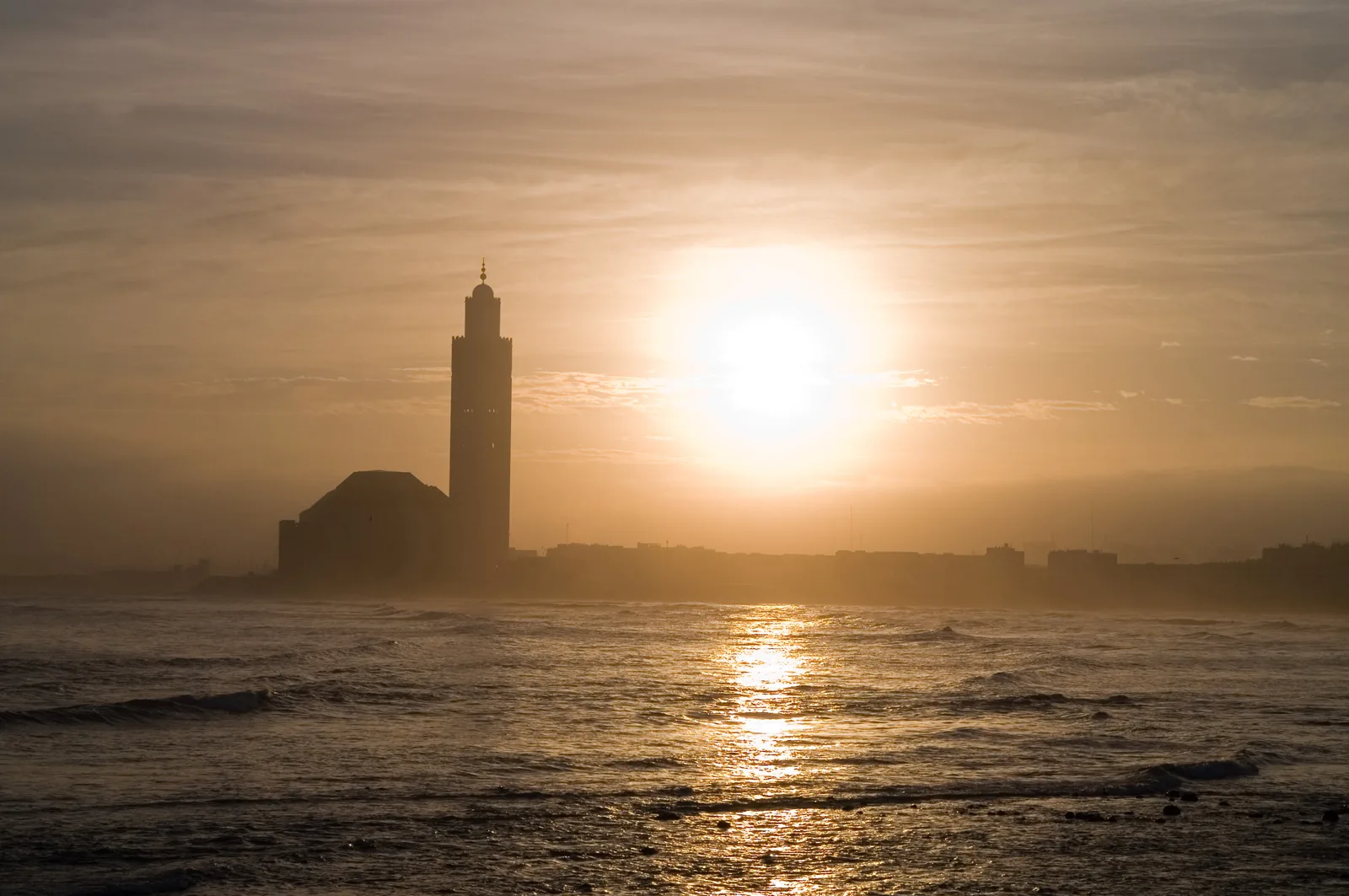
Far from being frozen in the past, Islamic architecture continues to reinvent itself: the Hassan II Mosque in Casablanca combines traditional Moroccan decoration with contemporary feats of engineering (its minaret rises over 200 metres), while the Sheikh Zayed Mosque in Abu Dhabi embraces a monumental white-marble classicism designed for the 21st century. From a palm-frond hut to an air-conditioned marble vessel, the thread running through it all remains the same: to build a space that turns the community towards a single point.
Discover
Mosques mentioned in this article
Hassan II Mosque
A giant standing on the Atlantic: a 210-metre minaret, a retractable roof and Moroccan craftsmanship at its peak.
Blue Mosque (Sultan Ahmed)
Six minarets, a cascade of domes and over 20,000 Iznik tiles: the icon of Istanbul.
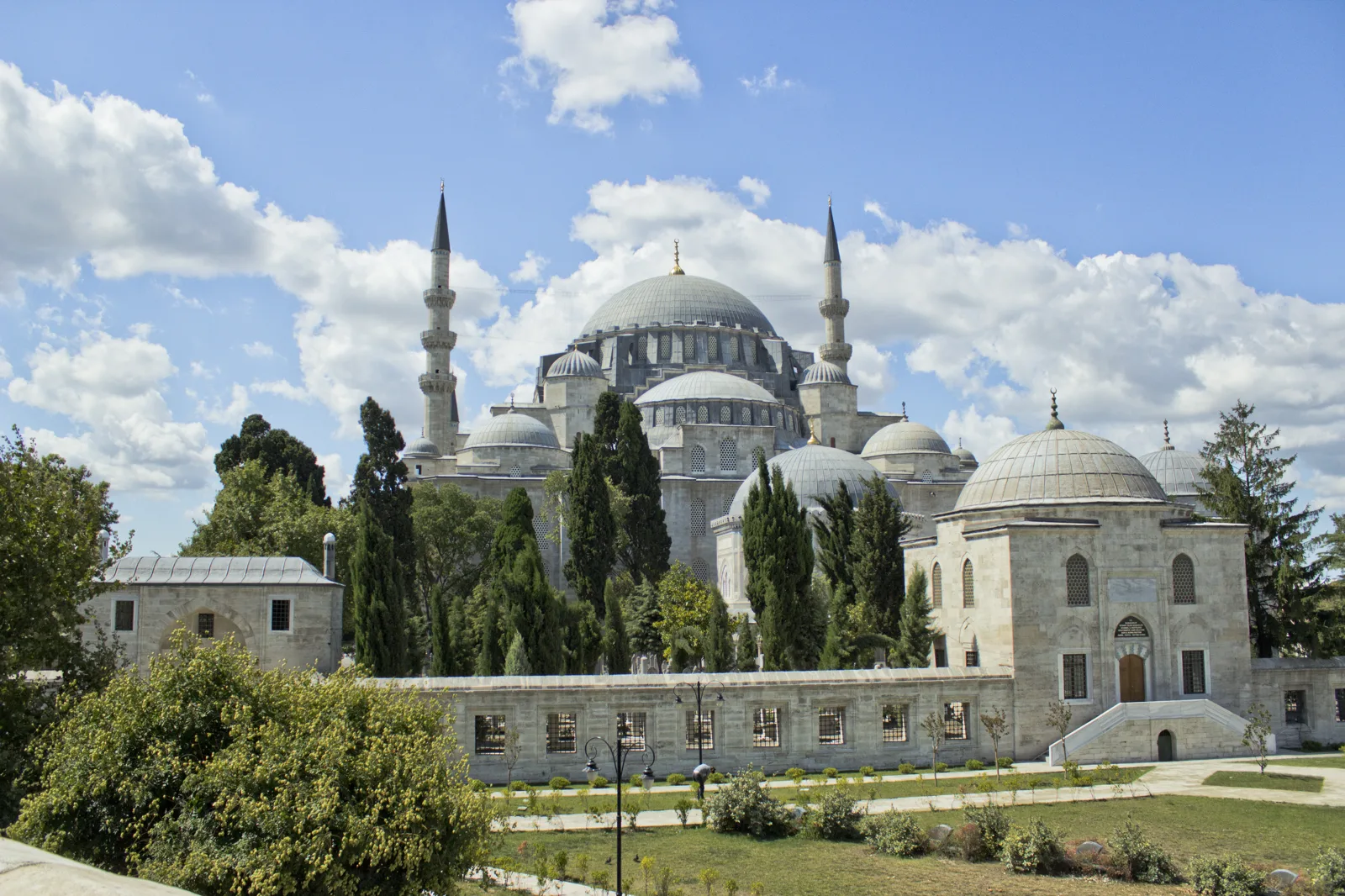
Süleymaniye Mosque
Sinan's masterpiece overlooking the Golden Horn, dedicated to Suleiman the Magnificent.
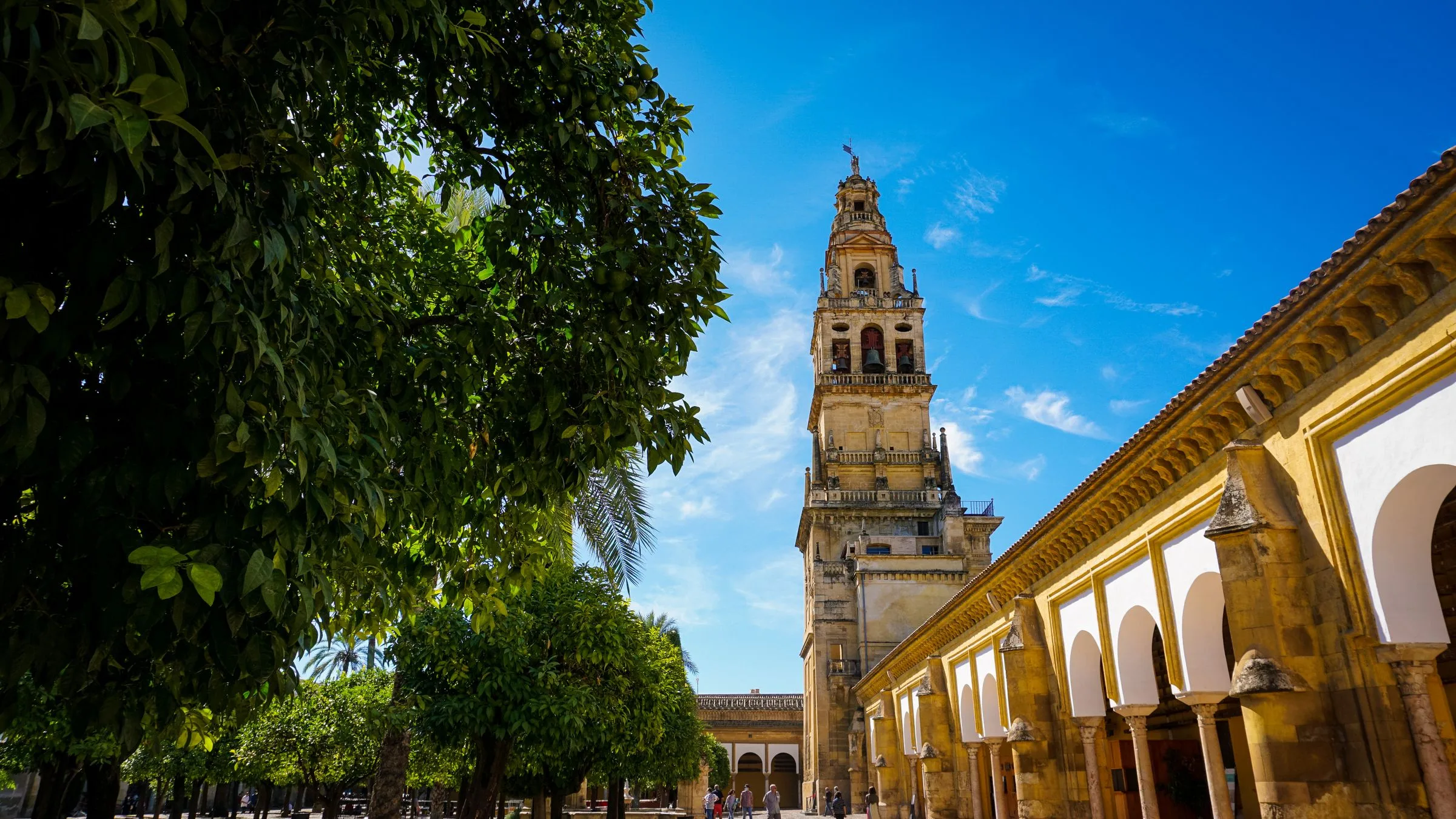
Mosque-Cathedral of Córdoba
The forest of two-tone arches of al-Andalus, a UNESCO-listed Umayyad masterpiece.
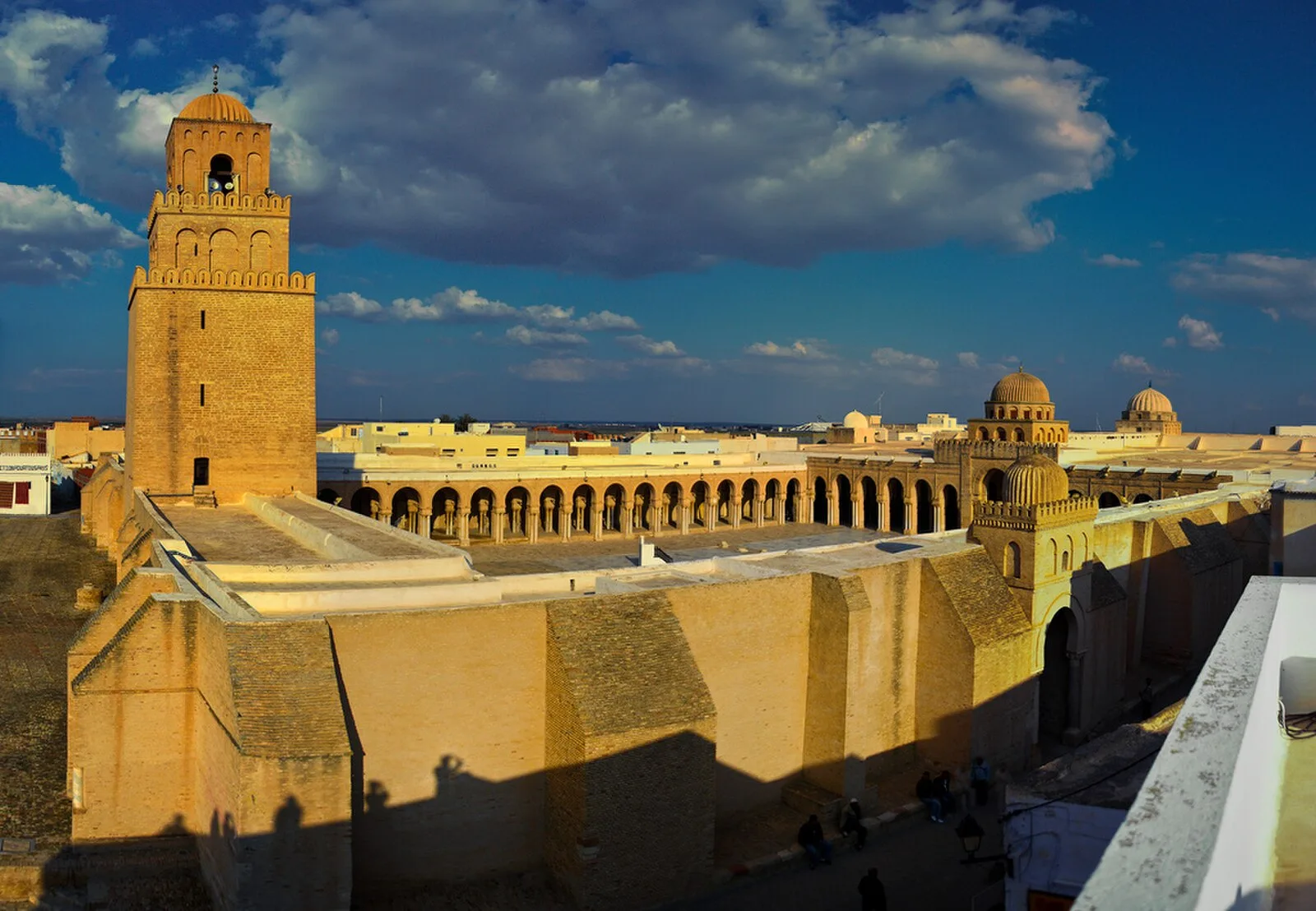
Great Mosque of Kairouan
The oldest great sanctuary of the Muslim West, a fortress of faith with 400 ancient columns.
About this page's content: this site offers editorial and cultural content written with care and respect for the religious traditions concerned; it does not constitute a theological opinion or a source of religious authority. Despite our checks, errors, inaccuracies or approximations may remain. If you spot one, please let us know via the Contact page or by email at qibla.mosk@gmail.com, and we will correct it gratefully.