
In Sarajevo a public clock does not show the time shown by every other clock in Europe. It reads twelve o'clock at the exact moment the sun goes down. Because sunset moves through the year, that clock is wrong the day after it is set. So somebody climbs the tower, twice a week, and has done since 1967.
A clock whose day begins at sunset
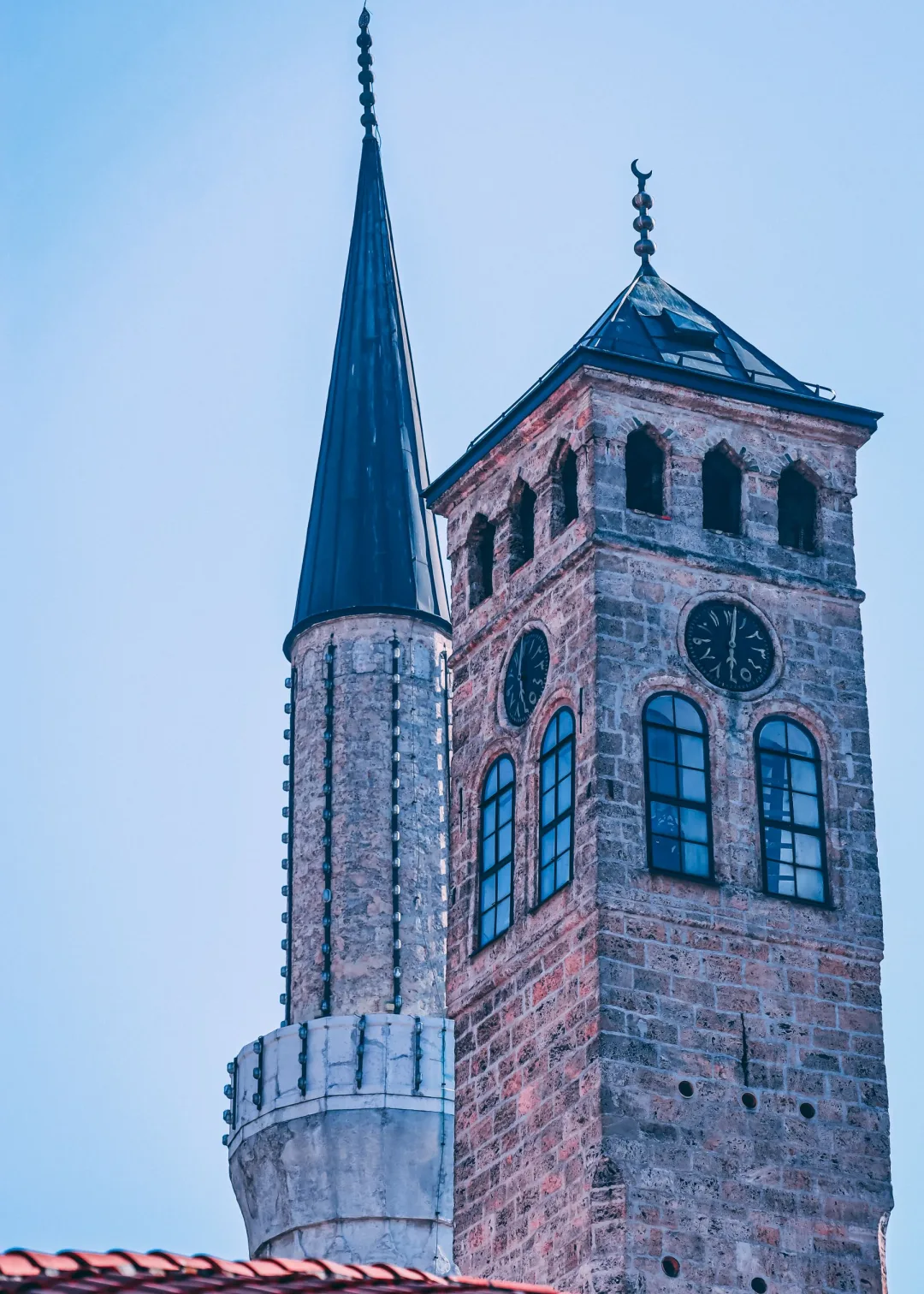
The tower is called the Sahat-kula, literally the clock tower. It stands a few metres from the Gazi Husrev-beg Mosque, the great mosque of Sarajevo, in the heart of the old Baščaršija quarter. Thirty metres of stone, four faces, and a way of reading time that the rest of the continent gave up.
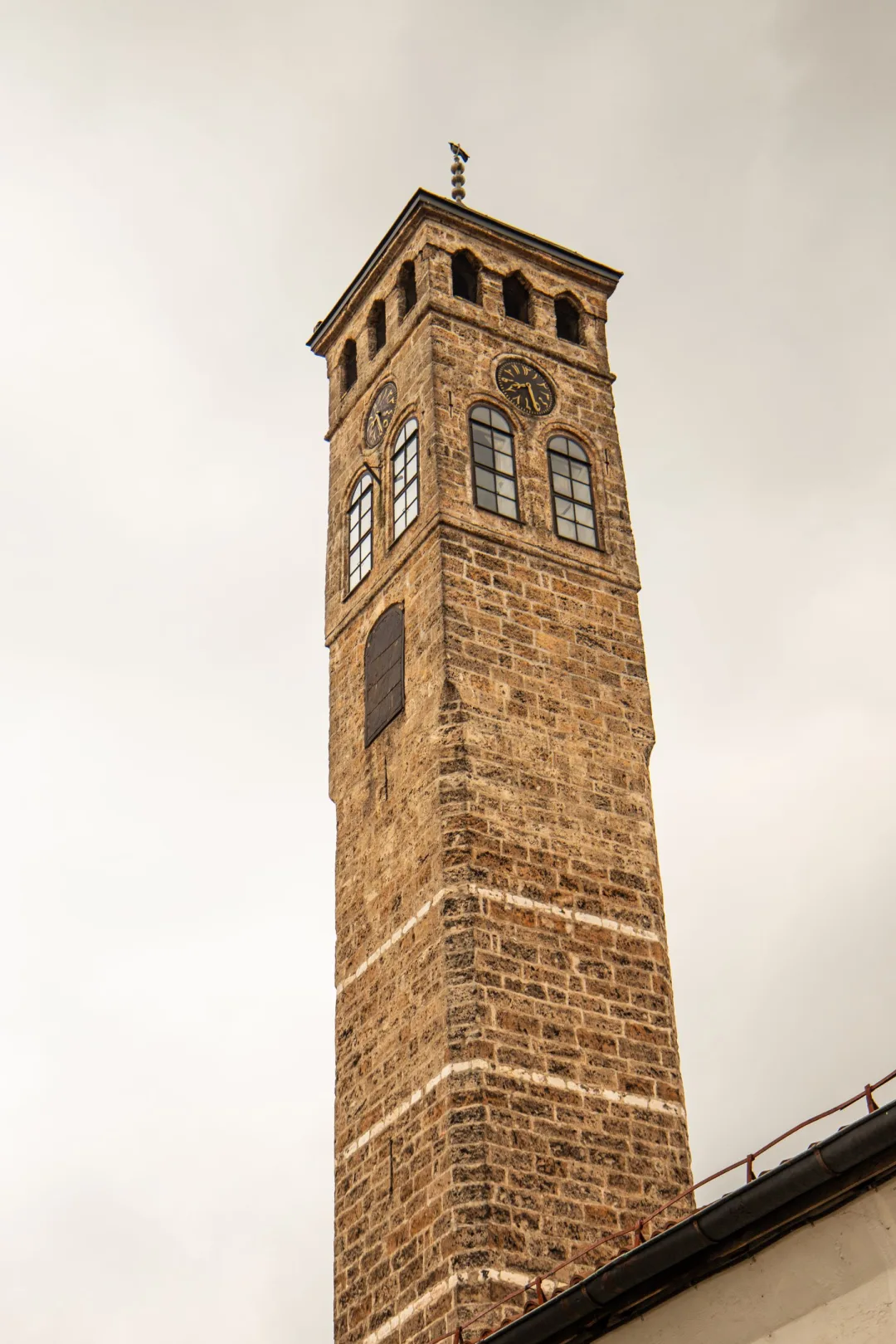
That system has a name: time a la Turca. It does not count hours from midnight but from sunset. The moment the sun disappears is the moment the day turns over, and the clock then reads twelve. Everything else follows from there. For anyone living by the five daily prayers this is not a curiosity but the single most useful marker there is, since the maghrib prayer begins at precisely that instant.
A clock set by the sun and a clock set by midnight do not drift apart a little. They drift apart constantly, and by more and more.
Why the tower has to be climbed twice a week
The arithmetic is easy to set out and it explains everything. At the latitude of Sarajevo, around forty-four degrees north, the sun does not set at the same hour from one month to the next. On 21 December it goes down at about 4:11 pm. On 21 June, three hours and twenty minutes later. Between the two there is no jump: there is a continuous slide.
That slide is not even. At the solstices it is almost nil for a few days, while the sun changes direction. At the equinoxes it reaches its maximum. Around 19 September, sunset moves by nearly two minutes a day.
This is the real constraint bearing on the tower. A clock set to twelve on a Monday evening is two minutes out on Tuesday, four on Wednesday, six on Thursday. By the fourth day the gap is approaching seven minutes, and a prayer announced seven minutes early or late is no longer announced at all. To stay right, the clock has to be reset every three or four days.
Twice a week, in other words. That is exactly the rhythm followed in the tower, and it is no coincidence: the rhythm was not chosen, it was imposed by the sky.
The muvekit, a trade that never ended
The man who climbs is called Mensur Zlatar. He is a goldsmith, and his shop sits a few steps from the mosque. He holds a title the city never stopped using, that of muvekit, keeper of time. Since 1967, twice a week, he climbs the tower's seventy-six wooden steps and sets the clock to that day's sun. His grandfather did the same work.
The title is not a local invention. It comes from an Ottoman institution we have described elsewhere, the muvakkithane, the timekeeping office attached to the great mosques. Prayer times for the city were worked out there, with instruments, tables and observations. Most of those offices closed when the states of the region moved to unified legal time. In Sarajevo the function survived, reduced to one man and a staircase.
It is worth being precise about what the work is and is not. It is not a matter of winding a weight or making up for a tired mechanism. The mechanism itself runs correctly. What is corrected is the gap between a time that advances at a constant rate and a sun that has never agreed to be constant.
An English mechanism in an Ottoman tower
The tower is far older than its clock. It is mentioned as early as the seventeenth century, notably by the traveller Evliya Çelebi, and it belongs to the religious endowment that maintains the mosque next door. The present mechanism is attributed to a London firm, Gillett & Bland, and its delivery is dated to 1874.
The detail is worth noting, because it cuts against a convenient assumption. It is tempting to picture such objects as frozen survivals, spared by the industrial world. The opposite is what happened. When the mechanism had to be replaced, the endowment bought the best available at the time, which meant English precision clockmaking, and put it to work counting hours in a way England did not use. The tool is modern, the use is old, and the two have held together for a century and a half.
The last of twenty-one towers
Clock towers are among the most visible marks of the Ottoman period in the Balkans. Twenty-one of them stand in Bosnia and Herzegovina, at Mostar, Gradačac, Travnik and Foča, and Sarajevo's is the tallest. All were built for the same reason: to give a whole town a marker of time that could be seen and heard, rather than leaving it to each person's judgement.
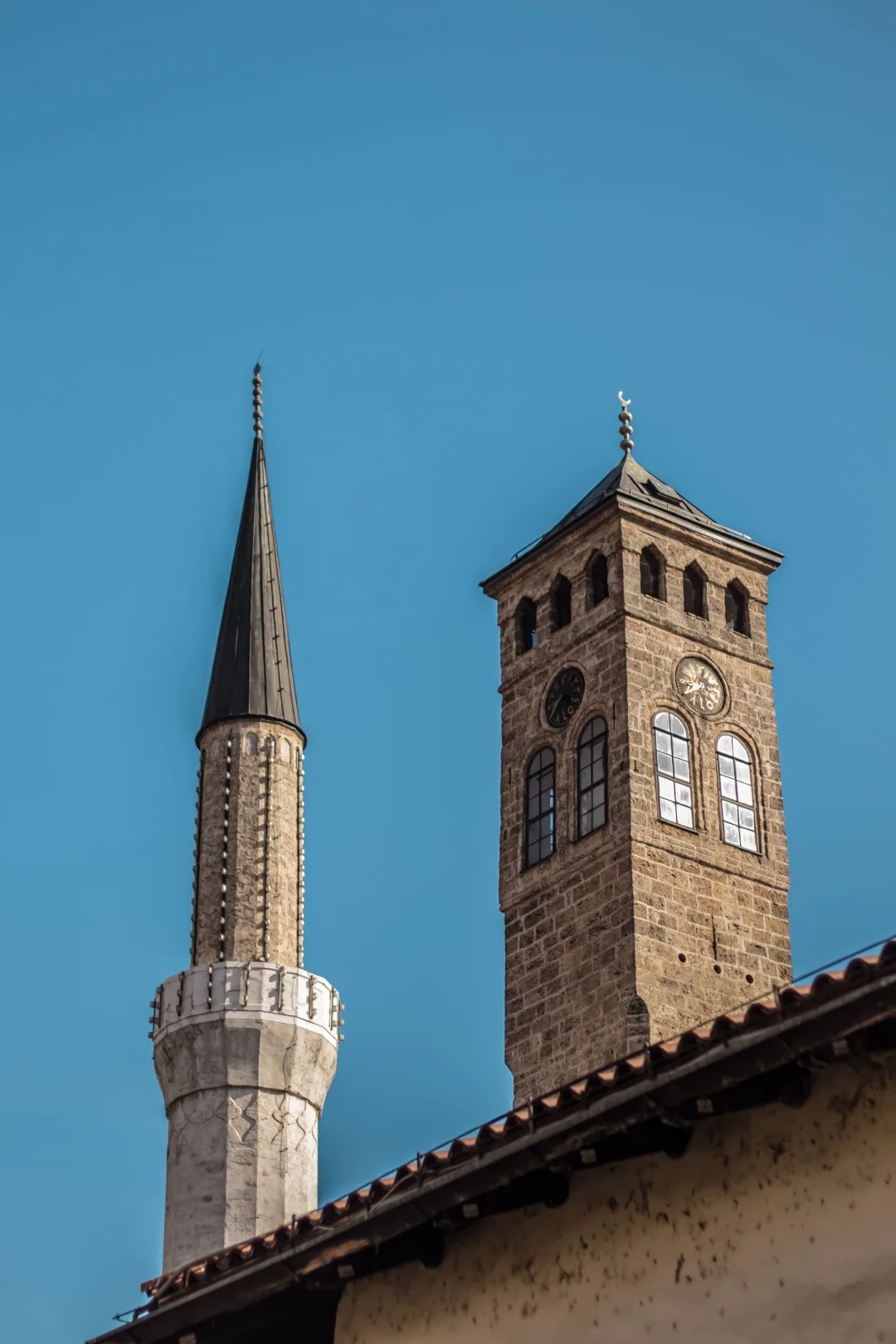
All of them went the same way, except one. As successive administrations imposed European legal time, the faces were reset to midnight and the towers became clocks like any other. Sarajevo's Sahat-kula is the only one that stayed with the sun.
It is often written that it is the only public clock in the world in that position. We have found no survey that would let us assert it, so we hold to what can be checked: in Bosnia the others went over to European time, and this one is the last.
What the tower says about the mosque
A clock tower is not a minaret. It does not call people to prayer, it tells them when prayer begins. Its presence beside the Gazi Husrev-beg Mosque says something exact about what a great Ottoman religious complex was: not an isolated prayer hall, but a full arrangement, with its school, its library, its fountain, its covered market and its timekeeping service.
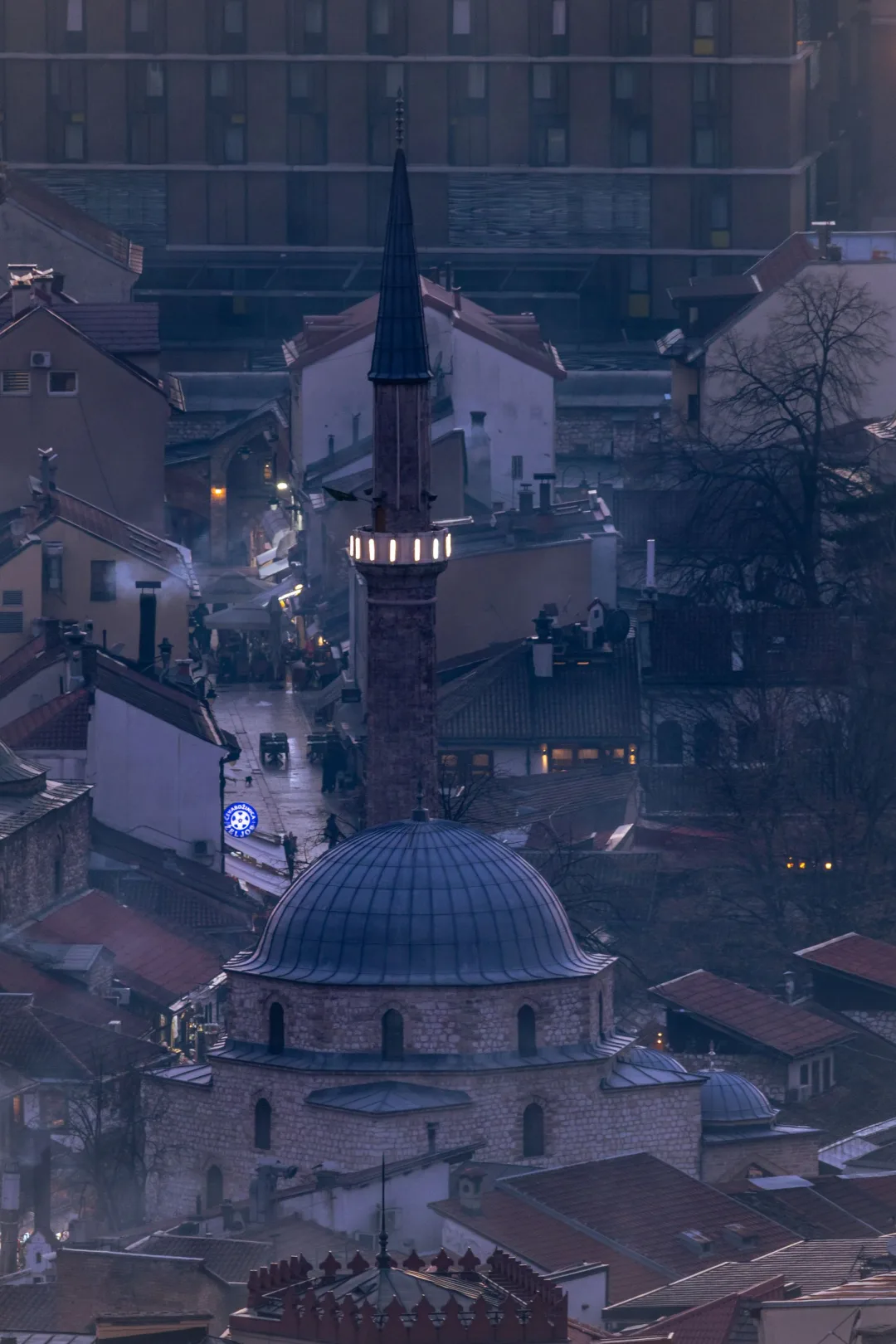
The mosque of Sarajevo is among the buildings we presented in our survey of mosques of Central Asia and the Balkans. The tower belongs to it as much as the dome does. It is what remains visible, in the middle of a city that lives on everyone else's time, of a way of dividing the day that begins when the day ends.
Twice a week, a goldsmith from Baščaršija climbs seventy-six steps to keep it true.
Discover
Mosques mentioned in this article
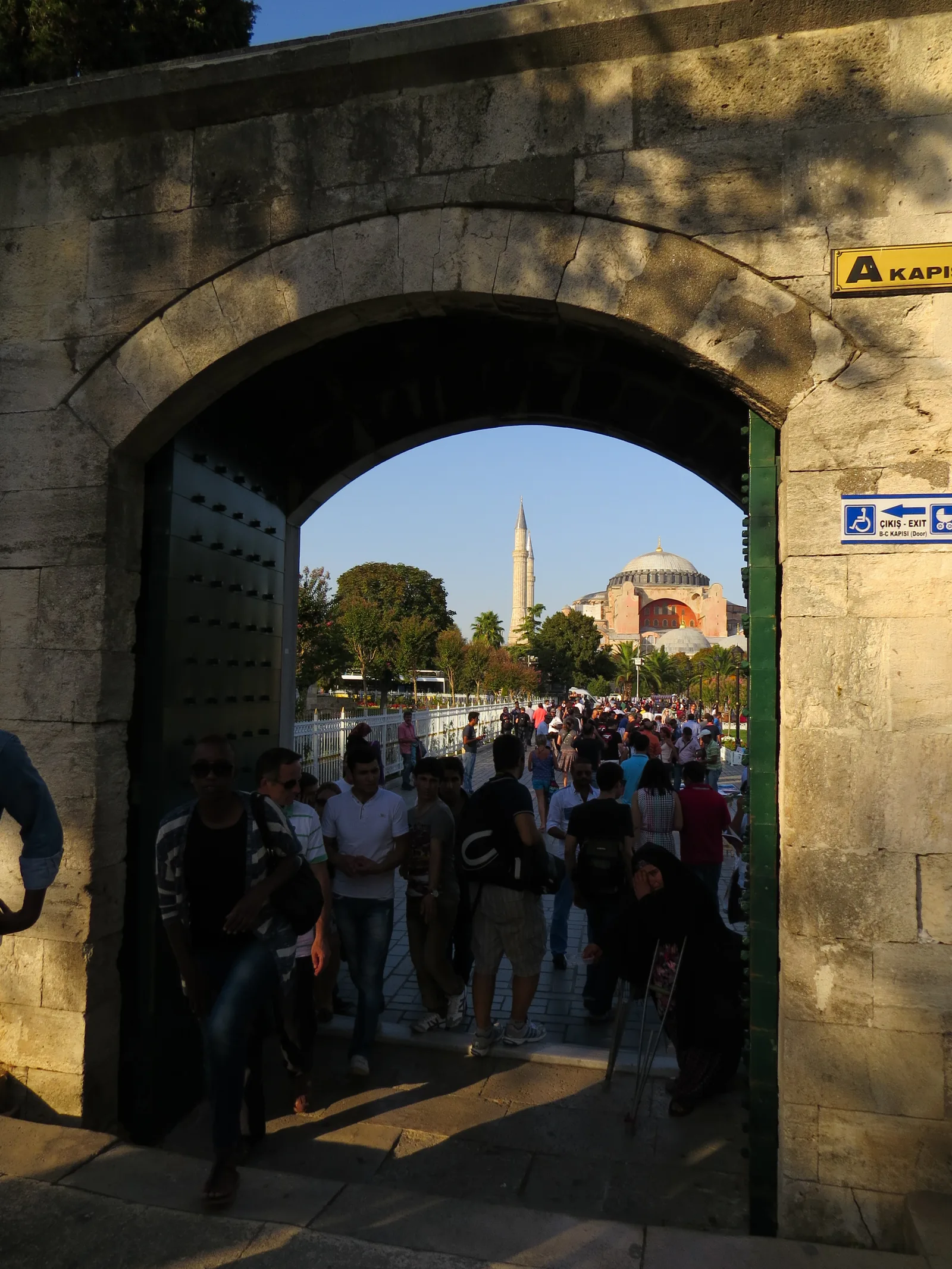
Blue Mosque (Sultan Ahmed)
Six minarets, a cascade of domes and over 20,000 Iznik tiles: the icon of Istanbul.
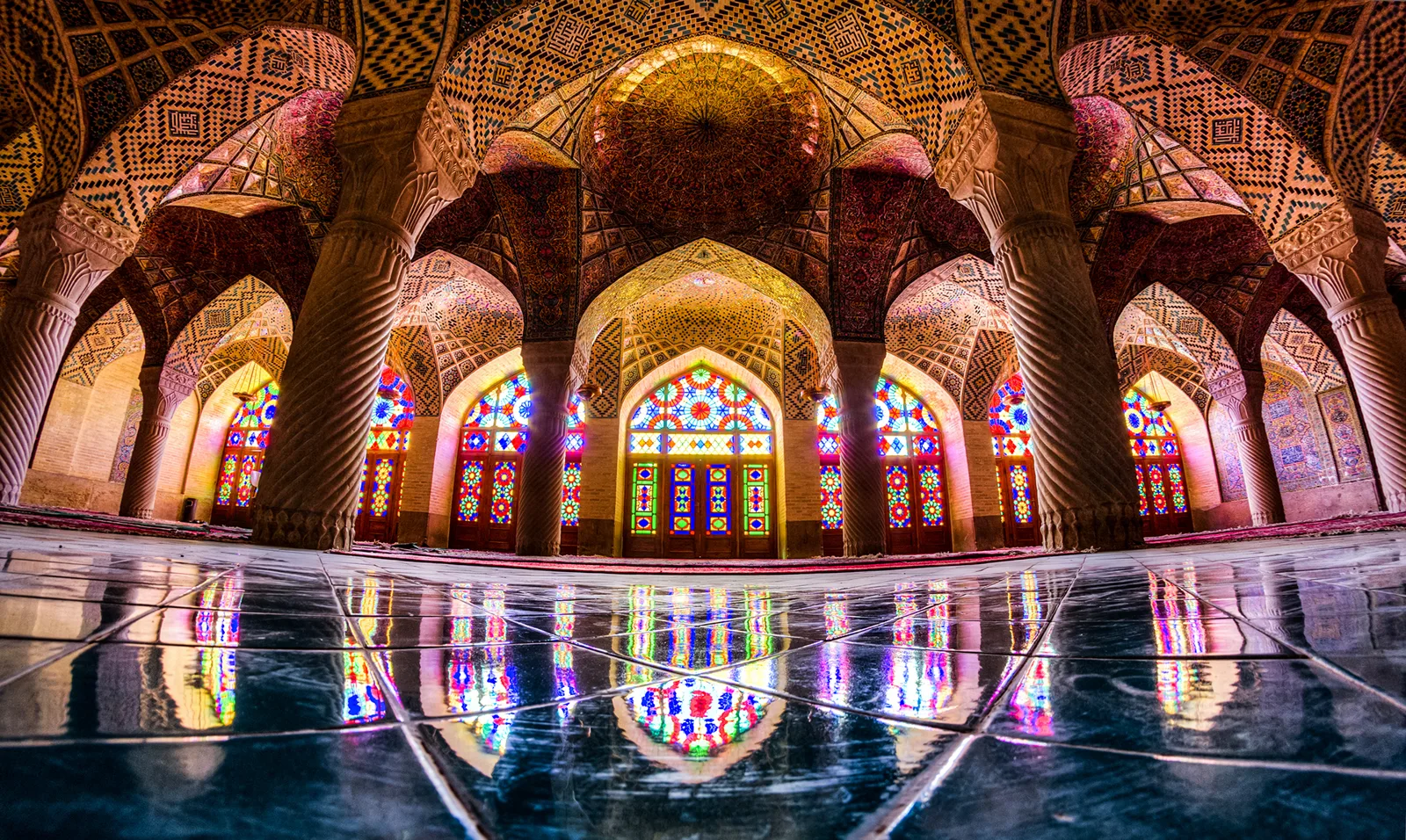
Nasir al-Mulk Mosque
Shiraz's "Pink Mosque", whose stained-glass windows turn every morning prayer into a kaleidoscope.
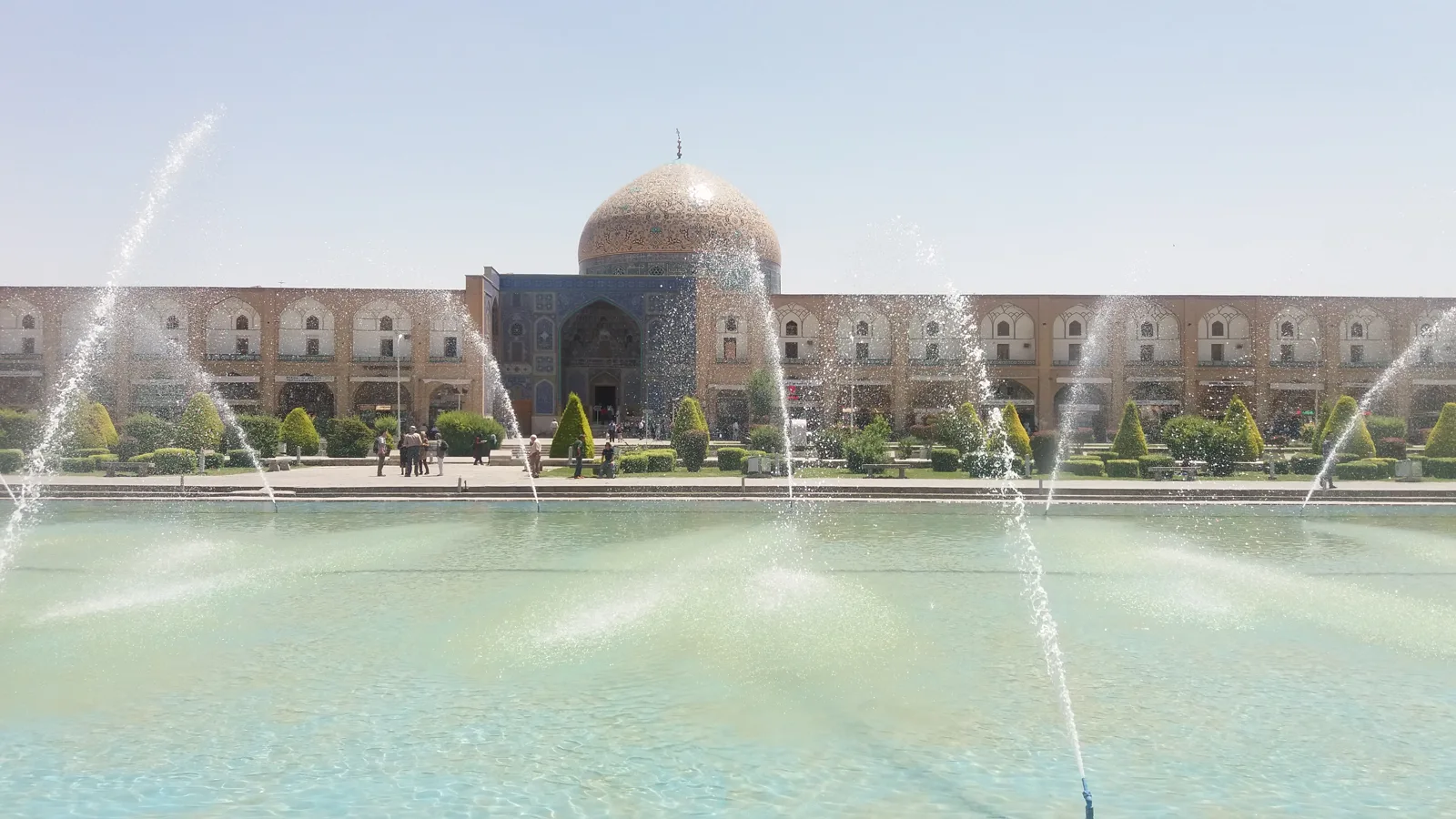
Sheikh Lotfollah Mosque
The Safavid jewel of Naqsh-e Jahan Square: no minaret, no courtyard, but Iran's most beautiful dome.
About this page's content: this site offers editorial and cultural content written with care and respect for the religious traditions concerned; it does not constitute a theological opinion or a source of religious authority. Despite our checks, errors, inaccuracies or approximations may remain. If you spot one, please let us know via the Contact page or by email at qibla.mosk@gmail.com, and we will correct it gratefully.