
Home › Masjid an-Nabawi › The ground does not burn, and it is not a miracle
Masjid an-Nabawi, chapter 5 · Medina · 8 min read
The ground does not burn, and it is not a miracle
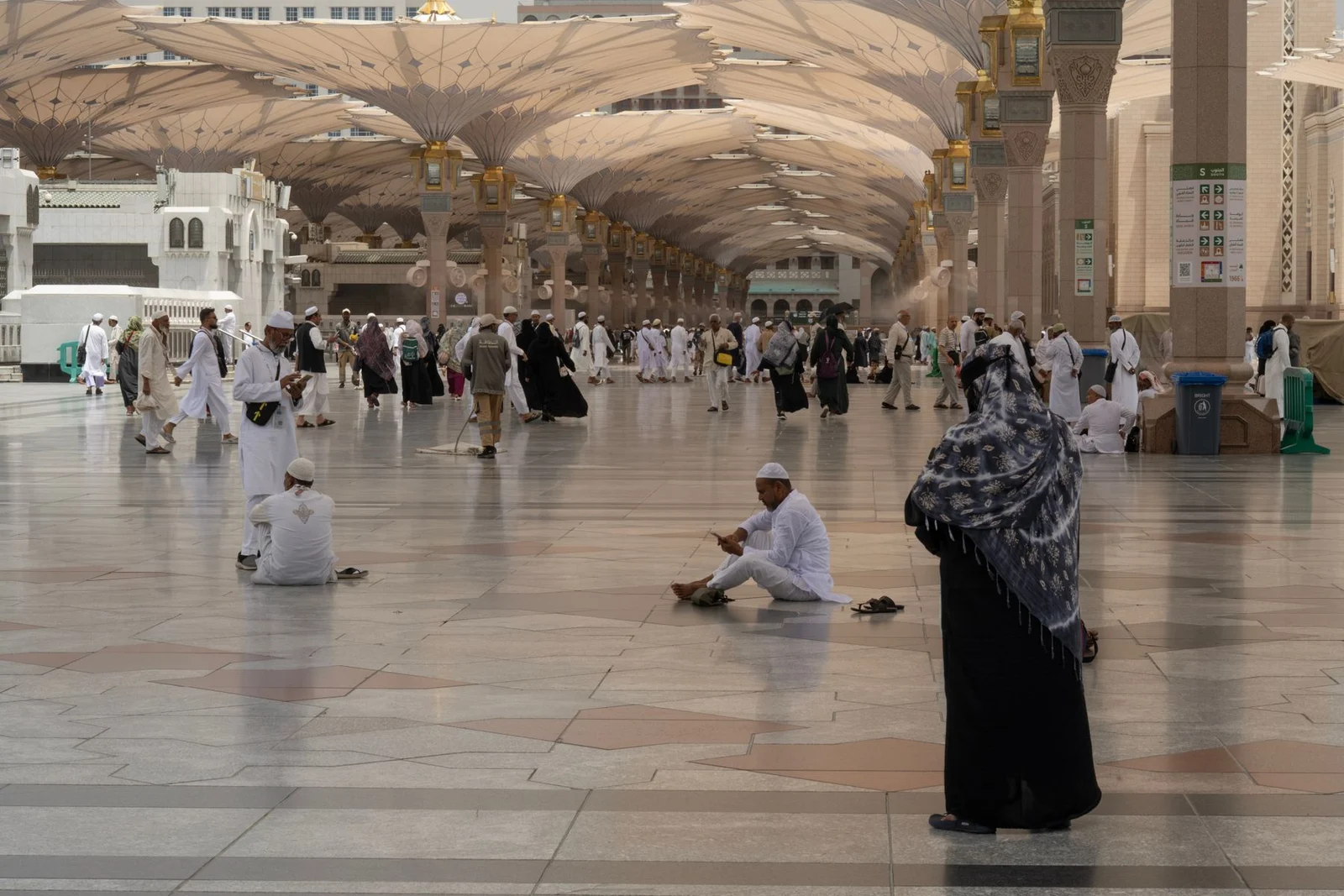
At Medina in summer the air runs well past forty degrees. People walk barefoot on the courtyards of the Prophet's Mosque, and the ground stays usable. That is not a miracle, it is a choice of stone, and it rests on two measurable properties.
Stating the problem properly
A surface in full sun heats up. A pale surface heats less than a dark one; everybody knows that. But paleness alone does not explain what happens here, and that is what makes the subject interesting.
What matters to a bare foot is not how much energy the paving receives, it is the temperature of its surface. And that depends on two distinct things: the share of radiation the stone sends back, and what it does with the rest.
A stone can reflect a great deal and still be scorching, if the little it absorbs stagnates at the surface. That is exactly the trap the marble chosen here avoids.
A stone from a Greek island
The courtyards and roofs are paved with white Thassos marble, from an island in the northern Aegean. The area laid is a hundred and seventeen thousand square metres.
This marble is not chosen for its whiteness alone. It has two rare properties, and it is their combination that settles the problem.
First property: it sends most of it back
Its solar reflectance reaches about eighty-five per cent. In other words, of all the energy arriving from the sun, the overwhelming majority leaves again immediately.
That is already considerable. A common urban surface, dark asphalt for instance, reflects a far smaller fraction and turns the rest into surface heat. Barefoot, the difference between the two is not a shade of comfort, it is the difference between usable and unusable.
Second property: what it absorbs, it moves away
That leaves the fifteen per cent that enters the stone. This is where the marble distinguishes itself.
Its thermal conductivity is about six watts per metre-kelvin, against about three for ordinary white marble at ninety-five per cent calcite. It is therefore roughly double.
High conductivity can look like a defect. Here it is the opposite. It means the absorbed heat does not stay trapped in the first few millimetres, but travels down into the thickness of the paving and into whatever lies beneath. The surface discharges instead of accumulating.
The combination is what counts, and it bears repeating: it sends most of it back, and it conducts downwards the little it takes. Neither property on its own would produce the result.
Why this one and not another
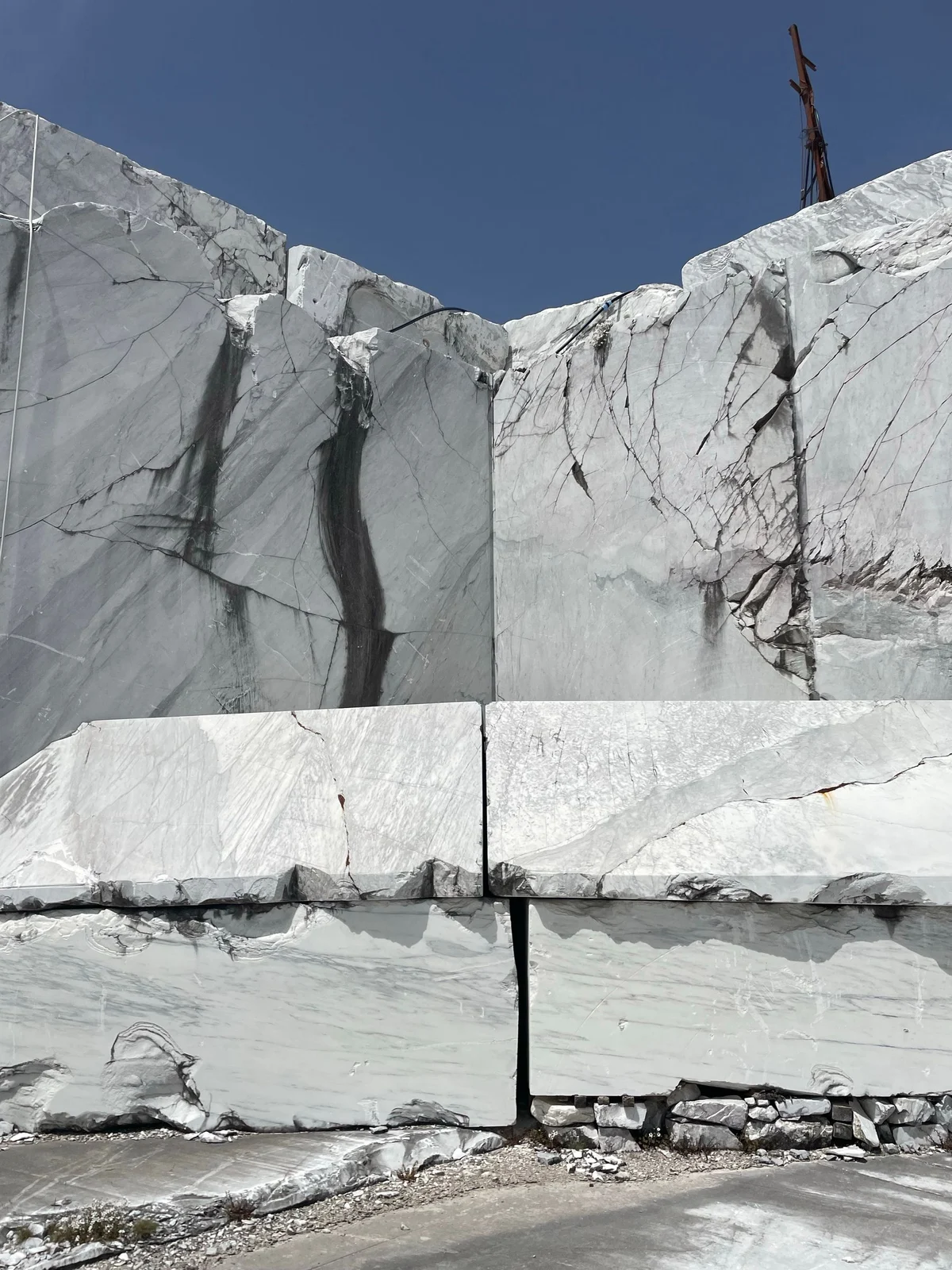
The explanation lies in the structure of the grain.
Thassos marble is made of large plate-like crystals, on the order of two millimetres, and above all oriented the same way. It is also almost pure.
A material whose crystals are large, clean and aligned conducts heat better than one with fine, disordered grains, because the energy meets fewer interfaces on its way. That is what accounts for the factor of two in conductivity, and it is a fact of microstructure, not a magic property of the stone.
What we do not say, and why
We need to be explicit here, because the most widespread explanation is not the one we keep.
It is often written that the coolness of the ground comes from the stone absorbing moisture at night and releasing it by day through evaporation. That explanation appears in a state encyclopaedia, among other places.
We do not adopt it, for two reasons. First, it appears in neither of the two peer-reviewed studies this article rests on. Second, marble is a rock of very low porosity, which makes the mechanism unlikely as stated.
We do not claim to settle the matter for good. We report what the technical literature establishes, and flag what it does not.
Likewise, no surface temperature is given in this article or in the video, simply because none of the sources consulted provides one. And thicknesses, layers under the paving, and any circulation systems are not described: the figures circulating on that subject are not sourced.

The misting fans, and what they actually do
Misting fans are installed across the courtyards. Their role needs stating, because it is often confused with the ground's.
They cool the air, not the stone. These are two distinct devices addressing two distinct problems: one makes the atmosphere bearable, the other makes the ground walkable. Crediting the misting fans with the coolness of the paving is getting the mechanism wrong.
What it means
Ground that does not burn is not comfort. It is what makes the courtyard usable.
The reasoning is exactly that of chapter 1 on the umbrellas. In both cases a device that could be taken for an amenity is in fact what manufactures available area. Without shade and without walkable ground, a hundred and fifty thousand square metres of courtyard are, in the hot hours, a hundred and fifty thousand unusable square metres.
A note on the word "cool"
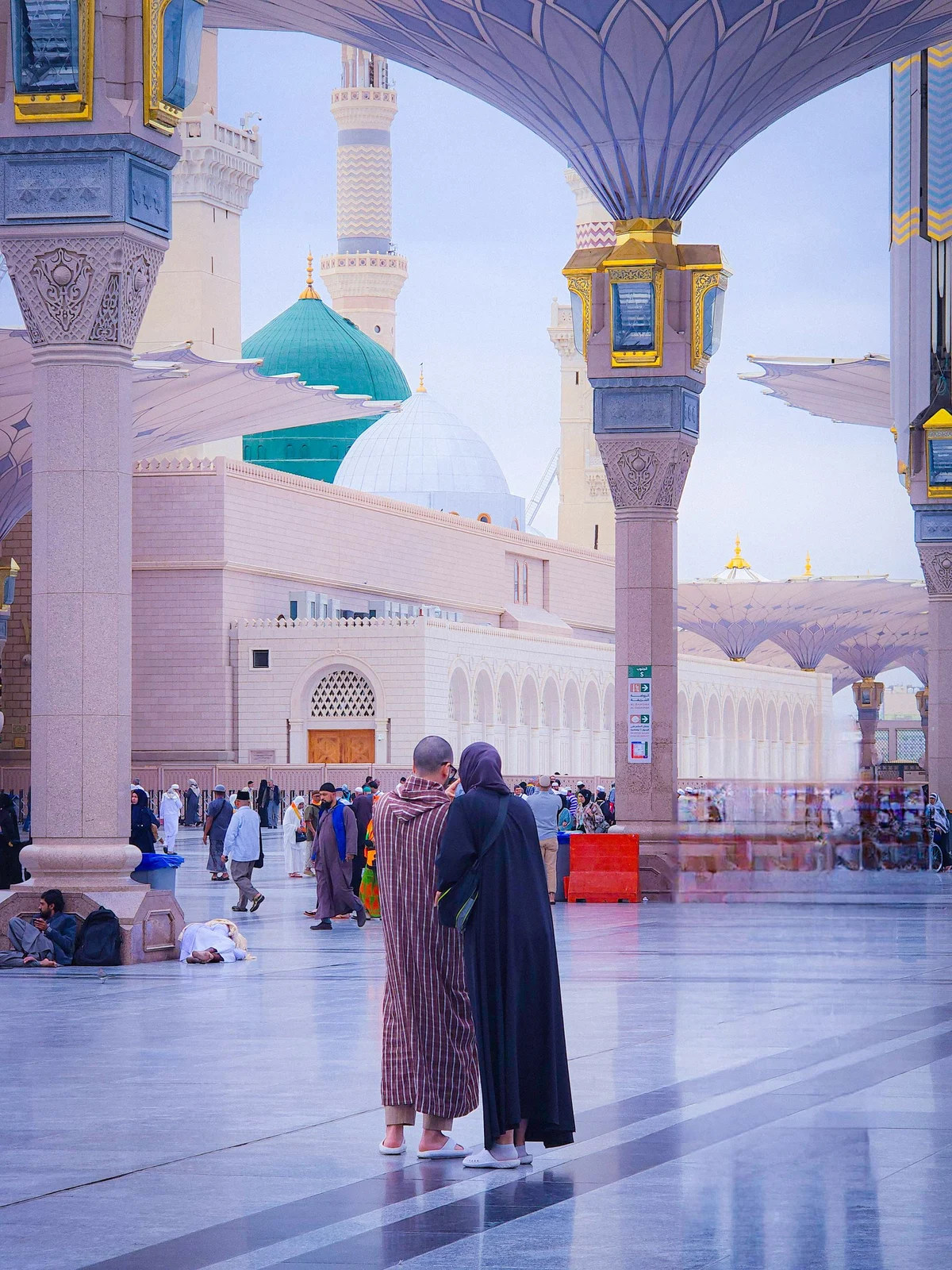
English-language descriptions often call this a "cool marble", which is accurate as a label and misleading as an explanation. The stone is not cold, and it does not make anything cold.
What it does is refuse to store heat at its own surface. On a hot afternoon the paving is warm; it is simply not the fifty or sixty degrees a dark surface would reach in the same conditions. The difference between warm and unwalkable is the whole subject, and it is smaller than the word "cool" suggests.
Our sources
Two peer-reviewed articles underpin this chapter:
Investigating the Unique Thermal properties of Thassos marble, Journal of the Institution of Engineers (India), Springer, and Cool white marble pavement thermophysical assessment at Al Masjid Al-Haram, Construction and Building Materials, Elsevier. They establish the solar reflectance of about eighty-five per cent, the conductivity of about six watts per metre-kelvin against about three for ordinary white marble, and the microstructure of large oriented crystals.
The laid area of a hundred and seventeen thousand square metres comes from the state press agency, and the role of the misting fans from the state encyclopaedia.
The rest of the series
Chapter 4 deals with another choice of material, more visible and far more recent than it is generally taken to be.
Discover
Mosques mentioned in this article
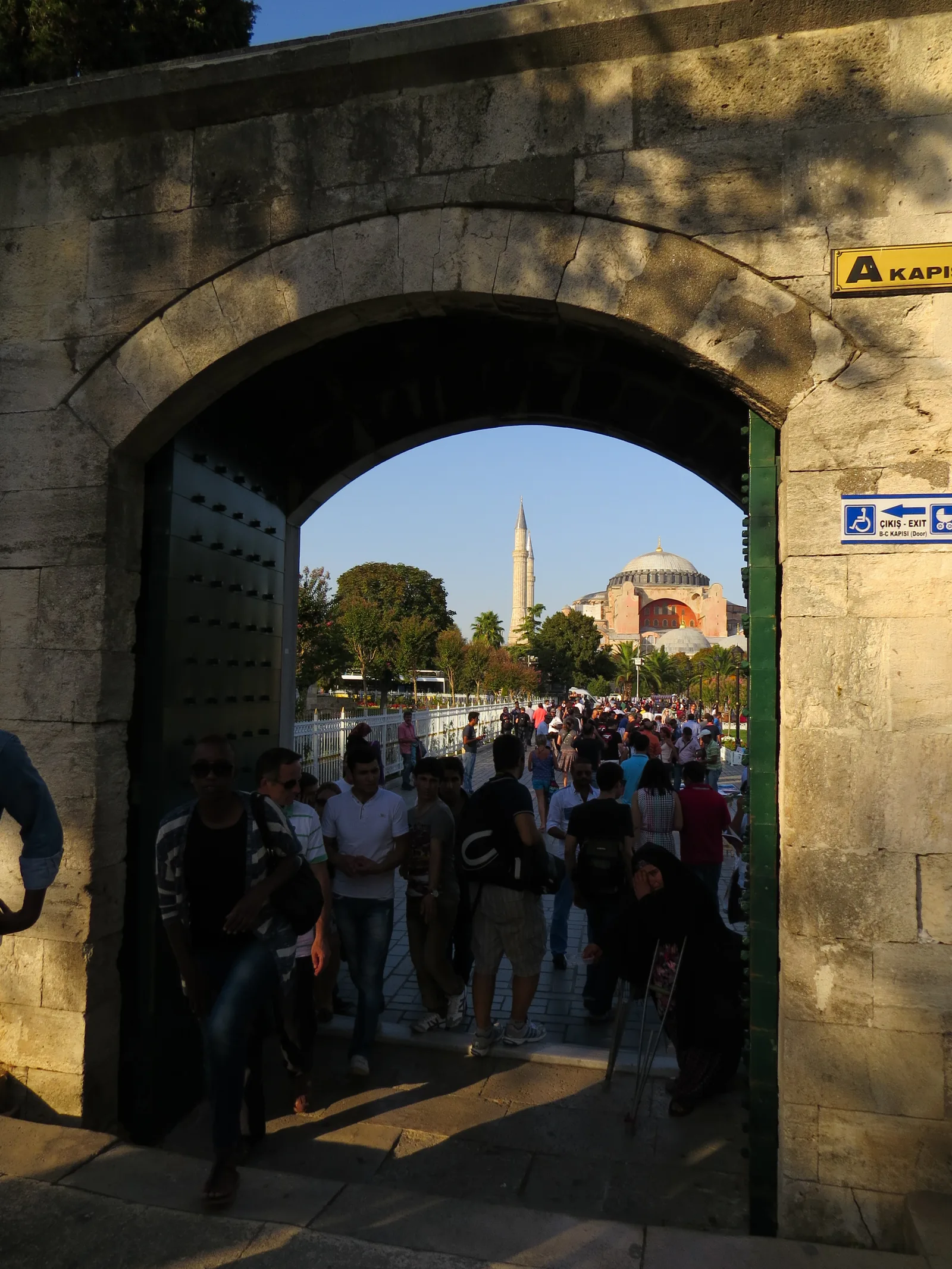
Blue Mosque (Sultan Ahmed)
Six minarets, a cascade of domes and over 20,000 Iznik tiles: the icon of Istanbul.
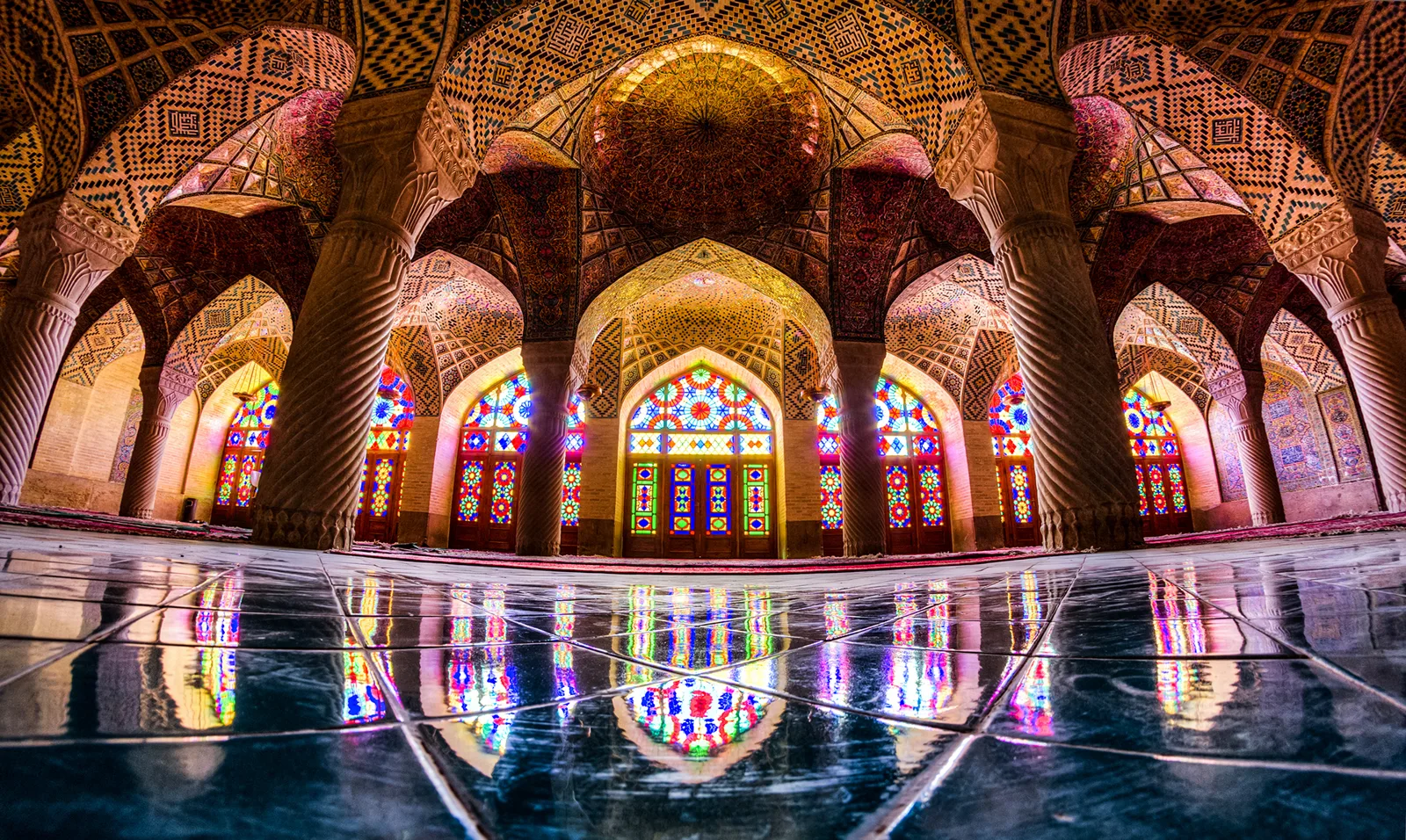
Nasir al-Mulk Mosque
Shiraz's "Pink Mosque", whose stained-glass windows turn every morning prayer into a kaleidoscope.
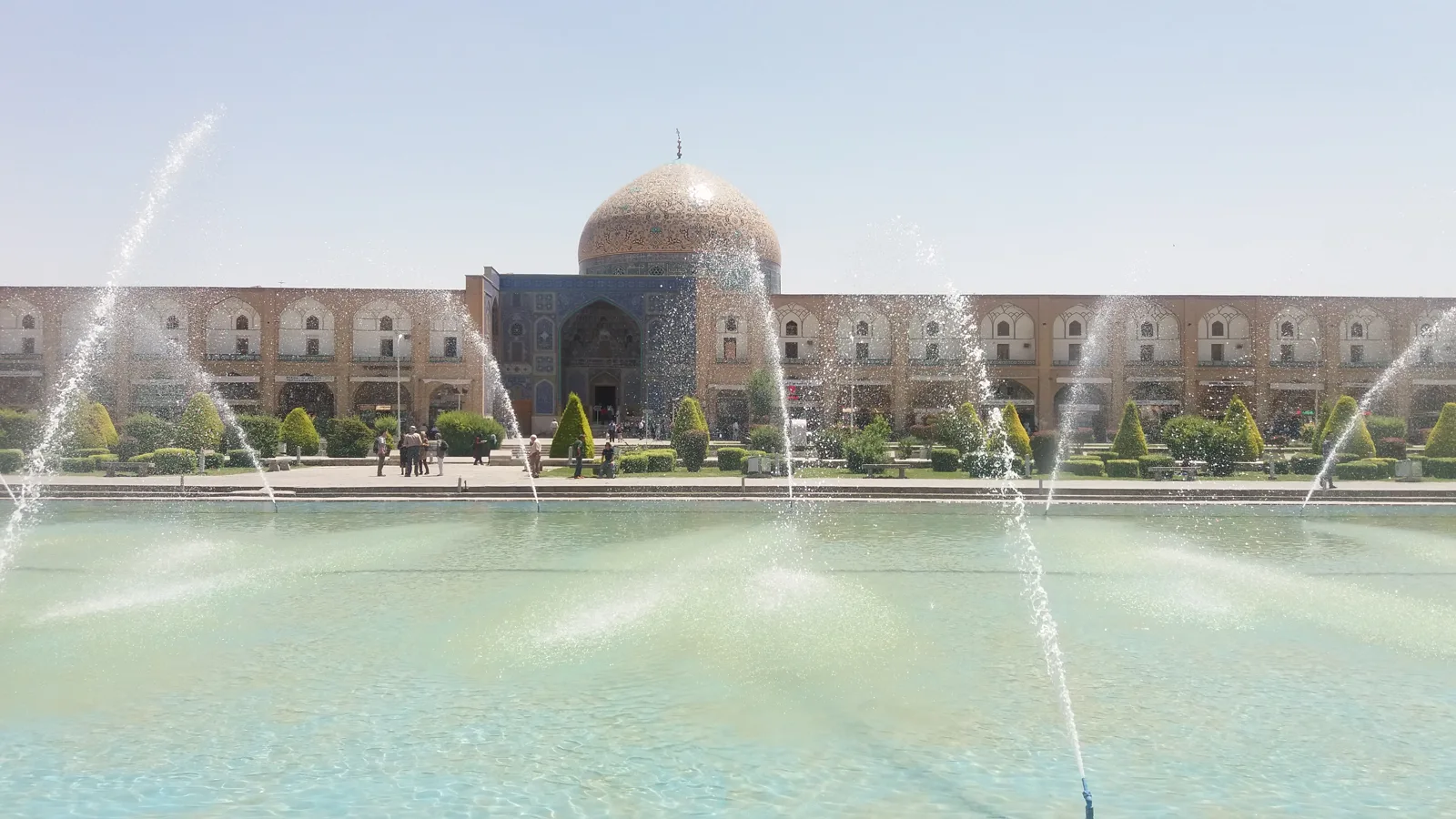
Sheikh Lotfollah Mosque
The Safavid jewel of Naqsh-e Jahan Square: no minaret, no courtyard, but Iran's most beautiful dome.
About this page's content: this site offers editorial and cultural content written with care and respect for the religious traditions concerned; it does not constitute a theological opinion or a source of religious authority. Despite our checks, errors, inaccuracies or approximations may remain. If you spot one, please let us know via the Contact page or by email at qibla.mosk@gmail.com, and we will correct it gratefully.