
Home › Masjid an-Nabawi › The dome has only been green since 1837
Masjid an-Nabawi, chapter 4 · Medina · 8 min read
The dome has only been green since 1837
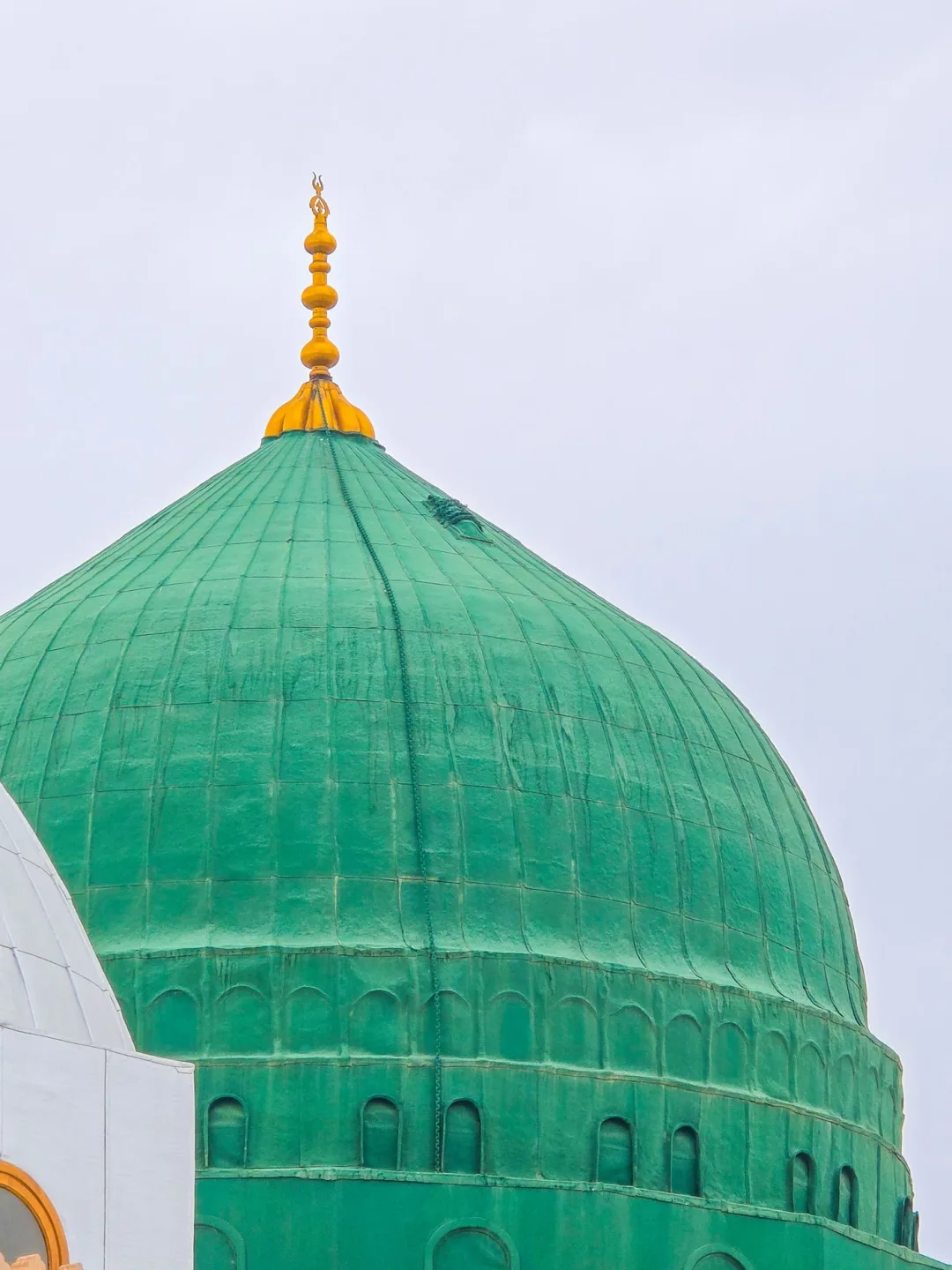
The green dome of Medina is the most recognisable image of the city. It has not always been green: it became so in 1837, two years before the invention of photography. That is exactly why no image of the earlier state exists.
A colour younger than it looks
The first green paint dates from 1837. That figure alone undoes a very common intuition: we look at this dome as an ancient element, and its colour is less than two centuries old.
Before that, the building bore other names. It was called the white dome, and then the blue dome.
Precision matters here, and we hold to it on screen as in this article: the sources give those two names as names borne, not as two dated states. They record the appellations; they do not record the year of each painting. So we do not manufacture a chronology of colours that does not exist.
Two years before the camera
Here is the fact that makes the date interesting.
The daguerreotype was presented to the Académie des sciences in 1839. The dome became green in 1837.
Two years separate the events. The consequence is direct and checkable: photography arrives just after the change, and so no photograph of the earlier state exists. There cannot be one.
That is a documentary constraint, not an opinion. It explains why this chapter rests on a drawn figure rather than on archive images, and why that figure is announced as a reconstruction from beginning to end.
The dome is younger than what it covers
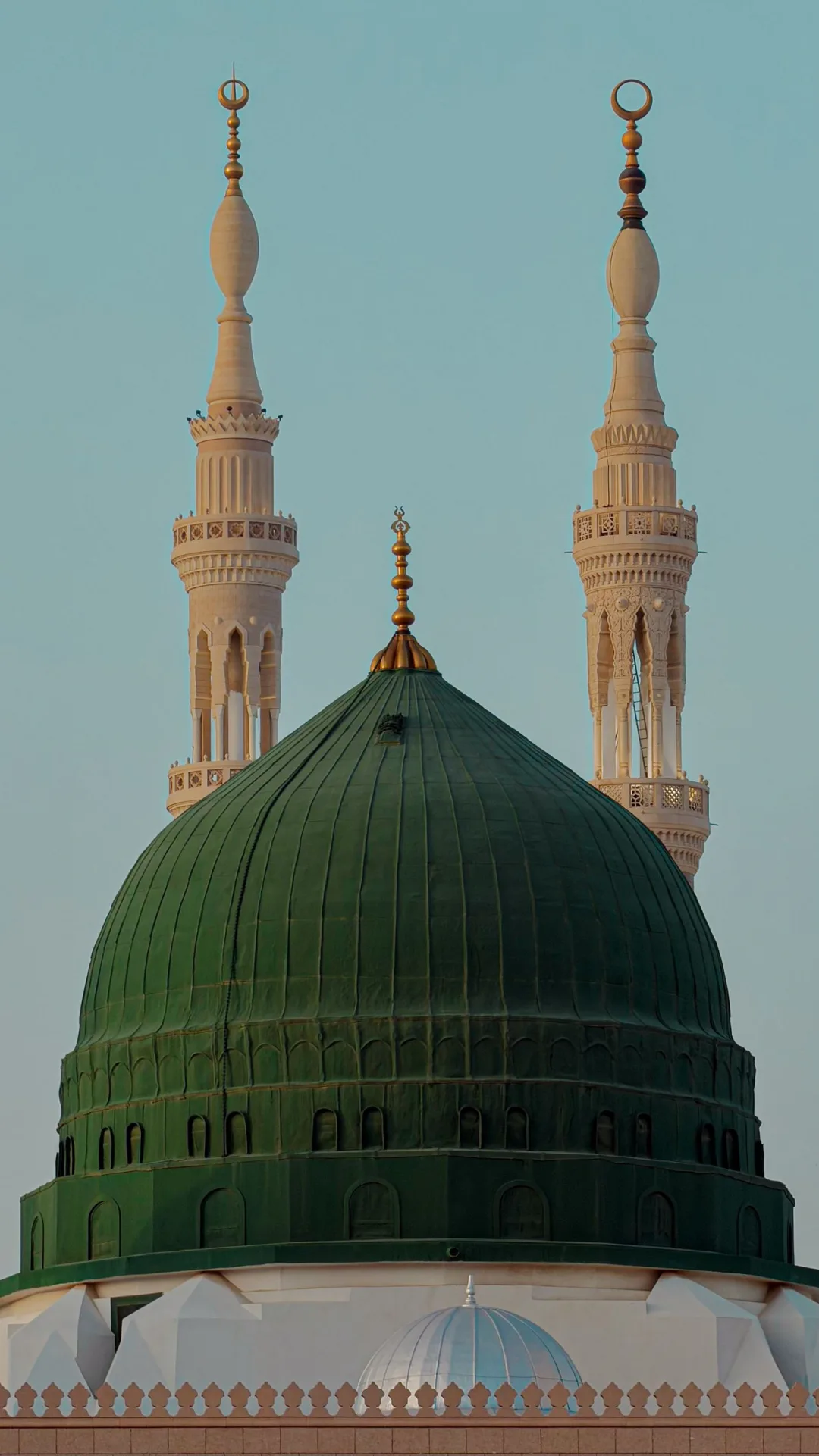
The outer shell seen today is Ottoman, and dates from 1818, under sultan Mahmud II.
What it covers is far older. A first dome, in wood, was raised in 1279 or 1280, under the Mamluk sultan al-Mansur Qalawun.
A fire took it in 1481, that is 886 of the hijri calendar. It was rebuilt in stone under sultan Qaitbay.
Between 1482 and 1818 several campaigns follow. We do not put a number on them, because the sources do not agree on how many there were. What can be said safely is that the dome burned and was raised again more than once before receiving its present shell.
A maintenance colour
Since 1837 it has always been repainted green.
It is worth weighing what that means. A dome exposed to sun and wind does not keep its paint. It gets repainted at regular intervals, like any external surface. The colour that identifies Medina the world over is therefore not old matter, it is maintenance renewed.
That takes nothing away. It simply shifts the object: what we look at is not a relic, it is a decision taken again at every maintenance campaign for almost two centuries.
A note on the time scale
The video for this chapter carries a time axis, and that axis is in two parts. This is not a graphic whim.
On a single axis running from 1250 to today, the labels 1818, 1837 and 1839 overlap: at that scale, two years are two pixels. We could have spread the labels apart to make them fit, but that would have lied about the scale, which is precisely what the article is about.
The main axis therefore carries only 1279, 1482 and 1818, and an enlarged detail, announced as such, carries the tight cluster at the end. The crowding is not a drawing fault, it is the fact itself: the world's most recognisable image of Medina is recent, and it arrives just before the camera.
What the figure does not say
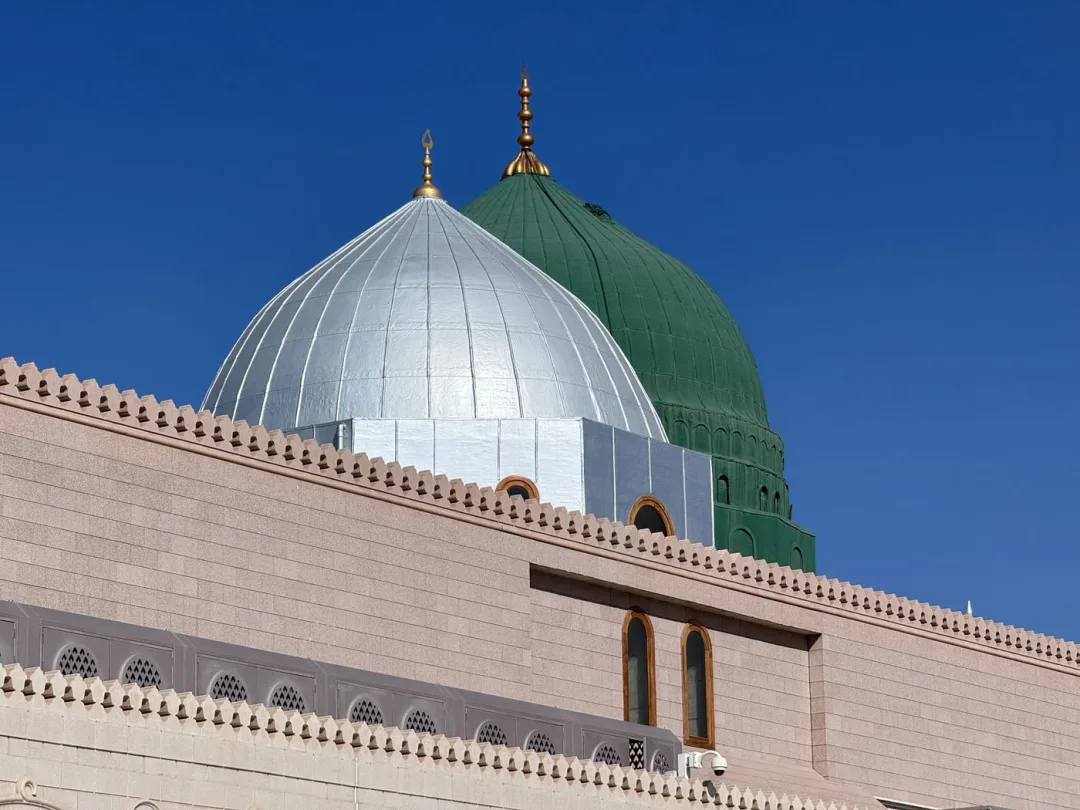
The silhouettes are not surveys. No archive drawing of the dome of 1279 or of 1482 is attested. The drawn shape is identical at every stage, and that is deliberate: what is documented is the material and the colour, not the profile.
No dimension is given. The diameters and heights in circulation cannot be tied to a dated state with enough certainty to be displayed.
The label "reconstruction" is shown throughout, together with the statement that no image of the earlier state is attested.
Why green, though
The question comes naturally, and the honest answer is that we did not find it in a solid source.
Plenty of symbolic explanations circulate. None that we were able to consult is backed by a document contemporary with the decision of 1837, and we do not adopt an interpretation for want of anything better. What the sources establish is the date and the fact, not the motive.
That is a limit better displayed than filled. A plausible but unsourced explanation gets copied from one site to the next until it passes for established, and that is exactly the mechanism this series tries not to feed.
Rulers change, the mosque stays
One last thing, which ties this chapter to the rest of the series.
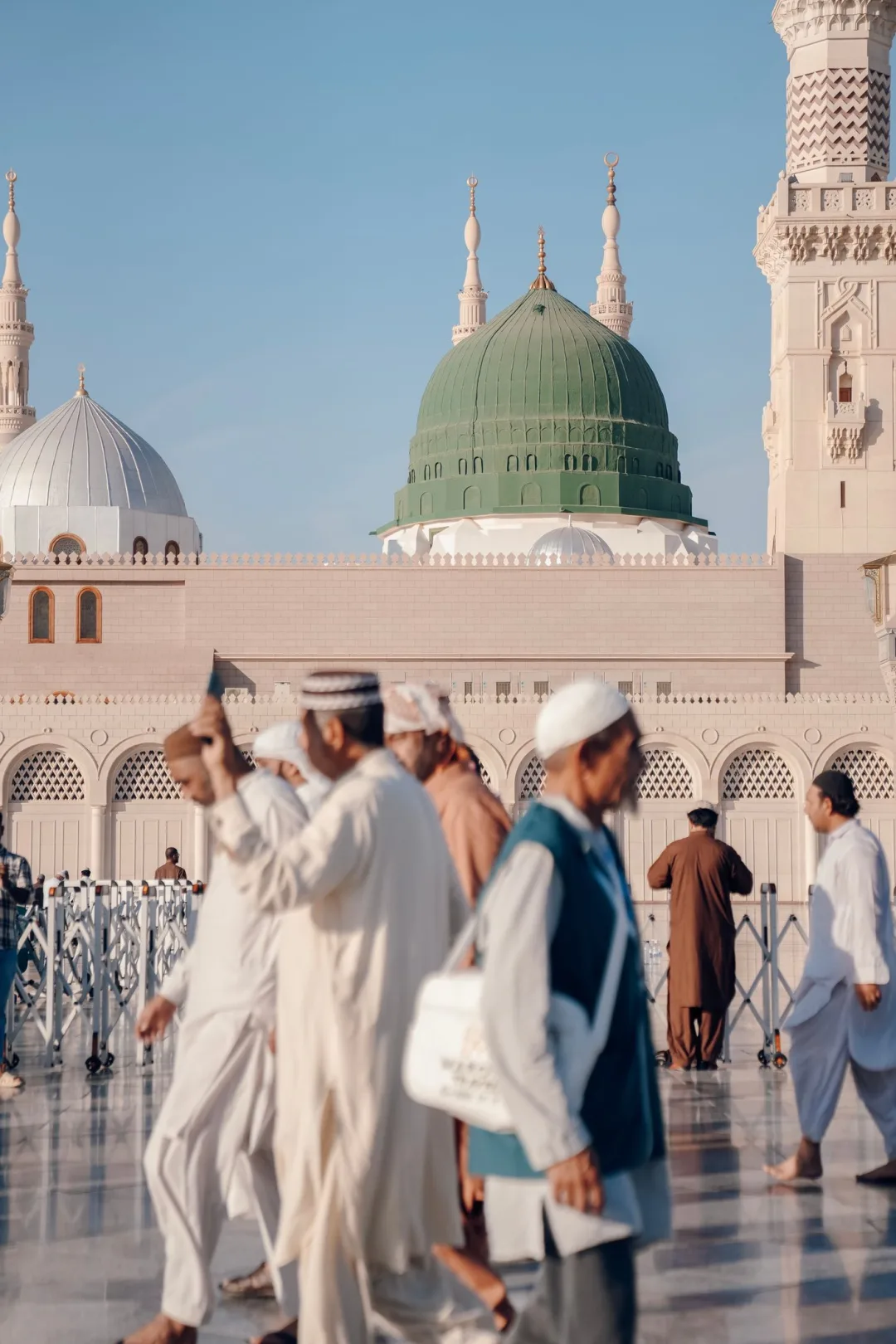
Everything described above concerns a shell: its material, its colour, its repairs. It was commissioned by one Mamluk sultan, rebuilt by another, taken up by an Ottoman sultan, then repainted under a third. Under that shell, the point covered has never been moved, and that is the subject of chapter 2.
It is the same mechanics that governs the whole building: the envelope adapts, the centre is not negotiable. The rulers, the colour and the pilgrims change. The mosque is still there.
Our sources
Facts cross-checked against Andrew Petersen, Dictionary of Islamic Architecture, and Ali Hafiz, Fusul min Tarikh al-Madinah al-Munawwarah: first wooden dome in 1279-80 under al-Mansur Qalawun, fire of 1481 then rebuilding in stone under Qaitbay, present outer shell of 1818 under Mahmud II, first green painting in 1837.
The date of 1839 for the presentation of the daguerreotype to the Académie des sciences is a fact from the history of technology, independent of the subject, which is what makes it a good marker.
The rest of the series
Chapter 5 deals with another choice of material, the stone of the courtyards, and shows that it too answers a precise physical constraint.
Discover
Mosques mentioned in this article
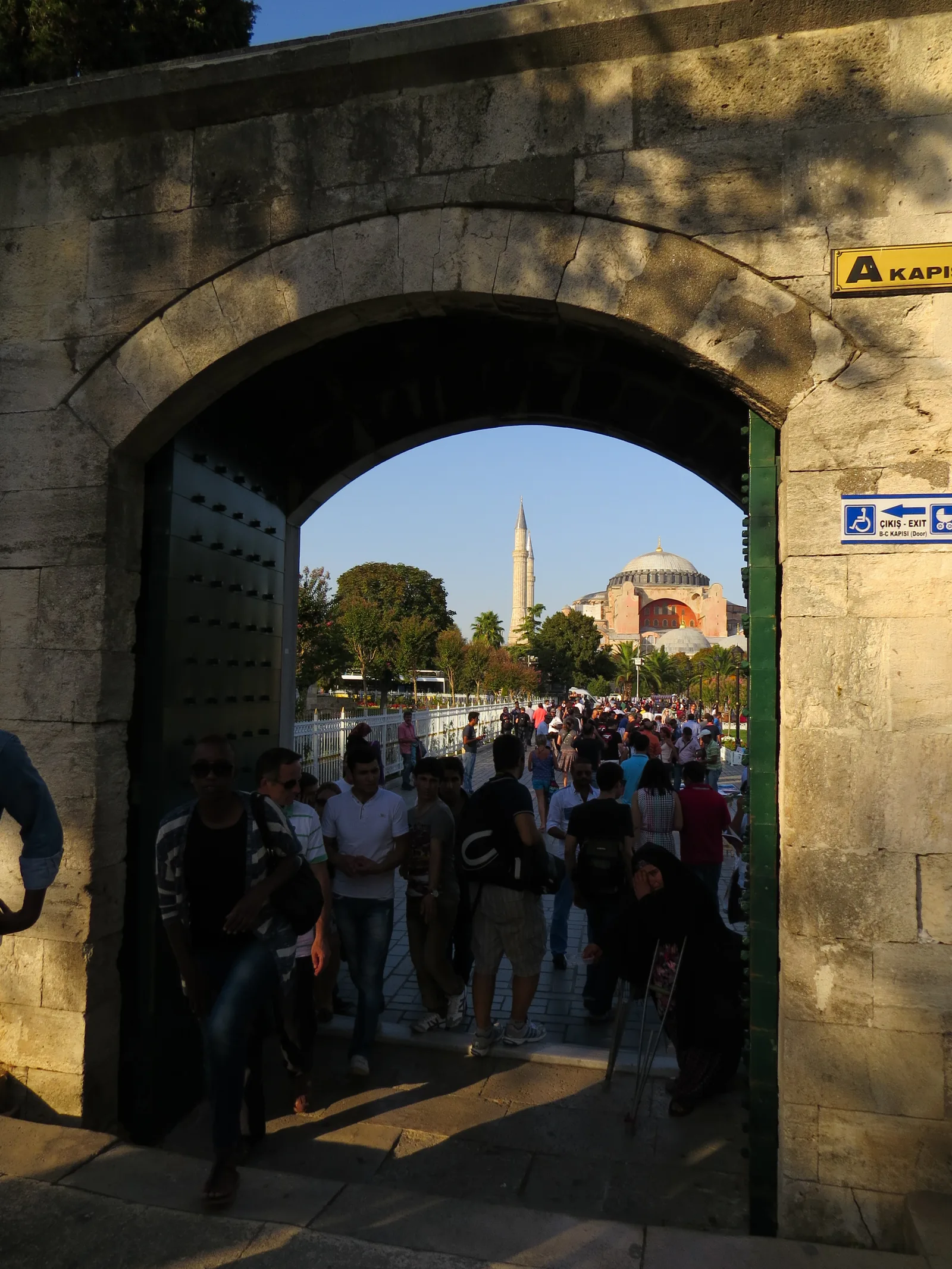
Blue Mosque (Sultan Ahmed)
Six minarets, a cascade of domes and over 20,000 Iznik tiles: the icon of Istanbul.
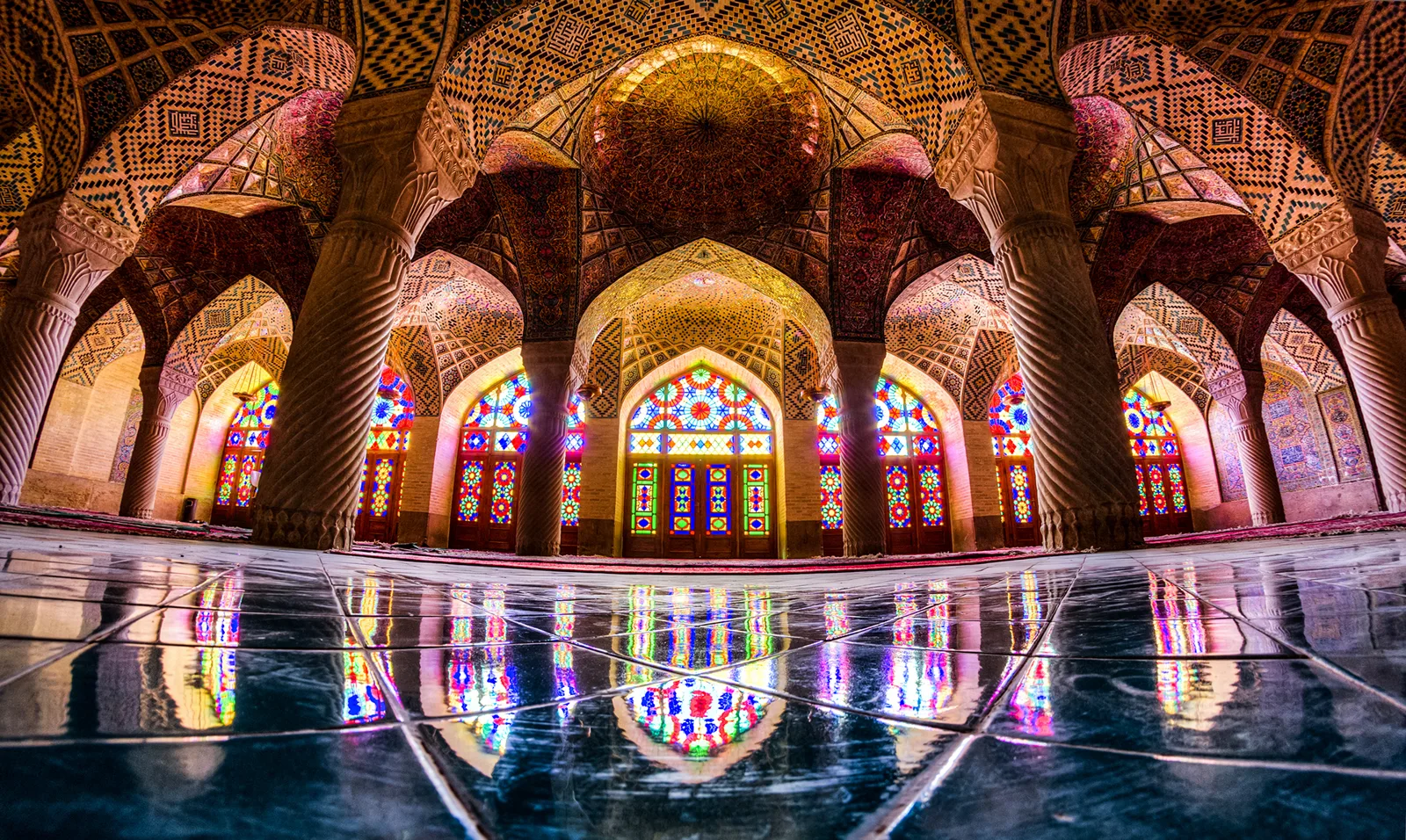
Nasir al-Mulk Mosque
Shiraz's "Pink Mosque", whose stained-glass windows turn every morning prayer into a kaleidoscope.
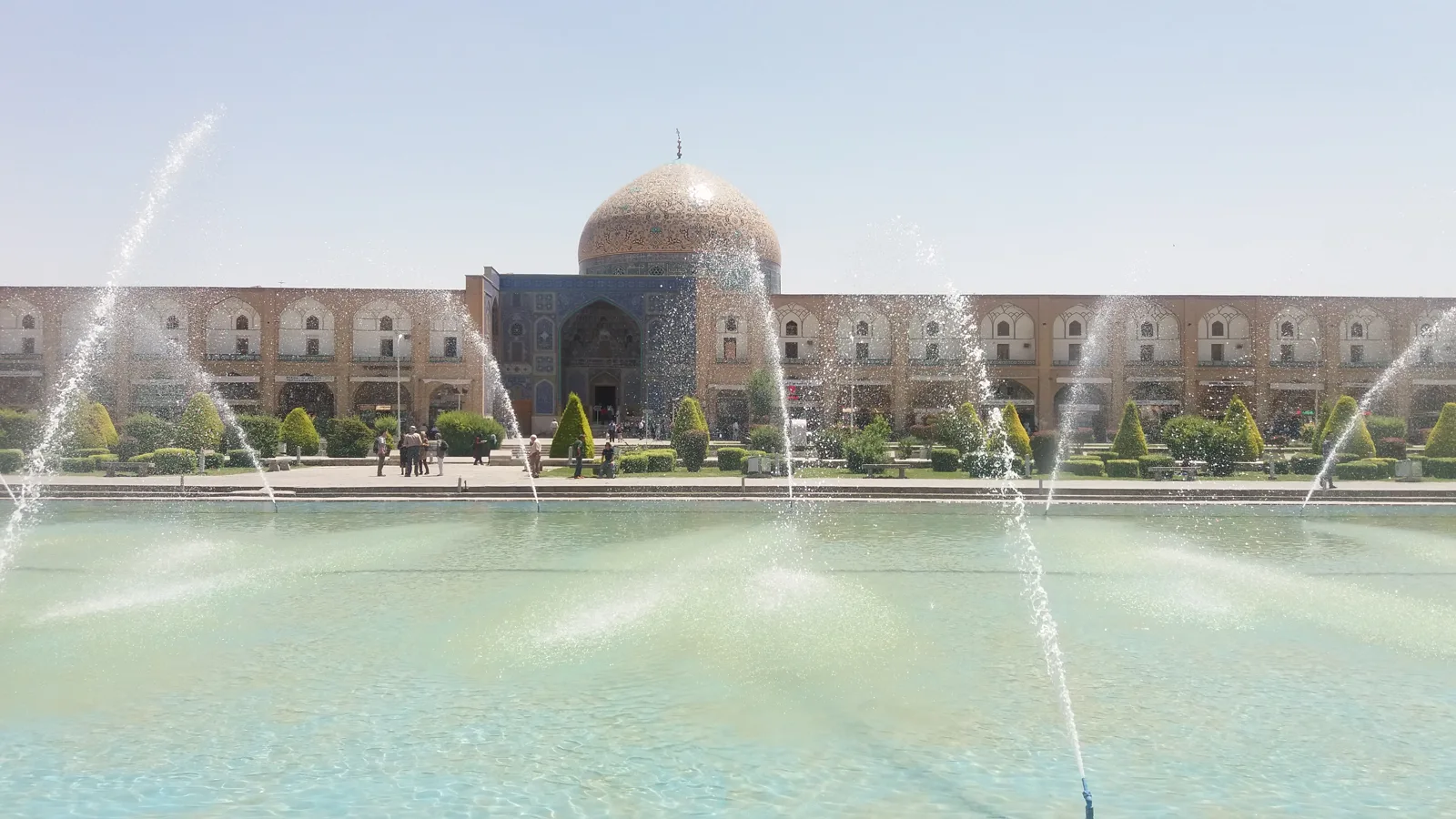
Sheikh Lotfollah Mosque
The Safavid jewel of Naqsh-e Jahan Square: no minaret, no courtyard, but Iran's most beautiful dome.
About this page's content: this site offers editorial and cultural content written with care and respect for the religious traditions concerned; it does not constitute a theological opinion or a source of religious authority. Despite our checks, errors, inaccuracies or approximations may remain. If you spot one, please let us know via the Contact page or by email at qibla.mosk@gmail.com, and we will correct it gratefully.